分类: society

  • Better pay, faster growth

    Better pay, faster growth

    A growing exodus of nursing professionals from Trinidad and Tobago is being driven by uncompetitive pay, blocked career advancement, and unsafe working conditions, according to first-hand accounts from three nurses who have recently relocated for jobs in the United States and United Kingdom. All three secured their overseas roles through international recruitment agencies, a pathway they describe as more cost-effective and streamlined than other hiring channels.

    Darius Mollineau, a former psychiatric nurse with Trinidad’s North West Regional Health Authority (NWRHA), left for the United Kingdom in 2021, citing a complete lack of upward professional mobility as his core motivation. Before departing, Mollineau had completed specialized training to work as a District Health Visitor and served in an acting capacity in the role for three full years. Only after he made the decision to migrate was the permanent position offered to another candidate, a missed opportunity Mollineau calls disheartening.

    What disturbed him most, he says, is the widespread culture of extended acting appointments across Trinidad’s public health system, where some staff wait as long as nine years to have their positions made permanent. “I was like, I’m not going to be stuck in that holding pattern for that long. Even now it’s not my turn, I don’t want to be that person five, six years from now still stuck in an acting role,” he explained.

    Today, Mollineau works at a hospital near Birmingham, England, where he has risen to a management role in just three years – a progression he says would be unheard of in his home country. He credits the foundational training he received at NWRHA for his success, but notes that the UK healthcare system offers far clearer pathways to transition into specialized roles such as nursing assessor or prescriber, with opportunities that are far more accessible for frontline staff.

    When asked if he would ever consider returning to Trinidad and Tobago, Mollineau says he is open to the idea – but only after major systemic changes are made. Most urgently, he points out that nurses in the country are still being paid according to a 2013 salary scale, a frozen pay structure that has not been addressed in the five years since he left. “If salaries are adjusted to what nurses actually deserve, that would be a real incentive to come back,” he said. Though he has experienced repeated racism during his time working in the UK, he says his significantly higher pay offsets the disrespect he has encountered. He added that nurses in Trinidad are also undervalued by patients and hospital visitors, on top of being drastically underpaid. Beyond salary, Mollineau says expanded investment in ongoing professional development is a non-negotiable requirement for him to return home, noting that UK nurses are required to complete regular updated clinical training every three years to maintain their practice, a standard that is not enforced locally.

    For Marcia Baptiste, a 17-year veteran nurse who worked with Trinidad’s South West Regional Health Authority (SWRHA) before moving to a New York City hospital in 2023, the decision to migrate came down to a search for financial stability and faster professional growth. “Back home, you get your pay check and it’s gone before you know it. I was looking for more long-term financial security, and moving here has really turned that around for me,” she explained.

    Beyond higher wages, Baptiste says overall working conditions are far better in New York, though she does note one downside: a 30-minute lunch break, compared to the one-hour break she received at SWRHA. She acknowledges that nurses in New York still face systemic challenges – pointing to the January 2024 strike of 15,000 nurses across three city hospitals, who walked out demanding safer staff-to-patient ratios, improved benefits, and protections from workplace violence. But even with those shared challenges, she says professional advancement is far less bureaucratic in the U.S. “Back in Trinidad, you have to cut through endless red tape to move up. Here, once you have the required certification, you can climb the ladder very quickly,” she said.

    As a single parent of two, Baptiste admits the transition to the U.S. was difficult at first, and she has faced implicit bias from patients who have questioned her competence based on her skin tone. She draws a parallel between this anti-Black bias abroad and the widespread stigma and undervaluing of nurses that is common in Trinidad. Baptiste, who plans to earn a specialized certification in chemotherapy administration – a program that is partially funded by her New York hospital – says the scope of nursing practice is also far broader in the U.S. than in her home country. “Back home, nurses rely on doctors for almost every decision. Here, we have real autonomy. If you’re certified to do a procedure, you do it, and the hospital will invest in training you to get that certification,” she explained. In the U.S., advanced practice registered nurses like nurse practitioners can diagnose conditions, order diagnostic tests, and prescribe medication, with many practice areas operating as nurse-led care models where patients only see a doctor for complex emergency cases.

    Like Mollineau, Baptiste says she would consider returning to Trinidad eventually, and wants to come back to work in a management role after gaining international experience. But she echoes the concern that inadequate pay that does not match advanced skills and specializations would keep her away. While she does not support the long-term brain drain of Trinidad’s nursing workforce, she encourages young local nurses to gain international experience before returning home to share their new skills and knowledge.

    The third nurse, a former employee of the North Central Regional Health Authority (NCRHA) who requested anonymity to protect her family back home, left Trinidad one year after graduating from the University of the Southern Caribbean in 2019, and has since worked in the UK and is currently seeking a permanent role in the southwest U.S. She cites systemic nepotism and favoritism as the core drivers of her decision to leave, explaining that hiring for permanent roles at regional health authorities is not based on qualifications, but personal connections. “Whether you have a bachelor’s degree versus an associate degree doesn’t make a difference. The only thing that matters is who you know,” she said.

    She also describes a contradictory cycle where hospital management constantly complains about understaffing, yet claims there are no open permanent positions. After months of waiting, she was only offered a 10-month fixed-term contract. As a new graduate nurse, she describes her early experience on the job as dangerously overwhelming, with no formal mentorship or support system for early-career staff. In her first few days working on a cardiac ward, she was assigned to work night shifts completely alone after just three days of on-the-job experience, a situation she found terrifying as a new nurse. “Back here in the U.S. and UK, each nurse is responsible for four to six patients maximum. Back there, I was expected to cover an entire ward alone with no support,” she explained. That experience led her to resign from the position and pursue work abroad.

    Unlike the other two nurses, she has no plans to return to Trinidad, with rising crime being another major factor in her decision to stay overseas. She notes that advanced education opportunities for nurses are also far more accessible abroad: next year, she will begin a nurse practitioner graduate program, a path she says would not have been possible for her in Trinidad, where management is rarely supportive of staff pursuing master’s or doctoral level training. She encourages other Trinidadian nurses to take the opportunity to work abroad, calling it one of the most life-changing and career-enhancing steps they can take.

  • Pigeon Point tragedy  highlights deadly pattern

    Pigeon Point tragedy highlights deadly pattern

    The coastal paradise of Trinidad and Tobago’s Pigeon Point Heritage Park has once again been the site of a devastating watercraft tragedy, claiming the life of 7-year-old Angelica Jogie last Wednesday. The young girl’s death after being struck by an out-of-control jet ski is far from an isolated incident—it marks the latest entry in a decades-long pattern of preventable water-related deaths and injuries that have plagued the island nation’s popular coastal recreation areas. This newest tragedy has drawn immediate connections to a near-identical incident at the exact same beach that occurred 17 years earlier, exposing persistent gaps in safety regulation that have gone unaddressed despite clear court orders.

    In 2007, a runaway pirogue crashed into two teenage vacationers—17-year-old Yanik Quesnel from Trinidad and Tobago and his girlfriend Ana Carolina Barry-Laso, a Spanish national—who were swimming off Pigeon Point. The collision left Quesnel permanently paralyzed, prompting a years-long legal battle that held both the Tobago House of Assembly (THA), the local governing body, and Pigeon Point Heritage Park Ltd, the company that manages the park, responsible for visitor safety.

    In the 2010 ruling, Justice Judith Jones blasted the two entities for their failure to address a known hazard to swimmers. The judgment explicitly found that THA and the park operator had breached their duty of care to visitors by failing to keep large watercraft far from swimming shorelines and failing to install clear warning signs for beachgoers. Jones further noted that the teen victims had exercised reasonable caution for their own safety and were legally entitled to expect proper safety protections from the managing authorities.

    In a public news conference held the same night of Angelica Jogie’s death, THA Chief Secretary Farley Augustine referenced the 2010 ruling, which found the assembly liable for the 2007 harm. He framed the newest tragedy as a consequence of rule-breaking by watercraft operators, but public records show that even after the landmark court ruling, safety reforms have been slow to stop recurring incidents.

    Within a year of the 2010 judgment, THA implemented a ban on all recreational watercraft use at two popular Tobago beaches: Store Bay and Buccoo. Then-Environment Secretary Hilton Sandy stated at the time that the ban was explicitly intended to curb harm from reckless watercraft operation, allowing only jet skis operated by the Tourism Division for rescue purposes to operate in the restricted areas. Yet despite this initial policy change, dangerous watercraft incidents have continued to claim lives and cause severe injury across coastal areas of Trinidad and Tobago year after year.

    A review of incident records reveals a disturbing pattern of unstopped harm: In 2010, Tobago resident Andell Roberts died in hospital after losing consciousness while attempting a stunt on his personal jet ski. Two years later, three American visitors—40-year-old Racquel Welch, her 13-year-old daughter Paige Welch, and their relative Lance Aqui—suffered devastating injuries when a pirogue linked to the Trinidad and Tobago Regiment crashed into their kayak at Scotland Bay in Chaguaramas, splitting the small watercraft in half. Paige Welch’s left arm was nearly severed in the collision, and all three victims required hospitalization. Later that same year, 17-year-old Angel Superville died in a jet ski accident at the same bay, in what was only his first time operating the watercraft. He collided with a tow rope connecting a larger boat to a dinghy, and the force of the impact threw the teen—who was wearing a life jacket and remained conscious immediately after the crash—into the water, where he succumbed to his injuries.

    In 2014, 26-year-old Sheriza Ramdath was killed at Spring Bridge in Moruga when she lost control of her jet ski and crashed into a mangrove, dying at the scene of the accident. Her brother suffered severe head and facial injuries in the same crash. Four years later, another young life was lost at Pigeon Point: primary school student Shem Murray died two days after his jet ski hit an underwater coral formation, throwing him from the vehicle. He was transferred from a local Tobago hospital to a facility in Trinidad for advanced care, but could not be revived. That same year, 35-year-old fisherman Sheldon Guerra died off Los Iros when another vessel broadsided the fishing boat he was sharing with four crewmates, who had stopped to retrieve a fishing net. The collision happened in darkness, overturning both boats and throwing all passengers overboard, killing Guerra.

    More recent incidents continue the trend: In October 2022, a lifeguard required emergency medical care after being struck in the head by a fishing boat while swimming off Maracas Bay. Just last year, 21-year-old Mathias Jerry went missing after a jet ski accident near Tobago’s No Man’s Land; his body was later recovered from submerged waters.

    Angelica Jogie’s death has renewed calls for urgent action to enforce existing safety regulations and close gaps that have allowed decades of preventable harm to affect both local residents and visiting tourists at some of the nation’s most popular beach destinations.

  • It was a slip-up

    It was a slip-up

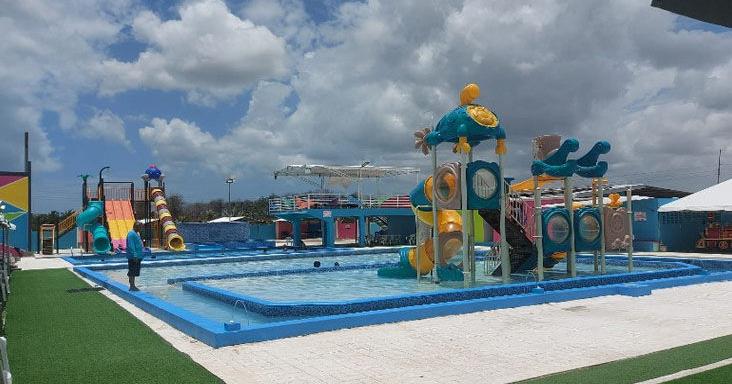
    Tragedy has struck twice in just days across Trinidad and Tobago, following the jet ski collision death of 7-year-old Angelica Saydee Jogie in Tobago waters. The latest child water safety incident saw 6-year-old Skylar Gabriel, a child with high-functioning autism, hospitalized in critical condition after a near-drowning at a public pool in Gasparillo’s Bumper Jumperz Fun Park on Friday.

    After the accident, Skylar was admitted to the Intensive Care Unit at San Fernando General Hospital (SFGH), where as of Sunday, medical updates showed encouraging signs of improvement. The young girl was submerged for multiple minutes in 4 feet of water before being pulled out, and her ventilator support has increased from 35% to 50% as her breathing stabilizes. Skylar’s parents, Desire Walters, a firefighter, and Sheldon Gabriel, a fire service officer, confirmed their daughter’s condition is “looking up” during a visit from the *Sunday Express*.

    Walters pushed back against unkind online speculation from social media users unfamiliar with their family, emphasizing her commitment to her daughter’s safety as the parent of a child with autism. “As a mother of a child with autism, you always have to be looking here and there, 24/7,” she said, acknowledging the incident was an unforeseen slip-up. The couple explained they had turned their backs to unpack supplies for their daughter moments after arriving at the park, and Skylar, who is familiar with water park routines, walked straight to the pool. “It happened quickly. It was a slip-up,” Walters added.

    The family also pointed out critical safety gaps at the facility: unlike other water parks Skylar has visited, Bumper Jumperz Fun Park provided no complimentary life jackets and had no on-duty lifeguard at the time of the accident. Gabriel, who performed CPR on his own unresponsive daughter after locating her, described a disturbing delay in response from park staff. For several minutes, he and Walters searched the facility for Skylar without any assistance from employees or other guests. “We told the staff she was missing, but the music continued playing. It was only after she was found that the staff came running,” he said. As a trained emergency responder, Gabriel said blocking out all surrounding chaos to administer CPR to his own child was an experience no parent should ever have to endure. “Right now, my child is looking up and that is what I’m focused on,” he added.

    Closed-circuit television footage from the facility, which police have already taken possession of and the *Sunday Express* reviewed, offers a clear timeline of the accident. The nearly 10-minute recording shows Skylar, unprotected by any flotation device, playing alone in the children’s pool while her parents sit with their backs turned roughly 4 feet away under a shaded tent. Around the one-minute mark, Skylar leaves the shallow children’s pool, climbs the stairs to the water slide leading to the deeper adult pool, rides down, and submerges without re-emerging. Her parents begin searching a minute later, and their search extends for several minutes before she is located. Approximately 40 guests were present in the pool area at the time, with other adults supervising their own children using the same slide.

    Local police confirmed that after Skylar was pulled from the 45-foot by 20-foot pool (which ranges from 3 to 5 feet deep), Emergency Health Services responded, detected a pulse, and rushed the child to SFGH for urgent ICU care.

    In a statement to the *Sunday Express* at the park Sunday, an unnamed spokesperson for Bumper Jumperz Fun Park – which has operated for 15 months without a prior serious incident – said the accident is deeply concerning, but emphasized that parental supervision is the primary responsibility for child safety at the facility. The spokesperson confirmed the park has been without a full-time lifeguard for three weeks while actively recruiting for the role, and that clear signage is posted throughout the property notifying guests of the lack of on-duty lifeguards and requiring parents to accompany children at all times. He added that two pool monitors were on staff the day of the accident, and that the team was not notified in advance that Skylar was autistic, though staff have experience working with neurodivergent children.

    The spokesperson also noted that flotation devices and life jackets are available for purchase at affordable prices starting at $30, and that the park’s emergency protocol was not activated because staff were never alerted that Skylar was missing until after she was found. “We have steps in place that if an alarm is raised, we sound the horn, we pull everyone from the pool and we conduct a thorough search,” he explained. Operations continued at the park Sunday, and the spokesperson said the team has reached out to Skylar’s family and is praying for her full recovery, while urging all parents to maintain constant vigilance when their children are near water, especially for children with special needs.

    This latest incident comes as communities across Trinidad and Tobago are already reeling from the death of 7-year-old Angelica just two days prior, reigniting public debate over water safety regulations and enforcement at public recreational facilities across the twin islands.

  • Meteorologist explains April rains reignite the debate: which is the rainiest month in the Dominican Republic?

    Meteorologist explains April rains reignite the debate: which is the rainiest month in the Dominican Republic?

    For many people living in or familiar with the Dominican Republic, a widespread misconception has persisted: that the country’s wettest weather aligns with November, or that unusually heavy early-spring downpours in recent years have shifted the peak rainfall to April. But 30 years of systematic climate measurements tell a far different story, according to a leading Dominican meteorologist.

    Cristopher Florian, a climatology specialist at the Dominican Institute of Meteorology (Indomet), shared the findings in an exclusive interview with local newspaper HOY, debunking the common misconception about the country’s rainfall patterns. Long-term climatological data collected consistently across decades confirms that May actually holds the title of the Dominican Republic’s rainiest month, with June ranking as the second wettest, Florian explained.

    “That conclusion is firmly established by climatological science, drawn from three decades of continuous rainfall measurements across monitoring sites across the country,” Florian told reporters. The meteorologist added that while extreme heavy precipitation events have occurred in April and November in recent years, that short-term trend is not enough to upend long-held climate patterns.

    To formally declare a shift in a region’s long-term climatology, scientists require a continuous 30-year dataset to filter out short-term random weather fluctuations and identify sustained trends, Florian noted. “We still need many more years of consistent measurements to confirm that April or November have overtaken May and June as the country’s rainiest months,” he clarified.

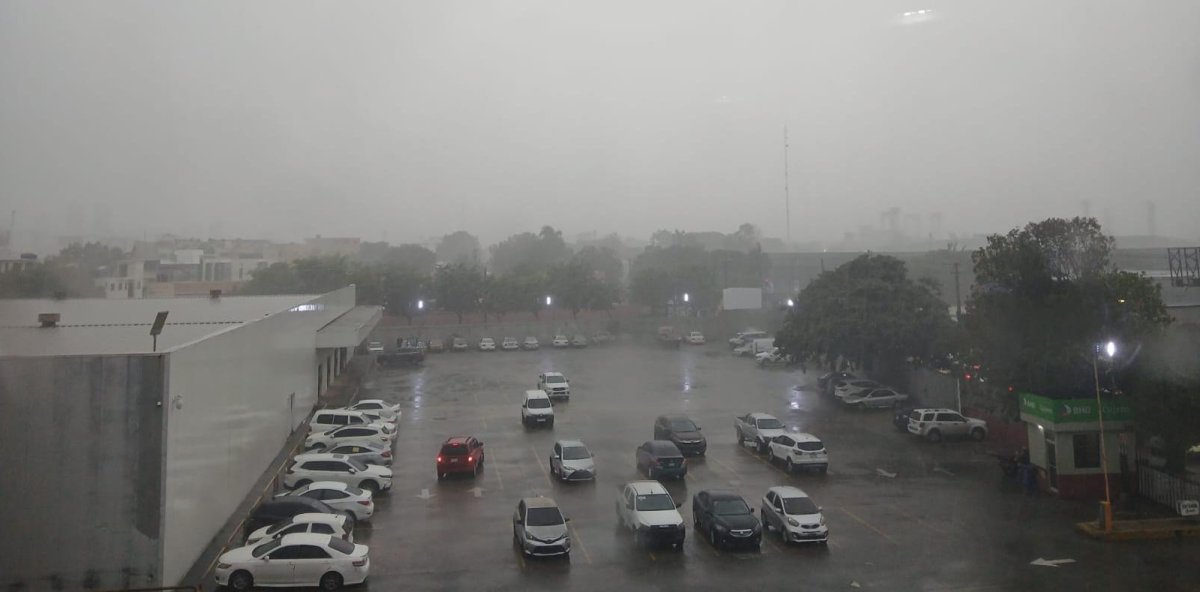
    Beyond correcting the long-held misconception, Florian also issued a practical forecast for the coming days, warning residents that widespread rainfall will persist through the weekend. He projected that precipitation levels will climb notably on Sunday, and the wet weather will continue into Monday with increased intensity. This forecast raises the risk of several hazardous conditions, including swelling of rivers, streams and mountain ravines, as well as flash urban flooding in low-lying developed areas, the meteorologist cautioned.

  • Bridge over Camú River collapses; dozens of homes flooded and extensive damage in Puerto Plata

    Bridge over Camú River collapses; dozens of homes flooded and extensive damage in Puerto Plata

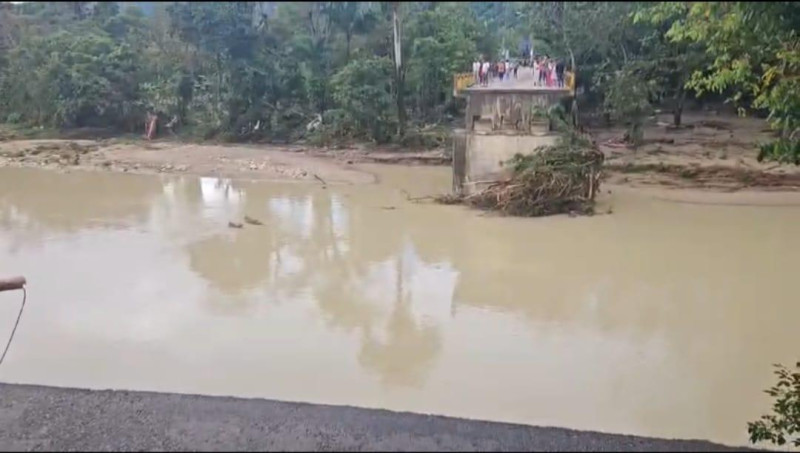
    On Saturday night, torrential downpours swept across the Dominican Republic’s Puerto Plata province, leaving a trail of widespread destruction that has disrupted communities and cut off critical transportation links. Two major bridge structures sustained serious damage, while rising floodwaters inundated dozens of residential properties across multiple municipalities.

    The most critical infrastructure failure occurred on the region’s popular tourist corridor, where the Camú bridge collapsed entirely, trapping residents and cutting off access to the surrounding area. A parallel crisis unfolded in the Altos de la Boca sector of Los Hidalgos, where a second bridge was rendered impassable by flood-driven damage, creating another isolated pocket of the province.

    Flooding was not limited to infrastructure damage, with multiple low-lying communities across Villa Montellano registering severe inundation. Neighborhoods including Los Ciruelos, El Tamarindo, Monte Bravo, and the La Maternidad district all reported standing floodwaters that entered residential homes. In one dramatic incident in Monte Bravo, an entire family was forced to climb onto the roof of their flooded property to escape rising waters, where they waited for rescue before being pulled to safety by teams from Amber Rescue.

    In the municipality of Imbert, communities along the Bajabonico River including Baraguana, Barrabás, and La Yaguita all saw widespread flooding as the waterway overflowed its banks. The same pattern of river-driven inundation was reported across three additional municipalities: Guananico, Altamira, and Villa Isabela, where dozens of additional homes were flooded.

    Beyond flooding and infrastructure damage, the heavy rain also triggered multiple landslides along the Puerto Plata-Navarrete highway. Slope failures were recorded in the El Copey community of Altamira, as well as at the main entrance to the highway’s tunnel, closing sections of the critical intercity route.

    In response to the crisis, José Ignacio Paliza, the Dominican Republic’s Minister of the Presidency, announced that an official emergency assessment and relief mission would launch in the early hours of Sunday. Paliza confirmed the government’s commitment to supporting impacted families in a post to his official social media account, writing, “We are heading to Puerto Plata to assist the families affected by the heavy rains of the last few hours. God is in control!”

  • Government asks the population to stay away from rivers and coasts

    Government asks the population to stay away from rivers and coasts

    Residents of the Dominican Republic are preparing for severe weather this weekend, after national authorities activated full emergency response protocols on Friday ahead of an approaching frontal system forecast to bring heavy, widespread rainfall across much of the country. The announcement followed a high-level coordination meeting led by President Luis Abinader at the National Palace in Santo Domingo, where officials confirmed the government would operate in permanent session to monitor the storm’s progression and coordinate rapid responses to any emerging hazards.

    Following the meeting, Juan Manuel Méndez, general director of the country’s Emergency Operations Center (COE), issued clear guidance to the public: all residents are asked to avoid recreational visits to coastal areas, and to cooperate fully with mandatory evacuation orders for communities located in high-risk, vulnerable zones. Méndez emphasized that public compliance is critical to preventing avoidable loss of life, stressing that non-cooperation during evacuations could put both residents and first responders at unnecessary risk.

    Two tiers of weather alerts are currently in effect across 19 provinces and the National District. Five provinces — Monseñor Nouel, Santiago Rodríguez, Santiago, La Vega, and Monte Cristi — are under yellow alert, indicating elevated risk of severe weather impacts. A green alert, signaling preliminary preparedness is required, covers the National District, the province of Santo Domingo, Elías Piña, San José de Ocoa, Monte Plata, Puerto Plata, Dajabón, Duarte (with a specific focus on the vulnerable Lower Yuna region), San Cristóbal, Valverde, San Juan, Independencia, and Bahoruco.

    According to updates from the Dominican Institute of Meteorology (Indomet), rainfall is set to begin in the early hours of Saturday and persist through the entire day. Over a 24 to 48-hour window, total precipitation accumulation is expected to reach 100 to 125 millimeters across most affected areas, driven by the combination of the approaching frontal system and an associated trough. Forecasters project rain will intensify through Saturday afternoon, bringing moderate to extreme downpours, with risks of isolated hailstorms, severe thunderstorms, and strong wind gusts. The hardest-hit areas are expected to include Greater Santo Domingo, Monte Plata, Sánchez Ramírez, Duarte, Monseñor Nouel, La Vega, Espaillat, Hermanas Mirabal, and much of the Cibao region, with particularly severe conditions forecast for the Central Mountain Range, the country’s border region, and southwestern provinces.

    Méndez warned that widespread soil saturation will increase the likelihood of flash flooding across large swathes of the country, and alert levels may be upgraded to higher tiers if the weather system intensifies beyond current projections. In addition to flood risk, Indomet has flagged hazards including urban flooding, rising water levels in rivers and streams, landslides in hilly terrain, and sudden wind gusts. The agency noted that alert levels will be updated continuously over the next 72 hours as new weather data becomes available.

    Alongside storm warnings, meteorological officials added that hot, humid conditions will persist before and after rain events, driven by warm, moist wind flow from the east and southeast. In urban areas, the heat index will reach particularly high levels, prompting Indomet to recommend that residents wear lightweight clothing, stay hydrated by drinking plenty of fluids, and limit extended exposure to direct sunlight.

    President Abinader reaffirmed the government’s commitment to proactive preparation, stating that national authorities will remain on constant alert to monitor every development of the weather system across the entire country, with resources pre-positioned to respond to any emergency that arises. “The Government will be attentive to every situation throughout the country, both to anticipate and to react in any case,” Abinader said. Méndez echoed this call for vigilance, urging all residents, even those not currently under elevated alerts, to follow guidance from civil protection agencies, monitor official weather updates closely, and avoid complacency. He added that residents should never attempt to cross swollen rivers, streams, or ravines while rain is ongoing, a leading cause of storm-related fatalities in tropical weather events.

  • Minister Aubourg promotes fishing productivity

    Minister Aubourg promotes fishing productivity

    In a working visit to Haiti’s far northern regions this week, Marcelin Aubourg, the country’s Minister of Agriculture, Natural Resources and Rural Development (MARNDR), led a inter-agency delegation to assess the progress of ongoing fisheries infrastructure development projects, part of a broader national push to unlock the sector’s untapped economic potential for coastal communities.

    The delegation’s first stop was Fort-Liberté, where they toured a local facility manufacturing marine engines and new fishing vessels. Bernard Chauvet, general manager of the workshop, confirmed that 20 of the 80 ordered fiberglass fishing boats will be ready for delivery by the end of May. Built at four feet wide, each vessel is outfitted with an average 15-horsepower engine, specifically engineered to withstand deep-sea fishing conditions that are common off Haiti’s northern coast.

    On April 10, 2026, Aubourg convened a working meeting with representatives from local fishing associations at the North Departmental Directorate of Agriculture (DDAN). During the talks, the minister stressed that fishing has evolved into one of Haiti’s most promising high-growth sectors for rural livelihoods. He noted a striking cultural shift in the industry: unlike decades past when fishing was often viewed as an unstable, low-status occupation, today’s Haitian fishermen embrace their professional identity, as the trade now reliably generates enough income to support their households. Aubourg, who previously served as departmental director of agriculture for the South and Grand’Anse regions, urged northern fishermen to fully invest in their work, noting that expanded infrastructure and training will open pathways to long-term improvements in household income and quality of life.

    The on-site inspections and community meetings are part of Haiti’s broader Program to Support Agricultural and Fisheries Productivity and Improve Rural Infrastructure for Market Access (PAPAIR), a national initiative focused specifically on boosting fisheries output and rehabilitating outdated coastal fishing infrastructure. After delivering measurable positive outcomes for small-scale fishing communities in Haiti’s southern departments, the program is now rolling out to the northern and northeastern regions.

    Laurent Mérisier, an agricultural engineer and one of three national PAPAIR coordinators, shared details on the program’s early progress in the north. To date, roughly 20 local fishing associations—15 in the North department and five in the Northeast—have completed technical training as part of the initiative’s organizational capacity-building component. Each participating association will receive four of the 80 new fishing boats currently under construction. All vessels will come fully equipped with marine engines and modern fish preservation tools, a upgrade that will particularly benefit small-scale fishmongers who rely on fresh product to serve local markets.

    PAPAIR is a flagship project of the Haitian government, implemented through MARNDR, with financial backing from two major international development bodies: the Inter-American Development Bank (IDB) and the Global Agriculture and Food Security Program (GAFSP).

  • Dominican Republic increased the number of provinces under Red Alert for 4 Provinces due to heavy rain and flood risk

    Dominican Republic increased the number of provinces under Red Alert for 4 Provinces due to heavy rain and flood risk

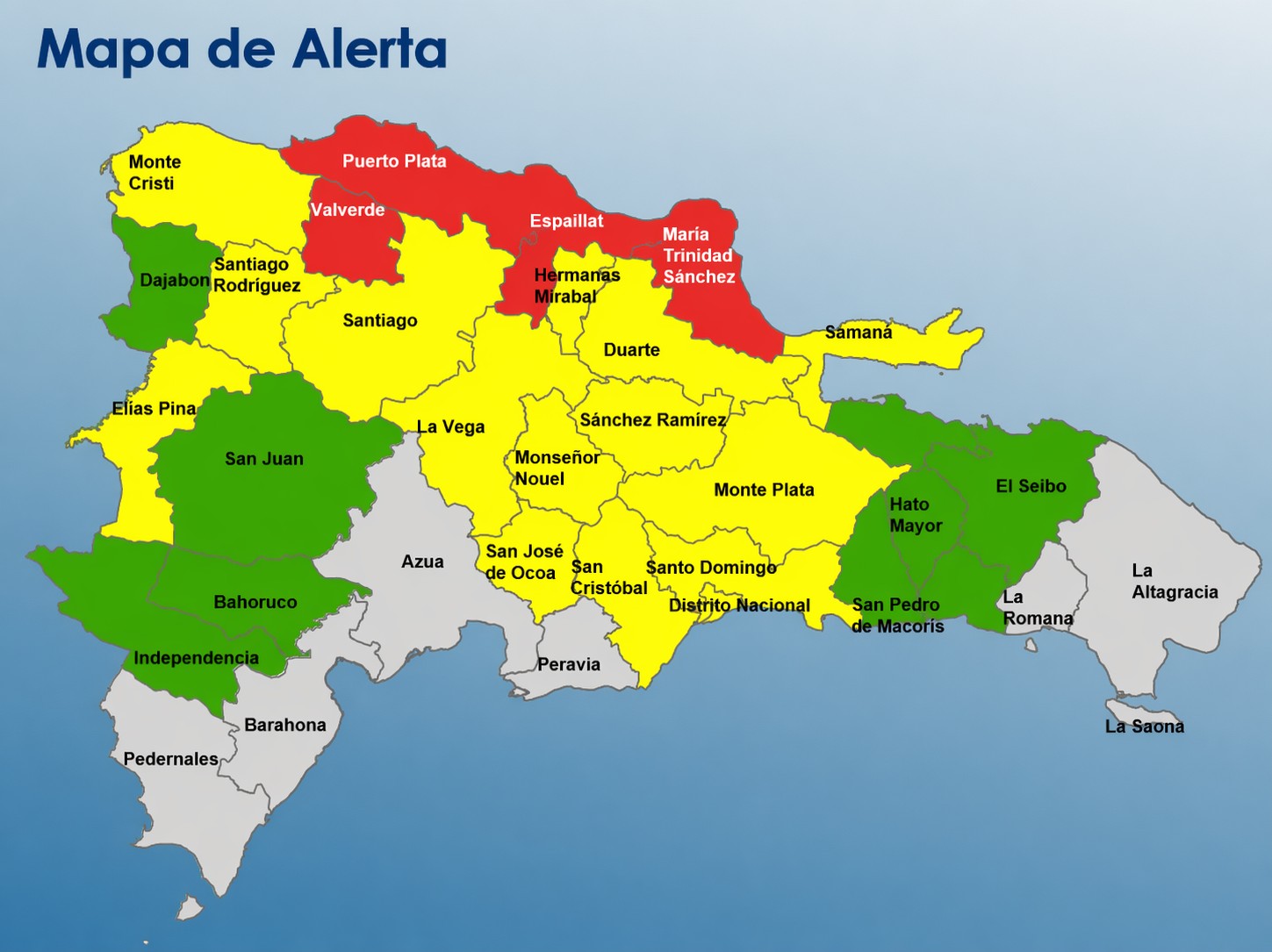
    The Dominican Republic’s emergency management authorities have rolled out a three-tiered national alert system, placing four northern provinces on the highest risk red alert as adverse weather conditions threaten widespread flooding across large swathes of the country.

    The four red-flagged provinces, which face the most severe potential hazards, are Puerto Plata, Valverde, Espaillat, and María Trinidad Sánchez. Beyond these high-risk zones, the country’s capital National District and an additional 14 provinces have been placed under yellow alert, signaling a moderate level of danger, while the remaining seven provinces carry the lowest-level green alert status, indicating minimal immediate risk.

    The nation’s Emergency Operations Committee (COE), which manages disaster preparedness and response, confirmed that the tiered alerts were triggered by growing threats of multiple flood types. At-risk areas face potential overflow across rivers, small streams, and natural ravines, alongside the looming possibility of sudden flash floods and standing water in dense urban areas.

    This latest alert update draws on official data and forecasts from two leading national institutions: the Dominican Institute of Meteorology (Indomet) and the National Institute of Hydraulic Resources (INDRHI). Technical assessments from both agencies confirm that atmospheric conditions across the country remain primed for sustained rainfall. A slow-moving trough connected to an active frontal system has kept moisture levels elevated, leaving already saturated soils in high-risk provinces far more vulnerable to runoff and flooding. Local authorities are urging residents in alert zones to monitor official updates, prepare for potential evacuation, and avoid low-lying flood-prone areas through the duration of the weather event.

  • Santiago Civil Defense highlights the preventive work of the Santiago City Council in the face of rains

    Santiago Civil Defense highlights the preventive work of the Santiago City Council in the face of rains

    As forecasters warn of incoming heavy precipitation across the Dominican Republic’s Santiago province, local Civil Defense leadership has publicly commended the proactive flood risk reduction work led by Santiago’s municipal mayor, Ulises Rodríguez.

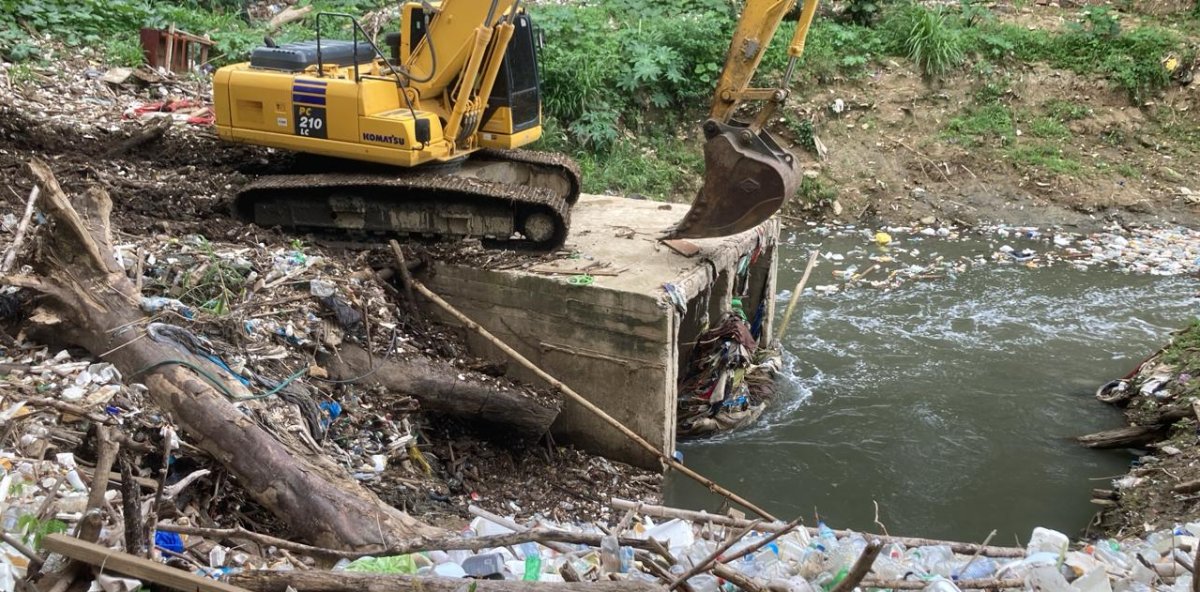
    Francisco Arias, regional director of the Dominican Civil Defense, highlighted that the municipal government has prioritized critical pre-storm preparedness tasks across high-risk neighborhoods and geographic hotspots. These interventions include clearing debris from natural ravines, unclogging urban drainage systems, removing accumulated waste from bridge approaches, collecting scattered solid waste from residential areas, and pruning overgrown tree branches that could threaten infrastructure during storms.

    The work has already been fully rolled out across a range of priority zones, Arias confirmed, including 20th Street, 8th Street, the communities of Nibaje and Hoya de Caimito, and the high-risk Devil’s Ravine — all locations long identified as prone to dangerous waterlogging during heavy downpours. Beyond the physical infrastructure work, Arias noted that municipal crews have maintained a consistent, visible presence in these flood-prone areas to respond quickly to emerging hazards as the rain approaches.

    In his remarks, Arias also extended recognition to Arismendi Dajer, the municipal government’s general secretary, and the full team of local municipal staff who have collaborated to advance the preparedness campaign.

    Arias explained that pre-event mitigation is a core component of effective disaster management: by addressing hazards before storms hit, officials can dramatically cut the risk of destructive flooding and keep local residents safe. “Our Civil Defense teams have been continuously moving through vulnerable neighborhoods to share safety guidance with residents, and the Mayor’s Office has complemented that work with on-the-ground infrastructure upgrades that directly reduce flood risk,” he explained.

    All of these coordinated actions fall under a broader, holistic disaster preparedness strategy designed to protect both the lives and property of Santiago residents, Arias added, emphasizing that the municipal government remains in a constant state of readiness to address any weather-related emergency.

    In a final update, Arias confirmed that the interagency Prevention, Mitigation, and Response Committee (PMR) has already been activated, with round-the-clock monitoring of shifting weather conditions already underway. Since the previous day, Civil Defense response brigades have been door-to-door in at-risk communities, walking local families through the key safety steps they should follow if flooding does develop.

  • Manhunt launched for gang behind daring cash robbery

    Manhunt launched for gang behind daring cash robbery

    A violent armed robbery has left three Chinese nationals targeted in their own residential property in Guyana, with four suspects currently evading law enforcement capture, the Guyana Police Force confirmed in an official update published Saturday, April 11, 2026.

    The attack unfolded around 3:53 p.m. local time on Friday, as the three victims had just arrived at their property in Eccles, a community located along Guyana’s East Bank Demerara. As the group stepped out of their vehicle, four male suspects ambushed them. According to initial police accounts, one of the four attackers was openly carrying a loaded handgun during the incident.

    After overpowering the victims, the suspects forced the three Chinese nationals back inside their home, where they carried out a systematic search of both the upper and lower floors of the residence. During the ransacking, the robbers stole a combined haul of multiple currencies and personal identification documents. The stolen assets include 500,000 Guyanese dollars, 900 U.S. dollars, 1,000 Mexican pesos, and 200 Hong Kong dollars, alongside a Chinese national identity card and other critical personal paperwork.

    Law enforcement investigators have already secured key evidence to advance the case, with closed-circuit television footage recorded by cameras installed on the victims’ property successfully collected for review. This footage is now a core component of the active manhunt and ongoing investigation into the robbery.

    As of Saturday afternoon, no suspects had been taken into custody, and police continue their efforts to locate and apprehend the four perpetrators responsible for the attack.