
A formal announcement from the national Ministry of Education has confirmed that 12 educational institutions spanning the East and Northeast regions will suspend all in-person operations on Tuesday, April 28, 2026. The affected facilities cover both primary and secondary education levels, and include Concord Primary, Atkinson Primary, Salybia Primary, Sineku Primary, Castle Bruce Primary, Lighthouse Christian Academy, Temple SDA, San Sauveur Primary, Wesley Primary, Wills Strathmore Stevens (WS Stevens) Primary, Castle Bruce Secondary, and North East Comprehensive. In the official statement, education officials emphasized that the temporary closure is a proactive safety measure designed to protect the health and well-being of all students, faculty, and non-teaching staff on campus. The closure will remain in effect until local conditions stabilize and are deemed safe enough for the resumption of regular academic activities, authorities added. No additional details on the specific underlying conditions prompting the closure were released alongside the initial announcement.
分类: society
-

Police Arrest 22-Year-Old Male In Connection With Bomb Threat
The Royal Police Force of Antigua and Barbuda has confirmed the arrest of a 22-year-old male resident of Old Parham Road in connection with a bomb threat targeting the agency’s central headquarters. The threat was first reported on Monday, triggering an immediate response from law enforcement units across the island nation.
Officers from the Criminal Investigations Department (CID) Task Force took the suspect into custody during a targeted operation launched shortly after 6:00 a.m. local time on Tuesday, April 28. As of the latest official update, the detained individual is cooperating with investigators as they work to unpack the details of the incident, including motive and any potential broader connections to other activities.
In an official media statement released by the police force’s Office of Strategic Communications (STRATCOM), department leadership emphasized that all threats to public security are treated with the highest level of urgency. The administration reaffirmed its ongoing commitment to protecting the welfare and safety of every citizen and permanent resident across Antigua and Barbuda.
Authorities note that the investigation is still active and evolving, and additional information will be released to the public once new developments are confirmed in the case.
-

3 denied bail for Eversley murder
A high-profile murder case of a serving municipal police officer took another dramatic turn on Tuesday, as three men already charged with killing corporal Anuska Eversley appeared in court to face a raft of new offenses tied to one of the largest illegal firearms caches uncovered in recent memory. All three suspects were denied bail and remanded into custody following the hearing, held before Master Delicia Bethelmy.
The three accused—28-year-old municipal police officer Jivan “Bigs” Cooper, 20-year-old construction worker Kwame Arnold, and 24-year-old scrap iron dealer Nicholas “Nico” Ramdass, all residents of Claxton Bay—had the charges, formally laid by ASP Maharaj, read aloud in court. The allegations stem from the April 19 killing of Eversley, whose body was discovered inside the Municipal Police Station at King’s Wharf, San Fernando. A post-mortem examination confirmed she died after being strangled and beaten, and her funeral service was held on the same day as the court appearance.
Beyond the murder charge, the trio is also accused of robbing Eversley of her government-issued service weapons and ammunition, and committing acts of violence against the officer during the fatal attack. The new firearms charges reveal a far larger stockpile of illegal weapons than law enforcement had previously disclosed publicly: 114 pistols, one revolver, six shotguns, two MPX submachine guns, and 173 firearm magazines intended for trafficking, along with a total of 4,395 rounds of assorted ammunition—4,355 9mm rounds, 30 12-gauge shells, and ten .38 caliber rounds. Prior to this court hearing, official police updates to the media had only acknowledged the recovery of 60 weapons and 1,532 rounds of ammunition, marking the first time the full scope of the seized cache has been confirmed.
None of the accused were required to enter pleas at this stage of the proceedings. Cooper is represented by defense attorney Keith Beckles, while duty counsel Krysan Rambert appeared for Arnold and attorney Perusha Lord represented Ramdass. Both Arnold and Ramdass announced following the hearing that they plan to retain private legal counsel going forward.
Beckles raised a series of critical procedural concerns during the hearing, centered heavily on widespread pre-trial publicity across social media platforms. He told the court that his client’s driver’s permit was widely circulated online before formal charges were even filed, and Cooper had already been named and sensationalized as the primary suspect in the case. Beckles argued that this pervasive, misleading coverage could taint the jury pool and create irreversible bias against his client. He also questioned significant delays in the submission of the full case file to the Office of the Director of Public Prosecutions, and raised objections to a further detention order issued against Cooper after an initial temporary detention order expired during his pre-trial custody.
Responding to the defense’s concerns, police prosecutor Reagan Ramanan explained that the July 24 target date for file submission is necessary due to the extraordinary complexity and size of the case. The case file currently includes hundreds of witness statements, physical evidence exhibits, crime scene photographs, video footage, interview transcripts, and a full report from the Cyber Crime Unit, with additional statements still pending. Ramanan also clarified that neither he nor ASP Maharaj had prior knowledge of the additional detention order issued under the Emergency Powers Regulations, as such orders are issued directly by the Minister of Homeland Security.
Master Bethelmy issued a formal scheduling order outlining next steps for both the prosecution and defense, and ruled that the three accused would reappear for a further hearing on October 15. The court also advised the defendants that they may submit written applications for bail ahead of that date.
In the wake of Eversley’s killing, Commissioner of Police Allister Guevarro submitted a formal recommendation to Minister of Rural Development and Local Government Khadijah Ameen, calling for a new policy requiring all municipal officers’ firearms to be stored for safekeeping at central police stations before being issued for duty. Ameen subsequently issued a directive ordering all chief executive officers of city, borough, and regional corporations to comply with the new protocol.
-

Bloody Sunday
Three brutal killings unfolded across three different Trinidad and Tobago communities within a six-hour window on Sunday, sending shockwaves through local neighborhoods and pushing the country’s overall murder toll to 117 for the current year.
-

Lawanda Lavia to Release “Educate to Build, Grow to Replenish” National Production in 24 Hours
ST. JOHN’S, ANTIGUA & BARBUDA – In just two days, Antigua and Barbuda will welcome a groundbreaking new project from one of the nation’s rising young advocates: criminologist, scholar and social development leader Lawanda Lavia. Her upcoming motivational, nation-focused production *Educate to Build, Grow to Replenish* has stirred growing public excitement ahead of its launch in the next 48 hours.
The multi-part series is crafted to center on the life-changing impact of core societal values: accessible education, personal discipline, ethical leadership, community cohesion and individual resilience. Its core mission is to empower all citizens, particularly young people, to build purpose-driven lives and contribute meaningfully to the long-term progress of Antigua and Barbuda.
Lavia, who recently earned a master’s degree with Merit in Criminology and Social Policy from Liverpool John Moores University, has built her public career around advancing justice, lifting up marginalized youth, and expanding support for vulnerable communities across the twin-island nation. This new production is framed as a natural extension of that ongoing commitment to public service.
Unlike many mainstream digital productions, this project is far more than entertainment: it is structured as a full social empowerment campaign built to cultivate collective hope, national civic pride, and a renewed sense of personal responsibility among citizens. The project’s title intentionally breaks down its core philosophy into four actionable pillars, with explicit acknowledgment of the Antigua and Barbuda government’s ongoing investment in finance and education sectors:
1. **Educate**: Prioritize continuous knowledge-building and lifelong learning for all residents
2. **Build**: Strengthen the foundations of strong families, connected communities, and trusted public institutions
3. **Grow**: Advance holistic development across personal, professional, environmental and spiritual dimensions of life
4. **Replenish**: Commit to giving back to local communities and lifting up the next generation of leadersFeaturing cinematic narrative techniques, heartfelt personal messaging, and consistent focus on inclusive national progress, the series will center much of its messaging on young Antiguans and Barbudans. Lavia plans to use the platform to reinforce a simple, empowering lesson: meaningful success is within reach for young people who commit to consistency, intentional education, lawful citizenship and clear long-term vision.
Those who have followed Lavia’s public advocacy over the years note that her work has always been rooted in service, not recognition. She has previously pushed for stronger child protection policies, expanded family support frameworks, and more youth-centered public policy across Antigua and Barbuda. This upcoming release is widely framed as a constructive, positive contribution to civic life—designed to motivate citizens rather than criticize or divide.
As the launch countdown continues, public anticipation has grown across the islands. Local residents have been urged to watch, support and share the production once it goes live, at a moment when many Antiguans and Barbudans are actively seeking uplifting local content that reflects national ambition, shared progress, and collective pride.
In an unofficial statement shared by Lavia’s supporters, the core message of the production boils down to a straightforward truth: “When one citizen rises through education and returns to serve their home, the whole nation reaps the benefits.”
For many observers, this series represents more than a new media project. It stands as a symbol of what young, educated Antiguans can achieve when they channel their knowledge, creativity and patriotism into building a brighter shared future for the entire nation. In just two days, all of Antigua and Barbuda will be waiting to see what Lavia has created.
-
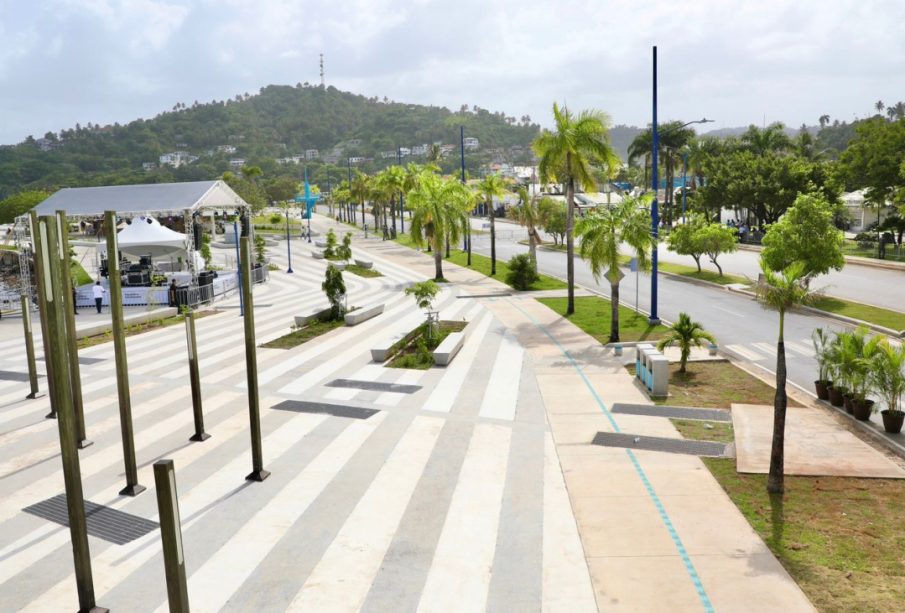
DGCINE announces temporary road closures in Samaná for filming
Local film production activities are set to bring short-term traffic disruptions to the popular coastal region of Samaná, after the Dominican Republic’s General Directorate of Cinema (DGCINE) officially announced planned road closures to accommodate on-location shooting.
Two separate closure windows have been confirmed for the coming days, both aligned to the logistics of the ongoing audiovisual project. The first closure will go into effect on Tuesday, April 28, affecting Avenida de la Marina, commonly known as the Malecón. The restricted stretch will run from the location of Taberna Mediterránea through to Hacienda Samaná, with no through traffic allowed between 4:00 a.m. and 7:00 p.m. that day.
A second closure is scheduled two days later, on Thursday, April 30, impacting William Johnson Avenue. This segment will be shut down from the junction with Galera Samaná road in the La Aguada sector all the way to the Marina Avenue roundabout, operating during the exact same 15-hour time frame as the first closure.
In a public statement, DGCINE clarified that these temporary traffic restrictions are a necessary part of coordinating on-location logistics for the audiovisual production currently being filmed across the Samaná area. The agency has issued a formal advisory to all local residents, commuters and visitors planning to travel through the affected zones, urging them to map out alternate routes well in advance of their trips and to exercise additional caution when moving around the perimeter of the closed areas. The agency also noted that all restrictions will be lifted promptly once filming activities wrap up for the day on each scheduled date.
-
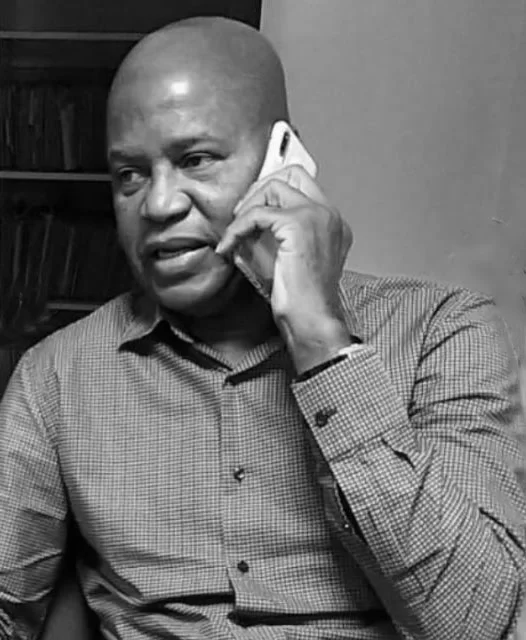
Column: Humphrey Schurman, een man van recht, humor en vrijheid
On April 27, 2026, prominent Surinamese lawyer and co-founder of Network Star Suriname – the parent company of local news outlet Starnieuws – Humphrey Schurman passed away at the age of 72, leaving behind a legacy of unwavering commitment to the rule of law, press freedom and principled leadership. In a moving tribute published April 28, Starnieuws editor Nita Ramcharan reflected on the profound loss felt by the outlet’s entire team, describing Schurman as a rare and extraordinary figure whose quiet dignity has left an indelible mark on Suriname’s media and legal landscapes.
Schurman built his reputation as a respected legal professional and community leader defined by quiet authority rather than performative power. Unlike many public figures who crave the spotlight and push for control, he carried influence through the substance of his arguments, the conviction of his beliefs, and a natural aura of calm, trust and integrity that resonated with all who worked with him. For the Starnieuws team, he was far more than a boardroom leader – he was a steadfast guardian of core journalistic principles that underpin a functional democratic society.
As a co-founder of Network Star Suriname, Schurman maintained a deliberate and respectful distance from the outlet’s editorial decision-making, a choice that stands out in an era when many media owners view newsrooms as extensions of political or personal power. He never interfered in story selection, headline wording or article publication, never demanded advance access to content, and never pressured editors to soften or remove critical reporting. He read Starnieuws the same way any ordinary citizen did – only after it was published. What many might take for granted was in fact a reflection of Schurman’s deep understanding: that independent journalism is the foundation of credible news, and editorial freedom cannot exist if owners impose external pressure on reporting teams.
Far from being a distant, uninvolved leader, Schurman was an enthusiastic supporter of journalistic innovation, new ideas and progress for Suriname. He firmly believed the nation could and should become a place where the rule of law is applied equally to all, where public institutions are strong and accountable, and where all citizens feel safe to express their opinions without fear of retribution. He particularly cherished unflinching, honest columns that spoke truth to power directly, not out of a love for conflict, but because he recognized that hard honesty is often required to break through soft, damaging lies that erode public trust.
When tensions rose and opposing factions found themselves at odds, Schurman rejected the zero-sum approach of seeking a clear winner and loser, instead prioritizing collaborative solutions that addressed the interests of all sides. He understood that lasting compromise grows not from weakness, but from wisdom – a trait that those who knew him say best defines his character. He was unwavering in his core values but flexible in how he engaged with others, committed to his principles without being rigid, and determined in his goals without becoming harsh or unapproachable.
Ramcharan notes that the tribute would likely have drawn a typical self-effacing response from Schurman: a gentle smile, a wave off of excessive praise, and a quick shift of focus back to the work at hand rather than his own achievements. But Ramcharan argues that taking time to honor Schurman is a necessary act, not because he was perfect, but because his life carried profound meaning – and the impact of his work will long outlive his passing.
While Schurman’s voice is now silenced, and his clear-headed analyses will be deeply missed, his example will continue to guide everyone who had the privilege of working with him. His legacy lives on in every choice to protect editorial independence, every defense of equal justice under the law, and every effort to build bridges where others choose to build dividing walls.
On behalf of the entire Starnieuws team, Ramcharan extended heartfelt condolences to Schurman’s family, friends and all those who loved him. “Your loss is profound, and so is ours,” she wrote. “May his soul rest in eternal light, a fate we do not question he deserves. May his legacy continue to remind us all that dignity, freedom and justice never go out of style.”
-
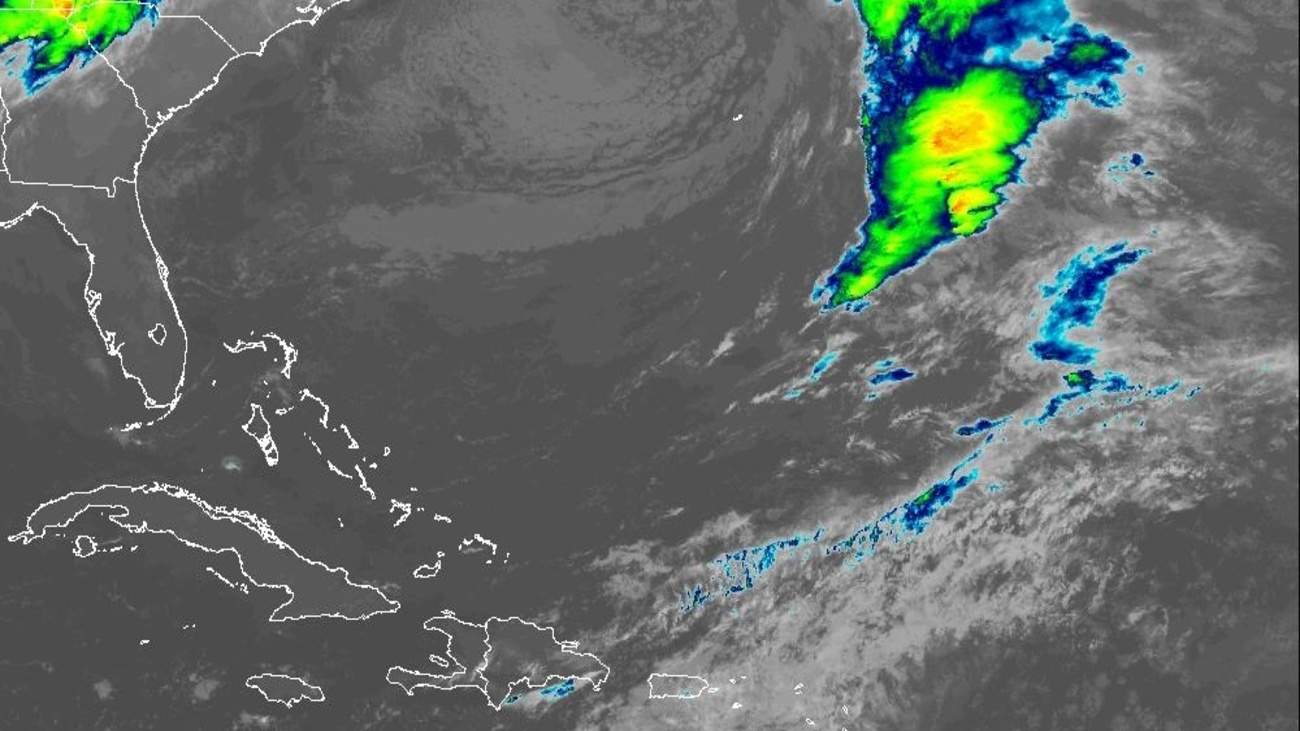
Weather system brings heavy downpours and storms to Dominican Republic
Residents of the Dominican Republic are preparing for disruptive severe weather on Tuesday, as the country’s national meteorological agency, the Dominican Institute of Meteorology (Indomet), has issued a series of alerts for widespread heavy rainfall, thunderstorms, and powerful wind gusts driven by overlapping atmospheric systems. According to the official forecast, the unstable conditions stem from two converging weather patterns: an approaching surface trough connected to a frontal system positioned northeast of the island, combined with a separate disturbance in the upper atmosphere. This combination is expected to create favorable conditions for intense precipitation and storm activity across large swathes of the country.
Early morning cloud cover will kick off the weather event, with scattered to moderate showers forecast to hit more than 10 provinces from the earliest hours of Tuesday. The list of regions expecting early precipitation includes the eastern tourist hubs of La Altagracia, San Pedro de Macorís, and La Romana, as well as inland and central provinces El Seibo, Monte Plata, San Cristóbal, Sánchez Ramírez, Monseñor Nouel, La Vega, and Santiago. Forecasters project that storm activity will build steadily through the day, with a sharp intensification expected during the afternoon and evening hours. As the systems develop, heavier downpours and stronger thunderstorms will expand coverage to reach the North, Northeast, and Southeast regions, the high-elevation Central Mountain Range, and the country’s border regions with neighboring Haiti.
To prepare residents for potential hazards, Indomet has put in place two tiers of official weather notifications. Active weather alerts are currently in effect for the provinces of Espaillat, Hermanas Mirabal, La Vega, Monseñor Nouel, Santiago Rodríguez, Samaná, Hato Mayor, and Puerto Plata. Higher-level weather warnings, indicating elevated immediate risk, remain in force for Santiago, María Trinidad Sánchez, Duarte, and Sánchez Ramírez. The elevated risk levels stem from forecasts of multiple potential hazards: flash flooding, sudden rises in water levels along rivers and smaller streams, and an increased possibility of soil displacement and landslides in vulnerable hilly and mountainous areas.
National and local authorities have issued public guidance urging all residents in affected regions to prioritize safety over the coming 24 hours. Officials have reminded communities to monitor official Indomet weather updates closely for any changes to the forecast or risk level, and to follow all public safety guidance issued by the country’s civil protection agency as the weather event unfolds.
-
Early-Morning Road Shutdown Ends with Subsidies and Fare Increase
On the morning of April 27, 2026, a coordinated shutdown of major highways and key roadways across northern Belize brought regional travel and daily commerce to a near-total standstill, after bus operators organized the industrial action to push for relief amid rising operating costs. The disruption forced immediate high-level intervention from the national government, with Prime Minister John Briceño convening an emergency negotiating session in the capital city of Belmopan by early afternoon.
For close to three hours behind closed doors, leadership of the Belize Bus Association (BBA) held direct talks with Transport Minister Dr. Louis Zabaneh and his technical team, alongside representatives from the Prime Minister’s Office, to resolve the tense standoff. Speaking to reporters immediately after discussions concluded, Zabaneh outlined the core framework of the preliminary agreement, which centered on two key concessions to address operators’ financial pressures.
“Our meeting covered two central priorities,” Zabaneh explained. “First, the government will provide a subsidy of $3 per gallon of diesel for eligible bus operators. Second, we have agreed to move forward with a fare increase, as proposed by the BBA. We have reached a foundational agreement, but much work remains to finalize the details tomorrow.”
Zabaneh clarified that administrative work is still ongoing to verify all licensed operators—covering highway, rural village, and urban city routes—to ensure every eligible provider can access the subsidy. For the proposed fare adjustments, the tentative plan sets a 50-cent increase for short routes and a $1 increase for long-distance hauls, with teams set to map adjustments to every registered stop along all bus lines tomorrow, matching the outline agreed between BBA leadership and the Prime Minister. When asked if the changes would apply only to private operators, Zabaneh confirmed the new fare structure will be implemented across the board, affecting all public bus services nationwide.
BBA President Philip Jones expressed that the association regretted the widespread inconvenience the road blockade caused for daily commuters and residents, but noted that the protest was a necessary last resort to secure government action. Jones emphasized that the agreed fare increase is deliberately modest, framed to balance the financial needs of operators with the burden on the public. “This decision was made with the best interests of regular commuters in mind,” Jones said. “Fares will only rise 25 cents on some shorter routes, 50 cents on most medium trips, and cap out at $1 for the longest routes. The $3 per gallon subsidy will be in place for a three-month period, which will give operators enough breathing room to operate sustainably while we work on longer-term solutions.”
Jones added that both sides upheld their commitments to a peaceful resolution, confirming that no injuries were reported during the industrial action, and that nearly all bus services have already resumed normal operations. “I’m relieved this was resolved quickly and without violence,” Jones said. “No one wanted this disruption, but we were left with no other option to get the attention our industry needed.”
Negotiating teams from the government and BBA are scheduled to reconvene tomorrow to iron out the remaining administrative details, formalize the full agreement, and release a joint public statement. The new subsidized regime and adjusted fare structure are on track to go into effect nationwide this Wednesday.
-

Bus Operators Shut Down Highway in Fuel Cost Showdown
On April 27, 2026, a long-simmering dispute between Belizean bus operators and the national government over cripplingly high fuel prices erupted into direct action, when hundreds of operators shut down the country’s critical Phillip Goldson Highway for four hours, stranding thousands of daily commuters and forcing last-minute negotiations that delivered a preliminary policy concession.
The standoff followed two weeks of unproductive talks between government representatives and the Belize Bus Association (BBA), the industry’s leading trade group. Frustrated by stalled negotiations, operators launched their protest before dawn, parking buses across the highway at multiple choke points: starting at the Tower Hill Bridge just after 4:30 a.m., with additional blockades set up near Guinea Grass Village, Ladyville, and the Boom–Hattieville junction. The demonstration quickly halted all north-south traffic along the key transportation corridor, leaving students, healthcare workers, educators, and hourly workers trapped for hours with little advance warning.
As tensions rose, police detained BBA member Charles Swift at the Boom–Hattieville junction on charges of obstructing traffic, a move that did little to shift operators’ resolve. A second detention was also reported at a smaller secondary blockade in San Jose Succotz Village, according to on-site reporting from News Five correspondent Paul Lopez.
Many stranded commuters expressed sympathy for the operators’ cause, even as they navigated major disruptions to their own daily routines. Johan Alonso, a medical laboratory technologist caught in the gridlock, noted that his ability to care for patients at his workplace was compromised, but added that the disruptive action was necessary to force the government to acknowledge the severity of the industry’s crisis. “It is good that they are doing the blockade so the government can see how serious the people are, and how fed up we are,” Alonso explained. “They need to take everyone into consideration and talk to everyone before making decisions on their own.”
Other commuters voiced frustration over the lack of advance notice. Dianne Martinez, a teacher who woke early to travel to her job on San Pedro Island, told reporters she had only learned service was canceled after arriving at her departure terminal. “What is disappointing to me is that nobody told me this was going to happen, and a lot of people stay stranded on the road,” she said. Other hourly workers shared their anxiety over lost wages, with one noting he had already budgeted for his daily earnings and could not afford unexpected extra costs like alternate private transport.
Despite mounting disruption, bus operators stood firm in their demands, arguing that skyrocketing fuel prices had made it impossible to cover operating costs and support their families. “Fuel prices are a crisis right now,” operator Edward Bull told reporters. “How will we sustain our family if we have more than one child at home? At the end of the day if you watch your pocket, how much you spend on fuel going and coming, and you have bills to pay, owe the bank, how will you make two ends meet?”
Michael Frazer, BBA Vice President, confirmed that the protest was a pre-notified action: operators had warned the Deputy Prime Minister two days prior that they would escalate to a highway blockade if their demands for fuel cost relief were not met. The warning was quickly heeded at the highest levels of government, with Prime Minister John Briceño entering direct talks with Frazer as the blockade stretched into its third hour.
Within four hours of the protest’s start, government representative Chester Williams, Chief Executive Officer of the Ministry of Transport, arrived on site to announce that a preliminary agreement had been reached. The terms of the deal include a $3 discount per gallon of fuel for bus operators, with formal follow-up negotiations scheduled in the capital city of Belmopan to work out final regulatory adjustments. Frazer also noted that operators had requested a representative from the Prime Minister’s office attend the follow-up talks, citing a lack of trust in existing negotiations led by local transport official Zabaneh.
Shortly after the agreement was announced, operators pulled their buses off the highway and traffic began moving again, ending the gridlock that had stranded thousands. As of April 27, both sides have confirmed they will move forward to finalize the details of the fuel concession in the coming days.