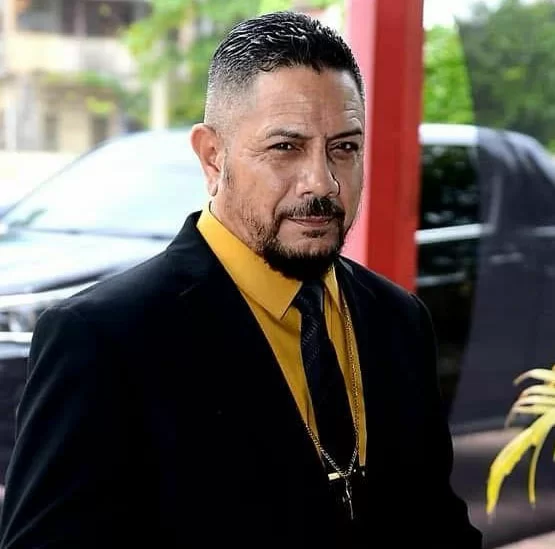
Social norms and cultural values are in constant flux, shifting alongside broader societal evolution. Practices that were deemed unprofessional, inappropriate or unacceptable just a few decades ago are increasingly accepted by mainstream communities today. This shifting landscape has now reached the Korps Politie Suriname (Suriname Police Corps), sparking a debate over long-standing grooming bans on full beards and visible tattoos among serving officers.
For generations, the Suriname Police Corps has adhered to a strict policy that prohibited officers from wearing full beards, with the restriction rooted in outdated perceptions that linked facial hair to poor grooming, a lack of discipline and diminished authority. Similarly, tattoos were historically stigmatized as markers of criminal activity and negative public image, barring officers from displaying visible ink.
But as societal attitudes have transformed dramatically across the globe, the Suriname Police Union (SPU) is now questioning whether these decades-old restrictions still reflect 21st century social reality. Today, well-groomed full beards are a common personal choice for men across all professional sectors, including public service. For many officers, wearing a beard is also a core expression of their religious identity, required by their personal faith. Tattoos, meanwhile, are widely recognized globally as a legitimate form of body art and personal expression, worn by professionals across every walk of life – from doctors and lawyers to teachers, military personnel and police officers.
As the representative body for Surinamese police officers, the SPU argues that true professional competence is defined by an officer’s conduct, integrity, discipline, expertise, and commitment to carrying out their duties – not by superficial appearance. A neatly maintained beard or a visible tattoo says nothing inherently about an officer’s character, authority, trustworthiness, or ability to serve the public. “Police work is carried out by the officer, not their facial hair or body art,” the union emphasizes.
Beyond shifting social norms, the SPU frames the debate as a matter of fundamental constitutional and human rights. Suriname is a democratic constitutional state, and Article 8 of its constitution enshrines the principle of equality, banning discrimination on the grounds of religion or personal status. Article 9 further guarantees every citizen the right to physical, psychological and moral integrity. When personal appearance such as a beard is directly tied to an officer’s religious belief or core personal identity, the union questions whether any restriction on that choice can be considered necessary, reasonable, or proportionate under the law.
These protections are also reinforced by international human rights treaties that Suriname has ratified. Article 18 of the International Covenant on Civil and Political Rights (ICCPR) protects freedom of thought, conscience and religion, while Article 26 of the same treaty guarantees the right to equal treatment and freedom from discrimination. International human rights norms also explicitly protect personal dignity and personal privacy, rights that are implicated by overly broad grooming restrictions.
The union is careful to note that this argument does not mean police forces should abandon all grooming and conduct rules. It acknowledges that any police corps has both the right and the responsibility to set reasonable expectations for public representation, discipline and professional standards. But any such rules must be objective, reasonable, proportionate, and applied consistently across all ranks, the SPU says.
The debate has been sparked by a recent internal incident, in which an officer was reassigned over claims that his beard violated standards of public representativeness. The case has raised urgent, unresolved questions: Is a neatly groomed full beard truly a threat to public representation? Are there objective, evidence-based criteria to back up such a claim? Have fundamental rights and personal religious convictions been adequately considered in disciplinary decisions? And does this outdated approach align with modern societal expectations?
The SPU points to a growing global trend of police forces updating their policies to reflect changing social norms. A growing number of countries around the world now allow well-groomed beards and visible tattoos for officers, as long as they do not conflict with safety requirements or interfere with an officer’s ability to perform their duties.
At its core, the debate is not about appearance – it is about what the public actually expects from its police force, the union argues. Modern Surinamese society does not demand superficial uniformity of appearance at the expense of individual rights. Instead, it expects police officers to demonstrate consistent professionalism, integrity, fairness, and high-quality service to the community.
To drive home this core message, the union concludes: A beard does not do police work. A tattoo does not do police work. That is the work of the police officer.
This opinion piece was written by Revelino R.M. Eijk, LLB, Chair of the Suriname Police Union, published on June 24.