分类: society

  • TOGABO: Masked Thieves Use Stolen Backhoe in Daring ATM Heist Attempt

    TOGABO: Masked Thieves Use Stolen Backhoe in Daring ATM Heist Attempt

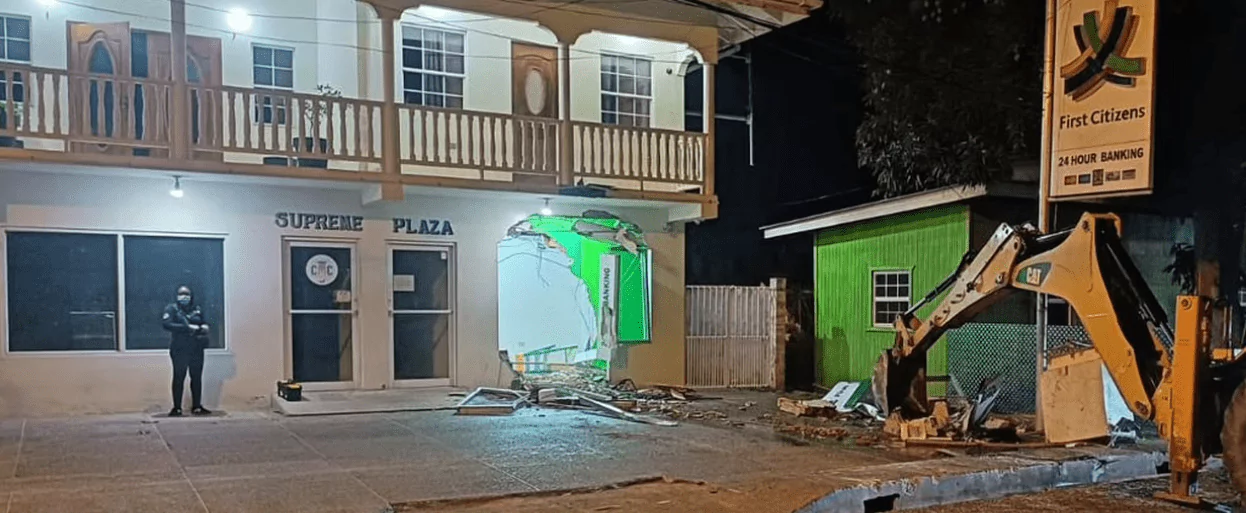
    In a brazen early-morning raid that has shocked the small community of Togabo, a crew of heavily masked thieves carried out a carefully coordinated attempt to break into a freestanding ATM, using a stolen heavy construction backhoe to execute their plan. Local law enforcement confirmed that the suspects first stole the backhoe from an unsecured nearby construction site earlier that night, before driving the heavy machine directly to the ATM location, which sits along a lightly traveled commercial corridor on the edge of town.

    Surveillance camera footage from nearby businesses captured the entire sequence of the heist attempt, showing the masked criminals maneuvering the backhoe to ram the reinforced concrete foundation of the ATM enclosure repeatedly in an effort to dislodge the machine and access its cash reserves. Neighbors reported hearing loud crashing noises shortly before 2 a.m. local time, but many initially mistook the sounds for late-night construction work and did not contact police until several minutes after the suspects had arrived.

    Despite their sustained efforts over nearly 15 minutes, the would-be thieves ultimately failed to breach the ATM’s reinforced security casing, leaving the machine structurally intact and all stored cash undisturbed. After abandoning their unsuccessful attempt, the crew fled the scene in an unmarked, dark-colored pickup truck that has not yet been located by investigators. The stolen backhoe was left parked at the heist site, with visible damage to its front loader from repeated impacts with the ATM structure.

    Local police have launched a full investigation into the incident, asking any members of the public who may have seen suspicious activity in the area overnight, or who have any dashcam footage or other information related to the heist attempt, to come forward. Investigators are also reviewing additional surveillance footage from surrounding properties to identify more details about the suspects and their getaway vehicle. Community leaders have expressed surprise at the level of coordination displayed by the thieves, noting that brazen heavy-equipment heists are extremely rare in the quiet Togabo area.

    Local business owners in the corridor have since increased overnight security patrols, and police have stepped up random patrols of remote ATM locations across the region to deter similar attempted robberies in the wake of the incident.

  • Community Soup Kitchen Begins Reconstruction After Months of Delays

    Community Soup Kitchen Begins Reconstruction After Months of Delays

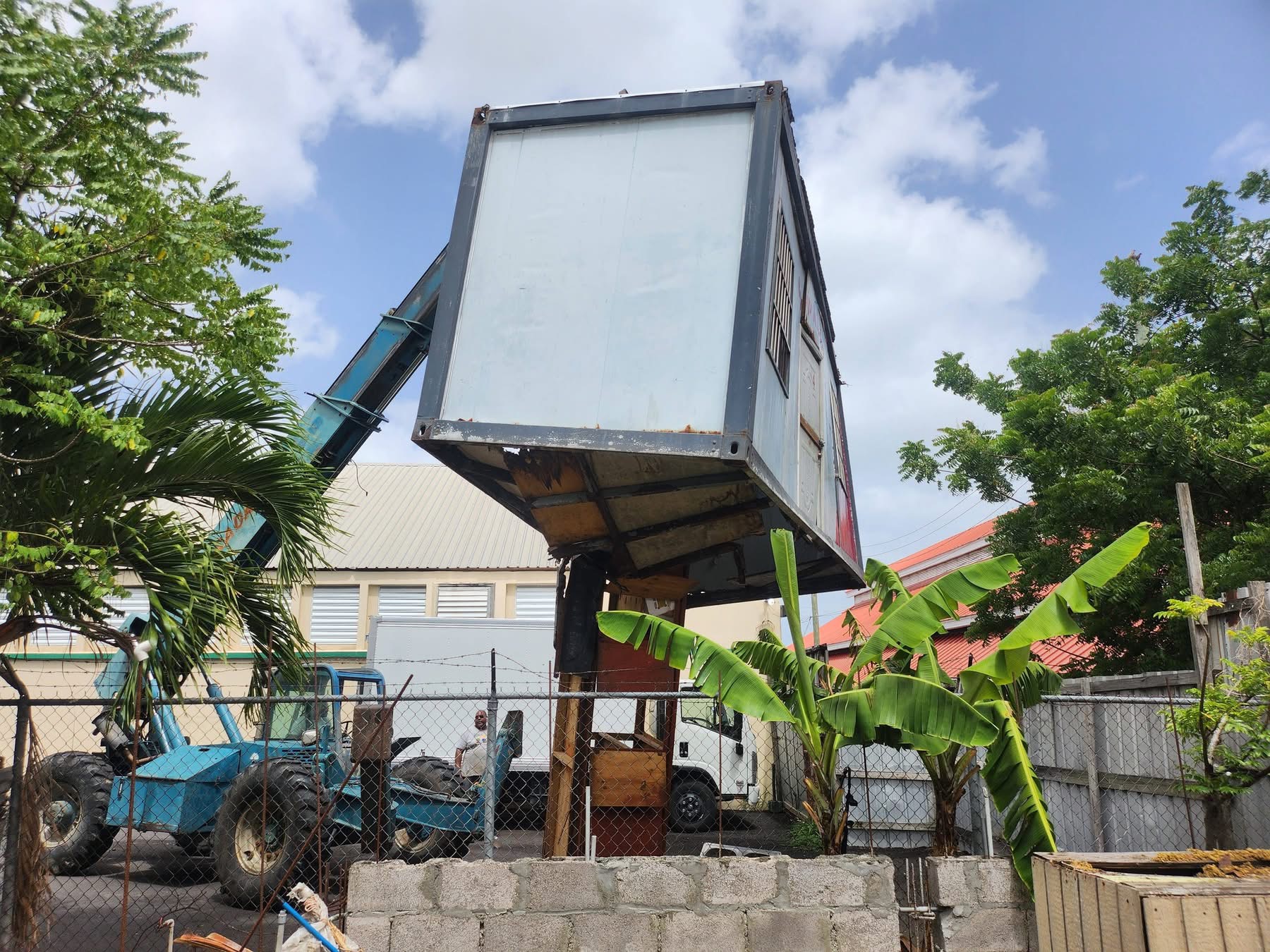
    For years, a beloved community soup kitchen has served as a lifeline for thousands of vulnerable residents facing economic and personal hardship, offering warm meals and critical social support to those who need it most. Now, after months of unexpected setbacks that put plans on hold, the organization has cleared the final barrier to begin a transformative reconstruction project, following the removal of the aging temporary shipping container that has housed its operations up to this point.

    When complete, the upgraded, purpose-built facility will equip the soup kitchen to dramatically expand its reach across the local community. Organizers say the new space will allow the program to welcome a greater number of guests each day for hot, nutritious meals, while also creating room for additional wrap-around community support services that address the root causes of food insecurity and hardship.

    The initiative could not move forward without the generous backing of a coalition of local corporate and institutional partners, which organizers have publicly recognized for their commitment to the project. Key sponsors include CIBC Caribbean, the national Social Protection Board, Kings Antigua, and 2M Heavy Enterprises, all of which have contributed funding, resources, and expertise to make the rebuild possible.

    Since its launch, the soup kitchen has grown into one of the community’s most vital support institutions, counting hundreds of local families and unhoused individuals among the regular guests who rely on its services. While construction is now set to get underway, organizers have not yet released a projected timeline for completion or announced a firm date when the soup kitchen will reopen its doors to guests in the new facility.

  • Ocean Academy Rejects Call to Surrender Licence as Government Plans Rival School

    Ocean Academy Rejects Call to Surrender Licence as Government Plans Rival School

    On the small Caribbean island of Caye Caulker, a well-established independent non-profit high school is standing its ground against a government push to end its operations, as authorities move forward with plans to launch a competing public secondary institution on the island. Ocean Academy, a beloved community-centered secondary school that has served local students for years, has formally rejected a formal request from Belize’s Ministry of Education to voluntarily revoke its operational license, confirming it will remain an independent educational provider for the island’s community.

    School leadership confirmed to local outlet News 5 that ministry representatives explicitly stated the upcoming government-run secondary school would operate with no formal affiliation or partnership with Ocean Academy, leaving the independent institution with no clear role in the new public project. Following a series of consultations with parents of current students, alumni, and other key community stakeholders, the school’s governing body voted unanimously to reject the government’s request.

    Founder Heidi Curry explained the decision was rooted in deep community ties and widespread support for Ocean Academy’s unique educational model. “We have generations of alumni who deeply value their Ocean Academy diplomas and the reputation that comes with the school’s seal,” Curry said in an interview. “Parents are also consistently enthusiastic about our hands-on experiential learning framework, our specialized programs, and the unique curriculum we have built over the years. As a non-profit rooted in this community, we listened to what our stakeholders wanted, and we made the decision to keep moving forward on our independent path.”

    The standoff comes as Ocean Academy is already navigating significant post-disaster recovery challenges. The school’s original campus suffered months of disruptive closures after severe flooding left widespread mold damage across the building. After extensive structural repairs and renovations to the upper floors of the campus, most students were able to return to in-person learning at the main site in April 2026. To adapt to the remaining damage, school administrators repurposed one upstairs classroom into new office space and restrooms, and the entire contaminated ground floor was permanently abandoned. This overhaul has left the school two classrooms short of its needs, forcing one group of students to continue attending classes at an off-site location as the region’s annual rainy season approaches.

    To address the immediate classroom shortage while the school works toward a long-term solution of building a permanent new campus, Ocean Academy has unveiled plans to construct two modular movable classrooms on a nearby parcel of land. Curry noted that the school has already secured preliminary permission to use the temporary site, and has partnered with an architect to design the movable structures, ensuring that any investment in the facilities can be repurposed for the permanent campus down the line. “We designed the buildings to be movable so that every dollar we invest will benefit our students for years to come, rather than being locked into a site we won’t use long-term,” Curry explained.

    To fund both the temporary movable classrooms and the future purchase of a larger plot for a permanent campus, the school has launched a public fundraising campaign branded as Ocean Academy 2.0. Early responses from the donor community have already been promising, with one donor already committing a $25,000 pledge that will go toward a down payment on the future permanent campus property. The proposed new permanent site would allow the school to add long-missing athletic facilities, including a basketball court, volleyball court, and running track, amenities the current campus has never had the space to accommodate.

    The school has launched a dedicated website for the initiative, where it will post regular updates on fundraising progress for the movable classrooms, and will eventually share full details of the land purchase agreement once terms are finalized. As the government moves ahead with its plans for the new public school, Ocean Academy remains committed to continuing its 501(c)(3) educational mission on the island, backed by widespread community support.

  • Autism Belize: ‘There’s Still a Lot More to Learn About Autism’

    Autism Belize: ‘There’s Still a Lot More to Learn About Autism’

    A recent incident at a Belizean preschool has thrown a long-simmering issue back into the public spotlight: the widespread lack of neurodiversity awareness and accessible support for autistic students across the country’s education system. On Friday, June 20, 2026, three autistic children attending Anglican Diocesan Preschool were reportedly sidelined during the institution’s annual graduation ceremony, pushing the urgent need for systemic change to the top of local advocacy agendas.

    A family member of one of the three students confirmed to local media that the ceremony’s seating arrangement placed the autistic children entirely behind the main graduate seating block, positioning them out of clear sight of most parents and event attendees. The deliberate separation has reignited longstanding concerns from disability advocates about how neurodivergent students are marginalized by educational institutions that lack foundational training on supporting autism.

    Christie Almeida, founder of leading national advocacy group Autism Belize, emphasized that the incident is unlikely to have stemmed from intentional malice. Instead, she framed it as a clear symptom of deep-rooted gaps in public and institutional understanding of neurodiversity that persist across most Belizean schools. Almeida drew a key distinction between formal equality and targeted equity in education, noting that meaningful inclusion requires far more widespread education about autism and neurodivergent needs than the system currently offers.

    Almeida pointed out that repeated missteps like this highlight a critical need for improved, ongoing communication between school leadership, classroom educators and the families of children on the autism spectrum. She called on institutions to proactively engage with autistic people and their families to co-design inclusive practices, rather than making unilaterial decisions that exclude students. “All we can ask is that there is some level of flexibility and that you consult us as parents. Have a sit down, have a discussion, and let’s talk about how best we can involve your child,” Almeida said. “This isn’t something for us to shy away from. Let’s have these conversations and figure out how we support each other.”

    To address the recurring gaps in support for neurodivergent students, Almeida highlighted the transformative role that certified, trained classroom aides could play in supporting teachers who often lack the resources or training to accommodate autistic learners. She made a formal policy call for government-funded specialized aide positions, noting that many low- and middle-income Belizean families cannot afford private, one-on-one support for their children. “If government takes it on, it would be a significant cost, but it is something we need to work towards,” she said.

    As of June 24, 2026, Anglican Diocesan Preschool has not responded to multiple requests for comment from local outlet News 5 on the incident, leaving the preschool’s official position unstated.

  • Former Athlete on Trial for Alleged Sexual Abuse of Daughter

    Former Athlete on Trial for Alleged Sexual Abuse of Daughter

    A high-profile criminal trial has gotten underway at a national High Court, where a one-time competitive athlete faces multiple serious criminal charges connected to claims he sexually abused his own minor daughter over a 12-month period. Presided over by Justice Ann Marie Smith, the proceeding is being decided by an all-female jury, with the defendant pleading not guilty to three total offences: two counts of aggravated serious indecency and one charge of indecent assault.

    Prosecution lawyers lay out that the alleged abuse unfolded while the child was under the accused’s direct care, spanning from April 2022 through April 2023. The young complainant took the witness stand this week to share her account of the alleged incidents, telling the court that every reported attack occurred when her father’s girlfriend was not present at the family home.

    In her testimony, the girl also opened up about the persistent fear that has kept her from returning to live with her father after she was relocated to stay with her grandmother following the allegations coming to light. During aggressive cross-examination lead by defence counsel Wendel Alexander, who suggested the child had been coached by third parties to fabricate the damaging claims against her father, the complainant stood firm. She flatly denied the assertion and reaffirmed that every detail of her statement to the court was entirely truthful.

    As of the latest update from the courtroom, the trial remains ongoing, with both sides expected to present closing arguments in the coming days before the jury begins deliberations to reach a verdict.

  • Collision protection installed at new Demerara River bridge

    Collision protection installed at new Demerara River bridge

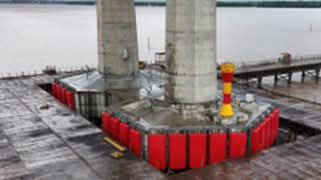
    Guyana’s Ministry of Public Works announced Wednesday, June 24, 2026 that a purpose-built collision protection system for the Bharrat Jagdeo Demerara River Bridge has been successfully completed and put in place, marking the finalization of a key permanent safety upgrade for the critical national infrastructure.

    According to official statements from the ministry, the installation project was wrapped up on June 18, 2026, delivered by the CRCCI-CRCCCL-CRBG Joint Venture, the contracted firm responsible for the works. The specialized system has been fitted around the main tower pile caps that sit beneath the water surface of the Demerara River, addressing a core safety risk for the river-crossing structure.

    The core function of the new system is to shield the bridge’s most vital substructural components from accidental damage caused by wayward vessel collisions. Engineering design allows the system to absorb and dissipate the kinetic force of a collision before that force can reach the main tower pile caps and other key supporting structures, preventing severe structural damage that could threaten the bridge’s integrity and disrupt navigation.

    As a key active shipping corridor in Guyana, the Demerara River has seen consistent vessel traffic since the bridge opened to traffic. Official data shows that 4,323 vessels have already passed safely under the bridge span, underscoring the ongoing demand for reliable navigation access and the urgent need for enhanced protection for the crossing.

    Ministry officials emphasized that the collision protection system is an integrated part of the bridge’s permanent safety and protection framework. Beyond safeguarding the structure itself, the upgrade will boost the overall resilience of the crossing, create safer operating conditions for marine traffic transiting near the bridge’s main span, and lay a solid foundation for the stable long-term operation of this major national infrastructure asset.

  • Emergency Repairs Underway After Sinkhole Appears on Highway

    Emergency Repairs Underway After Sinkhole Appears on Highway

    On June 24, 2026, a sudden road collapse at the 17.5-mile marker of Belize’s Hummingbird Highway triggered an immediate closure of the affected stretch, launching urgent emergency repair work while officials issue safety warnings for all passing motorists.

    Local residents who first spotted the sinkhole raised urgent alarms about the hazard, telling local outlet News 5 that the depression is both large and deep enough to swallow a heavy commercial truck if any vehicle attempts to drive over the damaged area. The unanticipated collapse has disrupted regular traffic flow along the critical highway, forcing commuters and commercial transport operators to rearrange their travel plans on short notice.

    Engineers from the country’s Ministry of Infrastructure Development and Housing (MIDH) completed an initial inspection of the collapse site shortly after the sinkhole was reported. Their assessment confirmed that the metal culvert installed beneath the highway at this location remains structurally sound. Instead, the failure is traced to the road surface and the supporting fill material positioned above the culvert, which eroded and gave way unexpectedly to create the sinkhole.

    Crews of construction and maintenance workers have already mobilized to the site, with the first priority being stabilizing the damaged area to prevent any further expansion of the collapse before full repairs get underway. In an official statement published after the incident, MIDH emphasized that the agency is pulling out all stops to speed up the repair process, while still adhering to strict safety protocols to protect both workers and the traveling public.

    To avoid incidents, transportation officials are urging all motorists planning to travel along this corridor to plan ahead and use marked alternative routes whenever possible. Any drivers who must travel near the work zone are instructed to follow all directions from on-site maintenance crews and traffic management personnel.

    MIDH has confirmed that it will release new public updates promptly as work progresses, including a formal notification when the damaged section of the highway is fully repaired and reopened to all vehicular traffic.

  • Cop charged 9 years after traffic death

    Cop charged 9 years after traffic death

    It has been more than nine years since 21-year-old Phillip Daniel Clare Jr. lost his life after being struck by a vehicle while crossing Tonique Williams Darling Highway, a case that the victim’s parents refused to let go cold. Now, a serving police corporal has finally been formally charged in connection with his death, marking a long-awaited turning point in a case marked by years of delays and unrelenting advocacy from the victim’s family.

    Forty-one-year-old Corporal Samuel Rolle, 3847, was granted $8,500 in bail during a hearing before acting Chief Magistrate Ancella Evans on Wednesday. He faces one count of causing Clare’s death through dangerous driving. This development comes nearly two full years after a Coroner’s Court inquest delivered a verdict of gross negligence manslaughter in the case, a finding that cleared the way for formal criminal proceedings.

    According to prosecution allegations, Rolle was off duty on January 10, 2017, when he was operating a 2008 Suzuki Swift at excessively high speed. The vehicle struck Clare as the young man attempted to cross the highway to reach Pressure Point Bar to purchase food. Clare sustained catastrophic traumatic injuries in the collision and died shortly after the incident.

    During the 2024 coroner’s inquest, the court heard critical details that were not publicly disclosed until that point: responding officers confirmed that Rolle’s vehicle was both unlicensed and uninsured at the time of the crash, yet no traffic-related charges were filed against him in the immediate aftermath of the incident. No plea was required from Rolle during his recent initial appearance before Magistrate Evans, and the case is on track to advance to the Supreme Court via a voluntary bill of indictment (VBI), a procedural path for serious criminal matters.

    Prosecuting inspector Deon Barr did not raise any objections to the request for bail. In granting bail, Magistrate Evans ordered that Rolle secure one to two financially responsible sureties, and required him to check in daily at the East Street South Police Station every Thursday before 7 p.m. She also directed the prosecution to move quickly to set an early date for service of the voluntary bill of indictment, specifically noting the extraordinary length of time that Clare’s family has already waited to see the case heard in a court of law. Rolle is scheduled to reappear in court on September 3 to receive the official VBI documentation.

    This long-awaited charge is the direct result of years of unrelenting pressure from Clare’s family, who have repeatedly spoken out about the agonizingly slow progress of the case and demanded accountability since the day of the crash. After the coroner’s inquest concluded its work, the full case file was forwarded to the Office of the Director of Public Prosecutions to review and make a final determination on whether formal charges would be filed.

    When contacted by The Tribune for comment on the years-long delay in advancing the case to court, police press liaison Superintendent Sheria King deferred questions about the timeline to the lead investigator assigned to the matter.

    The case first captured widespread public attention back in 2018, when Clare’s parents made a public statement that they were prepared to launch a private prosecution if state prosecutors failed to take action. At that time, The Tribune reported that a memorial wreath honoring Clare sat atop a small stunted tree along the side of Tonique Williams Darling Highway, a quiet but constant public reminder of the fatal crash and the ongoing grief of his parents.

    Clare’s mother, Ms. Reckley, shared at the time that she still listened to old WhatsApp voice notes from her son to cope with her overwhelming grief. His father, Phillip Clare Sr., said he still regularly visits his late son’s old bedroom, keeping it largely unchanged from when Phillip lived there. “The room is him,” he said in that 2018 interview. “I just go in the room and look.”

    At the time, Ms. Reckley said justice had remained out of the family’s reach for years, and that no one could understand the pain her family had endured. “All I want is justice for Phillip,” she said then, a statement she has repeated consistently in the years since the crash. “No one is getting what I am feeling. My child was knocked down, and they’re like, it’s finished, we’ll just get over it. How can we get over it?”

    Kevin Armbrister is representing Rolle in the proceedings.

  • Hard work, discipline, focus key to destiny, graduates told

    Hard work, discipline, focus key to destiny, graduates told

    On the occasion of Cuthbert Moore Primary School’s 2026 graduation ceremony, Barbados Union of Teachers (BUT) President Rudy Lovell delivered a keynote address centered on the event’s theme — “Destiny, a dream achieved by hard work” — challenging the graduating cohort to embrace full personal accountability for their next chapter in secondary education and beyond.

    Lovell pushed back against the widespread modern myth that success stems from luck or innate talent, emphasizing that every academic milestone and long-term achievement is the product of consistent effort, intentional discipline and unshakable resilience. Rejecting the idea that graduation is merely a symbolic ceremonial step, he framed the milestone as concrete evidence of what young people can accomplish when their ambitions are powered by sacrifice, hard work and deep self-belief.

    Acknowledging the obstacles the graduates had already overcome to reach this point, Lovell noted that many students navigated crippling academic anxiety, spent long hours in extra lessons, and gave up precious vacation time to complete their primary education. “Regardless of the challenges, you all shared one thing in common: a dream of your future,” he told the crowd. “But let us be honest, dreams alone are not enough. Dreams don’t just come to us — they do in fairy tales. You have to go and fight for them. This theme is not just a phrase. It is the story of every late night, every early morning, every setback, and every triumph that brought you here.”

    To cement his message of personal responsibility, Lovell led the graduates in an interactive call-and-response exercise, having the group repeat the mantra: “If it is to be, it is up to me.” He pointed out that popular culture often glorifies instant fame and overnight success, but the most meaningful, lasting achievements are built slowly through steady, consistent effort over time. He warned that unacted-upon dreams are easily destroyed by self-doubt and fear, adding that the key difference between those who only dream and those who achieve their goals is the choice to prioritize discipline over comfort and persistence over excuses.

    Citing Thomas Edison’s famous observation that opportunity is so often missed because it comes disguised as work, Lovell explained that every difficult assignment and challenging exam students have completed was not just a requirement — it was a training ground to build the strength they would need for future success. To bring this principle to life, he highlighted the careers of two global sports legends: Jamaican sprint icon Usain Bolt and Portuguese football superstar Cristiano Ronaldo.

    Lovell recounted how Bolt overcame early career injuries, inconsistent performances and public doubt through years of rigorous, disciplined training to claim his title as the fastest human in history. Similarly, Ronaldo rose from a working-class, financially strained childhood, and put in thousands of extra hours of practice to transform himself from a skinny young prospect into one of the most accomplished athletes in football history. “Both journeys demonstrate that early failures do not define success,” Lovell said. “Determination, hard work, and continuous improvement can turn dreams into greatness.”

    Turning to the unique challenges of adolescence and secondary school, Lovell issued a clear warning about the social pitfalls young people may face as they enter this new phase. He referenced Nelson Mandela’s iconic quote that “it always seems impossible until it’s done” to encourage students to ignore critics who claim their goals are too big. But he also stressed the critical importance of choosing social circles carefully, noting that not everyone they meet will share their values and ambitions.

    “Not everyone you meet will share your vision, values, or goals. Some people may have dreams and ambitions that are vastly different, and if you are not careful, they may influence you to take paths that lead you away from the future you desire,” he said. “Always remember that negative influences such as drugs, gangs, and unhealthy friendships will never help you achieve your goals.” Lovell added that while these harmful paths may offer short-term excitement, they carry lasting consequences that can derail a young person’s life and destroy a reputation built through years of hard work. He urged graduates to surround themselves with supportive, positive peers who push them to succeed, and to hold onto the guidance of their parents and teachers.

    Addressing parents and guardians in attendance, Lovell reminded them that their role as supporters and mentors does not end with primary school graduation. As students navigate the more complex social and academic landscape of secondary school, he noted, they will need even more parental wisdom, emotional support and steady guidance to thrive.

    To ease widespread anxiety among students about their secondary school placements, Lovell left the Class of 2026 with two core reassurances to carry into their next phase. “Firstly, the school you have passed for is not your final destination. You are not your school. Your exam is only a small fraction of what you are and how you learn,” he said. “Secondly, never let small minds convince you that you cannot achieve your dreams. This island, this region, and this world, all need people who are ambitious and committed to achieving.”
  • Garbage Collection Delayed in Five Islands, Radio Range and Herberts

    Garbage Collection Delayed in Five Islands, Radio Range and Herberts

    Residents of three communities in Antigua — Five Islands, Radio Range, and Herberts — are facing unexpected disruptions to their regular residential waste collection schedules, the National Solid Waste Management Authority (NSWMA) has confirmed. In an official public advisory released to local communities on Wednesday, the governing body confirmed that scheduled waste pickups in all three areas have been pushed back from their originally planned timelines. While the NSWMA has not released any public details explaining what caused the service disruption, it moved quickly to assure affected households that crews are already working to resolve the underlying issue. According to the advisory, the authority aims to clear all backlogged waste collections by Thursday, June 25, to return services to their standard routine as soon as possible. Expressing gratitude to impacted residents for their cooperation amid the inconvenience, the NSWMA called on anyone who has experienced extended delays or a complete missed pickup to reach out directly to its dedicated customer support hotline. The hotline, reachable at 562-1347, is set up to log resident reports and address individual concerns related to the disrupted service. As of the advisory’s release, the NSWMA remains focused on clearing the backlog and restoring full, normal operations for all affected communities.