
In late April 2026, key stakeholders gathered in Les Cayes, Haiti, for the fourth Steering Committee meeting of the Support Program for the Productivity of Agriculture and Fisheries and the Improvement of Rural Infrastructure for Access to Markets (PAPAIR), a flagship rural development initiative launched in January 2022. Held under the official patronage of Haitian Minister of Agriculture Agronomist Marcelin Aubourg and Ministry Director General Agronomist Pierre-Richard René, the two-day event brought together participants both in-person and via videoconference to review program achievements and map out next steps. With PAPAIR’s original mandate set to conclude in the coming months, discussions between Haiti’s Ministry of Agriculture and the Inter-American Development Bank (IDB) are already underway to explore a potential extension that would allow for the completion of ongoing projects and the long-term consolidation of on-the-ground results. The Steering Committee, which includes representatives from the Program Implementation Unit, IDB, departmental agricultural directorates across Haiti’s South, Grand’Anse, North, and North-East regions, partner institutions, and local farmer and fisher organizations, used the meeting to outline a revised strategic direction for remaining activities in 2026. All decisions reached at the gathering will be formally submitted to IDB for review as part of the official extension request. Opening the meeting, Minister Aubourg emphasized that even amid widespread economic and social challenges across Haiti, PAPAIR has delivered tangible, encouraging outcomes for rural communities. Echoing this assessment, Yannick Saint Paul, IDB’s representative to the meeting, confirmed the bank’s satisfaction with the program’s progress, noting that current results align fully with the institution’s initial expectations. Saint Paul also reaffirmed IDB’s long-standing commitment to supporting Haiti’s efforts to reduce widespread food insecurity and expand sustainable domestic agricultural production, a stance that was widely endorsed by all participating stakeholders. A breakdown of the program’s current achievements reveals widespread impact across four key target departments and 21 municipalities. To date, more than 15,600 of the 21,819 targeted smallholder farmers have directly benefited from program interventions. Program teams have established 336 dedicated agricultural demonstration plots, upgraded or rehabilitated nearly 20 municipal agricultural offices, and constructed new water storage tanks and irrigation infrastructure to reduce producers’ vulnerability to drought and erratic rainfall. In the area of farmer capacity building, 947 participants have already completed training through the program’s field school network, out of a total 3,300 planned trainee slots. For Haiti’s fisheries sector, which falls under the program’s second and fourth components, 65 local fisher associations across the four target departments are already receiving sustained organizational and technical support to improve sustainability and livelihoods. On the institutional development front, the program has completed construction of the new Aquin Communal Agricultural Office, and a 252-square-meter modern administrative building for the Southern Departmental Agricultural Directorate (DDAS) is currently 92% complete. The new facility, which includes upgraded office space, a conference room, and modern amenities, is designed to dramatically improve working conditions for departmental agricultural staff and boost overall administrative efficiency. Under the program’s rural infrastructure component, 24 kilometers of rural access roads have already been rehabilitated across Haiti’s North and North-East departments. These upgrades are expected to cut producer transport costs, reduce costly post-harvest losses, improve smallholders’ access to regional markets, and stimulate local economic activity across rural communities. The program has also provided specialized training to Ministry of Agriculture executives, departmental agricultural staff, and local government officials to strengthen their capacity to monitor infrastructure implementation and conduct long-term maintenance after project completion. By the close of the meeting, attendees approved a series of key resolutions to guide the program’s remaining activities, or any potential extended mandate. Priorities include expanding capacity building support for fisher and farmer associations, increasing the involvement of departmental agricultural directorates and Haiti’s National Seed System in regulating and supporting local seed suppliers, formalizing systems for the Ministry of Agriculture to retain project-trained staff to ensure long-term activity continuity after the program ends, strengthening departmental ownership of intervention planning and monitoring, and rolling out additional targeted skills training to improve the overall quality of program interventions. The event concluded with guided field visits to ongoing project sites in the municipalities of Les Cayes and Torbeck. Attendees had the opportunity to inspect progress firsthand, including the ongoing DDAS building expansion, and hold direct discussions with the engineering teams leading construction and infrastructure works across the region.
分类: society
-

Breakthrough Arrest in Jamir Cambranes’ Murder
A week after a fatal shooting sent shockwaves through the community of Belize City, law enforcement has secured a breakthrough in the investigation into the murder of 19-year-old Jamir Cambranes. Investigators have formally arrested and charged a teenage suspect, 19-year-old Belize City resident Kenrick Robinson, with the crime of murder, bringing the first major development in a case that has gripped the local area.
The shooting that claimed Cambranes’ life took place on April 26, according to official details from the Belize Police Department. Assistant Superintendent of Police Stacy Smith, a staff officer with the force, confirmed that the arrest and upcoming pursuit of additional suspects have been built on evidence gathered through two key investigative channels: surveillance footage pulled from the department’s Crime Fusion Center, and forensic analysis conducted at the shooting scene and on a vehicle linked to the incident.
Despite this significant step forward, police emphasize that the investigation is far from complete. Three additional male persons of interest remain at large, and investigators are continuing to work to identify and locate them for questioning. At this stage of the probe, no definitive motive for the deadly shooting has been confirmed, leaving key details of the crime still unresolved.
Smith noted that the combination of digital surveillance evidence and hands-on forensic work has been instrumental in moving the case forward after it initially left the community reeling. Law enforcement remains committed to pursuing all leads to hold every party involved in Cambranes’ death accountable, with the investigation classified as an active, ongoing open case. This report is adapted from a transcribed broadcast of local evening news programming.
-

Saturday Night Crash Turns Fatal on TV Ramos Highway
A routine Saturday evening commute along the Thomas Vincent Ramos Highway ended in tragedy this week, leaving a 45-year-old man dead after a violent collision between his motorcycle and a bus operated by the National Bus Company (NBC). The fatal crash has triggered urgent community conversations about systemic road safety hazards along the busy stretch of highway, even as law enforcement continues working to unravel the exact sequence of events that led to the incident.
-

Coordinated Police Operations Snare Crack Traffickers
In a targeted week-long series of coordinated law enforcement actions spanning multiple districts across the country, Belizean police have cracked down on a network of illicit crack cocaine traffickers, arresting and formally charging six individuals connected to the illegal drug trade. The operation, which wrapped up in late April 2026, marks a major milestone in ongoing police efforts to dismantle drug trafficking networks and stem the flow of controlled substances across the nation.
ASP Stacy Smith, a Staff Officer with the police service, released detailed official breakdown of the charges and drug seizures linked to each defendant. Eddy Hernandez faces charges for possession with intent to supply in connection with 4.6 grams of cocaine. Joshua Burns, a resident of Cotton Tree Village, was charged over 2.8 grams of the controlled substance. Stephan Hyde and Giany Wade, both from San Pedro, were jointly charged in connection with a 2.8-gram cocaine seizure. Gliriam Mejia faces two separate counts, linked to 1.25 grams and 5.5 grams of crack cocaine respectively. The largest seizure recorded during the operation was tied to Burton Godoy of Belize City, who also faces two counts for 28 grams of cocaine and 90.9 grams of crack cocaine.
Law enforcement officials emphasized that the arrests and charges are the product of sustained, coordinated investigative work across regional jurisdictions. The operation was specifically designed to disrupt the structure of the local illegal drug trade and hold those profiting from illicit drug sales accountable through the judicial system. This report is a transcript of an evening television news broadcast, with Kriol-language testimony transcribed using a standardized spelling system for accuracy.
-

Stolen FFB Hilux Recovered in Calla Creek After Police Chase
In an early-morning brazen theft that has now opened a probe into potential cross-border criminal activity, authorities in Belize recovered a stolen government-owned pickup following a rapid police pursuit that ended near Calla Creek Bridge just 15 minutes after the heist was reported.
The incident unfolded just before 3:40 a.m. on Saturday, April 25, 2026, at the compound of the Football Federation of Belize (FFB) in Belmopan. Two masked assailants forced their way into the on-site security booth, where they overpowered and restrained the lone on-duty guard before stealing the keys to the FFB’s white Toyota Hilux and fleeing the scene.
Within minutes of receiving the alarm, Western Region Belizean law enforcement mobilized across key strategic locations, rolling out standard operating protocols designed specifically for motor vehicle thefts in the area. According to Assistant Superintendent Stacy Smith, Staff Officer for Belize Police, authorities proactively set up checkpoints and patrols because stolen vehicles from Belize are frequently trafficked across the nearby border into Guatemala.
That rapid response paid off: just 15 minutes after the theft was reported, officers spotted the stolen pickup traveling along Santa Rosa Road. A short police pursuit concluded near the Calla Creek Bridge, where the vehicle was recovered. While the truck was found empty when authorities intercepted it, one male suspect has been taken into custody, and a manhunt is currently ongoing for two remaining accomplices who remain at large.
Investigators say the bold heist is not an isolated car theft, and evidence collected so far points to the operation being tied to a larger cross-border trafficking ring. Law enforcement now has security camera footage of the incident to advance their investigation, as they work to identify and apprehend the remaining at-large suspects and unpack the full scope of the suspected criminal network.
This report is adapted from a televised evening news broadcast, transcribed for online readers.
-

Swift Response Prevents Tragedy Near Secret Beach
On a Friday evening in April 2026, what started as a casual tour off Ambergris Caye’s popular Secret Beach nearly turned into a fatal maritime tragedy, before a rapid, multi-party response brought two people to safety.
The incident unfolded when a visiting tourist and the tour’s captain went for a swim at a nearby sandbar. As they enjoyed the water, shifting ocean currents pulled the pair farther from their anchored vessel, leaving them stranded in open water as the sun set and darkness rapidly obscured the area. Back on the boat, the third member of the tour group, a woman, quickly realized her two companions were missing. With no response to her repeated shouts, she took decisive action: she started the boat’s engine, navigated toward the visible shoreline lights of Secret Beach, and raised the alarm at the local dock as soon as she reached land.
Word of the missing swimmers spread quickly, including through a public alert posted to Facebook, which mobilized an urgent, community-wide search effort. Local law enforcement officers, the national coast guard, professional emergency medical responders, and dozens of local recreational and commercial boaters all joined the operation to locate the pair before conditions turned deadly.
Emergency Medical Technician Abner Bacab, one of the first emergency providers to arrive at the scene, detailed the timeline of the rescue in an on-scene interview. After roughly 30 to 45 minutes of searching the waters around the sandbar, Bacab received a call from his son, who was standing watch on shore. His son reported hearing distant cries for help coming from the shallow coastal shallows not far from the shoreline. Searchers immediately redirected their boats toward the sound, used powerful floodlights to cut through the darkness, and located the two missing people wading toward shore.
By the time they were found, both the tourist and the captain were suffering from extreme exhaustion and muscle weakness from hours of fighting the current. First responders evaluated them on scene and confirmed that neither had sustained any serious injuries, a outcome Bacab described as a close call.
“Everything happened just in time,” Bacab noted of the rescue. He added that the pair was able to make slow progress toward shore because the water in the area remained shallow, and their familiarity with local coastal geography also helped them stay oriented until rescuers arrived. Even with the successful outcome, Bacab emphasized that the incident underscores the need for stronger water safety planning and preparation for coastal tour operations in the area, to prevent similar near-tragedies in the future.
-

Crocodile Attack Injures Woman on Caye Caulker
A late-night swimming trip on the small Caribbean island of Caye Caulker has ended in a frightening wildlife attack, leaving an American expat businesswoman with significant injuries and reigniting long-running debates over public safety along the island’s popular shorelines. The violent encounter took place shortly before 4 a.m. on April 27, 2026, when the victim, identified as Nicole Robinson, joined a group of friends for a swim in waters directly in front of the well-known local establishment Sit and Dip.
According to official details released by the Belize Police Department, an unexpected predator lurked beneath the water’s surface while the group was swimming. Without warning, a crocodile ambushed Robinson, biting her on the elbow before the group could react. First responders were quickly alerted to the incident, and Robinson was immediately transported to the Caye Caulker health center for initial emergency treatment. Assistant Superintendent Stacy Smith, a staff officer with the Belize Police Department, confirmed that following initial stabilization, the injured woman was transferred for advanced care, and as of the latest official update, she remains in a stable medical condition.
In the wake of the attack, local authorities have issued an urgent public reminder to both Caye Caulker residents and the island’s large tourist population. Officials are urging all people to exercise extreme caution when entering coastal waters around the island, particularly during late-night and early-morning hours when crocodiles are most actively hunting. The incident has prompted renewed calls for clearer signage along high-traffic shorelines, increased public education about crocodile behavior, and potential safety patrols to reduce the risk of future human-wildlife encounters.
This report is adapted from a transcript of a televised evening news broadcast, with original Kriol-language statements transcribed using an accepted standardized spelling system for publication.
-

Historic Service Honors Anglican Archbishop Philip Wright
On a quiet Sunday morning in April 2026, the entire nation of Belize came to a standstill to mark a groundbreaking milestone in the country’s spiritual and religious history. Hundreds of clergy members, faith congregants, and supporters from across the region gathered at the Belize City Center for a one-of-a-kind Service of Recognition, honoring the remarkable career of The Most Reverend Philip S. Wright.
Wright, a native son of Belize, has made history by ascending to the highest leadership roles in the regional Anglican communion: he now serves as Archbishop, Primate, and Metropolitan of the Church in the Province of the West Indies, which oversees Anglican communities across the Caribbean basin.
The interdenominational ecumenical gathering was far more than a celebration of one clergyman’s achievement. For the Anglican Church in the Caribbean, it cemented Belize’s growing influence in regional religious leadership; for Belize as a nation, it stood as a point of national pride, marking the first time a Belize-born church leader has risen to this top regional role. Wright’s career path traces back to his early days of ministry in his home country, where he built his reputation as a community-focused pastor before expanding his work across the Caribbean.
This report is adapted from a transcript of a televised evening newscast, with upcoming video footage of the celebration to be added to the online publication. Per the outlet’s editorial standards, any comments delivered in Kriol during the original broadcast have been transcribed using a standardized spelling system for accessibility, and the full video recording of the newscast is available to view on the publication’s digital platform.
-
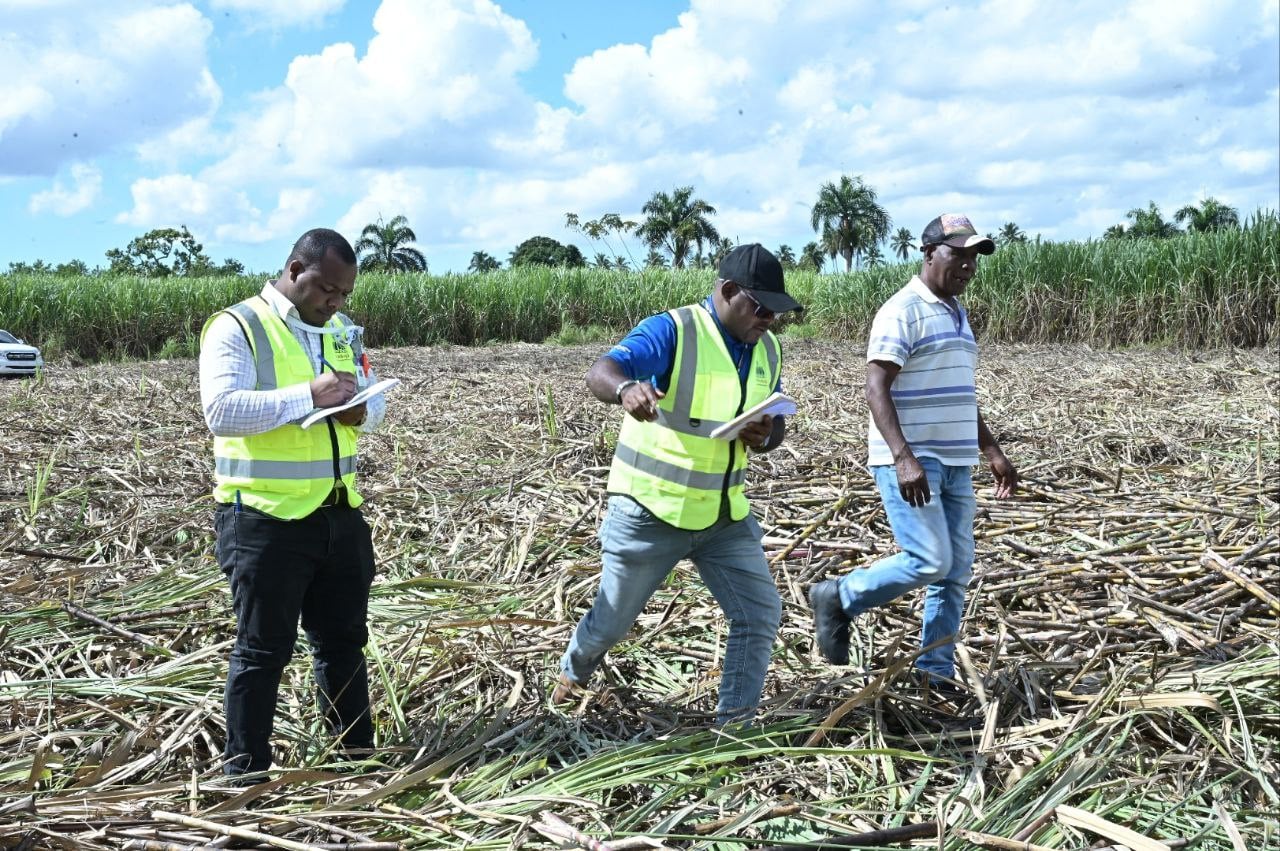
Dominican government reinforces efforts to eradicate child labor
In Santo Domingo, top Dominican labor officials have doubled down on the national government’s long-standing pledge to wipe out child labor, announcing a sweeping strategy that combines expanded prevention frameworks, tighter monitoring systems, and enhanced protective support for vulnerable minors across the country.
Over the coming six months, the Dominican Ministry of Labor is set to grow its specialized cross-disciplinary task force dedicated to combating child exploitation. The expansion will bring on additional psychologists, social workers, legal experts, and translators, equipping the agency to improve both early detection of at-risk children and rapid, effective intervention when cases are uncovered.
Officials spotlighted the success of ongoing prevention initiatives spearheaded by the country’s Directorate for the Eradication of Child Labor. To date, the directorate has run 138 community-focused DARSE workshops, which have delivered education and outreach to more than 6,300 people. This turnout far surpasses the program’s original participation goals, marking a significant win for public engagement on the issue.
A core focus of ongoing enforcement work remains the Dominican agricultural sector, which includes major domestic commodity industries such as sugar cane, rice, banana, tomato, coffee, and cocoa production. Labor regulators have prioritized consistent inspections across these agricultural areas, given historical risks of child labor exploitation in rural commodity work.
Official inspection data shows that regulators carried out more than 5,000 targeted inspections in agricultural zones across the country in 2025. That momentum has continued into 2026, with nearly 2,000 additional inspections completed in just the first quarter of the year.
While no confirmed child labor cases were uncovered during 2025’s enforcement rounds, two cases involving underage workers were detected in 2026 in the Azua and Higüey regions. In both instances, authorities launched immediate, coordinated response measures: the minors were reintegrated into formal schooling, their families received targeted support, and complementary community awareness programming was rolled out in the affected areas, in close coordination with other relevant public institutions.
ddzGoing forward, government officials stress that sustained cross-sector cooperation across national and local levels will remain the critical foundation for upholding children’s rights and stopping child labor exploitation before it occurs.
-

Mission to Strengthen Social Protection in Artibonite and Northern Haiti
In a targeted push to expand and strengthen social safety net services for vulnerable communities, Haiti’s Ministry of Social Affairs and Labor (MAST) launched an official working mission across Artibonite Department and northern Haiti starting April 24, 2026. Led by MAST Minister Marc-Elie Nelson, the delegation included top leadership from two of Haiti’s key social assistance bodies: Jhonny Raphaël, Director General of the Social Assistance Fund (CAS), and Kesner Romilus, Director General of the Economic and Social Assistance Fund (FAES). The mission’s first stop was the commune of Saint-Michel de l’Attalay, located in Haiti’s central Artibonite region.
The visit to Saint-Michel de l’Attalay delivered multiple tangible improvements to local social services, kicking off the mission with measurable progress. To address longstanding gaps in public service access, Minister Nelson formally inaugurated a new, purpose-built headquarters for the local CAS directorate. The upgraded facility is designed to cut wait times and improve service delivery for residents seeking social support across the commune. In a move to boost on-the-ground operational capacity, more than 10 newly hired local social services technicians received their official assignment letters during the event, bringing much-needed additional staffing to the under-resourced region. Additionally, local authorities confirmed they would begin outreach to identify nearly 1,000 eligible new beneficiaries, who will receive official CAS membership cards granting them formal, sustained access to the fund’s support programs.
A core priority of the mission’s first stop was addressing the urgent humanitarian needs of people displaced by ongoing insecurity in nearby Marchand-Dessalines. Hundreds of residents have fled escalating violence in Marchand-Dessalines and its surrounding areas, seeking shelter in Saint-Michel de l’Attalay. To meet their immediate food needs, the delegation announced that an off-site community soup kitchen has already been established, which will serve up to 300 hot meals daily to displaced people and other vulnerable local residents. Recognizing that the majority of the 800 displaced people currently residing in on-site accommodation lack regular access to cooked meals, Minister Nelson also confirmed plans to open a second community restaurant directly on the displacement camp site in the near future. To ensure future support is tailored to actual needs, the government has launched a comprehensive, on-the-ground assessment of living conditions among displaced populations, which will inform both emergency relief efforts and longer-term structural support programs.
On the sidelines of the social protection and humanitarian activities, Minister Nelson held a working meeting with leadership from the Saint-Michel de l’Attalay local police department. During the discussion, he publicly recognized and commended the local police force for their consistent commitment to maintaining public safety and protecting vulnerable residents amid widespread regional insecurity.
Following the completion of the first phase of the mission in Saint-Michel de l’Attalay, the delegation will travel to Gonaïves, Haiti’s historic birthplace of independence, for the next leg of their outreach. After wrapping up activities in Gonaïves, the mission will continue north to Cap-Haïtien, where officials will roll out additional social protection expansions and assess community needs across the northern department.