分类: society

  • Another Union Leader Backs Senator Dennison’s One-Man Protest

    Another Union Leader Backs Senator Dennison’s One-Man Protest

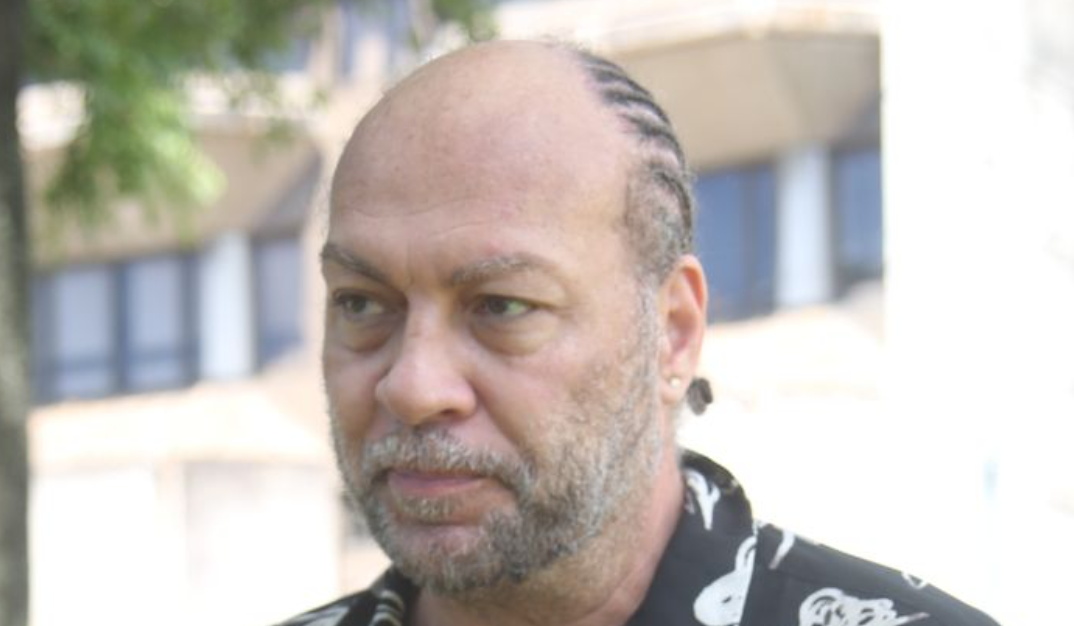
    In a landmark show of cross-union solidarity, the leadership of Belize’s Public Service Union (PSU) has formally pledged unreserved support for Senator Glenfield Dennison’s sustained solo public demonstrations, now entering their second week across high-traffic zones in Belize City. Dubbed by Dennison himself as a grassroots “education campaign” rather than a conventional protest, the daily street actions are already resonating deeply with ordinary residents, according to PSU President Dean Flowers.

    “From where we stand, this campaign is driving tangible impact,” Flowers stated in a recent public address. “Senator Dennison is prompting everyday Belizeans to hit pause on their busy routines, stop, and critically engage with the core concerns he is amplifying to the public.” Flowers clarified that while Dennison is a longstanding PSU member, his ongoing street outreach is being conducted primarily in his official capacity as an elected senator. He also issued a firm commitment that union members will turn out in full force to join Dennison the moment his demonstrations extend to the national capital of Belmopan.

    This latest endorsement follows closely on the heels of a formal statement of support from National Trade Union Congress of Belize (NTUCB) President Ella Waight, who last week emphasized that peaceful protest is a constitutionally enshrined right for every Belizean. Waight went on to encourage all residents with unaddressed grievances related to public services, cost of living, or administrative oversight to exercise that legal right to make their voices heard. “There is no barrier for any Belizean to pick up a sign and say clearly, ‘My water bill is exorbitant, and the government needs to take action’,” Waight noted. Building on the momentum of Dennison’s solo campaign, the NTUCB has now formally announced a coordinated mass public protest scheduled to take place this coming Friday in Belmopan, inviting all concerned citizens to participate.

  • Ah feel shame!

    Ah feel shame!

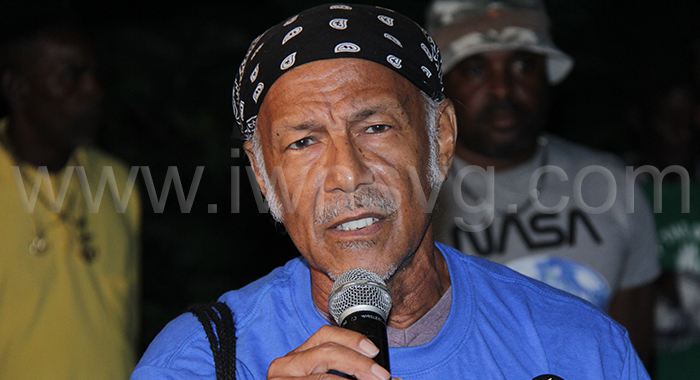
    During a candid Independence Day drive across St. Vincent and the Grenadines’ main island, a local resident shared a visceral moment of national embarrassment, noting that the unkempt, overgrown grass verges, tangled vines, and drooping tree canopies lining major roadways on both sides of the territory were in the worst condition he had ever witnessed. The sight prompted him to question if core public bodies including the Forestry Department, state utility VINLEC, and Local Government Department were still operational, though he intentionally held back direct criticism of central authorities — the very entity legally tasked with sustaining a functional, decentralized local governance framework.
    The author, veteran public servant Donald De Riggs, outlines that central government’s core mandates extend far beyond basic infrastructure upkeep: it is responsible for securing stable, fair market access for local agricultural and tourism goods, unlocking economic opportunities that benefit the broad majority of Vincentians rather than a narrow, privileged elite, facilitating cross-sector dialogue to expand formal employment and accessible education pathways, and advancing the long-discussed plan to establish a domestic national university. Such a tertiary institution would allow local students to pursue higher education without relocating abroad, eliminating the heartbreak of family separation for households forced to send children overseas to study.
    Road maintenance, the piece argues, is far more comprehensive than patching potholes and resurfacing worn asphalt — services the public already pre-pays for via mandatory vehicle registration and driving license fees. To counter the territory’s frequent heavy rainfall that makes grass regrow within days of trimming, verges, roadside shrubs, overhanging vines, and drainage networks along main and feeder routes require scheduled upkeep no fewer than six times per year, rather than the current inconsistent pattern of only two annual cleanup drives timed exclusively for the back-to-school season and Christmas holidays.
    A properly resourced, fully operational local government structure, De Riggs insists, would restore the country’s road network to a source of collective national pride, matching the neat, vibrant, well-maintained thoroughfares seen in neighboring sister islands Grenada and St. Lucia, where decentralized governance ensures hyper-local needs are addressed quickly.
    He recounts a first-hand anecdote from his tenure at the Government Information Service (later renamed API under a previous administration), when he repeatedly asked every sitting cabinet minister — including the late iconic leader Sir James — why successive political parties had included a local government rollout in their election manifestos, yet never followed through on the promise. During one such meeting with then Minister of Communications and Works Glenford Stewart, the pair’s conversation was interrupted by an incoming phone call. After hanging up, Stewart shook his head and confirmed the call was about a request to arrange a replacement toilet seat for a primary school on the remote island of Canouan.
    De Riggs pointed out to the minister that central government’s logjam of trivial, neighborhood-level requests was entirely self-inflicted: if formal local government bodies were established in every parliamentary constituency, small, site-specific needs like school bathroom repairs would never need to be escalated all the way to a national cabinet minister. Stewart openly agreed with that assessment. The opinion piece issues a stark warning to the current administration: if it fails to deliver on a formal local government policy and fully implemented decentralized governance structure, its time in power will be cut drastically short.
    Shifting to another long-stalled critical public priority, De Riggs reminds readers that the opposition New Democratic Party first tabled a National Health Insurance (NHI) bill in Parliament back in 2001, shortly after losing the general election to the Unity Labour Party. If the ULP administration had acted on that forward-thinking, progressive proposal, the NHI scheme would have reached full maturity in 2026, acting as a robust safety net to guarantee low-income and vulnerable Vincentians access to high-quality, affordable medical care. The author emphasizes that it is not too late to revive that widely popular policy, which would lift crippling medical cost burdens for generations of local residents to come.
    Currently, countless Vincentians face public fundraising campaigns every week to cover costly diagnostic tests, complex surgeries, and specialized treatments that are not available domestically, forcing many to travel to Trinidad, Barbados, or further afield for care and leaving families at constant risk of financial ruin due to unexpected medical crises. A fully funded NHI scheme would also incentivize local medical practitioners to invest in state-of-the-art diagnostic and surgical equipment, as they would have guaranteed coverage for those services via the contributions the working population has paid into the national scheme over decades. De Riggs closes with a direct, urgent appeal to the current government, noting that the draft NHI bill already exists and the ruling party holds a comfortable majority in the House of Assembly, so there is no valid excuse for further delay: legislators must pass the bill in the next parliamentary sitting to deliver the relief that Vincentians at home and in the diaspora have long demanded and fully support. This opinion piece reflects the personal views of author Donald De Riggs, and does not necessarily align with the editorial position of iWitness News.

  • Anse Cochon inquiry raises questions about collision response and protocols

    Anse Cochon inquiry raises questions about collision response and protocols

    The ongoing public commission of inquiry probing the fatal July 18, 2026, boat collision off Saint Lucia’s Anse Cochon Bay laid bare critical gaps in maritime emergency response frameworks during its Monday hearing, as testimony from frontline law enforcement officers exposed inconsistent adherence to formal procedures and fragmented coordination between responding units. The late-night collision, which occurred at 11:55 p.m. on the fateful Saturday, claimed four lives, and while search and recovery teams successfully retrieved all victim remains, Monday’s proceedings raised far-reaching questions about whether local maritime agencies are adequately prepared to respond to high-stakes mass casualty nautical incidents. Leading the morning testimony was Corporal Luciano Garde, head of the Marine Intelligence and Investigation Unit and the case’s lead investigator, who is also the son of Saint Lucia’s Police Commissioner Vern Garde. Commission chair Mario Michel repeatedly noted that Garde’s testimony was often disjointed, as the officer relied heavily on his personal notes to recount basic operational details. While Garde confirmed two police marine vessels were deployed to the scene, he was unable to recall the exact number of personnel mobilized for the rescue and recovery effort. He further disclosed that he was not assigned to lead the investigation until 5:09 p.m. on July 19, nearly 17 hours after the collision took place, with Superintendent Irvin Alfred and Acting Sergeant Mario Chicot of the Police Marine Unit overseeing initial response efforts. Garde, who manages a four-person investigative team, revealed that his formal request for additional staffing support to process the high-fatality incident was explicitly denied by Superintendent Alfred, who stated no extra resources were required. When pressed on whether his team followed specialized standard operating procedures (SOPs) tailored to major maritime collision fatalities, Garde confirmed no such targeted protocols were used, and the probe was conducted using only general, generic law enforcement investigative practices. “This incident is unprecedented, the first of its kind we have encountered, so we treated it like any standard investigation,” Garde told the commission. Later testimony from Acting Sergeant Chicot appeared to contradict portions of Garde’s account, as Chicot confirmed that formal SOPs do exist for the Police Marine Unit, and asserted that all steps taken during the response and investigation aligned fully with those documented procedures. Dive team member Officer Gonzague, who served as crew on one of the deployed rescue vessels, provided further conflicting details: he confirmed that one of the two dispatched marine craft was diverted away from the active search for missing victims immediately after arrival at the bay, to respond to a report of a bleeding individual on a nearby yacht where a physical altercation had broken out. Gonzague also openly admitted he had no working knowledge of the Police Marine Unit’s formal response protocols for fatal maritime collisions. The hearing also highlighted widespread confusion over cross-agency coordination between the Police Marine Unit, the Marine Intelligence and Investigation Unit, and the Saint Lucia Air and Sea Ports Authority (SLASPA) Maritime Division, with multiple officers acknowledging their operational accounts appeared disjointed despite claims that teams “managed” through the response. Garde confirmed that all available evidence for the collision probe has now been compiled, and the full case file has been submitted to the Director of Public Prosecutions for further guidance. The commission of inquiry is scheduled to resume public hearings on Wednesday, November 11, to continue examining the systemic failures of the emergency response.

  • Mennonieten: Mannen niet aangetroffen bij nieuw bezoek mennonietenlocatie

    Mennonieten: Mannen niet aangetroffen bij nieuw bezoek mennonietenlocatie

    On November 10, local indigenous advocacy leaders in Suriname released findings from a second fact-finding visit to a Mennonite settlement in the remote Tibiti area, which revealed a stark drop in the number of residents present just weeks after the national government carried out a high-profile expulsion of 63 unauthorized Mennonite settlers from the nearby Mazoni region.

    The delegation, led by Erlan Sleur, a prominent indigenous rights activist, and representatives from the Organisatie Inhemsen in Suriname (OIS) and the Inheems Kolectief Suriname (IkSur), toured a settlement site along Albergaweg in the Tibiti zone, where OIS chair Stanley Liauw Angie noted a dramatic shift in the resident population since their first visit to the area. During their initial inspection, the team had counted 7 to 8 women, multiple children, and a group of men who were working or staying elsewhere on the surrounding land. On the latest follow-up trip, however, the group found only roughly 3 women and a small number of children remaining, with all the adult men reportedly absent, after community members told the delegation the men had traveled to Paramaribo, the national capital. No further details on the exact location of the missing men, the reason for their departure, or whether their absence is temporary could be confirmed during the visit.

    This site is not part of the same unauthorized group that was recently expelled from the Mazoni area, government and indigenous leaders clarified, meaning the remaining residents are not automatically subject to immediate removal. Even so, the fact-finding team was unable to verify the legal residency status of the remaining women and children, or confirm whether all local residents hold the required land use and settlement permits to stay in the protected indigenous traditional territory.

    Indigenous representatives have raised sharp concerns over unregulated large-scale agricultural activity in the Tibiti region, where widespread deforestation and land clearing have already been documented in recent months. Liauw Angie warned that unpermitted farming operations could continue to expand without formal government oversight, threatening the ecological integrity of lands that have sustained indigenous communities for generations. IkSur representative Lloyd Read, who joined the delegation’s visit, emphasized that the national government must release full, transparent details of all existing agreements related to land use across all Mennonite settlement sites, and publicly identify the parties responsible for establishing these remote communities on traditionally indigenous held land.

    The indigenous coalition is now formally calling on Suriname’s central government to launch a full, formal audit of all Mennonite settlements across the country’s interior, to document every current resident, map all ongoing commercial and agricultural activities, and clarify the exact legal terms under which non-indigenous settlers are permitted to remain on lands designated for indigenous stewardship. As of the latest public update, no authorized regulatory agency has announced that new compliance inspections have been carried out at the Tibiti Albergaweg site following the delegation’s fact-finding trip.

  • Mill Reef Fund Grant Brings Hot Peppers for Susie’s Hot Sauce to The Blue Dragonfly Foundation’s Friendship Farm

    Mill Reef Fund Grant Brings Hot Peppers for Susie’s Hot Sauce to The Blue Dragonfly Foundation’s Friendship Farm

    A newly approved grant from the Mill Reef Fund is set to launch a specialized agricultural and small business development initiative at the Blue Dragonfly Foundation’s community-focused Friendship Farm, centered on scaling the cultivation of high-yield, flavorful hot pepper varieties for the local artisanal Susie’s Hot Sauce line. The funding allocation, designed to fill critical gaps in the farm’s existing infrastructure, will cover the cost of climate-controlled seed starting beds, organic pest management supplies, expanded irrigation lines, and dedicated training sessions for participating community growers to optimize hot pepper yields without compromising the farm’s regenerative agricultural standards. Friendship Farm, which has long operated as a communal space that provides vocational training, food access, and social connection for marginalized local residents, will use the new hot pepper operation to create 12 part-time seasonal roles for program participants, while also securing a dedicated, local supply chain for Susie’s Hot Sauce that previously sourced 70% of its core pepper stock from distant regional distributors. Representatives from both the Mill Reef Fund and the Blue Dragonfly Foundation noted that the partnership aligns with shared goals of strengthening local food systems, supporting small independent food enterprises, and expanding economic opportunity for vulnerable community members, with the first pepper harvest scheduled for late summer of this year.

  • Limes resident’s career teaching at Grenada School for Special Education

    Limes resident’s career teaching at Grenada School for Special Education

    Raised and still residing in The Limes, Grand Anse, Grenada, 40-something mother of two Shala Thomas had long observed the local Grenada School for Special Education (GSSE) from a distance as a child, waving at students through its perimeter fence but rarely interacting with them, as local residents colloquially referred to the facility as the “dummy school” in years past. In 2006, Thomas joined the GSSE team through the national Imani Programme, a government youth apprenticeship and empowerment scheme designed to reduce youth unemployment by placing 18 to 35-year-olds in structured work placements. Though she had no prior experience working with disabled learners, Thomas had nurtured a lifelong dream of becoming an educator, and when asked to select a preferred teaching placement, she was directed to GSSE – a role she never initially imagined herself taking, but now counts as her life’s purpose.
    Over subsequent years, Thomas pursued formal specialized training, earning a Teacher Education Certificate in Early Childhood Education by 2019, followed by a bachelor’s degree in Psychology with a Special Education concentration in 2022 via a targeted Ministry of Education professional development initiative. Rejecting repeated suggestions from acquaintances to transfer to a mainstream school, Thomas has poured 18 years of service into the institution, describing the joy of witnessing her students’ small, hard-won victories as deeply fulfilling.
    Founded in 1976 through collaborative advocacy from the Rotary Club of Grenada, a now-defunct local association for people with intellectual disabilities, concerned community members, and CUSO volunteer Janet Johnston Scott who successfully lobbied the national government for formal support, GSSE first operated out of a bungalow at the former Carifta Cottages in Morne Rouge, St George, before relocating to its permanent The Limes, Grand Anse campus in 1977, on land allocated by the administration of then-Prime Minister Sir Eric Gairy. The school recently celebrated its 50th anniversary in September at a dedicated appreciation and awards ceremony, themed “Celebrating 50 Years of Overcoming: Breaking Barriers and Building Brighter Futures”.
    From an inaugural cohort of just 11 learners, GSSE has grown to serve 84 students aged 5 to 21, expanding its curriculum far beyond basic care to include formal exam preparation, vocational training, and extracurricular programming. Since 2018, five of its students have successfully completed the Caribbean Primary Exit Assessment (CPEA), while learners also participate in a campus 4H gardening club and foundational digital literacy courses. Under Thomas’s guidance, a relaunched 2022 work training program (paused during the COVID-19 pandemic and resumed in 2024) now connects older students to structured placements across 7 local community partners, spanning hospitality, automotive services, grocery retail, personal care, and public recreation. The two-phase program, consisting of a 5-week introductory placement and an 8-week extended role, exposes participants to two distinct work environments, addressing longstanding public stigma around disabled people’s capacity for productive work. While the team initially faced barriers convincing local businesses to participate, partner sites consistently report students exceeding performance expectations, with many offering permanent paid roles to top trainees.
    Althea McPhail, current president of founding partner the Rotary Club of Grenada, reaffirmed the organization’s ongoing commitment to GSSE at the anniversary event, noting that 50 years of sustained collaborative support has transformed hundreds of lives through compassionate, community-centered action. GSSE Principal Patricia Williams-Prince praised Thomas as a highly focused, growth-oriented educator whose dedication and passion have made an indelible mark on the school’s student community.

  • Privy Council rules in favour of gay man who challenged T&T buggery laws

    Privy Council rules in favour of gay man who challenged T&T buggery laws

    In a historic, unanimous ruling issued on Tuesday, the London-based Judicial Committee of the Privy Council — Trinidad and Tobago’s highest appellate court — sided with 62-year-old gay activist Jason Jones, formally invalidating longstanding criminal provisions targeting consensual adult same-sex relations in the Caribbean nation. Jones, a Trinidad and Tobago native now residing in the United Kingdom, had launched his legal challenge against Sections 13 and 16 of the 1986 Sexual Offences Act, which criminalize so-called “buggery” and all non-intercourse sexual acts outside of private, consensual encounters between heterosexual adults aged 16 or older, arguing the statutes violated his constitutionally enshrined right to private and family life and core human dignity. Prior to the hearing, Jones had publicly expressed unwavering confidence that the court would reject what he described as a 500-year-old homophobic colonial British law, noting “The Privy Council will never uphold a 500-year-old homophobic piece of British law that goes against the rights of the individual! Not in 2026! I’m going to win.” While celebrating the watershed ruling, Jones emphasized that the decision alone would not resolve broader systemic gaps in LGBTQ+ equality across the Commonwealth, where dozens of nations still enforce discriminatory laws inherited from British colonial rule. Represented by former Trinidad and Tobago Attorney General Anand Ramlogan SC, Jones navigated a multi-year legal battle that first saw the country’s High Court rule the two contested sections unconstitutional, before a split Court of Appeal partially reinstated the statutes by ruling they qualified as “existing protected law” under Section 6 of the 1976 Trinidad and Tobago Constitution, which shields pre-independence laws from fundamental rights challenges. The Privy Council, in a judgment jointly delivered by Lord Sales and Lord Burrows and backed by all committee members, dismissed both the lower Court of Appeal’s partial validation of the provisions and the state Attorney General’s cross-appeal defending the statutes. The panel clarified that the 1986 Sexual Offences Act constituted a full, comprehensive parliamentary overhaul of the nation’s sexual offence legal framework, rather than a minor re-enactment of pre-1976 colonial law, and thus was not eligible for protection under Section 6 of the Constitution. The judges further rejected the state’s argument that the statutes were justified under Section 13 of the Constitution, which allows laws that deviate from fundamental rights only if they can be proven reasonably justifiable in a society that respects individual liberties. The panel ruled that the “reasonably justifiable” test must be assessed at the time the individual’s rights are being challenged, not at the date the law was originally passed, and noted that the Attorney General had failed to submit any evidence demonstrating the criminalization of private, consensual same-sex conduct served a legitimate public interest. The judges explicitly emphasized that criminalizing intimate same-sex relationships strikes at the very core of personal identity and human dignity, and that the severe intrusion on Jones’s private life could never meet the threshold for a fair, proportionate balance of public and private interests. While the committee noted it will solicit final written submissions from both parties to formalize the exact remedial revisions to the 1986 Sexual Offences Act, it confirmed its provisional position that the original High Court’s full declaration of unconstitutionality for Sections 13 and 16 should be upheld. Ramlogan hailed the outcome as an unprecedented, transformative win for equal dignity, privacy rights, and LGBTQ+ equality across the twin-island nation.

  • Coast Guard had considered dragging MV Barima closer to shore- fisherman

    Coast Guard had considered dragging MV Barima closer to shore- fisherman

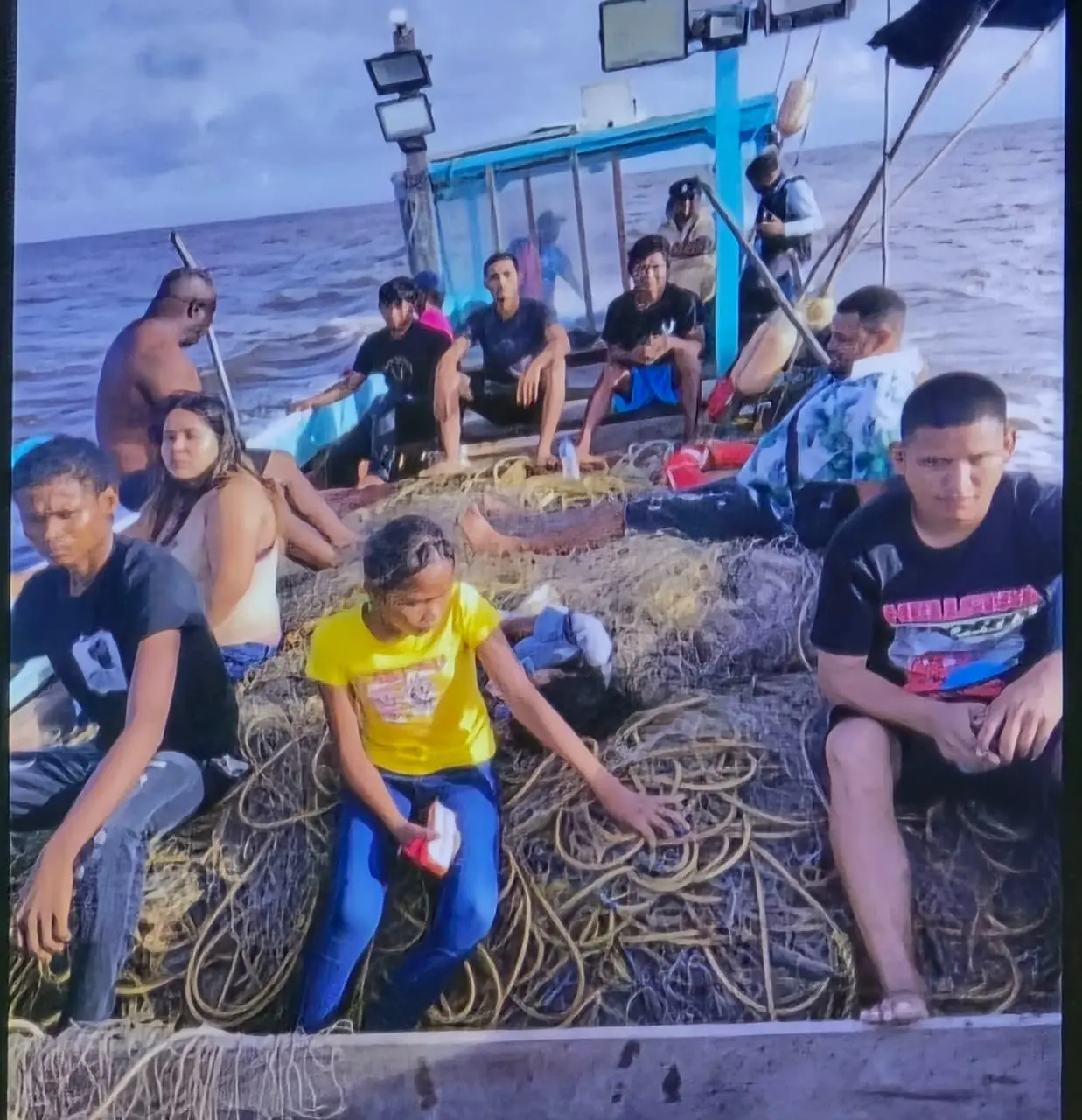
    On Tuesday, November 10, 2026, the ongoing public Commission of Inquiry probing the deadly July capsizing of the 87-year-old ferry MV Barima off Guyana’s Essequibo Coast heard firsthand accounts from two key witnesses that cast new light on the hours surrounding the disaster and long-unaddressed safety lapses on the vessel, which claimed an estimated 100 lives four months prior. Veteran Guyanese fisherman Haresh Singh, who led the rescue of 11 survivors from the sunken ferry, testified before the five-member panel of legal and maritime operations experts that GDF Coast Guard Commander David Shamsudeen had previously considered a targeted salvage plan to tow the distressed vessel close to shore before it fully sank. Singh outlined that the proposed intervention would have secured the MV Barima to a nearby barge to pump out floodwater, a move he insisted could have averted the mass casualty event entirely. Singh, who was fishing in the area on the afternoon of July 19 when the ferry went down, shared that his local, generations-honed knowledge of Atlantic tidal patterns, unusual shifts in seawater color, and a distinct acrid, oil-tinged odor in the water allowed his crew to pinpoint the exact 55-foot-deep location of the sunken wreck long before official response teams arrived. It was during that initial search that his crew spotted a life raft carrying 11 people, including a wounded young child, none of whom were wearing personal flotation devices. The fisherman added that there was no cellular service at the offshore site of the sinking, and his crew only encountered a Coast Guard patrol vessel as they traveled back toward shore with the rescued group. He further noted that the stretch of Atlantic 10 nautical miles off the Essequibo Coast, where the MV Barima now rests, is notoriously treacherous, with a long documented history of trawlers, pontoons, and small cargo vessels sinking due to unpredictable, rough sea conditions. In a separate testimony to the inquiry, MARAD (Maritime Administration) Inspector Christopher Bailey confirmed that the MV Barima had been formally exempted from mandatory routine safety inspections, and that the only optional check conducted on the aging ferry one year prior to the disaster, ordered at the direct request of MARAD’s director, uncovered a series of critical safety failures. These included a fully non-functional Automatic Identification System (AIS) for real-time vessel tracking, a broken radar unit that was not even listed on the ferry’s official registered equipment manifest, and a defective Emergency Position-Indicating Radio Beacon that would have prevented first responders from receiving an automatic distress signal when the capsizing occurred. The Guyanese government has since contracted BK International to carry out formal salvage operations on the sunken MV Barima wreck.

  • DHTA launches “Hiking in November” initiative to celebrate Dominica’s heritage and wellness

    DHTA launches “Hiking in November” initiative to celebrate Dominica’s heritage and wellness

    The Dominica Hotel and Tourism Association (DHTA) has formally rolled out its highly anticipated “Hiking in November” campaign, a carefully curated series of guided outdoor experiences crafted to immerse both local residents and international visitors in the Caribbean nation’s unrivaled natural landscapes, rich ancestral cultural legacy, and time-honored wellness practices. Announced via an official DHTA press release, the initiative will host two distinct, thematically tailored guided treks across consecutive Saturdays on November 14 and November 21, 2026. Anchored by three core guiding principles – cultural celebration, holistic wellness, and communal connection – the program is strategically structured to invigorate domestic tourism flows while nurturing widespread, grassroots appreciation for Dominica’s globally renowned environmental assets. Association leadership emphasized that the project redefines the scope of the island’s tourism ecosystem, moving far beyond the narrow focus on international visitor arrivals to create accessible, meaningful opportunities for local communities to rediscover, engage with, and take pride in their own national treasures. Each of the two scheduled outings offers a fully unique itinerary and thematic focus to cater to varied participant interests. The first hike, taking place on November 14 at Sari Sari Falls, carries the official theme “Nature, Water and Togetherness”. This route is designed to showcase Dominica’s globally celebrated abundance of pristine freshwater ecosystems, while highlighting the proven mental and physical health benefits of shared, community-centered outdoor activity. Organizers are encouraging all participants to wear bright yellow for the event, with hearty local one-pot dishes available for on-site purchase to support local food vendors. The second trek, scheduled for November 21 along the Chemeh Letang Trail leading to Denier Falls, operates under the theme “History and Identity”. This immersive excursion guides hikers through the island’s lush, biodiverse rainforest while weaving in guided storytelling sessions that unpack Dominica’s layered cultural and colonial history. Participants are invited to wear green for this leg of the program, and local hospitality operator Rosalie Bay will offer pre-hike gentle yoga sessions to loosen muscles, exclusive discounted post-trek massages, and a full local one-pot meal priced at just EC$25. Far more than a casual recreational series, the DHTA positions hiking as a foundational, long-term pillar of Dominica’s differentiated national tourism brand. The association notes that the “Hiking in November” initiative is intentionally designed to create inclusive economic spillover effects that support community livelihoods, generating new revenue streams for local food purveyors, independent tour guides, and small, non-hospitality local businesses that are often excluded from the benefits of peak international tourism seasons. Beyond economic gains, the program also seeks to advance public physical health outcomes, instill lifelong sustainable conservation habits among participants, and empower local residents to act as authentic, firsthand brand ambassadors for Dominica’s iconic “Nature Island” global identity. Registration for each individual guided hike is set at a flat rate of EC$45 per person. Any members of the public seeking to sign up, or to access specific logistical details including exact meeting points and scheduled departure times, are instructed to reach out directly to the DHTA via their official contact email at info@dhta.dm.

  • Pro Consumidor has destroyed 7 million products unfit for consumption

    Pro Consumidor has destroyed 7 million products unfit for consumption

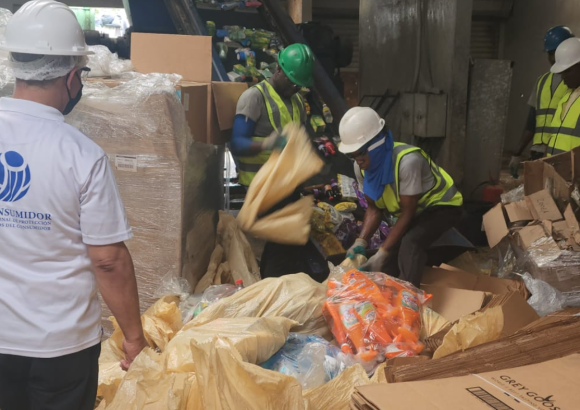
    Santo Domingo, Dominican Republic – The Dominican Republic’s leading consumer protection authority, Pro Consumidor (the National Institute for the Protection of Consumer Rights), has publicly announced that over 7 million units of unfit consumer products have been seized and permanently destroyed across the nation since Eddy Alcántara took office as the agency’s executive director in March 2021. The massive batch of non-compliant goods was confiscated during targeted, cross-province inspection campaigns, after regulatory teams confirmed the items failed to meet mandatory national benchmarks for quality, public safety, hygiene standards, or formal health registration requirements. The inspection footprint spanned a wide network of retail and storage sites, including large supermarket chains, neighborhood grocery stores, private and public warehouses, open-air public markets, food service restaurants, and unregistered informal street vendors, covering key regions such as Greater Santo Domingo, Santiago, San Cristóbal, La Altagracia, Puerto Plata, La Vega, San Pedro de Macorís, and dozens of additional provincial jurisdictions. Inspectors uncovered a sweeping range of public health and regulatory violations during these operations: large stockpiles of expired or spoiled foodstuffs, dented and compromised food cans that risked contamination, completely unlabeled goods with no traceability information, storage facilities suffering from active pest infestations, and batches of adulterated or outright counterfeit consumer merchandise. The destroyed inventory included essential household staples such as rice, beans, pasta, canned goods, flour, and dairy products, alongside beverages, sauces, disposable diapers, condoms, feminine sanitary products, alcoholic drinks, counterfeit cigarettes, and dozens of other daily-use consumer items. Alcántara emphasized that Pro Consumidor’s expanded enforcement mandate also prioritizes cracking down on illicit informal trade networks that traffic counterfeit, adulterated, and illegally sourced goods that pose severe risks to public health and consumer financial security. He highlighted two high-impact joint enforcement operations held in July and September this year, conducted in close partnership with the Dominican Republic Public Ministry and other cross-sector regulatory agencies, which alone seized nearly 20 tons of expired and adulterated food items hidden in unregistered clandestine warehouses operating in San Cristóbal. The agency confirmed that its specialized inspection teams run year-round, permanent enforcement operations, guided both by proactive institutional risk monitoring and formal complaints submitted directly by concerned members of the public. Alcántara reaffirmed his administration’s commitment to expanding nationwide inspection coverage in the coming months, with a zero-tolerance policy for any products that fail to meet national legal safety requirements. He also issued a public advisory to all Dominican consumers to proactively verify expiration dates, check for intact, undamaged packaging, and confirm clear, legitimate product labeling before completing any purchase, and to immediately report any suspected regulatory violations via Pro Consumidor’s official public reporting channels.