分类: society

  • Parents ‘at centre’: Education in shift to boost student success

    Parents ‘at centre’: Education in shift to boost student success

    Barbados’ Ministry of Education Transformation has launched a landmark national initiative this Monday that redefines the architecture of the country’s education system, placing families at the center of academic success rather than treating classrooms and infrastructure as the sole drivers of student progress. Developed in partnership with the Inter-American Development Bank (IDB), the new Parent Education Programme (PEP) marks a deliberate strategic shift, recognizing that strong learning foundations are built long before children enter formal school environments.

    Currently rolling out as a pilot across 13 community sites in multiple Barbadian parishes, PEP targets all parents and primary caregivers of children ranging from early childhood (age 3) through upper secondary education (age 18). The program’s core premise is simple but high-stakes: in an increasingly fast-changing world, students need home learning environments that are as informed, adaptive, and supportive as the school curricula they encounter each day.

    Chief Education Officer Dr. Ramona Archer-Bradshaw emphasized the non-negotiable role of the “human element” in shaping positive student outcomes at the program’s official launch. While she reaffirmed that sustained investment in school facilities, digital tools, and curriculum updates remains critical to education reform, she noted that parental engagement is the most consistent predictor of student success across global and regional research.

    “Too often when we discuss education improvement, our focus lands exclusively on curriculum overhauls, new infrastructure, and cutting-edge technology,” Dr. Archer-Bradshaw explained. “All of these are essential, but there is another factor that consistently delivers outsized impact on how well students perform: that factor is parents. PEP is a deliberate, intentional investment in the parents and caregivers who are raising our youngest generation of citizens.”

    She added that PEP was designed to be flexible, accessible, and inclusive, meeting families where they are regardless of their income, background, or living situation. Built around real-world parenting challenges and lived experiences, the six-week community-based program equips caregivers with actionable tools to foster positive development at home. “When parents are empowered with the right skills, children succeed. When families are strengthened, entire schools are transformed,” she said. “This program meets the actual needs of families, not abstract ideals, and gives caregivers the resources they need to drive better outcomes for their kids at home.”

    The IDB has committed $300,000 in funding to back the initiative, which blends evidence-based best practices with context-specific approaches tailored to Barbadian culture and community needs. Francesco De Simone, Operations Chief at the IDB Barbados Country Office, framed the partnership as an ambitious but deeply rooted effort that centers local needs rather than imposing generic global models.

    “When the Ministry first approached the IDB, their request was clear and bold: they wanted not just a new program, but a comprehensive national strategy to reconnect families to education,” De Simone said. “Our shared goal was to strengthen the bond between children, families, and schools not through a one-size-fits-all framework, but through an approach that is distinctly Barbadian. This is critical: development only works when local people see themselves reflected in the solutions.” He added that regional data consistently shows targeted parenting programs deliver significant, measurable improvements to child development and academic outcomes.

    “PEP exists to equip, empower, and strengthen caregivers, and to reinforce the truth that education is a collaborative effort that extends far beyond classroom walls,” De Simone said. “The IDB is proud to support this bold framework that recognizes education and parenting are not separate pursuits—they are two interconnected forces working toward the shared goal of raising healthy, successful children.”

    Minister of Education Transformation Chad Blackman expanded on the program’s core philosophy in his keynote address, arguing that meaningful education reform must start long before a child crosses a school’s threshold. “Education transformation does not begin at the school gate—it begins at home. If I am being honest, it begins even earlier, from the moment a child is born in the hospital,” he said.

    Blackman urged parents to reflect on the long-term impact of their daily words and interactions with children, noting that offhand comments can leave lasting impressions that shape a young person’s mindset and worldview for decades. He also used the launch to address a growing public concern: student misbehavior and loitering at bus stops during school hours, announcing a coordinated, firmer crackdown alongside other government agencies.

    “The Ministry of Education, working with other government entities, will put a stop to this practice,” Blackman warned. “Many parents would be shocked to learn their children are loitering on public roads instead of attending class. This has to end, because we have a duty to protect our young people and prepare them for the future.”

    Positioning PEP as a key part of national development as Barbados approaches its 60th anniversary of independence, Blackman emphasized the program’s far-reaching national impact. “When we strengthen parents, we strengthen our children. When we strengthen our children, we strengthen the country we call Barbados,” he said. “Education transformation is already underway, but its success depends on every sector working together.”

    As the pilot progresses, ministry officials are encouraging eligible parents and caregivers to sign up for the six-week course, framing participation not as a corrective for struggling families, but as an act of leadership that strengthens the entire household and community. A breakdown of the pilot’s core parameters confirms its community-focused design: it serves 3 to 18-year-olds’ caregivers across 13 parish sites, centers on practical support for real-life challenges, and aims to align home learning support with in-class instruction to boost long-term student outcomes.

  • Children with special needs ‘risk being overlooked’ in 11-plus system

    Children with special needs ‘risk being overlooked’ in 11-plus system

    As the annual Barbados Secondary School Entrance Examination (BSSEE), widely known as the 11-plus common entrance test, approaches, a sharp uptick in applications for special examination accommodations has reignited longstanding concerns over systemic gaps in supporting students with learning differences. Advocates and education specialists warn that persistent stigma around neurodiversity and disability, paired with delayed formal assessments, continues to leave hundreds of vulnerable pupils without the critical support they need long before they sit for this high-stakes secondary school placement exam.

    New data released by the Ministry of Education shows 246 requests for special consideration have been filed for 2026’s test, a 34% jump from 183 requests logged in 2025 and 180 recorded in 2024. The accommodations requested cover a range of adjustments designed to level the playing field for students with learning disabilities, including extra testing time, scribes for students with motor impairments, large-format question papers, on-site readers, and full exemptions for certain exam components. While education experts acknowledge the rise in requests signals growing public awareness of learning needs across the island, they emphasize the trend also exposes a critical flaw: thousands more children remain undiagnosed and unsupported throughout their primary school years.

    Senator Janelle Odle, speaking to local outlet Barbados TODAY, explained that deep-rooted social stigma still discourages many Barbadian parents from pursuing early assessments for their children. “The core question we have to confront right now is: are children with disabilities getting any support before they even reach the 11-plus?” Odle noted. “We are still stuck in a phase where many parents fear disclosing their child’s disability because of the stigma attached to it. As a result, countless kids move through the education system without accommodations, and they simply fall through the cracks.” Odle has long pushed for expanded universal screening for learning needs in primary schools, arguing that early identification opens the door to earlier, more effective intervention that dramatically improves long-term academic and social outcomes for students.

    Hazeain Harding-King, principal of the Caribbean Mind Institute (CMI), echoed these concerns, noting that while public awareness of learning disabilities has improved significantly over the past two decades, parental reluctance to pursue formal testing remains a major barrier. “People are far more aware of the challenges neurodivergent children face today than they were 10, 15 or 20 years ago,” Harding-King explained. “Overall, society is a good deal less judgmental than it used to be. But even with these gains in awareness, many parents still hold back from getting their children tested. Often, this comes down to simple denial — it’s human nature to avoid receiving what feels like bad news about your child.”

    Delaying assessments and subsequent intervention, Harding-King stressed, causes irreversible harm to children’s academic progress and well-being. “Putting off support is never in a child’s best interest. Parents have to put their child’s needs ahead of their own discomfort or concerns about how a diagnosis will reflect on them. At the end of the day, the child is the one who has to navigate these challenges every single day, and they bear the brunt of delayed support.”

    Harding-King added that once a child completes a formal diagnostic assessment, the Ministry of Education is typically willing to approve requested accommodations, as long as families can provide documented evidence of a learning need from a qualified professional. The real barriers, she argued, come long before the exam accommodation application process — and in the procedural hurdles that low-income families face. “Our current system forces families to jump through endless hoops just to get basic accommodations for kids already diagnosed with conditions like autism, ADHD, or dyslexia,” she noted. “Many low-income parents simply cannot afford to pay a private psychologist for a formal assessment to prove their child needs extra time. There is no reason these students shouldn’t automatically qualify for accommodations and extra resources based on their existing diagnoses.”

    Harding-King also questioned the fundamental structure of the 11-plus exam, arguing that its strict time limits inherently disadvantage students with processing differences. “Right now, we don’t have an alternative exam for students with special needs, so every child has to sit the same test. At the very minimum, we should give all students with documented learning needs extra time. It’s not that these kids don’t know the material — they just need more time to process questions and put their answers down. That’s the only disadvantage they face,” she said. “We also have to ask what this exam is actually measuring: are we testing what students know, or just how fast they can work?”

    For her part, Senator Odle called for systemic changes beyond exam accommodations, including expanded access to assistive technology across all Barbadian primary schools, regardless of student population. “We need more assistive technology integrated everywhere in the education system,” she said. “While some high-end tools are expensive, there are many low-cost devices we could roll out right now to support both students and teachers, to help them meet diverse learning needs.” Odle specifically highlighted the benefits of digital learning materials, noting that adjustable-format e-books allow students with visual impairments or dyslexia to modify text size, contrast, and use text-to-speech tools to access content independently. She also added that more teacher aides are desperately needed in mainstream classrooms to support students with extra needs, explaining that one-on-one assistance can make a world of difference for students with disabilities. “From my experience, students with disabilities in mainstream schools struggle to keep up when they don’t have targeted support,” Odle said. “A teacher aide can step in to explain diagrams for visually impaired or blind students, or break down instructions for students who need extra support, that makes all the difference in helping them keep up with their peers.”

    The rising number of special accommodation requests has put the issue of learning needs support back at the forefront of education policy debate in Barbados, with advocates pressing the government to move forward with expanded early screening and reduced barriers to support for vulnerable students.

  • ‘A $48 Million Boom’: Agric Had It All

    ‘A $48 Million Boom’: Agric Had It All

    Even with mercury soaring to uncomfortable highs over the first weekend of May 2026, hundreds of excited attendees from across Belize flocked to the National Agriculture and Trade Show grounds in the capital city of Belmopan, turning out for an event that blends rural tradition, cutting-edge agricultural innovation, and community celebration like no other. The three-day annual gathering featured a packed lineup of attractions that catered to guests of all ages, from classic rodeo staples such as bucking bull contests and thoroughbred horse racing to modern displays showcasing agricultural drone technology, alongside a popular competitive dog show that drew dozens of entrants.

    Rodeo events emerged as some of the biggest crowd-pleasers of the 2026 show, drawing packed stands throughout the weekend. The high-stakes energy of professional bull riding led to one memorable incident, when one competitor was thrown from his mount and stomped before being carried out of the arena for medical evaluation. Beyond professional competition, the event carved out space for the next generation of agricultural and rodeo talent: junior rodeo divisions gave young, aspiring riders and competitors their first chance to test their skills in a formal event setting, drawing enthusiastic support from family and spectators in the stands.

    In his address to attendees and stakeholders at the show, Belize Minister of Agriculture Rodwell Ferguson used the event as a platform to highlight a major milestone for the nation’s core agricultural sector: over the previous 12 months, the industry recorded a $48 million expansion, a growth trend that was visible across every corner of the showgrounds. Ferguson emphasized that for Belize, agriculture is far more than a driver of economic output. “These events remind us that agriculture is not just an industry, it is a way of life,” he told the crowd, noting that the show serves as a living tribute to the work and culture that shapes communities across the country.

    One of the most moving moments of the 2026 event came during a ceremony at the Rodeo Walk of Fame, where family members of deceased Belizean rodeo pioneers gathered to see their late loved ones honored for their contributions to the nation’s rodeo and agricultural culture. The tribute recognized the foundational work done by early rodeo organizers and participants, who built the traditions that continue to draw crowds and participants generations later.

    The full on-the-ground report from the 2026 National Agriculture and Trade Show is set to air during News Five’s prime time 6pm broadcast the same day, for viewers who want to experience more highlights from the three-day event.

  • Ministry Official Urges Parental Calm and Unconditional Support Ahead of 11-Plus Exam

    Ministry Official Urges Parental Calm and Unconditional Support Ahead of 11-Plus Exam

    As thousands of primary school students across the country gear up to sit their 11-Plus secondary school placement examination this Tuesday, a leading education psychologist from the government’s student support services is sounding the alarm over unnecessary parental pressure, urging caregivers to center their children’s mental and emotional health ahead of test results.

    Juanita Brathwaite-Wharton, Senior Psychologist with the Student Support Services division of the Ministry of Education Transformation, is reframing the high-stakes assessment for families, emphasizing that the 11-Plus is simply a standard checkpoint along a child’s primary education journey—not a final verdict on their intelligence, worth, or future success.

    “The 11-Plus is just an evaluation of what students have learned throughout their time in primary school,” Brathwaite-Wharton explained. “I tell every parent to frame it for their child as one test among many. They have already navigated multiple assessments through their schooling, and they will face many more as they move forward. Tuesday is nothing more than a regular school day, just like any other.”

    This year, a core pillar of the Ministry of Education’s public messaging centers on fostering a calm, supportive emotional environment at home in the lead-up to the exam. Brathwaite-Wharton warned that many parents unknowingly transfer their own unaddressed anxiety about the test onto their children, a shift that can damage both academic performance and long-term emotional stability.

    She advises caregivers against placing unnecessary, excessive pressure on young test-takers. “So often, parents feel their own nervousness and fear about the outcome, and that energy transfers straight to their kids,” she noted. “Right now, the most important thing is for children to relax, release built-up stress, and get their minds and bodies ready for the test day ahead.”

    Brathwaite-Wharton went on to clarify the core purpose of the 1-Plus assessment: it is designed simply to match students with a secondary school environment that aligns with their needs, where they can grow into their unique individual potential. By reframing the exam as a placement tool rather than a make-or-break life event, the Ministry hopes to cut through the overwhelming pressure that households across the island feel every exam cycle.

    To help families combat the widespread phenomenon of pre-test “exam fever,” the senior psychologist has outlined practical, accessible stress-relieving activities for the final 24 hours before the exam. Her top recommendation? Step away from revision guides and textbooks, and spend time connecting with nature to give overworked brains a much-needed reset.

    “I encourage parents to plan a stress-busting activity with their kids this evening before the test,” she said. “If you can, take them to the beach or a local park to run around and play. Spending time in nature helps melt away all the anxiety that has built up over weeks of preparation.”

    For families that choose to stay home in the final hours before the exam, the Ministry recommends turning to free online mindfulness exercises and calming music to help students center themselves mentally. Experts also emphasize that a full night of uninterrupted sleep and an early, unhurried start Tuesday morning are non-negotiable steps to keep young test-takers relaxed and ready to perform to the best of their ability.

    As students prepare to transition to secondary education after the exam, Brathwaite-Wharton reminded parents that consistent, unconditional support matters far more than the exam’s final outcome, regardless of which secondary school a child is placed at. She urged caregivers to look past test scores and focus on nurturing their child’s long-term growth, specific interests, and natural talents.

    “I urge parents to stand behind their children fully, no matter what the results say,” Brathwaite-Wharton emphasized. “Take the time to learn what your child cares about, where their strengths lie, and what challenges they face. Help them grow through their weaknesses, and leverage their strengths to push them forward into the next stage of their lives.”

    She closed with a powerful reminder of the most important role parents play during this high-pressure period: “Let your children know that no matter how they perform on this one test, you will always be their biggest cheerleader. You will be there to support them, and help them find success in whatever they choose to put their minds to.”

  • BUT urges calm, confidence ahead of 11-plus

    BUT urges calm, confidence ahead of 11-plus

    As thousands of Barbadian students gear up for the high-stakes Barbados Secondary School Entrance Examination (BSSEE), the leader of the island nation’s largest educators’ union is offering an empowering message to ease pre-test anxiety and reframe how students think about success. Rudy Lovell, president of the Barbados Union of Teachers (BUT), has released a public statement targeting test-takers, encouraging them to set aside nervousness and focus on delivering the strongest effort they can, rather than obsessing over final outcomes.

    Lovell’s message centers on a simple but impactful reminder for young test-takers: while the BSSEE is an important academic milestone, it does not determine a student’s worth or long-term potential. “As you approach this moment, remember that your job is simple: do your very best. Success is not measured only by results, but by the effort, discipline, and determination you bring to the task,” Lovell shared in his address to students.

    Beyond reframing the definition of success, the union president also offered practical guidance to help students perform their best on exam day. He urged candidates to lean on the months of preparation they have already completed with their teachers, reminding them that their hard work in the classroom has laid the foundation for success. “Stay calm, think clearly, and approach each question with confidence. Believe in your abilities and maintain a positive mindset throughout,” he added.

    In a move to reinforce that students do not face this challenge alone, Lovell emphasized that every candidate has a broad support network rooting for them, regardless of how they perform on the test. “This examination does not define who you are… your teachers, families, and communities are all standing behind you, cheering you on,” he said. The message comes as annual BSSEE assessments get underway, with educators across the country echoing similar calls for balanced perspectives amid the traditional pressure surrounding secondary school placement exams.

  • Family ‘overwhelmed’ by support as teen begins urgent treatment abroad

    Family ‘overwhelmed’ by support as teen begins urgent treatment abroad

    For 17-year-old Noi Jemmott, what started as minor discomfort – a small headache and spells of dizziness during school days – rapidly escalated into a devastating health crisis that has upended the entire Jemmott family’s life. Within just a few days of first noticing symptoms, the Barbadian teen received a diagnosis of Acute Lymphoblastic Leukaemia (ALL), an aggressive, fast-spreading blood cancer. What was once a routine life of attending classes suddenly shifted to a permanent hospital stay in Colombia, where Noi has now begun the first round of specialized, life-saving cancer treatment.

    Even as the family navigates crippling fear, crippling uncertainty, and jaw-dropping medical bills, Noi’s father Janson Jemmott says one bright thread has cut through the darkness: the extraordinary outpouring of love and generosity from people across his home country of Barbados. In an emotional interview with Barbados TODAY, Jemmott shared that the overwhelming wave of community support has left him humbled, and restored his belief in collective goodness at a time when his family is living through their darkest chapter.

    “In a world where we see so much bad news every day – wars breaking out across continents, constant shootings, so much negativity everywhere – the one incredible positive I have seen is how many people have stepped up to donate for Noi,” Jemmott said. “I truly believe this is all driven by love. That is the one thing I will carry with me through this whole journey.”

    Fighting back tears, Jemmott added that the compassion shown to his daughter, whose quiet courage has touched hearts across Barbados and beyond, has moved him beyond words. “The support has been incredible, and I want to thank every single person who has stood with us so far,” he said. “I am totally blown away by what we have received. It leaves me so emotional every time I think about it.”

    Noi departed Barbados on a Saturday morning for Colombia, where oncologists are currently conducting comprehensive blood testing to identify the exact subtype of ALL she is living with, and design the most effective, personalized treatment plan. While the community’s immediate fundraising response has been extraordinary, the financial burden facing the family remains immense. Jemmott shared that more than $100,000 USD has already been raised to cover Noi’s care – a remarkable start that has kept the family afloat in the first weeks – but far more funding will be needed in the coming months.

    “The first invoice we received for the first month of treatment alone was $130,000 USD, that’s equal to $260,000 Barbadian dollars,” Jemmott explained. “Noi will need to stay in Colombia for treatment anywhere between six months to a full year, so it’s almost impossible to pin down the final total cost right now. We set a target of $400,000 USD on the GoFundMe page, and we hope that will be enough, but we still don’t know exactly how much we will end up needing.”

    For Jemmott, the diagnosis hit especially hard because of the kind, driven young woman he has watched Noi grow into. “My daughter is such a lovely young lady, and I don’t say that just because she’s my daughter – I really admire this girl,” he said. “Every morning I drop her off at community college and watch her walk in, and I just think about how good she is. When I got the diagnosis, I kept asking, what kind of joke is this? What am I supposed to learn from this? But through all of this, Noi has stayed so strong… she hasn’t changed, she’s still the same amazing girl.”

    Medically, ALL is an aggressive blood cancer that develops when immature white blood cells called lymphoblasts multiply uncontrollably in the bone marrow, pushing out healthy, functional blood cells. It is the most common form of childhood leukemia, with symptoms including fatigue, frequent infections, unexplained bruising or bleeding, bone pain, and fever, and it typically progresses over just a few days or weeks. Without prompt treatment, ALL spreads rapidly, but modern medical advances – including intensive chemotherapy, targeted therapies, and stem cell transplants when needed – mean that many children and young adults now achieve long-term remission or a full cure.

    As Noi continues her battle against cancer far from her home in Barbados, Jemmott is asking community members to continue offering whatever support they can, whether through donations or prayers for Noi’s recovery. Anyone who wishes to contribute to Noi’s treatment fund can visit the GoFundMe page at: https://www.gofundme.com/f/help-noi-jemmott-fly-to-colombia-for-lifesaving-treatment.

  • Fire Service responds to 100 calls over Labour Day weekend.

    Fire Service responds to 100 calls over Labour Day weekend.

    The island nation of Saint Lucia’s public emergency responders faced a surge of urgent calls across the 2025 Labour Day long weekend, logging an extraordinary 100 responses from 9 a.m. on Friday, May 1 through 9 a.m. on Monday, May 4, according to official service updates. Among the incidents, three stood out as life-threatening serious emergencies: two separate violent chopping assaults and a cliff-side motor vehicle crash that put a young child at risk.

  • SUMUN 2026 zet jongeren centraal in debat over AI en mensenrechten

    SUMUN 2026 zet jongeren centraal in debat over AI en mensenrechten

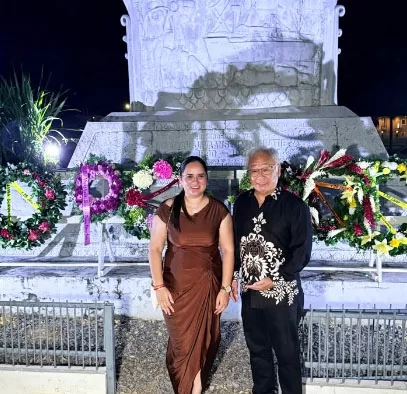
    In a gathering that places youth voices front and center in global policy conversations, the 2026 Suriname Model United Nations (SUMUN) conference wrapped up its sessions focused on human rights in the age of artificial intelligence, held at the iconic National Assembly building in Paramaribo. More than 45 young delegates between the ages of 17 and 22 gathered to debate pressing international issues, putting months of preparation and specialized training on display for diplomatic leaders and foreign guests in attendance.

    SUMUN is designed specifically to give emerging young leaders hands-on exposure to the fields of diplomacy, policy development, and cross-border cooperation. This year’s opening ceremony drew a lineup of high-profile guests, including Suriname’s Minister of Foreign Affairs Melvin Bouva, Minister of Oil, Gas and the Environment Patrick Brunnings, as well as senior foreign diplomats: French Ambassador Nicolas de Lacoste and Argentinian Ambassador Emiliano Gabriel Waiselfisz.

    In his keynote address to delegates, Minister Bouva centered his remarks on the critical need to include youth perspectives in global conversations that will shape their futures. Drawing on the conference’s 2026 core theme of human rights in the artificial intelligence era, he emphasized that ethical guardrails for emerging technologies can only be effective when rooted in coordinated global collaboration that includes the input of the generation that will live with AI’s long-term impacts.

    Anand Gajapersad, president of the Rotary Club of Paramaribo, one of the initiative’s supporting organizations, also addressed delegates, highlighting how inclusive diversity and cross-community collaboration are foundational to solving modern global challenges. Ravi Patandin, chair of the SUMUN organizing committee, expanded on this, outlining how meaningful youth engagement in public decision-making strengthens long-term social and economic development across all nations.

    Weeks before the official conference got underway, all participating students completed a rigorous six-week training program focused on building core leadership, structured debate, and public communication skills. During the simulation sessions, which mirrored the working procedures of the United Nations Security Council and General Assembly, delegates presented formal position papers and negotiated resolutions on AI and human rights before an independent panel of judges. A series of awards were granted to recognize outstanding participation, including honors for the best position paper, best delegate, and best speaker.

    Following the conclusion of the conference, the Rotary Club of Paramaribo reaffirmed its admiration for the dedication and critical thinking demonstrated by all participating delegates. The organization also emphasized its ongoing commitment to supporting youth development initiatives that empower young people to contribute meaningfully to public life and global problem-solving.

  • “I Miss Him So Bad”: Mother Mourns Son Killed in Crash

    “I Miss Him So Bad”: Mother Mourns Son Killed in Crash

    A quiet Saturday afternoon took a devastating turn for a Belize City family, leaving a grieving mother mourning the sudden loss of her son, one of two fatalities in a horrific multi-vehicle crash on the George Price Highway. The collision, which unfolded between mile markers 16 and 17 in the Belize District on Saturday night, claimed the lives of 24-year-old Glenn Lamb Jr. and his close friend and father figure Nelson Hemsley.

    Michaela Baide, Lamb Jr.’s heartbroken mother, shared that her son had no plans to leave the family home that day. “From Thursday he said he no going nowhere,” Baide recalled in an interview. It was Hemsley’s request that convinced her son to step out that afternoon, a decision that would end in tragedy. “He never came home,” Baide said, her voice heavy with grief.

    Describing her son as a gentle, respectful young man who avoided drinking, smoking and late-night partying, Baide called him her everything. “He was humble, he was my perfect child,” she said. “He gave me the world. I miss him so bad it got me down, but I think when I lay him to rest, everything will be okay. I just wish I had one more minute with him.”

    Acting Commissioner of Police Hilberto Romero, head of Belize’s National Crimes Investigation Branch, confirmed details of the crash to reporters. First responders found Lamb Jr. and Hemsley unresponsive and trapped inside the black Ford Escape SUV the pair were traveling in. Both men were pronounced dead shortly after arriving at Karl Heusner Memorial Hospital.

    The collision involved three vehicles in total: the Ford Escape, a Ford van driven by Chadwick Ysaguirre, and a motorcycle operated by David Lambey. Initial investigative findings indicate the sequence of events began when the Ford Escape struck the motorcycle, before swerving across the center line into the direct path of the oncoming van, triggering a fatal head-on impact.

    Romero confirmed that the two other people involved in the crash—Ysaguirre and Lambey—are currently in stable condition. Some have already been released from medical care, while others remain in hospital for ongoing observation and treatment.

    To determine if alcohol impairment played a role in the collision, investigators have sent urine samples from all involved parties for toxicology testing, and are currently awaiting the results of the analysis. Local outlet News 5 will be airing a full, in-depth report on the crash during its 6 p.m. News 5 Live broadcast tonight, with further updates as the investigation progresses.

  • Man remanded on firearm, ammunition charges

    Man remanded on firearm, ammunition charges

    A 27-year-old male resident of St. Michael, Barbados has been ordered into pre-trial custody at a state prison following his initial court appearance in a weapons-related criminal case. The defendant, Trasuon Romario Roger Alleyne, who lives in the Morris Gap neighborhood along Westbury Road, was taken into police custody and formally charged by investigators from the Barbados Police Service’s elite Serious Organised Crime Unit (SOCU) on April 30. The two charges against him include illegal possession of a firearm and unlawful possession of 26 rounds of live ammunition.

    Alleyne made his first court appearance this week on Monday, May 4, before Chief Magistrate Douglas Frederick at the District ‘A’ Criminal Court No. 1. Under the island nation’s legal procedures for serious indictable offenses, Alleyne was not required to enter a formal plea during this initial hearing. Following the brief proceeding, the Chief Magistrate ordered that Alleyne be remanded to the custody of the Barbados Prison Service at the Dodds Correctional Facility, where he will remain behind bars leading up to his next court date.

    The case has been formally transferred from the initial criminal court to the District ‘A’ Traffic Court, with the next procedural hearing scheduled for June 1. As the legal process moves forward, no additional details about the circumstances of the alleged weapons possession or any other context surrounding the arrest have been released by law enforcement officials as of this reporting.