
Days after the UK-based Privy Council delivered a landmark ruling that formally strikes down colonial-era legislation criminalizing consensual same-sex relations between adult citizens in Trinidad and Tobago, three prominent religious leaders representing different faith communities have publicly voiced their non-support for the judicial decision, citing their adherence to longstanding divine spiritual principles. Dr. Ellis Burris, president of the country’s Inter-Religious Organisation (IRO) — a multi-faith body that counts Baha’i, Zoroastrian, Hindu, Muslim, and Christian congregations among its affiliated members — told local outlet the Trinidad Express in a telephone interview that no major global divine religious tradition endorses the newly validated secular legal framework. Burris explained that the IRO’s entire membership is unified in prioritizing alignment of national laws with what they define as universal divine principles, and that the group will only throw its support behind state legislation that matches these spiritual benchmarks. He noted that the organization would not intervene to judge the personal lives of LGBT+ community members, and instead called for mutual patience and respect, urging both religious followers and queer residents to engage in prayer to work toward what he framed as eventual universal alignment of all earthly laws with divine mandates. He framed the shift toward secular legal recognition of same-sex relations as a symptom of eroding spiritual fabric amid rising materialism, adding that communities must move gradually toward greater spiritual harmony without cruelty or inhumanity toward others. Separately, Palo Seco Imam Lorris Ballack shared his uncompromising rejection of the ruling in a separate phone interview, stating he cannot condone the new legal status. While he said he would not intervene in private personal choices between consenting adults, he warned that the ruling could pave the way for subsequent legal changes including same-sex marriage certification and adoption of young boys by same-sex male couples, outcomes he claimed would create a “sick society.” Ballack referenced the biblical and Quranic story of the destruction of Sodom and Gomorrah as a divine punishment for same-sex relations, claiming the ruling could bring similar collective harm to Trinidad and Tobago and calling on all citizens to speak out publicly against the decision. Spiritual Shouter Baptists Archbishop Barbara Burke also joined the chorus of critics, describing the decriminalization ruling as an “evil” imposition that contradicts divine design for humanity. Burke echoed the reference to the destruction of Sodom and Gomorrah, questioning why a majority-faith nation like Trinidad and Tobago was being forced to accept the legal change, which she incorrectly implied originated from London rather than local judicial processes. She argued that the country’s far more urgent public priority should be addressing its persistent high murder rate, calling on all prayerful citizens to kneel in worship to chase away what she framed as invading evil forces. She closed with a rhetorical question comparing the historic persecution faced by Shouter Baptist communities, who were once targeted for arrest for their traditional worship practices including ringing ceremonial bells, to the new legal status for same-sex relations, asking which of the two she described as transgressions was more harmful to national life.
分类: society
-
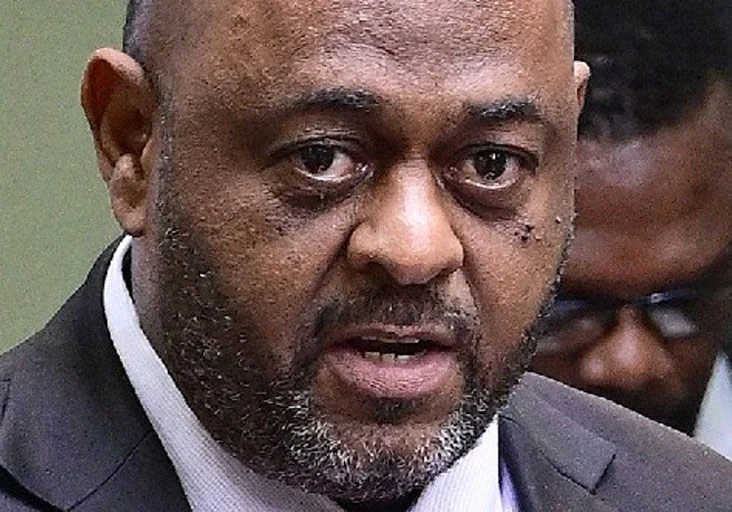
Sturge defends State response in Chag collision
Trinidad and Tobago’s Defence Minister Wayne Sturge has pushed back firmly against allegations of government inaction following a tragic dual pleasure craft collision off Chaguaramas on Sunday, confirming that the Trinidad and Tobago Coast Guard launched its emergency response a mere four minutes after the incident was reported. The high-seas crash left five people unaccounted for at sea, including a 17-year-old girl, while six other survivors were rushed to the St James Medical Complex in critical condition, triggering a coordinated multi-agency search and rescue effort that drew personnel from the Coast Guard, the Trinidad and Tobago Police Service Coastal Unit, and the force’s Air Support Unit. In a press briefing responding to queries from the Express, Sturge described the fatal incident as “extremely unfortunate and entirely avoidable”, framing it as a stark reminder of the lethal risks posed by non-adherence to established maritime safety protocols. He noted that the government faced widespread backlash and heavy criticism on social media just weeks prior, when it issued targeted safety warnings to boat operators in Toco about collision risks and other perils of unregulated maritime operations. Sturge drew parallels to recent high-profile maritime disasters in a nearby Caribbean nation, noting that the public should already have been primed to exercise heightened caution when navigating local territorial waters. While he acknowledged that routine patrols to enforce vessel safety standards fall under the Coast Guard’s remit to a limited degree, Sturge emphasized that the agency’s core statutory mandate remains national border security, rather than full-time compliance monitoring for recreational craft. The defence minister stressed that comprehensive maritime safety legislation is already on the books to protect seafarers, arguing that the longstanding bottleneck is not a lack of rules, but widespread public pushback when authorities attempt to enforce existing safeguards. “When we move to uphold these regulations, the public immediately complains and pushes back,” Sturge explained. “At the end of the day, vessel operators bear the ultimate responsibility to respect these rules and understand their purpose.” Sturge declined to share further details about the specific circumstances of the Sunday collision, noting that the full incident is now the subject of an active criminal police investigation, and extensive public commentary at this stage could compromise the integrity of the probe. His remarks came in direct response to public criticism from environmental and maritime advocacy group Fishermen and Friends of the Sea (FFOS), whose corporate secretary Gary Aboud issued a statement Sunday calling on the government to immediately table long-delayed comprehensive fisheries management legislation that the organization has spent 30 years lobbying for. FFOS accused successive administrations of ignoring repeated warnings about gaps in vessel operation and safety frameworks that could have prevented the weekend tragedy. Sturge pushed back on the group’s critique, stating he did not expect Aboud to ever acknowledge or credit the government for any positive progress it has made on maritime safety to date, adding that the lessons from the Chaguaramas collision will be used to strengthen public outreach around existing rules to ensure all boat operators understand the rationale behind mandatory safety mandates.
-
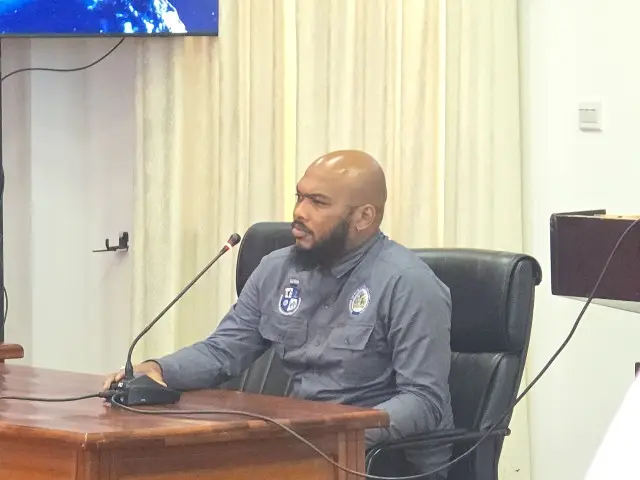
COI exposes possible “significant” safety shortcomings aboard MV Barima
A presidential Commission of Inquiry (COI) probing the July 18, 2026 capsizing of the MV Barima ferry – which sank mid-voyage between Georgetown and Port Kaituma – heard damning testimony on November 10, 2026, from Christopher Bailey, a newly hired inspector with Guyana’s Maritime Administration (MARAD), that dozens of severe safety deficiencies flagged eight months prior to the disaster were never remediated, due to systemic breakdowns in regulatory follow-up. Led by Trinidad and Tobago-based maritime specialist and COI commissioner Nyree Dawn Alfonso, the line of questioning uncovered that Bailey, who had only been on the job for three months at the time of his inspection, had documented widespread safety gaps on the coastal passenger vessel but failed to issue a port detention order, and no subsequent MARAD official followed up to enforce corrective action. Bailey confirmed that the 200+ lifejackets aboard the ferry lacked water-activated lights, a gap that local fisherman Haresh Singh corroborated during earlier rescue testimony, noting he spotted zero illuminated lifejackets and no accessible fire extinguishers in the vessel’s passenger accommodation area during post-capsizing search operations. While Bailey noted that local Guyanese maritime rules for domestic coastal vessels do not mandate lit lifejackets, the International Convention for the Safety of Life at Sea (SOLAS) requires the feature for all international voyaging craft. Under oath, Bailey conceded that the total absence of hand flares, parachute flares, smoke signals, and flare guns qualified as a major, high-risk safety shortfall. Per standard MARAD protocol, Bailey stated his full inspection report was submitted to the agency’s Director of Safety, who was required to forward the documentation to the Transport and Harbours Department under the Ministry of Public Works to trigger mandatory fixes, followed by a return inspection to verify compliance. Bailey admitted he never received any formal directive to conduct that follow-up check, so no revisit ever took place. When pressed by retired Trinidad and Tobago Rear Admiral and COI panel member Hayden A. Pritchard to confirm the full scope of unaddressed defects, Bailey acknowledged the MV Barima was operating without functional radar, an Automatic Identification System (AIS), an Emergency Position-Indicating Radio Beacon (EPIRB), formal vessel stability data, any reliable distress signaling capacity, a sufficient number of serviceable life rafts, an operational emergency generator, a fixed motorized fire pump, a man-overboard alert system, and required crane operation documentation. Bailey also admitted he failed to review prior inspection records before conducting his assessment, and was unaware that nearly identical critical safety flaws had already been flagged on the MV Barima during a 2024 regulatory check. Senior Jamaican maritime surveyor and COI panel member Captain Hamada Fouda emphasized that expired, unserviceable life rafts are classified as a detainable deficiency under global maritime standards, meaning the vessel should have been barred from leaving port entirely until the issue was resolved – a step Bailey confirmed he never recommended. Additional gaps uncovered during testimony included no posted passenger capacity certificate, no fire safety suits stored on board, improper and unsegregated stowage of dangerous acetylene, LPG cooking gas, and oxygen cylinders alongside passenger areas in violation of International Maritime Organization (IMO) dangerous goods codes, and a complete absence of the mandatory inspection and passenger vessel certification required under Guyana’s national Shipping Act. Throughout his testimony, Bailey repeatedly asserted he never formally cleared the MV Barima to sail, claiming the vessel was supposed to remain docked for ongoing maintenance at the time of his assessment.
-

Grieving Mother Chooses Peace, Not Violence
In the wake of a brutal Halloween night shooting that left two men dead and two more wounded on Belize City’s Cemetery Road, a grieving local mother has made a deliberate, courageous choice to reject cycles of retaliatory violence in favor of peace, even as local authorities escalate enforcement under a newly declared State of Emergency tied to the bloodshed. The November 30, 2026, attack unfolded shortly after 7:10 p.m. as 29-year-old Charles Middleton socialized with three companions — 31-year-old Charles Nolberto, 32-year-old Cesario Choco, and 43-year-old Cliford Olivera — in the adjacent Taylor’s Alley neighborhood, when an unidentified gunman opened fire on the group. Nolberto succumbed to his wounds shortly after arriving at a local medical facility, while Middleton clung to life for several days before passing away, marking the second time he had survived a gun assault in the same community: he was among six people injured in a 2012 Taylor’s Alley shooting. Local police, led by ASP Stacy Smith, confirmed the attack was rooted in long-running rivalry between two opposing street gangs, and that the high-profile double homicide served as the direct catalyst for the newly implemented State of Emergency measures across targeted Belize City neighborhoods. Investigators are currently leveraging data from the national Crime Fusion Center to track down a specific vehicle of interest linked to the suspect, and are reviewing surveillance footage to identify the shooter. For Middleton’s mother, Stephony Neal, the formal police investigation is a secondary priority next to navigating unfathomable grief, while refusing to demand or endorse payback for her son’s killing. Still reeling from the shock of losing her child, Neal told reporters she is drawing strength from her remaining children and extended family to avoid succumbing to anger, noting that she is choosing to remember her son for the widespread affection he shared with friends and neighbors, rather than the violent circumstances of his death. She added that she has been praying constantly not just for her own family, but for every household across Belize trapped in the repeating cycle of gang gun violence, describing the wave of bloodshed as a destructive national trend that requires collective healing rather than more retaliation. Court records show Middleton and Choco had previously faced 2015 murder charges in the killing of Hattieville taxi driver Patrick Dean Spencer, but both were acquitted after key eyewitnesses withdrew their testimony and declined to support the prosecution’s case. As Neal prepares to lay her son to rest, her core priorities remain protecting her surviving children, honoring her son’s memory peacefully, and urging the broader Belizean community to turn away from violent reprisals to break the cycle that has claimed dozens of lives in recent years.
-

Surveillance Cameras Watch, But Do They Deter Crime?
Nearly two years following the full rollout of Belize’s landmark nationwide public surveillance initiative, hundreds of high-definition cameras now stand watch across the country’s busiest thoroughfares, key intersections, and documented high-crime hotspots, with officials planning to expand the network to 1,000 total units in the near future. Equipped with night vision, long-range zoom, and in select locations, facial recognition and automatic license plate recognition functionality, the system is paired with a dedicated police Crime Fusion Center that processes captured footage alongside data from the national law enforcement drone unit. Law enforcement leadership frames the technology as a transformative upgrade to investigative workflows, noting it has already delivered tangible results across high-profile cases. Most recently, the system is supporting the active probe into the killing of 19-year-old Shiloh Coleman, where investigators used camera feeds to narrow down the possible location of the missing vehicle linked to the crime, with teams actively pursuing leads generated from the footage. In a separate recent case, surveillance footage helped identify two suspects accused of robbing an Orange Walk-based businessman at gunpoint, leading to their swift arrest and the seizure of the suspected getaway vehicle. Despite these investigative wins, senior officers including ASP Stacy Smith acknowledge the current system carries notable operational frictions: the massive volume of raw footage requires hours of manual review by overstretched staff, creating bottlenecks when multiple major crime cases unfold simultaneously. To address this gap, the Belize Police Department is actively lobbying a partner agency to deploy advanced artificial intelligence tools that can automatically flag relevant activity in footage, cutting down manual labor requirements and freeing more officers to patrol on the ground. The rapid expansion of the camera network has also sparked growing public debate over two core unresolved concerns. First, widespread questions remain over whether the system actively deters criminal activity before offenses occur, or if it only serves as a post-incident tool to solve crimes after harm has already been done. Second, rising privacy worries have prompted calls for clear regulatory guardrails to prevent misuse of the continuous public monitoring feeds, even as police leadership vows the system is targeted exclusively at criminal elements and will not intrude on ordinary citizens’ private lives. A related challenge has emerged as criminal actors have begun targeting the cameras themselves: a Belize City man named Jimmy Rojas was recently arrested and slapped with two criminal charges for vandalizing two separate surveillance units. Police Commissioner Dr. Richard Rosado is now pushing for formal legislative amendments to raise the currently low penalties for tampering with or damaging public surveillance equipment, arguing the existing minor property damage fines are insufficient to deter these attacks on critical public safety infrastructure.
-
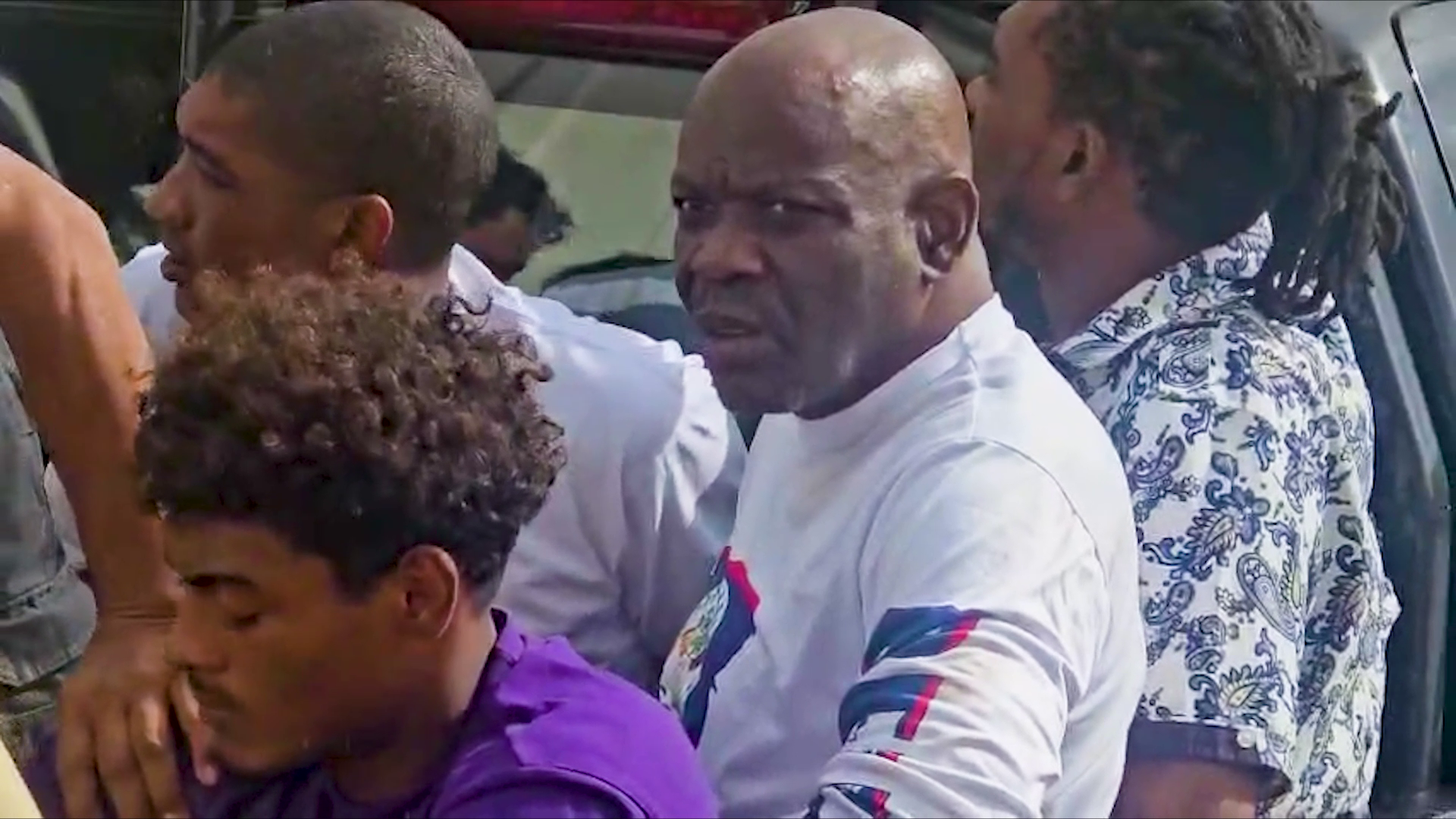
“Easy Glen” Committed to Stand Trial for Murder
In a procedural ruling delivered on November 10, 2026, Belize District’s Chief Magistrate formally ordered Goldburn Adolphus, widely known by the nickname “Easy Glen,” to stand trial at the January 2027 session of the Belize High Court on a single count of murder, following the conclusion of a full preliminary inquiry held in Court Number One. The case stems from the 2025 killing of 42-year-old Shaniele Faber, a local school warden and mother of four, whose body was discovered stuffed inside a blue plastic drum by a scrap bottle collector in a Belize City neighborhood. Court documents confirm Faber’s death is alleged to have occurred sometime between October 2 and October 4, 2025, with Adolphus formally taken into police custody and charged with the murder on October 6 that same year. Prosecutors presented a robust body of evidence during the preliminary proceedings, including sworn testimonies from 16 witnesses spanning uniformed police officers and civilian bystanders, alongside formal documentary records and physical forensics: a recovered machete, suspected blood residue from a nearby residential building, and surveillance footage that law enforcement officials say directly links Adolphus to the crime scene. During the hearing, Adolphus notified the court of his intent to summon four alibi witnesses — two men and two women — to testify on his behalf during the upcoming High Court trial. The otherwise routine procedural hearing was upended, however, by a heated dispute over Adolphus’ legal representation that unfolded on the record. Adolphus told the magistrate he was forced to navigate the entire preliminary inquiry without legal counsel, claiming his aunt had paid prominent local attorney Norman Rodriguez a total of $1,200 to represent him throughout the proceedings. A letter submitted to the court by Rodriguez prior to the hearing stated he had formally withdrawn from the case after Adolphus notified him he intended to retain different legal counsel. Speaking to reporters outside the courthouse later, Rodriguez offered a conflicting account, confirming he had only received $800 in partial payment for his services, and said Adolphus had told him his aunt would finalize all remaining administrative and financial arrangements for the case. Adolphus has since announced he plans to retain veteran attorney Richard “Dickie” Bradley to lead his defense for the High Court murder trial, and intends to file a formal misconduct complaint against Rodriguez with the national Bar Association over the representation dispute. As of the November 10 ruling, Adolphus remains in pre-trial detention, with no bail granted ahead of his scheduled January 2027 court appearance.
-
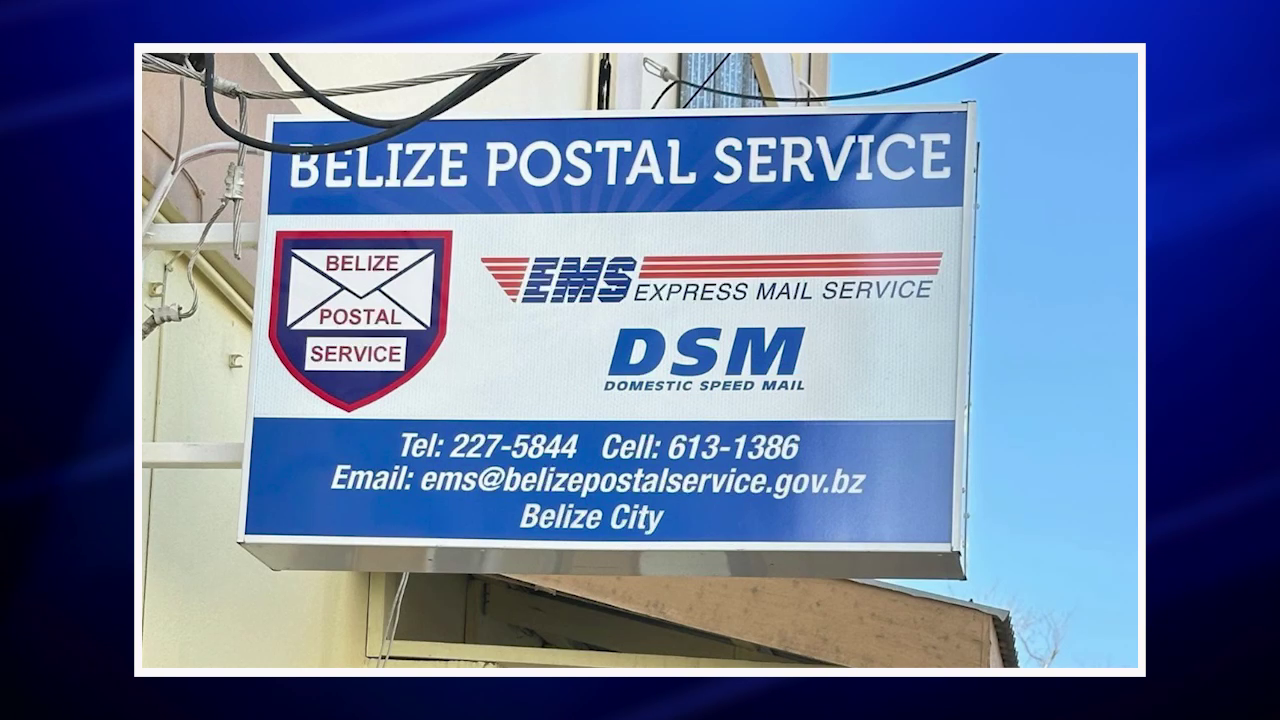
Police Foil Post Office Safe Robbery, Detain Two Suspects
In the early hours of November 10, 2026, a coordinated attempted burglary targeting the main Belize City Post Office on the intersection of North Front Street and Pickstock Street was disrupted by responding local law enforcement, leaving two suspects in custody and the rest of the five-person alleged crew at large. According to preliminary police reports, the masked group launched their operation by first tearing the facility’s external electricity meter from its mounting, a deliberate tactic intended to cut power and disable the building’s integrated security alarm system. After severing the power supply, the perpetrators pried open the heavy metal security shutters lining the Pickstock Street side of the property, shattered a ground-floor glass entry panel, and gained unimpeded access to the post office’s interior. Once inside, the group focused their efforts on two heavy-duty commercial safes stored on the premises, dragging both units out onto the public sidewalk in front of the building in a bid to break into them away from internal security cameras. The crew successfully forced open one of the two safes, only to find it completely empty of cash, stamps, or high-value documents. Before they could make any further progress on the second intact safe or flee the scene, responding patrol units arrived mid-break-in, apprehending two of the alleged intruders on the spot. Law enforcement officials have since returned both safes to the post office facility unharmed, with no reported loss of postal assets or public funds. Investigators are currently working to identify the remaining three members of the suspected burglary crew, determine the exact motive behind the targeted heist, and trace how the group obtained advance knowledge of the post office’s security protocols and safe locations. The local news outlet notes that this report is a transcript of its evening television newscast, with any Kriol-language speaker remarks transcribed using a standardized, consistent spelling system for accessibility.
-

NTUCB Wants Retirees to Keep More of Their Severance Pay
On November 10, 2026, the National Trade Union Congress of Belize (NTUCB) has resubmitted a long-stalled policy proposal to the Office of the Prime Minister and the Ministry of Finance, urging the government to eliminate the 25% income tax currently levied on severance payouts for all retiring workers across the country. The advocacy push, rooted in direct feedback from thousands of NTUCB rank-and-file members, targets a longstanding inequity in Belize’s tax code that the union argues imposes an unnecessary financial strain on residents at the exact moment they transition out of full-time formal employment. NTUCB President Ella Waight emphasized that the existing policy creates a two-tier system: a small subset of employers on a government exemption list already see their staff receive full untaxed severance payouts, while the vast majority of private and public sector workers face a 25% deduction the moment they reach the standard retirement age of 60, or are forced to exit the workforce early due to disability, retrenchment, or corporate redundancy. Waight noted that for most retirees, this lump sum severance payment is a critical financial buffer as they move from earning a steady full-time salary to relying on limited, often meager, post-employment income streams: many only qualify for a modest social security pension, a small fixed gratuity, or in some cases, a minimal public assistance grant. The 25% tax cut erodes that buffer significantly, undermining the ability of workers who have contributed decades of labor to Belize’s economy to retire with basic financial dignity. The NTUCB leader also disclosed that this severance tax relief proposal is just one of multiple unaddressed advocacy packages the union has delivered to successive administrations in recent years, including targeted interventions to curb soaring cost of living expenses and implement stronger anti-corruption safeguards for public funds. To date, the union has received no formal written response to these submissions, nor has it been extended an official invitation to meet with Ministry of Finance or senior cabinet officials to negotiate the proposed changes. The union is now calling on the government to prioritize the severance tax exemption as a low-cost, high-impact reform that delivers immediate, tangible financial support to some of the country’s most economically vulnerable residents.
-

Trio remanded over cocaine haul worth almost $27m
Three individuals linked to a record-breaking nearly $27 million cocaine bust appeared before the No. 1 District ‘A’ Magistrates’ Court on Tuesday, where they were formally remanded to Dodds Prison to await further legal proceedings. The three defendants have been identified as 56-year-old Michael Andrew Warde, a resident of Greenidge Tenantry Road, Hindsbury Road, St Michael; 35-year-old Michael Quitin Franklin, who resides in Mount Friendship, St Michael; and 37-year-old Ryan Alwyn Chichester, based at Apt 1, Browns Gap, Sargeants Village, Christ Church. During the Tuesday court hearing, presiding magistrates declined to allow the trio to enter formal pleas on a slate of indictable drug-related charges, including unlawful possession of a controlled substance, narcotics trafficking, and possession of the banned substance with the explicit intent to distribute it to third parties. Court documents confirm the alleged offences took place exactly one week prior to the arraignment, on the preceding Monday. Law enforcement officials seized a total of 538.8 kilogrammes of suspected uncut cocaine during the operation, with local drug enforcement authorities calculating the haul has an estimated street market value of $26.94 million, marking one of the largest narcotics seizures recorded in the jurisdiction in recent years. As the charges brought against the three men are indictable, the case will now proceed through the formal judicial process to a higher court for preliminary hearings to determine if there is sufficient evidence to move to a full trial.
-

Mother Pleads for End to Violence
On November 10, 2026, Belize City officials confirmed 29-year-old Charles Middleton as the second fatality stemming from a brazen October 31 gang-related shooting in the Taylor’s Alley corridor adjacent to Cemetery Road. The attack unfolded when unidentified armed assailants opened fire on a gathering of local men, instantly killing 31-year-old Charles Nolberto and leaving two additional residents, 32-year-old Cesario Choco and 43-year-old Clifford Olivera, with life-altering gunshot wounds. Middleton clung to life for nearly 10 days receiving emergency medical care before succumbing to his critical injuries. During a weekly public police briefing last Monday, Assistant Superintendent of Police Stacy Smith formally tied the deadly attack to ongoing turf conflicts between rival criminal gangs operating in the Belize District. Middleton’s mother, 47-year-old Stephony Neal, is now navigating overwhelming, disorienting grief while issuing a heartfelt public plea for all community members to reject cycles of retaliation and end the wave of unrelenting gun violence tearing through local neighborhoods. “I prayed day and night, every hour in between, not just for my own children but for every family in this country,” Neal shared through tearful remarks to local reporters. “I beg God to lay a healing hand over all of us, because this senseless killing has become a deadly, unbreakable trend. Belize needs it. Every single one of us needs this violence to stop.” Neal emphasized that she harbors no desire for retaliation, despite her devastating loss, and that her only immediate priorities are laying her son to rest in a peaceful, dignified ceremony and taking extra precautions to keep her remaining family members safe. Court and police records confirm Middleton had previously survived a 2012 mass shooting in the exact same Taylor’s Alley location that left six people wounded. He and surviving shooting victim Cesario Choco had also been arrested and charged in 2015 for the murder of Hattieville taxi driver Patrick Dean Spencer, but the pair were fully acquitted after the prosecution’s entire case fell apart when all key eyewitnesses recanted their previously submitted statements and refused to testify in court.