分类: society

  • Stakende BLTO vraagt ontslag onderwijsminister en directieleden

    Stakende BLTO vraagt ontslag onderwijsminister en directieleden

    In a dramatic escalation of ongoing labor disputes within Suriname’s education sector, the Union of Technical Education Teachers (BLTO) has formally petitioned President Jennifer Simons for the immediate dismissal of Education Minister Dirk Currie and two senior administrators. The union’s demands come amid a nationwide strike that has paralyzed technical education institutions across the country.

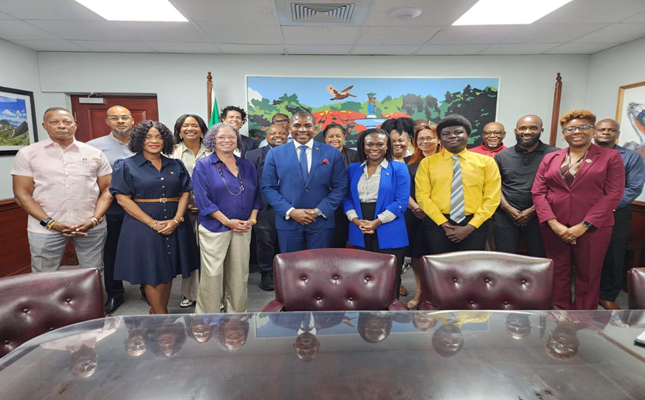
    During a tense meeting at the presidential palace on January 23, BLTO representatives presented their petition directly to President Simons, outlining five critical grievances that have prompted their fifth industrial action this year. The primary concerns include persistent delays in salary payments and overtime compensation dating back to November 2025, non-compliance with court orders mandating payroll system reforms, and detrimental policies that have allegedly dismantled the formerly functional vocational education system.

    Union spokespersons expressed profound frustration, stating, ‘We have been forced to strike. This marks our fifth action – we cannot continue under these conditions.’ Beyond personnel changes, the BLTO demands immediate establishment of an emergency intervention team and guarantees that all outstanding payments will be settled by January 31. Additional concerns highlight deteriorating infrastructure, with reports of inadequate safety measures, poor hygiene standards, and insufficient facilities at vocational schools.

    President Simons, while accepting the petition personally, declined to commit to the dismissal requests but pledged immediate action on other fronts. ‘I will begin addressing urgent matters today, including safety and hygiene concerns at schools,’ Simons stated, emphasizing collaboration with both Education and Finance ministries to resolve payment delays. However, she explicitly noted her inability to promise salary increases.

    The union has maintained its strike position despite presidential appeals to resume classes ‘in the students’ best interests.’ BLTO members expressed skepticism about government promises, with one representative noting, ‘It’s difficult to trust these assurances. Every administration says the same things, yet the problems persist.’ The union plans to determine its next steps during an emergency general assembly scheduled for later today or this weekend.
  • Ministry of Works & Forestry Division Collaborate to Replant Trees at Hall Estate

    Ministry of Works & Forestry Division Collaborate to Replant Trees at Hall Estate

    In an unexpected environmental incident during standard infrastructure maintenance, a mature tree was accidentally removed by a private contractor on Valley Road North near Hall Estate. The error was promptly detected by the Project Implementation Management Unit (PIMU), which immediately consulted with the Forestry Division to develop a remediation strategy.

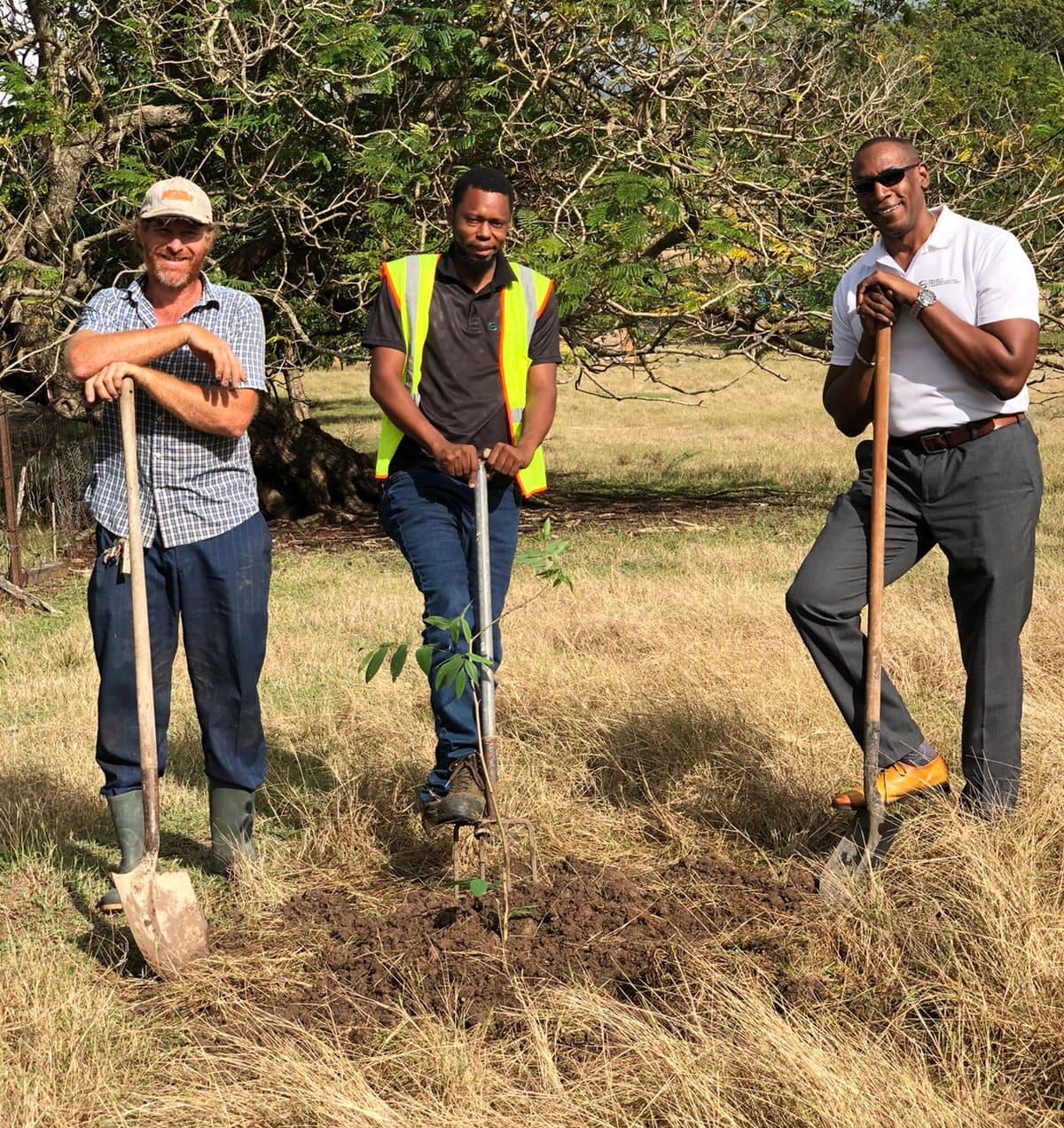
    Demonstrating rapid environmental accountability, PIMU organized a replanting initiative that resulted in two Cassia fistula trees being installed at the original location on January 23rd, 2026. This compensatory action aims to maintain ecological equilibrium, enhance regional biodiversity, and establish natural shading for future generations.

    The ceremonial planting was executed by a collaborative team including Mr. Adrian Hall, Manager of Hall Estate; Mr. Trevor Thomas, PIMU Driver; Mr. Sherwin Harding, Deputy Community Liaison Officer at PIMU; and Mr. Winston Whyte, PIMU Project Coordinator.

    Officials expressed gratitude to the Forestry Division for their expert guidance, reaffirming their dual commitment to progressive infrastructure development and conscientious environmental protection. The incident has highlighted the importance of careful oversight in public works projects and the value of swift corrective measures when errors occur.

  • LETTER TO THE EDITOR: ‘Deux Branches’ another betrayal of the public’s trust!

    LETTER TO THE EDITOR: ‘Deux Branches’ another betrayal of the public’s trust!

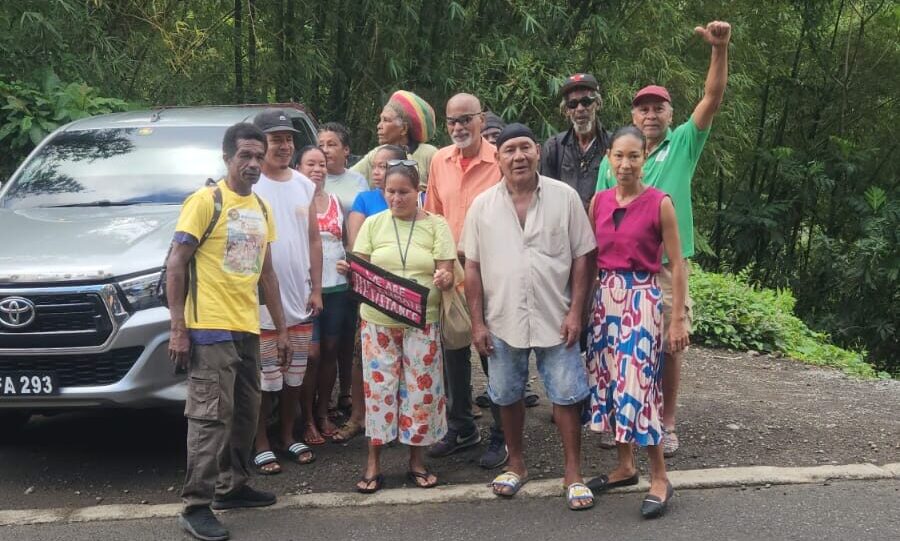
    Dominica confronts a severe crisis of public confidence as government inaction regarding illegal mining operations at Deux Branches exposes fundamental failures in governance. The situation has escalated dramatically since a foreign entity initiated unauthorized extraction activities despite a court-issued stop order that officials have conspicuously failed to enforce.

    The core issue transcends environmental concerns, striking at the heart of Dominica’s social contract. Public trust—particularly in the Ministries of Health, National Security, and Finance—has deteriorated to critically low levels. This distrust now threatens to spread to the departments of Planning, Environment, Lands & Surveys as officials demonstrate alarming indifference to both legal mandates and citizen concerns.

    What makes this case particularly troubling is the administration’s refusal to provide scientific data and factual information to concerned citizens who have themselves presented evidence-based arguments. This ‘No law, No constitution’ approach to governance has created a dangerous precedent that undermines democratic foundations.

    The ecological implications are equally grave. Deux Branches represents not just an environmental treasure but a litmus test for governmental accountability. The failure to protect this landscape could precipitate both ecological disaster and further erosion of public trust, potentially poisoning governance structures, impoverishing society, and destroying civil spirit.

    Dr. Irving ‘Eipigh’ Pascal, the author raising these concerns, maintains cautious optimism that transparent and professional management of this crisis could still reverse the damage. He emphasizes that prevention remains superior to cure, and that protecting Dominica’s natural heritage is fundamental to ensuring a just, prosperous future for the Nature Isle.

    The situation demands immediate attention as it represents a critical juncture in Dominica’s development. How authorities handle this illegal mining debacle will determine whether trust can be restored or whether collective insecurity will deepen in an increasingly challenging global landscape.

  • Detour in Place as Drainage Works Continue at Hodges Bay

    Detour in Place as Drainage Works Continue at Hodges Bay

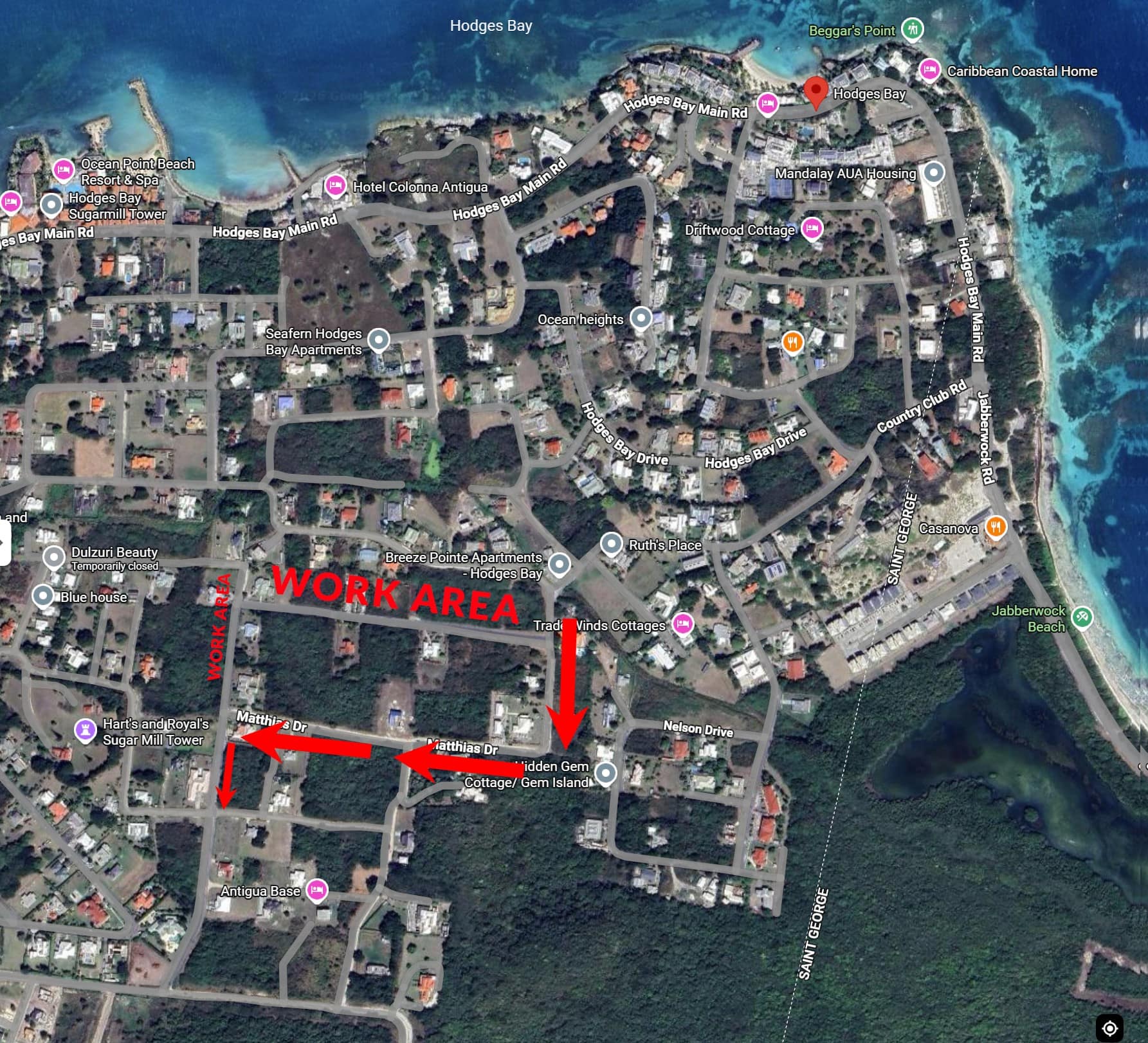
    Commuters navigating the Hodges Bay area are encountering significant traffic modifications as municipal authorities advance critical drainage infrastructure enhancements. The ongoing construction focuses on establishing a swale drain adjacent to Matthias Drive, situated south of the Breeze Pointe Apartments complex. This essential public works initiative has necessitated the partial closure of certain roadways, resulting in considerable transit delays during peak travel periods.

    Transportation officials have formally issued recommendations for motorists to employ alternative pathways to circumvent the construction zone. Suggested detours include utilizing Matthias Drive as a primary bypass or identifying supplementary access routes to reach destinations within the affected vicinity. The infrastructure development team has extended apologies for any inconveniences caused by the necessary construction activities, simultaneously expressing gratitude to both daily commuters and local residents for their demonstrated patience and cooperation.

    This drainage improvement endeavor represents a strategic component within a broader, comprehensive initiative aimed at reinforcing and modernizing the nation’s transportation infrastructure network. The swale drain installation specifically targets enhanced stormwater management capabilities, intended to mitigate flooding risks and improve road safety during severe weather events. Project coordinators confirm that construction timelines remain on schedule, with anticipated completion expected to conclude within the forthcoming weeks, pending favorable meteorological conditions.

  • Antigua and Barbuda seeks nominations to spotlight female philanthropists ahead of International Women’s Day

    Antigua and Barbuda seeks nominations to spotlight female philanthropists ahead of International Women’s Day

    The Directorate of Gender Affairs in Antigua and Barbuda has officially commenced the nomination period for its 2026 International Women’s Day Spotlight Series, a distinctive program dedicated to celebrating female philanthropists whose modest yet impactful contributions have substantially fortified community foundations nationwide.

    Under the resonant theme ‘Give to Gain,’ this year’s initiative deliberately shifts focus towards women whose altruistic endeavors, though frequently operating beneath the public radar, have generated measurable improvements in supporting vulnerable populations, advancing youth development, and enhancing overall community welfare. The Directorate emphasizes that the program’s core mission is to illuminate these selfless individuals who dedicate themselves to uplifting others and fostering sustainable positive transformation, thereby reaffirming women’s indispensable role as catalysts for societal advancement.

    Citizens are actively encouraged to participate by nominating women who exemplify extraordinary community service, demonstrate compassionate leadership, and exhibit an unwavering commitment to empowering their fellow citizens. Program officials clarify that eligibility extends beyond prominent financial contributors to include those whose generosity manifests through persistent, behind-the-scenes actions and grassroots activism.

    Prospective nominees must be submitted by the deadline of 18 February 2026, with all residents of Antigua and Barbuda eligible to participate in the nomination process. Submissions are accepted through multiple channels including physical delivery to the Directorate’s offices at Lower Nevis Street, postal mail, or electronic communication via telephone.

    This Spotlight Series constitutes an integral component of the nation’s broader International Women’s Day observances, scheduled for annual commemoration on March 8th. The campaign reinforces a fundamental societal message: women’s philanthropic contributions, whether through material resources or dedicated service, generate profound and far-reaching benefits for the entire social fabric.

  • K-9 Roni joins Royal Saint Lucia Police Force

    K-9 Roni joins Royal Saint Lucia Police Force

    The Royal Saint Lucia Police Force (RSLPF) has significantly bolstered its operational capabilities with the acquisition of K-9 Roni, a specially trained police dog generously donated by the French government. The canine specialist arrived on the island earlier this week accompanied by his handler, with formal training sessions scheduled to commence imminently with local K-9 unit officers.

    Police Public Relations Officer Zane Romulus confirmed that Roni’s integration into the force will substantially enhance the unit’s effectiveness in security operations. Concurrently, the RSLPF is developing comprehensive management protocols for its K-9 division, featuring ambitious infrastructure plans including state-of-the-art kennel facilities, specialized transportation systems for canine safety, and meticulously structured veterinary care programs.

    An official handover ceremony is being organized for the coming weeks to formally recognize this international security collaboration. This development follows high-level discussions between RSLPF delegates and French security counterparts during a January 19th visit to Martinique, where meetings were conducted with both the Gendarmerie and French Navy authorities.

    These diplomatic engagements, stemming from the ninth Franco-Saint Lucia Joint Security Meeting held in October 2025, have additionally paved the way for expanded training opportunities across multiple RSLPF units. The forthcoming programs will emphasize capacity building and strengthened cross-border cooperation mechanisms to effectively address regional security challenges.

  • Ciceron R.C. Combined wins schools Backyard Garden Competition

    Ciceron R.C. Combined wins schools Backyard Garden Competition

    In a pioneering initiative blending education with agriculture, Ciceron R.C. Combined School has emerged victorious in Saint Lucia’s inaugural Schools Backyard Garden Competition. The event, organized as a cornerstone of the Consumer Affairs Department’s Food Security Campaign during Business Month activities, saw Millet Primary School and Anse La Raye Primary School claiming second and third places respectively.

    Seven educational institutions from District Four participated in this innovative program, receiving vital seed contributions from the Taiwan Technical Mission. Students were tasked with establishing functional gardens while meticulously documenting their agricultural journey through video submissions. Additional participating schools included La Croix Maingot Combined School, Roseau R.C. Combined School, L’Abayee SDA Primary School, and Odsan Primary School.

    Educators observed remarkable student engagement throughout the project. Omica Common, Special Education teacher at the winning institution, noted how students incorporated traditional gardening techniques from their grandparents. The initiative sparked such enthusiasm at Anse La Raye Primary that Science teacher Lillian Stephens reported increased demand for farming club membership, leading to expanded projects including organic pesticide production and handmade flower pots.

    The Taiwan Technical Mission provided comprehensive support under Project Lead Maria Jaganath, who helped transform outdoor spaces into practical learning environments. The mission awarded monetary prizes to top-performing schools alongside recognition for all participants. This collaborative effort received additional backing from Saint Lucia’s Ministry of Agriculture and Ministry of Equity.

    At the January 15, 2026 awards ceremony held at the Archbishop Kelvin Felix Pastoral Centre, Dr. Charmaine Hippolyte-Emmanuel, Permanent Secretary for the Ministry of Equity, praised the project’s alignment with national youth development and food security objectives. She emphasized how the initiative demonstrated successful implementation of policy through effective partnerships, creating tangible community outcomes while acknowledging the crucial support from school administrators and staff.

  • UN urges governments to prioritise education funding on International Education Day

    UN urges governments to prioritise education funding on International Education Day

    In a powerful address marking International Education Day, UN Secretary-General António Guterres issued an urgent call for governments worldwide to elevate education funding as a paramount priority in national budgets and development agendas. The January 23rd observance highlighted education’s critical role as both a fundamental human right and essential catalyst for opportunity, dignity, and global peace.

    Guterres revealed startling statistics indicating that over 200 million children and youth remain excluded from educational systems due to intersecting crises of poverty, discrimination, conflict, displacement, and natural disasters. He emphasized that closing persistent gaps in financing, access, and educational quality requires immediate coordinated action from governments, international partners, and donors.

    Parallel developments emerged from the Caribbean region, where the Caribbean Development Bank convened a youth symposium addressing regional educational challenges. Participants identified three critical areas demanding urgent intervention: intelligent integration of technology in learning environments, mandatory implementation of Technical and Vocational Education and Training (TVET) programs, and strengthened collaboration among families, educational institutions, and communities.

    A significant generational divide surfaced regarding technological adoption, with students reporting that many educators and parents lack digital literacy, resulting in excessively restrictive technology policies. Symposium recommendations included comprehensive digital literacy programs for adults to facilitate more effective, safe, and responsible technology use in education.

    Youth representatives particularly emphasized the necessity for practical, hands-on learning experiences, advocating for TVET to become compulsory throughout Caribbean educational systems. They argued that these skills provide essential preparation for future economic success despite not being widely integrated into current curricula.

    Guterres specifically highlighted the importance of incorporating youth perspectives in policy formation, stating: ‘We particularly need to listen to the voices of young people themselves, and act on their pleas for qualified teachers, relevant skills training for a changing world, and equitable access to technology.’ His concluding appeal urged global collaboration to ‘build inclusive, resilient and innovative education systems for all people.’

  • UWIFIC Guild of students to Host Inter-Campus Guild Council Meeting in Antigua

    UWIFIC Guild of students to Host Inter-Campus Guild Council Meeting in Antigua

    The University of the West Indies Five Islands Campus is preparing to welcome student delegates from across the Caribbean region for the upcoming Inter-Campus Guild Council Meeting, scheduled to take place in Antigua over five consecutive days. This significant gathering will assemble student representatives from all five UWI campuses—Cave Hill, Mona, St. Augustine, Global Campus, and the host Five Islands campus—under the ambitious theme “Beyond the Council: A New Order of Leadership.

    The event represents one of the most substantial regional student leadership initiatives of the academic year, designed to foster enhanced collaboration, shared governance structures, and progressive advocacy among the university’s student bodies. As the hosting institution, UWI Five Islands will spearhead comprehensive discussions, interactive workshops, and strategic planning sessions concentrating on leadership development, effective student representation, and policy proposals with system-wide implementation potential.

    Kerron McKenzie, Guild President of the UWI Five Islands Campus, articulated the meeting’s profound significance, stating: “This transcends conventional formalities. We are building meaningful regional connections, fortifying inter-campus unity, and establishing foundational frameworks for sustainable initiatives that will advantage students throughout the entire UWI network.” McKenzie further emphasized the ICGC’s distinctive value as a platform for exchanging best practices, addressing common student concerns, and developing adaptable proposals that respect campus diversity while advancing a unified regional vision.

    A central thematic focus of this year’s deliberations will be legacy-building within student governance frameworks. Participants will explore mechanisms to ensure contemporary decisions generate enduring value, maintain operational continuity, and preserve institutional memory within guild leadership structures.

    The selection of Antigua as host venue underscores the growing influence of the UWI Five Islands Campus within regional student governance, positioning it as an emerging center for collaborative dialogue and innovative thinking within the broader UWI ecosystem. Campus organizers perceive this meeting as a definitive moment that reinforces purposeful leadership, regional solidarity, and the creation of lasting institutional legacies for future generations of UWI students.

  • UNDP Engagement Highlights St. Kitts and Nevis as Regional Leader in Crime Prevention

    UNDP Engagement Highlights St. Kitts and Nevis as Regional Leader in Crime Prevention

    BASSETERRE, St. Kitts – The Federation of St. Kitts and Nevis has gained significant international recognition for its innovative public health-oriented strategy in combating crime and violence. This acknowledgment follows high-level discussions between the nation’s Citizen Security Task Force and representatives from the United Nations Development Programme (UNDP).

    The dialogue occurred during the Task Force’s inaugural 2026 meeting, presided over by Prime Minister Dr. Terrance Drew. This meeting coincided with a UNDP assessment mission evaluating how the Federation’s prevention-focused framework could serve as a blueprint for broader Caribbean regional initiatives against criminal activities.

    Established in 2024, the Citizen Security Task Force has implemented a comprehensive societal approach that integrates law enforcement agencies, educational institutions, youth advocates, government officials, business leaders, and religious organizations. This collaborative model addresses crime fundamentally as both a public health concern and social development challenge rather than purely a law enforcement matter.

    The results have been transformative: the Federation has witnessed a remarkable 76% reduction in homicides, achieving single-digit homicide rates for the first time in more than twenty years.

    Prime Minister Drew emphasized that international attention validates both the model’s effectiveness and the collective national effort behind its success. “Today’s recognition celebrates a novel and thoughtful methodology toward citizen security,” stated Dr. Drew. “This approach conceptualizes crime and violence not merely through a law enforcement lens but as multidimensional public health and social challenges. The credit belongs to the people of St. Kitts and Nevis who partnered with government, embraced prevention, and took ownership of their safety.”

    The Prime Minister further noted that the model’s expanding influence creates opportunities for regional impact. “We take pride that our progress can now help shape solutions throughout the Caribbean. If our experience can assist other nations in enhancing safety, resilience, and social stability, that represents a contribution we are honored to make,” he affirmed.

    Eartha Carey, Coordinator of the Citizen Security Secretariat, indicated that UNDP’s engagement reinforces the importance of maintaining momentum throughout 2026. “This international interest confirms that prevention strategies work when communities are actively engaged and properly supported,” Carey observed. “Our current focus involves deepening outreach efforts, strengthening partnerships, and ensuring that achieved progress becomes sustainable long-term.”

    UNDP officials have suggested that St. Kitts and Nevis’ methodology could significantly influence discussions surrounding a proposed Regional Action Plan addressing crime and violence as public health issues. This development aligns with Caribbean leaders’ continued prioritization of prevention mechanisms, social investment, and regional cooperation frameworks.

    The Government of St. Kitts and Nevis reaffirms its commitment to enhancing citizen security through evidence-based policies, community involvement, and international collaboration, with the ultimate objective of ensuring safety and security for all citizens, residents, and visitors.