分类: society

  • Judgement Reserved in Wilbert Banks Murder Trial

    Judgement Reserved in Wilbert Banks Murder Trial

    Five years after the fatal shooting of Belize City bicycle technician Wilbert Banks, the criminal trial of the man accused of masterminding his killing has entered its final stage, with the judge delaying the verdict to the end of the month.

    Krismar Espinosa, 36, stands charged with orchestrating the 2021 murder that left Banks dead from multiple gunshot wounds. Following days of witness testimony and closing arguments from both legal teams, Supreme Court Justice Nigel Pilgrim announced he would reserve his ruling until July 31, giving time for careful review of all evidence presented in court.

    The prosecution’s case is anchored by the testimony of a key witness: Banks’ former girlfriend, who was Espinosa’s romantic partner at the time of the killing. Citing credible threats to her personal safety and that of her young child, the witness was granted permission to deliver her testimony remotely via video link. She told the court that Espinosa pressured her to lure Banks to the Lake Garden neighborhood, threatening to kill her and her son if she refused to comply with the plan.

    Per the witness’s account, she contacted Banks under the pretense of requesting a ride to the nearby town of Ladyville. When the pair arrived at the prearranged location in Lake Garden, Espinosa emerged from hiding and opened fire directly into the vehicle Banks was driving. Though Banks managed to speed away from the attack to escape, he ultimately crashed his vehicle a short time later. A post-mortem examination conducted after his death confirmed that he died from a total of seven gunshot wounds inflicted during the attack.

    Investigators first connected Espinosa to the crime after recovering the witness’s cell phone in close proximity to the crash and attack site. Law enforcement later traced the device’s ownership to the shared residence of Espinosa and the witness in Lords Bank. The witness fully cooperated with authorities throughout the investigation and has not faced any charges connected to Banks’ killing, while Espinosa was taken into custody and formally charged with murder.

    Breaking with the common practice of defendants declining to testify, Espinosa took the witness stand in his own defense to deny any role in the killing. He told the court that he was at his own home at the time of the shooting, maintaining his complete innocence in the case. After both the prosecution and defense delivered their final closing arguments summarizing their positions, Justice Pilgrim adjourned the trial and scheduled the delivery of the final verdict for two weeks after the hearing, on July 31.

  • Director of Nursing Honored for 42 Years of Service at Sir Lester Bird Medical Centre

    Director of Nursing Honored for 42 Years of Service at Sir Lester Bird Medical Centre

    At a time when healthcare systems around the globe continue to recognize the irreplaceable contributions of frontline medical staff, Antigua and Barbuda’s Sir Lester Bird Medical Centre has shone a spotlight on one of its most long-serving and dedicated team members. Director of Nursing Jacqueline JnoBaptiste is being celebrated for marking an extraordinary 42 years of continuous service in the nursing profession, a career that has touched thousands of patient lives and shaped the standard of care at the leading national medical facility.

    The institution’s official recognition highlights the core values that have defined JnoBaptiste’s decades-long career: unwavering dedication to patient welfare, deep-seated compassion for every person under her care, and a consistent drive to elevate the quality of healthcare and public services delivered to local communities across Antigua and Barbuda. Unlike many professionals who shift careers over a 40-year period, JnoBaptiste has remained rooted in nursing, growing her expertise and taking on increasing levels of responsibility throughout her tenure.

    Today, JnoBaptiste holds the senior leadership position of Director of Nursing, where she oversees all nursing operations at the Sir Lester Bird Medical Centre, guiding a large team of nurses and shaping clinical care protocols for the facility. In its formal statement recognizing JnoBaptiste’s service milestone, the medical centre extended warm congratulations to the veteran nursing leader, emphasizing that her decades of work have left a lasting, positive mark not only on patient outcomes at the hospital but also on the broader healthcare profession across the twin-island nation.

  • New Police Officers Told Every Traffic Stop and Every Investigation Matters

    New Police Officers Told Every Traffic Stop and Every Investigation Matters

    On Thursday, July 16, 2026, Antigua and Barbuda marked a key milestone for its law enforcement community with the passing out parade for the Royal Police Force’s 50th Recruit Training Course. During the official graduation ceremony, Attorney General Sir Steadroy Benjamin delivered a keynote address that centered on the profound impact of everyday policing decisions and the critical responsibility that comes with serving the public.

    Benjamin told the newly minted officers that every routine action they take – from responding to resident complaints to pulling over motorists during traffic stops and leading criminal probes – directly shapes how the public views and trusts the entire Royal Police Force. He emphasized that policing is far more than a routine role focused solely on enforcing national and local laws; instead, it requires consistent, respectful service to every member of the community, regardless of background. Every single interaction between an officer and a citizen, he noted, leaves a lasting impression that can either strengthen or erode public confidence over time.

    “There are no shortcuts to delivering high-quality, ethical service to the Antiguan and Barbudan public,” Benjamin told the graduating class. “Every complaint demands thorough, professional investigation, conducted with unwavering respect for the rights and inherent dignity of every person involved.”

    The Attorney General stressed that the legal authority new officers gain with their graduation comes hand-in-hand with profound personal and professional responsibility. “Today, you are not just leaving here with a certificate confirming you completed your training,” he said. “You are accepting a sacred public trust. From this day forward, you are the guardians of the law, the protectors of vulnerable community members, and the public face – the ambassadors – of the Royal Police Force of Antigua and Barbuda.”

    Benjamin also pushed back against the idea that policing can be treated as a standard 9-to-5 occupation. “Policing is never just an eight-hour job,” he explained. “It is not a career for people who only watch the clock or count down to their next paycheck. It demands commitment beyond scheduled shifts.”

    He encouraged the new recruits to cultivate consistent traits of dependability, courtesy, and calm resilience, even when facing high-stakes, volatile scenarios. The force, he argued, urgently needs officers who can retain their professional bearing and empathy when confronting adversity. “We need men and women who show up reliably, treat all people with courtesy and politeness, and remain sensitive to the needs of community members who are struggling,” Benjamin said. “We need people who can hold their composure and stay true to professional standards, even when the situation pushes them to their limits.”

    Beyond addressing the graduating officers, Benjamin also issued a call to senior leadership and experienced personnel within the Royal Police Force, urging them to take an active role in mentoring the new recruits. He noted that experienced officers carry a formal responsibility to provide clear leadership and steady guidance as the new graduates transition from training to active frontline duty. “These new officers need your support and guidance to build successful, long careers in law enforcement,” he said. “It is your responsibility to lead by example and make sure they do not lose their way as they adjust to the realities of policing work.”

    The ceremony itself capped off the 50th iteration of the force’s recruit training program, welcoming a cohort of new officers to fill active service roles across Antigua and Barbuda, and reinforcing the force’s ongoing commitment to upholding professional, public-centered policing.

  • All 33 children evacuated from burning Hope children’s home

    All 33 children evacuated from burning Hope children’s home

    On Friday, a sudden fire broke out at the Hope Children’s Home, a residential childcare facility located on Guyana’s East Coast of Demerara, prompting an emergency response that resulted in all 33 children at the home being evacuated without harm, the nation’s Ministry of Human Services and Social Security confirmed in an official press statement updated 17 July 2026.

    Critical good fortune meant that when the blaze ignited in the home’s boys’ dormitory, every child living at the facility was gathered on-site for Vacation Bible School in the compound’s adjacent church building, far from the origin of the fire. First responders and facility staff acted immediately to coordinate an organized evacuation, moving all children to a secured open area on the nearby dam to account for everyone present.

    The ministry has formally confirmed that all 33 residents – 18 boys and 15 girls – have been accounted for, with no injuries reported among the children or responding personnel. In the immediate aftermath of the incident, the country’s Childcare and Protection Agency, alongside senior ministry officials, has already launched the process of relocating the children to alternate state-run care facilities.

    At these new temporary and permanent accommodations, the children will continue to receive the full spectrum of care, protection, and emotional support they require, consistent with standard care protocols. In the statement, the Ministry emphasized that the safety and long-term well-being of the children affected by the incident remain its top operational priority, and that officials will continue to monitor the situation closely as relocation and recovery efforts progress.

  • Hotel chain says it acted immediately after altercation with guests in Punta Cana

    Hotel chain says it acted immediately after altercation with guests in Punta Cana

    A viral social media video capturing a violent altercation between a staff member and dining guests at The Grand Punta Cana Moon Palace resort has prompted The Palace Company to issue its first official public statement on the incident this Friday.

    The footage, which spread rapidly across digital platforms in recent days, shows the hotel employee throwing multiple objects toward seated guests, sparking widespread panic and tension among restaurant patrons. The clip drew thousands of reactions online, putting intense public pressure on the resort chain to address the event.

    In the formal statement, The Palace Company confirmed that it immediately triggered internal emergency response protocols to support all parties involved the moment the incident was brought to company leadership’s attention, and quickly notified local law enforcement and relevant authorities.

    The resort organization added that it has maintained consistent open communication and ongoing collaborative work with investigative bodies to fully uncover the full sequence of events and specific circumstances that led to the confrontation. As of the statement’s release, local authorities have not released any public details regarding the root cause of the altercation or what investigative steps have been taken so far.

    The company extended formal regret for the negative impact the incident has inflicted on the guests involved, as well as the broader community that places trust in the Palace Company brand. It reaffirmed that the safety, security, and overall well-being of both guests and employees remains the top core priority across every one of its global properties.

    “The Palace Company reaffirms its commitment to creating a safe, respectful environment in accordance with the highest quality standards that distinguish both our organization and the tourist destination of Punta Cana,” the statement read. The company also reiterated that it will continue to provide full cooperation to authorities throughout the investigative process, standing by its longstanding pledges to guest and staff safety.

    This high-profile incident has drawn renewed attention to safety protocols at major Caribbean tourist resorts, a key economic driver for the Dominican Republic.

  • The demand for justice against the police erupts again in the streets.

    The demand for justice against the police erupts again in the streets.

    SANTO DOMINGO — Just two weeks after the fatal police-related death of 21-year-old Darlyn Mercado sparked widespread public outcry, demands for accountability over deaths involving Dominican National Police officers have reignited across the country. Demonstrations intensified Sunday, with protesters pushing for full, transparent investigations into two additional suspicious deaths that families say are tied to uniformed officers.

    In the city of San Cristóbal, demonstrators carried an empty coffin to the gates of the local police headquarters to draw attention to the death of Miguel Antonio Lucas Paredes. Concurrent with that action, relatives of both Paredes and 18-year-old Rawel Sierra gathered outside the Santo Domingo East Prosecutor’s Office to demand swift answers for their loved ones’ deaths, both of which the families attribute to police conduct.

    According to Paredes’ family members, the 35-year-old was taken into custody last Wednesday, July 8, by a captain from the National Police’s Central Directorate of Intelligence (Dintel). The arrest, carried out on allegations of illegal lottery ticket sales in a San Cristóbal neighborhood, was conducted without a formal court warrant, the family claims. Following his arrest, Paredes was held for three days at the Sector 17 police detachment in San Cristóbal.

    While in custody, Paredes told officers he was unwell after being beaten by personnel inside the detention facility, according to family accounts. He never received the requested medical care during his detention. When he was finally released to his relatives, Paredes was already in critical condition. He was immediately rushed to the Juan Pablo Pina Regional Teaching Hospital, where he was pronounced dead shortly after arrival.

    National Police spokesperson Diego Pesqueira has pushed back on the family’s narrative, stating that institutional investigations are ongoing and pending autopsy results to confirm an official cause of death. Pesqueira noted that preliminary internal accounts claim Paredes was arrested while engaging in illegal activity and was released before his health declined. The police spokesperson added that all investigative work is being conducted strictly in line with available evidence.

    For the family of Rawel Sierra, the wait for justice has stretched to 25 days. Sierra, an 18-year-old living with autism, left his home in the Brisas del Este neighborhood of Santo Domingo East on a simple errand to buy a hamburger when he was killed by a bullet to the head. Family members say the fatal bullet was fired by a police officer during a street protest over widespread power outages in the area.

    Carrying hand-painted banners emblazoned with the slogan “Police don’t kill me,” Sierra’s relatives joined Sunday’s demonstration to demand authorities immediately identify and prosecute the officer responsible for his death. The family told reporters they have grown frustrated with the lack of updates from investigative bodies, saying no concrete progress on the case has been shared with them nearly a month after the shooting.

    The renewed demonstrations mark the second wave of public pressure on Dominican law enforcement and prosecutorial bodies in less than a month, as citizens push for systemic reform to address frequent allegations of excessive force and police misconduct across the country.

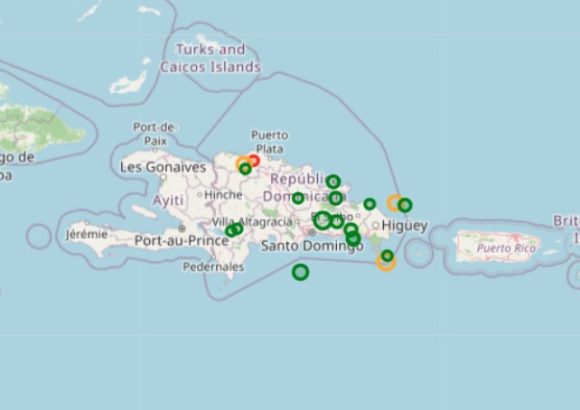
  • How to prepare for a possible earthquake in the Dominican Republic?

    How to prepare for a possible earthquake in the Dominican Republic?

    Situated at the tectonic boundary between the Caribbean and North American plates, the Dominican Republic faces a permanently elevated threat of destructive seismic activity, prompting a leading local structural engineer to issue a urgent call for widespread public preparedness to reduce potential harm.

    Following a formal risk assessment delivered by seismic and structural engineering specialists last Wednesday that reaffirmed the country’s high-risk designation, Claudia Germoso, a practicing seismic engineer, stressed that proactive disaster mitigation starts with homeowners and families assessing their own living spaces long before a tremor strikes.

    Germoso outlined clear, actionable steps that households can complete in advance to boost their safety. First, every family should map out sturdy, low-risk safe spots within their home, anchor heavy freestanding furniture like bookshelves and wardrobes to wall frames to prevent tipping, and conduct a visual inspection for red flags that signal structural vulnerability. These warning signs include diagonal cracks running through load-bearing walls or columns, chipping or detaching concrete on support beams, exposed reinforcing steel, and any home additions or modifications built without oversight from a licensed engineering professional.

    When an earthquake is actually underway, Germoso emphasized that panic and impulsive action are the leading causes of preventable injury. She advised the public to remain calm, immediately execute the internationally recommended “drop, cover, and hold on” protocol, which also helps create the so-called “triangle of life” survival space, and avoid rushing for exits. Most earthquake-related injuries, she noted, are caused by falling unsecured objects, not structural collapse during shaking. Once the shaking subsides completely, residents should evacuate calmly and in an orderly manner using stairwells (never elevators) and move to pre-identified open outdoor spaces like public parks or empty parking lots far from damaged structures.

    Beyond household prep, Germoso pushed the public to get a formal professional assessment of their building’s structural integrity, pointing to several key factors that drastically increase risk: older buildings constructed before modern seismic building codes were adopted, homes built on uncompacted fill or geologically unstable terrain, unpermitted, unengineered structural modifications, and chronic lack of routine maintenance. “If you are unable to assess the vulnerability of your home and surrounding environment on your own, reach out to a qualified expert for guidance,” she stated.

    Contrary to a common public misconception, Germoso added that a home’s earthquake resistance does not rely solely on using strong building materials — appropriate, code-compliant structural design is the foundational requirement for seismic safety.

    In additional guidance published on the local seismic awareness Instagram account Sismicidadrd, officials reminded residents that every household should keep a pre-packed emergency safety backpack ready to grab at a moment’s notice. Recommended supplies for the pack include a fully stocked first aid kit, portable flashlights with extra batteries, bottled drinking water, non-perishable food items, and copies of all critical personal identification and property documents.

    This story was compiled and updated in partnership with DominicanScope, the Dominican Republic’s leading English-language local news outlet.

  • Wastewater seeping onto Bridge Street raises health concerns among vendors

    Wastewater seeping onto Bridge Street raises health concerns among vendors

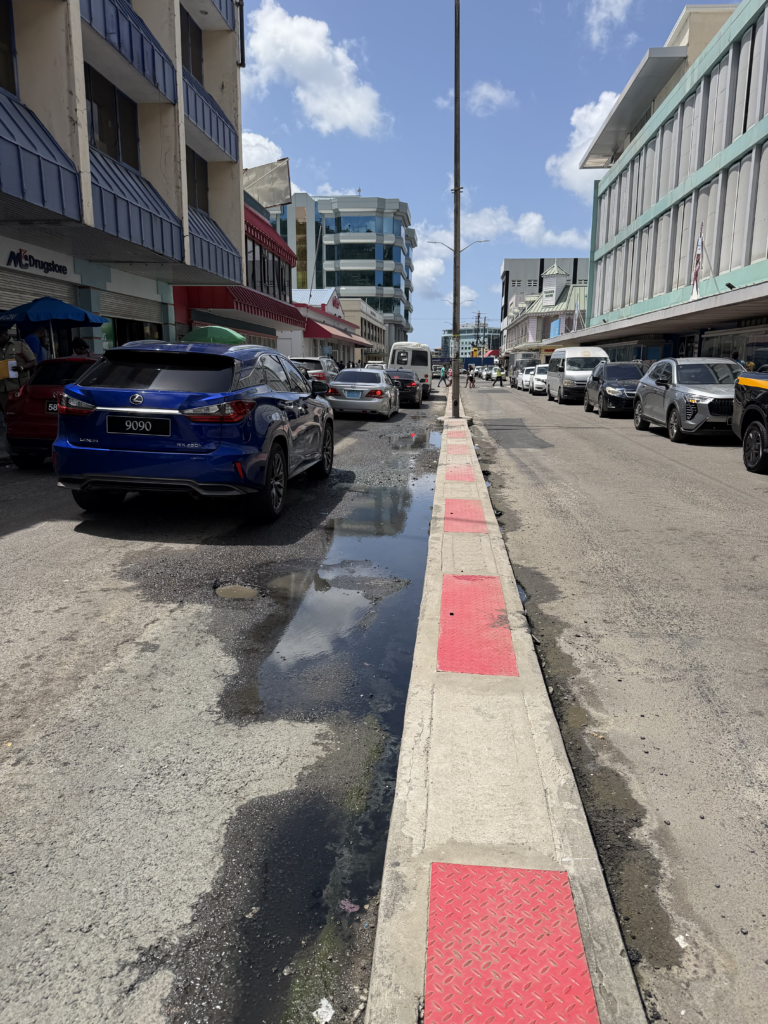
    For months, a persistent uncontrolled wastewater leak has transformed a stretch of Bridge Street in Saint Lucia into an unhygienic, foul-smelling hazard that has crippled local small businesses and raised urgent red flags over public health and safety. Local vendors who operate along the affected corridor have detailed the steady deterioration of conditions, pushing for immediate targeted intervention from responsible authorities after failed temporary fixes and a bureaucratic standoff over who owns the problem.

    Rosemond Clery, one street vendor working steps from the leak, described the stench as overwhelming to the point of driving customers away entirely. “The smell is more than one can bear. It’s really, really bad,” Clery explained, noting that passersby now hurry past the area rather than stopping to browse or purchase goods like they once did. Clery added that the leak has grown progressively worse, with wastewater flowing at higher volumes than it did when the problem first emerged, pooling in deep potholes that line the roadway. Previous attempts to patch the damaged section have done nothing to resolve the issue: workers filled potholes with cement, but the constant flow of water prevented the material from setting properly, leaving the potholes and leak fully intact.

    The leak has already created immediate safety risks, Clery said, recalling an incident where a pedestrian slipped on the contaminated surface and got her feet covered in wastewater. Water from the leak carries high levels of dangerous bacteria, Clery warned, putting everyone who passes through the area at risk of exposure.

    Another local vendor, who asked to remain anonymous, traced the origin of the problem to construction work that recently began at the nearby Dennery bus stop. Since construction started, the foul odor has chased off potential customers who would otherwise stop along the popular corridor. To escape the stench, nearly all nearby shop owners have taken to keeping their doors closed and relying exclusively on air conditioning to circulate air inside their businesses. The vendor emphasized that the urgency of the issue cannot be overstated: “something needs to be done effectively immediately because this is sewer water.”

    Berthia John, who runs Good Old Days Snacks along Bridge Street, called daily exposure to the leak unpleasant and deeply disruptive. “The smell has not been something great to be inhaling on a daily basis,” she said, describing the ongoing situation in the area as “disgusting.” Beyond the odor, John pointed to additional risks from passing traffic: when vehicles speed through the pooled wastewater, they often splash contaminated water onto vendors and pedestrians standing nearby. Many drivers are inconsiderate of the conditions, she added, ignoring the obvious hazard. John warned that long-term exposure to the sewage and its fumes could lead to chronic illness for vendors who are forced to work along the street daily. For most vendors, there is little option to relocate: “you kind of just have to stay where you are,” John said, though some have resorted to closing their stands early each day to limit their exposure.

    One local resident affected by the leak stressed that the problem is not limited to just street vendors, but impacts everyone who travels or works along Bridge Street. Conditions deteriorate even further during rainstorms, when the odor intensifies and contaminated water spreads further down the roadway, expanding the hazard zone. This resident criticized local officials for moving far too slowly to address what they called a preventable public health issue, urging immediate action to resolve the leak before more serious health problems develop.

    After weeks of growing public outcry, the Water and Sewerage Company Inc. (WASCO), Saint Lucia’s main water and sewerage utility, issued a response distancing itself from responsibility for the leak. A company representative clarified that WASCO does not own, operate or maintain any public sewer lines running along Bridge Street, meaning the issue falls outside of the utility’s official remit. While the company acknowledged the validity of public concerns over the leak, it stated that “the matter does not fall under WASCO’s current sewerage infrastructure network or operational responsibility.” The utility added that “the relevant authorities or responsible parties must be engaged to address the matter,” and encouraged local residents to report wastewater issues through official, designated channels. WASCO reaffirmed its commitment to maintaining and managing public water and wastewater systems across Saint Lucia in areas where it holds responsibility.

  • Ministry warns about psychoactive substances during Carnival

    Ministry warns about psychoactive substances during Carnival

    As the annual Lucian Carnival enters its final stretch, public health and law enforcement authorities in Saint Lucia have issued an urgent public safety alert over a sharp uptick in unregulated illegal drug and psychoactive substance use among event attendees. The warning comes as medical providers across the island have reported a surge in patients presenting with dangerous drug-related symptoms over the course of the festivities.

    The Secretariat of the Substance Abuse Advisory Council, the body leading public awareness efforts for this issue, is specifically calling on carnival-goers to familiarize themselves with the risks posed by popular illicit party drugs including Molly and ecstasy. Health experts emphasize that these unregulated, illegal substances carry severe, potentially life-threatening health risks, with common adverse reactions ranging from acute shortness of breath and disorientation to crippling, intense anxiety.

    Natasha Lloyd-Felix, the coordinator of the Substance Abuse Advisory Secretariat, has urged all participants in this year’s celebrations to prioritize personal and community safety, and to look out for fellow revelers throughout the final events. “As you and your group enjoy the festivities, we ask that you remain vigilant with your drinks and stay alert for the well-being of those around you,” Lloyd-Felix stated in a public briefing.

    Over the past several days, frontline medical professionals, first responders, and emergency room physicians across Saint Lucia have submitted multiple reports of patients exhibiting the specific symptoms linked to the use of dangerous psychoactive substances, Lloyd-Felix confirmed. “If you notice any of those symptoms, whether with a member of your group or yourself, it’s important to seek immediate medical attention at one of our nearest health facilities,” she added.

    Lloyd-Felix noted that all official carnival events have on-site medical stations staffed with professionals ready to provide urgent care for anyone experiencing adverse effects from substance exposure. She also reminded revelers to stay close to their companions, keep an eye on their beverages at all times, and take proactive steps to reduce the risk of drink spiking or unwanted exposure to psychoactive substances.

    The current warning follows a series of drug-related arrests made by Saint Lucian police during last year’s Lucian Carnival. In one high-profile case from 2023, a 33-year-old individual was apprehended in possession of multiple packets of ecstasy, Molly, and cannabis resin, and ultimately faced multiple criminal charges including drug possession with intent to supply the controlled substances to others.

    In Saint Lucia, all regulations around controlled substances are outlined in the *Drugs Prevention of Misuse Act*, which classifies possession of banned illicit substances as a serious criminal offense carrying significant legal penalties. Law enforcement has echoed the public health alert, reminding all attendees to enjoy the end of the Lucian Carnival celebrations responsibly and comply fully with national drug laws.

  • BCEN backs moves on pricing, questions consumer protection effort

    BCEN backs moves on pricing, questions consumer protection effort

    A leading consumer advocacy organization in Barbados has thrown its weight behind the government’s planned review of corporate transfer pricing practices, a key policy move targeting the island nation’s persistent high cost of living, while pushing back against the government’s characterization of consumer protection as centered largely on conservation-focused public outreach.

    On Wednesday, Minister of Commerce and Consumer Affairs Kerrie Symmonds outlined the government’s dual-pronged strategy to rein in soaring living costs: cracking down on potentially abusive internal pricing among supermarket chains, paired with a national campaign to encourage household resource conservation. Transfer pricing, the practice by which connected divisions of a single corporate entity set prices for internal exchanges of goods and services, has been flagged as a hidden driver of inflated retail grocery prices in Barbados. When a single corporate group controls every step of the supply chain – from importation to distribution to retail sales – it can layer additional markups at each internal transaction, pushing final shelf prices far higher than actual market conditions would warrant.

    Symmonds, who also holds senior portfolios for energy, business development and commerce, revealed that policymakers are drafting regulatory reforms that would mandate more transparent, arm’s-length pricing between related corporate entities. The goal of the reforms is to eliminate hidden “padding” in supply chain costs that is ultimately passed through to consumers.

    Maureen Holder, executive chair of the Barbados Consumer Empowerment Network (BCEN), says her group recognizes the transfer pricing review as a critical step toward unpacking the structural forces driving Barbados’ high cost of living. But the organization has raised sharp concerns over how Symmonds framed the government’s overall consumer protection approach.

    Holder explained that BCEN took issue with Symmonds’ announcement that the government would prioritize consumer protection through a conservation-focused public education campaign, which he asked local media to help promote. “While BCEN welcomes initiatives that encourage responsible consumption and nationwide environmental stewardship, we are concerned that this approach mischaracterises what constitutes consumer protection and risks creating confusion about the role of government in protecting consumers,” she said.

    Long before the minister’s public announcement, Holder noted, BCEN has consistently argued that consumer protection is far broader than consumer education or resource conservation. She acknowledged that the government’s package includes positive measures, including the transfer pricing review and temporary relief for household electricity and fuel costs. But she emphasized the need to draw a clear line between policies that help households cope with high prices and policies that actively protect consumers from unfair market practices.

    “BCEN also maintains that the cost of living cannot be addressed solely by encouraging consumers to shop differently or conserve more resources,” Holder said. “Therefore, it is prudent that the pricing environment itself also be examined.”

    Holder argued that when connected companies involved in importing, wholesaling, distribution and retail exchange goods at prices that do not align with open market conditions, there is a clear public interest in mandating transparency and requiring arm’s-length transactions. Greater transparency, she said, would boost public confidence that consumers are paying prices rooted in genuine production and distribution costs, rather than unnecessary cumulative markups within integrated corporate groups.

    BCEN has welcomed the government’s decision to open a national conversation on transfer pricing reform, and is calling for broad, inclusive consultation with key stakeholders – including the Fair Trading Commission, the Barbados Revenue Authority, independent consumer organizations, economists, private sector representatives and competition policy experts – before any legislative changes are enacted.

    Holder reiterated that BCEN supports conservation and consumer education as valuable policy goals in their own right. Encouraging efficient use of electricity, water and fuel is unquestionably good public policy, she noted: efficient resource use cuts household expenses, reduces national import bills, and advances environmental sustainability. Similarly, long-term priorities such as promoting energy-efficient building codes and supporting a gradual transition to electric vehicles are entirely worthwhile. But, she stressed, these initiatives should not be labeled as consumer protection.

    By definition, Holder explained, consumer protection exists to shield the public from unfair, deceptive, or anti-competitive business practices. This core mandate includes ensuring fair pricing, transparent commercial contracts, enforceable product safety standards, accessible dispute resolution, fair financial services, truthful advertising, and strong regulatory oversight of key markets. “Consumer education empowers consumers to make better choices. Conservation encourages behavioural change. Consumer protection, however, places legal and regulatory obligations on businesses and governments to ensure markets operate fairly,” she said. “While education is an important component of consumer protection, it cannot substitute for robust enforcement of consumer rights.”

    BCEN also acknowledged the government’s recent temporary interventions to ease household financial strain, including continuing to absorb a portion of global fuel price increases through the Fuel Clause Adjustment mechanism and cutting the value-added tax rate on the first 250 kilowatt-hours of monthly residential electricity use. These measures have undoubtedly provided critical short-term relief for many households amid ongoing global energy price volatility, the group said. But it warned that temporary subsidies should not replace action to address the root structural causes of high living costs.

    Long-term price affordability, Holder argued, requires competitive markets, greater end-to-end pricing transparency, effective industry regulation, and updated, comprehensive consumer protection laws. BCEN has long pushed for a modern consumer protection framework that goes beyond stopgap fiscal measures, she added.

    Barbados still needs comprehensive standalone consumer protection legislation, stronger enforcement of competition policy, more robust market surveillance, and enhanced pricing transparency across all sectors that make up a large share of household spending, Holder said. As such, the proposed transfer pricing review should be folded into a much broader policy agenda focused on improving market competition, cracking down on excessive market concentration that harms consumers, increasing price transparency, and equipping regulators with the full authority they need to investigate unfair market practices.

    BCEN also sees the ongoing policy process as an opportunity to improve coordination between key regulatory bodies, including the Fair Trading Commission, Barbados Revenue Authority, and Central Bank of Barbados, to strengthen market oversight and rebuild public confidence. Holder said BCEN is ready to participate constructively in all upcoming consultation processes, and remains committed to working alongside the government, regulators and the private sector to develop policies that promote competitive markets, defend consumer rights, and improve living cost affordability for all Barbadians.