
Newly released crime analytics from Barbados’ Criminal Justice Research and Planning Unit (CJRPU) have flagged a rapidly growing public safety concern: robberies are claiming a steadily larger share of the country’s major offence landscape, even as total serious crime volumes hold nearly steady year-over-year. Kirt Goodridge, Senior Research Analyst at CJRPU, laid out the stark emerging trends during the Tuesday broadcast of the special online public affairs program *IN FOCUS | Crime Trends 2026: Tracking Criminal Activity & Justice Issues in Barbados*. Data covering the first nine months of 2026 shows a total of 490 major crimes recorded across the island, with quarterly totals showing minimal fluctuation: 170 in Q1, 160 in Q2, and 160 in Q3. But the internal composition of these offences has shifted dramatically. Robberies made up 41% of all major crimes in the January-March window, climbed to 49% in April-June, and hit 52% in the July-September quarter, marking a consistent, worrying upward trajectory. This surge in robberies, particularly those involving firearms, stands in sharp contrast to positive declines in other high-harm violent offences. Murder counts dropped sequentially from 14 in Q1 to 13 in Q2, then fell sharply to 7 in Q3, while cases of serious bodily harm decreased from 55 to 39 to 33 over the same three periods. Goodridge noted these downward trends indicate existing targeted violent crime reduction strategies are delivering measurable progress, but the parallel rise in robberies and gun-enabled incidents represents an unaddressed vulnerability in public safety frameworks. Firearms remain the dominant weapon in homicide cases across all three quarters: 79% of Q1 murders involved guns, that share spiked to 92% in Q2, and only fell to 57% in Q3. While gun use in homicides dipped in the third quarter, Goodridge pointed out that the gap was filled by a rise in fatal stabbings involving knives and cutlasses, signalling that interpersonal conflicts still frequently escalate to lethal violence. Underpinning these worrying trends is a widespread, unregulated proliferation of illegal firearms across the island. CJRPU’s qualitative research interviews with incarcerated offenders reveal that access to unregistered weapons is far easier than the general public assumes. While most inmates refused to detail their exact sources for firearms, nearly all confirmed that obtaining a gun required minimal effort, with many repeat offenders reporting they were able to re-possess a firearm within just one week of being released from prison — even after prior convictions for weapons-related offences. Goodridge emphasized that these findings expose critical gaps in current post-release supervision and illegal firearms interdiction policies, raising urgent questions for justice policymakers about how to disrupt the easy flow of unregulated weapons to repeat offenders and curb the accelerating robbery trend before it undermines broader public safety gains.
分类: society
-

Bus operators welcome $6 fuel subsidy as Antigua and Barbuda fare increase expected in January
Following a high-level closed-door meeting between Antigua and Barbuda’s Cabinet and the national bus operators association last Friday, local public transport providers have expressed widespread relief over a newly rolled-out targeted fuel support package, even as the government extends its timeline for approving a long-debated bus fare hike originally slated to launch in early January. The temporary fuel subsidy allocates a $6 per gallon discount for up to 10 gallons per operator, directly cutting their on-road fuel expenses at the pump. Keith Roy Black Sr., president of the bus operators’ association, noted the group was deeply grateful for the immediate financial lifeline, adding that the entire cohort was pushing for the subsidy to be formally implemented as early as the coming Monday to ease mounting operational cost pressures. In a parallel policy decision announced after the Cabinet talks, the West Indies Oil Company will hand over management of one of its two upcoming new service stations to the bus association, creating a dedicated refueling hub tailored to public transport fleet needs. Black also emphasized that operators would be required to deliver tangible service improvements to justify any future fare adjustment, in direct response to longstanding public feedback pointing out gaps in bus maintenance and passenger experience. He stressed that operators could not prioritize financial gains alone, and must fulfill reciprocal community obligations to deliver higher quality, safer public transport for commuters. To move the fare review process forward, a working group comprising representatives from the Finance Ministry, the Transport Ministry, and the bus operators association will conduct further granular analysis of the proposed fare increase, while a separate cross-sector committee will conduct a comprehensive overhaul of the full public transport fare structure, including adjustments to holiday pricing and discounted rates for uniformed primary school students.
-

EBS kondigt stroomonderbrekingen aan wegens tekort aan opwekcapaciteit
Paramaribo, November 11 – Suriname’s state-owned public utility Energiebedrijven Suriname (EBS) has formally notified residential and commercial customers across multiple regions of upcoming scheduled rolling power outages spanning two separate multi-day windows in November 2026, a mandatory measure to accommodate critical upgrade and maintenance work at the Afobaka power generation complex. The utility confirmed that the planned work will temporarily reduce the collective total generating capacity of the national power plant fleet, leaving insufficient available output to meet peak nationwide electricity demand at certain intervals during the work periods. The two scheduled maintenance and load-shedding windows will run consecutively from Friday, November 13 through Monday, November 16, and Friday, November 20 through Monday, November 23, 2026. During these four-day blocks, targeted rolling outages of no more than three consecutive hours will be implemented across different service zones exclusively during midday and evening peak demand hours, to avoid simultaneous full blackouts across the entire national grid. EBS leadership acknowledged that the planned interruptions will likely create significant inconvenience for households, small businesses, healthcare facilities and commercial operations, and the company has committed to deploying all available technical teams to complete the Afobaka works as quickly and efficiently as possible to minimize broader societal disruption. All affected customers can verify the exact outage schedule for their residential or workplace zone in real time by visiting the official dedicated EBS load-shedding portal at loadshedding.ebs.sr on the relevant operational days.
-

Police seek wanted man
The Barbados Police Service (TBPS) has issued an official public call for community assistance to track down a man sought for voluntary questioning as part of an active, high-priority serious criminal case. Law enforcement officials have identified the individual as Keshawn Jakobi Greenidge, whose most recently confirmed residential address is recorded as 8th Avenue, Ivy, in the St Michael parish. Officials have released a detailed physical description to aid public recognition: Greenidge stands roughly five feet 10 inches tall, has a slim build, and has a dark complexion. Police are formally advising Greenidge to turn himself in at the Criminal Investigations Department housed within District ‘A’ Police Station at Station Hill, St Michael, and are strongly recommending he arrange to be accompanied by a licensed legal representative of his own choosing when he reports to authorities. TBPS has shared multiple dedicated contact channels for members of the public who hold verified information about Greenidge’s current location to come forward safely: individuals may reach the Criminal Investigations Department directly at the phone numbers 430-7242 or 430-7270, dial the 211 police emergency line, contact the anonymous Crime Stoppers hotline at 1-800-8477, or visit the closest local police station to submit their details in person. In a formal advisory included with the public appeal, TBPS leadership has reminded all residents that intentionally harbouring, concealing, or providing any form of material assistance to a person wanted by law enforcement constitutes a severe criminal offence under Barbadian law, and any person found engaging in such conduct will face formal criminal prosecution.
-
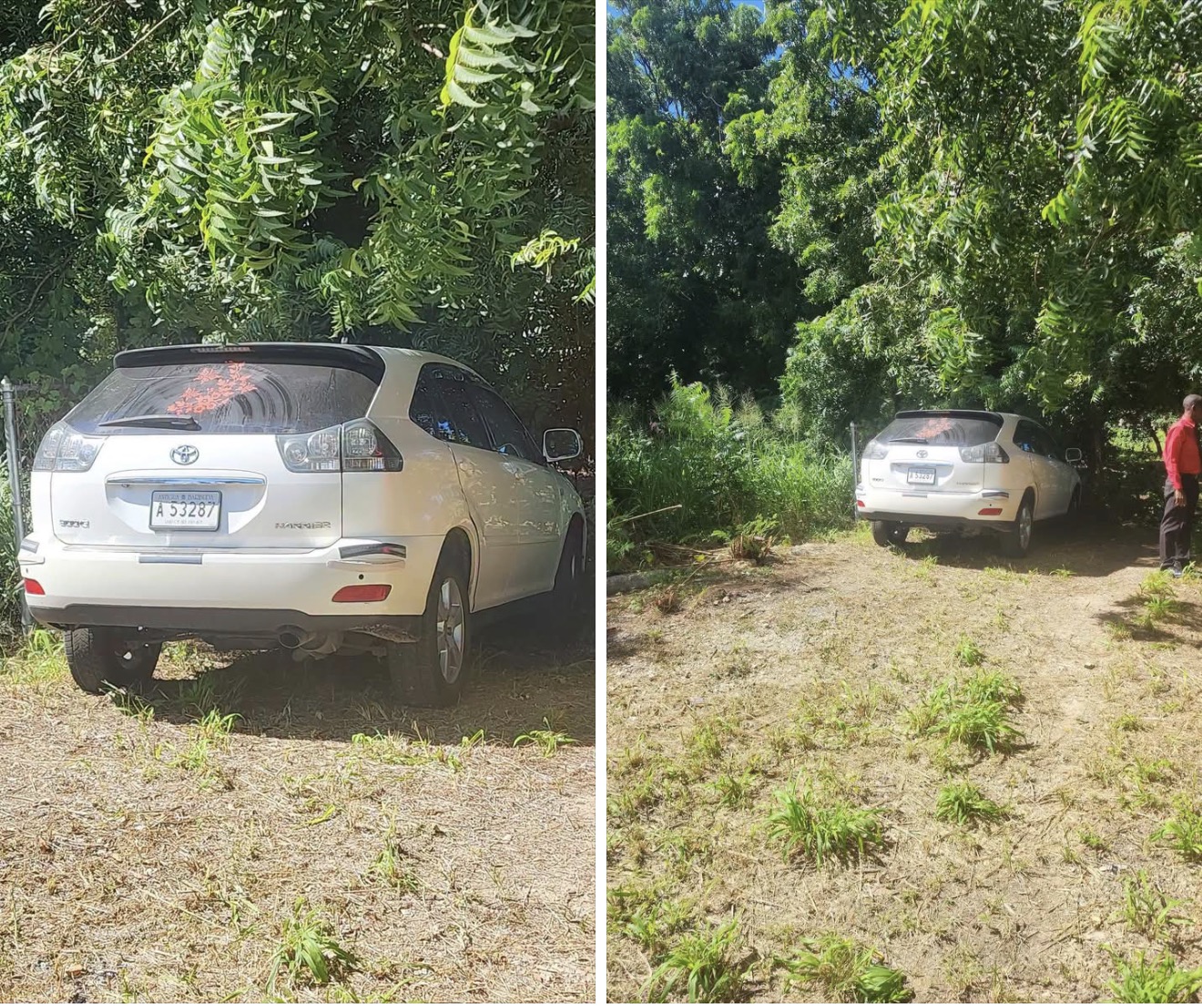
Vehicle Reported Stolen in St. Johnson’s Village Found Following Social Media Appeal
On the evening of Tuesday, November 10, a privately owned vehicle bearing the registration plate A 53287 was stolen from directly outside its owner’s residential property located on Big Apple Road, local law enforcement and community reports confirm. The female vehicle owner shared that she had exited the car roughly at 5:30 p.m. that day to retrieve a personal item from her home, and had inadvertently left the car keys dangling from the vehicle’s exterior door lock when she stepped away, creating an easy opening for the theft that occurred in the one-hour window between 7 p.m. and 8 p.m. Later that same week, the owner issued an urgent public appeal across local community social media groups and neighborhood notice boards, asking residents to share any sightings of the missing vehicle to aid in its safe recovery. The appeal circulated widely among local residents, with dozens of community members reposting the notice to extend its reach. Shortly after the call for assistance went viral, the owner announced that the vehicle had been successfully located and returned to her possession. She publicly extended her gratitude to every local resident who had shared her appeal, offered tips, or helped spread the word to accelerate the recovery process. A preliminary visual check of the recovered vehicle found no obvious scratches, dents, or other visible signs of damage to its body or exterior components. As of the latest update, local authorities have not released further details clarifying the exact sequence of events that led to the vehicle’s disappearance, nor have they disclosed if any suspects have been identified, questioned, or charged in connection with the theft incident.
-
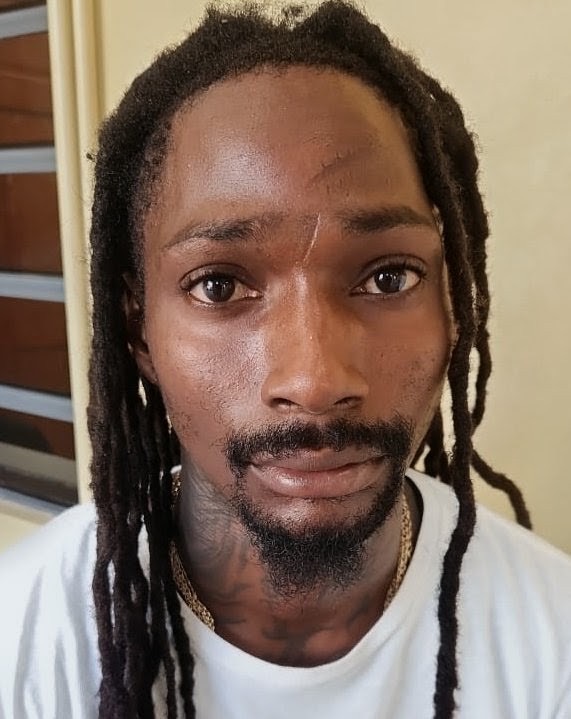
Reuben Forde pleads guilty to illegal gun and ammunition possession, remanded to prison until November 17
The Royal Police Force of Antigua and Barbuda has confirmed that local resident Reuben Forde has been ordered to remain in custody at His Majesty’s Prison, following an admission of guilt on dual firearm and ammunition-related charges at the All Saints Magistrate’s Court. The official public notice, released by the force’s Office of Strategic Communications on Wednesday, November 11, 2026, outlines the full sequence of events that led to the court ruling. The chain of incidents first unfolded on Friday, November 6, 2026, when members of the Criminal Investigations Department’s specialized Task Force launched a targeted patrol operation in the Ottos residential neighborhood. At roughly 9 a.m. that morning, uniformed officers pulled over a white Lexus sedan operated by Forde for a routine compliance check, which escalated to a full search of the vehicle. During the inspection, law enforcement officials uncovered an unregistered Taurus G3 9mm pistol, alongside a loaded magazine holding exactly ten 9mm caliber ammunition rounds. Forde was immediately taken into custody on suspicion of unlawful weapons possession, and transported to the main St. John’s Police Station for formal processing, booking, and evidence documentation. Two days later, on Monday November 9, Forde was brought before Chief Magistrate Ngaio Emanuel for his scheduled arraignment, where he was formally served with two separate criminal counts: unauthorized possession of a prohibited firearm, and unauthorized possession of restricted ammunition. Rather than entering a not guilty plea and proceeding to a full trial, Forde admitted full responsibility for both offences, a plea that was formally accepted by the prosecuting legal team. As no presentence background reports have yet been compiled for the court’s review, Chief Magistrate Emanuel ordered that Forde be remanded in prison custody, with his next scheduled court appearance set for November 17, 2026, at which point the proceedings will advance to the sentencing phase.
-
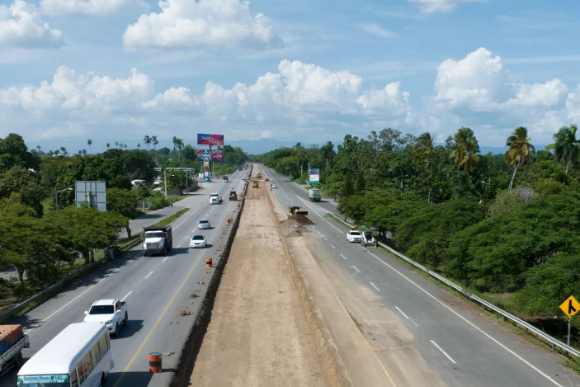
Authorities launch operation to remove illegal structures along Duarte Highway
Santo Domingo, Dominican Republic – A coordinated enforcement operation led by the country’s Ministry of Public Works, in partnership with the Military and Police Commission (Comipol) and Road Safety Support Commission (Codevial), is underway to dismantle unauthorized commercial constructions that have encroached on the legally designated right-of-way of the high-traffic Duarte Highway. The enforcement action is fully grounded in Law No. 1474-34 governing public road access, and follows a formal, months-long notification process that gave all affected property owners a clear, extended window to voluntarily adjust their structures to meet regulatory requirements before mandatory demolition proceedings began. One high-profile case involved the Plaza One commercial complex situated at the 17-kilometer marker in Los Alcarrizos. Officials had previously paused formal legal action against the site after reaching a negotiated agreement, under which the property owners pledged to partially tear down the sections of their development that extended into the public highway easement. However, enforcement teams discovered that during the recent national long holiday weekend, the property owners had brought in construction crews to complete unapproved upgrades and structural expansions that directly violated the terms of the earlier truce, prompting authorities to move forward with immediate demolition. Beyond the Plaza One site, the multi-location operation has already overseen the removal of illegal perimeter walls at two additional commercial sites: Plaza Yanzi in Villa Altagracia, and Plaza Turey in San José del Puerto, located in the Monseñor Nouel province. Inspectors also conducted formal regulatory interventions at the Plaza del Chivo commercial complex in Sabana del Puerto to assess unpermitted encroachment on public road space. In an official public statement, Codevial leadership stressed that preserving the full unobstructed right-of-way of major national highways is a non-negotiable prerequisite for preventing traffic collisions, enabling emergency response access, and maintaining long-term road infrastructure integrity. The agency called on all local business operators and residential property owners across the country to proactively review their land use permits and refrain from any new construction that intrudes on public road property, to avoid facing similar enforcement measures in the future.
-
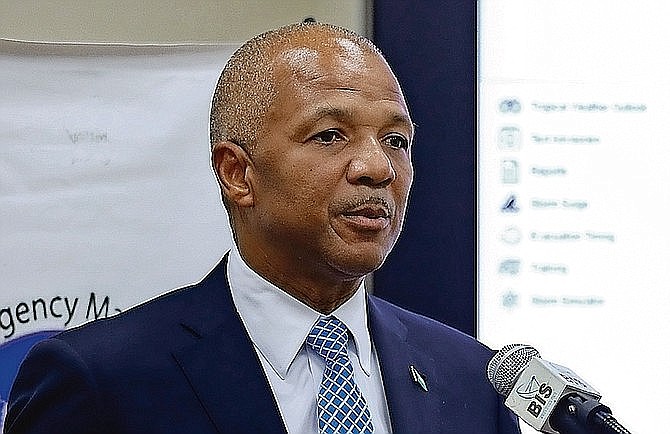
Minister says no complaint as RBDF officer questioned
A serving Royal Bahamas Defence Force member is currently undergoing formal questioning by criminal investigation detectives, National Security Minister Myles LaRoda confirmed in an official public statement yesterday. The development follows viral social media footage showing an armed man, later verified as the defence force officer, threatening a 27-year-old civilian outside a popular Nassau nightclub in the early hours of Monday morning.
The alleged victim, Alphonique Strachan, recounted that the altercation originated inside 316 Bar and Lounge on Prince Charles Drive, when a male friend of hers danced with the female companion of the man now identified as the defence force service member. As Strachan and her group exited the venue to return to their vehicle, she claims the man stepped out of a nearby jeep brandishing a firearm, and repeatedly threatened to shoot and kill both her and her friend, leaving her in genuine fear for her personal safety. The widely circulated cellphone footage captures the officer holding the weapon while Strachan confronts him for drawing a gun on her, before he stows the firearm back in the jeep and approaches her on foot.
Strachan further alleges that a uniformed on-duty police officer patrolling the surrounding area failed to intervene, allowing the armed defence force member to drive away without any search of his vehicle. She additionally claims that the on-duty officer seized her iPhone immediately after she finished recording the confrontation, and instructed her to retrieve the device from the local police station later. As of Tuesday, the phone had not been returned to her, though she was able to preserve all footage of the incident thanks to automatic cloud syncing that backed the recordings up to her linked iPad.
Strachan stated that she attempted to file a report of the incident at two separate police stations in the hours following the confrontation, arriving at Elizabeth Estates Police Station shortly after the altercation. Staff there informed her the case fell outside their jurisdiction and redirected her to Fox Hill Police Station, where she arrived around 4 a.m. and played the recorded footage for a senior ranking officer. She says the senior officer called the on-duty patrol officer involved in the incident, who described the weapon in the footage as a homemade “pumper” firearm, prompting the senior officer to push back that the clip clearly showed a semi-automatic weapon, and question why the patrol officer had not filed an official incident report. When Strachan asked to submit her own formal statement, she was told the police inquiries department would reach out to her directly, and as of Monday, no law enforcement representative had contacted her to initiate the process. She maintains she submitted a formal complaint to the Police Complaints and Corruption Branch on Tuesday.
However, Minister LaRoda pushed back on that account during his public briefing, noting that while representatives from the Complaints and Corruption Branch have interviewed Strachan on at least two separate occasions, no signed, official formal complaint has been formally logged against the defence force officer as of yet. He confirmed that he had spoken directly with the Royal Bahamas Defence Force Commodore, who verified the individual captured in the viral footage is an active duty service member, and that the officer is currently being interviewed at the Central Detective Unit under the Criminal Investigation Department as part of an active, open investigation.
LaRoda emphasized that while the overwhelming majority of both police and defence force personnel carry out their public safety duties with full adherence to professional codes of conduct, any public servant found to have violated civilian rights or breached official operational guidelines will face full legal consequences. “Let the chips fall where they may,” the minister stated, when asked about the separate allegation that a serving police officer seized Strachan’s cellphone and failed to intervene to detain the armed defence force member after the threat. He declined to confirm whether the firearm drawn on Strachan was an official government-issued service weapon, and did not immediately announce if the defence force officer would be placed on administrative leave during the inquiry, noting that the Commodore, who is himself a trained legal professional, is fully aware of the need to preserve public trust in national security institutions, and that all appropriate administrative actions will be finalized promptly once the investigation reaches its conclusion. -
Bahamas repatriates 62 Haitians as Immigration warns of removals
The Bahamas Department of Immigration carried out coordinated repatriation operations yesterday, sending 62 Haitian nationals back to their home country alongside separate removal exercises for undocumented Dominican and Chinese citizens, though authorities have not publicly disclosed the exact number of Dominican and Chinese individuals processed in the latest round.
The recently repatriated Haitian cohort comprises 51 adult men and 11 adult women, and the operation marks the latest entry in a sustained series of targeted removal actions targeting people residing in the Bahamas without valid legal status throughout 2025. Chedville “Chad” Adams, Acting Assistant Director of Immigration with oversight for operational divisions, delivered a stern public advisory to all undocumented persons remaining within the country’s borders, outlining severe consequences for anyone who fails to regularize their immigration status voluntarily. “Any individual without formal legal residency or valid immigration status in the Commonwealth of The Bahamas faces full enforcement action including arrest, formal prosecution, mandatory deportation, and a permanent or extended bar on re-entering the national territory at any point in the future,” Adams emphasized during a public briefing on the operations.
This year’s removal track record stretches back to the immediate aftermath of the May 12 general election, when immigration authorities chartered a Bahamasair flight on May 15 to repatriate 107 Haitian nationals to Cap-Haïtien, a group that included 22 women and five underage minors. Officials confirmed that the vast majority of that cohort had either overstayed their original permitted visitor or resident window, while the remainder had been apprehended after making unauthorized, unapproved landings on Bahamian soil. Subsequent monthly operations have ramped up in scale: 114 Haitian citizens were repatriated in June, followed by a flight on August 27 that carried 116 Haitian nationals (79 men, 33 women and four minors) to the northern Haitian hub. In September, a two-phase operation moved 184 Haitian detainees home, with a Bahamasair flight departing New Providence with 29 detainees before collecting an additional 71 people from the Inagua detention facility to carry 100 passengers on the first leg of the journey.
The shift to routing all deportation flights to Cap-Haïtien instead of Haiti’s capital Port-au-Prince comes against the backdrop of a catastrophic security collapse in Haiti, where armed criminal gangs now control an estimated 70% of the capital’s metropolitan area. Port-au-Prince’s main international airport has been deemed far too high-risk for regular commercial and state-chartered deportation flights, forcing regional governments to redirect all repatriation traffic to the more stable northern coastal city. The Bahamas is not the only regional state accelerating these enforcement actions: the United States has also dramatically scaled up its own deportation flows to Haiti, after terminating Temporary Protected Status protections that had shielded roughly 350,000 Haitian migrants residing in the U.S. from removal. Washington launched its first post-termination deportation flight on August 20 carrying more than 160 Haitian nationals, and within a matter of weeks shifted from a previously monthly flight schedule to weekly repatriation runs to process undocumented Haitian residents.
Official statistics submitted to the Bahamian Parliament show that the country repatriated a total of 2,910 foreign nationals across 2024, 2,196 of whom were Haitian citizens. For the 11-month period leading up to June 2025, total operating costs for the national repatriation program have already exceeded $1.5 million, as immigration authorities continue to prioritize enforcement of domestic immigration rules amid sustained cross-border irregular migration pressures. -

Mirabal Law proposes national statistical system on violence against women
Santo Domingo, Dominican Republic – A landmark piece of legislation tabled before the national legislature, formally named the Organic Law on Comprehensive Response to Violence against Women and widely referred to as the “Mirabal Law,” sets out a sweeping institutional framework to standardize data collection and cross-agency coordination for addressing gender-based violence across the Caribbean nation. The draft bill assigns the country’s National Statistics Office (ONE) the lead technical role in overseeing a dedicated, nationwide specialized statistical ecosystem focused exclusively on tracking all forms of violence targeted at women. Under the proposed rules, the ONE will partner closely with the Ministry of Women and more than 20 other public sector bodies that generate relevant official datasets, to build a unified workflow for aggregating, cross-referencing, analyzing, and publicly releasing verified gender violence data. A core function of this new system will be rolling out uniform, standardized categories, classification frameworks, and shared data variables across all participating government agencies, eliminating current inconsistencies that make cross-departmental datasets impossible to compare accurately. All published data will be fully anonymized to protect victim privacy, and aligned with both domestic statistical governance rules and global international data standards for gender-based violence tracking. The legislative proposal also enshrines a mandatory requirement for the ONE to administer a comprehensive National Survey on Violence against Women at minimum every five years. This recurring population-level study is designed to capture not just formally reported cases, but also the large volume of unreported incidents that have long been hidden from official public records, to map the full prevalence, distinct characteristics, and long-term evolving trends of gender violence across the country. All findings from these surveys will be proactively disclosed to the public, and used as the evidence base to draft, refine, and track the performance of targeted public intervention policies. Complementing the statistical infrastructure, the bill will formalize a permanent national inter-agency coordination body led by the Ministry of Women, which will bring together over 20 government entities to synchronize prevention, support, and law enforcement responses to gender-based violence, and conduct ongoing monitoring of policy outcomes. The legislation bears the name of Patria, Minerva, and María Teresa Mirabal, three iconic Dominican anti-dictatorship activists who were assassinated by the brutal Trujillo authoritarian regime on November 25, 1960. That date has since been designated globally as the International Day for the Elimination of Violence against Women, making the proposed law a direct national tribute to the Mirabal sisters’ legacy of fighting for justice and gender equity.