分类: society

  • Spiritual death

    Spiritual death

    In an impassioned address during Tuesday’s sectoral debate in Jamaica’s House of Representatives, Opposition health and wellness spokesperson Dr. Alfred Dawes has delivered a stark wake-up call to the nation, arguing that a growing “spiritual death” among Jamaicans is eroding the country’s core capacity for compassion and empathy toward its most vulnerable populations.

    Dawes framed Jamaica’s most pressing social struggles—from persistent violence to deep-seated inequality and rising division—as extending far beyond physical and mental health crises, rooted instead in a widespread collapse of collective spiritual well-being, what he calls the overlooked final pillar of overall public health. “I fear that we are losing our humanity because we have ignored the existence of our spiritual health,” he told lawmakers.

    Opening his reflection on the topic with reference to a recent high-profile fatal shooting that sparked national outrage, Dawes called out the violent incident that claimed the life of Latoya “Buju” Bulgin in Granville, St. James on Sunday. Footage of the shooting, which saw Bulgin shot dead by police and her body dragged from her vehicle by the feet like an animal carcass before being dumped into a police van, circulated widely across social and traditional media, shocking communities across the island. While Dawes acknowledged the need to allow due process to run its course, he emphasized that the incident laid bare a broader loss of moral bearing among those involved: “we all know what we saw, [and] what we saw was one woman losing her life and several men losing their humanity.”

    From that incident, Dr. Dawes expanded his critique to systemic patterns of desensitization across Jamaican society. He argued that growing political polarization has pushed many Jamaicans to set aside core moral values to prioritize partisan loyalty, with many now willing to excuse exploitation, abuse, and systemic inequality simply to uphold their political collective. “We have become polarised by party politics so much that some would defend the exploitation and abuse of others because our core desire to be a part of the party collective is greater than our God-instilled desire to defend the vulnerable,” he said.

    The spokesperson also targeted deepening class divisions and systemic social prejudice that dehumanize marginalized Jamaicans based on where they live, the color of their skin, and their economic status. By rationalizing this bias and reducing whole groups of people to “lesser beings,” Dawes said, Jamaicans are actively undermining their own collective and individual spiritual health.

    This spiritual rot, he added, does not only impact marginalized communities. Many outwardly successful Jamaicans, he noted, have become emotionally and spiritually disconnected from the suffering of people around them, prioritizing personal gain over collective good. “Too many Jamaicans are physically fit, mentally stable, but spiritually dead inside because they choose selfishness over service, prosperity over philanthropy, and politics over the people,” he explained.

    Dawes connected this national spiritual decline to broader failures across Jamaica’s public health system and social infrastructure, pointing to ongoing crises that have been left unaddressed by authorities: patients forced to sleep on cold hospital floors for lack of beds, and communities still grappling with unmet recovery needs nearly a year after Hurricane Melissa hit the island in October 2023. These systemic failures, he argued, are a direct reflection of the nation’s lost spiritual compass.

    To reverse this decline, Dawes called on Jamaicans to set aside narrow self-interest in favor of a unifying national purpose: lifting up the hopeless, amplifying the voices of the unheard, and dismantling the broken system that allows poor people to suffer while billions in public funds are misallocated or go missing.

    Even amid his grim assessment of the country’s current state, Dr. Dawes ended on a note of cautious hope, affirming his belief that Jamaicans still hold the innate compassion and resilience needed to turn the tide. Closing with a direct message to Jamaicans enduring ongoing hardship, he said: “To the patients sleeping in the emergency rooms tonight, don’t fret too much, because better will come. To the family praying for an ICU space, hold the faith, because better soon come.”

  • 41 injured in toll road crash, police say

    41 injured in toll road crash, police say

    CLARENDON, Jamaica — A major traffic accident left at least 41 people with injuries on a Wednesday morning in central Jamaica, after a passenger coaster bus crashed into a concrete road median, local law enforcement confirmed in an official statement to Observer Online.

    Emergency responders and police were dispatched to the crash site, located at the traffic stoplight intersection marking the May Pen entrance to the Williamsfield Toll Road, shortly after the collision was reported at 7:57 a.m. local time.

    In the hours following the incident, visual documentation of the crash spread widely across social media platforms. The shared images and footage show the yellow passenger bus heavily damaged, with its front end compressed against the solid concrete median after the impact.

    As of the latest update from local authorities, investigators have not yet been able to verify whether a second vehicle was involved in triggering the collision. Emergency medical teams have transported all injured individuals to nearby medical facilities for treatment, though no update on the severity of their injuries has been released to the public as of this reporting.

  • Man reportedly beheaded in Westmoreland

    Man reportedly beheaded in Westmoreland

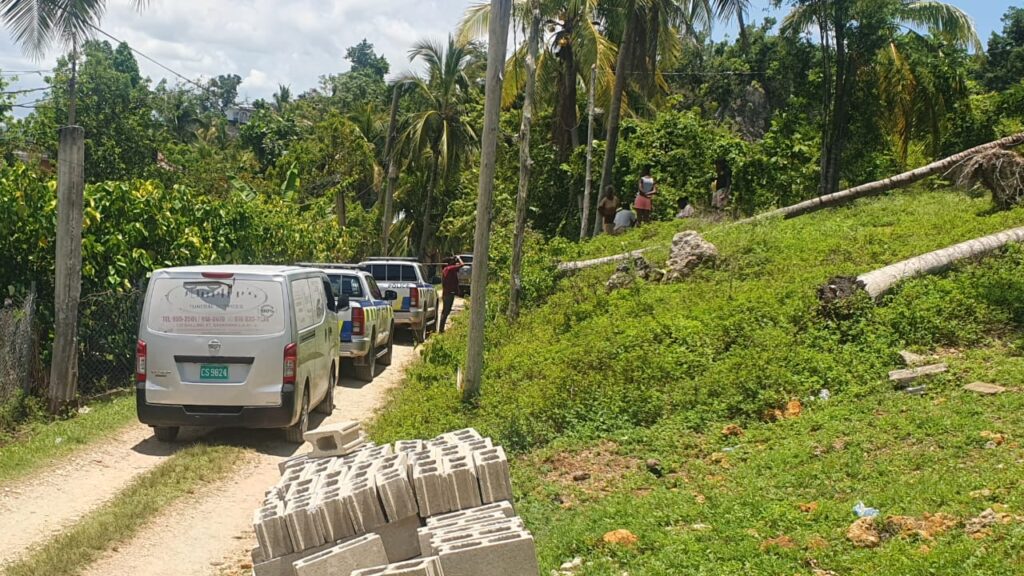
    Residents of the quiet rural district of Retreat, located in Jamaica’s Westmoreland parish, are reeling from a brutal, early Wednesday morning murder that has left the tight-knit community in disbelief. According to initial police and resident accounts, the violent attack unfolded as 40-something year-old local laborer Vinroy Holmes rested in his own home, with the attacker killing and beheading him while he slept. By Wednesday morning, official crime scene investigation teams had already been dispatched to the property to secure evidence, conduct forensic examinations, and reconstruct the sequence of the horrific attack. Local authorities have not yet released further details about possible motives for the killing, potential persons of interest, or updates related to the ongoing investigative process. Law enforcement officials have indicated that additional official information will be made public as the investigation progresses, and the community remains on edge waiting for answers to the senseless act of violence that shattered their normally quiet neighborhood.

  • St James man charged with murdering American wife, Melissa Samnath

    St James man charged with murdering American wife, Melissa Samnath

    In a developing criminal case out of western Jamaica, a 31-year-old St James resident has been formally charged with the murder of 35-year-old Melissa Samnath, his American wife who was registered as a resident of New York. Dane Watson, the accused, was officially served with the murder charge by St James-based detectives on Wednesday, more than a week after he turned himself in to law enforcement with the support of his family members.

    The timeline of the case dates back to April 29, when medical staff at Cornwall Regional Hospital received Samnath, who had already sustained multiple severe injuries. She was pronounced dead shortly after arriving at the facility. Law enforcement investigators currently believe that Watson himself transported the injured woman to the hospital before departing the premises, leaving her there without further interaction with authorities.

    Following Samnath’s death, law enforcement launched a manhunt for Watson, who they suspected had fled St James parish to avoid questioning and arrest. Investigators say the suspect ultimately hid out in the Gayle community of St Mary, a parish on Jamaica’s opposite northern coast. According to police accounts, Watson grew concerned for his own safety while in hiding, so he reached out to his relatives to plan a voluntary surrender. His family then coordinated directly with the Gayle police department to arrange a peaceful handover, which took place last week before his official charge was filed this week.

    Authorities have not yet released additional details about the motive for the killing or the circumstances that led to Samnath’s injuries, and more updates are expected as the investigation progresses.

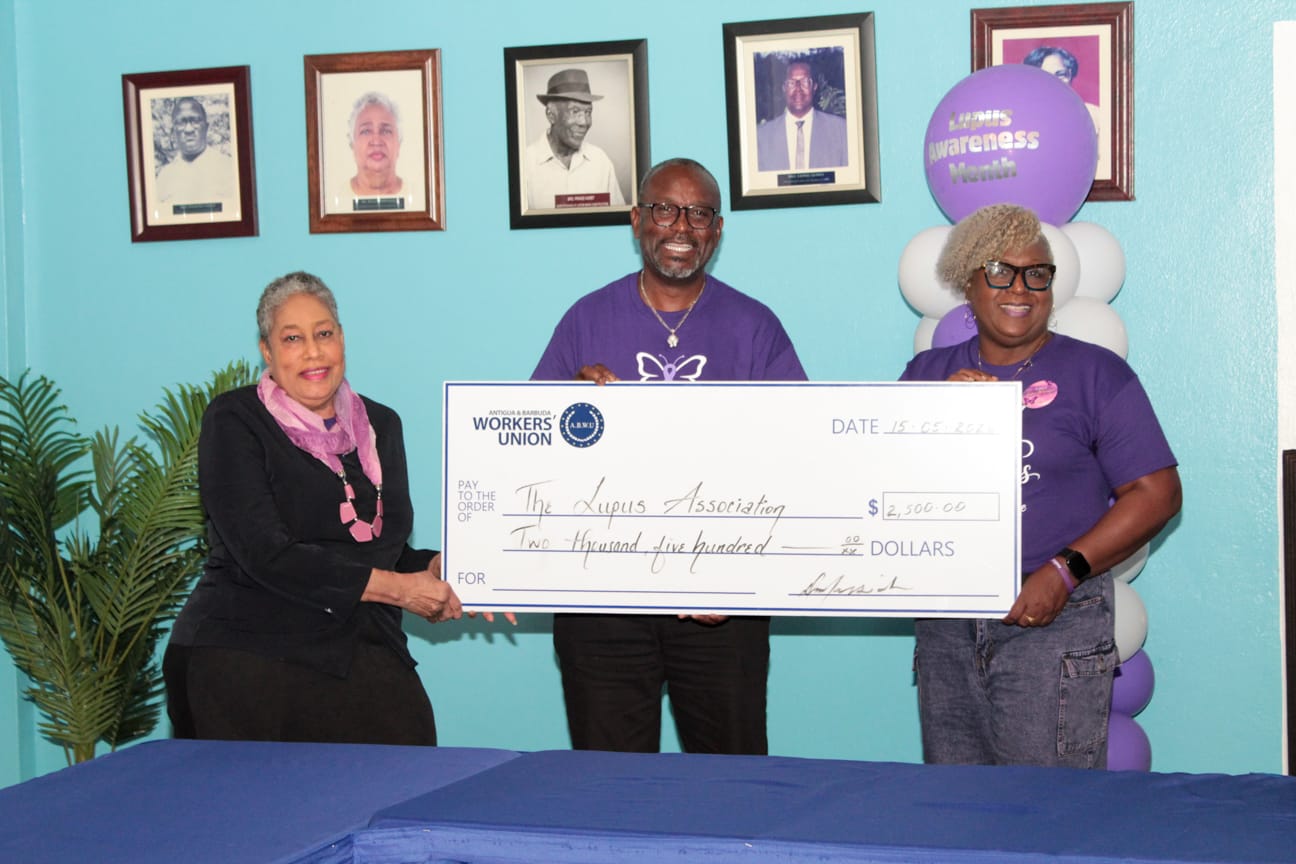
  • ABWU Partners with Lupus Association, Donates $2,500 in Support of Awareness Efforts

    ABWU Partners with Lupus Association, Donates $2,500 in Support of Awareness Efforts

    A landmark collaboration between the Antigua and Barbuda Workers’ Union (ABWU) and the Lupus Association of Antigua and Barbuda is set to transform how the Caribbean nation addresses the unmet needs of communities affected by lupus, kicking off with a EC$2,500 donation and a long-term pledge to expand outreach, education and patient support. The official launch of the partnership took place Friday, aligned perfectly with global Put on Purple (POP) Day, an international initiative dedicated to driving public attention to this chronic, often misunderstood autoimmune disease.

    Speaking at the donation presentation ceremony, ABWU General Secretary David Massiah emphasized that the initiative goes far beyond a single charitable contribution. He framed the partnership as a lasting promise built on collective solidarity with those navigating life with lupus, including working residents who balance daily management of the condition with holding down employment and caring for their families. “Today, we are not simply making a presentation. We are making a commitment rooted in solidarity,” Massiah said. “The ABWU is proud to stand alongside the Lupus Association as we work together to raise awareness about a condition that affects many individuals and families within our nation, including workers who continue to face the daily challenges associated with lupus while striving to earn a living and care for their loved ones.”

    Massiah also highlighted a common, harmful gap in public understanding of the disease: unlike many visible health conditions, lupus’ impacts are often hidden from casual observation, even as it imposes severe, multifaceted burdens on patients, ranging from chronic physical pain to emotional distress, mental health struggles and crippling financial strain from ongoing medical care.

    Linda Mussington, president of the Lupus Association of Antigua and Barbuda, welcomed the new collaboration, noting that the union’s broad reach across the country will help the association extend critical lupus education to younger demographic groups, a population that has seen rising diagnosis rates in the nation. “With the Antigua Workers’ Union, I know that the exposure is going to really take us further, because we have also seen that there are so many young people in Antigua that have lupus,” Mussington explained.

    The partnership announcement also coincided with a milestone for the ABWU: the union is currently marking its 59th year of service to Antigua and Barbuda’s workers and broader community. Stacey Ladoo, assistant secretary of the Lupus Association, thanked the union for its targeted support and commended the organization for its decades-long commitment to advancing public welfare across the islands.

  • Nevis Honours 14 Outstanding Students with 2026 Boys of Excellence Awards

    Nevis Honours 14 Outstanding Students with 2026 Boys of Excellence Awards

    CHARLESTOWN, Nevis – May 18, 2026 – Fourteen outstanding male students from across Nevis have been recognized for their exceptional academic achievement, community service, leadership, and personal character as recipients of the 2026 Boys of Excellence Awards, presented by the Nevis Island Administration (NIA) Department of Gender Affairs.

    The celebratory award ceremony, which took place at the Malcolm Guishard Recreational Park, brought together government officials, educators, families, and community members to honor the young men who have set a positive example for their peers through contributions to their schools, households, and local neighborhoods. Each awardee was selected for demonstrating core values including selflessness, academic dedication, athletic excellence, volunteerism, and ethical conduct that align with the program’s mission to lift up exceptional young boys across the island.

    The 2026 cohort of honorees represents 14 primary and secondary schools across Nevis, each bringing their own unique strengths and contributions to their communities: Kyran Hendrickson of Cecile Browne Integrated School, praised for his integrity, willingness to support classmates and teachers, and commitment to fostering unity among peers; Ezra Hanley of Ivor Walters Primary School, recognized for his strong academic record, humble demeanor, and outstanding sportsmanship; Kemarii Reed of Maude Crosse Preparatory School, a top-performing Grade 3 student who serves as captain of the Positive Vybz Steel Orchestra and volunteers regularly for community and faith-based events; Naiim Morton of Montessori Academy, a longstanding, well-respected school member known for his consistent academic excellence and polite, caring approach to all members of the school community; Kaijay Powell of Nevis Academy, a multi-talented student involved in cricket, football, and drama who prioritizes lifting up peers who feel excluded; Jah-lique Chambers of Charlestown Primary School, a disciplined, humble student dedicated to building core life skills of responsibility and accountability; Izariel Webbe of St. Thomas Primary School, a talented student-athlete who competes in quiz bowls, football, and track and field, exemplifying teamwork and determination; Hazo Ottley of St. James Primary School, a quiet, compassionate multi-instrumentalist and athlete who serves as a positive influence among peers; Elvorn Herbert of Violet O. Jeffers Nicholls Primary School, a peer-focused leader and student-athlete whose maturity and compassion outpace his years; Te’adrian Toss of Elizabeth Pemberton Primary School, a well-rounded student-athlete who balances academic success with strong social leadership; Aaron Daljit of Joycelyn Liburd Primary School, a consistently top-ranked student, talented steelpan musician, and regular volunteer at school, church, and home; Cleston Bartlette of Gingerland Secondary School, a model student and community volunteer who serves as a student ambassador, defense force cadet, and church drummer; Jedaiah Carter of Nevis International Secondary School, an honor roll scholar-athlete who has medaled in all school cross-country events and represented the school at regional inter-high competitions; and Kymarni Newton of Charlestown Secondary School, a record-breaking athlete who won bronze at the 2026 CARIFTA Games and set a new Under-18 Junior National Record, while also representing Nevis on the national Under-17 Football Team for three consecutive years.

    Awards were presented by a panel of senior Nevisian government leaders, including Deputy Governor General Her Honour Mrs. Hyleeta Liburd, Deputy Premier the Honourable Eric Evelyn, Senior Minister the Honourable Spencer Brand, Minister of Education and Youth the Honourable Senator Troy Liburd, Minister of Social Development the Honourable Senator Jahnel Nisbett, and Special Advisor to the Premier the Honourable Latoya Jones.

    In her remarks at the ceremony, Minister Nisbett emphasized the importance of the annual awards program, noting that selecting just 14 honorees each year is an increasingly challenging process, as growing numbers of Nevisian boys exceed community expectations.

    “This activity annually is really to shine the light on not only the good but the excellent. And these fourteen young men are indeed excellent… It’s such a difficult decision annually because so many of our boys are really exceeding our expectations,” Minister Nisbett said, urging the awardees to continue serving as role models for their peers and upholding the values of the Boys of Excellence title.

    Guest speaker Trevor Heron, a psychosocial therapist, addressed the honorees under the event’s theme “Boys to Men: Adopting Good Habits and Attitudes.” He encouraged the young men to lean on the supportive community around them, embrace Nevis’ strong core values, and remain intentional about pursuing their goals.

    “You have the right people around you… What we love about Nevis is its values, and it will not compromise, and those values are going to build you and propel you to excellence. Be intentional. Your gifts are designed to make room for you… to position you. Your gift is going to open doors for you,” Heron said. “So young men, stay focused, be intentional in all you do and you will succeed.”

    The annual ceremony was held in advance of the International Day of the Boy Child, observed globally on May 16, aligning the award celebration with international efforts to recognize the achievements and potential of young boys.

  • NIA Empowers Dozens of Women with Tools for Wealth and Home Ownership

    NIA Empowers Dozens of Women with Tools for Wealth and Home Ownership

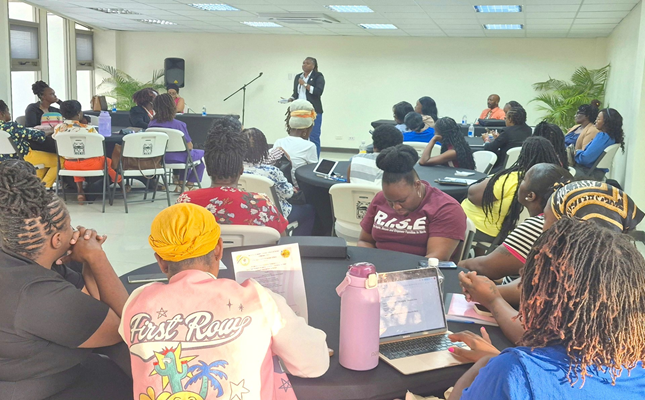
    CHARLESTOWN, Nevis – In a landmark initiative targeting gender-inclusive financial progress, the Department of Gender Affairs under the Nevis Island Administration (NIA) hosted its inaugural annual Women’s Asset Building Seminar on May 11, 2026. Held at the Malcolm Guishard Recreational Park under the theme “Own Your Future: Women, Wealth and Home Ownership”, the event gathered nearly 50 women from across the island for a hands-on session focused on closing the gender wealth gap and supporting long-term financial security.

    Unlike generic informational events, the seminar was designed to deliver actionable, real-world tools that address a common systemic gap: women’s frequent prioritization of family care over their own financial stability and wealth building. Honourable Senator Jahnel Nisbett, Minister of Gender Affairs, noted that the strong turnout and active participant engagement marked the event as a resounding success for the local community.

    “This wasn’t just another talk shop,” Nisbett emphasized in remarks following the seminar. “Too often, women put all their energy into caring for their children, partners and aging parents, leaving no time or space to plan for their own financial wellbeing. This workshop was built specifically for them, to show that it’s never too late to reach those personal and financial goals – whether that’s owning a home, building a retirement nest egg, or protecting the assets they work hard for.”

    A diverse cross-sector panel of industry experts led targeted sessions across core financial topics relevant to asset growth. Orvis Tyson, Senior Adviser at Sagicor, walked participants through strategies for leveraging insurance protection and growing long-term investments. Tesia Burton, Branch Manager at Republic Bank, broke down foundational knowledge around savings habits, accessing loans, and building and maintaining strong credit – a critical requirement for qualifying for home mortgages. Karen Claxton-Amory, an inspector with the Nevis Social Security board, shared actionable tips for maximizing retirement income to support long-term stability. Althea Campbell, a practicing local attorney, delivered clear guidance on legal protections for property ownership and strategies to safeguard personal assets against unforeseen circumstances.

    Nisbett highlighted that the interactive format of the event encouraged open dialogue: participants freely shared their own personal financial challenges and asked targeted questions that aligned with their individual goals. The overwhelming majority of attendees requested additional follow-up sessions to continue building on the knowledge gained, and all panel facilitators provided their personal contact information to offer customized one-on-one guidance for participants after the event concluded.

    Chaired by Deslyn Johnson of the NIA Department of Gender Affairs, the seminar also included an on-site networking opportunity where participants could connect directly with representatives from key local institutions. These included a local legal aid clinic, the NIA Department of Physical Planning, the Nevis Housing and Land Development Corporation (NHLDC), independent structural engineering and architectural consultants, and the Ministry of Finance, giving attendees direct access to resources for pursuing home ownership after the event.

    Nisbett closed by extending formal thanks to the expert facilitators, engaged participants, and internal NIA staff who collaborated to conceptualize and execute the first-of-its-kind event, which is set to become an annual offering to support women’s financial empowerment across Nevis.

  • OPINION: Great Destination but not taking care of their Animals

    OPINION: Great Destination but not taking care of their Animals

    GLOBALLY RENOWNED as a postcard-perfect Caribbean luxury travel hotspot, Antigua and Barbuda has built its $1.5 billion tourism industry on a reputation of 365 sun-drenched beaches, five-star oceanfront resorts, and warm, world-famous hospitality. For millions of first-time and returning visitors, the nation delivers exactly the idyllic escape it advertises — but a devastating, underreported crisis is festering beneath this polished exterior, threatening both the island’s most vulnerable creatures and its global brand.

    Across the country’s cities, rural towns, and even popular tourist corridors, a rapidly growing population of unhoused, neglected stray animals struggles daily to survive. Sick, underfed, and suffering from untreated conditions like severe mange, these animals are increasingly visible to the millions of tourists Antigua works hard to attract each year, turning idyllic vacations into jarring, traumatic experiences for many. Local grassroots animal welfare advocates have spent years sounding the alarm about this crisis, but systemic gaps in policy, funding, and enforcement have left the entire burden of care on overstretched private rescuers.

    At the front lines of this quiet emergency is Dogs and Cats of Antigua, one of the nation’s leading independent animal rescue organizations. Alongside a network of volunteer rescuers, the group works around the clock to pull injured and sick animals off the streets, fund emergency veterinary care out of their own pockets, deliver donated food to colonies of strays, and find permanent foster or adoptive homes for as many animals as they can. Every day, the organization’s social media feeds document the scale of the crisis: photos of emaciated puppies abandoned by roadsides, urgent calls for donations to cover life-saving vet treatment, and appeals to the public for information on abusive owners.

    What makes this crisis especially devastating, advocates argue, is that the legal framework to address animal cruelty already exists. The country’s longstanding Animal Health Act explicitly bans animal mistreatment and neglect — but the law is almost never enforced. To date, the national government has not matched public commitments to animal welfare with sustained budget allocations for enforcement or population control, and acts of abandonment and abuse almost always go unpunished. This lack of action leaves the entire $1.5 billion tourism industry, which forms the backbone of Antigua and Barbuda’s national economy, exposed to growing reputational damage. In an era of social media and instant online reviews, traumatized visitors regularly share their encounters with suffering stray animals, turning negative firsthand experiences into viral bad press that deters future luxury travelers.

    Advocates are now calling for urgent, coordinated action from three key stakeholders: the national government, the powerful private tourism sector, and the local community. Their core demands focus on four key pillars of meaningful reform. First, they push for consistent, strict enforcement of existing animal protection laws, requiring police and the judiciary to treat cruelty and abandonment as the serious offenses they are. Second, they call for government-funded, mandatory spay and neuter programs to humanely reduce the stray population over time, addressing the root cause of the crisis. Third, they ask for sustained institutional and financial support for registered rescue groups, who currently carry the full cost of care despite doing work that benefits the entire nation.

    Advocates are quick to emphasize their gratitude for the tireless work of local volunteers and independent organizations, who have given thousands of neglected animals a second chance at life despite limited resources. But they also stress that voluntary charity alone cannot solve a systemic crisis of this scale. True paradise, advocates argue, is not just a beautiful landscape for wealthy tourists to enjoy from a resort balcony — it is a community that protects and cares for all its most vulnerable living beings. If Antigua and Barbuda wants to preserve its standing as a top-tier global travel destination, it must step up and address the stray animal welfare crisis that is already eroding its reputation.

  • Agriculture ministry estimates $2 million in damage to farmers following severe trough system

    Agriculture ministry estimates $2 million in damage to farmers following severe trough system

    A powerful low-pressure trough system that swept across the island on October 26, 2026, has left a devastating trail of destruction for agricultural producers in the island’s eastern and northeastern regions, with total damage and economic losses pegged at $2 million — a figure that does not yet account for destruction to critical farm access infrastructure, according to senior government officials.

    The weather system unleashed unprecedented heavy rainfall, measuring a staggering 18 inches across affected zones, triggering widespread flash flooding and destructive landslides that hit agricultural communities particularly hard. In the immediate aftermath of the storm, a rapid assessment mission was launched by the Ministry of Agriculture, Fisheries, Blue and Green Economy, led by the sector’s minister and carried out by the ministry’s team of extension officers, to document the full scope of harm.

    Ryan Anselm, Permanent Secretary of the ministry, shared key findings from the official Post-Disaster Needs Assessment in a recent media interview, outlining that out of 734 registered farmers operating in the impacted regions, 276 faced direct harm to their operations. Damage was spread across all segments of the local agricultural sector, including row and tree crop production, livestock raising, and aquaculture operations. Beyond lost produce and livestock, critical on-farm infrastructure was also damaged, including greenhouses, animal enclosures, production tools, farm machinery, and access routes.

    “This $2 million total only accounts for losses to agricultural assets and production, and excludes damage to feeder roads and farm access corridors,” Anselm clarified. “Our assessment captured the specific needs of farmers across every impacted community, so we can build a targeted response that addresses the most pressing challenges producers face right now.”

    In response to the widespread damage, the Ministry of Agriculture is preparing to roll out a targeted cash grant assistance program for affected producers in the coming weeks. The relief initiative is designed to support farmers who suffered major losses to crops and livestock, cover unexpected emergency labor costs, and offset hardships caused by cut-off access to farmland resulting from damaged feeder roads.

    To address the infrastructure gap that has left many farmers unable to reach their land, the ministry will coordinate closely with the Ministry of Public Works to prioritize rapid restoration of critical farm access routes, clearing blocked roads and repairing damaged segments to restore connectivity for agricultural operations.

    Looking beyond immediate emergency relief, the ministry is also developing medium-term climate mitigation measures to address long-term damage caused by the extreme rainfall event. The intense downpour triggered widespread soil erosion and land slippage across hilly agricultural regions, so planned interventions will include land stabilization work, soil nutrient restoration to reverse degradation, and strategic planting of deep-rooted tree crops to reduce future erosion risk during extreme weather events.

  • Fisherman sentenced for rum bottle killing

    Fisherman sentenced for rum bottle killing

    A fatal confrontation that turned a casual gathering of friends into a devastating tragedy has concluded with a 10-year prison sentence for a 56-year-old fisherman from Calliaqua, Joel Ashton, widely known by the nickname Boat. The High Court in Kingstown handed down the penalty on Monday, with Justice Rickie Burnett presiding over the sentencing hearing for the unlawful killing of 42-year-old security guard Cameron Alexandar, who died from a blunt-force head injury in August 2023.

    The chain of events that led to Alexandar’s death began on August 26, 2023, when Ashton, Alexandar, and a group of mutual friends were socializing along the coast of Lowmans Bay. Alexandar and another attendee of the gathering pooled their funds to purchase a pint of high-strength rum, priced at just 8 Eastern Caribbean dollars. As the afternoon wore on, tension flared between the two men after Alexandar reportedly took a small bottle of rum from Ashton’s jacket pocket without permission.

    In the heat of the spontaneous conflict, Ashton struck Alexandar hard on the left side of the head with a full glass rum bottle, shattering the container on impact. Eyewitness accounts presented during the trial confirm that Alexandar did not retaliate for the blow, only asking in shock, “Just so?” Witnesses quickly noticed blood streaming from his ear, and after dipping his injury in the nearby sea, Alexandar returned to the area’s local shop before heading home for the night. That evening, his older son Jiovanni Stapleton checked on his father and found him asleep, choosing not to wake him.

    Alexandar reported to his security guard job the next day, with no obvious immediate issues, though his younger son told investigators he noticed unusual behavior: his father stared blankly into the distance and talked to himself. By August 28, just two days after the altercation, Alexandar’s condition declined sharply. His younger son found him unresponsive, foaming at the mouth and bleeding, and alerted Stapleton, who rushed the injured man to Milton Cato Memorial Hospital. Alexandar was admitted to the Intensive Care Unit, where he died from his injuries on August 30, 2023.

    A post-mortem examination conducted the following day by forensic pathologist Dr. Ronald Child confirmed the cause of death was blunt force trauma to the head, directly matching the injury caused by Ashton’s bottle strike. Over the course of the investigation, law enforcement officers visited the Lowmans Bay site multiple times to collect evidence. On September 24, 2023, Ashton turned himself in at the Questelles Police Station, accompanied by his defense attorney Grant Connel. He declined to provide a formal statement during an electronic interview, and authorities formally arrested him on suspicion of manslaughter, after he was overheard making incriminating statements during a visit to the crime scene with investigators. A nine-member jury subsequently found him guilty of the unlawful killing.

    During sentencing, Justice Burnett outlined the profound impact of Alexandar’s death on his two young sons, reading details from the official victim impact statement. Stapleton, the older son, told the court that his father was everything to him, and he still grieves the loss of his father’s voice, presence, and daily conversations. He explained that a core part of himself died with his father, a void that can never be filled. The traumatic nature of the killing has left lasting psychological scars: even hearing the word “rum” at public events triggers overwhelming bad memories that instantly change his mood. Since Alexandar’s death, the brothers’ lives have fallen into disarray: a family dispute forced Stapleton to leave the family home he shared with his father, and his younger brother has lost the critical paternal guidance he depended on. Despite the profound loss, Stapleton left the question of justice entirely in the court’s hands, and followed the trial closely even though he was not present for the final sentencing hearing.

    In determining the appropriate sentence, Justice Burnett followed Eastern Caribbean Supreme Court guidelines for manslaughter, which categorize offenses into four seriousness tiers: Category A (very high, 24-year starting sentence), Category B (high, 18-year starting point), Category C (medium, 12-year starting point), and Category D (low, 6-year starting point). After evaluating all evidence and case facts, the judge placed this offense in the minimum bracket of Category C, setting an initial 12-year sentence.

    Justice Burnett then assessed aggravating and mitigating factors. The use of the glass rum bottle as an improvised weapon was marked as an aggravating circumstance, but the court also confirmed there was no premeditation or advance planning for the attack, a key mitigating point. No further adjustment was made to the sentence at this stage. Additional mitigating factors came from Ashton’s prior good character: the court heard testimony from character witnesses confirming Ashton had no previous violent offenses, and no aggravating personal factors were presented on behalf of the prosecution. Finding that mitigating factors outweighed the single aggravating circumstance, the court reduced the sentence by two years, bringing the total penalty to 10 years.

    The court further deducted the two months and three days Ashton has already spent in remand custody, leaving a remaining term of nine years, nine months and 28 days to be served behind bars.