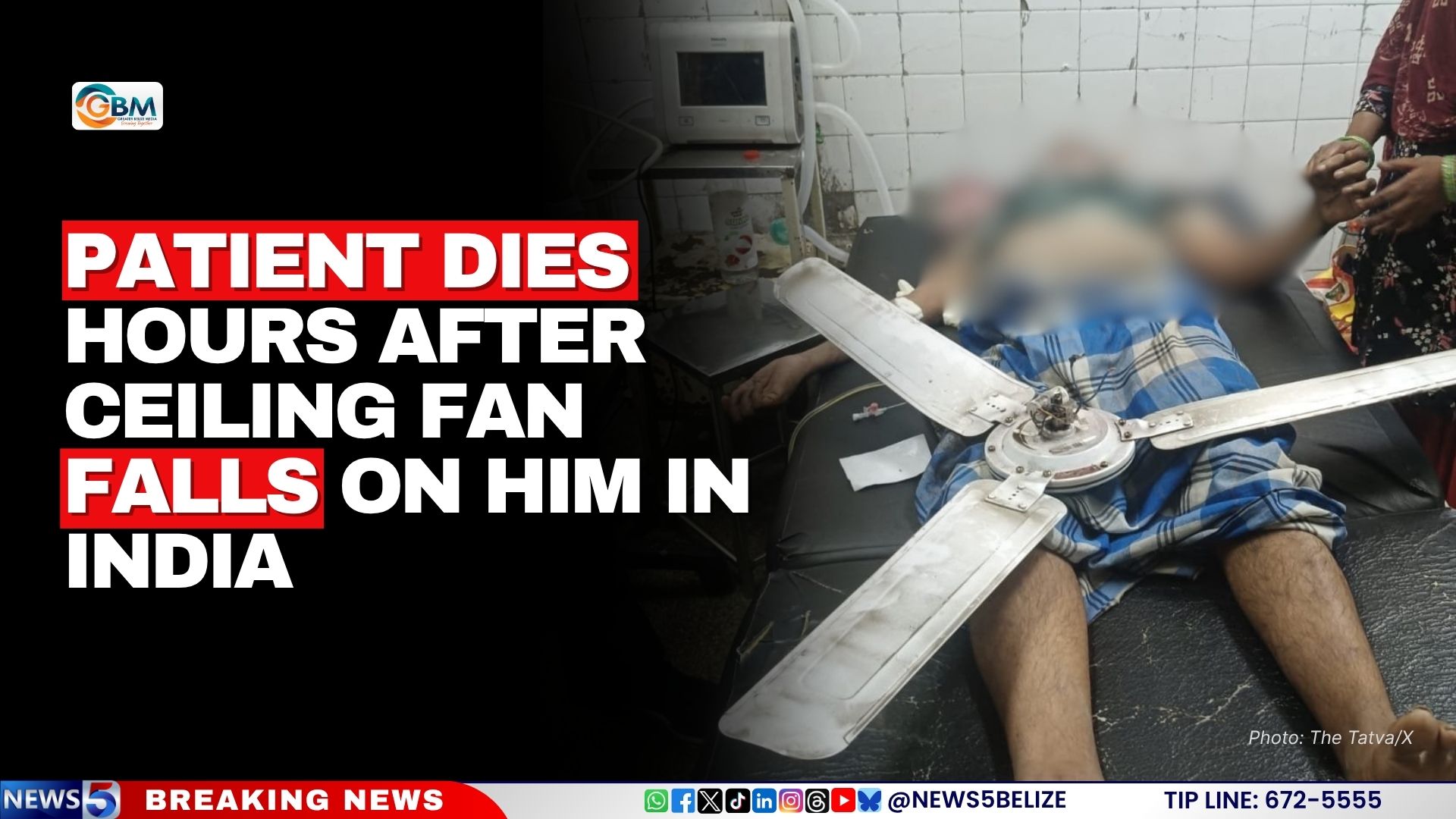
In a tragic incident that has raised serious questions about infrastructure safety at Indian public health facilities, a 42-year-old patient has died less than three hours after an unsecured ceiling fan plummeted onto his hospital bed in New Delhi, India. The fatal event unfolded on Saturday evening at Guru Teg Bahadur Hospital, one of the capital’s largest public medical centers, where the patient, identified as Mohammad Akbar, was undergoing treatment for multiple pre-existing serious health conditions.
Local law enforcement officials confirmed that the collapse occurred at approximately 9:30 p.m. inside the hospital’s emergency ward, where Akbar was being cared for hypertension, meningoencephalitis, and aspiration pneumonia. Eyewitness accounts from other patients and medical staff on the ward describe a sudden, unexpected failure: the ceiling fan abruptly tore free from its mounting and crashed directly onto Akbar’s bed. A nursing officer who was attending to Akbar at the time of the collapse also sustained minor injuries in the accident.
Official hospital records list Akbar’s time of death at 12:16 a.m. on Sunday, just under three hours after the fan fell. Notably, the hospital’s issued death certificate cites Akbar’s underlying pre-existing illnesses as the official cause of death. A senior hospital administration official acknowledged that the ceiling fan collapse did occur, but pushed back against claims that the incident contributed to the patient’s death. The official added that Akbar was already admitted with severe respiratory complications when he arrived at the facility, and maintained that his passing was solely the result of his underlying poor health.
However, Akbar’s family has rejected the hospital’s account, arguing that the preventable accident exposes systemic safety and maintenance failures at the public facility. They are now calling for a transparent, independent investigation to determine whether institutional negligence contributed to the death, and are demanding accountability for what they call an avoidable tragedy.