分类: society

  • Police seeking public assistance in locating missing Keimone Donica Speede

    Police seeking public assistance in locating missing Keimone Donica Speede

    Law enforcement authorities in Barbados are asking for the public’s help to find a missing teen from Christ Church. Keimone Donica Speede, 14, who lives in the Upper Carters Gap area of Enterprise B, has not been contacted since she was last spotted at 2:37 p.m. on Monday, March 4, 2026.

    Police have released a full physical description of the missing teenager to help community members identify her. Speede stands approximately five feet five inches tall, has a slim frame, and a dark complexion. Distinguishing features include a protruding forehead and small nose. Those familiar with her note she speaks in a soft tone and typically walks with a slumped posture.

    When she was last seen, Speede was wearing a black short-sleeved top, patterned black-and-white long pants, and white slip-on slippers. She was also carrying a blue-and-pink haversack at the time of her disappearance.

    Investigators added that Speede has a known history of leaving home without warning, and she often travels to the Silver Sands district in Christ Church. This pattern of behavior has led police to focus community outreach and search efforts in that area, while also calling on any member of the public who may have seen her recently to come forward.

    Any individual with information about Keimone Donica Speede’s current location, no matter how small it may seem, is urged to contact local law enforcement immediately. Tips can be submitted directly to the Oistins Police Station at 430-2612 or 430-2604, the national police emergency line at 211, anonymous tips through Crime Stoppers at 1-800-TIPS (8477), or any nearby local police station across the country.

  • Cinco de Mayo: More Than Tacos and Margaritas

    Cinco de Mayo: More Than Tacos and Margaritas

    Every year on May 5, people across North America gather for street parties, plates of savory tacos, and icy margaritas to mark Cinco de Mayo — but for many celebrants, the deep historical meaning behind the date remains widely misunderstood. A common misconception frames the holiday as Mexico’s celebration of independence from Spanish rule, but the actual historical event it honors is far more specific, and far more remarkable: the 1862 Battle of Puebla, where an outnumbered Mexican force pulled off an upset victory against one of Europe’s most powerful armies.

    Leading the ragtag Mexican militia was General Ignacio Zaragoza, who commanded a force of roughly 4,000 poorly supplied troops that stood against more than 6,000 well-trained, well-equipped French soldiers. At the time, France had invaded Mexico with plans to seize control of Mexican territory and install a European-backed puppet regime. Against all military expectations, Zaragoza’s troops defeated the French invasion force at Puebla, a major victory that became a enduring symbol of Mexican national resilience and resistance to foreign aggression.

    Today, the holiday is observed with far less fanfare across most of Mexico, with large-scale celebrations concentrated almost exclusively in the city of Puebla where the battle took place. But across the border in the United States, Cinco de Mayo has grown into one of the most widely celebrated cultural holidays honoring Mexican-American heritage, transforming over more than 150 years into a vibrant showcase of Mexican art, music, food, and community identity.

    Historical records show the earliest Cinco de Mayo celebrations in the U.S. date all the way back to the 1860s, just months after the Battle of Puebla. During the height of the American Civil War, Mexican communities living in California held organized gatherings to mark the victory, as both the U.S. and Mexico opposed French intervention in North America. Over the following decades, the holiday spread across the country, boosted in part by marketing efforts from food and beverage companies that turned it into a mainstream cultural event.

    While modern celebrations are often centered around food and drink, historians and community leaders emphasize that the core meaning of Cinco de Mayo endures: it is a reminder of what marginalized, outnumbered communities can achieve when they stand together in defense of their sovereignty and identity, a legacy that still resonates with Mexican and Mexican-American communities today.

  • Buried Without Answers, What Happened to Jericho Humes?

    Buried Without Answers, What Happened to Jericho Humes?

    It has now been two weeks since Jericho Humes, a 39-year-old father of three from Dangriga, was laid to rest — but his grieving family has not been able to find closure, as key details surrounding his April 2026 disappearance and death remain locked behind official silence.

    Humes was last seen by his loved ones on April 1, 2026, before he vanished without warning. Weeks later, local police recovered a heavily decomposed body in an undisclosed location, and DNA testing confirmed the remains belonged to the missing man, Humes’ older sister Arsenia Humes told local reporters in an interview this week.

    After months of waiting for news of their missing family member, the Humes family finally received Jericho’s remains and held a private burial service roughly 14 days ago. But the resolution the family had hoped for never materialized, Arsenia explained, because authorities have refused to share basic information about the case and denied the family’s request for an independent autopsy.

    “His whole death just feels wrong, it feels off,” Arsenia said of her brother. “I formally requested a full autopsy to find out how he died, but I was told it could not be done. When police released his body to us, they told us nothing — no cause of death, no where they found him, no details about what condition he was in when he was found.”

    Arsenia described her brother as a well-known member of their small Dangriga community who struggled with alcohol abuse but was never a violent or confrontational person. She said the complete lack of a formal investigation into his death is deeply alarming, not just for her family, but for other residents of the area.

    “He drank often, that’s true, but he was always calm,” she emphasized. “I don’t understand why there hasn’t been any investigation into what happened to him. Police need to do this work, they can’t just leave this case open and unanswered. If they let this go, what’s to stop this from happening to someone else here?”

    Troubling evidence collected by the family in the early days of Humes’ disappearance raises even more questions about the case. Shortly after Humes went missing, family members went to check his home and found it had been ransacked: windows were smashed, the front door had been forced open, and a partially burned cap was left inside the property.

    A week after Humes vanished, one of his family members also received a ransom call from a phone number registered in Mexico. The caller demanded a $10,000 payment for Humes’ safe release, and accompanied the demand with a photo showing a knife pressed to Humes’ neck, as well as audio recordings of the kidnapping. The family turned over all of this evidence to police immediately, Arsenia confirmed, but has not gotten any update on what investigators have done with the materials.

    Nearly two months after Humes’ disappearance and two weeks after his burial, the Humes family says they will not stop pushing for transparency and a full investigation into Jericho’s death. They have called on local law enforcement to release all public details of the case and answer the basic questions that have left them grieving without closure.

  • Mother Pleads for Help to Find Her Daughter and Grandkids

    Mother Pleads for Help to Find Her Daughter and Grandkids

    It has been more than a month since 62-year-old Delia Corrales last heard from her 31-year-old daughter Kenia Chan, and time is growing increasingly desperate as the search for Chan and her two minor children — 15-year-old Ezekiel Montejo and 6-year-old Dorian Montejo — enters its fifth week.

    Corrales told reporters that Chan maintained a consistent routine of checking in with her at least once a week, a pattern that abruptly broke off on March 31, the final date any member of the family received communication from Chan. After more than a month of radio silence and failed attempts to reach Chan through mutual contacts, Corrales officially filed a missing person report with Belizean law enforcement this Monday.

    At the time of their disappearance, Chan and her two children were residing with her current romantic partner in Las Flores Village, a small community located on the outskirts of Belmopan, the capital of Belize, within the country’s Cayo District. New details obtained by Corrales have raised urgent concerns for the family’s safety: through a former employer of Chan’s partner, Corrales learned the man has a documented history of alcohol-fueled violent outbursts. The former employer previously contacted police after the man destroyed his property during a drunken episode, resulting in a three-week detention period for the suspect.

    Further complicating the investigation, repeated attempts by Corrales and local authorities to contact the man’s family have yielded no response. Corrales also confirmed that she believes the man is a native of neighboring Guatemala and may be residing in Belize without valid immigration documentation, opening the possibility that he could have crossed the border to avoid detection.

    In an emotional public plea for assistance, Corrales is asking anyone across Belize and neighboring regions who may have spotted Chan, her children, or her partner in recent weeks to come forward with information. Members of the public with any relevant details can contact Crime Stoppers anonymously at 922, submit tips through the official P3 Tips mobile application, or reach out directly to the closest local police station.

  • Message buried in time: BWU capsule honours past, future

    Message buried in time: BWU capsule honours past, future

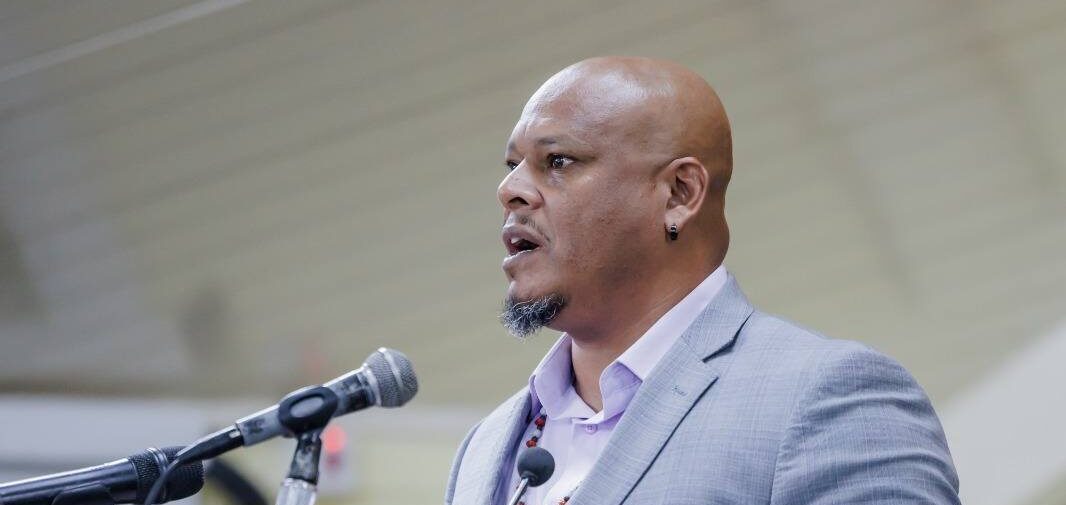
    On the cusp of its 85th anniversary, the Barbados Workers’ Union (BWU) has turned a ceremonial act into a powerful testament to its decades-long fight for working people, burying a symbolic time capsule at its Solidarity House headquarters that holds far more than just historical artifacts. Sealed during an official ceremony led by BWU General Secretary Toni Moore, the capsule carries a carefully crafted message of gratitude, collective resilience, and unwavering commitment to the union’s core mission that stretches across generations.

    During the event, Moore reflected on the union’s 84-year journey, paying public tribute to the generations of rank-and-file members, elected officers, and visionary leaders whose dedication has kept the labour movement thriving through decades of economic upheaval, social change, and systemic challenge. The ceremony drew a cross-section of Barbados’ labour community, with attendees including former BWU General Secretary Sir Roy Trotman, Barbados Secondary Teachers’ Union head Mary Redman, National Union of Public Workers General Secretary Richard Greene, and representatives from dozens of other labour organizations across the island.

    As the union prepares to mark its 85th founding anniversary in October 2026, Moore used the gathering to extend heartfelt gratitude to every person who keeps the BWU’s mission active in workplaces across Barbados. “This time capsule holds gratitude to the shop stewards, the officers, the delegates, the members — everyone who keeps this movement alive and moving every single day,” she told the crowd.

    Moore also took the opportunity to honor the trailblazing women who broke barriers to open the door for her historic appointment as the BWU’s first female general secretary, acknowledging the broad base of support that has sustained her leadership through 12 years of significant economic and social turbulence. “A leader is only as strong as those who stand with him or with her,” Moore said. “The past 12 years have been rough. The seas have been choppy, but the journey has been possible because I’m assured that I do not stand alone. To those who walk with me, those who supported me, those who challenged me… it is because of you… that we refuse to break. Instead, we continue to grow in strength.”

    Far from being a mere symbolic archive of past achievements, Moore framed the capsule as a living message to future generations of BWU leadership, scheduled to be opened on the union’s 100th anniversary in 2041. “Today, as we shortly install this time capsule, we are planting more than memories. We are planting a message to the future,” she said, emphasizing that the BWU is “an institution that is built to last.” She stressed that the union’s foundational values — fairness, economic justice, and unwavering advocacy for working people — remain just as relevant today amid the rapid shifts reshaping global and local workplaces. “Our commitment to fairness and justice will always be non-negotiable and…the worker, always the worker, remains at the center of everything that we do.”

    The BWU, Barbados’ oldest and most influential trade union, traces its origins to the widespread labour unrest that swept across the British West Indies in the 1930s, officially forming on October 4, 1941. From its early days, it has represented workers across nearly every sector of the Barbadian economy, from agriculture, transport, and tourism to manufacturing, public services, and media. It quickly emerged as a defining driving force behind Barbados’ social and economic transformation, working collaboratively with the country’s two major political parties at times, and challenging them when necessary to advance worker interests. Many of the parties’ most prominent leaders, including Moore herself — who serves as a backbench Member of Parliament for the ruling Barbados Labour Party — have roots in the union’s leadership.

    In the decades following Barbados’ independence, the BWU grew into a mass-membership organization of tens of thousands of workers, earning a reputation for uncompromising, effective collective bargaining that delivered landmark gains for working people. The union secured transformative improvements to social security, expanded severance protections, and stronger employment safeguards that benefit all Barbadian workers today. In recent years, amid shifting labour market dynamics and changing political landscapes, overall union membership has declined, but the BWU has continued its advocacy against unfair workplace treatment. Most recently, it led the successful push for new legislation that bars companies found to have violated workers’ rights from receiving government public contracts.

    Closing her remarks to the future BWU leaders who will unseal the capsule in 2041, Moore issued a call to continue strengthening the vital institution they will inherit, carrying forward the mission that has defined the BWU for nearly a century.

  • ABCAS Partners with UWI Mona and ABNTA to Host Electric Vehicle Battery Technologies Workshop

    ABCAS Partners with UWI Mona and ABNTA to Host Electric Vehicle Battery Technologies Workshop

    A landmark new training initiative focused on electric vehicle battery technology has officially kicked off in Antigua and Barbuda, bringing together cross-sector stakeholders to build local and regional capacity for the transition to sustainable mobility. Hosted by the Antigua and Barbuda College of Advanced Studies (ABCAS) at its Muriel O’Mard Campus, the four-day workshop is the product of a collaborative partnership between ABCAS, The University of the West Indies Mona campus, and the Antigua and Barbuda National Training Agency (ABNTA), and will run from May 5 to 8, 2026.

    Unlike generic technical conferences, this event is tailored to address the specific gaps in small island developing states’ EV ecosystem, gathering a diverse cohort of attendees spanning government regulators, public and private fleet managers, energy sector authorities, transport agency officials, electric utility providers, national standards bodies, and solid waste management teams. All participants will engage in hands-on, targeted training covering the latest advances in electric vehicle battery technology, a critical component of scaling EV adoption across the Caribbean.

    The opening ceremony featured opening remarks from a lineup of senior institutional and government leaders, starting with Dr. E. Jonah Greene, President of ABCAS, and Ms. Latoya Reynolds, Principal of the Harrison Centre. Representatives from both co-organizing partners, The University of the West Indies Mona and ABNTA, also took the stage to address attendees, emphasizing that regional coordination is key to accelerating the shift to low-carbon sustainable energy and electric mobility across the Caribbean region.

    Dwayne Edwards, Project Manager at Antigua and Barbuda’s Department of Environment, also delivered remarks during the opening ceremony, highlighting that as the global EV sector rapidly evolves, it is increasingly urgent for small island nations to strengthen their domestic technical and regulatory capacity to keep pace with the transition. The training program is made possible through financial support from the German Federal Ministry for Environment, Climate Action, Nature Conservation and Nuclear Safety (BMUKK), delivered via the ministry’s International Climate Initiative (IKI), in partnership with the German Agency for International Cooperation (GIZ).

    At the conclusion of the workshop, all participants who successfully complete the full program of training and pass required daily assessments will receive an official Certificate of Completion to recognize their newly acquired skills. The initiative marks a key step for Antigua and Barbuda in preparing its workforce and regulatory framework for the growing adoption of electric vehicles across the country, aligning with global and regional climate action goals.

  • Saharan Dust advisory

    Saharan Dust advisory

    A distinct cloud of mineral dust originating from the arid Saharan Desert in North Africa is currently traversing the Atlantic Ocean, carried westward by dominant transoceanic winds. According to an official advisory issued by the Grenada Meteorological Service, this natural weather event is projected to primarily impact the southern portion of the Windward Islands, with the Caribbean nation of Grenada facing the most significant effects.

    The advisory, which remains in force from Monday evening through Wednesday, May 6, projects that moderate reductions in air quality will begin across Grenada later on Monday and persist through the end of the advisory period. Analysis of real-time satellite imagery and atmospheric modeling data confirms that concentrations of Saharan dust in Grenada’s lower atmosphere will climb steadily through Monday afternoon, reaching their highest peak during the overnight hours between Monday and Tuesday. Gradual improvement in air and atmospheric conditions is forecast to begin by early Thursday morning, as the dust plume continues its westward movement away from the island.

    The Grenada Meteorological Service has confirmed that it will maintain continuous, close monitoring of the plume’s trajectory and concentration levels, with updates to be issued if conditions change significantly. Two primary impacts have been highlighted for residents and visitors: first, general reductions in horizontal visibility that may affect ground transportation and small vessel navigation; second, elevated health risks for individuals with pre-existing respiratory conditions, who are advised to take appropriate preventative precautions to minimize exposure to fine particulate matter.

    This report was published by NOW Grenada, which notes it is not liable for third-party contributor content, and provides a channel for users to report any inappropriate content shared on its platforms.

  • Road Upgrades Advance Across Antigua and Barbuda as April Works Continue

    Road Upgrades Advance Across Antigua and Barbuda as April Works Continue

    ST JOHN’S, Antigua — Across the twin-island nation of Antigua and Barbuda, ongoing road improvement projects maintained consistent momentum through the month of April, with government officials confirming that key infrastructure initiatives, most notably the rehabilitation of the heavily traveled All Saints Road, are moving forward as planned.

    The entire nationwide infrastructure overhaul is being backed by a $100 million regional development loan, which is structured to speed up upgrades to smaller neighborhood access roads even as crews continue work on the country’s primary transport arteries. Among the scheme’s flagship projects, the All Saints Road rehabilitation has logged steady progress over the past four weeks, with construction teams maintaining consistent activity along the high-traffic corridor to keep the timeline on track.

    Delivering the upgrades is a coordinated partnership between the Ministry of Works, the national Project Implementation Management Unit (PIMU), contracted construction firms, and several cross-agency supporting bodies including the Antigua Public Utilities Authority (APUA) and the Antigua and Barbuda Transport Board (ABTB).

    Project leads have been transparent about the short-term impacts of the large-scale works, acknowledging that the construction activity has caused unavoidable disruptions to regular traffic flow and daily community movement across affected areas. In a public statement, authorities extended gratitude to local residents and commuters for their patience and ongoing cooperation as the works proceed.

    Looking ahead, the Antigua and Barbuda government confirmed that road development activity will ramp up in the coming months as additional tranches of the funding are disbursed. The expanded effort will prioritize improvements to both high-capacity major roadways and less prominent secondary routes that serve local communities across both islands, with the goal of delivering a safer, more reliable national transport network for all users.

  • MWAG mourns the passing of Linda Straker

    MWAG mourns the passing of Linda Straker

    The Media Workers Association of Grenada (MWAG) has issued an official statement mourning the passing of Linda Straker, one of the Caribbean nation’s most respected veteran journalists, who died on Tuesday, 5 May 2026. Straker’s death has been met with an outpouring of grief from media communities across Grenada, the wider Caribbean region, and the global journalistic landscape, with MWAG leading tributes to her decades of service.

    In the statement, MWAG extended its deepest condolences to Straker’s children, extended family, and close friends, who are navigating profound grief following her passing. For years, Straker carved out a reputation as a uniquely formidable voice in Grenadian journalism: unwavering in her convictions, deeply engaged with national issues, and unshakable in her commitment to the media’s core role in supporting a functional democratic public life. Her entire career was anchored in a core belief: that journalism’s primary duty is to hold power to account, while expanding public understanding of the issues that shape everyday life in Grenada.

    Throughout her decades-long professional career, Straker prioritized ongoing growth and skill development, actively pursuing specialized training opportunities to strengthen her expertise across critical journalistic domains, from in-depth research and hard-hitting investigative reporting to the evolving landscape of digital journalism. Her published work was consistently distinguished by its analytical depth, dogged persistence, and unwavering commitment to unpacking the most pressing issues of national importance.

    A lifelong, vocal advocate for unfettered press freedom, Straker maintained close working partnerships with global press freedom watchdog organizations, including Reporters Without Borders. Through these collaborations, she helped document threats to media independence in Grenada and bring these concerns to a global audience, contributing meaningfully to the broader international movement to monitor and protect the safe operating space that journalists rely on to do their work.

    Straker also played a key leadership role within MWAG itself, serving as a sitting member of the organization’s Executive Committee. In this capacity, she contributed to critical conversations around organizational governance, institutional integrity, and the defense and interpretation of MWAG’s founding constitutional framework, playing an active role in the association’s evolution while working tirelessly to uphold its core guiding principles.

    Just recently, Straker received public recognition for her work in the latest cycle of the MWAG Media Awards, where she was named the recipient of the People’s Choice Award for Best Digital Reporter. The honor reflected the strong, trusting connection Straker built with Grenadian audiences over her career, and the far-reaching impact of her digital-first reporting. She was also selected as a nominee for the inaugural Leslie Pierre Press Freedom Award, a recognition of her decades of advocacy for the sector.

    Straker built her career within a rapidly changing, often challenging media landscape, one that requires consistent professional discipline and careful navigation of competing political and commercial pressures. Even amid these challenges, she never stepped back from engaging with the most contentious issues of the day, consistently contributing thoughtful, incisive analysis to national public discourse through her reporting.

    MWAG closed its statement by reiterating its condolences to Straker’s family, colleagues, and all readers and community members whose lives were touched by her work. The association emphasized that Straker’s passing marks a profound loss for Grenada’s entire media community, but that her life’s work stands as a lasting reminder of why an independent, curious, and public-interest-focused media sector matters.

    This statement was released by MWAG. Editor’s note: NOW Grenada does not take responsibility for opinions or content shared by contributing organizations, and invites users to report any abusive content via the platform’s official reporting channel.

  • Drought Is Coming; Belize Puts Cash in Farmers’ Hands Before It Hits

    Drought Is Coming; Belize Puts Cash in Farmers’ Hands Before It Hits

    As the 2026 Atlantic hurricane season draws near, a far quieter but equally dangerous climate threat is already looming over Central America’s Belize: a severe, prolonged drought that threatens to wipe out harvests for thousands of small-scale agricultural producers across the country. With just 26 days remaining before the official start of hurricane season, meteorological forecasts have already painted a stark picture for the coming months, prompting government and international aid partners to roll out an unprecedented pre-emptive response to protect vulnerable farming communities.

    Climate forecasters confirm that El Niño conditions are nearly certain to develop across the Pacific region by July 2026. For Belize, this climate pattern translates to an extended dry period far longer than the nation typically experiences, raising the risk of widespread crop failure, livestock loss, and long-term livelihood collapse for smallholder farmers who lack the resources to adapt to sudden water scarcity.

    In response to this confirmed threat, Belize’s Ministry of Agriculture, the National Meteorological Service, and the United Nations World Food Programme (WFP) have jointly activated the country’s specialized Anticipatory Action mechanism – a pre-planned framework designed to intervene before a disaster strikes, rather than mobilizing aid only after damage is done. Under this initiative, direct cash transfers will be distributed to smallholder farmers operating in the three districts identified as facing the highest drought risk: Orange Walk, Corozal, and Cayo.

    Recipients retain full flexibility to use the cash for whatever drought adaptation measures their operations need, including the purchase of water storage tanks, expanded irrigation infrastructure, and certified drought-resistant crop seeds that can thrive through extended periods of low rainfall.

    Brian Bogart, a senior WFP representative working on the initiative, emphasized that early, pre-emptive action can fundamentally alter the outcome of a coming climate shock. “Acting early in these scenarios can mean the difference between a manageable shock and a devastating, generational crisis,” Bogart explained. He added that the anticipatory action model leverages peer-reviewed climate science and on-the-ground data to get ahead of drought impacts, protect vulnerable farmers’ livelihoods, and ultimately reduce the long-term economic and humanitarian costs of climate disasters that often far outstrip the price of early intervention.

    This groundbreaking anticipatory action framework was nearly two years in development, with multi-donor financial support from the international community, including the governments of Canada, Ireland, and the United States, as well as the European Union. The model represents a growing shift in global climate adaptation policy, moving away from a purely reactive response to natural disasters toward proactive planning that protects at-risk communities before harm occurs.