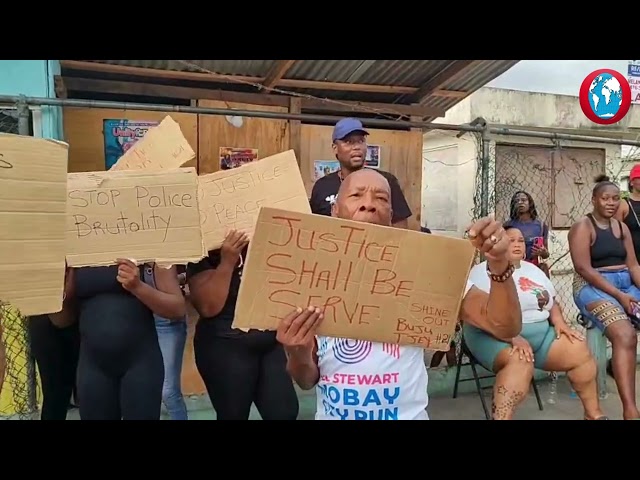
ST JAMES, Jamaica — Hundreds of residents of the Granville community heeded an official appeal from local law enforcement and gathered for a peaceful demonstration Sunday, amplifying long-simmering outrage over a string of controversial fatal police shootings that have left multiple community members dead. Clad entirely in black and carrying hand-painted placards outlining their demands, protesters chanted unified slogans calling for an immediate end to police brutality and formal justice for Latoya Bulgin, a woman locally known as Buju, who was killed by police last week during what officers described as an alleged confrontation. The gathering marked one of the most organized displays of public discontent over police violence the region has seen in recent months. What many attendees do not widely know is that Bulgin was on her way to join a separate protest for 17-year-old Tjey Edwards when she was shot. Edwards was killed under nearly identical circumstances just one week earlier, on May 10. The deaths of Bulgin and Edwards are not the only cases driving community anger; protesters also placed heavy focus on a New Year’s Day shooting that left four-year-old Romaine Bowman and two adult men dead, pushing the nation’s total tally of fatal police shootings to 130 for the current period. Independent Commission of Investigations (Indecom) has already issued a public appeal for witnesses to come forward with information on the Granville killings, but residents say little tangible progress has been made to hold officers accountable. In a break from past protests that resulted in road blockades and clashes with police, Sunday’s demonstration remained entirely peaceful, a change that came directly in response to an appeal from Parish Police Chief Senior Superintendent Eron Samuels. During a community meeting held last Thursday, Samuels made clear that any demonstration that included road blockages would be immediately shut down by law enforcement. Abiding by this request, protesters confined their main gathering to Granville Square, with plans to stage a peaceful march through residential neighborhoods later in the day. The call for peaceful action was echoed by Marlene Malahoo Forte, the Member of Parliament for St James West Central, who met directly with protesters Sunday to hear their concerns. “I am happy that in the search for answers, the peace is still being maintained though we know it is a fragile peace,” Forte told Jamaica’s Observer Online in an on-site interview. “I continue to say to everyone, stay on the right side of the law and I am really hoping that this incident is not treated as just another incident, let the steam blow off and blow and we continue as usual. There are genuine questions and genuine concerns and I am keeping faith that we are going to come out better for this and I really hope that we don’t have another incident,” she added. Despite commitments from local officials to move forward with investigations, protesters remain resolute in their demands, with many vowing to continue demonstrations until they see verifiable progress in the cases, particularly that of Bulgin. One of Bulgin’s sons, who joined Sunday’s protest, spoke publicly about his family’s grief and the widespread fear now gripping the community. “I need justice for me and my family and all of the residents in Granville and also all around Jamaica. It is unfair for us to lose her life no reason, my mother died for no reason and all of us fear for our lives right now,” he said. “We fear who should be protecting us from danger and this is not right. Justice for Latoya Bulgin, Justice for Tjey Edwards, Justice for everyone who died to police brutality,” he declared. The officer at the center of Bulgin’s killing has already been placed on interdiction pending the outcome of the investigation, but the victim’s son says that is not enough. He is adamant that the officer should face severe criminal consequences for the shooting. “I want justice, that police should be in prison right now,” he insisted.
分类: society
-

Portland bee farmers lose big after failed April honey flow
For the first time in a decade and a half, commercial beekeepers across Portland, Jamaica have walked away from their hives empty-handed during April – the parish’s most productive month for honey collection. According to Bernard Walker, president of the Portland Bee Farmers Association, this unprecedented disruption traces directly to a shifting seasonal blossoming schedule of local flora across the northeastern parish.
Walker estimates that the missed first major honey flow of the year has cost local producers roughly 1,000 gallons of unsold honey, equal to a minimum revenue loss of $14 million Jamaican dollars. In interviews, he explained that long-standing regional blooming cycles have broken down in recent years: where mango trees once consistently produced full blooms across December, the crop now reaches peak blossoming as early as March. By the time April arrives, mango flowering has long tapered off, and while other local crops do blossom later in the season, their combined bloom period shifted entirely to March, leaving bees with no major nectar source as harvest season traditionally begins.
This disruption has also created an unusual supply gap across Jamaica. Following Hurricane Melissa’s damage to honey production in western Jamaica, local food manufacturers and the Jamaica Promotions Corporation have flooded Portland’s producers with requests for additional honey to make up for regional shortages. But Walker says that after checking in with all member farmers during the association’s monthly second-Thursday meeting, there is currently no harvestable honey available anywhere in the parish. Producers are now a full seven weeks behind their standard harvesting calendar.
Portland’s beekeepers typically collect honey four times annually between March and September. Having missed the critical March-April opening harvest, the association now anticipates holding the first collection of 2024 in June – a date that would normally mark the second harvest of the year. Even with this adjusted schedule, Walker warns that yields are expected to be far lower than average.
Compounding the risk is the timing: June marks the official start of the Atlantic hurricane season, and with production already lagging far behind normal, even a weak tropical depression could spell total disaster for the parish’s producers. Walker noted that a single major storm could end the entire honey harvesting season for Portland, potentially resulting in the first year on record with zero commercial honey production from the parish. For full-time commercial beekeepers, who rely on honey sales as their primary source of household income, such an outcome would be financially devastating. “This is what we do for a living,” Walker emphasized.
In the wake of recent hurricanes Beryl and Melissa, the Jamaica Social Investment Fund (JSIF) and the national Ministry of Agriculture stepped in to provide emergency supplementary feed for Portland’s bee populations, a move that helped stabilize colonies after a prolonged dry period. Moving forward, Walker says the association plans to stretch the remaining feed stock through 2026 to support colony health through future dry seasons. Adequate nutrition allows queen bees to lay more eggs during dry periods, cutting rates of colony collapse caused by starvation, he explained.
To address the root cause of shifting nectar supplies, the association is organizing community-wide tree planting events over the upcoming Labour Day weekend. The initiative aims to expand native foraging habitat for bees and ensure consistent, long-term food sources for hives across the parish. Walker is urging all local residents and community groups to participate, noting that healthy bee populations do more than produce honey: they are foundational to global and local food security. As the world’s primary pollinators, bees are responsible for fertilizing roughly one-third of all food consumed by humans.
“To make sure our bees have enough feed, the general public has to play a major role,” Walker said. “Even in urban neighborhoods and housing developments, if every household plants one or two fruit trees like ackee or mango, that small change adds up to make a huge difference for local bees.”
The association has also adopted a new adaptive practice to boost colony nutrition: mixing moringa powder, a nutrient-dense plant-based supplement, into sugar syrup for bee feed. Early results have been promising, Walker says, with bees readily accepting the supplement. Moringa’s high nutritional content, wide availability, and ease of cultivation across Jamaica make it an ideal local solution that cuts reliance on imported feed, while also improving food safety safeguards for the industry.
As producers wait for June’s adjusted harvest, the entire community of Portland beekeepers is holding out for a quiet, storm-free Atlantic hurricane season to avoid a total annual loss.
-

Wanted: Shane Anthony Greene
Law enforcement authorities in Barbados are calling on community members to help track down a wanted individual suspected of involvement in serious criminal activity. The Barbados Police Service has issued an official appeal for public assistance locating Shane Anthony Greene, who is also known by the street aliases “Thuggy” and “Shaney Poo”, as investigators work to move forward with questioning in an ongoing criminal probe.
Authorities have released detailed identifying information to help members of the public recognize Greene. His last confirmed address was in Ashby Land, along Lodge Road in the parish of Christ Church. According to police descriptions, Greene stands roughly 5 feet 10 inches tall, has a dark complexion, and a slim physical build. He also has two distinct identifying tattoos: the word “Thug” is inked on his right hand, while his left hand features the word “Faith” paired with a tattoo of several birds.
In a formal notification to the suspect, police have stated that Greene may voluntarily surrender to investigators at the Criminal Investigations Department housed within the Oistins Police Station. Authorities have added that he is permitted to bring a legal representative with him when turning himself in.
Police are urging anyone with current information about Greene’s location to contact law enforcement immediately. Tip lines available for leads include the Oistins CID office at 418-2609 or 418-2612, the national 24/7 police emergency line at 211, the anonymous Crime Stoppers hotline at 1 800-8477, or any local police station closest to the member of the public.
The Barbados Police Service has also issued a critical reminder to the public: harboring or intentionally providing aid to a wanted person is classified as a serious criminal offense under Barbadian law. Anyone found to have helped Greene avoid arrest will face prosecution, authorities confirmed.
-
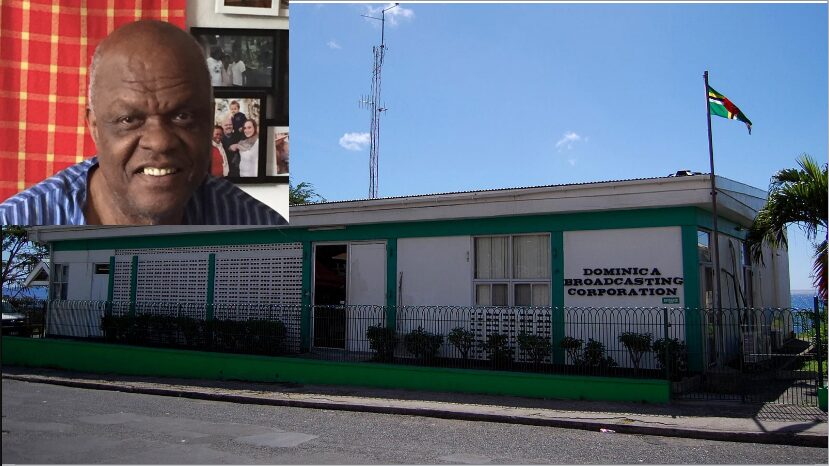
Dominican broadcasting pioneer, Jeff Charles, has died
The Caribbean island nation of Dominica is mourning the loss of one of its most influential media trailblazers, Jefferson “Jeff” Charles, whose passing was confirmed by Dominica News Online.
Charles’ career stands as a foundational chapter in Dominica’s modern media history. As a veteran local broadcaster, he earned the distinction of becoming the first manager of Radio Dominica — the country’s first ever national broadcasting outlet, which was reorganized into the Dominica Broadcasting Corporation in 1976. During an era when radio served as the primary channel for public information and community connection across the island, Charles guided the development of the station’s first local content schedules and built the institutional framework that would support national broadcasting for decades. His early work not only gave Dominicans a dedicated local voice on airwaves but also permanently shaped the small island’s emerging media ecosystem.
Later in life, Charles relocated to the United States to expand his expertise in the rapidly evolving communications field. He pursued advanced academic study in communications technology, ultimately completing a doctorate in satellite communication — a cutting-edge discipline that was undergoing explosive growth in the late 20th century. His academic research and technical contributions advanced global satellite communication systems, creating a unique throughline between his hands-on experience building local media in the Caribbean and the global push to connect the world through advanced communications technology.
Today, Charles is remembered by communities in Dominica and across international communications circles for his far-reaching dual contributions. His passing represents the loss of a rare figure who left indelible marks on both the development of national media in his home country and the advancement of global communication technology. His decades-long career remains a notable example of how local media innovation can intersect with and contribute to global scientific progress.
-

Man fined after pleading guilty to assault charges
A 27-year-old man from St James, Barbados, has been ordered to pay a $5,000 fine after entering guilty pleas to three violent offenses, including wounding and two counts of assault. Justin Jamar Maynard, who lives in the Block 7C neighbourhood of Haynesville, faced his sentencing at the Holetown Magistrates’ Court on Friday, where the details of his May 19 offences were formally processed before Magistrate Cuffy Sargeant.
Alongside the steep financial penalty, the court issued a strict timeline for payment: Maynard must settle the full $5,000 fine within the next 30 days to avoid additional legal penalties. In an unusual procedural step, the court has also scheduled a follow-up court date for June 18, 2026, requiring Maynard to return to the Holetown courthouse nearly two years from now for official check-in on his sentence compliance.
-
Minstens 90 doden bij gasexplosie in Chinese kolenmijn
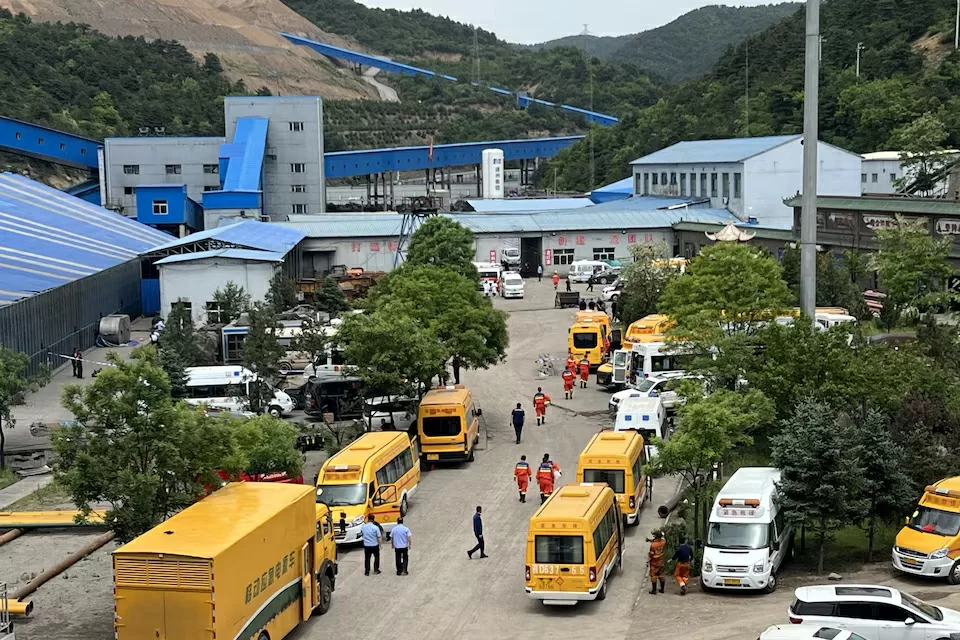
A devastating gas explosion at the Liushenyu coal mine in Qinyuan District, Shanxi Province, northern China, has claimed at least 90 lives, marking the deadliest mining disaster the country has seen in more than 15 years. According to state-run news outlet Xinhua, 247 workers were operating underground at the time of the blast, which occurred on Friday evening. The explosion was triggered shortly after a carbon monoxide alert was issued, with multiple reports indicating that gas concentrations at the mine had already exceeded regulated safe limits before the incident. Chinese state broadcaster CGTN confirmed that local authorities have launched a full investigation into the root causes of the disaster and have already taken the mine’s lead safety supervisor into custody. Following the tragedy, Chinese President Xi Jinping issued an urgent directive calling on local and national government bodies to draw urgent lessons from the fatal incident. He emphasized that all regions and relevant agencies must maintain constant vigilance over workplace safety standards, conduct thorough inspections to identify and address hidden hazards across high-risk industries, and enforce strict prevention measures to stop major accidents from occurring. As China’s core coal-producing region, Shanxi churned out more than 1 billion tons of coal last year, accounting for nearly one-third of the country’s total national output. China holds the title of the world’s largest coal producer and consumer, responsible for more than half of global coal consumption. While the country is also the world’s top annual emitter of greenhouse gases, it has poured billions of dollars in recent years into expanding renewable energy capacity to transition away from fossil fuels. Hundreds of rescue workers have remained on site in the days following the explosion, continuing search operations for any potential survivors. Footage and images from the disaster zone show dozens of ambulances lined up near the mine entrance as emergency operations proceed. Over the past two decades, China has made notable progress in improving coal mine safety across the country, implementing stricter regulatory frameworks and mandating upgraded safety protocols that have cut annual mining fatalities sharply. Even so, this latest tragedy makes clear that severe, life-threatening risks remain pervasive in the industry. The early arrest of the mine’s senior safety official underscores the Chinese government’s stated commitment to holding accountable parties responsible for safety failures and rooting out corruption that often allows unsafe operating practices to continue in the high-risk sector. The fatal disaster has refocused international and domestic attention on the ongoing challenge China faces in balancing rapid economic growth, worker safety, and ambitious climate policy as the world’s largest coal producer.
-
First 100 days: St Michael folk ‘see change’
Three months after Barbados’ February 11 general election, constituents in two St Michael constituencies are already witnessing tangible progress on key campaign pledges, from long-overdue road repairs to new skills-training initiatives aimed at empowering young people. During a 100-day checkpoint visit to communities across St Michael Central and St Michael West, Barbados TODAY spoke to dozens of residents who shared mixed but mostly positive reactions to the new administration’s early delivery.
In St Michael Central, one of the most visible changes is the full resurfacing of Powder Road, a thoroughfare that had sat in dangerous, disrepair for years. Today, motorists and pedestrians move along the smooth pavement without navigating gaping potholes or uneven terrain that made travel difficult for decades. Longtime resident Trey told reporters he never thought he would see the road fixed in his lifetime. “A couple years we’ve been dealing with this mess, but I’m so glad they got it done—it looks real good,” he said. “We couldn’t even walk along the side of the road properly before. This is the first promise we’ve seen delivered, but we’re willing to wait for the rest. What we really need now is more opportunities for idle young people, to keep them occupied and off the streets.”
Elderly resident Mrs Mayers echoed that gratitude for the resurfacing, but flagged a new safety concern that has emerged since the project was completed. Speeding vehicles turning from the main road onto the minor side road now pose a major risk to pedestrians, she explained, pointing to the sharp corner that leaves walkers with little warning of oncoming traffic. “They will have to put some kind of speed control or signage at the corner there, because somebody is going to get knocked down,” she warned. “But otherwise, I love the new road. It’s a world of difference.”
Fellow resident Sherlock King called the road work a long-awaited win for the whole community. “Great, splendid, marvellous—we were waiting for them to do this for years, because this was the most dangerous road out here,” he said. “We thank the Lord for that. Everything takes time, and we understand that, but this is a great start.”
Beyond infrastructure, St Michael Central’s Member of Parliament Tyra Trotman has already launched two people-focused programs aimed at reducing unemployment and empowering local residents. The first, Faces of the Future, is a six-week makeup artistry training course for young women in the constituency. Trinisha Farrell, parliamentary liaison officer, told Barbados TODAY the inaugural cohort wrapped up training last month with 17 graduates, all of whom are now certified to work professionally in the field.
The program far exceeded expectations, with demand spilling over from neighbouring constituencies. “We actually had an influx of persons calling the office from other areas asking to be a part of the program as well,” Farrell said. “It was a hit across Barbados, and definitely a hit with our constituents because we had an overflow of people wanting to join even after the course had already started. Many of our graduates have already gone on to launch their own small makeup businesses. If any of them need help registering their businesses through Business Barbados, Trotman has committed to walking them through that process step by step.”
A second cohort of 15 participants is set to begin training next week, just a short delay after the first round wrapped up. Organizers originally planned to cap each cohort at 16 participants, but adjusted to accommodate extra interest in the first round. Moving forward, the program’s continuation depends on securing additional funding to cover training costs and materials. “Funding is the main barrier we have to work through right now,” Farrell explained. “We’re actively seeking funding to keep the program running because it’s clearly filling a need. The whole goal is to help more people in the constituency become self-sufficient entrepreneurs, and that’s something we want to keep building on.”
Trotman’s second new initiative, the Walk the Bush program, was launched to connect unemployed men in the constituency with paid, flexible work assisting vulnerable households. The pilot started with 11 participants, who work three days a week completing property maintenance and yard work for elderly, disabled, disenfranchised residents and single-parent families that cannot afford or complete the work themselves. The program has already been expanded to accept requests from any local resident who wants to hire the participants for small jobs, with payments going into a centralized fund that keeps the program running and guarantees participants steady pay. The next phase of the initiative will focus on helping participants build the skills and connections needed to launch their own independent service businesses, with the goal of having graduates go on to mentor other unemployed young men in the constituency.
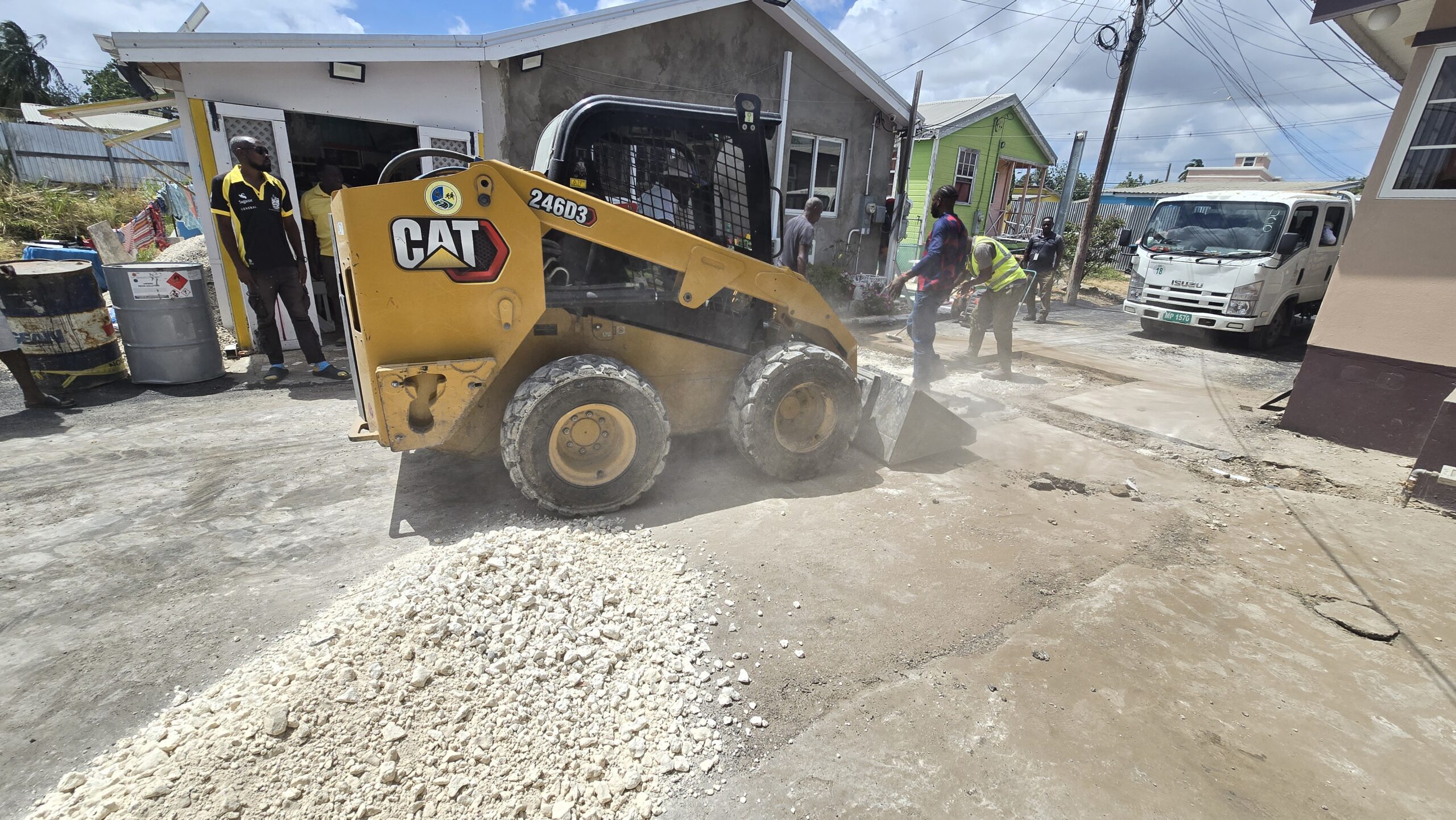
Over in St Michael West, residents of Greaves Land are equally enthusiastic about long-awaited road repairs to a thoroughfare that had been neglected for more than 30 years. The project hit a minor snag earlier this month when a water main burst damaged a section of the newly patched road, but workers have already made quick progress repairing the damage. One local business owner, whose shop sits directly along the road, said she doesn’t mind the temporary dust and construction disruptions, because the end result will be life-changing for the whole community.
“Once it’s done I can wear high heel shoes again, instead of sticking to sneakers and slippers just to get to my door,” she said. “My feet won’t get covered in dust and mud every time I step out anymore. I’m so glad the government got this patching machine to fix all these potholes that have been here for decades. Now the kids can run and play on the road, as long as the ZR route vans don’t come speeding through cutting people off.”
She added that while she is grateful for the work, residents are waiting to see how the road holds up during the upcoming rainy season, since low-lying sections of the road have historically flooded and pooled water after heavy storms due to the natural slope of the land. “I got to wait til the rainy season to see how it goes now, you can see the land slopes down that way,” she said, pointing to the low side of the road. “But I’m thankful, that’s the truth. The workers have been working hard, and this is more progress than we’ve seen in 30 years.”
-
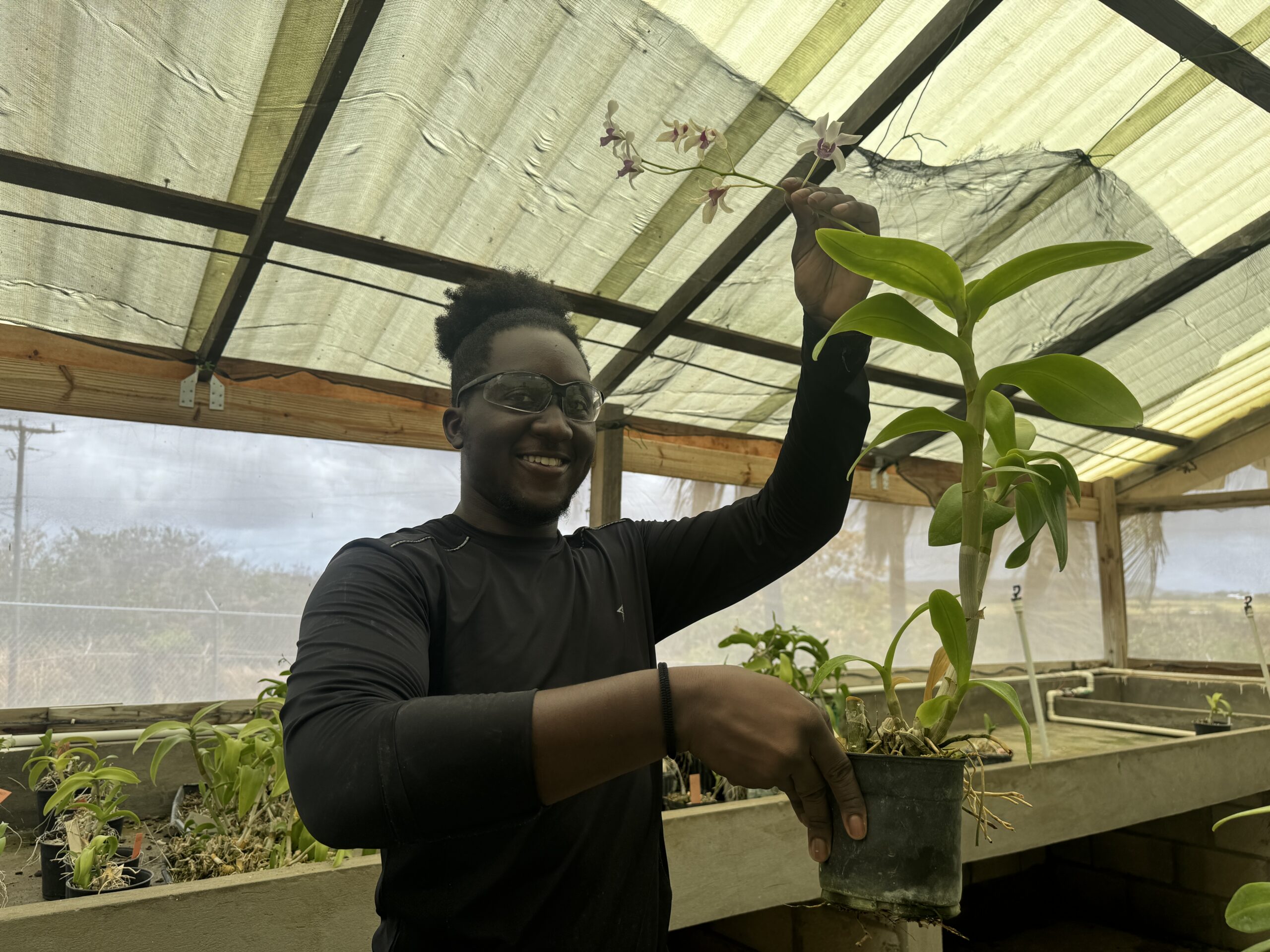
Fusing medicine, farming, researcher seeks plant-based cancer treatment
At an age when many young professionals are still mapping out their first career steps, 24-year-old Stefon Burgess has made a deliberate pivot that connects his early medical ambitions to a new path rooted in plant science, food sovereignty, and groundbreaking cancer research. A native of Bowmanston, St. John, Burgess now spends his working days at the Plant Tissue Culture Laboratory in St. Philip, where plant propagation work has reshaped not just his professional goals, but his entire perspective on what a meaningful career can look like.
Burgess initially set his sights on becoming a medical doctor, but a gradual shift in priorities led him to test a different path. He made the decision to take a research internship at the lab to gain hands-on experience, a choice that quickly won him over. “I honestly wanted to be a doctor, but my mind just started to change, and I decided, well, I’m going to do the internship here and get the experience,” Burgess shared. “I’m enjoying it. At first, I thought to myself, outside field work is okay, but I like being in the lab as well, and I am exposed to both here.”
What began as a seven-week temporary placement through the University of the West Indies last year morphed rapidly into a full-time position. By August 2023, Burgess had signed a permanent contract at the lab, and he has now built up nearly nine months of on-the-job research experience. Equipped with a Bachelor of Science degree in Biology, with specialized coursework in ecology, biochemistry and chemistry, Burgess said the laboratory environment opened his eyes to the under-explored scientific potential locked within the agricultural sector. “I grew really good here. I learned a lot with the physiology of the plants – sweet potato, yam, pineapple and then plantain and everything,” he said.
Even as agriculture has captured his professional interest, Burgess never let go of his longstanding fascination with medical science. Instead of abandoning that passion, he is now working to merge his two interests through targeted future research. “I would still love to incorporate my medical background,” he explained. “I want to do research on soursop and come up with an antidote for cancer using bioactive compounds from the fruit and leaves.”
Outside of his formal lab work, Burgess tends to a small personal backyard garden at his home, where he grows his own sweet potatoes, figs, plantains and sweet peppers. Beyond the practical benefit of cutting down on monthly grocery bills amid skyrocketing living costs, he said the routine of gardening has become a deeply effective therapeutic practice that supports his mental well-being. “Mental health is very important,” he said. “Not just going out partying and stuff. I think that would be a good way to stabilise yourself as well.”
For Burgess, home gardening also represents a tangible form of personal independence at a time when Barbados is facing widespread cost of living increases that have strained household budgets across the country. “You will want to garden at home so that you will have your own produce and you wouldn’t have to be looking here or there looking for fruits or vegetables,” he said. “Things getting expensive, so it will put a little ease on your family too.”
Though still in his early twenties, Burgess speaks with articulate passion about the critical issue of national food security, and the unique role that young Barbadians must play in strengthening the country’s local agricultural sector. “All of we living essentially the same life in Barbados. We know how hard it is here, especially cost of living, gas, food, everything going up,” he said. “Me, I know I was born in the 2000s, but that don’t mean I don’t know anything about the world.”
He believes that expanding youth participation in agriculture could help Barbados cut its reliance on costly food imports, while simultaneously opening new opportunities for agricultural exports and homegrown innovation. “This is a good way to actually show that we need to get students into agriculture so that we would get our own exports to other countries,” Burgess said.
His enthusiasm for growing and working with fresh produce even extends into the kitchen, where he regularly experiments with healthier homemade recipes using produce harvested directly from his backyard. One of his most successful creations to date has been savory dough pockets made entirely from homemade sweet potato flour. “I was doing a little experiment doing sweet potato pockets,” he said with a laugh. “Just get a little blend here and put it in a frying pan. Honestly, it was better than the store-bought pocket mix, and it’s healthier too.”
Burgess’s core mission now is to encourage more young Barbadians to reframe their perception of agriculture: instead of seeing it as outdated, physically demanding blue-collar work, he wants them to recognize it as a dynamic avenue for scientific innovation, financial self-sufficiency, and personal growth. “Honestly, I would encourage other young people,” he said. “Everything makes sense, especially working in the plant tissue culture lab.”
This story was produced in partnership with Barbados’ Ministry of Agriculture.
-
Indian quarry workers to be paid before month-end, no word on return airfares
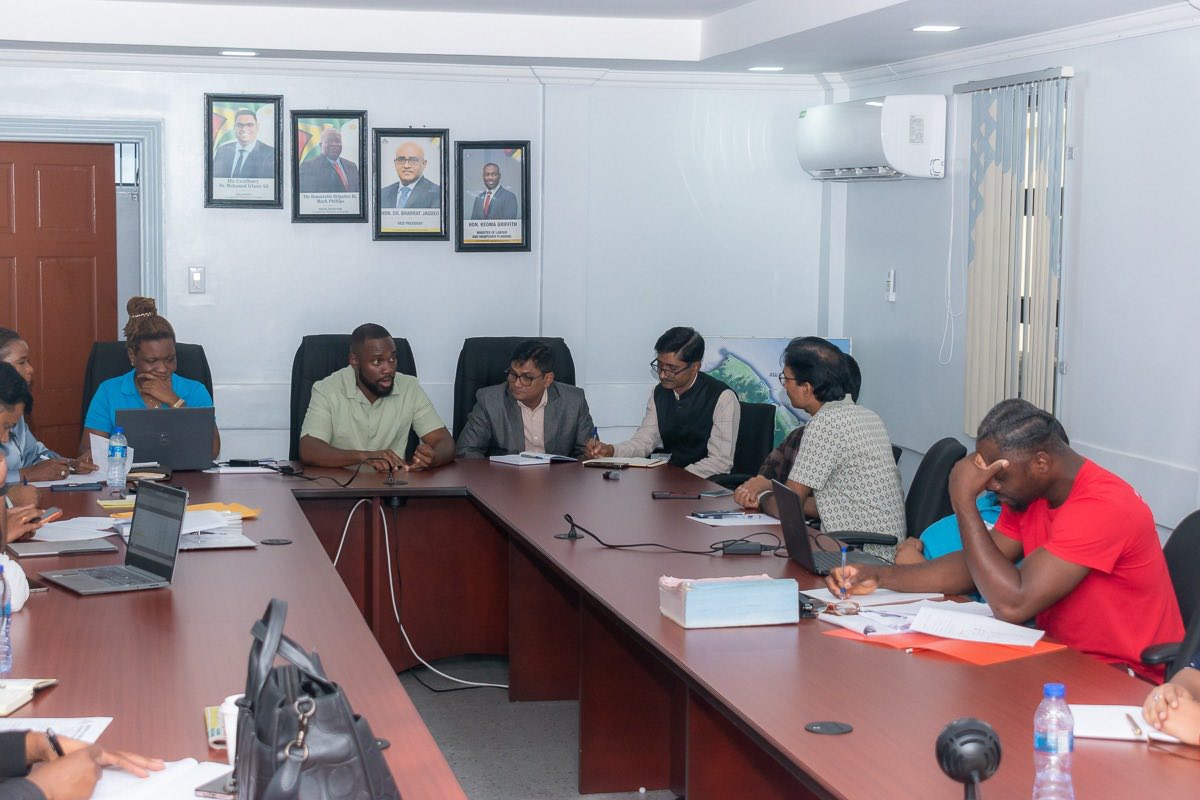
On May 23, 2026, new developments emerged in a high-profile labour dispute involving 37 Indian migrant workers at a Batavia quarry in Guyana’s Region Seven (Cuyuni-Mazaruni), after the workers came forward with serious allegations of abusive working and living conditions. Officials from Guyana’s Ministry of Labour, senior government representatives from multiple domestic agencies, and India’s acting Deputy High Commissioner held multi-stakeholder consultations at Guyana’s Labour Ministry to address the workers’ grievances.
Following the closed-door talks, the Labour Ministry announced in an official statement that EKAA HRIM Earth Resources, the India-headquartered firm that operates the quarry, has formally committed to disbursing all unpaid salaries and wages owed to the 37 workers no later than May 27, 2026. During the negotiations, both the workers and company representatives raised additional unresolved issues, and both sides have agreed to submit supporting documentation for these outstanding matters when talks resume next week. No further details on these additional claims have been released to the public.
The agreement on back pay does not extend to return airfares for most workers, however, according to Guyana’s Opposition Leader Azruddin Mohamed, whose opposition WIN party first brought the workers’ plight to public attention. Mohamed told local outlet Demerara Waves Online News that the company has refused to cover the cost of return flights for the majority of the aggrieved workers, arguing that most breached the terms of their employment contracts. EKAA HRIM has only offered to pay for tickets for five to eight workers who have completed three-year tenures at the quarry, Mohamed said. To date, the Labour Ministry has not issued a formal decision on the airfare dispute.
Talks are set to resume next Monday morning, when workers will submit pay slips to corroborate additional claims beyond unpaid April salaries. The workers allege the company made unauthorized deductions from their wages that were held as unreturned security deposits, and have stated they never received formal pay slips for their work at the quarry. In a sharp rebuke of Labour Minister Keoma Griffith’s handling of the case, Mohamed criticized the minister for failing to uphold his mandate to protect worker rights, pointing to multiple documented labour violations at the EKAA quarry.
The situation took an unusual turn when police officers called to the Labour Ministry blocked Mohamed from attending the stakeholder negotiations, barring him from the meeting boardroom. After the workers left the quarry, Mohamed has housed and fed the group at one of his personal properties.
The case also includes serious allegations of human trafficking tied to the company’s retention of the workers’ passports. Mohamed confirmed that legal counsel has been engaged to pursue these claims. Earlier this week, EKAA HRIM consultant Yoganand Persaud defended the company’s actions, claiming the workers voluntarily surrendered their passports to the company for safekeeping. After intervention from Labour Minister Griffith and India’s acting High Commissioner, all passports were returned to the workers.
Guyana’s Labour Ministry has confirmed it is continuing to investigate allegations of labour law breaches and occupational safety and health violations at the quarry, stating that all proceedings will follow due process and adhere strictly to Guyana’s national labour regulations.
-
‘Zero tolerance to school violence’
A recent viral video capturing a violent student assault at a secondary school in Chaguanas has pushed school safety and disciplinary policy into the spotlight of Trinidad and Tobago’s parliamentary debate, prompting the nation’s top education official to reaffirm a hardline stance against campus violence.
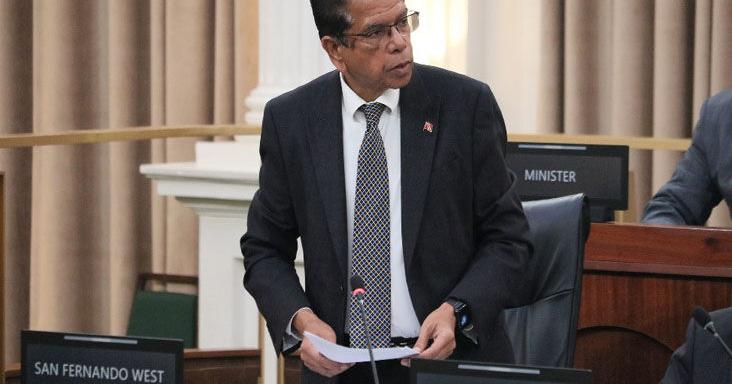
During Wednesday’s parliamentary sitting held at the Red House in Port of Spain, Education Minister Dr Michael Dowlath addressed questions from Opposition Member of Parliament Dr Nyan Gadsby-Dolly, who centered her query on the widely circulated footage of the attack on a male student earlier that week. Gadsby-Dolly pressed for clarity on two key points: whether the Trinidad and Tobago Police Service (TTPS) had been officially brought into the case, and what steps had been launched to hold the students responsible for the beating accountable.
Responding to the first set of questions, Dowlath confirmed that ministry officials have already received an initial incident briefing from Chaguanas South Secondary School, the campus where the assault took place. He confirmed that school administration has formally reached out to the Chaguanas Community Police unit, and the full investigation is currently underway under law enforcement oversight. For the implicated students, Dowlath noted that the school has already launched its internal disciplinary process, collecting written testimonies from both the involved students and independent witnesses. Parents of all implicated students have already been contacted and summoned to a meeting at the school, and the ministry has ordered the school to hold formal disciplinary hearings aligned with national education policy and the National School Code of Conduct, after which official disciplinary measures will be finalized. The ministry will maintain active oversight of the case to ensure the disciplinary process concludes properly and that the school continues full cooperation with the TTPS, Dowlath added.
Turning to the broader question of systemic responses to rising campus violence, bullying, and gang-related activity in secondary schools, Dowlath outlined a series of updated and expanded measures the ministry has rolled out to improve school safety. Most notably, the ministry has recently revised and strengthened the National School Code of Conduct, adding more explicit, clear provisions governing violent acts, in-person bullying, cyberbullying, gang-associated behavior, weapon possession, and other severe instances of misconduct. He repeated that a zero-tolerance framework remains in full effect for all serious violent acts that put student safety at risk.
To reinforce on-the-ground safety, the national Police in Schools Programme remains active across 51 of the nation’s highest-risk secondary schools, with supplementary police patrols and cross-agency partnership deployed when needed. The ministry’s Student Support Services Division continues to deliver targeted support for at-risk students, including professional counseling, behavioral intervention programs, psychosocial support, conflict resolution training, and external referrals for students requiring more intensive support. Individual schools also receive guidance and training on evidence-based behavioral management strategies, restorative justice practices, and timely conflict intervention to de-escalate tensions before they escalate into violence. Dowlath emphasized that the ministry maintains ongoing close collaboration with parents and local school communities to strengthen student oversight, improve disciplinary standards, and expand early intervention for at-risk youth. To close, he noted that the ministry continuously tracks data on student disciplinary actions and suspensions, using this data to refine intervention strategies and allocate support services where they are most needed.