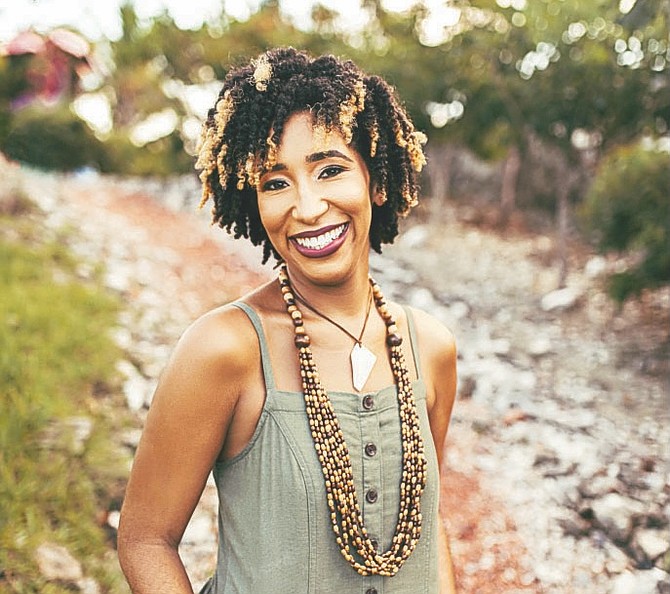
Bahamian gender equality advocacy group Equality Bahamas has issued sharp criticism of the current Davis administration, accusing leaders of sidelining gender-based violence (GBV) as a policy priority during their term, pointing to chronically underfunded support systems for survivors and the government’s ongoing refusal to outlaw marital rape.
In an interview outlining the group’s concerns, Equality Bahamas Director Alicia Wallace charged that the administration has rejected even the most straightforward, low-barrier actions to address widespread GBV, despite consistent calls for reform from both local advocacy organizations and international human rights bodies. Unlike the government’s claim that entirely new policy frameworks are needed to tackle the crisis, Wallace noted that actionable, vetted recommendations have existed for years from global groups including the UN Committee on the Elimination of Discrimination against Women (CEDAW) and the UN Human Rights Council. Existing draft legislation only requires minor updates and final approval to move into law, she added.
A core point of contention is the long-running push to criminalize marital rape, a reform that CEDAW has recommended since 2018. Even after a new draft bill was introduced to amend the country’s Sexual Offences Act, Wallace said the current administration deliberately excluded this critical provision. In public comments made in February 2025, Prime Minister Philip “Brave” Davis argued that broad “consensus” from across Bahamian society was required to move forward with the change, saying the government must reflect the will of all groups, not just gender equality advocates. That same month, Attorney General Ryan Pinder confirmed that the administration does not plan to introduce the legislation before the end of its current term, citing the issue’s political sensitivity.
Notably, the prime minister’s own spouse, Ann Marie Davis, has publicly broken with the administration’s position, voicing full support for criminalizing marital rape and calling for policymakers to act immediately. Back in 2022, Davis made an unusually public rebuke of the status quo, saying: “We must agitate and hold our policy makers accountable. We want them to upgrade our laws and we really need that. Imagine, we are still living in a society where no does not mean no. How could that be? I tell you no and you think I mean yes. No, sir. Of course I’m talking about marital rape right. No means no.”
Critics of the administration’s delay point to past examples where Bahamian governments have moved forward on politically divisive policies without full national consensus. For instance, the former Christie administration moved to regularize the gaming industry after a referendum on the issue failed, and the current Davis administration implemented cannabis reforms despite widespread opposition from religious groups.
Wallace explained that the legal exception for marital rape is not just a technical oversight, but a reflection of deep systemic gender inequality. “It suggests that women’s identities and autonomy cease to exist in the context of marriage, and dangerously, that we become the property of men. This is at the root of all other issues of gender inequality and gender-based violence,” she said.
Beyond criticizing the ruling party, Wallace also called out the Bahamian opposition for failing to uphold its oversight role, noting that the opposition has not used its legislative leverage to push for reform or back advocates’ demands as high-profile domestic and sexual violence cases continue to make headlines. “As story after story of domestic violence and sexual violence reach headlines, they have not reiterated recommendations, support our demands, or made their own interventions, completely wasting the leverage they had as an opposition,” she said.
Other youth and community leaders echoed these concerns. Prodesta Moore, from the Bahamas Urban Youth Development Centre, emphasized that GBV and the lack of legal protections do not only affect adult women, but shape the lives of young people across every community. “Domestic violence and sexual assault continue to affect families across communities, with young people often directly or indirectly impacted. These are not just adult issues, they are youth issues,” Moore said. “They shape the environments our young people grow up in, the trauma they carry, and the futures they are trying to build.” Moore called for expanded protections for women and girls, broader public education and prevention programming, and more accessible support services for survivors.
Khandi Gibson, a representative of local group FOAM, acknowledged that many women face unique barriers to leaving abusive relationships that extend beyond government policy, but confirmed that limited resources remain a crippling barrier to support, particularly for temporary housing and mental health counselling.
The Bahamian Tribune reached out to four senior female government ministers — Labour and Public Service Minister Pia Glover-Rolle, Energy and Transport Minister Jobeth Coleby-Davis, Education Minister Glenys Hanna-Martin, and Housing and Urban Renewal State Minister Lisa Rahming — for comment on the administration’s unaddressed gender equity commitments. None responded to requests for comment before the publication deadline.