分类: society

  • Market Bag: Shopping with Chef Lumley in Papine

    Market Bag: Shopping with Chef Lumley in Papine

    ST ANDREW, Jamaica – A revealing episode of the culinary series ‘Market Bag’ featured an exclusive glimpse into the shopping habits of Executive Chef Brian Lumley, one of Jamaica’s most distinguished culinarians. In a candid conversation with host Carlysia Ramdeen, Chef Lumley detailed his essential ingredients and shared strategic insights on adapting his craft amidst severe supply chain disruptions following Hurricane Melissa.

    The interview provided a stark contrast to the reality faced by local consumers, as a simultaneous market survey revealed a significant spike in food prices. At Papine Market, a critical hub for fresh produce, costs have escalated dramatically compared to the previous week’s figures at Linstead Market.

    Current price indicators illustrate the steep inflation: Scotch bonnet peppers command J$800 per pound, ginger is priced at J$600, while Irish potatoes and onions are selling for J$350 and J$400 respectively. Root vegetables like yam and carrots are listed at J$500 and J$300, with tomatoes also at J$300 per pound. This market volatility underscores the ongoing challenges in Jamaica’s agricultural recovery and food security landscape.

    The episode promises a comprehensive analysis of these market conditions, offering viewers vital information on navigating the current economic climate affecting household nutrition and culinary practices across the island.


  • Jamaicans urged to know their data rights

    Jamaicans urged to know their data rights

    KINGSTON, Jamaica — Jamaican citizens possess enforceable legal entitlements to ascertain what personal data entities maintain about them, according to recent clarifications from the Office of the Information Commissioner (OIC). This right is enshrined in the nation’s Data Protection Act and its complementary Data Protection Regulations of 2024.

    Andree Holness, Director of Complaints Resolution and Compliance at the OIC, emphasized that while individuals may seek comprehensive disclosure of information retained about them, the legislation establishes a formalized procedure for submitting such inquiries. “The framework mandates a specific request mechanism—designated as Form Two—which explicitly delineates the categories of information that a data subject can legally demand from a data controller,” Holness stated during a recent installment of the Jamaica Information Service’s ‘Get the Facts’ series.

    The scope of accessible information encompasses numerous dimensions, including the specific types of personal data stored, the purposes for which it undergoes processing, and whether it is disseminated to third parties as part of these operations. Holness further detailed that Sections 6 through 8 of the Data Protection Act, in conjunction with Part V and the Second Schedule, provide explicit guidelines governing the manner and circumstances under which access to personal data must be granted.

    Significantly, the definition of personal data under the act extends beyond fundamental identifiers such as names and birth dates to include opinions formed and decisions rendered about individuals. This broad interpretation ensures greater transparency in how personal information is utilized across various sectors.

    The OIC continues its initiatives to promote public awareness and adherence to the Data Protection Act, underscoring the shared responsibility of both individuals and organizations in protecting sensitive personal information against misuse and ensuring privacy rights are upheld.

  • Construction buried alive in hillside collapse

    Construction buried alive in hillside collapse

    Recovery operations persisted through Thursday night and into Friday morning following a devastating hillside collapse at a construction site adjacent to the Tonique Williams-Darling Highway. The incident resulted in the death of a 51-year-old construction worker who became trapped beneath massive boulders and debris while operating excavating machinery.

    According to eyewitness accounts from the scene, the catastrophic event occurred approximately at 3pm on Thursday when a significant portion of the hillside suddenly gave way. Independent contractor Mark Turnquest, who was working at the site, revealed that the victim had been working alone at the time of the collapse, with both the operator and his heavy equipment becoming completely buried under the landslide.

    Police authorities confirmed they were alerted to the industrial accident shortly after 6pm Thursday. Upon arrival, officers consulted with two construction workers who reported the excavator and its operator missing following the slope failure. Initial rescue attempts proved unsuccessful in locating or reaching the trapped operator due to the substantial amount of debris and safety concerns.

    The recovery effort mobilized multiple agencies including Police Fire Services and corporate volunteers equipped with heavy machinery. During debris-removal operations, responders managed to locate the victim’s torso, but deteriorating light conditions and ongoing safety risks forced the suspension of operations late Thursday evening.

    The victim’s brother joined recovery teams who returned to the site Friday morning to continue the painstaking process of removing rubble and recovering the remaining remains. Official investigations into the precise circumstances surrounding the fatal incident remain ongoing as authorities work to determine the factors that contributed to the hillside collapse.

  • Digicel calls network vandalism and theft a national crisis

    Digicel calls network vandalism and theft a national crisis

    Jamaica’s telecommunications sector is confronting a severe national emergency as systematic vandalism and theft of critical infrastructure escalate, triggering widespread service disruptions and posing substantial public safety hazards. During a recent webinar hosted by the Office of Utilities Regulation (OUR), Digicel Business Marketing Lead Brithney Clarke revealed that criminal attacks on network facilities have evolved from isolated incidents into coordinated operations targeting the nation’s essential communications systems.

    Clarke disclosed staggering financial impacts, with Digicel suffering approximately US$3.9 million in direct losses between 2023 and 2024. This period witnessed the theft of over 450 batteries, vandalism of nearly 100 generators, damage to equipment shelters, and compromised operations at about 300 critical sites. Notably, criminals are deliberately destroying fiber-optic cables and other infrastructure with minimal resale value, indicating motives beyond mere theft that intentionally undermine network redundancy and continuity.

    The consequences extend throughout Jamaican society, affecting emergency response capabilities, business operations, and economic productivity. Clarke emphasized that service failures directly endanger lives by hampering police, fire, and ambulance services while simultaneously disrupting supply chains and commercial activities. The vulnerability of communications infrastructure particularly jeopardizes disaster management during hurricanes and other emergencies when reliable coordination is paramount.

    Repeated attacks are eroding public trust and discouraging investment in Jamaica’s telecommunications framework. Companies are being forced to redirect resources from network expansion and community development toward constant repairs, stagnating technological progress. Clarke urgently called for enhanced legislative measures, stricter penalties reflecting the national security implications, and a coordinated response involving government agencies, law enforcement, industry stakeholders, and public vigilance in reporting crimes.

    ‘This constitutes a major act with national repercussions affecting healthcare, education, elections, and emergency response systems,’ Clarke stated, urging swift amendments to telecommunications legislation and characterizing the crisis as the ‘mindless minority holding the nation hostage.’

  • Learning from the source

    Learning from the source

    In an era of escalating climate crises, environmental educator Faraaz Abdool proposes a radical shift in how we approach learning—by turning to nature itself as the ultimate classroom. Despite global efforts to implement environmental education, humanity continues its trajectory toward ecological catastrophe, suggesting fundamental flaws in our current educational paradigms.

    The prevailing extractive mindset cultivated by modern education systems treats nature as a commodity to be harvested and exploited rather than a complex system to be understood and preserved. This approach produces professionals who value timber over forests, economic gain over ecological balance, and resource extraction over sustainability.

    Abdool identifies our profound disconnection from natural systems as the core issue, manifested not just physically but cognitively—through diminished patience, avoidance of uncertainty, and manufactured fears of wild creatures. This separation has been carefully engineered through comfort-oriented lifestyles and sensationalized media portrayals of nature.

    The solution proposed is both simple and revolutionary: begin reconnecting with nature through bird observation. Birds serve as ideal entry points to natural education due to their accessibility, diversity, captivating behaviors, and ability to command attention in an increasingly distracted world. They require no prior knowledge or equipment to appreciate, making them perfect ambassadors for the natural world.

    Through observing species like Trinidad and Tobago’s distinctive yellow-rumped caciques (locally known as ‘cornbirds’), students of nature can uncover complex ecological relationships. These birds flock to swamp immortelle trees during flowering season, attracting smaller birds like tanagers and hummingbirds. Later, parrots arrive to feed on seed pods, inadvertently assisting in seed dispersal. These observations reveal seasonal patterns, habitat preferences, and ecosystem functions that formal education often overlooks.

    This nature-based learning generates practical wisdom that informs responsible decision-making—recognizing that swamp immortelle populations indicate seasonal flooding patterns and aquifer recharge zones, knowledge crucial for sustainable land use planning. Such insights surpass what conventional degrees offer and cannot be replaced by recycling initiatives or corporate sustainability rhetoric.

    Abdool concludes that rekindling our connection to nature through simple observation represents our best hope for developing the ecological literacy necessary to navigate impending environmental challenges. This approach benefits not just children but lifelong learners seeking wisdom from nature’s infinite classroom.

  • Fire forces evacuation at KPH

    Fire forces evacuation at KPH

    A pre-dawn fire emergency triggered the full-scale evacuation of Kingston Public Hospital’s Accident and Emergency Department on Friday morning. The incident originated on the facility’s first floor shortly before 5:00 AM, prompting immediate emergency protocols.

  • Barbuda Airport to Extend Operating Hours with New Apron Lighting

    Barbuda Airport to Extend Operating Hours with New Apron Lighting

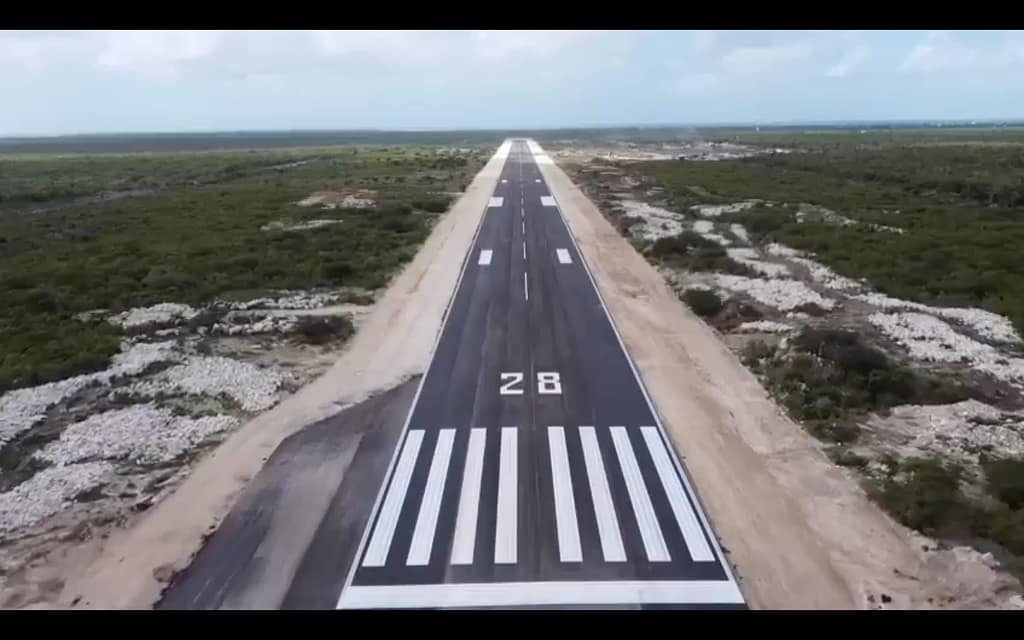
    The Barbuda International Airport is poised to significantly expand its operational capabilities through the installation of advanced apron lighting infrastructure. This strategic enhancement will permit scheduled flights to continue until 9:30 PM, effectively eliminating the current restriction that forces the airport to cease all operations at sunset.

    According to Maurice Merchant, Director General of Communications in the Prime Minister’s Office, this decision resulted from high-level Cabinet discussions involving airport authorities and representatives from the PLH development project. The existing illumination system, described as ‘sunset lights,’ has historically limited aviation activities to daylight hours, creating logistical challenges for the island.

    The Antigua and Barbuda Airport Authority is collaborating directly on this infrastructure project, which represents a critical component of broader developmental initiatives linked to PLH’s investments on the island. The extended operational window is anticipated to yield substantial benefits across multiple sectors including inter-island transportation, tourism expansion, and emergency medical response capabilities.

    Officials emphasize that enhanced nighttime accessibility will be particularly valuable during peak travel seasons and for after-hours emergency situations. While specific completion timelines remain under development, authorities confirm that installation works will commence imminently, marking a new chapter in Barbuda’s connectivity and economic development.

  • Five years on, no answers in Stephanie Thomas’ murder

    Five years on, no answers in Stephanie Thomas’ murder

    Five years after the grim discovery of a decomposed female body at Pigeon Point in Gros Islet, Saint Lucia, the grieving family of 22-year-old Stephanie Thomas continues their agonizing wait for justice. The case, initially investigated in January 2021, remains officially active with law enforcement yet to make any arrests in connection with the young woman’s death.

    The emotional toll on Thomas’s family has been devastating. Her father, Robertson Henry, described the past five years as “an emotional roller coaster” that has tested his sanity. “I try to remain sane by constantly occupying myself with work, but the memory and the pain never goes away,” Henry revealed in an interview with St. Lucia Times. “The images of her decomposed body serve as a constant reminder of the brutality and nastiness of the murderer.”

    Despite public appeals from police officials during the initial investigation phase, the case has encountered significant forensic challenges. According to police sources, the advanced state of decomposition of Thomas’s body has prevented pathologists from determining the exact cause of death, creating a substantial obstacle in the investigation.

    Superintendent George Nicholas, who heads Crime Management in the Royal Saint Lucia Police Force, had previously assured the public that investigators were pursuing all possible leads. While one individual has been questioned multiple times in connection with the death, the absence of conclusive evidence has prevented any arrests.

    The tragedy occurred during a particularly violent year in Saint Lucia, with Thomas’s death being one of 75 homicides recorded in 2021. Her father maintains that even if the killer is eventually brought to justice, it cannot fully compensate for the loss of his daughter, who was “taken away from us way too soon.”

  • Jamaican national charged with capital murder in Biscombe killing

    Jamaican national charged with capital murder in Biscombe killing

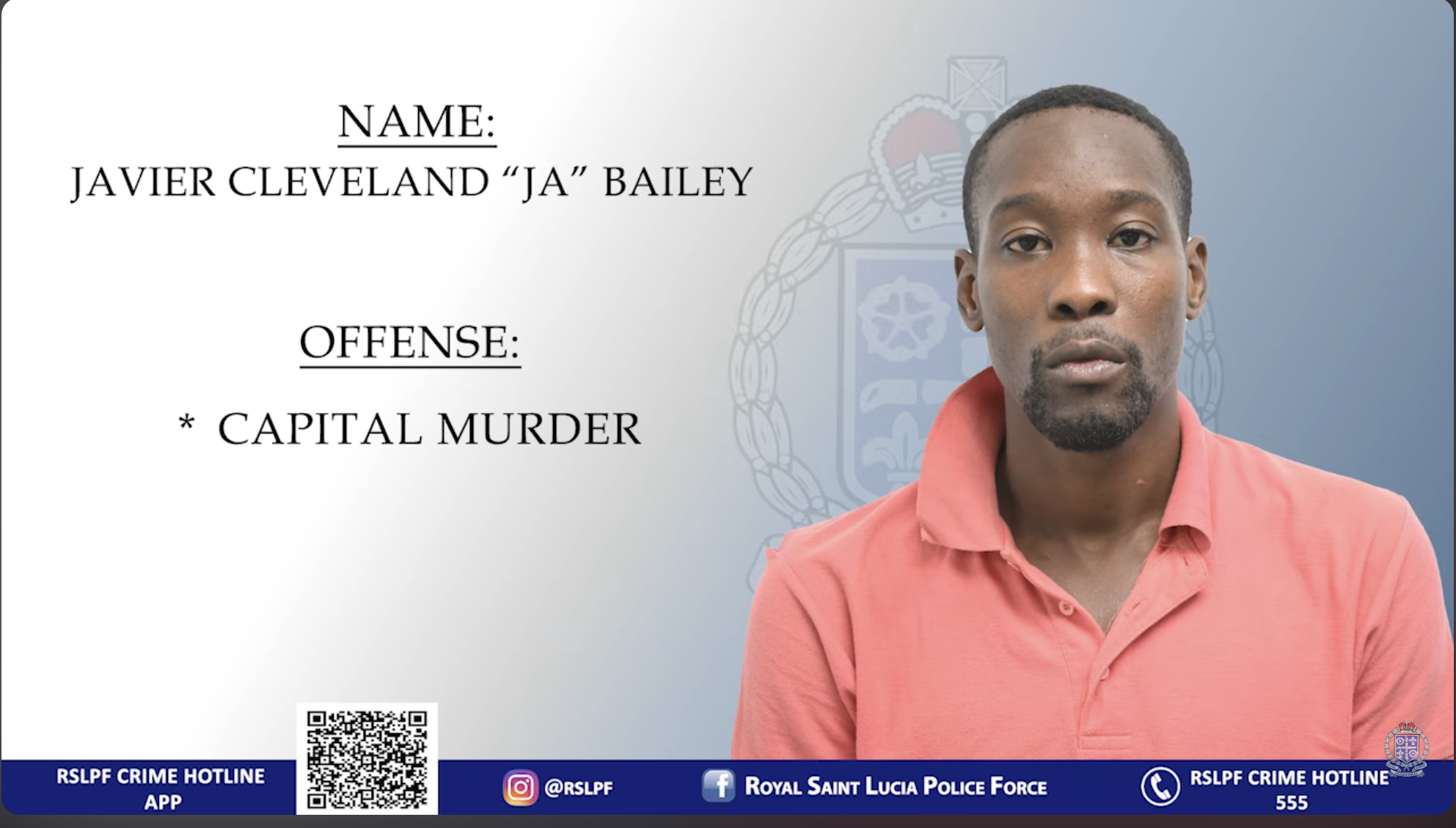
    Saint Lucian authorities have formally brought capital murder charges against Javier Cleveland Bailey, a Jamaican national, for the January 19th fatal shooting of 27-year-old security guard Cresean Biscombe. The incident occurred during an apparent robbery attempt at a Castries supermarket where Biscombe was employed.

    The Royal Saint Lucia Police Force confirmed Bailey’s arrest came following an intensive investigation into the La Clery homicide. Court documents show prosecutors presented their case before the First District Court on January 28th, where the presiding judge ordered Bailey remanded into custody pending trial proceedings.

    Law enforcement officials have revealed their investigation remains active, with at least one additional suspect currently detained for questioning. Police indicate multiple individuals may have participated in the attempted robbery that resulted in Biscombe’s death. Authorities are continuing investigative operations to identify and locate other potential accomplices.

    The case has drawn attention to workplace safety concerns for security personnel and highlighted ongoing efforts to combat violent crime in commercial establishments. The judicial process will proceed under Saint Lucia’s legal framework for capital offenses, which carries significant penalties upon conviction.

  • Cabinet to Address Rising Barbuda Ferry and Flight Costs Next Week

    Cabinet to Address Rising Barbuda Ferry and Flight Costs Next Week

    The Antigua and Barbuda Cabinet has formally recognized mounting public discontent regarding the deteriorating state of inter-island transportation, specifically highlighting spiraling ferry expenses and a concerning contraction in flight availability. This pressing societal issue, which directly impacts the mobility and economic vitality of Barbuda’s residents, was formally tabled during the government’s weekly briefing session. However, a definitive deliberation and the formulation of potential countermeasures have been strategically postponed until the ministerial body’s subsequent convocation scheduled for the following week.

    Maurice Merchant, the Director General of Communications within the Prime Minister’s Office, provided official commentary on the deferral. He confirmed that while the Cabinet is acutely aware of the grievances articulated by the populace, the agenda of the most recent assembly did not permit a thorough examination of the subject. Merchant assured stakeholders and concerned citizens that the matter retains a high priority on the governmental docket and is slated for comprehensive review imminently.

    The core of the public’s consternation revolves around a tripartite challenge: exorbitant and rising ferry fares, a significant reduction in reliable air service operators, and profound reliability deficits plaguing the existing transportation infrastructure. This precarious situation generates severe impediments for Barbudans, adversely affecting daily commutes, access to employment opportunities, and the operational capacity of local enterprises. Particular inquiries have been directed toward understanding the rationale behind the temporary suspension of certain air carriers and the long-term strategy for ensuring stable and affordable connectivity.

    While the government’s spokesperson abstained from speculating on prospective solutions or policy interventions, he emphatically guaranteed that the Cabinet intends to confront these logistical and economic challenges directly. The national community now anticipates substantive announcements and a clear, actionable plan from the administration subsequent to the conclusion of the next high-level meeting.