分类: society

  • President Abinader attends installation of new bishop of La Vega Diocese

    President Abinader attends installation of new bishop of La Vega Diocese

    LA VEGA – A landmark ceremonial event unfolded this week at the Immaculate Conception Cathedral in La Vega, where newly appointed Bishop Andrés Napoleón Romero Cárdenas was formally installed as the top leader of the Diocese of La Vega. The installation followed an official appointment by Pope Leo XIV, with Apostolic Nuncio Archbishop Piergiorgio Bertold presiding over the formal religious gathering. Dominican Republic President Luis Abinader was in attendance to mark the historic occasion for the regional Catholic community.

    In his inaugural homily delivered moments after taking office, the new bishop laid out a clear vision for his tenure leading the diocese. Romero Cárdenas committed to guiding a faith community rooted in proximity to local residents, built around open dialogue and collaborative partnership, while intentionally steering clear of partisan political divides. He emphasized his intent to work constructively alongside government officials, educational establishments, local business groups, and community-focused organizations to advance shared public good across the diocese’s coverage area.

    Beyond collaborative governance, Romero Cárdenas reinforced his dedication to upholding the Dominican Republic’s long-held religious and cultural heritage. He highlighted core values that will anchor his pastoral work: respect for life, support for family structures, a commitment to justice and peace, investment in education, upholding human dignity, and advancing meaningful action for environmental protection.

    Among his key pastoral priorities, the new bishop singled out youth ministry as a central focus for growth in the coming years. He announced concrete plans to expand and strengthen existing support programs for young people, delivered through coordinated cross-community pastoral initiatives designed to meet the evolving needs of the diocese’s youth population.

    The Diocese of La Vega is one of the Dominican Republic’s larger regional Catholic jurisdictions, serving four provinces: La Vega, Hermanas Mirabal, Monseñor Nouel, and Sánchez Ramírez. Across its service area, the diocese oversees 63 individual parishes and supports a roster of more than 120 active priests serving local faith communities.

  • Santo Domingo Este Malecón closed today for Central American and Caribbean Games triathlon

    Santo Domingo Este Malecón closed today for Central American and Caribbean Games triathlon

    Santo Domingo, Dominican Republic – Ahead of the triathlon competition kicking off as part of the XXV Central American and Caribbean Games 2026, local transportation authorities have formally announced temporary traffic restrictions along a key coastal corridor in the capital’s eastern district.

    The National Institute of Transit and Land Transportation (Intrant) confirmed Monday, August 3, that the entire stretch of Santo Domingo Este Malecón, officially known as Avenida España, will be closed to all motor vehicle traffic for 11 hours on the day of the event. The shutdown is set to begin at 3:00 a.m. and will remain in place until 2:00 p.m., giving event organizers time to set up race infrastructure before the competition and clear the course for regular use once the triathlon concludes.

    In an official statement, Intrant has urged all drivers who typically travel along the corridor to adjust their travel plans in advance to prevent unexpected delays and congestion at nearby access points. To help commuters and commercial vehicles reroute smoothly, the agency has identified three primary alternate routes: Las Américas Avenue, Estados Unidos Avenue, and Mirador del Este Avenue, all of which are designed to accommodate increased traffic volume during the closure.

    To further assist road users, Intrant confirmed that all details of the temporary closure have already been updated and integrated into the popular Waze real-time navigation application, allowing app users to automatically receive rerouting suggestions when planning trips through the affected area. Additionally, uniformed traffic officers have been deployed to key intersections and diversion points along the restricted zone. These personnel will be on site throughout the closure to manually direct vehicle flow, respond to unexpected congestion issues, and uphold overall traffic safety for both race participants and road users during the event.

  • Independence Day crash victim memorial

    Independence Day crash victim memorial

    Nearly one month after a devastating plane crash claimed 10 lives during the Bahamas’ Independence Day celebrations, families of the victims are trapped in extended anguish, marked by the first funeral held on Saturday and an incomplete memorial held without a loved one’s remains.

    In Nicholls Town on the island of Andros, hundreds of mourners packed the local Church of Christ to lay 24-year-old Macaro Rolle to rest, the first of the 10 crash victims to be buried. Rolle was one of the initial survivors of the crash, but ultimately succumbed to his injuries three hours after impact – a window of time that allowed him to say final goodbyes to his family and leave a lasting testimony of his deep Christian faith.

    Rolle, who owned his own home by age 24, had built a reputation as a disciplined, reliable worker over seven years of employment at MSC Ocean Cay, where he missed only a single day of work. “That speaks about his character. That speaks about his legacy and life at MSC Ocean Cay,” said Anna Albury, the resort’s human resources manager. The company covered travel costs for more than 20 employees to attend the funeral and brought in professional grief counselors to support staff following the disaster.

    Friends and relatives shared warm memories of Rolle’s consistent faith, recalling he would pray even before eating a small snack like a potato chip or piece of candy. In his final hours waiting for rescue, he called repeatedly on the name of Jesus. His aunt Linda Rolle noted that the three hours of survival after the crash gave his family a small measure of closure his counterparts in other bereaved families have yet to receive. “It’s not easy but I want to encourage my family today to know that God is faithful, just to keep him alive to bring closure to the other family members but most of all to leave a testimony. That’s important. We serve a faithful God,” she said.

    Close family members shared poignant reminders of their final interactions before the fateful flight. One cousin recalled receiving Rolle’s room key just hours before takeoff, with plans to meet up later. “That’s the very same key I had to use later to pack up his things and bring it home,” he said, his grief raw weeks after the crash. Rolle was remembered as a loving sibling, loyal friend, avid fisherman and joke-teller who dedicated himself to helping others. His former high school classmates honored his memory by gifting his family a custom portrait, while local lawmaker Leonardo Lightbourne sent official condolences via a representative after being unable to attend.

    Meanwhile, 40 kilometers away in New Providence, dozens of family members and friends gathered at Kingdom Evangelistic Apostolic Ministries for a memorial service for Rashad Storr – a member of the popular Da Pond Band and a mechanic for Western Air. Like several other victims, Storr’s remains have not been recovered and returned to his family due to severe burn damage that has complicated identification efforts, which currently rely on DNA testing to confirm victims’ identities. Even as speakers celebrated Storr’s life, the absence of his body hung over the entire service, with his relatives saying they will not find closure until his remains are returned.

    Attendees wore dark green and gold to honor Storr, remembering his warmth as a musician, his generosity toward others, and his dedication to his craft. Bandmate Shaniese Miller said Storr’s kindness to everyone he met earned him the nickname “the great Rashad” long before the crash. “Not because he asked to be call that but because there was something truly great about the way he treated people,” Miller said. Friend Phil Rolle described Storr as a chosen brother who taught him to play guitar and always showed up for people in need. “I don’t know if I’ll ever be as good on the guitar as him but I have to keep the legacy going,” he said.

    Western Air manager Ricardo Wilson also paid tribute to Storr’s work ethic, noting “He came to our organisation as an employee but he left as family.”

    Alongside Rolle and Storr, the eight other victims of the crash include Da Pond Band leader Giovanni McKenzie, band members Mateo Winder, Toniquea Gilot and Tra’vis Johnson, popular DJ Melvin “DJ Fresh International” Henfield, Andros native Quintin Myers, lead pilot Franklyn Cambridge, and 16-year-old Nicholas Oliver Jr. As families continue to wait for identification results to bring their loved ones home, the dual services on Saturday highlighted the prolonged pain bereaved relatives continue to endure weeks after the tragedy.

  • Kerrianne Eubanks Dies Six Weeks After Brutal Sea View Farm Attack

    Kerrianne Eubanks Dies Six Weeks After Brutal Sea View Farm Attack

    Six weeks after a brutal, vicious attack left her with multiple life-threatening chop wounds along a Sea View Farm roadside, a 45-year-old Bendals resident has died from her injuries. Kerrianne Eubanks, a mother of two, passed away on Saturday at the Sir Lester Bird Medical Centre, where she had been held in the intensive care unit since the June 20 assault. A close family member has officially confirmed her death to local authorities.

    When first responders arrived at the scene after the attack was reported, they found Eubanks suffering from devastating trauma to her head and multiple other areas of her body. She was immediately rushed to the hospital for emergency care, but medical teams were ultimately unable to save her life. In the immediate hours after the incident, law enforcement withheld Eubanks’ identity publicly to notify next of kin, only confirming her name in the days following the attack.

    With Eubanks’ passing, law enforcement officials confirm the case will now be formally reclassified as a homicide investigation — a step that brings a new level of urgency to the ongoing probe. Eubanks is survived by her two children and extended family, who are now grieving the loss of their loved one.

    As of the latest update, no suspects have been taken into custody, and no criminal charges have been filed in connection with the attack. Investigators continue to work through evidence and interview witnesses to piece together the full circumstances of the brutal assault.

  • COMMENTARY: When Success Becomes a Drug

    COMMENTARY: When Success Becomes a Drug

    In an era that celebrates relentless ambition and constant upward momentum, the pursuit of success has quietly morphed from a motivating goal into a dangerous compulsion for millions of people around the world. What begins as a healthy drive to improve one’s life, advance a career, or achieve personal milestones can slowly spiral into a dependency that mirrors the behavior of substance addiction, reshaping how people think, feel, and interact with the world around them.

    Unlike traditional addictions that center on chemical substances, success addiction feeds on the flood of dopamine that accompanies every win—whether that means a promotion, a six-figure salary, a viral social media post, or public praise from peers. Every achievement triggers a rush of good feelings, and over time, the brain adapts to this high, requiring bigger, more frequent wins to generate the same level of satisfaction. What once felt like a major accomplishment becomes the new baseline, leaving addicts constantly chasing the next hit with no sense of lasting fulfillment.

    This compulsive pursuit leaves deep, often hidden scars on personal well-being and relationships. Addicted to the high of success, many people sacrifice sleep, skip family gatherings, abandon hobbies they once loved, and ignore early warning signs of burnout and mental health decline. Relationships erode as work and achievement take priority over connection; loved ones are pushed aside in the relentless march toward the next goal, leaving many successful people feeling isolated and empty despite their external wins. Even physical health pays a price, as chronic stress from constant chasing elevates the risk of heart disease, anxiety disorders, and depression.

    Social media and modern cultural norms have only amplified this crisis. Today, personal worth is often measured by visible milestones: job titles, follower counts, net worth, and life highlight reels shared online. This constant comparison creates a feedback loop where people feel pressured to keep achieving just to maintain their social status and sense of self-worth. Young people entering the workforce are particularly vulnerable, raised in a culture that tells them they must constantly “hustle” and “level up” to be considered valuable, normalizing the overwork that fuels success addiction before they even establish their careers.

    Breaking free from this cycle requires a fundamental shift in how society and individuals define success. It means moving beyond a purely metric-based definition of achievement to prioritize balance, purpose, and relationships. For individuals, this can involve setting intentional boundaries around work, practicing gratitude for existing accomplishments rather than constantly reaching for more, and reconnecting with activities that bring joy unrelated to achievement. For society, it means challenging the “hustle culture” narrative that glorifies overwork and equates busyness with worth, creating space for people to find fulfillment outside of their career and public achievements.

    Ultimately, success is a healthy pursuit when it is a means to a fulfilling life, not the end goal itself. When it becomes a drug that consumes every part of life, it destroys the very quality of life it is supposed to improve. Recognizing the signs of success addiction and taking steps to reorient our priorities can help people achieve lasting satisfaction that does not depend on the next big win.

  • …Psychologist says recognising our triggers can help

    …Psychologist says recognising our triggers can help

    The recent brutal fatal stabbing of 25-year-old Shayanna Ruiz has sparked urgent conversations about emotional management and deep-rooted societal violence in Chaguanas, where the incident unfolded. Ruiz was killed Wednesday in a confrontation over a $4,500 debt with her ex-boyfriend’s current girlfriend, prompting mental health experts and security analysts to sound the alarm about gaps in how modern society handles conflict and intense emotion.

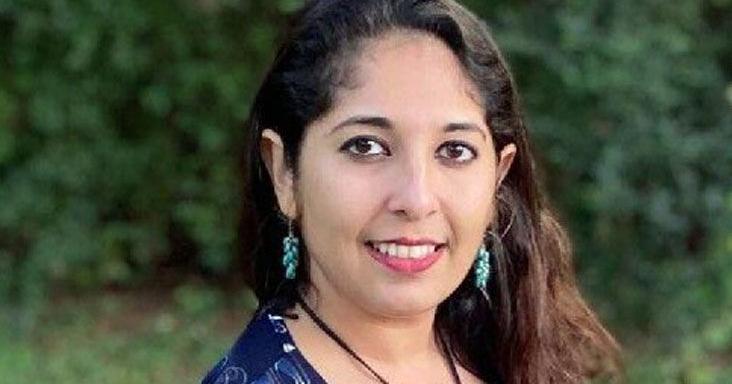
    Clinical and counselling psychologist Nidhi Kirpalani shared her insights with the *Sunday Express* in the wake of the killing, arguing that the core skills of recognizing emotional triggers and regulating intense feelings could prevent impulsive, destructive acts during moments of anger or distress. Contrary to common misconceptions, Kirpalani emphasized that anger is not an emotion to be suppressed or avoided entirely — it is a normal, functional human response that signals hurt, perceived unfairness, or threat, and acts as a warning of internal imbalance.

    “Emotional intelligence is not just about staying perpetually calm or never feeling angry,” Kirpalani explained. “The first critical step to building this intelligence is cultivating awareness of what situations spark our strongest emotional reactions. Even just identifying your triggers is a meaningful victory; it gives you deeper self-knowledge that you did not have before.”

    Kirpalani noted that simply noticing recurring emotional patterns is an active step toward change, as it helps people connect their reactions to unwanted outcomes. Managing anger does not mean pushing the feeling down, she clarified — it means preventing anger from taking full control of one’s actions. When people pause before reacting, they activate the region of the brain responsible for empathy, sound judgment, and understanding consequences, rather than slipping into the involuntary survival mode that intense anger triggers.

    “When anger becomes overwhelming, our brain and nervous system shift into fight, flight or freeze mode,” Kirpalani said. “Our heart rate spikes, our thinking rigidifies, and we focus only on reacting instead of weighing what will happen after we act. Slowing down, taking deep breaths, and grounding yourself in the present moment gives you space to evaluate different responses and their outcomes.”

    She added that anger often acts as a surface-level mask for deeper unresolved emotions, including sadness, feelings of rejection, or fear of abandonment. Unaddressed childhood trauma and lingering core insecurities can also amplify current emotional reactions, she said, meaning people must examine whether their response stems from the present situation or old unhealed wounds. Critically, emotional regulation does not require people to accept unfair treatment or ignore their legitimate grievances — instead, it creates space to respond intentionally rather than react impulsively, protecting both personal well-being and, in extreme cases, personal freedom.

    Building emotional awareness is a gradual, lifelong practice, Kirpalani noted, but it empowers people to respond thoughtfully rather than letting intense emotion dictate their choices. Her advice for anyone feeling anger rising is simple: step back for a moment, notice your physical and emotional state, and assess your options before acting.

    Beyond individual emotional skills, regional security consultant Dr. Garvin Heerah argues that Ruiz’s death exposes a far deeper, more disturbing societal trend that has taken root across parts of the population: the normalization of aggression as a legitimate tool to resolve conflict. Heerah told the *Sunday Express* that this trend is visible across all layers of society, from common road rage outbursts and rising school violence to the hateful, divisive, vengeance-focused language that permeates public discourse and even political spaces. He added that persistent, underrecognized racial tension also fuels this culture of aggression, beneath the surface of perceived social harmony.

    From a security perspective, Heerah said one of the most alarming shifts in recent years is the growing link between violent crime and psychopathology. Offenders increasingly demonstrate extreme brutality, a total lack of empathy, and a willingness to kill over trivial disputes that could be resolved through calm discussion. Violent acts are growing more excessive and personal, signaling a dangerous shift in public behavior that cannot be solved by policing alone, he argued.

    “This is not solely a law enforcement issue — it is a national crisis of social resilience that demands a whole-of-society response,” Heerah said. “Families, schools, communities, faith groups, mental health professionals, and the justice system all have a role to play. If we do not address the cultural and psychological drivers of violence, we will raise a new generation that sees violence as an acceptable way to solve conflict.”

    Heerah warned that if society continues to become desensitized to brutal violence, it could become a permanent, damaging part of the nation’s collective character. “The greatest threat to a nation is not just the criminal holding a weapon — it is a society that slowly stops seeing violence as abnormal,” he said. “This is a trend we must reverse before it becomes permanently embedded in our national identity.”


  • Woman held as police find assault rifle, ammo, cannabis

    Woman held as police find assault rifle, ammo, cannabis

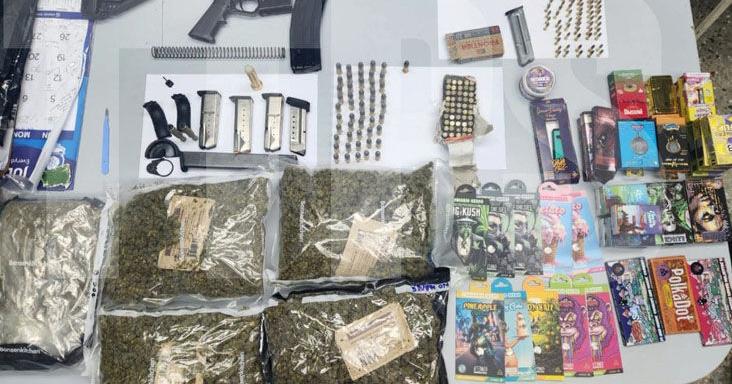
    Acting on actionable intelligence, a multi-hour police operation executed by the Northern North Division Task Force in the Trinidad and Tobago town of Curepe has resulted in the arrest of a 43-year-old woman and the seizure of a large cache of illegal weapons and cannabis products. The operation, which unfolded between 7 p.m. and 10 p.m. on Friday, centered on a residential property located on Harris Street, following tips received by law enforcement. Overseen by Corporal Griffith, the search yielded a significant haul of prohibited items that were discovered hidden inside a bedroom at the property, according to official statements from the Trinidad and Tobago Police Service (TTPS). Among the most serious items recovered by officers was a fully assembled AR assault rifle, alongside a sprawling stockpile of ammunition across multiple calibers. In total, police documented 50 rounds of 9mm ammunition, 50 rounds of .44 ammunition, 20 rounds of 5.56 ammunition, 99 rounds of .22 ammunition, and three additional rounds of 5.7 ammunition. The seizure also included multiple firearm accessories and components: five standard pistol magazines, one extended pistol magazine, one rifle magazine, and assorted internal and external parts, including rifle and pistol springs, guide rods, and pistol back straps. Alongside the firearms cache, officers uncovered a substantial quantity of cannabis and cannabis-infused products. A black suitcase held five compressed cannabis packets with a total weight of 2.6 kilograms, while a separate bag contained 23 boxes of cannabis vapes and three boxes of cannabis-infused chocolates. Following the search, the 43-year-old female resident of the property was taken into police custody. As of the latest update from the TTPS, she remains in detention as investigators continue to piece together details of the case, including potential links to larger illegal firearms or drug trafficking networks operating in the region.

  • Korpschef Pinas peilt zorgen bewoners: meer surveillance en snellere politiehulp gevraagd

    Korpschef Pinas peilt zorgen bewoners: meer surveillance en snellere politiehulp gevraagd

    On a recent Saturday, Suriname Police Chief Melvin Pinas led a community walkthrough in the De Nieuwe Grond neighborhood, cutting through bureaucratic layers to hear directly from residents about their experiences with and expectations for local law enforcement. The outreach initiative forms a core part of Pinas’ long-stated goal to bridge the growing gap between police forces and the communities they serve.

    Since taking office, the chief has emphasized that sustained, close engagement between police and the public is non-negotiable for effective public safety. Sitting behind a desk only gives leadership secondhand accounts from officers, Pinas explained during the walk, noting that on-the-ground conversations offer unfiltered insight into how community members actually experience policing.

    While many residents reported that their neighborhood currently remains relatively calm and expressed a desire to preserve that stability, almost all shared key priorities for improving local police services. The most commonly cited demands included faster processing of police reports, more decisive action against criminal activity, clearer, visible outcomes following police interventions, and an increase in regular neighborhood patrols to deter crime. Even residents satisfied with overall local safety pushed for more consistent, visible police presence to maintain current low crime rates.

    Other residents voiced more specific frustrations with systemic delays in police work. Multiple attendees called out the months-long wait for accident reports required for insurance claims, a burden that leaves crash victims waiting extended periods for compensation they are owed. Complaints also included the complete lack of follow-up updates provided to victims of crimes such as robbery, even when surveillance footage clearly identifies potential suspects. Many residents also shared a widespread perception that preferential treatment is common, claiming that connections within the police force are required to get cases processed in a timely manner.

    Following the walkthrough, Pinas hosted a follow-up community meeting at the Penny and Jon School to continue the conversation. While turnout for the meeting was lower than expected, attendees raised a broad range of additional public safety concerns that require police attention. These issues included reckless driving by e-bike users and bus drivers particularly during peak commuting hours, groups of people loitering outside retail establishments late into the night, repeated vandalism of critical fiber optic infrastructure, excessive noise from overnight neighborhood parties, suspicious unfamiliar individuals loitering in residential areas, and vehicles with heavily tinted windows parked for extended periods in neighborhood streets, which residents view as a potential security risk.

    Throughout both the walk and the subsequent meeting, Pinas shared his personal contact number with all attendees and gave a formal commitment that the police service would prioritize addressing every complaint and tip received during the outreach. In a major policy announcement tied to the engagement push, Pinas revealed that the national police is developing a dedicated mobile application that will allow residents to submit anonymous tips, and upload photos or other evidence related to suspicious activity or crimes. Pinas noted that the app is designed to remove barriers to reporting and enable faster, more effective responses to criminal offenses across communities.

    Reflecting on the day’s outreach, Pinas said he viewed the initiative as a success, but acknowledged that future events need more proactive publicity to draw a larger, more representative cross-section of neighborhood residents. Similar face-to-face community engagement sessions are already scheduled for the coming months in other Surinamese communities including Para, Galibi, and Tamanredjo, as the police force continues its push to build closer, more trust-based ties with the public.

  • Family Appeals for Help to Find Missing Woman Shenett Jacobs

    Family Appeals for Help to Find Missing Woman Shenett Jacobs

    The family of Shenett Jacobs is turning to the wider community for urgent assistance to locate the 5-foot-4 woman who has been missing for weeks after she was last spotted in the Brown’s Bay/Nonsuch Bay region on July 25, 2026.

    Law enforcement and Jacobs’ relatives have released a detailed physical description to help members of the public recognize her: Jacobs has a brown complexion and hair that blends both black and grey strands. The clothing she wore when she was last seen included a bright yellow construction helmet, a heather grey long-sleeved shirt, deep green trousers, and a pair of grey Converse sneakers.

    Local authorities and the Jacobs family are emphasizing that every piece of information, no matter how insignificant it may seem to the holder, could prove critical to advancing the ongoing search. Anyone who has seen a person matching this description, or has any details that could shed light on Jacobs’ current whereabouts, is strongly encouraged to reach out either directly to her family or to the local police force as soon as possible.

  • Eerste Heritage Month moet Surinamers dichter bij elkaar brengen

    Eerste Heritage Month moet Surinamers dichter bij elkaar brengen

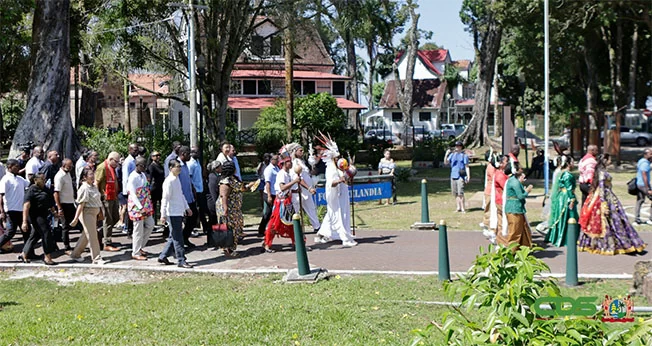
    On August 1, Suriname launched a landmark new national initiative with the official opening of its first-ever Heritage Month, an event designed to center the country’s collective past, celebrate its abundant cultural richness, and build a unified vision for its shared future. The opening ceremony unfolded in two symbolic stages: it began at the Queen Wilhelmina monument adjacent to Fort Zeelandia, where government officials, foreign diplomats, and cultural sector representatives gathered before undertaking a ceremonial walk to Palmentuin. This stroll was intentionally staged to represent the journey from honoring historical memory to fostering connection, cultural exchange, and national solidarity. President Jennifer Simons, hailed by event host Clifton Braam as the founding visionary behind Heritage Month, led the official opening and unveiled the initiative’s official logo, with plans to embed the annual celebration as a permanent fixture across the country’s education, cultural, and community spheres.

    The overarching theme for this inaugural edition of Heritage Month is “However we came together, this is how we move forward together” — a framing that reflects the nation’s commitment to embracing its full, complex history to strengthen collective purpose. In her keynote address, President Simons emphasized that Heritage Month is far more than a series of cultural events; it is intended to grow into a lasting, cross-sector program that brings together education institutions, academic researchers, and government policymakers to deepen public understanding of Suriname’s shared history and narrow persistent social and regional divides. “Suriname is not just home to diversity — we are diversity,” the head of state stated. She shared her hope that the initiative will help all Surinamese grow increasingly aware of their shared responsibility to one another, adding, “I hope that all Surinamese will increasingly recognize that we are our brother’s keeper.”

    Organized around four sequential core themes — origins of ancestral communities, the journey of Suriname’s forebears, centuries of coexistence across groups, and documenting progress for future generations — the Heritage Month program is designed to both reflect on the past and actively build a cohesive shared national identity, according to the Suriname Communication Service. Minister of Internal Affairs Marinus Bee noted that cultural heritage is a living, evolving reality, visible in the daily lives of families, the multiplicity of languages spoken across the country, long-held traditions, and vibrant local communities. Bee stressed that entrepreneurs, artists, and the tourism sector all play critical roles in preserving and promoting Suriname’s unique national identity. “Heritage Month is not a nostalgic look backward,” he explained. “It is an invitation to look forward, to build bridges between young and old, between urban centers and rural districts, between the past and the future.”

    Minister of Education, Science and Culture Dirk Currie underscored the critical importance of documenting Suriname’s history from the perspective of its own people, rather than outside narratives. He noted that education and academic research must ensure that younger generations not only learn where Suriname comes from, but also understand how its diverse modern society took shape. Currie also highlighted the underrecognized economic value of cultural heritage: by growing the creative sector, supporting traditional crafts, and expanding cultural tourism, heritage preservation can both protect cultural identity and drive new job creation and inclusive economic growth. “A large part of our history was written by the people who enslaved us,” Currie said. “That has to change.”

    Rachel Pinas, chair of the presidential working group for Heritage Month, called the opening a historic turning point for the nation. She explained that August 1 was intentionally selected as the launch date to ensure the initiative creates space to honor Suriname’s full history, including its Indigenous roots, colonial era, the experience of chattel slavery, indentured contract labor, and all subsequent waves of migration. Pinas referenced Article 8 of Suriname’s constitution, which enshrines equality and bans discrimination, noting that Heritage Month is intended to reinforce these foundational values and ultimately secure a permanent, structural place in national education and community life. “Today we are making history,” Pinas emphasized. “With the opening of the first Heritage Month, the Republic of Suriname makes a deliberate choice to embrace our shared history as the foundation for our shared future.”

    The first Heritage Month will run from August 1 through August 31. Throughout the month, community and national events will be hosted across every region of the country, focused on celebrating Suriname’s tangible and intangible cultural heritage, highlighting its extraordinary cultural diversity, and deepening public understanding of its collective shared history.