分类: society

  • Dominican Republic investigates death of NYPD officer after cosmetic surgery

    Dominican Republic investigates death of NYPD officer after cosmetic surgery

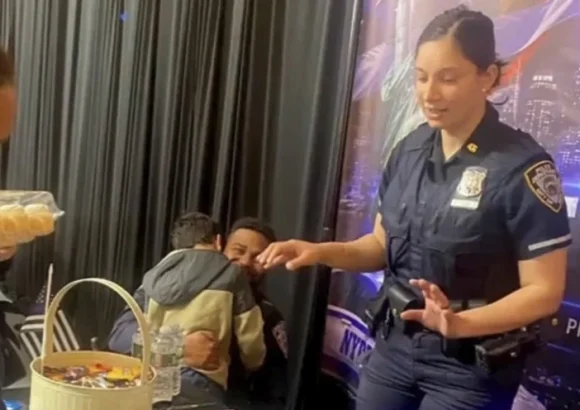
    Santo Domingo — A 31-year-old New York Police Department officer with Dominican roots has died following breast implant removal surgery at a Dominican clinic, triggering an active official investigation into the circumstances that led to her unexpected passing.

    Rebecca DePaula traveled to the Caribbean nation roughly seven days before the procedure to undergo the operation, according to official reports. To date, authorities have declined to release the public identity of the medical facility or the operating surgeon that carried out the treatment.

    A joint probe is being led by the Dominican National Police and the nation’s Public Ministry, with the investigative process currently in a holding pattern while teams await results from autopsy and forensic testing completed by the National Institute of Forensic Sciences, known locally as INACIF. Only after receiving these formal results will officials confirm an official cause of death and assess whether any form of medical negligence contributed to the fatality.

    National Police spokesperson Diego Pesqueira emphasized that investigators will not jump to unsubstantiated conclusions about what led to DePaula’s death, noting the case file remains open as forensic work is finalized.

    Family members of the fallen officer have shared preliminary accounts that DePaula developed serious health complications immediately after her surgery, including intense, persistent diarrhea. Relatives also added that treating physicians raised the possibility of a dangerous bacterial infection as a contributing factor. Despite these anecdotal claims, official investigators have stressed that none of these allegations have been verified through the ongoing forensic review, and all potential causes remain on the table.

    DePaula was a serving member of the NYPD’s 46th Precinct based in New York City. Beyond her law enforcement career, she also served as a pastor alongside her husband. She leaves behind her spouse and three children, who are currently in New York making arrangements to receive her remains for repatriation and burial.

  • ‘Something ain’t adding up,’ says mom of drowned teen who couldn’t swim

    ‘Something ain’t adding up,’ says mom of drowned teen who couldn’t swim

    A promising 18-year-old Bahamas resident with his whole future ahead of him has drowned in the South Beach Canal after ending up in the water alongside friends, leaving his heartbroken family grappling with inconsistent accounts of what led to the tragedy and struggling to come to terms with their loss. Ryan Alfred, an 18-year-old who could not swim, died on Friday after he and three companions were trapped by powerful currents near the canal’s sandbanks. His mother, 41-year-old Monique Alfred, says she is still unable to piece together the clear circumstances of her son’s death, with conflicting narratives emerging from witnesses about how he entered the water.

    In an interview shared with local media, Monique Alfred emphasized that her son shared her inability to swim, and would never have intentionally entered deep water. “My son cannot swim just like me,” she explained. “He’ll go around the beach but he’s not going in the water because he can’t swim. Something ain’t adding up.” Conflicting witness statements have only deepened her confusion: one person told her Ryan had been unwilling to go into the water, while others offered entirely different versions of the fateful outing.

    Official police accounts confirm that Alfred was in the water with a 17-year-old girl and two 19-year-old men when the entire group was suddenly caught in unexpectedly strong currents. One of the 19-year-old men told responding officers that he first saw the teenage girl in distress, pulled her to safety on shore, and turned back to rescue Alfred — but before he could reach him, a second powerful surge of current swept both men further out from shore. Alfred soon slipped beneath the surface and vanished before help could arrive.

    Authorities were first alerted to the incident just after 7 p.m., launching an immediate multi-agency search operation that included local police and divers from the Royal Bahamas Defence Force. Divers eventually recovered Alfred’s body roughly 300 feet from the shoreline, and he was pronounced dead at the scene by emergency responders.

    The family had begun growing worried hours before the official confirmation of his death, when repeated phone calls and text messages to Alfred went unanswered throughout the day. His father also attempted to contact him, before reaching out to one of Alfred’s sisters to ask if she had any information about his whereabouts. It was not until one of Alfred’s friends finally answered his phone that the family was told to rush immediately to the local police station, with the message that “something bad happened to Ryan.”

    Monique Alfred recounted the chaotic, devastating moments after she received the news: “My daughter called and said ‘mummy, something wrong’. I didn’t have no ride and their daddy went there. I called him and he explained to me what happened. When I arrived at the station, police were already questioning my husband and Ryan’s friends, and at that point, they still hadn’t found his body.” Officers later returned from the recovery site to officially confirm the teen’s death, leaving his mother completely shattered. “The first thing I asked them ‘was my baby okay, Ryan okay’ and they said ‘no Ryan is dead’ and I said ‘what,’ and as a mother, I was at that station like crazy crying.”

    Those who knew Alfred describe him as a quiet, kind-hearted young man who was deeply loved in his tight-knit Johnson Road community. A lover of video games, Alfred was a 2025 graduate of Doris Johnson High School who had recently taken the first steps toward building his adult life: he had just started a new job at local retailer Super Value, and was working as an apprentice welder under a local business owner in the St Anne’s area. For Monique Alfred, who raised three children on her own through significant financial hardship, her son was a steady, caring presence who always prioritized helping his family. Their last conversation before his death centered on his plan to use his first paycheck to buy new school supplies and new Clarks shoes for his 11-year-old younger sister. “He was saying, ‘Mummy, I gone help you with my 11-year-old sister because I know you’re not working,” Monique Alfred recalled. “I gon’ help you out and I think Clarks was on sale, and he was saying he’s gonna get the shoes. He’s like, ‘Mummy, what her size is and everything’.” After that conversation, Ryan left for work — it was the last time his mother would speak to him.

    “My son was 18. He had plans. He wanted to help me take me on my situation,” his mother said, adding that Ryan’s father is also consumed by grief over the sudden loss. Alfred’s older sister Monica has been unable to eat or sleep since the tragedy, and says she is heartbroken she never got the chance to say goodbye. “I’m gonna miss the phone calls, the texting, the getting offs, the cracking jokes, the hugs, me being the annoying sister but I thank God for the 18 years he give us him,” she said. Like her mother, Monica also questioned how her brother, who disliked water and could not swim, ever ended up in the dangerous canal.

    News of Alfred’s death has sparked an outpouring of tributes from across the local community on social media. Adrian White, the Member of Parliament for St Anne’s, remembered Alfred as a gentle, respectful young man who had his whole life ahead of him. “Despite not wanting to be in the water, Ryan found himself there. He has now gone on to heaven, leaving behind a grieving mother and two siblings,” White said. Senator Keno Wong also issued a statement of condolences, urging local residents to hold the Alfred family in their prayers during this impossible time.

    As the family processes their grief and seeks answers about what exactly happened to Ryan, they are asking for community support to cover unexpected burial costs. Any member of the public wishing to contribute to the fund can contact Monique Alfred directly at 809-1474.

  • Mourners bid tearful farewell to Shirley Street crash victims

    Mourners bid tearful farewell to Shirley Street crash victims

    As grieving families and friends gathered over the weekend to lay to rest two of the five young victims of a fatal Shirley Street car collision, one family’s story of hardship, sacrifice and unbreakable sibling devotion has come to light.

    Anthony Thompson, the older brother of 22-year-old Bertica Brown, opened up about the decades-long journey that saw him step into the role of both brother and father from his teenage years. When Brown was just two years old, she lost her father, and by the time she turned nine in 2015, the death of their mother left the pair orphaned. Thompson, then a homeless teenager, made the decision to take full guardianship of his little sister, raising her alongside his own wife and two young children in a makeshift shack in Abaco.

    “When I received Trica, I was living in a shack,” Thompson shared in an emotional address during Saturday’s service. “But I didn’t let anybody know because I knew God’s journey.” Thompson described the overwhelming uncertainty he felt about raising a young child at such a young age, but threw himself fully into nurturing her growth and ambitions. When Brown developed an interest in throwing events for track and field, Thompson didn’t just support her from the sidelines — he coached her and even founded a local track club to give her space to practice. More than once, he went without meals to ensure his sister had enough to eat, a sacrifice that forced him to grow up far faster than any teenager should have to.

    “There were times the brother in me wanted to let her do her own thing,” Thompson recalled. “Then the father in me would stand up and say, ‘No, I’ll give you every opportunity I possibly can.’”

    Financial strain marked Brown’s entire childhood: for months at a time, Thompson could not cover the tuition for the private school he enrolled her in, and he dreamed of giving her travel opportunities that would help her secure a spot in college. Even amid these struggles, Brown never turned to rebellion; while she navigated the common growing pains of adolescent identity formation, she remained grounded and driven. Time and again, community sponsors stepped forward to cover her costs, a streak of good fortune Thompson attributes to divine favor.

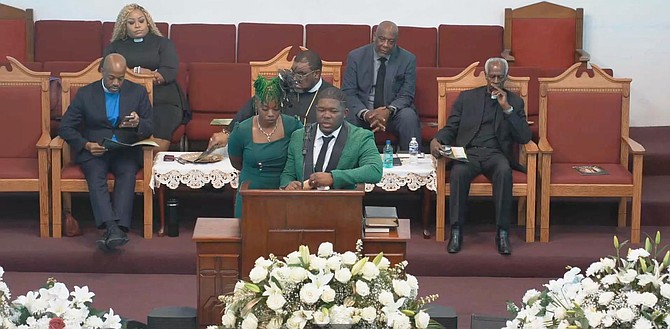
    Brown went on to graduate from Agape Christian School in Abaco, where she stood out as a star athlete in both volleyball and track and field. Before the crash that cut her life short, she had already earned multiple college scholarship offers. On Saturday, hundreds of mourners packed the Church of God Temple for her funeral, many wearing green in her honor, and loud wails of grief echoed through the sanctuary at multiple points during the service. Brown will be laid to rest in Abaco at a future date.

    A separate funeral service was held the same weekend for 19-year-old Evalena Johnson, the second of the five crash victims to be honored, at Living Waters Kingdom Ministries. The three other victims — 17-year-old Diamond Stubbs, and 19-year-olds Stania Webb and Keno Gordon — have already been memorialized: a joint funeral was held for Stubbs and Webb on Cat Island last weekend, and Stubbs’ parents traveled to attend Brown’s service Saturday. Most of the eight people traveling in the vehicle the night of the crash had known each other since early childhood, adding another layer of heartbreak to the tragedy for their tight-knit community.

    Thompson said he chose to share his family’s story after being moved by Stanley Webb’s tribute to his daughter Stania during the Cat Island service. Across all the services, tributes to Brown focused not on her athletic or academic achievements, but on the warmth of her character. Mourners remembered her as a kind, loving young woman with a generous spirit that made it impossible not to care for her. Bishop Denczil Rolle, who delivered the sermon at Brown’s funeral, recalled how Brown had once approached him directly to ask for university sponsorship. He told the congregation that her combination of frankness and respectful determination stuck with him, a perfect reflection of the drive that shaped her short life.

  • MAANZ launches annual studentpreneur initiative to promote youth skills and entrepreneurship

    MAANZ launches annual studentpreneur initiative to promote youth skills and entrepreneurship

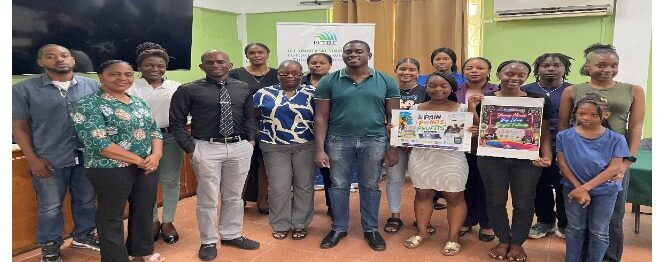
    Against the global backdrop of rising youth unemployment and a growing demand for entrepreneurial training, Dominican business leader Marilyn A. Cuffy-Morris has launched a groundbreaking annual program designed to empower the next generation of business builders. Titled the Annual MAANZ Studentpreneur Youth Showcase and Marketplace, the initiative made its official debut on July 15, 2026 — a date aligned with the United Nations’ World Youth Skills Day, chosen to reinforce the program’s core mission of equipping young people with tools for sustainable career success. The 2026 launch event carried the unifying theme “Discover your talent. Build your future.”

    The United Nations established World Youth Skills Day to draw global attention to the critical need for investing in youth skill development, specifically for employment, dignified work, and entrepreneurial ventures. With this mandate in mind, Cuffy-Morris’s initiative was crafted to go beyond one-off networking events, offering a sustained ecosystem of support for young aspiring entrepreneurs.

    Participants at the inaugural event gained access to a wide range of hands-on learning and connection opportunities. Attendees were invited to build professional relationships, take part in interactive skills-focused business games, and support peer growth by purchasing products developed by fellow young entrepreneurs. The event also facilitated collaborative problem-solving sessions, where participants worked together to identify common barriers to early-stage business success and co-create actionable solutions. All attendees are invited to join the growing Studentpreneur movement, an ongoing community dedicated to continuous youth development, and gain access to the initiative’s new digital platform.

    During the launch, organizers unveiled two key complementary projects to extend the initiative’s impact year-round. The first is the MAANZ Skills Website, a digital hub that allows skilled business owners and industry managers to promote their ventures while connecting to a broader network of like-minded professionals across the region. The second addition is the “Pain to Profits” podcast, a weekly series that gives young entrepreneurs a platform to openly discuss the unique challenges they face, while receiving targeted guidance and evidence-based practical solutions from experienced industry leaders. The podcast airs every Wednesday at 5:00 PM, and Cuffy-Morris has extended an open invitation to entrepreneurs and community members to join as guests or listeners.

    The inaugural showcase featured a full schedule of engaging activities beyond core networking. Guest speakers included successful young entrepreneurs who shared their career journeys and insights with attendees. A highlight of the day was the Young Bosses Pitch Competition, where three emerging founders presented their business concepts to a panel of judges and won cash and in-kind prizes to advance their projects. The event also included a public talent showcase and a creative youth-focused health and safety initiative to support holistic participant well-being.

    Organizers have confirmed that the showcase will become a permanent annual event held every World Youth Skills Day, with planning already underway for the 2027 gathering. All participants in the 2026 inaugural event will be honored as charter members of the Studentpreneur movement and receive exclusive green recognition badges, while pink has been announced as the official theme color for next year’s gathering. The launch event also marked the debut of the movement’s official theme song, “Be The Light,” crafted to inspire young people to trust their abilities, embrace their unique skills, nurture strength in mind, body, and spirit, and seize opportunities to improve their own lives and lift up their families.

    In closing remarks at the launch, Cuffy-Morris reaffirmed her long-term commitment to youth economic empowerment across the Dominican Republic. She encouraged established skilled professionals to register their profiles on the new MAANZ Skills Website to support emerging talent, and reiterated the open invitation for entrepreneurs to engage with the “Pain to Profits” podcast to share their experiences and access expert guidance.

  • Teen who murdered while breaching curfew jailed for 11 years

    Teen who murdered while breaching curfew jailed for 11 years

    A then-14-year-old perpetrator who stabbed a 19-year-old man to death in Georgetown in late 2023, then issued violent threats against the victim’s family, has been sentenced to 11 years in custody, with his original sentence reduced under court rules governing juvenile offenders.

    The offender, Tyshaun Spring, initially pled not guilty to the November 21, 2023 murder of Oneil Delicia, a fellow Georgetown local, during a January 2025 court proceeding. However, after testimony from Spring’s mother in May that year, his defense counsel Ronald Garrick requested a re-arraignment, at which point Spring changed his plea to guilty.

    High Court Justice Rickie Burnett outlined the full sequence of events during the July 24 sentencing held in Kingstown, with witness identities protected by only being referenced via initials for safety. Per Justice Burnett’s summary, Delicia was gathering with friends in the backyard of a local residence around 6:30 p.m. on the day of the killing when Spring, accompanied by an associate, arrived by bicycle near the property, which sits adjacent to a Queen Street bar and eatery.

    After Spring halted near a nearby home, Delicia stepped out onto the street from the residence. Spring dismounted his bicycle, propped it against a parked car, and immediately opened a verbal confrontation, asking Delicia, ‘Ah war you wah nuh?’ When Delicia challenged him to follow through on his threats, bystanders attempted to intervene, but Spring pulled a black-handled folding knife from his waistband, charged at Delicia, and stabbed him multiple times in a frenzied attack.

    Following the assault, Spring remained on the street brandishing the bloody weapon, before a female witness confronted him, managed to disarm him, and threw the knife into a neighboring residential yard. She then left to arrange emergency transport for Delicia, who had crawled back up the steps to the porch before collapsing from heavy blood loss. Two bystander women attempted to stem the bleeding from a deep wound to Delicia’s right shoulder before rushing him to Georgetown’s Modern Medical and Diagnostic Centre.

    Delicia’s brother, who found his sibling injured, grabbed a metal bar from a nearby vehicle and attempted to pursue Spring, but the teen managed to evade capture. The victim’s brother then proceeded to a local police station to file an official report. Responding Corporal Laborde retrieved the discarded bloody knife from the location provided by the witness, and officers found Delicia had been transferred to Georgetown Hospital, where he was pronounced dead at 8 p.m. that same evening.

    Law enforcement located Spring near his grandmother’s home, where witnesses overheard him threatening the victim’s relatives, stating, ‘Ah one by one ah go deal with aryo.’ When approached, Spring began throwing glass bottles at the person who confronted him before police could take him into custody. Officers later recovered a black-and-grey backpack from the bed of an abandoned vehicle near the scene. Spring claimed he had sustained injuries during the incident, but a medical examination found no evidence of acute harm. The next day, he underwent a mandatory psychological evaluation as part of the legal process.

    A post-mortem examination confirmed Delicia died from multiple sharp force injuries, including two gaping wounds measuring 9 centimeters and 18 centimeters respectively. A June 2025 psychiatric report prepared by Dr. Enyinne Williams revealed Spring admitted to drinking undiluted industrial rum on a regular basis, and had started daily heavy smoking by the age of 13. The evaluation found Spring had no diagnosable clinically significant psychiatric conditions.

    A separate social inquiry report shed light on the longstanding tension between Spring and Delicia’s family, which dated back to their primary school years and continued through secondary education. The report noted Spring was raised primarily by his grandmother and aunt, and was already violating a court-ordered curfew at the time of the killing – he was required to be at home, but instead traveled to his grandmother’s residence that evening. Spring’s time at Georgetown Secondary School was marked by repeated physical violence and disciplinary action. Community members described him as a deeply troubled child with no consistent adult guidance, who was frequently involved in street fights, was hostile to the public, and struggled with persistent distress.

    For Delicia’s family, the loss has been catastrophic. Delicia’s mother told the court her family has never recovered from the killing, leaving all members grappling with severe long-term emotional and psychological harm. She stated she has not been able to accept her son’s death, and often looks at photos of him on her phone to cope with the constant grief.

    In determining the final sentence, Justice Burnett noted the four core goals of sentencing: retribution, deterrence, crime prevention, and rehabilitation. He applied sentencing rules specifically for offenders under 18 years of age, which prioritize encouraging accountability and social reintegration over punitive custody, and require that custodial sentences be used only as a last resort for the most severe juvenile offenses. Justice Burnett ruled the brutal nature of the killing warranted a fixed-term custodial sentence.

    The judge set an initial starting sentence of 30 years, a notional equivalent of a life sentence for an adult perpetrator. He identified three aggravating factors: the attack was carried out in full public view, it was unprovoked, and Spring committed the murder while already subject to a court-ordered curfew. No mitigating factors related to the offense itself were found, so three years were added to the initial term, bringing it to 33 years. Mitigating factors related to the offender – Spring had no prior criminal record and retained potential for rehabilitation – led to a five-year reduction, bringing the sentence to 28 years.

    Spring received a full one-third sentence discount for his guilty plea, cutting 9 years and 4 months from the term, followed by an additional deduction of 2 years, 1 month and 17 days for time he had already spent in pre-trial detention, bringing the sentence to 16 years, six months and 13 days. Per mandatory practice directions requiring juvenile sentences be capped at two-thirds of the term an adult would receive for the same crime, Justice Burnett further reduced the sentence to its final term of 11 years imprisonment.

  • Van Reactie naar Creatie: een boodschap aan Suriname

    Van Reactie naar Creatie: een boodschap aan Suriname

    In a reflective opinion piece shared in early August, Surinamese artist and musician Sonny RJ Khoeblal draws a parallel between musical harmony and national unity to address recent tensions that have shaken the country’s National Assembly. Drawing on four decades of experience creating art that fosters connection and hope, Khoeblal frames his argument around a simple but powerful lesson he learned through music: true harmony is never achieved when every instrument sounds identical. Instead, it emerges when distinct, diverse tones learn to collaborate, lifting one another up to create something greater than the sum of its parts. Our societies, he argues, work exactly the same way, functioning as a vast, multi-voiced orchestra where difference is not a flaw, but the foundation of collective strength. Recent upheaval in the National Assembly has laid bare a critical truth, Khoeblal writes: when raw human emotion is allowed to dominate political discourse, the core mission of public service—representing and serving the Surinamese people—fades into the background. Too often, after conflict erupts, the only question the public and politicians ask is, “Who is in the right?” But according to Khoeblal, we must push ourselves to ask more constructive, wiser questions that move the conversation forward. Do our current responses breed further division? Do they amplify tension? Or do they spark new creation, generate solutions, and rebuild collective trust? For more than forty years, Khoeblal says he has dedicated his career and his life to cultivating what he calls theta: the life-giving energy of creativity, hope, inspiration, and connection. Against the negative, enturbulated energy of conflict, confusion, and division—what he terms entheta—stands a far more powerful, universal force: the innate human ability to create something new and better, no matter how deep the current rift. Khoeblal emphasizes this creative capacity is not reserved for a select few. It lives in every member of society, from members of parliament and small business owners to artists, parents, and young people. Every single person gets to make a choice: to react from a place of raw anger and emotion, or to create from a place of intentional awareness, mutual understanding, and compassion. Great nations, he reminds readers, are not built by people who never make mistakes. They are built by communities that can step back after conflict, ask what they can learn from the division, work together to repair broken trust, and move forward as one. Suriname, Khoeblal argues, is blessed with extraordinary untapped potential. It holds rich, diverse cultural traditions, world-renowned musical heritage, vast natural treasures stretching from mineral-rich soil to lush ancient rainforests and open skies, and an inherently creative population that has long thrived in spite of challenge. He closes with a call to action for all Surinamese people, wherever they live: let us choose to shift our collective energy from being controlled by conflict to being driven by the desire to build something better. He highlights the elegant parallel in the phrases “reactie” and “creatie”—the two words are made up of exactly the same letters, but represent two entirely different paths forward. This shift means moving from division to collaboration, from unregulated emotion to thoughtful wisdom. Khoeblal reminds readers that the positive energy each person holds within is always stronger than the negative energy of conflict. Closing with a traditional phrase in Suriname’s Sranan Tongo—*“Na Bun Fu Yu Mi Suku Tru, Da Na Ogri Musu Wai,”* which translates broadly to “I seek the good for you and me, so evil cannot stay”—Khoeblal calls on all Surinamese people to collectively build the future they want to see, rather than reacting to the conflict that divides them today.

  • Mother appeals for public’s help as search continues for missing Portsmouth teenager (with video)

    Mother appeals for public’s help as search continues for missing Portsmouth teenager (with video)

    As the search operation for a missing 19-year-old Portsmouth resident Jerbiah Kaysia Paul stretches into its ninth consecutive day, the teenager’s mother Jacinta Paul has delivered a heartfelt, urgent appeal to members of the public, begging anyone with even the smallest piece of information to come forward to help bring her daughter home safely.

    In her public address, Jacinta opened by expressing her profound gratitude to the hundreds of local residents, volunteer search teams, and law enforcement officers who have dedicated time, energy and resources to combing the area for any trace of Kaysia over the past week and a half. She emphasized that the outpouring of community support has been a small source of comfort for her family during this terrifying, uncertain period, but that the lack of updates on her daughter’s whereabouts has left the entire family in overwhelming distress.

    Local law enforcement agencies have confirmed that they are continuing to actively process all tips and leads that have been submitted by the public, and have stepped up patrols in areas that Kaysia was known to frequent before she was reported missing. Investigators have not released further details about the circumstances of her disappearance to avoid compromising the ongoing search operation, but have reiterated that any information, no matter how insignificant it may seem to the person holding it, could prove critical to resolving the case.

    Community groups across Portsmouth have also organized voluntary search parties, shared missing person flyers across social media platforms, and offered support to the Paul family as they wait for news. Local residents have been encouraged to check their private property, including outbuildings, sheds and vehicles, for any signs of the teenager, and to contact the dedicated police tip line immediately if they spot anything that matches Kaysia’s description.

  • Prescod links low Emancipation Day turnout to lack of historical consciousness

    Prescod links low Emancipation Day turnout to lack of historical consciousness

    This year’s Emancipation Day observance in Barbados drew far fewer attendees than expected, prompting the island nation’s Minister of Pan-African Affairs and Heritage Trevor Prescod to issue a rallying cry for collective action to reclaim Black ancestral history, alongside the launch of groundbreaking new educational programs focused on reparations and Black studies.

    Hosted at Haggatt Hall, the 2024 commemoration brought together a diverse cross-section of stakeholders, including cultural performance troupes, interfaith spiritual leaders, and senior government officials. The day’s schedule opened with a formal procession to the iconic Emancipation Statue – widely known locally as the Bussa Statue, a monument honoring the leader of one of Barbados’ most influential 19th-century slave rebellions. Key participating groups included delegates from the Nyabinghi Order and the Spiritual Baptist faith, whose members led opening prayers for the occasion. Cabinet members including Minister of Educational Transformation Chad Blackman and Minister of Agriculture Dr. Shantal Munro-Knight also joined the gathering to mark the historic date.

    Speaking to the modest crowd, Prescod framed emancipation not as a one-off achievement locked in 19th-century history, but as an ongoing struggle that requires constant stewardship from successive generations. Drawing direct connections between the mass resistance that forced colonial powers to end chattel slavery across the Caribbean and contemporary fights for racial justice, he warned that hard-won freedoms cannot be taken for granted. “Freedom is not a fixed thing. If you don’t protect it, you lose it,” Prescod emphasized, noting that the 1834 abolition of slavery in the British colonies only came to pass after sustained, organized resistance from enslaved people across the region.

    The minister publicly voiced his disappointment at the low turnout, arguing that the weak public turnout signals a troubling gap in historical consciousness among segments of the Barbadian public. He urged attendees to confront and honor the unthinkable hardships their enslaved ancestors endured to build the foundation for modern Barbadian freedom.

    To address this gap in historical awareness and advance the movement for reparatory justice, Prescod announced a landmark new scholarship initiative that will fund fully funded master’s degrees in Black studies and reparations. The program will be run by the Ministry of Pan-African Affairs in formal partnership with two leading higher education institutions: the University of the West Indies and Scotland’s University of Glasgow. The partnership draws on Glasgow’s documented historical ties to the transatlantic slave trade and its ongoing work to acknowledge and redress that legacy.

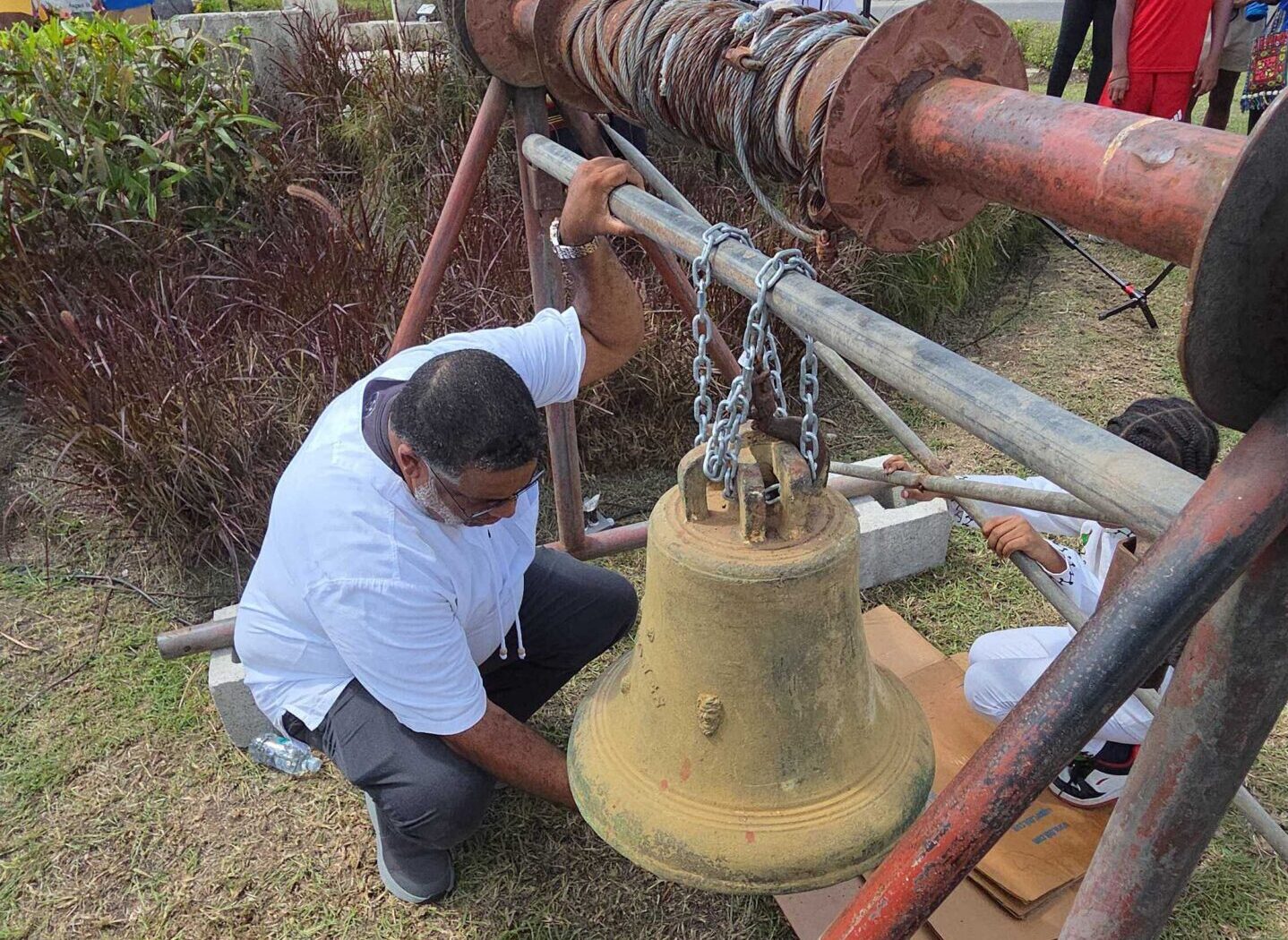
    Prescod also highlighted two recent cultural reclamation projects that he framed as critical stepping stones to rebuilding national collective memory: a well-attended tribute mass honoring iconic Jamaican Pan-African musician Bob Marley at St. Barnabas Church, and the successful recovery of a 300-pound plantation bell from the St. Joseph region, a physical relic of the island’s slavery era.

    The commemoration included traditional rituals including ceremonial wreath-laying, formal speeches, community prayer, and a symbolic ringing of the recovered plantation bell by restoration specialist Shane Wiseman. In closing, the procession wrapped up with a vehicle and motorcycle tribute to fallen freedom fighters, a go-kart demonstration showcasing intergenerational engagement with the holiday, and a solemn moment of silence at the Bussa Statue to honor the sacrifice of all who resisted slavery and fought for emancipation.

    Nyabinghi Order member Ras Martin echoed Prescod’s call for continued advocacy for reparations and the repatriation of African descendants whose ancestors were trafficked to the Caribbean during the slave trade. He noted that while Barbados is now widely marketed as a tropical paradise for visitors and wealthy residents, that transformation has not delivered equal justice and prosperity to the descendants of enslaved people who built the island’s economy. “Barbados was once thought of as hell on earth for the victims coming over from Africa,” Ras Martin said. “Over the years, Barbados was able to move from hell on earth to a paradise—but paradise for who? It is here that the reasoning on reparations and repatriation must be rooted. Freedom is not a fixed thing; if you don’t protect it, you lose it.”

  • Historic 300-pound plantation bell unveiled

    Historic 300-pound plantation bell unveiled

    On Barbados’ annual Emancipation Day, a one-of-a-kind historical artifact that holds centuries of layered history connected to transatlantic chattel slavery made its public debut: an 18th-century bronze plantation bell weighing roughly 300 pounds, confirmed by historians to be the only surviving example of its kind globally.

    Commissioned between 1743 and 1760 in England by Benjamin Mellows, a former parliamentary representative for Barbados’ St Joseph parish, the custom-cast bell was created exclusively for Bully Tree Hall, the sugar estate that would later be renamed Blackman Plantation. Cast directly into the bell’s front face is Mellows’ name, a permanent mark of its original commissioner, and the artifact was shipped directly to the Barbadian island at the height of its lucrative colonial sugar production industry.

    Local historian and lead researcher Shane Wiseman shared the bell’s complicated legacy with attendees at the unveiling event, walking the crowd through its centuries-long story. “Mellows commissioned it, covered its cost, and it was shipped straight to Barbados,” Wiseman explained. “His name is permanently imprinted on the bell, and after decades of research, we can confirm it is the only surviving bell of this specific type and provenance anywhere in the world.”

    For the hundreds of enslaved Africans forced to work the Blackman Plantation’s sugar cane fields, the bell dictated nearly every aspect of daily life under bondage. It functioned as an unforgiving timekeeper, marking the pre-dawn start of the 12+ hour workday and its end only after sunset. Beyond its role as a work schedule regulator, the bell carried other grim purposes: it sounded alarms to alert enslavers and forced laborers when dangerous cane field fires broke out, it rang to signal when an enslaved person had attempted to escape, and it summoned the entire enslaved community to gather for public, punitive punishments designed to terrorize them into compliance.

    During the unveiling ceremony, community leader Carl Padmore reflected on the bell’s modern meaning as a tangible link to ancestors who suffered under slavery, reading aloud from a prepared text: “A bell delivers notice. When you hear this bell ring today, it reminds us that our ancestors survived long enough for this artifact to be preserved for us. God preserved this bell to honor our ancestors, and it is now our responsibility to carry forward the work of justice and remembrance that they could not finish in their lifetimes.”

    To this day, researchers have not pinned down the exact year the bell was cast. Teams are continuing to coordinate with public and private archives across the United Kingdom to cross-reference shipping records, bronze foundry ledgers, and colonial estate documents to narrow down the precise date of manufacture, a step that will add further context to the artifact’s already significant historical record.

  • COMMENTARY: Outsourcing Sermons to AI

    COMMENTARY: Outsourcing Sermons to AI

    Over the past decade, artificial intelligence (AI) has reshaped nearly every corner of modern life, from streamlining corporate workflows and academic planning to designing infrastructure and generating creative content. What was once a niche experimental technology is now marketed to the general public as a revolutionary tool that will redefine how people work, learn, and create. While AI has delivered undeniable efficiency gains across sectors including business, education, and law enforcement, its rapid proliferation has also sparked urgent ethical questions, particularly as the technology moves into one of society’s most deeply personal spaces: Christian worship.

    The most pressing controversy surrounding AI’s growing role in faith communities centers on the rising trend of pastors using AI to generate full sermons and even original gospel music. A quick online search for “AI sermons” or “AI gospel songs” pulls up dozens of platforms offering ready-made spiritual content for clergy looking to cut down on preparation time. While the authors of this commentary acknowledge AI can serve as a helpful auxiliary tool for church administration, they argue that replacing the traditional sermon-writing process with AI-generated content raises profound spiritual and moral concerns that Christian leaders cannot afford to ignore.

    For centuries, preparing a sermon has been a deeply spiritual discipline for pastors: it requires diving deep into biblical text, cross-referencing passages with traditional concordances, and spending extended time in prayer and meditation to seek guidance from the Holy Spirit. Outsourcing this core work to an algorithm, the authors argue, erodes the authentic spiritual connection that gives preaching its power. They note that overreliance on AI mirrors the biblical warning against spiritual slavery, pointing to Galatians 5:1, where the Apostle Paul urges believers to stand firm in the freedom Christ offers, refusing to be yoked to new forms of bondage. In the modern context, the authors frame overreliance on AI as a new form of legalism, where clergy prioritize the convenience of a machine-generated product over reliance on the supernatural guidance of the Holy Spirit.

    Widespread acceptance of AI-generated sermons also reflects a growing lukewarmness among many believers and clergy, the commentary argues, echoing the biblical rebuke of the Laodicean church in Revelation 3:15-16, where Jesus condemns believers who are neither hot nor cold in their faith. The authors stress that true followers of Christ are called to spiritual discernment, and the pulpit must remain a space uncompromised by artificial shortcuts to uphold biblical integrity. AI lacks a soul, a personal relationship with God, and the ability to understand the specific spiritual needs of a local congregation, making it incapable of delivering the Spirit-led message that preaching requires.

    When pastors outsource the work of sermon preparation to AI, they not only rob themselves of the spiritual growth that comes from wrestling with scripture and prayer — a process the authors compare to building spiritual muscle that atrophies without use — they also risk turning church services into hollow, mechanical rituals disconnected from divine guidance. Deception, the authors note, so often hides behind the veil of convenience and efficiency, two of AI’s biggest selling points. Christian leaders have a responsibility to guard against this infiltration, holding fast to their role as shepherds of truth rather than conduits for shallow, unauthentic teaching. While AI can be used carefully as an auxiliary tool for administrative tasks, the authors warn that ceding core spiritual work to algorithms leaves churches vulnerable to losing the presence of the Holy Spirit entirely, a risk that all believers must take deliberate steps to avoid.