分类: society

  • Fire damages Globe City Plaza

    Fire damages Globe City Plaza

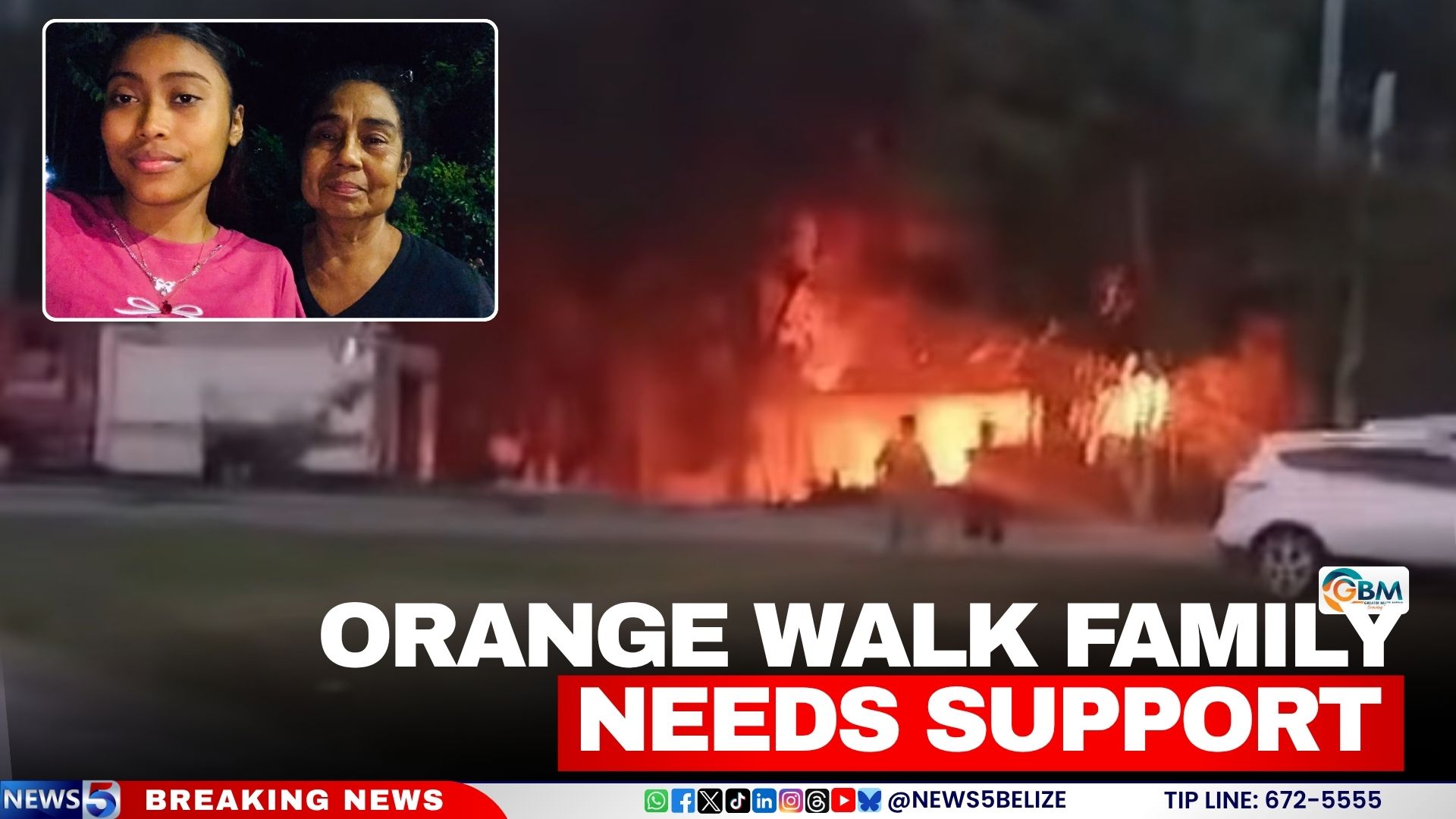
    A large-scale fire broke out at the landmark Globe City Plaza commercial complex in Chase Village, Trinidad on Wednesday, triggering a multi-division emergency response from the Trinidad and Tobago Fire Service (TTFS) that kept the blaze contained to one section of the site but left millions of dollars in estimated damage and disrupted dozens of local businesses.

    The fire ignited just after 9 a.m. local time, starting in a wholesale store located on the eastern side of the sprawling compound, which sits adjacent to the Connector Road highway near the Chase Village overpass. The alarm brought dozens of firefighters from across South and Central Trinidad to the scene, with a total of 35 personnel, five fire tenders, and a specialized Bronco Skylift aerial firefighting unit deployed to tackle the flames, acting Deputy Chief Fire Officer Ansar Ali told reporters.

    By midday, crews had successfully stopped the blaze from spreading to adjacent structures, including a foam factory at the rear of the complex and businesses on the western wing. Ali confirmed that the Water and Sewerage Authority (WASA) provided full support for firefighting operations, with no water supply shortages reported during the response; local media observed at least four truckloads of water delivered to the site within a three-hour window.

    Even after containing the spread, Ali noted that crews would need several additional hours to fully extinguish the fire, as collapsed roofing left smoldering hot spots trapped under debris. Fire teams worked through the afternoon to clear rubble and douse remaining embers. As of Wednesday evening, no fatalities had been reported, though a full sweep of the damaged area was still underway to confirm no one was unaccounted for.

    A preliminary cause of the fire has not yet been determined, with the investigation assigned to the Central Division’s Fire Prevention Investigation team. The full cost of damage is also still being assessed, though Ali gave an early estimated building value of $4 million, with the total value of inventory and commercial contents still unknown.

    The multi-business complex, founded by local businessman RS Jaglal, hosts at least 15 separate commercial operations ranging from retail stores, a hardware outlet, and food service spots to medical clinics, a dental practice, a spa, photo studio, pet supply store, and security firm. A front strip also houses dozens of independent food vendors.

    While two-thirds of the complex was saved thanks to the TTFS response, the incident still disrupted operations across the entire site. One tenant, who requested anonymity, confirmed all power to the plaza was cut immediately after the blaze, leaving all unaffected businesses closed indefinitely with no clear timeline for service restoration. Seven businesses in the fire’s eastern path were confirmed destroyed.

    For some vendors, however, the outcome was far better than expected. The owner of JoJo Gyro, a front-lot food cart, told reporters he was alerted to the fire just 30 minutes after it broke out and rushed to the site, only to find his business completely unharmed. He praised the TTFS for its rapid, effective response, noting crews arrived on scene within an hour of the blaze starting. Local resident Nicholas Britto, who saw thick plumes of smoke rising from his nearby home in Carlsen Field, confirmed the intensity of the fire, saying large flames were visible above the complex as crews worked to bring them under control.

    The heavy smoke from the blaze also triggered major traffic disruptions across the area, prompting authorities to close the Chase Village overpass temporarily. Backups stretched along both northbound and southbound highway lanes as emergency vehicles and onlookers converged on the site. The Ministry of Works and Infrastructure issued an advisory urging motorists to use alternative routes between the overpass and Southern Main Road near Thompson Road for the duration of emergency operations.

    Jearlean John, Member of Parliament for Couva North and the country’s Works Minister, visited the scene Wednesday and expressed deep sorrow for the business owners affected. “I am told that seven businesses were destroyed this morning, which means the loss of property, income, and jobs. It is extremely sad when people sacrifice for their families, for their dreams to lose it all in this terrible and unfortunate event,” John said, adding that she planned to meet with affected workers and business owners to offer support. John noted that senior TTFS leaders commended responding firefighters for their commitment, courage, and dedication, highlighting that their fast action saved roughly two-thirds of the entire complex from damage. Complex owners declined to comment to reporters while emergency operations were ongoing.

  • Highway Attack Leaves Hubert Baptist and Eric Fraser Hospitalized

    Highway Attack Leaves Hubert Baptist and Eric Fraser Hospitalized

    On the afternoon of May 5, 2026, a targeted, broad-daylight shooting on Belize’s Northern Highway left the local community stunned, after attackers ambushed a moving vehicle carrying two men, Hubert Baptist and Eric Fraser, sending their car crashing into a roadside drain. Both victims have been transported to the country’s main public medical facility, Karl Heusner Memorial Hospital, for urgent care, while law enforcement officials have launched a full investigation to unpack the motives and details of the brazen attack.

    The incident unfolded just after 3 p.m. in the immediate vicinity of the Haulover Bridge, where first responders pulled Baptist from the overturned wreckage. Investigators processing the crime scene found more than a dozen spent bullet casings scattered across the asphalt of the highway, mere feet from where the vehicle came to rest in the drain. Visible damage to the red SUV targeted in the attack includes multiple bullet holes piercing the front windshield and the driver-side door, confirming the intensity of the gunfire.

    Both Baptist and Fraser are well-known documented gang members who have been featured in local news coverage on multiple occasions over the past several years. Baptist’s history of run-ins with violence and the justice system stretches back years: in 2022, a police raid on the Baptist family home left both Hubert and his brother Earl wounded by non-lethal gunfire, requiring immediate medical treatment for their injuries. More recently, in 2025, Baptist spoke publicly with News Five about his experience of wrongful detention during the 2020 national state of emergency. He was one of 16 men who were ultimately awarded financial compensation for the wrongful detention, and at the time, he openly shared his deep frustration with what he described as a broken legal system that had failed him and other marginalized community members.

    Witness accounts of the attack outline a clear, premeditated ambush: another SUV pulled alongside the victims’ moving vehicle on the busy highway, and an unidentified gunman leaned out of the vehicle to open fire directly at Baptist and Fraser. Law enforcement agencies have not yet released any updates on potential suspects or motives for the shooting, confirming only that the investigation remains active and ongoing. This report comes from News Five correspondent Zenida Lanza.

  • Nehru Geban Tried to Save a Child, Then Police Locked Him Up

    Nehru Geban Tried to Save a Child, Then Police Locked Him Up

    A Belize City father who stepped forward to protect a child he believed was in imminent danger is now behind bars, raising urgent questions about the risks ordinary citizens face when choosing to act compassionately. The case of Nehru Geban has cast a spotlight on the unexpected consequences of doing good, as the father of three says his split-second decision to answer a child’s cries for help ended with his own arrest, which his legal team calls entirely unlawful.

    Geban shared his account of the incident, explaining that he was moved to act when he heard unusual, distressing screams coming from his neighbor’s home. As a parent himself, he said he could not ignore what sounded like a child in peril. When he went to check on the youngster, the child’s mother reacted with immediate hostility, launching into verbal abuse against him. What followed, however, was a far more alarming escalation that unfolded days later.

    On May 3, Geban was resting at home with his three young sons when two unknown men arrived at his door asking for him by name. One of the men, the child’s father, immediately attacked Geban, accusing him of disrespecting his wife and meddling in his family’s affairs. A physical scuffle broke out as Geban acted to defend himself against the unprovoked assault. Geban noted that his decision to intervene was also shaped by recent news of police violence against a child, which reinforced his belief that citizens have a moral and legal right to step in when a minor’s safety is at risk.

    When law enforcement arrived at the scene, Geban told officers he did not accept that he had committed any crime by protecting the child. According to Geban, police then pressured him to drop his legal claims against the two men who attacked him in his own home. When he refused to back down, citing ongoing fear for his safety, he was taken into custody instead.

    His attorney, Norman Rodriquez, has questioned the logic and legality of the arrest, pointing out that officers found two men aggressing against Geban at his residence when they arrived. Rodriquez emphasized that Geban only acted because the child was in obvious need of intervention, and that the attack on him at his home was the unwarranted escalation of the situation. Rodriquez says there is no justifiable basis for the criminal charges against his client.

    Now, Geban is pushing to clear his name and secure accountability from law enforcement. He and his legal team are reviewing all available legal options to file a lawsuit against the Belize Police Department, seeking compensation for wrongful detention and damages for the violation of his rights. The case has left Geban with a troubling question that resonates far beyond Belize City: If a regular citizen chooses to do the right thing and intervene to protect a child in danger, who will protect that citizen from unjust legal consequences?

  • Nightclub Clash Lands ‘Horse’ Garnett Before Court

    Nightclub Clash Lands ‘Horse’ Garnett Before Court

    A local 44-year-old man is speaking out after a violent weekend altercation outside a popular nightclub that has resulted in criminal charges against him and a forthcoming formal complaint against responding law enforcement. Jermaine Garnett, widely known by his nickname ‘Horse’, is now recovering at his home following the May 2 incident at Shisha’s Night Club that quickly spiraled into conflict.

    Following the confrontation, authorities have charged Garnett with two counts of aggravated assault against on-duty police officers. He made his first court appearance shortly after the incident, entered a formal not guilty plea to all charges, and was released after posting the $4,000 bail set by the judge.

    Garnett’s account of the events contradicts the official narrative laid out in the criminal charges. He maintains that he complied fully with police instructions to exit the nightclub, and that the conflict only erupted once the group moved outside the venue. In his account, officers were the aggressors, using excessive physical force that left him with injuries. He claims he was pushed during the encounter, resulting in the harm he is now recovering from.

    To back up his version of events, Garnett is calling on law enforcement agencies to publicly release full surveillance footage from the area surrounding the nightclub, which he insists will corroborate his claims of excessive force. Moving forward, he has confirmed plans to file an official complaint with the Professional Standards Branch, the independent body tasked with investigating misconduct allegations against police officers.

  • Three People Missing, Vanished Without a Trace in Cayo

    Three People Missing, Vanished Without a Trace in Cayo

    Authorities in Belize are engaged in a time-sensitive search operation for three missing individuals who have not been heard from or seen for more than a month in the Cayo District. The missing people have been identified as Kenia Chan, 15-year-old Ezekiel Montejo, and six-year-old Dorian Montejo. Their last confirmed location was Las Flores Village, a small community located close to Belmopan, the nation’s capital, with the last confirmed sighting recorded back in late March.

    Investigators working on the case have outlined the active missing timeline as running from March 31 through at least April 27, and public concern over the three’s fate has grown steadily as each day passes without new leads. Law enforcement officials are issuing a public appeal for assistance from anyone who may have any information related to the disappearance, even details that seem minor or insignificant.

    Investigators emphasize that even an unremarkable sighting or a passing comment someone may have overheard could prove to be the critical breakthrough that helps locate the three missing people. Members of the public who hold information are able to submit it anonymously through multiple channels: they can call Crime Stoppers’ dedicated tip line at 922, submit information through the official P3 Tips mobile application, or reach out directly to the closest local police station to share what they know.

    This report is a transcript of an evening television broadcast, with all Kriol language dialogue transcribed using a standardized spelling system for accessibility.

  • Deceased Dangriga Man Identified in Ongoing Investigation

    Deceased Dangriga Man Identified in Ongoing Investigation

    In the latest update to an ongoing death probe launched late last week, Belizean law enforcement has officially confirmed the identity of a man previously only documented as John Doe. The deceased individual has been named as 53-year-old Eldon Edward Solomon, a local laborer who resided in Dangriga Town, Stann Creek District. The critical breakthrough in the case came after a member of Solomon’s family contacted investigators to formally identify his remains, closing one of the most prominent open questions that has surrounded the probe since it began.

    While the identification marks a major milestone for investigators, the full circumstances surrounding Solomon’s death remain unconfirmed, and the official inquiry is still active and progressing. Local news outlets will continue monitoring developments in the case and publish new updates as additional details are made public by law enforcement authorities.

    This report is adapted from a transcript of an evening television newscast, which notes that all Kriol language dialogue included in the original broadcast was transcribed using a standardized spelling system for accuracy.

  • Witnesses Say Victim Alive, Died Waiting for Help

    Witnesses Say Victim Alive, Died Waiting for Help

    A fatal road traffic collision between a motorcycle and a passenger vehicle has left one person dead, with witnesses claiming the victim survived the initial impact but lost their life before emergency medical crews could arrive at the crash site. The deadly incident unfolded on the afternoon of May 5, 2026, at the intersection connecting San Juan and Cow Pen Village. Multiple bystanders who were present at the scene immediately after the crash confirmed that the motorcyclist, identified only as the victim, showed clear signs of life in the minutes right after the two vehicles collided. Unfortunately, emergency response teams did not reach the isolated junction in time to intervene, and the victim was pronounced dead before medical care could be administered. As of this evening’s official update, law enforcement authorities have not made any public announcement regarding the identity of the deceased. Investigators are still in the early stages of probing the collision, and no official confirmation has been issued on what factors led to the crash, including whether speeding, impaired driving, poor road conditions, or driver error played a role. This report is adapted from a transcribed evening television newscast, which originally included translated commentary from Kriol-language speakers formatted with a standardized spelling system for public distribution. As the investigation continues, local authorities are expected to release further updates once they have completed their preliminary on-site analysis and witness interviews.

  • When the Rain Won’t Come, Who Helps Farmers?

    When the Rain Won’t Come, Who Helps Farmers?

    As Belize prepares for an unusually severe dry season forecast to bring well below average rainfall between June and August 2026, the Caribbean nation has rolled out its first proactive drought relief program – though gaps in coverage have left many small-scale producers grappling with uncertainty over their livelihoods and family stability.

    The new “Anticipatory Action” initiative, a collaborative effort between Belize’s Ministry of Agriculture, the National Meteorological Service, and the World Food Program, aims to pre-emptively support vulnerable farmers before drought destroys their crops. Just weeks after the program was triggered by the grim rainfall forecast, 419 preselected farmers across the northern and western districts of Cayo, Orange Walk, and Corozal are set to receive one-time, no-strings-attached grants of 400 Belize dollars each, disbursed via Western Union. Unlike many government relief schemes, no repayment is required, and no spending receipts need to be submitted.

    Andrew Mejia, Director of Extension at the Ministry of Agriculture, explained that the flexible funding is designed to let farmers address their most urgent drought preparedness needs. “They can buy whatever they need – drought-resistant seeds, fertilizers, small irrigation equipment,” Mejia said in an interview. “It’s not a large sum of money, but it will make a meaningful difference for Belize’s small farming operations. While we don’t require receipts for spending, our ministry will conduct follow-up check-ins to understand how the funds were used and whether the support helped farmers weather the coming drought.”

    To qualify for the aid, farmers must be registered in the national Belize Agriculture Information Management System, operate plots between half an acre and three acres, and reside in one of the three targeted districts. Even with these clear eligibility rules, many small producers across the country have been excluded from the first round of support, leaving them to cope with soaring input costs and dry conditions on their own.

    Abner Cienfuegos, a small farmer who has received support from a separate government program in the past, told reporters that the current dry conditions have already taken a heavy toll on his crops. Increased watering to keep plants alive has pushed up his gas costs dramatically, at a time when global fuel prices are already at record highs. Even as production costs surge, Cienfuegos said he cannot raise produce prices at local markets, where shoppers demand the lowest possible rates.

    What has kept Cienfuegos going through the dry spell without access to the new anticipatory aid is the mentorship of Alberto Villanueva, a 40-year veteran of farming in Belize. Villanueva, however, says he has not received any government cash assistance recently, even though he qualifies for support in principle. The veteran farmer emphasized that the need for aid is acute: during drought years, production drops sharply, so extra cash is critical to covering household bills and keeping operations afloat. “It would always be helpful for our family to maintain our bills and everything,” Villanueva said. “Yes, we do need the cash.”

    For other farmers, the barrier to aid is simply lack of awareness of the program. Alex Spice, a small producer in Lower Barton Creek, pays official monthly farm taxes and is registered with the government, but had never heard of the Anticipatory Action plan. Spice, who says he prefers to earn his living through his own work rather than seeking government support, supplements his farm income by importing produce from Mexico during lean dry seasons – a safety net that many of his neighbors do not have.

    “I’m really not familiar with all these programs,” Spice explained. “I try to make my life with my hands, and I don’t go around asking for support. I don’t even know if I’m eligible for any of these programs.”

    Other farmers report repeatedly being locked out of government support, even when they meet eligibility requirements. A Stann Creek district farmer told News Five that he has missed out on multiple relief programs over the years, while many others struggle to complete the registration and outreach steps required to access available funds. The Ministry of Agriculture advises unregistered farmers to sign up for the national information system and contact a local extension officer to access future support, but for farmers already juggling drought stress and rising costs, completing those steps is far from straightforward.

    As the dry season approaches, the gap between limited government aid and widespread need has left many of Belize’s small farming communities wondering whether they will be able to keep their operations running and support their families through the coming months. While the new anticipatory program marks a milestone in proactive disaster response in the Caribbean, many producers are still waiting for the support they say they desperately need.

  • Restorative Justice: Not Just Time Served, But Lives Changed

    Restorative Justice: Not Just Time Served, But Lives Changed

    On May 5, 2026, a groundbreaking shift in Belize’s approach to criminal justice moved into the public spotlight at a joint symposium hosted by the University of Belize and the Leadership Intervention Unit. Unlike traditional correctional frameworks that prioritize punishment over reform, the event centered restorative justice—a model that reframes the justice system around accountability, victim healing, and second chances for justice-involved individuals. While policy experts and criminal justice leaders debated the future of the approach, the most resonant moment of the day came from a deeply personal firsthand account of life transformation after incarceration.

    That story belongs to Lane Grinage, a reform advocate who once served time in a Belizean prison for a criminal conviction that altered the course of his life. When Grinage first entered the correctional system, he confronted the reality of the wrong turn he had taken—and found a new path through the Ashcroft Rehabilitation Center (ARC) program, a restorative justice initiative that teaches participants critical social and life skills to prepare them for reentry into society. For Grinage, the loss of freedom that came with his sentence also brought an unflinching moment of reckoning that pushed him to engage with restorative justice practices. Instead of only completing a court-ordered term, he was guided to confront the real human harm his actions had caused to victims and communities, laying the groundwork for long-term personal change.

    Today, Grinage is out of prison and working to support other formerly incarcerated people as they rebuild their lives, but he openly acknowledges that the road to full societal reintegration has been far from easy. The persistent stigma of being labeled an ex-convict continues to create barriers, from employment discrimination to social exclusion that tests his commitment to reform. When asked whether bias against former inmates persists among employers and the broader business community, Grinage confirmed that discrimination remains widespread. Still, he maintains a pragmatic, determined outlook: consistent productivity and personal discipline will eventually open doors for those committed to turning their lives around.

    During a discussion at the symposium, Grinage raised concerns about a persistent imbalance in Belize’s correctional system, noting that many facilities still prioritize harsh industrial discipline over meaningful rehabilitation. Nasir Acosta, director of Wagners Youth Facility, responded by affirming that this gap is exactly what restorative justice is designed to fill. Acosta explained that the core work of restorative programs lies in rebuilding the individual sense of self-worth that is often stripped away by the correctional system. Through these initiatives, participants learn to see themselves beyond the label of “offender” or “perpetrator,” developing the internal tools they need to sustain long-term change after reentry.

    For criminal justice and criminology students at the University of Belize who attended the event, Grinage’s story offered a tangible, human perspective that cannot be learned from textbooks. Shaheed Mai, one of the participating students, noted that the account brought the theory of justice reform to life, highlighting that real change is possible when people have the drive to improve and access to supportive programming. The symposium closed with a reminder that justice is not only about holding people accountable for harm—it is also about creating space for transformation, one honest conversation and one second chance at a time. This report was prepared by Shane Williams for News Five.

  • UB Reviews Wagner Facility’s Restorative Justice Program

    UB Reviews Wagner Facility’s Restorative Justice Program

    In a landmark development for Belize’s juvenile justice reform efforts, criminal justice students from the University of Belize (UB) presented new, on-the-ground research at a national restorative justice symposium on May 5, 2026, offering a data-backed assessment of the Wagner Youth Facility’s flagship restorative justice programming for young male offenders.

    The student-led case study, focused exclusively on one of the country’s primary youth detention centers, delivers a nuanced picture of progress alongside unaddressed gaps, turning academic inquiry into a actionable plan for systemic improvement. Lead researcher Shaheed Mai explained that the project, conducted alongside two fellow UB classmates, centered on evaluating whether the facility’s rehabilitative model is successfully breaking the cycle of recidivism for young male detainees.

    “Our analysis confirms that the core restorative justice framework at Wagner’s is working,” Mai told attendees, noting that the facility has made tangible strides moving away from traditional punitive models toward a rehabilitation-centered approach. Still, the team uncovered critical unmet needs that are limiting long-term outcomes for detainees. Major gaps identified include insufficient access to vocational training, limited pathways to higher education, and ongoing stigma that leaves young people framed primarily as inmates rather than individuals working toward reinvention.

    Mai shared that many detainees currently housed at the facility expressed a strong personal desire to build skills, repair harm done to their communities, and contribute productively after their release — outcomes that are out of reach for many without expanded support systems.

    Wagner Youth Facility Director Nasir Acosta welcomed the independent student assessment, echoing the team’s focus on centering holistic rehabilitation to cut down on repeat offenses. Acosta emphasized that therapeutic work to help young offenders process their emotions and understand their actions is a foundational first step to lasting change. “Before a young person can find the internal motivation to make amends to society, they first need to understand themselves,” Acosta explained. “Many arrive here without a clear grasp of their own emotions, how they ended up in detention, or how they can navigate the world after release. That is why therapeutic work comes first — it helps them acknowledge where they went wrong, build self-awareness, and prepare to find their place and do better moving forward.”

    The collaborative effort marks a rare example of student research directly shaping public sector reform, with the study’s recommendations set to serve as a roadmap for updating programming at one of Belize’s leading youth detention facilities. This report is adapted from a televised evening news transcript, with Kriol-language remarks standardized for clarity in written transcription.