分类: society

  • Government asks the population to stay away from rivers and coasts

    Government asks the population to stay away from rivers and coasts

    Residents of the Dominican Republic are preparing for severe weather this weekend, after national authorities activated full emergency response protocols on Friday ahead of an approaching frontal system forecast to bring heavy, widespread rainfall across much of the country. The announcement followed a high-level coordination meeting led by President Luis Abinader at the National Palace in Santo Domingo, where officials confirmed the government would operate in permanent session to monitor the storm’s progression and coordinate rapid responses to any emerging hazards.

    Following the meeting, Juan Manuel Méndez, general director of the country’s Emergency Operations Center (COE), issued clear guidance to the public: all residents are asked to avoid recreational visits to coastal areas, and to cooperate fully with mandatory evacuation orders for communities located in high-risk, vulnerable zones. Méndez emphasized that public compliance is critical to preventing avoidable loss of life, stressing that non-cooperation during evacuations could put both residents and first responders at unnecessary risk.

    Two tiers of weather alerts are currently in effect across 19 provinces and the National District. Five provinces — Monseñor Nouel, Santiago Rodríguez, Santiago, La Vega, and Monte Cristi — are under yellow alert, indicating elevated risk of severe weather impacts. A green alert, signaling preliminary preparedness is required, covers the National District, the province of Santo Domingo, Elías Piña, San José de Ocoa, Monte Plata, Puerto Plata, Dajabón, Duarte (with a specific focus on the vulnerable Lower Yuna region), San Cristóbal, Valverde, San Juan, Independencia, and Bahoruco.

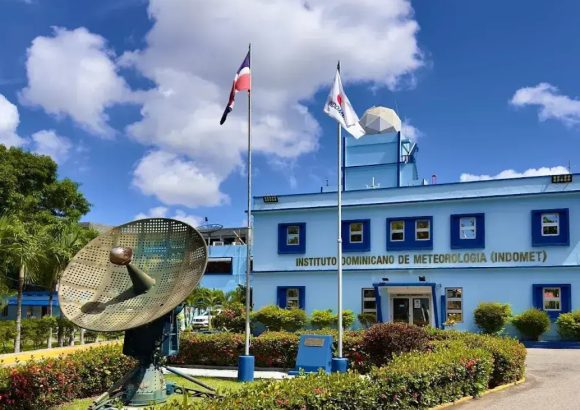
    According to updates from the Dominican Institute of Meteorology (Indomet), rainfall is set to begin in the early hours of Saturday and persist through the entire day. Over a 24 to 48-hour window, total precipitation accumulation is expected to reach 100 to 125 millimeters across most affected areas, driven by the combination of the approaching frontal system and an associated trough. Forecasters project rain will intensify through Saturday afternoon, bringing moderate to extreme downpours, with risks of isolated hailstorms, severe thunderstorms, and strong wind gusts. The hardest-hit areas are expected to include Greater Santo Domingo, Monte Plata, Sánchez Ramírez, Duarte, Monseñor Nouel, La Vega, Espaillat, Hermanas Mirabal, and much of the Cibao region, with particularly severe conditions forecast for the Central Mountain Range, the country’s border region, and southwestern provinces.

    Méndez warned that widespread soil saturation will increase the likelihood of flash flooding across large swathes of the country, and alert levels may be upgraded to higher tiers if the weather system intensifies beyond current projections. In addition to flood risk, Indomet has flagged hazards including urban flooding, rising water levels in rivers and streams, landslides in hilly terrain, and sudden wind gusts. The agency noted that alert levels will be updated continuously over the next 72 hours as new weather data becomes available.

    Alongside storm warnings, meteorological officials added that hot, humid conditions will persist before and after rain events, driven by warm, moist wind flow from the east and southeast. In urban areas, the heat index will reach particularly high levels, prompting Indomet to recommend that residents wear lightweight clothing, stay hydrated by drinking plenty of fluids, and limit extended exposure to direct sunlight.

    President Abinader reaffirmed the government’s commitment to proactive preparation, stating that national authorities will remain on constant alert to monitor every development of the weather system across the entire country, with resources pre-positioned to respond to any emergency that arises. “The Government will be attentive to every situation throughout the country, both to anticipate and to react in any case,” Abinader said. Méndez echoed this call for vigilance, urging all residents, even those not currently under elevated alerts, to follow guidance from civil protection agencies, monitor official weather updates closely, and avoid complacency. He added that residents should never attempt to cross swollen rivers, streams, or ravines while rain is ongoing, a leading cause of storm-related fatalities in tropical weather events.

  • Minister Aubourg promotes fishing productivity

    Minister Aubourg promotes fishing productivity

    In a working visit to Haiti’s far northern regions this week, Marcelin Aubourg, the country’s Minister of Agriculture, Natural Resources and Rural Development (MARNDR), led a inter-agency delegation to assess the progress of ongoing fisheries infrastructure development projects, part of a broader national push to unlock the sector’s untapped economic potential for coastal communities.

    The delegation’s first stop was Fort-Liberté, where they toured a local facility manufacturing marine engines and new fishing vessels. Bernard Chauvet, general manager of the workshop, confirmed that 20 of the 80 ordered fiberglass fishing boats will be ready for delivery by the end of May. Built at four feet wide, each vessel is outfitted with an average 15-horsepower engine, specifically engineered to withstand deep-sea fishing conditions that are common off Haiti’s northern coast.

    On April 10, 2026, Aubourg convened a working meeting with representatives from local fishing associations at the North Departmental Directorate of Agriculture (DDAN). During the talks, the minister stressed that fishing has evolved into one of Haiti’s most promising high-growth sectors for rural livelihoods. He noted a striking cultural shift in the industry: unlike decades past when fishing was often viewed as an unstable, low-status occupation, today’s Haitian fishermen embrace their professional identity, as the trade now reliably generates enough income to support their households. Aubourg, who previously served as departmental director of agriculture for the South and Grand’Anse regions, urged northern fishermen to fully invest in their work, noting that expanded infrastructure and training will open pathways to long-term improvements in household income and quality of life.

    The on-site inspections and community meetings are part of Haiti’s broader Program to Support Agricultural and Fisheries Productivity and Improve Rural Infrastructure for Market Access (PAPAIR), a national initiative focused specifically on boosting fisheries output and rehabilitating outdated coastal fishing infrastructure. After delivering measurable positive outcomes for small-scale fishing communities in Haiti’s southern departments, the program is now rolling out to the northern and northeastern regions.

    Laurent Mérisier, an agricultural engineer and one of three national PAPAIR coordinators, shared details on the program’s early progress in the north. To date, roughly 20 local fishing associations—15 in the North department and five in the Northeast—have completed technical training as part of the initiative’s organizational capacity-building component. Each participating association will receive four of the 80 new fishing boats currently under construction. All vessels will come fully equipped with marine engines and modern fish preservation tools, a upgrade that will particularly benefit small-scale fishmongers who rely on fresh product to serve local markets.

    PAPAIR is a flagship project of the Haitian government, implemented through MARNDR, with financial backing from two major international development bodies: the Inter-American Development Bank (IDB) and the Global Agriculture and Food Security Program (GAFSP).

  • Dominican Republic increased the number of provinces under Red Alert for 4 Provinces due to heavy rain and flood risk

    Dominican Republic increased the number of provinces under Red Alert for 4 Provinces due to heavy rain and flood risk

    The Dominican Republic’s emergency management authorities have rolled out a three-tiered national alert system, placing four northern provinces on the highest risk red alert as adverse weather conditions threaten widespread flooding across large swathes of the country.

    The four red-flagged provinces, which face the most severe potential hazards, are Puerto Plata, Valverde, Espaillat, and María Trinidad Sánchez. Beyond these high-risk zones, the country’s capital National District and an additional 14 provinces have been placed under yellow alert, signaling a moderate level of danger, while the remaining seven provinces carry the lowest-level green alert status, indicating minimal immediate risk.

    The nation’s Emergency Operations Committee (COE), which manages disaster preparedness and response, confirmed that the tiered alerts were triggered by growing threats of multiple flood types. At-risk areas face potential overflow across rivers, small streams, and natural ravines, alongside the looming possibility of sudden flash floods and standing water in dense urban areas.

    This latest alert update draws on official data and forecasts from two leading national institutions: the Dominican Institute of Meteorology (Indomet) and the National Institute of Hydraulic Resources (INDRHI). Technical assessments from both agencies confirm that atmospheric conditions across the country remain primed for sustained rainfall. A slow-moving trough connected to an active frontal system has kept moisture levels elevated, leaving already saturated soils in high-risk provinces far more vulnerable to runoff and flooding. Local authorities are urging residents in alert zones to monitor official updates, prepare for potential evacuation, and avoid low-lying flood-prone areas through the duration of the weather event.

  • Santiago Civil Defense highlights the preventive work of the Santiago City Council in the face of rains

    Santiago Civil Defense highlights the preventive work of the Santiago City Council in the face of rains

    As forecasters warn of incoming heavy precipitation across the Dominican Republic’s Santiago province, local Civil Defense leadership has publicly commended the proactive flood risk reduction work led by Santiago’s municipal mayor, Ulises Rodríguez.

    Francisco Arias, regional director of the Dominican Civil Defense, highlighted that the municipal government has prioritized critical pre-storm preparedness tasks across high-risk neighborhoods and geographic hotspots. These interventions include clearing debris from natural ravines, unclogging urban drainage systems, removing accumulated waste from bridge approaches, collecting scattered solid waste from residential areas, and pruning overgrown tree branches that could threaten infrastructure during storms.

    The work has already been fully rolled out across a range of priority zones, Arias confirmed, including 20th Street, 8th Street, the communities of Nibaje and Hoya de Caimito, and the high-risk Devil’s Ravine — all locations long identified as prone to dangerous waterlogging during heavy downpours. Beyond the physical infrastructure work, Arias noted that municipal crews have maintained a consistent, visible presence in these flood-prone areas to respond quickly to emerging hazards as the rain approaches.

    In his remarks, Arias also extended recognition to Arismendi Dajer, the municipal government’s general secretary, and the full team of local municipal staff who have collaborated to advance the preparedness campaign.

    Arias explained that pre-event mitigation is a core component of effective disaster management: by addressing hazards before storms hit, officials can dramatically cut the risk of destructive flooding and keep local residents safe. “Our Civil Defense teams have been continuously moving through vulnerable neighborhoods to share safety guidance with residents, and the Mayor’s Office has complemented that work with on-the-ground infrastructure upgrades that directly reduce flood risk,” he explained.

    All of these coordinated actions fall under a broader, holistic disaster preparedness strategy designed to protect both the lives and property of Santiago residents, Arias added, emphasizing that the municipal government remains in a constant state of readiness to address any weather-related emergency.

    In a final update, Arias confirmed that the interagency Prevention, Mitigation, and Response Committee (PMR) has already been activated, with round-the-clock monitoring of shifting weather conditions already underway. Since the previous day, Civil Defense response brigades have been door-to-door in at-risk communities, walking local families through the key safety steps they should follow if flooding does develop.

  • Manhunt launched for gang behind daring cash robbery

    Manhunt launched for gang behind daring cash robbery

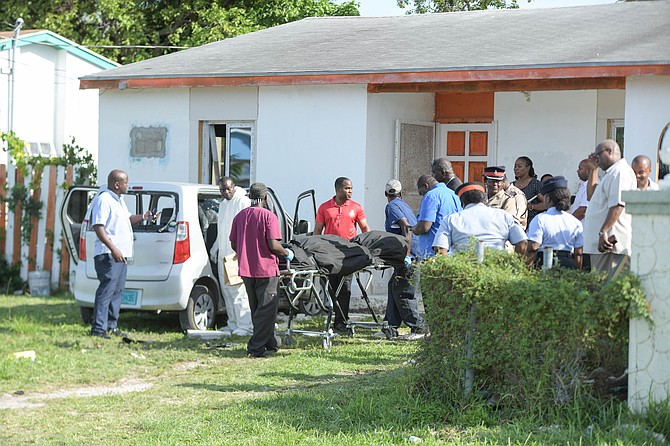
    A violent armed robbery has left three Chinese nationals targeted in their own residential property in Guyana, with four suspects currently evading law enforcement capture, the Guyana Police Force confirmed in an official update published Saturday, April 11, 2026.

    The attack unfolded around 3:53 p.m. local time on Friday, as the three victims had just arrived at their property in Eccles, a community located along Guyana’s East Bank Demerara. As the group stepped out of their vehicle, four male suspects ambushed them. According to initial police accounts, one of the four attackers was openly carrying a loaded handgun during the incident.

    After overpowering the victims, the suspects forced the three Chinese nationals back inside their home, where they carried out a systematic search of both the upper and lower floors of the residence. During the ransacking, the robbers stole a combined haul of multiple currencies and personal identification documents. The stolen assets include 500,000 Guyanese dollars, 900 U.S. dollars, 1,000 Mexican pesos, and 200 Hong Kong dollars, alongside a Chinese national identity card and other critical personal paperwork.

    Law enforcement investigators have already secured key evidence to advance the case, with closed-circuit television footage recorded by cameras installed on the victims’ property successfully collected for review. This footage is now a core component of the active manhunt and ongoing investigation into the robbery.

    As of Saturday afternoon, no suspects had been taken into custody, and police continue their efforts to locate and apprehend the four perpetrators responsible for the attack.

  • Vendor, construction worker prime suspects in thefts

    Vendor, construction worker prime suspects in thefts

    Authorities in Guyana have confirmed that two young local men are being held as prime suspects following a pair of related criminal offences committed earlier this month, regional outlet Demerara Waves Online News reported Saturday, with the information last updated at 19:38 local time on April 11, 2026.

    The two accused, a 22-year-old street vendor and a 21-year-old construction worker, both residents of Barnwell North in the Mocha community of East Bank Demerara, are linked to two distinct criminal incidents that took place on April 6, according to an official statement released by the Guyana Police Force.

    Investigators say the pair first carried out an armed robbery at a Chinese-owned supermarket located in Goed Fortuin, a community on the West Bank of the Demerara River. Later the same day, they allegedly committed a break-and-enter and larceny at a private residential property in Eccles, another settlement on East Bank Demerara.

    Following the crimes, law enforcement teams launched an immediate investigation that drew on key forensic evidence from both crime scenes. Investigators obtained and reviewed closed-circuit television footage captured at both locations, a step that significantly advanced the probe and helped lead investigators to identify the two suspects, police confirmed.

    After being identified, the pair were taken into custody and escorted to the Providence Police Station for formal questioning. They have since been remanded into continued custody as of Saturday’s update, and remain in detention while assisting law enforcement with ongoing inquiries into the offences.

  • NCCU investigates incident at  its ATM at cork street

    NCCU investigates incident at its ATM at cork street

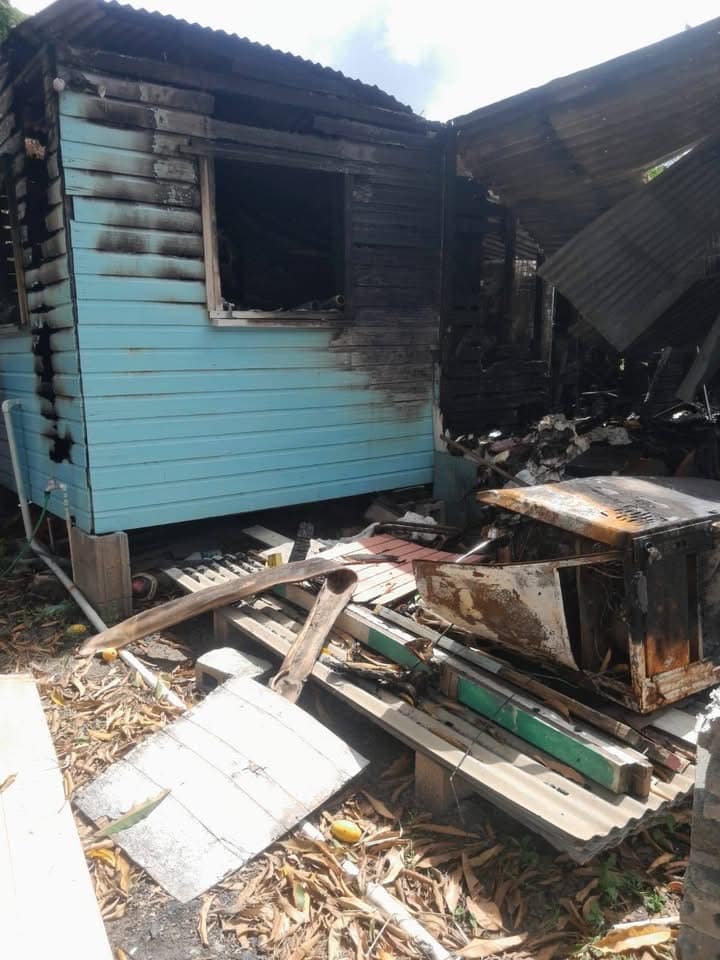
    The National Co-operative Credit Union Ltd (NCCU) has launched an official investigation into a fire-related incident that impacted one of its automated teller machines located on Cork Street in Roseau. In a public statement released on Saturday, April 11, 2026, the financial cooperative confirmed that the affected site around the ATM is currently undergoing deep cleaning, while critical maintenance work is being carried out on the machine itself to guarantee the ongoing safety of the institution’s members.

    In the notice, NCCU appealed to customers for understanding as its technical teams work to restore full public access to the ATM in the shortest timeframe possible. The organization also extended heartfelt gratitude to local community members who stepped in to help contain the fire before emergency services arrived, crediting their quick action with preventing more extensive damage to the site.

    NCCU closed its statement by noting that additional updates will be shared promptly with the public as new details about the incident and repair progress emerge.

  • FLASH : Terrible tragedy 30 dead at the Citadelle Laferrière

    FLASH : Terrible tragedy 30 dead at the Citadelle Laferrière

    A devastating crowd crush at one of Haiti’s most iconic historical landmarks has left at least 30 people dead and dozens more injured, in what local authorities are calling one of the worst public safety disasters in the region in recent years. The tragedy unfolded on Saturday, April 11, 2026, at the Citadelle Laferrière in Milot, where thousands of attendees gathered for annual traditional cultural festivities that drew a far larger turnout than organizers had anticipated.

    Preliminary investigations from Haiti’s Civil Protection agency point to severe overcrowding at the UNESCO-recognized site, compounded by critical gaps in pre-planned crowd management protocols, as the root cause of the deadly stampede. When overcrowding reached a breaking point, the sudden surge of people triggered a chaotic crush that left numerous victims trapped, suffering from asphyxiation and trampling injuries. The provisional death toll was confirmed at 30 as of early Sunday morning, with dozens of injured survivors currently receiving emergency care at regional hospitals across northern Haiti.

    Civil Protection officials have warned that the final death toll is likely to rise, as dozens of people remain unaccounted for in the aftermath of the incident. Sacré-Cœur Hospital in Milot, the closest major medical facility to the site, has already received multiple bodies of young victims who were pronounced dead on arrival, and eyewitnesses on the scene told local reporters they expect the total number of fatalities could climb above 50 as search and recovery operations continue.

    Local authorities moved swiftly to launch rescue operations in the wake of the disaster. The Cap-Haïtien Municipal Commission activated its emergency response protocol immediately, dispatching ambulances, emergency response teams and relief supplies to the Citadelle Laferrière to support evacuation, search and victim care efforts. In an official statement, the municipal body praised the rapid mobilization of Civil Protection workers, medical staff and civilian volunteers who have worked around the clock in difficult conditions to assist survivors.

    The commission also released an official message of condolence, expressing its deepest sorrow for the lives lost and extending its full solidarity to all families impacted by the tragedy. Haiti’s national government has also formally responded to the disaster. In a public statement released Saturday evening, Prime Minister Alix Didier Fils-Aimé and his administration expressed profound dismay and overwhelming sadness over the loss of life.

    “We share the profound emotion and immense sadness of the Haitian people following this unthinkable tragedy,” the statement read. “The Government extends its sincere condolences to the bereaved families and assures them of our deep solidarity during this time of mourning and great suffering.” All relevant national and local authorities remain on high alert, with the government confirming that all necessary support and medical care is being provided to survivors and their families without delay.

    The government is closely monitoring the evolving situation as an official investigation into the exact circumstances of the tragedy gets underway. Officials have called on the public to remain calm and exercise caution while waiting for the investigation’s full findings, and reaffirmed the government’s unwavering commitment to supporting the affected community through this crisis.

  • ‘You want to replace Good Friday with J’ouvert Friday?’ — Leacock

    ‘You want to replace Good Friday with J’ouvert Friday?’ — Leacock

    Across St. Vincent and the Grenadines, a long-simmering shift in cultural and religious traditions has sparked a heated public debate over what role, if any, entertainment events should play on Good Friday – one of Christianity’s most sacred solemn holidays, marking the crucifixion of Jesus Christ. Deputy Prime Minister and National Security Minister St. Clair Leacock recently brought the discussion to the forefront during an interview on local outlet Boom FM, tying the growing presence of secular entertainment over Holy Week and Easter weekend to broader concerns about shifting social values in the majority-Christian nation.

    Leacock explained that he first encountered the conversation while listening to a separate radio program en route to his own interview. During that segment, event promoters who had suffered significant financial losses on their Easter weekend events argued that the Ministry of Tourism should provide greater financial support to boost future event turnout. Most strikingly, Leacock noted, the program concluded that hosting a raucous J’ouvert street celebration on Good Friday night was entirely appropriate.

    The comment did not sit well with Leacock, who warned that this framing represents a worrying erosion of the religious significance of the Easter period for Vincentians. “Easter is Easter, and Easter is a special day or week in the Christian calendar,” he said, questioning what message the normalization of secular large-scale parties on Good Friday sends to the public and what it means for the country’s collective social fabric. He added that declining reverence for the holy period is not a new, creeping trend – it is already deeply entrenched in SVG, where most residents identify as Christian but many openly disregard core tenets of the faith.

    His comments drew an immediate response during the same broadcast from Pastor Cecil Richards of Kingstown Baptist Church, who offered a counter perspective rooted in the country’s democratic principles. Richards, who lives near Good Friday event venues and personally witnessed the noise and activity, said he shared the shock of many religious residents, but also acknowledged that non-believers hold equal rights to live according to their own values in a pluralistic democracy.

    “Inasmuch as Christians and Bible-believing people have rights, there are people who don’t have that spectrum and base of belief, and they have freedoms too, and they have rights,” Richards explained. He argued that all groups must negotiate and respect differing value systems: while Christian congregations deserve full access to hold their solemn Easter worship services, secular residents have the right to host parties and celebrations if they so choose.

    Richards warned that restricting the rights of secular groups on religious grounds sets a dangerous precedent that could one day be turned against religious communities. “What is good for the goose is good for the gander,” he said. “Today, you might want to restrict those who are doing that but tomorrow, the very same principle can apply, where, instead of that group being subdued, it could very well be that the very laws and rules and regulations that you might put in place to restrict and subdue the freedoms of that group, it might turn around and bite you.” He drew a parallel to the broader debate over COVID-19 vaccine mandates, which centered on the same core question: how far can a state go to impose collective values on individual residents’ personal choices.

    Leacock pushed back on the framing that any restriction on Good Friday entertainment amounts to an undemocratic overreach. He argued sarcastically that open sales of strong rum and wet fetes on the holiday are not inherent democratic rights, noting that all functioning democracies build their laws around shared social parameters. “I don’t think democracy ever anticipated that society is to be sent to the point where you do what you like,” he said. “That’s why we have law and order and we have limitation, and we have consent of what we do, when we do, and where we do certain things.”

    The deputy prime minister added that most modern state legal frameworks are ultimately rooted in traditional religious moral templates, and growing deviation from those norms has led to widespread social turmoil and confusion across the country. He acknowledged that residents hold democratic rights protected by the SVG constitution, but argued that there remains a widely accepted set of normative social behaviors that the public has a right to defend when those norms are crossed.

    Closing the debate, Leacock appealed to faith leaders like Richards for collective action, noting that the problem of eroding social norms is a shared responsibility between government, law enforcement, and the Christian community. “It will be so helpful to me and to the police force if people like yourself, who I recognise as influencers in society, are on board and say that we are on this thing together,” he said.

  • Mastering Difficult Conversations: Carolyn Rose Miller leads initiative to strengthen professional and personal relationships

    Mastering Difficult Conversations: Carolyn Rose Miller leads initiative to strengthen professional and personal relationships

    Unresolved conflict is quietly eroding relationships across both workplaces and personal lives in Jamaica, leaving behind fractured teams, broken partnerships, and even dangerous societal outcomes. Now, a seasoned Jamaican communication and conflict resolution expert is stepping in to equip people with the actionable tools they need to reverse this harmful trend.

    Carolyn Rose Miller, a 15-year veteran marketing and communication specialist, certified mediator, Justice of the Peace, and experienced trainer who has worked with public, private, and micro, small and medium enterprise (MSME) sectors across the country, has announced the upcoming “Mastering Difficult Conversations” workshop scheduled for May 2. The interactive training session aims to address a gap Miller has observed throughout her decades of practice: widespread avoidance of tense conversations that leaves small conflicts to fester into irreversible damage.

    In an interview with Observer Online, Miller explained that avoiding tense discussions or handling them poorly always comes at a cost, derailing desired outcomes and damaging connections that might otherwise thrive. She has personally seen countless relationships collapse entirely because parties refused to confront underlying issues, with consequences ranging from crippling workplace inefficiency to a rise in intimate partner violence—a trend she calls deeply troubling.

    Against this backdrop, the workshop is designed to intervene early, teaching participants practical, evidence-based strategies to de-escalate tension, rebuild damaged trust, and cultivate more constructive dialogue between colleagues, team members, romantic partners and community members. Unlike generic public speaking or communication training, the program is rooted in formal mediation and conflict resolution frameworks, a tool Miller says is underutilized in Jamaican culture outside of court-appointed cases, despite its proven effectiveness.

    “Mediation and conflict resolution are key to creating a harmonious, cohesive relationship,” Miller noted. “I see an urgent need to share tips in employing proven and effective strategies to address conflicts… this should be at the forefront of everyone’s mind.”

    The training is open to any person navigating challenging conversations in either their personal or professional lives, with a focus on six key groups that regularly face high-stakes difficult dialogue: leaders and managers tasked with addressing performance gaps and guiding teams through conflict; human resources professionals responsible for disciplinary action and workplace dispute resolution; frontline staff who interact with upset clients and colleagues in high-pressure settings; community and church groups that depend on open communication to maintain unity; professionals and individuals who want to build confidence to address issues rather than avoid them; and anyone required to deliver bad or uncomfortable news with clarity, empathy and professionalism.

    Co-hosted by Adrian Atkinson, a veteran voice and speech coach and media practitioner, the workshop blends theoretical instruction with hands-on practical practice. Attendees will work through real-world case studies and simulate realistic difficult conversations in a low-risk, guided environment, integrating lessons on emotional intelligence into every module. Unlike passive training programs, all strategies shared are designed for immediate implementation back in participants’ daily lives.

    To incentivize early sign-ups, the first three people to register will receive a complimentary bonus one-on-one coaching session on the spot. The exact venue will be shared directly with registrants after sign-up is complete.

    Miller emphasized that what sets this workshop apart from generic communication courses is its focus on transformation, not just theory. “Participants are not just learning theory—they are being equipped with proven strategies to address issues, manage emotions, and resolve conflict effectively,” she explained. “This is not just about communication, it is about transformation: giving people the confidence, structure, and tools to handle difficult moments with confidence, empathy, and results.”