分类: society

  • Loyalty to a criminal friend versus loyalty to my country’s laws

    Loyalty to a criminal friend versus loyalty to my country’s laws

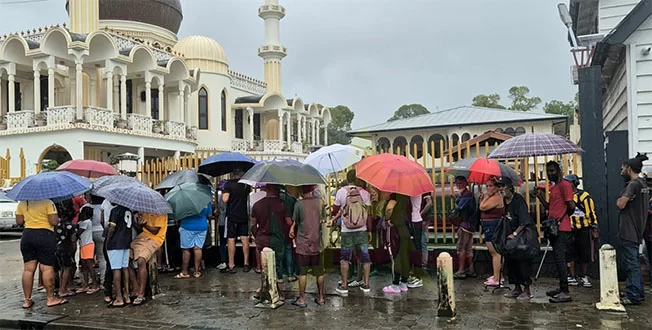
    Across the small island nation of St. Vincent and the Grenadines (SVG), open talk of violent crime and the people who commit it circulates freely in local communities, shared openly on neighborhood street corners among the right social circles. These offenses are not random acts of impulse; they are carefully planned, coordinated, and even bragged about by perpetrators among their peers. Yet despite this widespread community knowledge, law enforcement agencies continue to face immense barriers to making arrests and reining in the country’s persistent crime problem.

    This gap between public awareness and criminal prosecution has sparked a pressing public debate: Would a greater reliance on undercover policing and structured intelligence gathering finally bring dangerous offenders to justice? Or is this solution far simpler to propose than to implement, given the deep-seated cultural and moral challenges that hold SVG back, chief among them the age-old conflict between personal loyalty to loved ones and civic duty to one’s country?

    For most Vincentians, this dilemma is not an abstract hypothetical—it is a weighty moral question that cuts to the core of personal relationships. Consider the most extreme scenario: a close friend confesses to a murder they committed, and no other authorities know of their guilt. Would you hand them over to law enforcement? If you did, would that make you a disloyal friend? If you stayed silent, would that count as unwavering loyalty worth honoring?

    It is impossible to judge anyone forced into this impossible position, as any choice comes with devastating personal consequences. While on paper, many argue that all murderers must face justice no matter their personal connections, the reality becomes far murkier when the perpetrator is someone you love. What if it was not an acquaintance, but a parent, spouse, sibling, or child who accidentally took a life during a drunken brawl? Could you turn them in, knowing it would end their freedom and destroy your family bond forever?

    For the vast majority of people, the answer to that question is not a simple one. But proponents of civic accountability push back against the framing of silence as loyalty: True friendship demands that you hold the people you care about accountable for their harmful actions. Allowing a friend to walk free after committing murder not only betrays the victim and their family, it also violates the core values that any healthy relationship is built on. A real friend would guide their loved one to do the right thing, not help them hide from the consequences of their actions. Beyond that, staying silent puts the entire community at risk: If a person has killed once, there is no guarantee they will not harm more people in the future. Legally, anyone who chooses to conceal a murderer becomes an accomplice to the original crime and any violence that follows.

    This culture of silence around criminal activity does not only impact murder investigations. Author Troy Prince, a concerned SVG citizen writing in an opinion piece for iWitness News, argues that the same misplaced loyalty is what allows child sexual abuse to remain hidden and persistent across the country. Family members and friends close to abusers often choose to stay silent out of loyalty, allowing abuse to continue for years without intervention.

    Prince argues that this widespread reluctance to report crimes committed by friends and family is a clear sign of deep moral erosion in Vincentian society, and it has severely damaged the country’s justice system. Without community cooperation, even the most well-resourced police forces cannot effectively reduce crime or hold offenders accountable. To rebuild SVG as a nation rooted in moral responsibility, equal justice, and personal accountability, sweeping reform of the country’s justice system is non-negotiable, he says. The key open question remains: Which stakeholders will step up to lead that change?

    In closing, Prince offers advice to every Vincentian grappling with this dilemma: Turning in a loved one who has committed a crime is not “snitching” — it is an act that protects both the broader community and the perpetrator themselves, guiding them to take accountability for their actions rather than carrying the weight of their crime forever. It also shields innocent people from becoming legal accomplices and protects communities from future harm. Fighting the crime that plagues SVG is not solely the responsibility of police or politicians — it is a collective duty that starts with individual self-reflection and a willingness to do the right thing, even when it is hard.

    Disclaimer: The opinions expressed in this piece are solely those of the author, and do not necessarily reflect the official editorial stance of iWitness News.

  • Hospital honours four retiring nurses for decades of service

    Hospital honours four retiring nurses for decades of service

    After dedicating decades of their lives to advancing patient care and strengthening local healthcare services, four long-serving nursing professionals from Sir Lester Bird Medical Centre have closed out their distinguished careers, drawing heartfelt tributes from the institution they served.

    The four retiring team members include two nursing assistants, Loretta Gage and Corrine Scotland, and two experienced registered nurses, Janice Dunbar and Judy St John Edwards. Each brought unique skills, consistent compassion, and unwavering commitment to their roles over their years of service at the facility.

    In an official public statement, hospital leadership extended sincere gratitude to the four retirees, highlighting their far-reaching contributions to the center’s mission of delivering high-quality care to the community. The institution emphasized that the retirees’ consistent dedication to their craft and unwavering adherence to professional standards have shaped the hospital’s culture of care, leaving a profound, lasting impression on both their fellow colleagues and the thousands of patients who relied on their support through vulnerable moments.

    The tribute reflects the wider healthcare sector’s recognition of the critical role that long-serving nursing staff play in building resilient, trusted healthcare systems, and marks the well-deserved transition of four professionals who have given decades of service to public well-being.

  • How New Grant Junction became a rural economic hub

    How New Grant Junction became a rural economic hub

    For any driver traversing the curving stretches of Naparima Mayaro Road, heading east toward Trinidad’s sun-soaked Mayaro beaches or the inactive mud volcano that once engulfed the village of Piparo, the busy New Grant three-way intersection often slips by unnoticed. What many passing commuters fail to recognize, however, is that this quiet crossroads connecting rural communities including Princes Town, Rio Claro and Williamsville has grown over decades into one of the region’s most resilient grassroots economic hubs, home to a thriving cluster of small businesses and the birthplace of a nationally celebrated grocery chain.

    This junction has outlasted seismic shifts in the local economy, including the dissolution of State-owned agricultural conglomerate Caroni 1975 Ltd, which once employed hundreds of multi-generational local workers on its sugar cane, citrus and cocoa estates. It even survived the widespread economic disruption of the COVID-19 pandemic, which forced temporary closures for businesses across the country. Today, nearly 20 businesses remain rooted at the crossroads, with some evolving, some closing, and new ventures launching in just the past five years, continuing to draw loyal customers who have built their lives along this major regional corridor. As one long-time local resident told reporters, “You can get most of the things you need at this junction—not everything, but a lot of things. I think it is worth it to go there; the prices are sometimes better than when you go outside of the area.”

    ### The Historical Roots of a Community Crossroads
    New Grant itself draws its name and origins from the Merikins, liberated African enslaved people who were promised freedom and land grants in exchange for fighting alongside British forces during the American Revolutionary War. What is now known as New Grant Junction was originally called Torrib Trace Junction, and it has hosted small businesses catering to cross-district commuters for as long as locals can recall.

    The earliest permanent commercial operations were run by Chinese traders who set up the area’s first general stores along the main road in the early 1900s. By the 1960s, a public post office and gas station were added to the junction, meeting growing local demand for closer access to essential services. For local residents, the new amenities eliminated the need to travel long distances to the crowded urban centers of Princes Town or Rio Claro, cementing the junction’s role as a convenient community gathering point.

    The turning point for the junction came in 1988, when local entrepreneur Mohan Persad purchased the junction’s original long shop, located on the roadway leading to Rio Claro and Torrib Trace, from previous owner Parsam Nanan. Mohan and his wife Shirley Persad transformed the small store into Persad’s D Food King, the first location of what would grow into a nationwide supermarket chain with a sprawling wholesale and distribution network. Today, that original location still serves hundreds of local customers every week.

    ### A Thriving Cluster of Local Enterprise
    Today, the intersection hosts a diverse mix of businesses that cater to every daily need of local residents and passing commuters. The former Seecharan’s liquor shop has been converted into a hardware store, sitting alongside a gym, poultry outlet, barber shop, cyber cafe, multiple restaurants, and bars. A small religious and variety store has remained a community staple for decades, while street vendors line the roadside, displaying crates of fresh fruit, vegetables, coconuts and other local goods to catch the attention of passing drivers.

    The New Grant post office and long-standing gas station open their doors daily to customers from as far away as Tableland and Reform Village. As locals stop to collect mail or fill their vehicle tanks, they often browse the surrounding shops, picking up fresh produce from street vendors or grabbing a quick meal from one of the junction’s many food vendors. The crossroads has even gained regional fame for its local street food scene, with multiple popular doubles stands drawing customers from across the area.

    “ It is interesting because it is right there; it’s closer than going to Princes Town to San Fernando, and in my opinion, you get more value for some things. In particular, Persad’s grocery always has an offer or a sale, and it is like they consider the people who may not be able to buy in bulk or who need some more economic options, so I like it for that reason,” one resident explained.

    ### Persad’s D Food King: The Heartbeat of the Junction
    No business has shaped New Grant Junction’s growth and identity more than the original Persad’s D Food King location. Local residents say if the junction has a heartbeat, it has been sustained by the supermarket, alongside core community staples like the gas station and hardware store. Today, Persad’s Wholesale operates as an international direct importer, carrying everything from fresh produce, dried fruit, dairy, grains and cooking oils to frozen and processed meats, canned goods, cleaning supplies, personal care products, home goods, electrical fixtures, appliances and seasonal merchandise. Its logistics network reaches more than 30 countries worldwide, but company leaders say the entire business model traces back to this humble New Grant location.

    Ishvani Persad, marketing development executive and granddaughter of founders Mohan and Shirley Persad, explained that the founders started small decades before opening the New Grant location. By the 1970s, Mohan and Shirley were already running a small shop where prices were handwritten on brown paper bags, and sugar and chickpeas were scooped by hand for customers. That community-focused spirit shaped the New Grant location, which quickly grew into more than just a place to shop.

    “Generations have walked those aisles. Stories have been shared at the counters. Trust has been built, day by day, year by year. And that is why New Grant is not just one of our locations. It is the original blueprint of what we know to be Persad’s D Food King,” Ishvani Persad said.

    The founders chose the New Grant location for its strategic position between the east and south of Trinidad, a daily passage point for families commuting to San Fernando for work and school. It was also a deeply personal choice: the Persad family has deep roots in nearby Hindustan, and they understood the needs of the hard-working local community.

    “They knew what it meant to build from nothing, to stretch every dollar, and to rely on trust above all else. At the time, New Grant was a growing community filled with hard-working families who needed access—not just to goods, but to reliability, fairness, and care. There was a gap, and more importantly, there was an opportunity to serve,” she said.

    Built on a foundation of faith and community devotion, the business opened with prayers to Hindu deities Ganesha and Bhandi Mata, and was blessed by the founders’ parents. Today, the company embraces diversity, with a multi-faith staff and ongoing support for cultural and religious events across Trinidad and Tobago.

    As the community continues to grow, Persad’s Group is moving forward with an ambitious new development project called “Legacy Plaza—the Gateway to the south-east,” currently in the planning and permitting phase. Built on the successful model of the company’s Grand Market in Barrackpore, the new development will create a one-stop shopping destination for the entire southeast region. It will combine retail space with an incubation hub for small and medium-sized local entrepreneurs, bringing national brand-name products closer to local residents and eliminating the need for long out-of-region trips for quality goods. The multilevel facility will also address long-standing infrastructure concerns, while honoring the Persad family’s New Grant roots, its founders, employees and generations of loyal customers.

    ### Unresolved Challenges Hold Back Further Growth
    While residents and business owners agree that New Grant Junction’s greatest strength is its convenient, low-key alternative to crowded urban shopping centers, the crossroads still faces significant challenges that limit its growth. The most commonly cited need is a functional on-site ATM: currently, the nearest cash machine is far from the community, and many local businesses only accept cash payments.

    Sharlene, a local resident who requested her last name not be published, said an on-site ATM would cut costs for working people. “There would be no need to spend extra money on taxis/maxis just to access basic banking services. People won’t have to carry large amounts of cash from Princes Town back to New Grant,” she explained.

    Residents have also raised consistent concerns about road safety, traffic congestion and public safety in the area. Many noted that the junction’s pedestrian crosswalk is so faded that drivers no longer notice it, and most pedestrians have stopped using it entirely. Unregulated street vending has created unpleasant odors in the area, and the presence of three nearby bars means there is often no safe pavement for pedestrians to use, due to crowds and unruly behavior from occasionally intoxicated visitors.

    “You have to be constantly on high alert. Where are the traffic wardens and police when you need them?” one local resident lamented.

  • TTPS targets gang activity

    TTPS targets gang activity

    A recent uptick in violent criminal activity across multiple police jurisdictions in Trinidad and Tobago has pushed the country’s national law enforcement agency to overhaul and reinforce its crime reduction strategies, including ramping up uniformed patrols across high-risk areas, according to senior law enforcement official Suzette Martin. Martin, who serves as Deputy Commissioner of Police for Operations, outlined the updated action plan in an official media statement released Wednesday, noting that the Trinidad and Tobago Police Service (TTPS) has documented a wave of isolated violent incidents across the country over the previous 14 days.

    “In direct response to these developments, we have conducted a full review of our existing crime-fighting frameworks and strengthened our operational protocols, expanding our on-the-ground presence through our ongoing ‘Steady the Guard’ public safety initiative,” Martin stated in the release. “While early operations under this revised plan have delivered measurable progress, we do not underestimate the scale of the challenge ahead – there is still critical work to be done to reverse this recent trend.”

    The TTPS is rolling out a comprehensive, intelligence-led multi-pronged strategy to curb violent crime, with a core focus on addressing the root drivers of illegal activity, most notably organized gang activity. Leveraging targeted anti-gang operations and the expanded legal authority granted under the country’s current state of emergency, law enforcement teams are actively working to disrupt the day-to-day operations of criminal groups and dismantle transnational and local organized crime networks, Martin explained.

    To further improve operational effectiveness, the TTPS has also upgraded the analytical capabilities of its Crime and Problem Analysis Branch. This investment, Martin said, is already enhancing the agency’s ability to map emerging crime patterns, distribute personnel and resources to high-need areas more efficiently, and deploy proactive, preventive interventions that stop violent incidents before they can occur.

    On the ground, operational activities have been ramped up significantly: high-visibility policing has been intensified, with more patrols deployed along major transportation corridors and residential communities, paired with consistent roadblock operations and joint missions that bring together the TTPS’ specialized tactical units. Priority operational targets include intercepting illegal firearms shipments, breaking up gang activities, and disrupting cross-border and local narcotics trafficking operations.

    Martin also emphasized the critical role of inter-agency cooperation in the TTPS’ strategy, highlighting ongoing coordinated work between the police service and other key national security bodies, including the Trinidad and Tobago Defence Force, the national Prison Service, the Immigration Division, and the Customs and Excise Division. “These cross-agency partnerships enable synchronized operations and improved real-time intelligence sharing that makes all of our work more effective,” she noted.

    Beyond collaboration with other government agencies, Martin stressed that ongoing partnership with the general public remains a cornerstone of the TTPS’ long-term crime reduction goals. “We recognize that effective public safety cannot be delivered by law enforcement alone – it requires active buy-in and cooperation from the communities we serve. To that end, we have expanded our community-led intervention programs,” she said. “These initiatives are instrumental in lowering the risk of retaliatory gang violence and building lasting cooperative relationships between police and local residents.”

    The TTPS also places strong emphasis on strategic communication as a tool to shape positive public behavior, build long-term trust between law enforcement and communities, and drive sustainable social change, Martin added. “We are clear that no single strategy on its own can solve this national challenge. Enforcement action without public trust will never deliver meaningful, long-term results, and community engagement without robust enforcement fails to create the deterrence needed to stop criminal activity. This balanced approach is the foundation of our operational philosophy,” she explained.

    Closing out the statement, Martin reaffirmed the TTPS’ unwavering commitment to public safety on behalf of the national community. “As Deputy Commissioner of Police (Operations), I give this assurance to the people of Trinidad and Tobago: the TTPS remains steadfast in our mission to protect and serve our nation with pride,” she said. “We will continue to leverage modern, data-driven policing strategies, strengthened cross-sector partnerships, and community collaboration to drive down violent crime and make every community across our country safer.” She reiterated that the TTPS’ multi-layered, intelligence-centered approach is designed to tackle both the immediate incidence of crime and its deep-rooted underlying causes.

  • Better pay, faster growth

    Better pay, faster growth

    A growing exodus of nursing professionals from Trinidad and Tobago is being driven by uncompetitive pay, blocked career advancement, and unsafe working conditions, according to first-hand accounts from three nurses who have recently relocated for jobs in the United States and United Kingdom. All three secured their overseas roles through international recruitment agencies, a pathway they describe as more cost-effective and streamlined than other hiring channels.

    Darius Mollineau, a former psychiatric nurse with Trinidad’s North West Regional Health Authority (NWRHA), left for the United Kingdom in 2021, citing a complete lack of upward professional mobility as his core motivation. Before departing, Mollineau had completed specialized training to work as a District Health Visitor and served in an acting capacity in the role for three full years. Only after he made the decision to migrate was the permanent position offered to another candidate, a missed opportunity Mollineau calls disheartening.

    What disturbed him most, he says, is the widespread culture of extended acting appointments across Trinidad’s public health system, where some staff wait as long as nine years to have their positions made permanent. “I was like, I’m not going to be stuck in that holding pattern for that long. Even now it’s not my turn, I don’t want to be that person five, six years from now still stuck in an acting role,” he explained.

    Today, Mollineau works at a hospital near Birmingham, England, where he has risen to a management role in just three years – a progression he says would be unheard of in his home country. He credits the foundational training he received at NWRHA for his success, but notes that the UK healthcare system offers far clearer pathways to transition into specialized roles such as nursing assessor or prescriber, with opportunities that are far more accessible for frontline staff.

    When asked if he would ever consider returning to Trinidad and Tobago, Mollineau says he is open to the idea – but only after major systemic changes are made. Most urgently, he points out that nurses in the country are still being paid according to a 2013 salary scale, a frozen pay structure that has not been addressed in the five years since he left. “If salaries are adjusted to what nurses actually deserve, that would be a real incentive to come back,” he said. Though he has experienced repeated racism during his time working in the UK, he says his significantly higher pay offsets the disrespect he has encountered. He added that nurses in Trinidad are also undervalued by patients and hospital visitors, on top of being drastically underpaid. Beyond salary, Mollineau says expanded investment in ongoing professional development is a non-negotiable requirement for him to return home, noting that UK nurses are required to complete regular updated clinical training every three years to maintain their practice, a standard that is not enforced locally.

    For Marcia Baptiste, a 17-year veteran nurse who worked with Trinidad’s South West Regional Health Authority (SWRHA) before moving to a New York City hospital in 2023, the decision to migrate came down to a search for financial stability and faster professional growth. “Back home, you get your pay check and it’s gone before you know it. I was looking for more long-term financial security, and moving here has really turned that around for me,” she explained.

    Beyond higher wages, Baptiste says overall working conditions are far better in New York, though she does note one downside: a 30-minute lunch break, compared to the one-hour break she received at SWRHA. She acknowledges that nurses in New York still face systemic challenges – pointing to the January 2024 strike of 15,000 nurses across three city hospitals, who walked out demanding safer staff-to-patient ratios, improved benefits, and protections from workplace violence. But even with those shared challenges, she says professional advancement is far less bureaucratic in the U.S. “Back in Trinidad, you have to cut through endless red tape to move up. Here, once you have the required certification, you can climb the ladder very quickly,” she said.

    As a single parent of two, Baptiste admits the transition to the U.S. was difficult at first, and she has faced implicit bias from patients who have questioned her competence based on her skin tone. She draws a parallel between this anti-Black bias abroad and the widespread stigma and undervaluing of nurses that is common in Trinidad. Baptiste, who plans to earn a specialized certification in chemotherapy administration – a program that is partially funded by her New York hospital – says the scope of nursing practice is also far broader in the U.S. than in her home country. “Back home, nurses rely on doctors for almost every decision. Here, we have real autonomy. If you’re certified to do a procedure, you do it, and the hospital will invest in training you to get that certification,” she explained. In the U.S., advanced practice registered nurses like nurse practitioners can diagnose conditions, order diagnostic tests, and prescribe medication, with many practice areas operating as nurse-led care models where patients only see a doctor for complex emergency cases.

    Like Mollineau, Baptiste says she would consider returning to Trinidad eventually, and wants to come back to work in a management role after gaining international experience. But she echoes the concern that inadequate pay that does not match advanced skills and specializations would keep her away. While she does not support the long-term brain drain of Trinidad’s nursing workforce, she encourages young local nurses to gain international experience before returning home to share their new skills and knowledge.

    The third nurse, a former employee of the North Central Regional Health Authority (NCRHA) who requested anonymity to protect her family back home, left Trinidad one year after graduating from the University of the Southern Caribbean in 2019, and has since worked in the UK and is currently seeking a permanent role in the southwest U.S. She cites systemic nepotism and favoritism as the core drivers of her decision to leave, explaining that hiring for permanent roles at regional health authorities is not based on qualifications, but personal connections. “Whether you have a bachelor’s degree versus an associate degree doesn’t make a difference. The only thing that matters is who you know,” she said.

    She also describes a contradictory cycle where hospital management constantly complains about understaffing, yet claims there are no open permanent positions. After months of waiting, she was only offered a 10-month fixed-term contract. As a new graduate nurse, she describes her early experience on the job as dangerously overwhelming, with no formal mentorship or support system for early-career staff. In her first few days working on a cardiac ward, she was assigned to work night shifts completely alone after just three days of on-the-job experience, a situation she found terrifying as a new nurse. “Back here in the U.S. and UK, each nurse is responsible for four to six patients maximum. Back there, I was expected to cover an entire ward alone with no support,” she explained. That experience led her to resign from the position and pursue work abroad.

    Unlike the other two nurses, she has no plans to return to Trinidad, with rising crime being another major factor in her decision to stay overseas. She notes that advanced education opportunities for nurses are also far more accessible abroad: next year, she will begin a nurse practitioner graduate program, a path she says would not have been possible for her in Trinidad, where management is rarely supportive of staff pursuing master’s or doctoral level training. She encourages other Trinidadian nurses to take the opportunity to work abroad, calling it one of the most life-changing and career-enhancing steps they can take.

  • Pigeon Point tragedy  highlights deadly pattern

    Pigeon Point tragedy highlights deadly pattern

    The coastal paradise of Trinidad and Tobago’s Pigeon Point Heritage Park has once again been the site of a devastating watercraft tragedy, claiming the life of 7-year-old Angelica Jogie last Wednesday. The young girl’s death after being struck by an out-of-control jet ski is far from an isolated incident—it marks the latest entry in a decades-long pattern of preventable water-related deaths and injuries that have plagued the island nation’s popular coastal recreation areas. This newest tragedy has drawn immediate connections to a near-identical incident at the exact same beach that occurred 17 years earlier, exposing persistent gaps in safety regulation that have gone unaddressed despite clear court orders.

    In 2007, a runaway pirogue crashed into two teenage vacationers—17-year-old Yanik Quesnel from Trinidad and Tobago and his girlfriend Ana Carolina Barry-Laso, a Spanish national—who were swimming off Pigeon Point. The collision left Quesnel permanently paralyzed, prompting a years-long legal battle that held both the Tobago House of Assembly (THA), the local governing body, and Pigeon Point Heritage Park Ltd, the company that manages the park, responsible for visitor safety.

    In the 2010 ruling, Justice Judith Jones blasted the two entities for their failure to address a known hazard to swimmers. The judgment explicitly found that THA and the park operator had breached their duty of care to visitors by failing to keep large watercraft far from swimming shorelines and failing to install clear warning signs for beachgoers. Jones further noted that the teen victims had exercised reasonable caution for their own safety and were legally entitled to expect proper safety protections from the managing authorities.

    In a public news conference held the same night of Angelica Jogie’s death, THA Chief Secretary Farley Augustine referenced the 2010 ruling, which found the assembly liable for the 2007 harm. He framed the newest tragedy as a consequence of rule-breaking by watercraft operators, but public records show that even after the landmark court ruling, safety reforms have been slow to stop recurring incidents.

    Within a year of the 2010 judgment, THA implemented a ban on all recreational watercraft use at two popular Tobago beaches: Store Bay and Buccoo. Then-Environment Secretary Hilton Sandy stated at the time that the ban was explicitly intended to curb harm from reckless watercraft operation, allowing only jet skis operated by the Tourism Division for rescue purposes to operate in the restricted areas. Yet despite this initial policy change, dangerous watercraft incidents have continued to claim lives and cause severe injury across coastal areas of Trinidad and Tobago year after year.

    A review of incident records reveals a disturbing pattern of unstopped harm: In 2010, Tobago resident Andell Roberts died in hospital after losing consciousness while attempting a stunt on his personal jet ski. Two years later, three American visitors—40-year-old Racquel Welch, her 13-year-old daughter Paige Welch, and their relative Lance Aqui—suffered devastating injuries when a pirogue linked to the Trinidad and Tobago Regiment crashed into their kayak at Scotland Bay in Chaguaramas, splitting the small watercraft in half. Paige Welch’s left arm was nearly severed in the collision, and all three victims required hospitalization. Later that same year, 17-year-old Angel Superville died in a jet ski accident at the same bay, in what was only his first time operating the watercraft. He collided with a tow rope connecting a larger boat to a dinghy, and the force of the impact threw the teen—who was wearing a life jacket and remained conscious immediately after the crash—into the water, where he succumbed to his injuries.

    In 2014, 26-year-old Sheriza Ramdath was killed at Spring Bridge in Moruga when she lost control of her jet ski and crashed into a mangrove, dying at the scene of the accident. Her brother suffered severe head and facial injuries in the same crash. Four years later, another young life was lost at Pigeon Point: primary school student Shem Murray died two days after his jet ski hit an underwater coral formation, throwing him from the vehicle. He was transferred from a local Tobago hospital to a facility in Trinidad for advanced care, but could not be revived. That same year, 35-year-old fisherman Sheldon Guerra died off Los Iros when another vessel broadsided the fishing boat he was sharing with four crewmates, who had stopped to retrieve a fishing net. The collision happened in darkness, overturning both boats and throwing all passengers overboard, killing Guerra.

    More recent incidents continue the trend: In October 2022, a lifeguard required emergency medical care after being struck in the head by a fishing boat while swimming off Maracas Bay. Just last year, 21-year-old Mathias Jerry went missing after a jet ski accident near Tobago’s No Man’s Land; his body was later recovered from submerged waters.

    Angelica Jogie’s death has renewed calls for urgent action to enforce existing safety regulations and close gaps that have allowed decades of preventable harm to affect both local residents and visiting tourists at some of the nation’s most popular beach destinations.

  • It was a slip-up

    It was a slip-up

    Tragedy has struck twice in just days across Trinidad and Tobago, following the jet ski collision death of 7-year-old Angelica Saydee Jogie in Tobago waters. The latest child water safety incident saw 6-year-old Skylar Gabriel, a child with high-functioning autism, hospitalized in critical condition after a near-drowning at a public pool in Gasparillo’s Bumper Jumperz Fun Park on Friday.

    After the accident, Skylar was admitted to the Intensive Care Unit at San Fernando General Hospital (SFGH), where as of Sunday, medical updates showed encouraging signs of improvement. The young girl was submerged for multiple minutes in 4 feet of water before being pulled out, and her ventilator support has increased from 35% to 50% as her breathing stabilizes. Skylar’s parents, Desire Walters, a firefighter, and Sheldon Gabriel, a fire service officer, confirmed their daughter’s condition is “looking up” during a visit from the *Sunday Express*.

    Walters pushed back against unkind online speculation from social media users unfamiliar with their family, emphasizing her commitment to her daughter’s safety as the parent of a child with autism. “As a mother of a child with autism, you always have to be looking here and there, 24/7,” she said, acknowledging the incident was an unforeseen slip-up. The couple explained they had turned their backs to unpack supplies for their daughter moments after arriving at the park, and Skylar, who is familiar with water park routines, walked straight to the pool. “It happened quickly. It was a slip-up,” Walters added.

    The family also pointed out critical safety gaps at the facility: unlike other water parks Skylar has visited, Bumper Jumperz Fun Park provided no complimentary life jackets and had no on-duty lifeguard at the time of the accident. Gabriel, who performed CPR on his own unresponsive daughter after locating her, described a disturbing delay in response from park staff. For several minutes, he and Walters searched the facility for Skylar without any assistance from employees or other guests. “We told the staff she was missing, but the music continued playing. It was only after she was found that the staff came running,” he said. As a trained emergency responder, Gabriel said blocking out all surrounding chaos to administer CPR to his own child was an experience no parent should ever have to endure. “Right now, my child is looking up and that is what I’m focused on,” he added.

    Closed-circuit television footage from the facility, which police have already taken possession of and the *Sunday Express* reviewed, offers a clear timeline of the accident. The nearly 10-minute recording shows Skylar, unprotected by any flotation device, playing alone in the children’s pool while her parents sit with their backs turned roughly 4 feet away under a shaded tent. Around the one-minute mark, Skylar leaves the shallow children’s pool, climbs the stairs to the water slide leading to the deeper adult pool, rides down, and submerges without re-emerging. Her parents begin searching a minute later, and their search extends for several minutes before she is located. Approximately 40 guests were present in the pool area at the time, with other adults supervising their own children using the same slide.

    Local police confirmed that after Skylar was pulled from the 45-foot by 20-foot pool (which ranges from 3 to 5 feet deep), Emergency Health Services responded, detected a pulse, and rushed the child to SFGH for urgent ICU care.

    In a statement to the *Sunday Express* at the park Sunday, an unnamed spokesperson for Bumper Jumperz Fun Park – which has operated for 15 months without a prior serious incident – said the accident is deeply concerning, but emphasized that parental supervision is the primary responsibility for child safety at the facility. The spokesperson confirmed the park has been without a full-time lifeguard for three weeks while actively recruiting for the role, and that clear signage is posted throughout the property notifying guests of the lack of on-duty lifeguards and requiring parents to accompany children at all times. He added that two pool monitors were on staff the day of the accident, and that the team was not notified in advance that Skylar was autistic, though staff have experience working with neurodivergent children.

    The spokesperson also noted that flotation devices and life jackets are available for purchase at affordable prices starting at $30, and that the park’s emergency protocol was not activated because staff were never alerted that Skylar was missing until after she was found. “We have steps in place that if an alarm is raised, we sound the horn, we pull everyone from the pool and we conduct a thorough search,” he explained. Operations continued at the park Sunday, and the spokesperson said the team has reached out to Skylar’s family and is praying for her full recovery, while urging all parents to maintain constant vigilance when their children are near water, especially for children with special needs.

    This latest incident comes as communities across Trinidad and Tobago are already reeling from the death of 7-year-old Angelica just two days prior, reigniting public debate over water safety regulations and enforcement at public recreational facilities across the twin islands.

  • Meteorologist explains April rains reignite the debate: which is the rainiest month in the Dominican Republic?

    Meteorologist explains April rains reignite the debate: which is the rainiest month in the Dominican Republic?

    For many people living in or familiar with the Dominican Republic, a widespread misconception has persisted: that the country’s wettest weather aligns with November, or that unusually heavy early-spring downpours in recent years have shifted the peak rainfall to April. But 30 years of systematic climate measurements tell a far different story, according to a leading Dominican meteorologist.

    Cristopher Florian, a climatology specialist at the Dominican Institute of Meteorology (Indomet), shared the findings in an exclusive interview with local newspaper HOY, debunking the common misconception about the country’s rainfall patterns. Long-term climatological data collected consistently across decades confirms that May actually holds the title of the Dominican Republic’s rainiest month, with June ranking as the second wettest, Florian explained.

    “That conclusion is firmly established by climatological science, drawn from three decades of continuous rainfall measurements across monitoring sites across the country,” Florian told reporters. The meteorologist added that while extreme heavy precipitation events have occurred in April and November in recent years, that short-term trend is not enough to upend long-held climate patterns.

    To formally declare a shift in a region’s long-term climatology, scientists require a continuous 30-year dataset to filter out short-term random weather fluctuations and identify sustained trends, Florian noted. “We still need many more years of consistent measurements to confirm that April or November have overtaken May and June as the country’s rainiest months,” he clarified.

    Beyond correcting the long-held misconception, Florian also issued a practical forecast for the coming days, warning residents that widespread rainfall will persist through the weekend. He projected that precipitation levels will climb notably on Sunday, and the wet weather will continue into Monday with increased intensity. This forecast raises the risk of several hazardous conditions, including swelling of rivers, streams and mountain ravines, as well as flash urban flooding in low-lying developed areas, the meteorologist cautioned.

  • Bridge over Camú River collapses; dozens of homes flooded and extensive damage in Puerto Plata

    Bridge over Camú River collapses; dozens of homes flooded and extensive damage in Puerto Plata

    On Saturday night, torrential downpours swept across the Dominican Republic’s Puerto Plata province, leaving a trail of widespread destruction that has disrupted communities and cut off critical transportation links. Two major bridge structures sustained serious damage, while rising floodwaters inundated dozens of residential properties across multiple municipalities.

    The most critical infrastructure failure occurred on the region’s popular tourist corridor, where the Camú bridge collapsed entirely, trapping residents and cutting off access to the surrounding area. A parallel crisis unfolded in the Altos de la Boca sector of Los Hidalgos, where a second bridge was rendered impassable by flood-driven damage, creating another isolated pocket of the province.

    Flooding was not limited to infrastructure damage, with multiple low-lying communities across Villa Montellano registering severe inundation. Neighborhoods including Los Ciruelos, El Tamarindo, Monte Bravo, and the La Maternidad district all reported standing floodwaters that entered residential homes. In one dramatic incident in Monte Bravo, an entire family was forced to climb onto the roof of their flooded property to escape rising waters, where they waited for rescue before being pulled to safety by teams from Amber Rescue.

    In the municipality of Imbert, communities along the Bajabonico River including Baraguana, Barrabás, and La Yaguita all saw widespread flooding as the waterway overflowed its banks. The same pattern of river-driven inundation was reported across three additional municipalities: Guananico, Altamira, and Villa Isabela, where dozens of additional homes were flooded.

    Beyond flooding and infrastructure damage, the heavy rain also triggered multiple landslides along the Puerto Plata-Navarrete highway. Slope failures were recorded in the El Copey community of Altamira, as well as at the main entrance to the highway’s tunnel, closing sections of the critical intercity route.

    In response to the crisis, José Ignacio Paliza, the Dominican Republic’s Minister of the Presidency, announced that an official emergency assessment and relief mission would launch in the early hours of Sunday. Paliza confirmed the government’s commitment to supporting impacted families in a post to his official social media account, writing, “We are heading to Puerto Plata to assist the families affected by the heavy rains of the last few hours. God is in control!”

  • Government asks the population to stay away from rivers and coasts

    Government asks the population to stay away from rivers and coasts

    Residents of the Dominican Republic are preparing for severe weather this weekend, after national authorities activated full emergency response protocols on Friday ahead of an approaching frontal system forecast to bring heavy, widespread rainfall across much of the country. The announcement followed a high-level coordination meeting led by President Luis Abinader at the National Palace in Santo Domingo, where officials confirmed the government would operate in permanent session to monitor the storm’s progression and coordinate rapid responses to any emerging hazards.

    Following the meeting, Juan Manuel Méndez, general director of the country’s Emergency Operations Center (COE), issued clear guidance to the public: all residents are asked to avoid recreational visits to coastal areas, and to cooperate fully with mandatory evacuation orders for communities located in high-risk, vulnerable zones. Méndez emphasized that public compliance is critical to preventing avoidable loss of life, stressing that non-cooperation during evacuations could put both residents and first responders at unnecessary risk.

    Two tiers of weather alerts are currently in effect across 19 provinces and the National District. Five provinces — Monseñor Nouel, Santiago Rodríguez, Santiago, La Vega, and Monte Cristi — are under yellow alert, indicating elevated risk of severe weather impacts. A green alert, signaling preliminary preparedness is required, covers the National District, the province of Santo Domingo, Elías Piña, San José de Ocoa, Monte Plata, Puerto Plata, Dajabón, Duarte (with a specific focus on the vulnerable Lower Yuna region), San Cristóbal, Valverde, San Juan, Independencia, and Bahoruco.

    According to updates from the Dominican Institute of Meteorology (Indomet), rainfall is set to begin in the early hours of Saturday and persist through the entire day. Over a 24 to 48-hour window, total precipitation accumulation is expected to reach 100 to 125 millimeters across most affected areas, driven by the combination of the approaching frontal system and an associated trough. Forecasters project rain will intensify through Saturday afternoon, bringing moderate to extreme downpours, with risks of isolated hailstorms, severe thunderstorms, and strong wind gusts. The hardest-hit areas are expected to include Greater Santo Domingo, Monte Plata, Sánchez Ramírez, Duarte, Monseñor Nouel, La Vega, Espaillat, Hermanas Mirabal, and much of the Cibao region, with particularly severe conditions forecast for the Central Mountain Range, the country’s border region, and southwestern provinces.

    Méndez warned that widespread soil saturation will increase the likelihood of flash flooding across large swathes of the country, and alert levels may be upgraded to higher tiers if the weather system intensifies beyond current projections. In addition to flood risk, Indomet has flagged hazards including urban flooding, rising water levels in rivers and streams, landslides in hilly terrain, and sudden wind gusts. The agency noted that alert levels will be updated continuously over the next 72 hours as new weather data becomes available.

    Alongside storm warnings, meteorological officials added that hot, humid conditions will persist before and after rain events, driven by warm, moist wind flow from the east and southeast. In urban areas, the heat index will reach particularly high levels, prompting Indomet to recommend that residents wear lightweight clothing, stay hydrated by drinking plenty of fluids, and limit extended exposure to direct sunlight.

    President Abinader reaffirmed the government’s commitment to proactive preparation, stating that national authorities will remain on constant alert to monitor every development of the weather system across the entire country, with resources pre-positioned to respond to any emergency that arises. “The Government will be attentive to every situation throughout the country, both to anticipate and to react in any case,” Abinader said. Méndez echoed this call for vigilance, urging all residents, even those not currently under elevated alerts, to follow guidance from civil protection agencies, monitor official weather updates closely, and avoid complacency. He added that residents should never attempt to cross swollen rivers, streams, or ravines while rain is ongoing, a leading cause of storm-related fatalities in tropical weather events.