
On the popular Belizean island of Ambergris Caye, what has become a quiet crisis for daily life is now erupting into open frustration, as skyrocketing fuel costs stretch household budgets to their absolute limit. For the tight-knit community of San Pedro Town, where golf carts are not a recreational luxury but the primary mode of daily transportation, even the shortest commute now comes with a steep financial cost that is eating deep into already modest incomes. Many low-wage workers on the island earn between $200 and $300 per week, and fuel expenses now claim a disproportionate share of these earnings – leaving barely enough to cover other critical needs like rent and groceries. Local resident Celestino Tzul, one of the many voices sounding the alarm over the crisis, explained that the burden has become unsustainable for working families. “When it’s your livelihood, when it’s your transportation to work and everything, you have to consider: do I keep using my golf cart? Do I need to change from golf cart to something?” Tzul said. “You take away rent, you take away the expenses on gas, and then you take away the expense of food. Some people are barely even making it through the week. The gas price is very, very high.” The crisis has been compounded by a lack of viable, affordable alternatives to personal golf cart and car travel. While local authorities recently launched a small new bus service (dubbed the “busito”) to expand public transit options, residents say the new system has failed to close the affordability gap that leaves most families dependent on personal vehicles. Residents also point to ongoing supply-side issues that have kept fuel prices artificially high, with current costs reaching as much as $14.29 per gallon. This high-cost fuel also drives frequent, unplanned maintenance expenses for the island’s fleet of aging golf carts, adding another layer of financial strain for owners. Faced with stalled relief efforts and steadily rising costs of living that show no sign of easing, community members have had enough. A group of residents is currently organizing a peaceful protest scheduled for next week, where they plan to bring their demands for action directly to policymakers. Island residents are unified in their call for national government intervention to address both the exorbitant fuel prices and the longstanding gap in affordable public transit options. Without immediate, targeted relief, residents warn that reliable transportation for work, school, and daily needs could soon become completely out of reach for low- and middle-income families across the island. This report is adapted from a transcribed evening television news broadcast focused on local Belizean issues.
分类: society
-
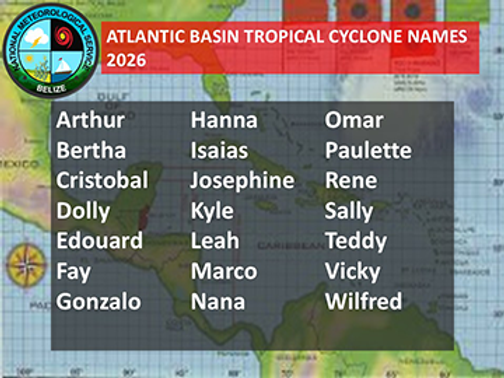
Belize Urged to Prepare as Hurricane Season Begins
The 2026 Atlantic hurricane season is scheduled to officially kick off on Monday, June 1, and will run its full six-month course through November 30. Though these dates mark the formal bounds of the annual storm season, meteorological officials have emphasized that tropical cyclones are not bound by calendar constraints, and off-season development remains a persistent possibility.
Lead forecasting bodies are projecting that this year’s hurricane activity will land slightly below the long-term historical average. Across the entire Atlantic Basin, the current outlook estimates that between 8 and 14 tropical systems will strengthen enough to earn formal named status. Of those developing disturbances, forecasters anticipate 3 to 6 will intensify into full hurricanes, with 1 to 3 gaining enough power to reach major hurricane classification – Category 3 or higher on the Saffir-Simpson scale.
To put this projection in context, a typical average Atlantic hurricane season sees around 14 named storms, 7 hurricanes, and 3 major hurricanes form over the course of the season.
Belize’s National Meteorological Service (NMS) has identified two key competing climate factors that will shape storm development over the coming months. Meteorologists report there is a high probability that an El Niño climate pattern will emerge over the course of the hurricane season. El Niño conditions are historically linked to reduced hurricane activity across the Atlantic Basin, thanks to shifts in atmospheric wind patterns that inhibit tropical cyclone formation and strengthening.
Counteracting this suppressing effect, however, is the ongoing trend of above-average sea surface temperatures across much of the Atlantic. Warmer ocean waters act as a critical energy source for tropical cyclones, creating favorable conditions for disturbances to organize and intensify as they move across open water.
Crucially, official forecasters have stressed that seasonal outlooks only provide a broad estimate of overall storm activity across the entire basin. These projections cannot accurately predict the exact timing of individual storm formation or the specific path any developing system will take. Even with the prediction of fewer total storms this season, Belize still faces a tangible risk of being impacted by one or more storm systems between June and November.
In response to this ongoing risk, the NMS and Belize’s National Emergency Management Organization (NEMO) have launched a public outreach push urging all residents to maintain consistent preparation for potential severe weather. Local authorities are advising all households and business operators to review and update their existing emergency response plans, as well as restock and refresh emergency supply kits ahead of any potential threat.
The NMS has confirmed that it will maintain continuous, close monitoring of all developing weather systems throughout the season. If any storm begins to track toward Belize, the service will issue timely updates to both NEMO and the general public to keep communities informed. NEMO and its network of local emergency committees across the country have also confirmed they are fully prepared to activate the national Hurricane Response Plan immediately if a storm threatens the nation.
In a final public note, officials are reminding all Belizeans to only trust weather and emergency updates released directly by official NMS and NEMO channels. They have also issued a warning that the distribution of false or misleading information related to hurricane threats constitutes a criminal offense under local law.
-

NISSS responds to April payment concerns, fixes bank deposit issues
Barbados’ national social security authority has announced that its targeted cost-of-living relief program reached nearly 2,000 additional eligible households in its second monthly disbursement round, marking progress in expanding access to financial aid for residents struggling with rising everyday expenses. The National Insurance and Social Security Service (NISSS) confirmed that 56,259 qualifying Barbadians received their second Cost of Living Cash Credit (COLCC) payment in May, a net increase of 1,959 recipients compared to the initial April disbursement. In total, $5.6259 million was allocated from the government’s Consolidated Fund for this second round of aid.
According to the NISSS’s official breakdown, more than 62% of May payments – 34,945 disbursements – were issued as direct transfers to beneficiaries’ bank accounts, while the remaining 21,314 payments were sent as paper cheques via postal mail. The largest share of recipients consists of National Insurance pensioners with annual incomes below $50,000, followed by welfare clients registered through the Social Empowerment Agency, public sector pensioners, and Barbadian residents without existing pension or regular income support.
Agency officials attribute the month-over-month growth in recipients to three key adjustments: the addition of welfare beneficiaries newly identified by the Social Empowerment Agency, expanded access to 2025 income year data shared by the Barbados Revenue Authority, and the continued open registration process for eligible residents. NISSS Chief Executive Kim Tudor emphasized that the expanding reach of the program reflects the government’s commitment to ensuring no qualifying resident is left without the support they are legally entitled to. “We will continue to collaborate with our cross-agency partners to identify and reach out to all eligible people who have not yet been enrolled in the program,” Tudor stated in an official media release.
Tudor also addressed widespread reports of delayed direct deposit payments that impacted some recipients during the first April disbursement, noting that the NISSS had worked directly with domestic banking partners to implement targeted fixes for the May payment cycle. “We heard the concerns of residents who faced delays accessing their April deposits,” Tudor said. “We took intentional steps in collaboration with our banking partners to resolve these issues for May, and we will continue to closely monitor payment delivery to prevent future disruptions.” The NISSS has urged any beneficiary who continues to experience issues accessing their funds to contact their banking provider or the dedicated COLCC support desk for assistance.
First launched as a government anti-inflation initiative, the COLCC program provides $100 in monthly cash support to eligible Barbadian seniors, people with disabilities, and low-income welfare recipients for a 12-month period. Funded entirely through the national Consolidated Fund and administered by the NISSS on behalf of the Ministry of Finance, the initiative is scheduled to run through March 31, 2027. As of the May disbursement, 1,835 new residents have registered for the program since its launch, and registration remains open for all eligible Barbadians who have not yet submitted their applications.
-

Two charged over Oistins Bay Garden slaying remanded
A deadly shooting that rocked the popular Oistins Bay Garden area left one person dead and multiple others injured, and two men accused in connection with the violence have been ordered held in custody following their initial court appearance.
Eighteen-year-old Jaheim Canute Collins, a resident of Inch Marlow, Silver Sands, and 29-year-old Shane Anthony Burke — who previously went by the name Shane Anthony Greene and resides in Ashby Land, Lodge Road — appeared before acting Magistrate Gayle Scott at the Oistins Magistrates’ Court this week. The pair face a string of serious criminal charges stemming from the April 6 shooting that claimed the life of Raul Clarke, and under local court procedure, they were not required to enter formal pleas to the murder charge during this initial hearing.
Beyond the murder count, the two men are also accused of intentional unlawful wounding against Roger Belcon and Krystal Blagrove, with the charges specifying the alleged intent to maim, disfigure or permanently disable the two victims. Additional accusations include reckless conduct that put three other bystanders — Reco Scantlebury, Akeem Carter and Jakeri Kinch — at immediate risk of death or severe bodily harm, possession and use of a firearm without a valid legal license, and colluding with other unnamed individuals to carry out violent acts that endangered everyone present at the bay garden during the incident.
From the defendant’s dock both before and after the full list of charges was read aloud in court, each of the accused repeatedly maintained their innocence and stated they had no connection to the shooting. Burke told the court directly, “My name get call on a murder charge and I ain’t murder nobody.” Following Burke’s statement, Collins pushed back against the allegations as well, saying, “Police see me and put a murder charge on me. I ain’t know nothing about this.”
After hearing the charges and the accused’s statements, acting Magistrate Scott explained that all charges before the court are indictable offenses, which fall outside the routine trial jurisdiction of the lower magistrates’ court. Under local law, lower courts lack the authority to grant bail in murder cases or offenses involving unlicensed firearms. Scott ruled that the pair would be held in official custody until their next scheduled hearing on June 25, noting that the men’s legal representation could file a separate bail application directly with the High Court if they wish to seek release ahead of trial.
-

SCSA president-elect calls for unity amid challenge to election results
One of Saint Lucia’s longest-standing public sector worker organizations is currently grappling with an unprecedented internal crisis, after a legal challenge to the results of its late April leadership election derailed a scheduled leadership transition and brought the union’s core operations to a halt.
The controversy unfolded immediately after results were finalized for the April 29 vote, and the incumbent outgoing president delivered a formal concession speech acknowledging the victory of the opposition slate led by Nickson Barry. Just under three weeks after the election, on May 18, 2026, losing candidates from the defeated team took formal legal action: they submitted a lawyer’s letter and filed an injunction against both the Saint Lucia Civil Service Association (SCSA) and its independent Elections Commission, claiming that unspecified irregularities had marred the electoral process.
The dispute moved to the Saint Lucia High Court for an initial hearing three days later, on May 21. According to president-elect Barry, legal representatives for the challenging slate requested an extended adjournment to complete preparation of their case. The court granted the request, pushing the full substantive hearing to June 15, 2026, and formally advised the SCSA to delay its planned delegates conference pending a court ruling.
This scheduling order has had cascading consequences for the union. Under the SCSA’s constitution, the newly elected executive body was scheduled to be formally sworn into office on May 27. That inauguration has now been canceled indefinitely, leaving the organization unable to advance any of its routine business. In remarks to SCSA members, Barry confirmed that the union’s daily operations have effectively come to a standstill amid the leadership vacuum.
Barry emphasized that the legal challenge is a historic turning point for the organization, marking the first time such a major dispute has erupted in its 75 years of existence. He described the current moment as among the darkest periods in the union’s history, warning that the challenge poses a long-term risk to member confidence in the SCSA’s internal governance framework. “They seek to erode the level of trust we place in our procedures and processes,” Barry told members, noting that the damage to institutional credibility could outlast the court case itself.
Despite the widespread uncertainty hanging over the organization, the president-elect used his address to lay out his policy agenda for when he eventually takes office. Barry has made a public commitment to strengthening and modernizing the SCSA’s internal systems, with a core focus on better serving the needs and interests of the union’s full membership. He also issued a direct appeal to all SCSA members to maintain unity and solidarity throughout the ongoing legal process, framing solidarity as key to navigating the crisis.
Barry has not shied away from the severity of the current impasse, but he has maintained steady optimism about the final outcome. “I believe justice will prevail, and our union will move forward to achieve great things,” he said, adding that members must not allow the internal dispute to distract from the union’s core collective mission and ongoing advocacy work for civil service employees.
Barry repeatedly affirmed that he and the rest of his elected leadership slate stand ready to assume office as soon as the legal process concludes. “I remain ready to work with the team of elected officers to deliver a stronger, united and modern SCSA that benefits us all,” he stated.
With the critical High Court hearing still weeks away, the leadership of the SCSA remains in limbo. Even so, Barry expressed unshakable confidence in the organization’s ability to overcome this unprecedented challenge. Closing his address to members, he declared: “The SCSA will rise above this challenge. Together we shall. Together we must. Together we will.”
-

‘Donald Trump’ Buffalo Spared from Eid Sacrifice After Going Viral
In a surprising turn of events sparked by viral social media attention, a rare albino buffalo with a unique golden tuft of fur – nicknamed “Donald Trump” for its striking resemblance to the former U.S. president’s signature hairstyle – has been granted a last-minute reprieve from ritual slaughter ahead of Eid al-Adha in Bangladesh.
The buffalo, which lives on a small family farm in Narayanganj, just outside Bangladesh’s capital Dhaka, was originally purchased to be sacrificed as part of the Islamic holiday’s traditional rituals. But everything changed when photos and clips of the unusual animal, whose golden locks are regularly combed and groomed by its owners, began circulating across digital platforms across the South Asian nation.
As the content spread, the buffalo quickly became a nationwide internet sensation. Curious tourists and animal lovers began traveling from across the country to visit the farm, turning the little-known animal into an unexpected local celebrity. Ziauddin Mridha, the buffalo’s original owner, shared that the unusual nickname was coined by his younger brother, who immediately noticed the similarity between the animal’s distinctive fur and the famous politician’s hairstyle. Mridha added that the albino buffalo has a uniquely gentle temperament and requires constant specialized care, including regular baths and multiple daily feedings to stay healthy.
Facing a groundswell of public interest, Bangladeshi authorities intervened to stop the planned sacrifice. Home Minister Salahuddin Ahmed issued an official order to spare the animal’s life, and the buyer who had purchased the buffalo for the ritual has already received a full refund. A spokesperson for the home ministry explained the decision was rooted in two key factors: widespread public affection for the buffalo and tangible security concerns, as the growing influx of visitors to the small farm created unmanageable crowd control risks.
Moving forward, the rare albino buffalo will be relocated to Bangladesh’s National Zoo in Dhaka, where it will join more than 2,000 animals from 191 different species and remain on permanent public display for visitors from across the country to enjoy.
-

WATCH: Education Minister provides update on the ongoing construction of the new Five Islands Primary School
A critical infrastructure project aimed at transforming primary education in Antigua and Barbuda is moving forward on a consistent trajectory, according to an official update from Daryll Matthew, the nation’s Minister for Education, Science and Technology. This new campus development at Five Islands stands as one of the government’s most substantial long-term investments in the future of the country’s education sector. When construction wraps up, the cutting-edge facility will deliver both students and teaching staff a secure, welcoming learning space outfitted with modern amenities. Every design element of the building has been crafted to elevate the quality of teaching practices and student learning outcomes. For those seeking a closer look at the most recent construction milestones and a breakdown of upcoming phases for this high-priority national initiative, additional details are available in a published video update.
-

DPSU and prime minister to discuss outstanding concerns at Dominica State College
A high-stakes meeting between leadership of the Dominica Public Service Union (DPSU) and Prime Minister Roosevelt Skerrit has been scheduled for the first week of June 2026, aimed at addressing a pile of unresolved grievances that have impacted faculty and non-academic staff at Dominica State College for years.
What many do not realize is that the problems set to be discussed are not new. According to official statements from the DPSU, a portion of the complaints stretch back to the chaotic period during and after Hurricane Maria made landfall, a devastating storm that inflicted widespread damage across Dominica’s infrastructure and disrupted public institutions. Other concerns, however, predated the catastrophic hurricane, meaning college staff have waited years for meaningful action on their demands.
The planned sit-down with the prime minister comes after a series of closed-door consultations between DPSU leaders and college employees. During those sessions, staff made clear their growing frustration over the prolonged delays in addressing outstanding issues, with many even pushing for organized protest action to draw attention to their unmet needs. Union leadership has emphasized that the core goal of the upcoming meeting is to move past stalled negotiations and deliver tangible solutions for the long-troubled public tertiary institution.
Among the top priorities on the meeting agenda is what the union calls chronically insufficient government funding allocated to the college. Another key issue is the extended vacancy in the institution’s top leadership role, with no permanent president appointed after months of delay. Unfinished repairs to campus buildings and facilities, many of which were damaged during Hurricane Maria, will also be a central topic of discussion.
Additional grievances that will be put forward include multiple vacant full-time staff positions that have yet to be filled, and ongoing delays rolling out formal recommendations from a completed job evaluation and classification exercise meant to update staff roles and compensation structures. Talks will also extend beyond immediate staff concerns to cover broader systemic changes, including plans to strengthen the college’s governance framework and improve its day-to-day operational efficiency.
The meeting marks a critical turning point for staff at Dominica State College, who have waited years for the government to address their cumulative concerns, after inaction pushed the situation to a potential breaking point.
-

Education Ministry Pays Tribute to Dr. Renee Smith
The Caribbean nation’s education sector is grieving the loss of a transformative figure this week, as the Ministry of Education, Science and Technology has become the latest institution to honor the legacy of Dr. Renee Smith, the celebrated educator, youth counselor and choral director who passed away at the age of 48.
Released publicly Thursday via the ministry’s Education Broadcasting Unit, the official statement paints a portrait of a life devoted to lifting up communities and young people across the country. Hailing Dr. Smith as a deeply dedicated educator and foundational nation builder, the ministry emphasized that her positive influence extended to hundreds of thousands of lives throughout her decades of service.
Throughout her career, Dr. Smith built her reputation centered on radical compassion and unwavering commitment to the whole development of young learners, first as a school counselor within the national public education system. In this role, she prioritized both the academic success and the emotional wellbeing of every student under her care, earning widespread respect from students, parents and fellow educators alike.
Beyond her work in academic counseling, Dr. Smith made indelible contributions to the national arts ecosystem and youth development through her decades-long tenure as director of the country’s National Youth Choir. Through this role, she shaped generations of young performers, playing a pivotal part in nurturing emerging vocal talent and fostering free, vibrant cultural expression among the nation’s young people.
Later in her career, Dr. Smith expanded her impact to the tertiary education sector, taking on dual roles as campus counselor and choir coordinator at The University of the West Indies Five Islands Campus, where she continued to mentor students and support artistic growth until her passing.
“Today, we honor and salute Dr. Smith for her invaluable years of service to our nation and for the lasting impact she made on the lives of so many,” the statement reads. The Ministry of Education, Science and Technology extended its deepest condolences to Dr. Smith’s family, close friends, professional colleagues and all members of the community who are mourning her unexpected passing.
-

Gun ‘accidentally’ fired: Couple charged
A routine traffic enforcement stop in the Trinidadian town of Arima escalated into a chaotic confrontation this week that ended with an accidental firearm discharge, law enforcement officials confirmed in a public briefing Thursday. The incident, which unfolded Wednesday morning involving a couple from Diego Martin, has resulted in multiple criminal charges against the pair, both of whom have made their initial court appearances and been released on bail.
According to official police accounts, patrol officers from the Arima Traffic Department were conducting routine patrols along Sorzano Street when they spotted a dark-tinted Toyota Hilux parked illegally in a clearly marked No Parking Zone. After approaching the vehicle, the female driver, identified as 38-year-old Katrianna Rezende, was informed of two violations: illegal parking and excessively dark window tinting, which violates local motor vehicle regulations governing permitted light transmittance for windscreens and vehicle windows. Officers issued her a fixed penalty notice for the tinting offense and instructed her to move the vehicle out of the restricted parking zone.
Rezende refused both orders: she declined to move the pickup truck and also refused to provide her driving documentation when requested by officers. The situation escalated quickly when Rezende started the vehicle and attempted to drive away from the scene, intentionally striking a female police officer’s right foot with the vehicle in the process.
Fearing that her life was in immediate danger, the injured female officer drew her service weapon from its holster and aimed it in a downward direction. As Rezende reversed the vehicle, the officer attempted to return the gun to its holster. During this movement, her finger accidentally made contact with the trigger, firing a single round off, police explained. No bystanders or other individuals were injured in the accidental discharge.
Following the confrontation, both Katrianna Rezende and her 39-year-old husband Manuel Rezende, who was also involved in the incident, were taken into police custody and charged. Katrianna faces four counts: disorderly behaviour, resisting arrest, dangerous driving, and careless driving, in addition to a separate charge of assaulting a police officer. She entered not guilty pleas to all charges during her appearance before Master Lisa Singh-Phillip in the Arima High Court.
The court granted Katrianna Rezende bail with a $80,000 surety for the assault charge and an additional $60,000 bail for the remaining offenses. As a condition of her release, she was ordered to check in once per month at the Four Roads Police Station between the hours of 6 a.m. and 8 p.m. Her case has been adjourned for further proceedings on June 24.
Manuel Rezende appeared before Magistrate Ali in the Arima Magistrates Court, where he faces charges of disorderly behaviour and using obscene language towards officers. He was granted bail in the amount of $30,000, and his case has been adjourned until November 30.