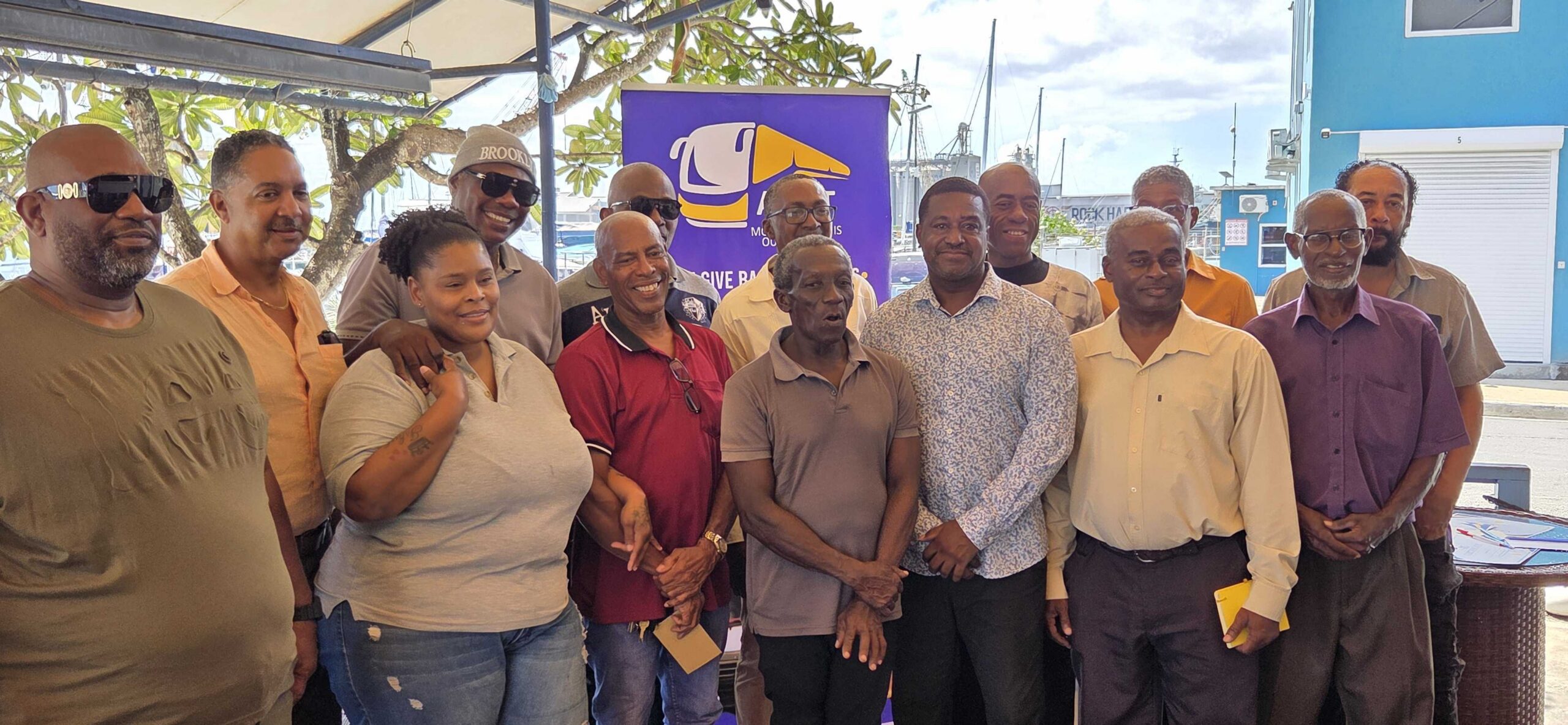
Barbados’ public transport sector gathered recently at Atlantis Submarines in Bridgetown to celebrate the hard work and dedication of its frontline workers, while industry leaders used the event to amplify longstanding calls for government intervention to address mounting operational and infrastructure challenges.
Hosted by the Alliance Owners of Public Transport (AOPT), the ceremony marked only the second formal awards event the association has held since its founding in October 2012, shining a spotlight on workers who have served communities reliably for decades. The evening’s top honor, Public Service Vehicle (PSV) Worker of the Year, went to Roger Norgrove—better known to regular commuters as Roger Dan—who has spent years operating the popular Pine/Regency Park route.
AOPT Chairman Roy Raphael explained that a thorough background review of Norgrove turned up no issues, highlighting the driver’s decades-long clean record, consistent punctuality, and unwavering reliability as key reasons for the recognition. “He is a very good worker, always on time, and serving one of our key routes,” Raphael said of the award winner. Norgrove’s manager, Shawn Gittens, accepted the award on his behalf from Pastor Dale Haynes during the ceremony.
Beyond individual recognition, the event brought tangible relief to operators grappling with skyrocketing operational costs. Energy firm Rubis donated fuel vouchers that were distributed to PSV operators, alongside official performance certificates and new “Safe Bus” vehicle stickers. The stickers are designed to let law enforcement quickly identify rule-abiding, high-performing operators, helping to distinguish responsible service providers from the small minority that have drawn criticism.
The celebration quickly turned to advocacy, as AOPT leaders outlined the most pressing challenges facing the sector, starting with soaring fuel expenses. Raphael noted that diesel remains the single largest cost for operators, with some drivers spending between $200 and $300 daily to keep their vehicles on the road. To address this and update the island’s aging PSV fleet, the association is pushing for long-sought duty-free concessions from the national government, and is requesting a direct meeting with Prime Minister Mia Mottley to negotiate the policy change.
“Some of these buses are older than me; over 35 years old,” Raphael explained, adding that fleet upgrades are particularly critical as tourism rebounds and more visitors rely on public transport to get around the island.
In addition to policy changes, AOPT announced two new initiatives to support PSV workers directly. The association plans to partner with the Co-operative Investment Fund to acquire seven housing plots exclusively for public transport workers, mirroring the housing benefits already offered to police officers. AOPT also confirmed it is exploring the possibility of acquiring a stake in the state-owned Transport Board, as the government moves forward with proposed divestment plans for the agency.
Addressing widespread negative stereotypes about public transport worker behavior, AOPT Communications Officer Mark Haynes pushed back against the narrative that poor discipline is widespread across the sector. He acknowledged that a small number of workers have engaged in irresponsible conduct that has tarnished the industry’s reputation, but noted that bad behavior is a societal issue, not one unique to public transport.
Haynes emphasized the critical, often underrecognized role that PSV workers play in Barbados’ daily life and economy: “These gentlemen get up at three in the morning to take people to and from work, contributing significantly to Barbados’ gross domestic product.” He added that it is important to celebrate and reward good service when it occurs, rather than only focusing on isolated problems.
Both Haynes and Raphael renewed calls for an urgent meeting with Prime Minister Mia Mottley to address a range of unmet needs, including structural bottlenecks in the sector, updates to taxi and PSV permit regulations, and expansion of the Transport Augmentation Programme (TAP)—a policy AOPT helped negotiate through months of late-night talks.
“The Alliance on Public Transport was very instrumental in the formation of TAP through many nights of negotiation,” Haynes said. “It is time for the prime minister to meet with the sector to ascertain our problems and see where she can help accelerate processes to move us forward.”