分类: society

  • Education : Day of discussions with Protestant leaders on the accreditation of educational institutions

    Education : Day of discussions with Protestant leaders on the accreditation of educational institutions

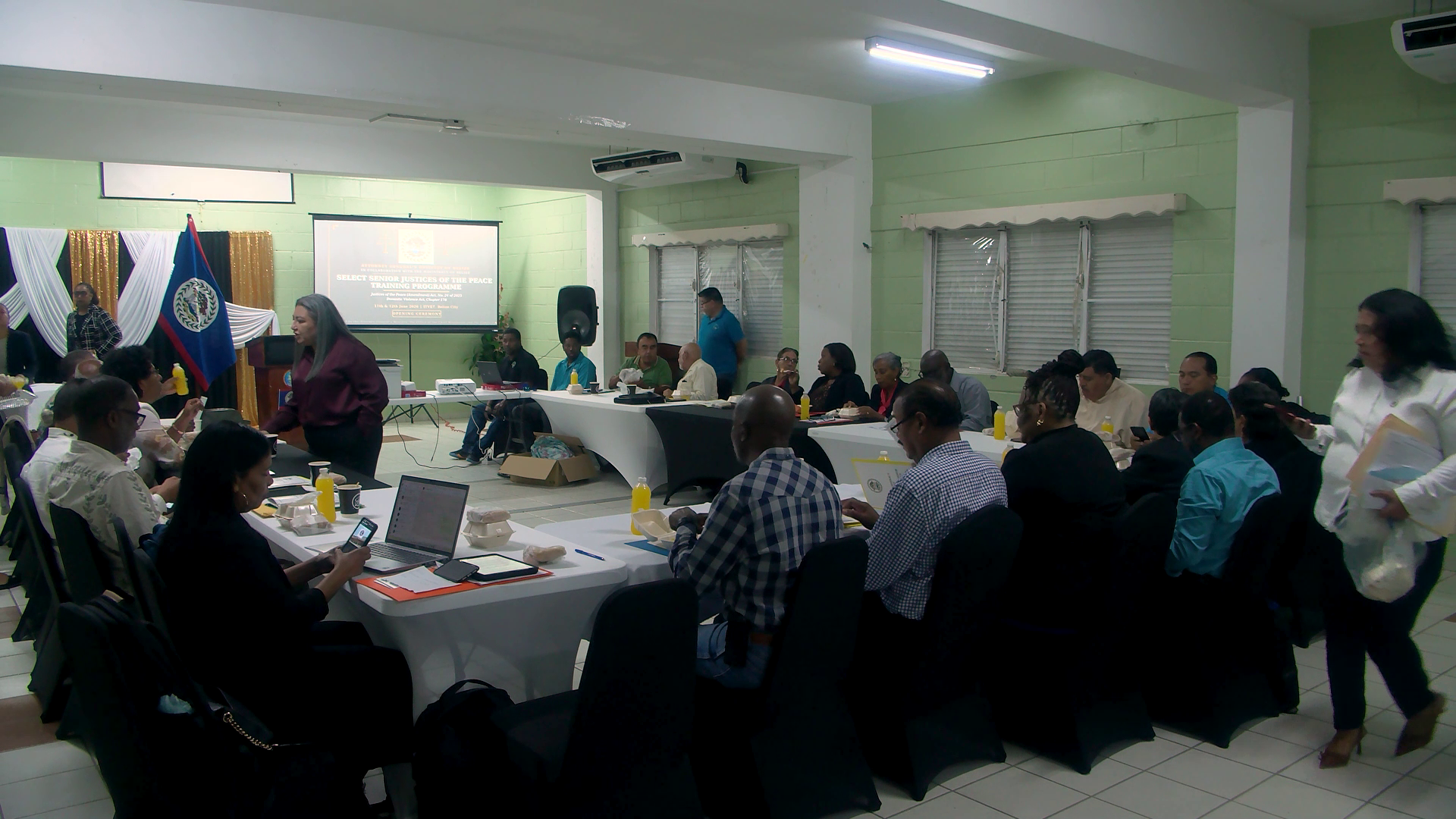
    Against the backdrop of milestone anniversaries for Haiti’s Protestant educational community, the Haitian Ministry of National Education and Vocational Training (MENFP) brought together more than 600 Protestant sector education leaders on June 10, 2026, for a full-day collaborative discussion focused on advancing the national accreditation process for private educational institutions. Attendees included heads of primary and secondary schools, vocational training center leaders, university deans, and rectors from across the country’s Protestant-led education network.

    The gathering was intentionally timed to align with major commemorations: the 40th anniversary of both the Protestant Federation of Haiti (FPH) and the Federation of Protestant Schools of Haiti (FEPH), as well as the 210th anniversary of the founding of Protestantism in Haiti. The core goal of the meeting was to align religious and secular education leaders around the urgent need to bring private Protestant-led institutions into compliance with national education standards, a change that officials say will cement consistent educational quality and open doors to stronger collaboration between the sector, public regulators, and global development partners.

    Addressing the assembled delegates on behalf of Prime Minister Alix Didier Fils-Aimé, Ms. Axène Joseph opened the event by noting, “On behalf of the Head of Government, I feel a sense of national pride and a great honor to address this assembly of representatives from Protestant schools and universities in Haiti today.” She emphasized that the Haitian government, through the MENFP, has launched an ambitious national education reform agenda that aims to fundamentally reshape the country’s entire school system, framing the gathering as a critical milestone in that broader transformation.

    MENFP Minister Vijonet Déméro framed the discussion as a proactive step to clear up confusion around accreditation protocols, helping Protestant denominations navigate the multi-step process of gaining national recognition for their institutions. He stressed the outsized influence that the Protestant education sector holds in Haiti: “If we consider the country’s school system, it’s easy to see that Reformed churches manage many schools, with a presence in rural areas and disadvantaged urban neighborhoods. If the Protestant sector succeeds in modernizing, Haitian schools will be transformed. If it commits to change, the Republic will move forward.” Déméro also outlined the ministry’s broader transformation agenda, which includes sweeping curriculum reform, standardization of core instructional materials, expanded access to digital, civic, and financial education, new investments in student mental health and well-being, infrastructure upgrades, and expansion of the national school canteen program.

    Raina Forbin, Haiti’s Minister of Foreign Affairs and Religious Affairs, praised the initiative for centering the critical work of the Protestant education sector and pledged her department’s full support throughout the three-stage accreditation process, which begins with institutional opening authorization, moves to issuance of an operating permit, and concludes with the award of a full accreditation certificate.

    FPH President Calixte Fleuridor and FEPH Executive Director Christon St. Fort both commended the MENFP for organizing the collaborative dialogue, while calling for continued investment in and expansion of public-private partnerships in Haiti’s education sector.

    The second half of the day was dedicated to practical, step-by-step procedural guidance for attending institutions. Walex Pierre, Director of the Directorate for Support to Private Education and Partnerships (DAEPP), laid out the core pillars of the National Policy for the Accreditation of Private Schools (PONAEP). Yves Villefranche of the National Institute for Vocational Training (INFP) walked attendees through recognition protocols for vocational training centers, while Jean Judson Joseph of the National Agency for Higher Education and Scientific Research (ANESRS) outlined the specific process for private universities. Elysé Colagène, Director General of the National Education Fund (FNE), explained how institutions can access national school grants, and Lucson Philémon, Coordinator of the National School Canteen Program (PNCS), detailed the requirements for schools to join the widely used meal program.

    To cap off the day of collaboration, the MENFP’s Directorate of Academic and Professional Development issued more than 300 operating permits to school representatives in attendance, marking tangible progress toward national compliance even as the broader accreditation process continues.
  • Flash Floods Turn Roads to Rivers, Sweep Bus Off Highway

    Flash Floods Turn Roads to Rivers, Sweep Bus Off Highway

    On June 11, 2026, communities across southern and central Belize woke to a landscape transformed into chaos after extreme overnight rainfall triggered devastating flash flooding that has put the entire nation on high emergency alert.

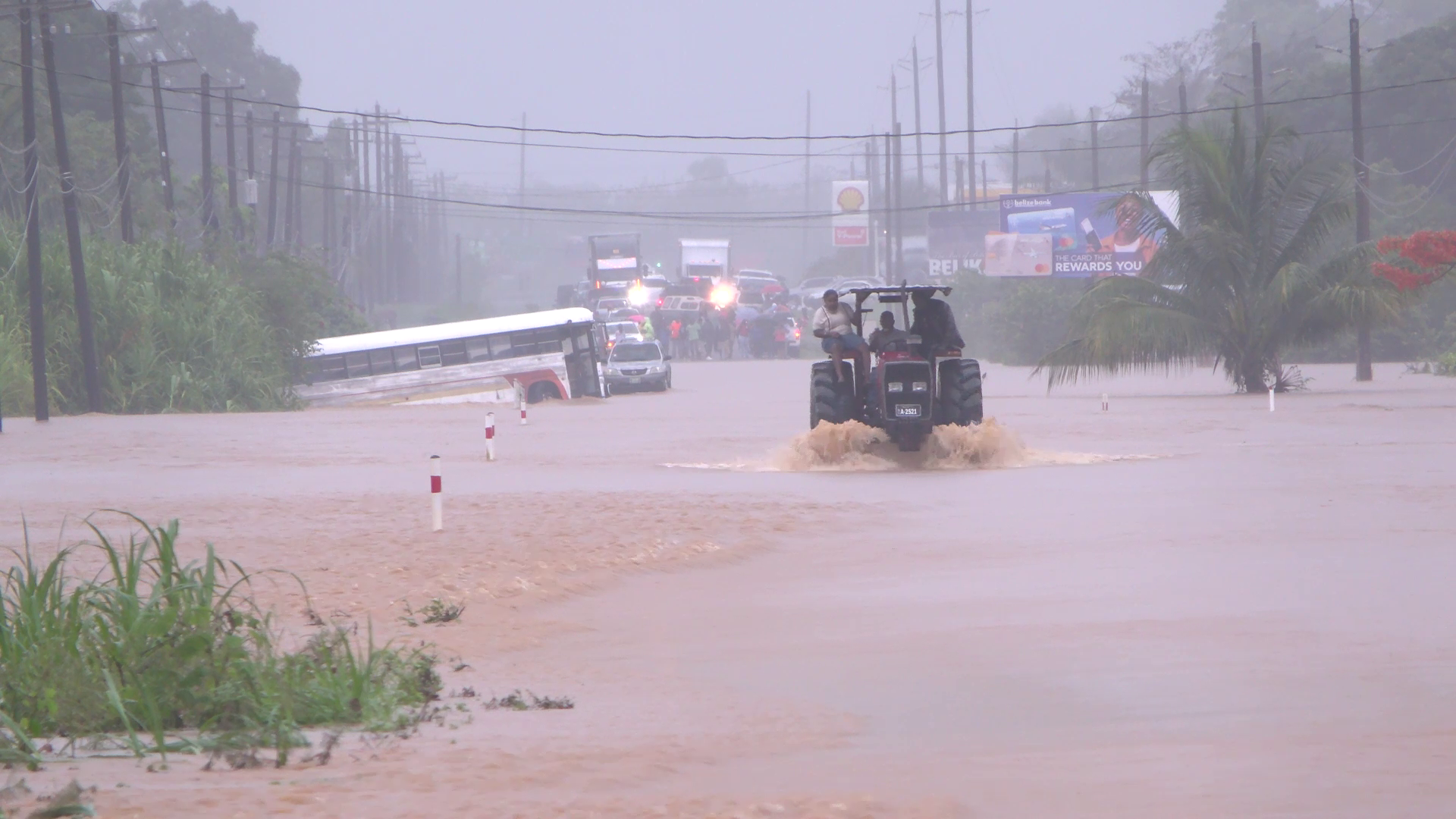
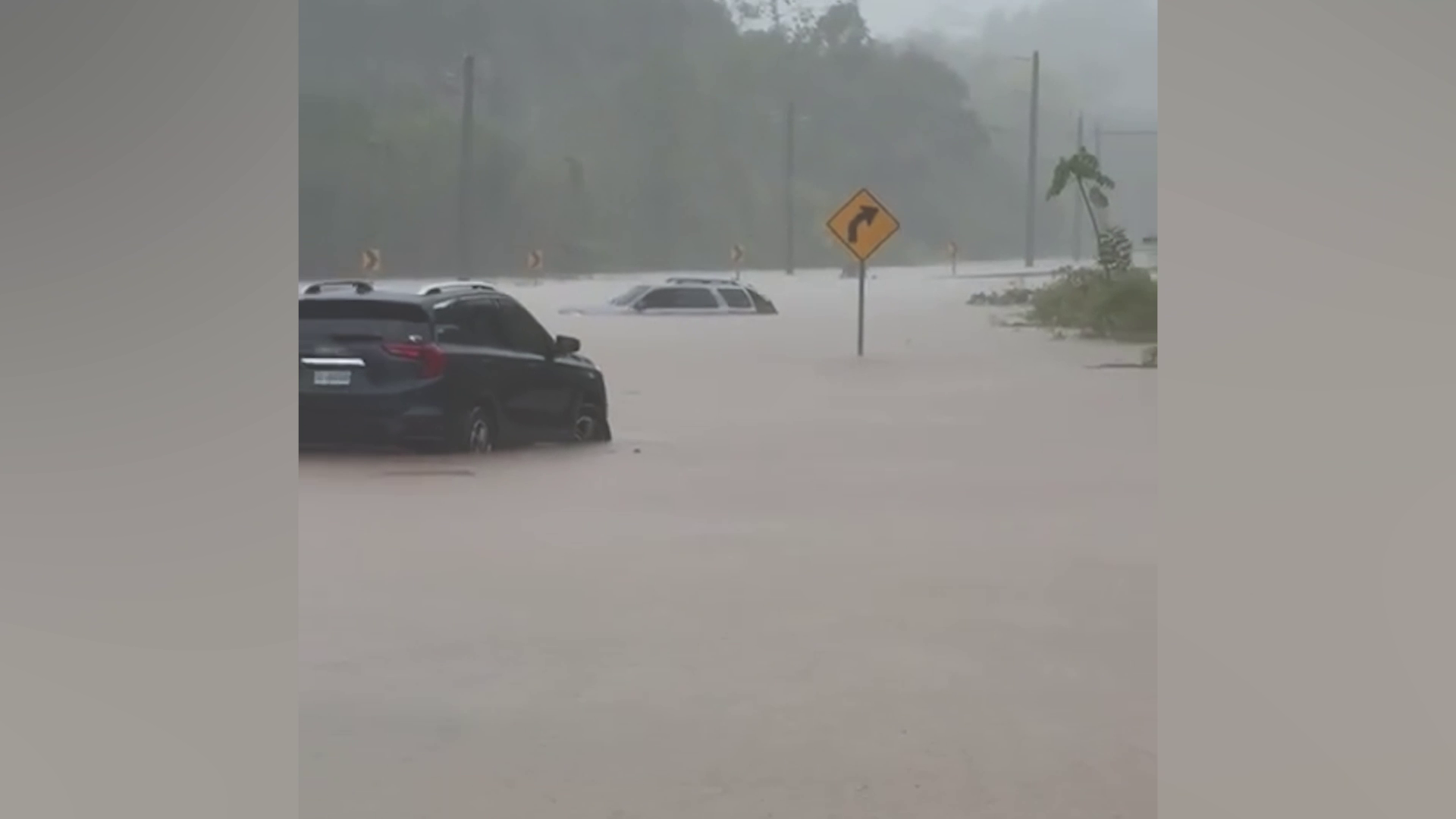
    The relentless downpour dumped unprecedented volumes of water across large swathes of the country, overwhelming drainage infrastructure, pushing natural waterways far past their safe thresholds, and turning paved highways into rushing, mud-choked rivers. In one of the most dramatic incidents of the disaster, fast-moving floodwaters swept a full passenger bus off a major highway, leaving emergency responders scrambling to assess the situation as conditions continue to evolve.

    Meteorological data collected from Belize’s network of automatic weather stations confirms the extreme intensity of the precipitation. From 6 p.m. the previous day through the early morning, the Middle Sex region recorded more than eight inches of rain in less than 24 hours. Nearby Kendal clocked seven inches of rainfall, while La Democracia saw between four and five inches. According to Ronald Gordon, Belize’s Chief Meteorologist, this extreme rainfall event can be traced to Tropical Storm Christina, which has now dissipated over the Eastern Pacific Ocean, but left behind moisture that is continuing to drive dangerous weather across the country.

    Gordon warned that there is no immediate end to the dangerous conditions, forecasting another heavy downpour overnight that will continue into early tomorrow morning. The worst of the new rainfall is expected to shift north, with northern Belize bracing for four to six additional inches of rain, with some areas potentially seeing as much as eight more inches.

    Tennielle Hendy, Principal Hydrologist for Belize, echoed Gordon’s warning, noting that the entire country remains at elevated risk of flooding. “We are seeing this weather system advance across most of the nation, with precipitation now pushing into northern regions,” Hendy explained. “Northern areas face a very high risk of localized and urban flooding from the excessive rainfall. For southern and central Belize, the nation’s hilly terrain means rainwater flows quickly down slopes into low-lying communities, worsening already dangerous flood conditions.”

    The National Emergency Management Organization (NEMO) has activated full alert status across the country. National Emergency Coordinator Daniel Mendez confirmed that response teams have already been deployed to the Stann Creek District, where multiple flood-related incidents have already been reported. Local NEMO coordinators have been on the ground assisting impacted residents since early morning. “All of our regional offices are in constant communication, and the entire country remains on high alert,” Mendez said. “While full system activation has not been required at this point, we stand ready to scale up our response rapidly if conditions worsen.”

    Emergency officials are urging all residents in at-risk areas to stay updated on weather alerts, prepare for potential evacuation, and avoid flooded roadways. With more rain on the way, response teams are working around the clock to monitor rising water levels and coordinate rescue and relief efforts as the disaster unfolds.

  • A Generational Weather Event: Stann Creek Valley Flooded

    A Generational Weather Event: Stann Creek Valley Flooded

    On June 11, 2026, what began as a routine education assignment for a News Five reporter became an on-the-ground chronicle of a sudden national weather emergency in southern Belize’s Stann Creek District. Reporter Shane Williams originally set out to cover the official opening of a new training facility at the Stann Creek Institute of Technical and Vocational Education and Training (ITVET), an event scheduled to feature a keynote address from Minister of State Dr. Louis Zabaneh. But overnight torrential rain upended every planned schedule, transforming a soft news story into a first-hand account of flood-driven survival.

    Before the sun rose over the district, social media platforms erupted with user-generated footage showing passenger vehicles stranded in waist-deep floodwaters along the Coastal Highway, the primary route south to Stann Creek. Williams’ team immediately adjusted their travel plans, departing earlier than scheduled and rerouting to the longer inland Hummingbird Highway. As the team traveled, new urgent updates emerged: Stann Creek West Area Representative Rodwell Ferguson posted a public call for rescue for Augustine Cho, a local farmer stranded on his property as floodwaters rose rapidly across the Stann Creek Valley. By the time the reporting team reached Belmopan, footage had already circulated showing evacuations of Mennonite communities in the valley’s most flood-prone lowlands.

    After navigating a multi-hour internet blackout through the Hope Creek section of the Hummingbird Highway, the team received official confirmation that the ITVET opening had been canceled due to unsafe conditions. Less than two miles further along the route, the team encountered Dr. Zabaneh, the keynote speaker they had traveled three hours to interview, standing on the shoulder of the highway alongside dozens of stranded commuters, monitoring the rising floodwaters.

    “The water has pulled back slightly over the last hour,” Dr. Zabaneh explained to the reporter on site. “Local police have been incredible, they’ve been posted here blocking incoming traffic to prevent more people from getting stuck. Earlier, only large trucks and high-clearance pickups could make it through. You can see what just happened back there: a bus driver got too close to the shoulder, the water pushed the rear of the bus off the pavement into the ditch. Thankfully, everyone on board escaped unharmed. We’re holding traffic here now, only allowing large, capable vehicles through.”

    With the route south completely impassable, Williams’ team turned back toward Belize City, but first stopped to document the unfolding crisis in the Mountain View Mennonite community, one of the hardest-hit settlements in the Stann Creek Valley. Community leader John Penner described the terrifying speed of the flood’s rise overnight.

    “It just rained and rained all night long,” Penner recalled. “We were watching and wondering if the water would come for us, and then it rose so fast – faster than anyone expected. We were scrambling to secure our belongings, before rescuers arrived with motorboats to evacuate all of us across to higher ground.”

    On the return journey, the team caught up with Ferguson, who was traveling door-to-door across flooded villages to assess damage and check on stranded residents. Ferguson provided an update on the stranded farmer Augustine Cho, explaining that Cho had stayed on his farm overnight to care for a group of young piglets, and became trapped when waters cut off his exit. After Ferguson put out a public call for rescue on social media, a local boat owner from Pomona responded to pull Cho to safety.

    “He ended up climbing a tree to stay above the water, but he made sure he got all three of his young pigs out safe too,” Ferguson said. “The good thing about flooding in the Stann Creek Valley is that it only stays as long as the rain keeps falling. Once the rain stops, the water drains away really quickly.”

    By mid-afternoon, unofficial reports indicated that floodwaters along the original Coastal Road route had dropped significantly, leaving only scattered debris, damaged pavement and a closed sign at the Gales Point junction. The team decided to attempt the crossing back to Belize City along that route, but hit another wall at the 16-mile marker, where floodwaters stretched across the entire roadway, reaching nearly two feet deep. A brief attempt to cross confirmed that the conditions were too dangerous, forcing the team to retreat back to the Hummingbird Highway once again.

    In a separate on-site report, News Five confirmed that floodwaters across the Hummingbird Highway had brought all regional traffic to a complete standstill, disrupting travel for teachers heading to work, students traveling to class, and families and visitors crossing the district. Stranded commuters told reporters that the sudden flood had completely upended their daily schedules, leaving them with no option but to wait out the rising waters.

    In his closing sign-off, Williams noted that the team did eventually reach the Stann Creek ITVET campus, but what began as a story about educational development had transformed into an intimate, first-hand look at the growing threat extreme weather poses to communities across Belize. This report is a transcript of an evening television newscast prepared for online publication.

  • Flooded Roads Disrupt Travel Across Southern and Central Belize

    Flooded Roads Disrupt Travel Across Southern and Central Belize

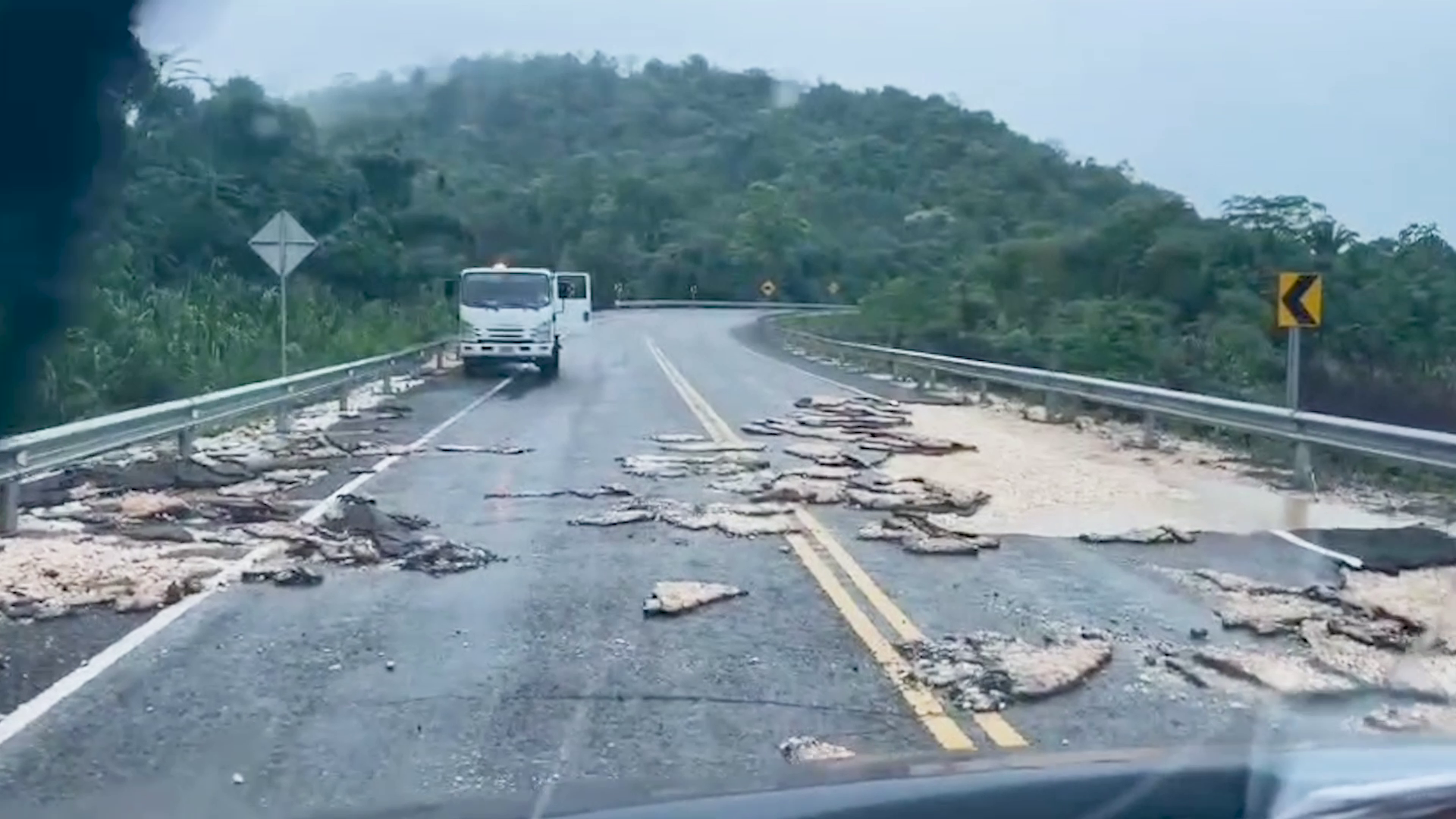
    As of the evening of June 11, 2026, unrelenting floodwaters have thrown travel across central and southern Belize into chaos, leaving multiple key routes closed, forcing motorists onto unplanned detours, and testing the patience of commuters across the region. One of the hardest-hit major corridors is the Coastal Plain Highway, which remains fully submerged and closed to all traffic as of Tuesday evening, though transportation officials have noted that partial reopening could come later the same night once water levels recede sufficiently. In a small reprieve for drivers, the Mile 7 stretch of the Hummingbird Highway — which was closed earlier in the day due to rising floodwaters — has been cleared and reopened to through traffic. Even on routes that remain accessible, conditions remain far from normal, with standing water, slippery pavement, and hidden hazards posing constant risks to road users. Transportation authorities have issued urgent warnings for drivers to reduce speeds and remain extra vigilant in high-risk areas, including the Mountain View access road, Canada Hill Junction near Hope Creek, and the approaches to Kendal Bridge on the Thomas Vincent Ramos Highway. To get the most up-to-date assessment of the unfolding flood crisis and its impact on Belize’s road network, local reporters spoke with Evondale Moody, Chief Engineer at the Ministry of Infrastructure and Development (MIDH), who has been leading on-the-ground monitoring of flood damage across the affected regions. Moody confirmed that new flooding has emerged in the Sarawee Village area between Mile 3 and Mile 4 of the Hummingbird Highway, with water levels continuing to climb steadily through the day. His team is maintaining constant surveillance of this stretch to assess when it may need to be closed to keep drivers safe. The most severe damage has been recorded near the Soldier Creek Bridge at Mile 16 on the Coastal Plain Highway, where intense floodwaters have caused scouring and erosion to the road pavement. Moody noted that this same stretch suffered identical damage roughly two years prior, prompting a major infrastructure upgrade in the area. Two years ago, engineering teams raised the elevation of the Soldier Creek Bridge approach and paved 50 additional meters of the vulnerable stretch with reinforced concrete, extending the protected area to 200 meters total. However, the 24-hour rainfall that triggered the current flood event far exceeded the volumes recorded during the 2024 incident that led to the original repairs. The erosion that has occurred in the current event is located beyond the 200-meter reinforced section, confirming that the intensity and volume of floodwater this time around far outpaced the design parameters put in place during the 2024 upgrades. In line with national emergency guidance, transportation officials have repeated a critical warning for all motorists: under no circumstances should drivers attempt to cross flooded road segments, as hidden damage, swift currents, and submerged debris create extreme risks of vehicle entrapment or drowning. This report is a transcript of an evening television newscast covering the developing flood situation, with all local Kriol language quotations transcribed using a standardized spelling system for accessibility. Readers can access the full video broadcast via the original publication’s website.

  • Notities uit de behandelkamer: Gezond genoeg om arm te zijn

    Notities uit de behandelkamer: Gezond genoeg om arm te zijn

    As a medical practitioner based in Suriname, I see one request from patients crop up almost daily: a signed medical statement for the Ministry of Social Affairs. This document is required to back applications for social welfare or the national Moni Karta income support program. Many applicants live with illness or chronic conditions that prevent them from holding steady work. But almost universally, the core challenge they share is crippling financial instability.

  • Man Jailed Six Years for Raping 14-Year-Old Stepdaughter and Fathering Child

    Man Jailed Six Years for Raping 14-Year-Old Stepdaughter and Fathering Child

    A middle-aged man has received a six-year prison sentence following his guilty plea to sexually abusing his 14-year-old stepdaughter, a crime that left the minor pregnant, the High Court confirmed this week.

    Justice Ann Marie Smith formally handed down the penalty after the defendant, whose identity is legally withheld to safeguard the anonymity of the underage victim, entered an admission of guilt on one count of sexual intercourse with a step-child, a serious offense under the jurisdiction’s criminal code.

    Court documents detail that the abuse occurred between July and August 2021, when the perpetrator was 37 years old and legally married to the victim’s mother. Over the course of those two months, he repeatedly engaged in non-consensual sexual activity with the teenager, who eventually became pregnant as a result.

    The horrific abuse only came to light in November 2021, when staff at the victim’s school noticed her pregnancy and filed a mandatory report with local law enforcement. When investigators first launched their probe, they were deliberately fed false information about who had fathered the unborn child, in an apparent effort by the perpetrator to cover up his crime. Subsequent forensic and investigative work quickly disproved these false accounts and pointed directly to the stepfather as the responsible party.

    In December 2021, as authorities closed in on him, the man attempted to flee the country to avoid prosecution. Law enforcement agents intercepted him at a local airport before he could board an outbound flight, taking him into custody immediately. Even after his arrest, the defendant initially continued to deny any connection to the pregnancy, claiming he had no knowledge of who had abused his stepdaughter.

    The case has drawn renewed attention to gaps in protections for minor stepchildren in domestic households, where abuse perpetrators often exploit their trusted family position to avoid detection for months or years. Legal advocates note that the mandatory reporting policy followed by the victim’s school was critical to uncovering the crime and holding the perpetrator accountable.

  • Indian Creek Conflict Grows Over Forest Material

    Indian Creek Conflict Grows Over Forest Material

    On June 11, 2026, a seemingly minor local disagreement over harvesting forest materials has erupted into open conflict in Indian Creek Village, laying bare long-simmering rifts within the small community that were previously hidden beneath routine daily life.

    The dispute centers on a local villager who secured formal approval for his harvesting project from two separate relevant parties: the private owner of the land where the bush sticks (raw timber to be used as house construction materials) are located, and the national Forestry Department. Having finalized all required authorization, the resident arranged for village chairman Domingo Choc to transport the harvested materials to his own property, where he planned to use them as rafters for a new residential building.

    What was expected to be a routine, legally compliant logistics operation quickly turned confrontational when local community leaders blocked the transport. According to Choc, who spoke to reporters via phone, the village alcalde attempted to seize the entire stock of bush sticks, arguing that the national Forestry Department’s permit held by the resident was not legally valid in this case. In a development that escalated the conflict further, a spokesperson for the local Member of the Legislative Assembly (MLA) was on site during the standoff and openly backed the alcalde’s position. Choc told reporters that he and his transport crew were detained at the site for roughly two hours, unable to leave with the approved materials.

    “This situation escalated because they attempted confiscate material that had been obtained under a valid Forestry Department permit,” Choc explained in his interview. After hours of tense negotiation, the MLA’s team ultimately conceded to allow the resident to take the timber rafters and proceed with his house construction, but the confrontation left community divisions fully exposed.

    Local MLA spokesperson Christina Coc has confirmed that she will share the elected official’s full perspective on the conflict with local outlet News Five in an interview scheduled for Friday. This report is a transcribed excerpt from the outlet’s evening television broadcast, with all non-standard language rendered consistent with a standardized spelling system for accessibility. The full broadcast is available to view on the outlet’s digital platform.

  • Domestic Violence Response Strengthened with JP Training

    Domestic Violence Response Strengthened with JP Training

    Six months of logistical hurdles and rigorous screening have culminated in a landmark shift in Belize’s domestic violence response: 30 vetted, specially trained Justices of the Peace (JPs) are now authorized to issue life-saving 72-hour emergency protection orders when courts are closed outside standard business hours. The long-delayed initiative, first mandated by legislation passed in late 2025, fills a critical gap in victim protection that advocates and officials say contributed to a devastating 2025 tragedy.

    The urgency to close this gap grew after the horrific October 2025 killing of Angelita Magana and her two young children. The family was killed when Magana’s ex-partner set their home ablaze, a crime that sparked widespread public outcry after widespread speculation that timely access to an emergency protection order could have prevented the deaths. In response, the Belizean government fast-tracked implementation of the new JP authority, turning a years-old policy proposal into active public service.

    Adrian “Danny” Madrid, President of the Association of Justices of the Peace, framed the program as a transformative change for at-risk Belizeans. For decades, domestic violence incidents spiking on weekends and public holidays left victims with no immediate route to court-ordered protection, since magistrate courts are closed during these periods. To address the safety concerns that kept many JPs from volunteering for the new role, all emergency order issuances will take place at local police stations, where on-site law enforcement presence can protect both volunteers and victims.

    “Many times, violence against a person is done mostly on weekends and holidays where the judiciary system, the magistrate courts are closed and we have nowhere to go,” Madrid explained in an interview with News Five. “So we decided and we finalized that we’ll do it at every police station, even in the villages, go to the police station where there’s a police presence so we have to have that protection because some JPs do not want to do it because they’re afraid of their own self, of violence against them. So, we’re hoping that they do not have to use us, but we want the public to know that you could feel safer.”

    The rollout faced significant delays due to the strict eligibility criteria set for participating JPs. Out of nearly 3,000 JPs serving across Belize, only a small pool met the requirements: candidates must hold senior JP status, which itself requires a minimum of 10 years of prior service, have at least five additional years of experience as a senior officer, and hold a completely clean police record. After six months of recruitment and screening, 30 qualified JPs stepped forward to complete the mandatory training.

    Attorney General Anthony Sylvestre outlined the structured coordination that will make the temporary emergency system function seamlessly with the formal court system. If a victim seeks protection on a Friday evening or holiday, the JP will issue an ex parte interim protection order, with all documentation immediately shared with police, court administration, and the Ministry of Human Development. When courts reopen, the case will be immediately assigned to a magistrate, who will review the order and schedule full proceedings with both parties present to formalize any long-term protection measures. Sylvestre emphasized that while the order is temporary, the 72-hour window it provides can mean the difference between life and death for at-risk victims.

    Officials acknowledge ongoing systemic challenges, including the high rate at which victims ultimately withdraw complaints against their abusers, a trend that slows justice and leaves survivors in dangerous cycles. But Minister of Human Development Thea Ramirez-Garcia stressed that the government remains committed to meeting survivors where they are, noting research showing that survivors often attempt to leave abusive situations multiple times before escaping permanently.

    “On average, it takes a person, a survivor, eight times trying to leave a difficult situation before they finally make it. A lot of people don’t make it out alive,” Ramirez-Garcia said. “So what would I say? I would say keep trying. If it takes you twenty times before you break out of a situation, then we keep trying twenty times with you. Of course it might be a lot of paperwork for the person on the other end taking the reports, but that’s their job.”

    Participating JPs provide their services pro bono, meaning emergency protection orders are completely free of charge for victims. To offset the out-of-pocket costs JPs incur for travel to police stations and other work-related expenses, the government has allocated a stipend of up to $100 per assignment to cover basic costs.

  • Violence at Russell Garcia Auditorium Draws Strong Reaction

    Violence at Russell Garcia Auditorium Draws Strong Reaction

    A viral video capturing a violent confrontation between Brian Swazo and a teenage basketball player at Belize’s Russell Garcia Auditorium has triggered widespread public condemnation and launched an official investigation into potential policy violations. The footage, which began circulating across social media and digital platforms earlier this week, has put the country’s National Sports Council under intense public and political pressure as authorities examine gaps in the facility’s access control and operational management.

    Thea Ramirez Garcia, Belize’s Minister of Human Development, issued a firm rebuke of the incident and the inaction of bystanders who captured the conflict on camera instead of intervening. In remarks following the video’s spread, Ramirez Garcia acknowledged that working with young people carries unique modern challenges that previous generations never faced—including the constant risk of being recorded by bystanders during moments of conflict. Still, she emphasized that she found the bystanders’ passive behavior unfathomable.

    “I still can’t believe that people, instead of coming forward and saying, ‘Hey, that we don’t do that,’ would sit there quietly and record whatever was happening and not step in to help and not step in to part whatever that was happening,” Ramirez Garcia said. She added that any physical contact against another person qualifies as assault, and made clear that violence against minors has no place in the country’s public recreational spaces.

    National Sports Council Director Jason Menzies publicly responded to the controversy this week, confirming that the organization has launched a formal probe to determine whether Swazo violated the council’s longstanding zero-tolerance non-confrontation policy. Menzies shared that the council is currently collecting on-the-ground incident reports and coordinating with local law enforcement to obtain an official police statement before making any final disciplinary decisions. He urged the Belizean public to avoid rushing to judgment, calling for equal scrutiny of all parties involved as the investigation moves forward.

    The incident has already reignited broader conversations about safety protocols and management oversight at public sports facilities across the country, with many community leaders calling for updated access control measures to prevent similar violent conflicts in the future.

  • LETTER: These Hotels Sent a Message of Inclusion—And I Stand With Them

    LETTER: These Hotels Sent a Message of Inclusion—And I Stand With Them

    In the wake of two major Antiguan resorts — Pineapple Beach Club Antigua and The Verandah Resort and Spa — making a public, formal commitment to welcoming LGBTQ+ travelers to their properties, a local mother of a gay son has stepped forward to share her deeply personal perspective on what this announcement means for her community, her family, and her child.

    For years, this mother has watched her son navigate a world that often passes judgment before getting to know the person behind the identity. She has borne witness to the quiet pain, persistent anxiety, and deep-seated fear that comes from repeated messages telling LGBTQ+ people that they do not belong, that they do not deserve equal acceptance, and that they are somehow less worthy of dignity than anyone else. It is this lived experience that makes the resorts’ simple statement of welcome far more than a public relations gesture — it is a landmark acknowledgment of a basic human truth.

    The mother emphasizes that this stand is not about pushing a specific agenda, nor is it about demanding that anyone change their deeply held personal beliefs. It is solely about recognizing that every human being, regardless of who they love, deserves to be treated with respect when they step foot on a property as a guest. That simple, unifying principle has sparked fierce backlash, however, a reaction that left her saddened but not surprised. In comments following the resorts’ announcement, some speakers invoked threats of violence and destruction, others dehumanized LGBTQ+ people by comparing them to a societal plague, and a small number went so far as to call for harm and forced expulsion of queer people from the community.

    To these voices, the mother poses a quiet, challenging question: would you speak this way if the queer person being discussed was your own child? Would you stand by as strangers wished violence on your son or daughter? Would you accept them being told they have no place in the country they call home?

    She goes on to remind readers that LGBTQ+ people are not outsiders or strangers to Antiguan and Barbudan society. They are our children, siblings, coworkers, classmates, friends, and neighbors. They are citizens of this nation, with the same rights to belonging and respect as anyone else.

    Decades of rigorous scientific research have long debunked the harmful myths that circulate about sexual orientation. Major studies confirm that no single root cause determines a person’s sexual orientation, just as no single factor shapes the countless other traits that make each human being unique. Most critically, peer-reviewed research has consistently shown that LGBTQ+ people are no more likely to cause harm to children, erode social structures, or damage families than any other group. It is not queer identity that harms families, the mother argues: it is hatred, it is rejection, and it is the systemic pressure that forces young queer people to question whether they are even worthy of love.

    The mother also takes time to acknowledge the incremental but important progress that Antigua and Barbuda has made on this issue, noting that the nation is not perfect but is clearly moving in a more inclusive direction. She points out that a country can honor its deep roots in faith while still upholding the fundamental humanity of every citizen and every visitor. She commends Prime Minister Gaston Browne and his administration for cultivating a policy environment where local businesses feel safe and empowered to open their doors to all travelers, regardless of identity. Even for those who hold personal disagreements with same-sex relationships, she argues, there can be no debate that every visitor deserves equal treatment, safety, and respect when visiting the islands.

    Beyond the moral case, there is a clear economic reality that cannot be overlooked: LGBTQ+ travelers contribute billions of dollars to the global tourism industry each year, and they consistently prioritize and return to destinations that make them feel welcomed and safe. Building a culture of inclusion is not only the right thing to do morally — it is a sound economic strategy that benefits the entire nation. But for this mother, the issue is never been primarily about money or tourism revenue.

    At its core, this is a question of basic humanity. It is a mother’s hope that her son can move through the world without living in constant fear of hostility or rejection. It is about ensuring that young queer people growing up today see examples of acceptance and welcome, rather than constant hatred and exclusion. It is a reminder that a society built on love, compassion, and decency will always be stronger and more resilient than one built on anger and exclusion.

    Closing her letter, she extends gratitude to the two resorts for their courage to stand openly for inclusion, and to the allies who have used their voices to support the move toward greater acceptance. To her fellow Antiguans and Barbudans, she leaves with a plea: that the nation continues moving toward a future where every person is treated with inherent dignity, no matter who they are or who they love.