分类: society

  • Regering wil achterstallige betalingen examinatoren uiterlijk vrijdag afhandelen

    Regering wil achterstallige betalingen examinatoren uiterlijk vrijdag afhandelen

    A months-long payment dispute that sparked widespread frustration among Suriname’s education sector is moving toward resolution after President Jennifer Simons led emergency high-level talks with education union representatives on June 23. The meeting, held at the President’s Cabinet, was convened directly in response to growing discontent over the failure to complete outstanding overdue payments to hundreds of examiners and committee members tied to national education assessments.

    In attendance alongside President Simons were key cabinet officials: Dirk Currie, Minister of Education, Science and Culture; Marinus Bee, Minister of Home Affairs; and representatives from the government’s central negotiation body. The meeting was organized and its outcomes announced by Suriname’s Communications Service.

    The root of the dispute stretches back to an agreement signed earlier this June between the Ministry of Education, Science and Culture and the country’s leading education unions. Under that initial deal, all overdue payments to eligible education workers—including examiners, committee members, and a group of teachers based in Moengotapoe—were scheduled to be disbursed starting June 1, with full completion promised by the end of the month during a follow-up meeting on June 12. As of the June 23 emergency summit, however, more than 300 examiners had still not received their owed compensation.

    Minister Currie acknowledged that bureaucratic red tape within the national government is a persistent source of payment delays, a issue that has fueled consistent irritation among union leadership. To address both the current backlog and prevent future disruptions, two key structural changes were agreed upon during the talks. First, the Ministry of Education will now hold weekly coordination meetings with education union representatives to flag and resolve bottlenecks early. Second, a permanent cross-government consultation framework will be established, bringing in officials from the Ministry of Finance and Planning, the Ministry of Home Affairs, and the President’s Cabinet for all payment-related discussions. Currie explained that cross-ministerial inclusion is necessary, as many payment processes and approvals span multiple government departments and occasionally require formal sign-off from the presidency itself.

    Vincent Fernandes, Director of Finance at the Ministry of Finance and Planning, detailed the specific administrative bottleneck that caused the current delay. Before any payments can be processed, rosters of eligible workers submitted by the Ministry of Education must first go through a formal verification check by the ministry’s Accounting Department. Fernandes noted that inconsistencies between submitted rosters and verified records are a recurring issue, and these discrepancies were the direct cause of the current holdup. Following the emergency talks, all parties have committed to completing all required administrative processing by the end of Friday at the latest.

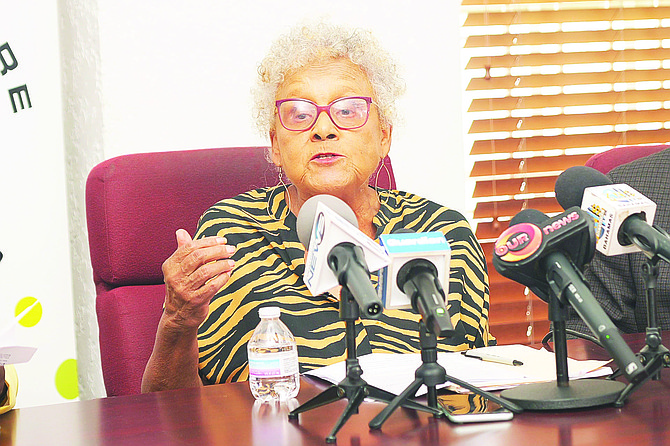
    Union leaders have expressed cautious confidence that the agreement will resolve the long-running backlog. Reshma Mangre, chair of the Suriname Teachers’ Union/Alliance of Suriname Teachers (BvL/ALS), stated that unions trust the president-led process will deliver results for the unpaid examiners. She did, however, note that a previously proposed cross-stakeholder commission including union and ministry representatives has not yet been formally established, leaving the sector without sustained structural coordination and leaving unions often unclear about the status of payment processes.

    Bernice Barron, chair of the Federation of Suriname Teachers’ Organizations (FOLS), echoed that confidence, adding that the majority of eligible workers will see their back pay processed under the new deadline. “There is a small subset of workers that are not yet eligible for payment at this stage,” Barron explained. “Officials are currently working directly with that group to identify and resolve their individual issues, and the minister will send formal correspondence to each of them outlining next steps. For everyone else, the process is now on track to be finalized.”

  • Vincy Driver Who Left The Scene After Crash arrested At Airport, Charged After Injuring Cyclist Tahje Browne

    Vincy Driver Who Left The Scene After Crash arrested At Airport, Charged After Injuring Cyclist Tahje Browne

    A cross-border manhunt has come to a close after authorities detained a Vincentian national at Antigua and Barbuda’s V.C. Bird International Airport, just as he attempted to flee the country following a high-profile hit-and-run crash that left elite local cyclist Tahje Browne with severe injuries. Kishroy Harry, the 32-year-old suspect, now faces four criminal charges connected to the June 20 incident on Sir Sydney Walling Highway, one of the island nation’s busiest arterial routes. The charges against him include dangerous driving, operating a motor vehicle without the registered owner’s consent, driving with no valid driver’s license, and failing to carry mandatory motor vehicle insurance.

    Law enforcement officials have laid out detailed allegations outlining the sequence of events of the collision. Investigators confirm that Harry was behind the wheel of a Toyota Vitz when the vehicle struck Browne as the cyclist traveled along the highway near the headquarters of the Antigua and Barbuda Transport Board. In what authorities describe as an attempt to cover up his involvement, Harry allegedly discarded the clothing he was wearing at the time of the crash before making plans to leave the country. His escape attempt was cut short on Sunday, when airport security flagged him before he could board an outgoing flight, leading to his immediate arrest and official charging.

    In the immediate aftermath of the collision, Antigua and Barbuda’s Prime Minister Gaston Browne publicly called on the at-large driver to turn himself in to police, condemning the decision to flee the crash scene as morally unacceptable. Speaking during an interview on the popular “Browne and Browne” radio program just one day after the incident, the Prime Minister emphasized that the country’s top competitive cyclist had escaped death by a narrow margin. “Our best cyclist got hit by a vehicle this morning, and he is lucky to be alive,” the Prime Minister stated, noting that early medical assessments confirmed Browne’s injuries, while serious, were not fatal. He went on to criticize the driver’s post-crash actions sharply, saying, “It is extremely unfortunate that that person would have left the scene. That was definitely very cruel of that individual and that person needs to present himself to law enforcement.”

    The Prime Minister also used the high-profile incident to renew longstanding public safety appeals to all motorists across the country, urging them to prioritize responsible driving habits and avoid reckless speeding. He reminded drivers that careless and dangerous operation of motor vehicles does not just put the driver at risk, but endangers the lives of all other road users, including cyclists and pedestrians. Harry is scheduled to make his first official court appearance before the Magistrate’s Court this coming Wednesday, where the case against him will move into the formal legal process.

  • NSWMA Says Jennings Waste Collection Delayed Until Wednesday

    NSWMA Says Jennings Waste Collection Delayed Until Wednesday

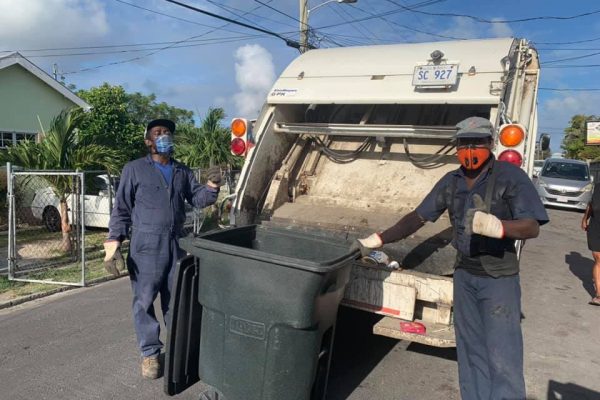
    Residents in the community of Jennings are adjusting their schedules this week after local waste management officials announced an unexpected delay to regular garbage pickup services. The National Solid Waste Management Authority (NSWMA), the government body responsible for residential waste collection across Antigua and Barbuda, confirmed the disruption in an official public notice released on Tuesday, noting that all delayed collections are now projected to be finished no later than Wednesday, June 24.

    In the statement, the NSWMA shared that its operational teams are actively working through the backlog of uncollected waste to resolve the disruption and return the community’s waste service to its consistent, scheduled routine as soon as possible. The authority extended a formal apology to Jennings residents for the inconvenience caused by the unplanned delay, and expressed gratitude to local households for their understanding and patience as collection crews work to clear the outstanding routes.

    Beyond the update for Jennings, the NSWMA also issued a general reminder to all residents across the twin-island nation of Antigua and Barbuda. In the event that any household experiences a missed pickup or extended delay to their regular waste collection service, residents are encouraged to reach out directly to the authority’s dedicated customer service hotline at 562-1347 to report the issue. The agency reaffirmed its ongoing commitment to addressing all service disruptions quickly and effectively to maintain clean, healthy communities across the country.

  • Kenyatta Benjamin to Be Arraigned June 30 in Fatal Andre Simon Crash Case

    Kenyatta Benjamin to Be Arraigned June 30 in Fatal Andre Simon Crash Case

    Nearly two years after a devastating Mother’s Day road collision claimed the life of elite national cyclist Andre Simon, the man charged in connection with the fatal crash is set to make his next court appearance for formal arraignment next month. Kenyatta Benjamin, a resident of Hatton, appeared before High Court Justice Ann Marie Smith this Monday, where the judicial schedule for the next procedural step was officially set. On June 30, Benjamin will formally answer the charge of dangerous driving brought against him, which stems from the 2022 incident that left Simon critically injured and ultimately dead. If Benjamin enters a plea of not guilty during the upcoming arraignment, court officials will move forward with setting a date for a full public trial.

    The tragic incident unfolded in May 2022 along the Sir George Walter Highway, during a scheduled training ride for a group of four competitive cyclists. Prosecutors’ case rests on the allegation that Benjamin’s vehicle collided with all four cyclists who were on the road that day. The cyclists involved were Andre Simon, Sean Weathered, Ghere Coates, and Tiziano Rosignoli, all of whom were rushed to a local medical facility immediately after the crash for emergency care.

    Three of the four riders — Weathered, Coates, and Rosignoli — eventually made full recoveries from their injuries and were released from care within a short period. Simon, however, was not as fortunate. The 36-year-old competitor, who left behind one child, suffered catastrophic, life-altering damage in the impact, including severe traumatic brain injury and life-threatening internal bleeding. He spent multiple weeks in the Intensive Care Unit at the Sir Lester Bird Medical Centre as medical teams worked to stabilize his condition. Due to the severity of his injuries, Simon was airlifted to the TIRR Memorial Hermann specialized trauma care facility in Houston, Texas on July 2, 2022, to access advanced treatment that was not available locally.

    Despite months of intensive medical intervention in the United States, Simon succumbed to his injuries roughly 13 months after the initial collision, becoming the fatal fatality of the crash. Now, after nearly two years of procedural progress, Benjamin is scheduled to return to the High Court for his long-awaited arraignment on the charge connected to Simon’s death.

  • Ministry of Equity, Cacoa Sainte Lucie honour 20 Canaries fathers

    Ministry of Equity, Cacoa Sainte Lucie honour 20 Canaries fathers

    In a heartfelt Father’s Day celebration centered on unsung community contributions, a Saint Lucian government department has highlighted the critical role fathers play in family and societal development by recognizing 20 committed men from the Canaries region.

    The special recognition event was a collaborative effort between the Community Services Unit under the Department of Equity, Social Justice, Gender and Older Persons, and Cacoa Sainte Lucie, a prominent local chocolate producer based in Belvedere Canaries. Unlike generic Father’s Day observances, this initiative intentionally spotlighted working-class fathers from diverse everyday professions, including fishermen, small-scale farmers, bus drivers, and other laborers who form the backbone of local communities.

    Each of the 20 honored fathers left the celebration with a curated gift box of handcrafted local chocolate, and all attendees were treated to a complimentary three-course Father’s Day lunch, fully sponsored by partnering company Cacoa Sainte Lucie.

    Lyncia Antoine, social transformation officer covering the Anse La Raye and Canaries districts, explained that the event was designed to draw attention to contributions that frequently go unacknowledged. Too often, the consistent, tireless work of fathers and male community role models flies under the radar, she noted, making targeted recognition a necessary priority.

    “This initiative is about showing appreciation to the men who work tirelessly to support their families and contribute to the development of their communities,” Antoine stated in remarks during the event. “Fathers play a vital role in building strong families and vibrant communities, and it is important that we take the time to celebrate their efforts.”

    Department officials emphasized that the gathering reflects the Ministry of Equity’s core commitment to fostering connected, resilient communities, strengthening family structures, and centering inclusive recognition for all groups within Saint Lucian society. Beyond a single day of celebration, the event also reinforces the widespread, foundational impact fathers have on shaping the fabric of the island nation’s social development.

    The Ministry of Equity extended formal gratitude to Cacoa Sainte Lucie for its partnership and sponsorship, noting that the company’s support turned the initiative into a meaningful, memorable experience for the fathers who were nominated for the honor.

  • Viral gas station worker overcomes physical disability

    Viral gas station worker overcomes physical disability

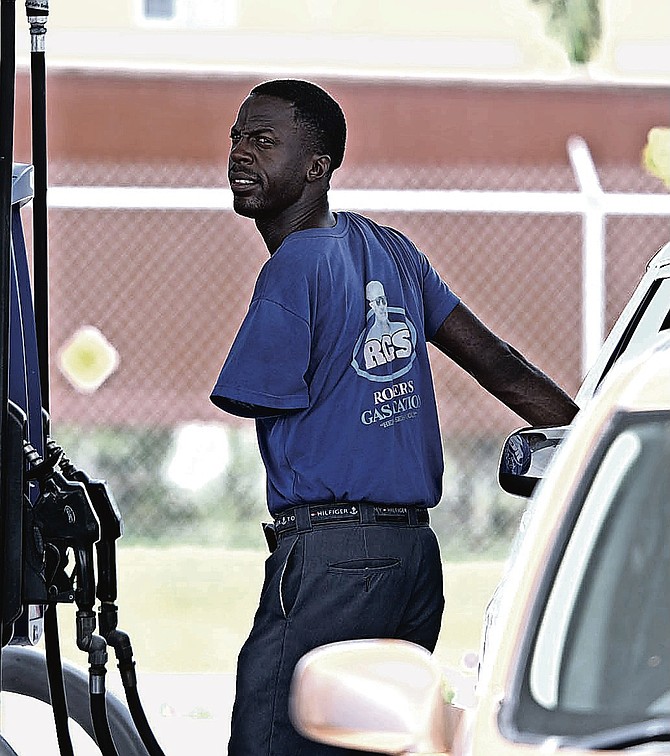
    For 29-year-old Francent Yoth, life has never handed him an easy path. Born with a congenital limb difference that left him with only one functional arm, he has spent his entire adulthood carving out stability through relentless hard work, bouncing between entry-level roles since graduating high school. Today, he serves customers daily as a pump attendant at Roker’s Gas Station, located on Nassau’s Faith Avenue in The Bahamas.

    Last week, a candid photo of Yoth going about his shift captured the hearts of social media users across the region, quickly going viral. Thousands of commenters flooded the original post to praise his quiet resilience, friendly customer service, and unwavering commitment to earning an honest living.

    When a Tribune reporter visited the gas station earlier this week, Yoth moved efficiently between fuel pumps, greeting every customer with a warm smile. At first glance, he blends seamlessly into the rhythm of the busy refueling stop, just like any other member of the local workforce. It is only when he turns that the empty pinned sleeve on his right shoulder reveals the lifelong set of challenges he has learned to overcome.

    Born in Haiti, Yoth relocated to The Bahamas with his family when he was 8 years old, entering a new school system already grappling with how to navigate being visibly different from societal norms. While most new students only worried about making friends, Yoth learned early how to respond to insensitive comments and bullying from peers.

    A graduate of CC Sweeting Senior High School, Yoth described his school years as a mix of highs and lows. “Like every place, you meet people who are kind,” he shared, noting that other peers often chose to make unkind remarks about his disability. He credits his close friends and supportive teachers for stepping in to defend him from bullies during those formative years.

    After graduating high school, Yoth held a string of entry-level jobs, including a role at a local auto parts retail shop. Over the years, he has faced repeated employment discrimination, with multiple employers turning him away based on his disability. Rather than growing bitter, Yoth chooses to focus on the employers who saw his determination instead of his difference. “I’ve had people that give me the job due to my determination and their compassion of seeing me trying to persevere,” he explained. “They were kind enough to give me a chance to do better for myself.”

    Yoth landed his current role in December 2025, after a close friend sent him an email alerting him to the open position. Today, he counts daily interaction with customers as one of his favorite parts of the job, and says many regulars have gone out of their way to encourage him. He calls last week’s unexpected viral social media attention one of the biggest highlights of his career.

    “It’s a positive thing to see yourself out there — not putting yourself out there, but someone saw me and they were compassionate and thoughtful to write something positive,” he said. “I didn’t know the person but thank God that they saw me doing my job, and they wrote it about me. The thing about social media, it can make or break you, and this time it turned into something good.”

    For other disabled people struggling to secure stable employment, Yoth has a simple message: every job comes with hurdles, and the hard work will pay off eventually. He urged people facing similar barriers to stay encouraged, emphasizing that “there is light at the end of the tunnel.”

    For Yoth, his disability has shaped his perspective rather than defined his potential. “There’s beauty in diversity, so in some ways, it helped me to persevere more because of my disability,” he said. “Some days I feel like, what if I had been born with two hands. But I can’t change it, that’s the way God intended for it to be done. So, I have to get through life.” He closed by expressing deep gratitude to the management of Roker’s Gas Station for trusting him with the role and giving him the opportunity to build a better life for himself.

  • Family of Abaco man missing two weeks appeal to the public for help

    Family of Abaco man missing two weeks appeal to the public for help

    For nearly a month, the relatives of a missing Abaco native have turned to the local community and social media for answers, after the 60-something truck driver vanished without a trace following a routine workday. Jean Honoret, an experienced truck driver in his early 60s, was last spotted on June 9, when he checked in for his scheduled shift but never made it back to his residence, according to close family members.

    Wilfred Toussaint, Honoret’s cousin who has shared an unusually close bond with him for years, described their daily routine of checking in with one another, multiple times a day in most cases. The pair spoke the day before Honoret disappeared, and Toussaint said nothing seemed off or alarming during their casual conversation, which unfolded just like any other. “We live like brothers,” Toussaint shared in an interview. “Every morning we check in, ask how the other is doing, what’s going on. We even crack a few jokes. By 5:30 every day, one of us always calls the other to make sure everything is okay.”

    It was that broken routine that first raised Toussaint’s alarm: when he did not hear from Honoret at their usual time the next day, he knew something was wrong. Toussaint, who currently resides in New Providence, told reporters he has no clear idea what could have happened to his cousin. “I don’t know if he’s still alive, or if someone hurt him. I really don’t have any answers,” he said, but added that the entire family is still clinging to hope that Honoret will be found safe.

    As the search drags on without official updates, local residents have taken to sharing posts across social media platforms, asking anyone with even small scraps of information about Honoret’s whereabouts to come forward. Toussaint also shared one key detail that has added to the family’s uncertainty: he later learned that a woman who claims Honoret owes her money showed up at his home looking for him shortly after he went missing.

    Toussaint confirmed he is making plans to travel to Abaco in the coming days to join the search for answers personally. When contacted by The Tribune, Chief Superintendent Michael Thurston, the top-ranking police official overseeing Abaco, confirmed that as of the outlet’s latest inquiry, Honoret’s family had not yet filed an official missing person report with local law enforcement.

  • Comments

    Comments

    Amid growing public calls for greater transparency around convicted sex offenders in The Bahamas, the leader of the country’s leading anti-violence advocacy organization is pushing back against opening the national Sexual Offenders Register to general public access, warning that such a move in this small island nation would backfire, fuel violent vigilante action, undermine official monitoring efforts, and ultimately fail to deliver on its core goal of protecting children.

    Sandra Dean-Patterson, director of the Crisis Centre – one of the earliest and most vocal supporters of creating the registry – made her position clear in new comments responding to a recent public incident that reignited debate over access rules. The debate flared after an Eyewitness News report featured a local mother who claimed a convicted paedophile was targeting her 10-year-old child. The mother said she had reported her concerns to police, only to be told that officers could not take action because she had not caught the suspect acting illegally.

    Dean-Patterson emphasized that her organization has long advocated for the creation of a formal sexual offenders registry, driven by alarming rises in reported child sexual abuse and exploitation across The Bahamas. The Crisis Centre’s core priority, she said, has always been to gain clear insight into the scope of child victimization and build a structured framework to address the crisis. Established under the 2014 Sexual Offenders Amendment Act and officially brought into force in July 2019, the registry represented a long-sought policy win for the advocacy group. In 2022, the government advanced the system further by digitizing records, launching a dedicated access kiosk at the Wulff Road Police Station, and activating a fully staffed management unit within the Bahamas Department of Correctional Services, which has overseen the registry since July 2021. Under current rules, all offenders sentenced after the 2019 enforcement date are required to register their residential address within 72 hours of release, and notify authorities immediately of any changes of address or travel lasting more than seven days.

    Despite the Crisis Centre’s full support for the registry itself, Dean-Patterson said the organization remains firmly opposed to opening the database to the general public. She stressed that The Bahamas’ small population and geographic size sets it apart from larger nations with public registries such as the United States and the United Kingdom, where public identification does not always produce the desired protective outcomes. Instead, access should be strictly limited to official agencies with a direct mandate for child protection and offender monitoring: the national police force, social services, and the correctional and prison system.

    Drawing on case studies from larger jurisdictions, Dean-Patterson noted that public access has repeatedly led to unintended harmful consequences. In parts of the U.S. such as Miami, for example, strict residency restrictions barring registered sex offenders from living near schools, parks, and other public spaces have pushed offenders into unregulated, isolated areas that make consistent monitoring far harder for authorities. Dean-Patterson also highlighted that vigilante violence and retaliation against offenders are well-documented outcomes of public registries in other countries, outcomes that she said would disrupt rehabilitation and monitoring work in The Bahamas. National Security Minister Wayne Munroe echoed this risk in 2022, noting that courts in some jurisdictions have removed offenders from registries entirely when public retaliation has been documented, eroding the system’s overall effectiveness.

    Under the current restricted model, Dean-Patterson explained, the burden of monitoring released offenders falls directly to trained, mandated officials, who are tasked with implementing appropriate public safety measures as soon as an offender is released from custody. She acknowledged, however, that this framework relies on one critical factor: public trust in the government agencies tasked with managing the system. Dean-Patterson admitted that public confidence in the ability of authorities to protect children from repeat offenders is not as strong as it needs to be, and that the debate over access rules will need to continue as the country works to address child sexual violence. She ended by reaffirming the Crisis Centre’s unwavering opposition to all forms of child violation, saying the organization will remain vocal and firm in its commitment to ending child abuse across the archipelago.

  • Police disperse ANPA protest with tear gas near National Palace

    Police disperse ANPA protest with tear gas near National Palace

    On Wednesday in Santo Domingo, a peaceful demonstration organized by agricultural workers seeking improved working conditions for the nation’s rural sector ended in chaos when the Dominican National Police deployed tear gas to break up the crowd before it reached the National Palace.

    The mobilization was coordinated by the National Association of Agricultural Professionals (ANPA), which had planned a deliberate, orderly route starting at Independence Park and ending at the seat of government to deliver their demands to national authorities. What was intended as a peaceful expression of long-unmet grievances was cut short when security forces intervened with chemical irritants, scattering the assembled crowd before it could complete its journey.

    ANPA’s members have spent years pushing for three core changes: meaningful salary increases, enhanced pension benefits, and updated labor protections that reflect the critical contribution agricultural professionals make to the Dominican economy. Association leaders say none of these long-standing requests have received a formal, adequate response from the government. During the police intervention, Tito Hernández, the president of ANPA, was directly exposed to tear gas, requiring emergency assistance from fellow demonstrators before being transported to a local medical facility for evaluation and care.

    Protest participants voiced deep anger and alarm over the law enforcement response, noting that a large share of ANPA’s membership consists of veteran professionals, many of whom are over the age of 60 and live with pre-existing chronic health conditions. For this vulnerable group, exposure to tear gas poses far more severe health risks than it would for younger demonstrators. Organizers also emphasized that they had properly notified the Ministry of Interior and Police of the march’s route and peaceful intent ahead of time, maintaining that Dominican law only requires notification rather than formal government permission for public demonstrations.

    Despite the aggressive police response and Wednesday’s disruption, ANPA leaders have made clear their campaign is far from over. The association has warned that protests will resume in the coming days, and could ramp up in intensity if the government continues to ignore their demands. Leaders stressed that they are fully prepared to hold daily mobilizations across the country if that is what it takes to secure long-overdue improvements for agricultural professionals nationwide.

  • Dominican Republic to have more seniors than children by 2050, ONE projects

    Dominican Republic to have more seniors than children by 2050, ONE projects

    New long-term demographic projections released by the Dominican Republic’s National Statistics Office (ONE) paint a clear picture of sweeping population transformation underway in the Caribbean nation, driven by rising life expectancy, plummeting birth rates, and rapid population aging over the coming decades.

    Developed in partnership with the Latin American and Caribbean Demographic Centre (CELADE), which provided specialized technical support for the analysis, the projections outline dramatic shifts in key demographic indicators through the end of the 21st century. According to the study, average life expectancy at birth is on track to jump from 75.7 years in 2026 to 91.5 years by 2100, a gain of more than 15 years that reflects improvements in public health, medical care, and quality of life across the country.

    At the same time, fertility rates will remain well below the 2.1 replacement level required to sustain a stable population without immigration. The report projects that the average number of children per woman will fall from 1.97 in 2026 to roughly 1.7 in the coming decades, a decline that will reshape the country’s age structure dramatically. The national average age is expected to climb from 32.9 years in 2026 to 51.6 years by 2100, making the Dominican Republic’s population one of the oldest in the Latin American and Caribbean region by the end of the century.

    One of the most notable milestones highlighted in the analysis is set to arrive mid-century: by 2050, the Dominican Republic will record more residents aged 65 and older than people under 15, marking the first time this demographic shift has occurred in the nation’s history. The share of seniors in the total population is projected to triple over the next 77 years, rising from 9% today to 17% in 2050 and hitting 36% by 2100. Meanwhile, the proportion of children and young adolescents will continue a steady decline that has been underway for the past two decades.

    Total population size will follow a different trajectory: growth is expected to continue through the 2070s, when the national population will hit a peak before entering a gradual decline that brings it down to roughly 11.9 million inhabitants by 2100. Beyond the core trends of aging and falling fertility, the projections also point to other positive demographic shifts, including a continued drop in adolescent fertility rates and slowing overall population growth.

    Notably, the analysis identifies an ongoing “demographic window of opportunity” that will remain open through roughly 2065, driven by a relatively low dependency ratio – the proportion of non-working age residents that working-age populations must support. ONE officials emphasized that the new projections are far more than an academic exercise: the data will serve as a critical foundation for shaping long-term public policy across sectors, from healthcare and pension systems to housing and education, as the country prepares to address the far-reaching economic and social impacts of its rapidly aging population.