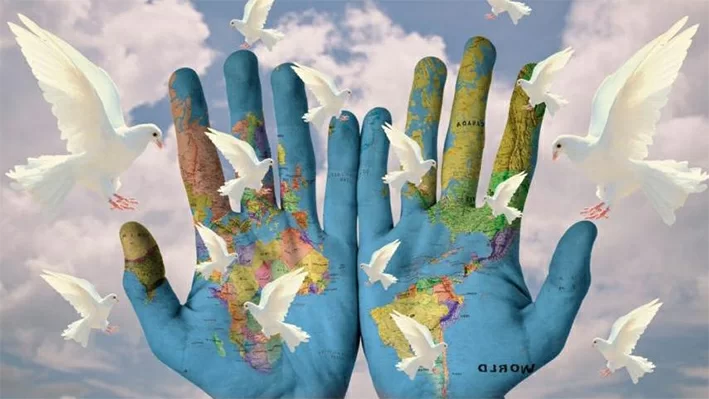
September 21 marks the annual International Day of Peace, a global observance where communities, leaders and citizens across the world come together to deliver speeches, raise symbols of unity, and issue public statements reaffirming their shared commitment to peace. We often claim peace is one of our core values, so important that we have set aside an entire dedicated day to honor it. But how often do our actions match these grand words?
Even as speeches echoing across auditoriums and public squares today, many of us carry small, daily actions that undermine the very peace we claim to celebrate: quarrels with a neighbor over a boundary fence, judgment of a colleague for their different appearance or background, angry outbursts over minor traffic inconveniences, sharing divisive online content that targets and dehumanizes others, and staying silent when injustice demands we speak up. Preaching peace on a global stage is simple. Living peace in our daily lives is an entirely different, far more challenging practice.
Perhaps it is long past time we reexamined what peace actually means. For many, peace is defined only as the absence of large-scale war between nations. For others, it means basic security: a roof over one’s head, consistent food on the table, and safety walking home at night. For many more, peace is far smaller, more intimate: an evening free of persistent worry, a conversation free of blame and resentment, a quiet mind unburdened by constant stress and conflict.
Peace is not some lofty, abstract state that only exists between world leaders in international summits. It starts small. It starts with each of us, as individuals.
Inner peace is arguably the most underrated form of peace. A person who has found calm and balance within themselves carries that calm out into the world around them. They do not need to scream to be heard. They can listen to different perspectives without jumping to unfair judgment. They do not spread chaos and anger; they spread calm and perspective. This effect ripples outward, too. A person at peace with themselves passes that peace to their family, their friends, the strangers they interact with on the street. It is contagious, in the best possible way. Unfortunately, the opposite is just as true: unrest, frustration and distrust spread just as quickly through communities.
Building peace in our personal lives does not require every part of life to be perfect. It means learning to adapt to and handle the imperfections that are inevitable. It means choosing to address conflict head-on, rather than avoiding it or trying to destroy the other person to win. It means holding our own convictions while still respecting other people’s right to their own differing views.
Peace in our local communities means showing up for the people around us: the lonely neighbor living down the street, the young person struggling with unemployment or mental health, the colleague navigating a hard personal season. More often than not, peace only requires pausing for one minute and asking a simple question: “Are you okay?”
This reflection on peace hits especially close to home here in Suriname, a nation built by generations of people from vastly different roots, languages, faiths and cultural traditions: Creoles, Hindustanis, Javanese, Maroons, Indigenous peoples, Chinese, Lebanese and many more communities have built this country together. Of course, coexistence is not always smooth. There are still tensions, persistent prejudices, and occasional distrust between groups. But at the end of the day, we have built a remarkably peaceful shared life here. That is no accident. It is the product of generations of ordinary people who chose day after day to learn to tolerate, respect, and ultimately value one another’s differences.
We have a duty to cherish this hard-won peace, and most importantly, to keep building on it. As long as we only see each other as members of separate ethnic or cultural groups, we sell ourselves and our nation short. The true strength and wealth of Suriname comes from seeing each other first and foremost as Surinamers. This unity is not built on erasing our differences; it is built on embracing those differences while still choosing to move forward together. Look at the young people growing up here today: they play together, learn together, dream together. Why would we force on them the rigid, divisive social boxes that we have carried for generations?
On a day dedicated to global peace, it is entirely right to dream of a world free of war and division. But we must not forget that global peace does not start in a United Nations conference room in New York or a diplomatic meeting hall in Geneva. It starts at the kitchen table, in a school classroom, on the city bus, in the office, in the aisle of the local supermarket.
Peace is not some far-off destination we reach after decades of global negotiation. It is a small, daily choice each of us makes.
So today, yes, let us talk about peace. But more importantly, let us match our words with action. We do not need grand gestures; we only need small, consistent choices. Choose not to yell back when someone snaps at you. Choose to really listen when someone shares a different view. Choose to stay silent instead of adding fuel to a growing conflict.
Because peace does not start on a stage, at a podium, or in an international treaty. It starts with you. And it starts with me.