分类: society

  • The law relating to changing a woman’s name

    The law relating to changing a woman’s name

    A soon-to-be-married woman in Jamaica recently reached out to prominent Jamaican women’s rights advocate and senior attorney Margarette May Macaulay with a pressing legal question, sparked by conflicting guidance from her wedding officiant and her married boss. The woman explained that her boss, who recently wed, had chosen to combine her maiden name with her husband’s surname without using a hyphen – a choice that let her avoid the hassle of reissuing all her official identity documents, from driver’s licenses and passports to tax registration numbers. Eager to follow this same path ahead of her own wedding, the woman hit an unexpected roadblock when her counsellor, who also serves as the pastor officiating her marriage, insisted that combining two last names without a hyphen is not legally recognized in Jamaica, and refused to accommodate her stated wish.

    In a clear, authoritative response published for the public, Macaulay immediately debunked the pastor’s claim as entirely incorrect. Under Jamaican law, which follows common law principles that remain unchanged by national legislation on this issue, Macaulay confirmed that every woman marrying in Jamaica holds full, exclusive legal right to choose how she structures her surname after marriage. This includes four fully valid options: retaining only her original maiden name, adopting solely her husband’s surname, adding her husband’s surname to her own with a hyphen, or adding the husband’s surname without a hyphen. All of these choices are equally legally binding, the attorney emphasized.

    Macaulay further clarified that the long-standing social tradition of women automatically adopting their husband’s full surname was never a legal requirement. Instead, it was a cultural norm rooted in historical systems that suppressed the rights of married women, a practice that has been rendered obsolete as fundamental human rights principles have become the global and national standard. Nowhere in Jamaica’s Marriage Act is there any mandate requiring a married woman to change her surname at all, nor any rule that forces women to hyphenate combined surnames. The question of what name a woman uses for her legal identity after marriage is solely her decision, Macaulay stressed, and all public and private institutions – from government agencies to schools, hospitals, and commercial entities – are legally required to honor that choice. Any person or organization that denies a woman this right is acting unlawfully, violating her fundamental legal autonomy.

    For women who have already been forced into an unwanted surname arrangement due to similar misinformation, Macaulay outlined a clear remedy: the woman can legally adjust her name through a deed poll process. If the pastor’s incorrect legal guidance led to this unnecessary extra step, Macaulay noted, the pastor who spread the wrong information is responsible for covering all associated costs, including the deed poll fee and any charges for updating identity documents.

    Macaulay closed by emphasizing that this legal right extends to all women, whether they are about to marry or have been married for years. No individual, regardless of their social standing or professional authority, has the right to dictate a woman’s choice of surname. Once a woman begins using the combined or single surname she selected immediately after her wedding, that becomes her legal identity for life, unless she chooses to make a further change down the line. She also urged the woman to share this clarification with her pastor, to prevent him from spreading misinformation and violating the rights of other future brides in the future.

    This response was published via the All Woman advice column of the Jamaica Observer, where Macaulay answers public legal questions focused on women’s rights. Macaulay, a veteran attorney, is also a Supreme Court mediator, notary public, and longstanding advocate for women’s and children’s rights in Jamaica.

  • Bartlett excited by launch of UWI’s Research Support Fund

    Bartlett excited by launch of UWI’s Research Support Fund

    Jamaica has launched a landmark JMD 100 million Research Support Fund for the Faculty of Medical Sciences (FMS) at The University of the West Indies (UWI) Mona Campus, with government officials framing the initiative as a critical intersection of medical progress, public confidence and national economic growth.

    Speaking as the keynote speaker at the launch event held last Tuesday in St. Andrew, Tourism Minister Edmund Bartlett argued that the fund is far more than a simple injection of capital into academic research. For Jamaica, whose economy relies heavily on tourism as a primary engine of growth, the initiative opens new pathways for aligned development across health science and the travel sector, he said.

    “This represents a launch of possibility, signaling a deeper bond between scientific advancement, societal well-being and the country’s long-term economic future — especially through the lens of tourism,” Bartlett emphasized during his address.

    The minister positioned the new fund within a broader national “tourism, health and resilience” strategy, noting that the sustainability of Jamaica’s $3 billion-plus tourism industry hinges entirely on public trust. Unlike common perceptions that frame tourism as only driven by scenic beauty and cultural attractions, Bartlett pointed out that modern travelers prioritize assurance of safety, stability and proactive health preparedness when choosing destinations.

    “Tourism is not merely about movement of people across borders — it is about confidence,” Bartlett said. “Trust is the decisive factor that drives travel decisions, attracts foreign investment and encourages visitors to return year after year.”

    That foundational trust, he explained, can only be built on a robust public health system, cutting-edge local research capacity and a proven ability to respond rapidly to emerging public health crises. Bartlett defined tourism health resilience as a nation’s ability to anticipate, detect and mitigate health threats without derailing economic stability, a mandate that extends beyond clinical care to protecting tourism workers, supporting resort-dependent communities, and upholding strict standards for food safety, water quality and public sanitation.

    To turn this vision into reality, Bartlett called on FMS and the affiliated University Hospital of the West Indies to take a leading role in strengthening Jamaica’s national destination assurance framework. Medical researchers and clinical professionals, he noted, are the unsung guardians of Jamaica’s global reputation as a safe, welcoming travel destination.

    Demonstrating the Jamaican government’s commitment to the initiative, the Tourism Enhancement Fund (TEF) has contributed JMD 10 million to the overall research fund. The National Health Fund (NHF) has added JMD 35.4 million to the pot, earmarked specifically for advancing research into mental health and maternal health outcomes. Additional funding is expected to come from private sector and institutional partners in the coming months.

    Looking ahead, Bartlett laid out an ambitious vision for UWI Mona to grow into a central pillar of Jamaica’s national health security architecture. His vision includes expanded access to telemedicine for rural and underserved communities, more coordinated emergency response systems, and greater integration of artificial intelligence into clinical care and public health monitoring. He also called for the fund to be used to support ground-breaking interdisciplinary research that connects medical science, tourism policy, data governance and AI ethics, creating a model that can be replicated across small island developing states.

    Through all these efforts, Bartlett stressed, protecting the health of both international visitors and Jamaican citizens remains the core mission — one that is inseparable from sustaining the country’s tourism industry and delivering inclusive long-term national development.

  • 5 things to consider before you marry a younger man

    5 things to consider before you marry a younger man

    Age-gap relationships between older women and younger men remain a largely unspoken but widely experienced reality for women across the world — one that often sparks quiet curiosity, unvoiced anxiety, and unsolicited outside judgment. Certified life coach and women’s empowerment advocate Marie Berbick-Bailey, who once walked this path herself, draws on personal experience and decades of coaching work to lay out a clear, honest framework for women navigating this high-stakes decision. Years ago, Berbick-Bailey turned down a marriage proposal from a much younger man she shared deep spiritual and personal connection with. Though the pair clicked on multiple levels and felt clear physical chemistry, she walked away after recognizing a fundamental incompatibility: he wanted children, and she had already completed her family. Choosing to prioritize his right to the life he wanted, she made the difficult decision to end the relationship. Today, she guides other women facing a similar crossroads. Many women find themselves unexpectedly falling for a younger man: one who is kind, present, emotionally open, everything they have been looking for. But the discovery of a significant age gap immediately floods the relationship with unasked questions — and societal judgment never fails to insert itself into the dynamic, uninvited. Before allowing outside opinions, fear, or giddy excitement to dictate a decision to marry, Berbick-Bailey outlines five non-negotiable areas women must evaluate first. First, emotional maturity cannot be judged by chronological age. It is not uncommon to see older men act with childish impulsivity while younger men lead with a wisdom far beyond their years. The real question women need to answer is whether their partner can handle the hard edges of life: how does he respond to conflict, stress, and unplanned responsibility? Can he communicate openly during hardship, or does he shut down and withdraw? Marriage will always test a relationship, and a partner needs the emotional capacity to hold steady rather than collapse under pressure. Second, alignment on children is non-negotiable, a foundational pillar of any lasting marriage. Women must ask clear, direct questions early on: does he already have children? Does he want children in the future? If he does, what is his desired timeline for growing a family? For women who are past the childbearing stage biologically or emotionally, this conversation cannot be put off or brushed aside in the name of love. Too many women enter marriage assuming love will bridge this divide, only to find themselves trapped in a painful, irresolvable disagreement years down the line. Alignment on this issue is not a bonus — it is an absolute requirement. Third, financial stability and mindset matter for any partnership, especially when there is an age gap. It is reasonable for a younger man to still be building his career, but he must have clear direction rather than drifting through life. Women need to examine his relationship with money: does he budget, save, and invest for the future, or does he spend recklessly as if there is no need to plan for tomorrow? Marriage requires a true partnership, not a dynamic where one partner carries all the financial responsibility while the other remains dependent. Fourth, shared long-term vision is critical to avoiding future conflict. Women should ask their partners to outline concrete plans, not just vague dreams, for where they see themselves in five to 10 years: what are their career goals, lifestyle priorities, and personal development targets? After hearing his vision, women must honestly ask whether it aligns with their own. If one partner is ready for quiet stability and the other is still chasing new experiences and exploring different life paths, that gap will inevitably grow into tension over time. Love alone cannot sustain a relationship where two people are moving in opposite directions. Fifth, women must honestly assess their own ability to push back against societal perception and stand confident in their choice. It is impossible to ignore that people will comment: there will be whispers labeling the older woman a “cougar”, rude jokes about the age gap, and endless unsolicited advice from people who have no stake in the woman’s happiness. The problem is not the comments themselves — it is whether the woman feels secure enough in her own choice to ignore them. Constantly having to defend one’s relationship to outsiders is an exhausting burden that will erode even the strongest connection over time. One question women almost always want answered but rarely ask aloud is: how much younger is “too young”? Berbick-Bailey says there is no universal one-size-fits-all answer, but offers clear wisdom: the wider the age gap, the greater the need for full alignment on core values, emotional maturity, and current life stage. A five-year gap will create very different practical and social challenges than a 15-year gap, and women must evaluate not just where both partners are today, but where they will be in 10 and 20 years down the line. Berbick-Bailey’s final counsel is straightforward: do not let flattery or excitement push you into a decision you have not carefully considered. It is true that a younger man’s attention can feel refreshing: he often sees a woman’s value, celebrates her, and brings renewed energy to the relationship. But that thrill should never override a careful assessment of core compatibility. Marriage is not held together by physical attraction alone. It lasts because of alignment on core priorities, emotional maturity, shared values, and matching long-term vision. A younger man can absolutely be the right life partner — but only if he is truly ready to be a husband, not just caught up in the excitement of new love. Ultimately, women are encouraged to choose wisely, not just emotionally. Marie Berbick-Bailey is a certified master life coach, women’s transformational coach, ordained minister, author, and motivational speaker dedicated to empowering women to heal, thrive, and live out their personal purpose. She can be reached through her websites www.marieberbick.com and www.marieberbickcoach.com, or via email at marieberbick@gmail.com.

  • Commissioner urges Jamaicans to de-escalate conflicts amid violent encounters

    Commissioner urges Jamaicans to de-escalate conflicts amid violent encounters

    KINGSTON, Jamaica — As violent clashes continue to claim lives across the island nation, Jamaica’s top law enforcement leader is pushing for collective action from citizens, while doubling down on the police force’s official commitment to reducing tension during public interactions. In his weekly address published as a newspaper column, Police Commissioner Dr. Kevin Blake sounded the alarm over a recent string of fatal violent incidents that have shaken communities across the country.

    “Unfortunately, we continue to see a number of violent confrontations where some have resulted in lives being lost,” Blake shared in the column, opening with a candid reflection on the current state of violent encounters between police, criminals and members of the public. The commissioner made explicit that the core mission of the Jamaica Constabulary Force (JCF) in every interaction with the public, particularly high-stakes confrontations, is to defuse tension before it escalates into harm.

    “Our main objective in any confrontation involving ourselves and the public is to de-escalate,” he emphasized. Beyond outlining the force’s internal protocols, Blake extended a urgent public appeal to all law-abiding Jamaicans to take shared responsibility for preventing unnecessary deaths. He asked residents to join law enforcement in urging the violent offenders that officers target on a daily basis to avoid resorting to deadly force during encounters with police.

    Blake stressed that fatal outcomes are never the intended goal of JCF operations, pushing back against any narrative that frames lethal shootings as an acceptable end to police work. “Fatal shootings do not benefit anyone. It is never a desired end state,” he added. The commissioner also highlighted that internal discipline within the force is a non-negotiable pillar of the JCF’s approach, noting that every serving officer is required to operate within the force’s established operating guidelines at all times.

    “In addition to our obligation under the use of force policy, I expect every single member to exercise discipline of self,” Blake said. For the JCF, centering de-escalation tactics, professional conduct, and unwavering adherence to the rule of law remains central to its broader strategy to cut down on violent crime and protect both citizens and officers across Jamaica.

  • Wellness drive brings free health checks to St Andrew South police

    Wellness drive brings free health checks to St Andrew South police

    Jamaica’s frontline law enforcement officers, who daily put themselves in harm’s way to protect communities, are receiving targeted support to prioritize their physical and mental well-being through a new outreach initiative. Last Wednesday, active officers and their family members serving in the Jamaica Constabulary Force (JCF) St Andrew South Police Division gained access to comprehensive free health screenings at the Hunt’s Bay Police Station, designed to address the unique chronic stress and occupational hazards that come with policing work.

    Senior Superintendent Damian Manderson, head of the St Andrew South Division, emphasized that officers and civilian staff are the division’s most valuable resource, outranking any operational equipment or infrastructure. “Our human resources, our men and women you see standing at the traffic lights, conducting operations, driving and going about, they are our greatest asset, no matter how expensive the van they are driving is. This is a part of investing in them. It is a part of ensuring they are well,” Manderson told local outlet Jamaica Observer in an interview Friday.

    The initiative brings medical care directly to personnel to eliminate barriers to accessing routine check-ups, with built-in plans for follow-up care for any issues identified during screenings. “The push is to ensure their well-being by bringing in these doctors at their fingertips, at their beck and call so that they can get due care — and coming out of these visits come the follow-ups,” Manderson explained.

    St Andrew South Division operates in one of Jamaica’s more violence-impacted policing districts: between January 1 and April 20, 2025, the division recorded 18 of the island’s 174 total murders, marking the second-highest murder count across Jamaica’s 19 police divisions, trailing only St James Division which logged 22 murders in the same period. This high-crime environment places extraordinary physical and emotional strain on personnel, leading division leadership to roll out holistic support beyond just medical care.

    Earlier in the same week, the division hosted financial advisors from the police credit union to help personnel build long-term financial stability, covering critical topics such as budgeting amid economic uncertainty, retirement planning, caring for aging dependent family members, and the importance of adequate insurance coverage. “It is a part of our thrust as a management body to ensure that our staff, whilst they work, they are working with clear, competent, healthy minds and spirit, putting everything in it, and that is what will translate on the streets with a safer division,” Manderson said.

    He noted that policing is an inherently high-risk occupation worldwide, requiring officers to place themselves between violent criminals and law-abiding community members, leading to persistent high stress and emotional tension. “It is not just good enough for them to show up, they must show up physically and mentally. We take mental health serious,” Manderson added, highlighting that good mental health is a non-negotiable foundation for effective, safe policing.

    The wellness drive has been made possible through long-standing partnerships with volunteer medical professionals, including Dr Nagamalleswara Rao Chandolu, as well as the JCF’s in-house medical services branch, which provides ongoing support for officer and family well-being. Wednesday’s health fair is the first of two such free events planned for the St Andrew South Division in 2025, open to all sworn officers and unsworn civilian staff, plus their immediate families. Multiple medical specialists participated, including general practitioners, surgeons, pediatricians, and physiotherapists, to address a wide range of health concerns. All services, including complimentary vitamins, minerals, and medication prescriptions, were provided at no cost to attendees.

  • ITA says eFitness processing at service hubs temporarily disrupted

    ITA says eFitness processing at service hubs temporarily disrupted

    KINGSTON, Jamaica — Vehicle owners and road users across Jamaica are facing temporary service disruptions after the Island Traffic Authority (ITA) confirmed widespread technical failures in its core fitness management infrastructure. In an official public advisory issued Wednesday, the state traffic regulator announced that its central Fitness Management System (FMS) has been encountering unplanned technical glitches that have halted key digital services.

    The outage has paused all processing of the ITA’s popular eFitness service at every one of the authority’s regional service hubs across the island. Beyond processing delays, the problem has also spilled over into the authority’s Certificate Generation and Distribution System (CGDS), blocking staff from accessing and printing required Certificates of Fitness for motor vehicles. These certificates are a mandatory legal requirement for all road-registered vehicles in Jamaica, confirming they meet minimum safety and emissions standards to operate on public roads.

    The ITA moved quickly to acknowledge the disruption, expressing sincere regret for the inconvenience caused to motorists who had planned to complete fitness inspections or collect their completed certification documents this week. The authority also moved to reassure the public that the organization’s third-party technical service provider has deployed a dedicated troubleshooting team to diagnose and resolve the issue as rapidly as possible. No estimated timeline for full service restoration has been released as of yet, with the ITA indicating it will issue a follow-up advisory once systems are fully back online.

  • CVSS to strengthen western Jamaica’s civil society with three-day training workshop

    CVSS to strengthen western Jamaica’s civil society with three-day training workshop

    KINGSTON, Jamaica — Jamaica’s peak civil society coordinating body, the Council of Voluntary Social Services (CVSS), has kicked off a three-day targeted training workshop series for civil society organizations (CSOs) across the country’s western region, running from May 12 to 14. Centered on the theme “From Idea to Impact – The Project Cycle,” the initiative is crafted to address longstanding operational gaps among community-focused groups.

    Funded through the European Union’s AIM Programme, this intensive capacity-building effort aims to elevate the role of local community-based organizations (CBOs) and non-governmental organizations (NGOs) as effective drivers of inclusive governance and national development, CVSS outlined in an official public statement.

    CVSS Executive Director Nancy Pinchas explained that the workshop curriculum was not developed arbitrarily. Following months of widespread consultations with CSOs across western Jamaica and systematic needs assessments, the training series was customized to directly tackle the most pressing capacity gaps that local organizations identified: weaknesses in project design, end-to-end management, and regulatory accountability.

    The workshop is structured into four hands-on, interactive sessions, each led by a seasoned industry specialist with deep roots in Jamaica’s non-profit sector. Social transformation expert Damion Hylton leads the session on Community Engagement and Prioritization, which focuses on centering community voices in project planning. Monitoring, Evaluation, and Learning (MEL) — a core competency for demonstrating impact — is facilitated by leading MEL specialist Zahra Miller. Seasoned non-profit advisor Sannia Laing Sutherland delivers a two-part deep dive into Project Proposal Writing, covering everything from aligning proposals to donor requirements to articulating clear community outcomes. Gender equity expert Carla Moore facilitates the “Gender and Human Rights: Change G.E.A.R.S.” session, which integrates inclusive practices into project design and delivery.

    Pinchas emphasized that every facilitator brings decades of on-the-ground experience in Jamaica’s civil society space, ensuring that learning outcomes are practical, context-specific, and focused on tangible results. She added that data collected from pre-training and post-training assessments of earlier workshop iterations held across the country confirm that participants leave with measurable gains in both technical knowledge and professional confidence across all core project management competencies.

    “ We see every day that CSOs across Jamaica have the passion and the creative ideas to transform the communities they serve, but too many lack the targeted technical support to turn those ideas into structured, sustainable initiatives that deliver long-term impact,” Pinchas said. “This training series exists to bridge that gap — it’s about equipping organizations with the practical tools they need to design robust projects, measure their social impact accurately, and uphold consistent accountability to the communities that rely on their work.”

    Looking ahead to upcoming regulatory changes for Jamaica’s non-profit sector, Pinchas noted that capacity-building initiatives like this are more critical than ever. As the country prepares to implement a new legislative framework for non-profits, these trainings ensure local organizations are prepared, operationally resilient, and well-positioned to make meaningful contributions to national development goals.

    This Montego Bay-based workshop series is part of CVSS’s ongoing commitment to decentralizing access to professional development, bringing critical training directly to grassroots organizations outside of the capital, Kingston. It builds on the success of similar training sessions held in Kingston earlier this year, and forms part of a broader national push to equip CSOs across all regions of Jamaica with the skills to design, implement, and sustain impactful initiatives that advance social inclusion, transparent governance, and community-level resilience.

    The workshop is scheduled to conclude on the afternoon of May 14, with a collaborative networking lunch that will include closing remarks, a celebration of participant achievements, and opportunities to build connections across western Jamaica’s civil society community. Beyond the core project management curriculum, the event also includes a dedicated discussion session on upcoming sector legislation, ahead of the planned rollout of Jamaica’s new Non-Profit Organisations (NPO) Act in October 2026.

    The proposed new legislation is designed to modernize the country’s outdated regulatory framework for non-profit groups. Once implemented, it will directly impact thousands of organizations across Jamaica that deliver essential services in areas including disaster response, social protection for vulnerable populations, and local community development.

  • Senator Isalean Phillip tables Saint Kitts and Nevis’ first-ever National Disability Policy

    Senator Isalean Phillip tables Saint Kitts and Nevis’ first-ever National Disability Policy

    Basseterre, Saint Kitts — In a landmark step toward building a more equitable, inclusive nation, the Government of Saint Kitts and Nevis has introduced its first ever national framework to advance the rights and quality of life for people living with disabilities across the federation.

    On April 30, 2026, Senator the Honourable Isalean Phillip, Minister of State with oversight for ageing and disability affairs, formally tabled the 2026–2030 National Disability Policy in the country’s Federal Parliament. The policy is a core component of the nation’s broader Sustainable Island State Agenda and aligns directly with priorities outlined in the National Development Planning Framework, rolling out a structured blueprint of guiding principles and actionable strategies to embed full inclusion for disabled people into every sector of national life.

    The new policy is anchored in 10 key imperatives that address longstanding gaps and systemic barriers facing disabled residents:
    1. **Removal of Environmental Barriers**: Mandates equal access to public spaces, transportation systems, information resources, and necessary assistive devices for all disabled people.
    2. **Education, Training and Lifelong Learning**: Guarantees equal access to educational opportunities and certification pathways for disabled students and adult learners.
    3. **Economic Inclusion and Financial Security**: Upholds the fundamental right of disabled people to secure employment, earn a living wage, and build long-term financial stability.
    4. **Public Awareness and the Attitudinal Barrier**: Integrates disability rights education into national school curricula and paves the way for a nationwide public awareness campaign to shift harmful societal attitudes.
    5. **Health and Wellness**: Builds a disability-inclusive health sector, ensuring equitable access to high-quality physical and mental healthcare services.
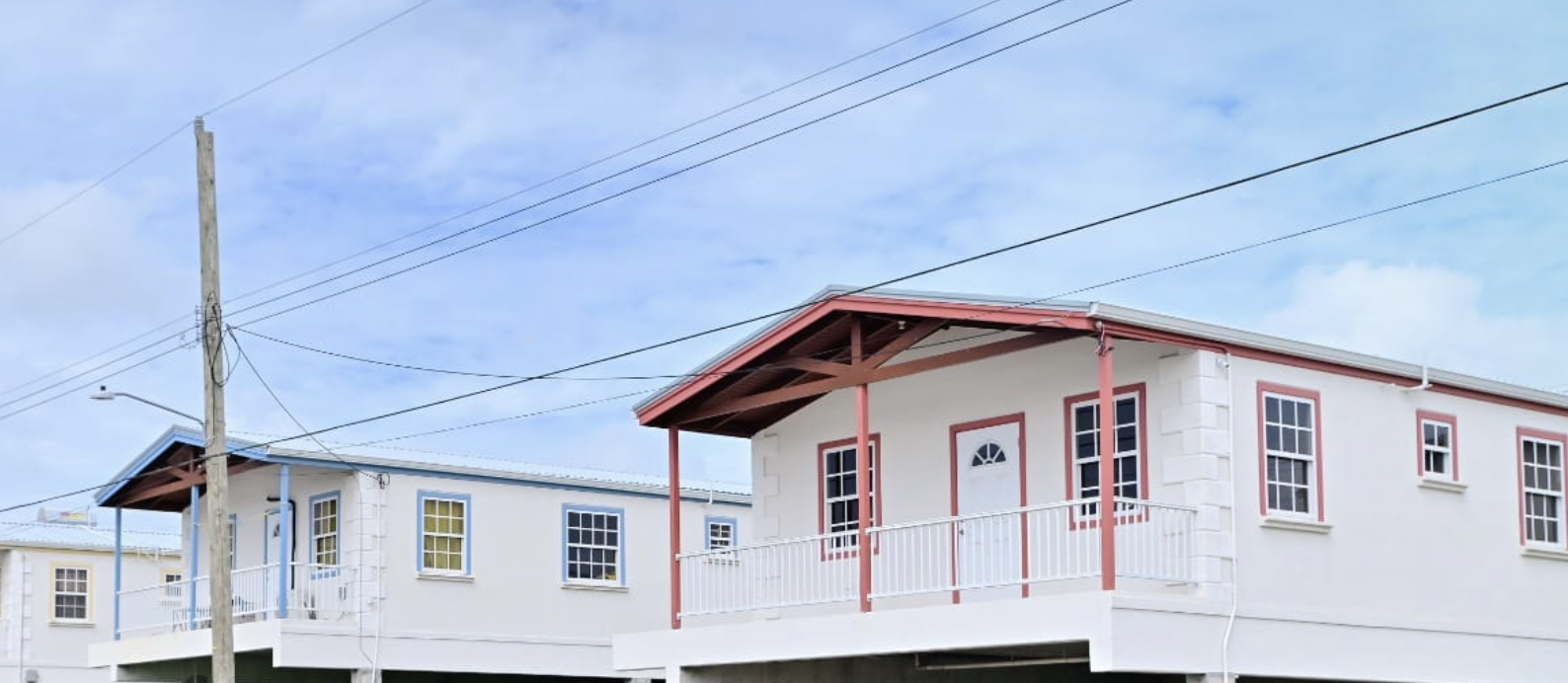
    6. **Inclusive Housing and Liveable Communities**: Establishes quotas for accessible public housing, introduces a home retrofit grant program, and requires accessibility upgrades for shared public spaces including emergency shelters, sports facilities, and community centers.
    7. **Social, Cultural and Public Participation**: Protects the right of disabled people to participate in cultural life, sports, civic processes including voting, and decision-making that impacts their communities and families.
    8. **Legal Capacity, Protection and Access to Justice**: Mandates a review of existing legislation and procedures to eliminate intentional and unintentional discrimination against disabled people, and creates a formal Disability Commission to receive and investigate reports of rights violations.
    9. **Disability Data and Research for Planning**: Implements structured collection and analysis of disaggregated disability data to enable ongoing monitoring and evaluation of policy outcomes.
    10. **Accountability Implementation and Governance**: Establishes a fully staffed National Disability Council with a dedicated secretariat to coordinate cross-sector policy rollout and enforce accountability for outcomes.

    In remarks following the tabling, Senator Phillip emphasized that the policy represents a clear, tangible demonstration of the federal government’s commitment to building a society that values every member, regardless of ability, and works actively to include all residents in national progress. For years, disability rights advocates in Saint Kitts and Nevis have pushed for a formal national strategy to address systemic exclusion, making this policy a long-awaited victory for inclusive governance in the small island nation.

  • The significance of the observance of Labour Day

    The significance of the observance of Labour Day

    International Workers’ Day, widely known as Labour Day or May Day, serves as more than just a public holiday—it is a global moment of reflection, recognition, and collective solidarity for working people everywhere. Rooted in the historic fight for fair working conditions, the annual observance honors the sacrifices of past generations of organizers, celebrates hard-won progress for workers, and keeps the urgent push for expanded labor rights at the center of public conversation. This year, as the world marks the occasion, the Caribbean nation of Barbados stands out for its decades of incremental, transformative progress in protecting and expanding worker protections.

    Over the past century, organized labor in Barbados has secured foundational rights that many workers now consider standard. Early 20th-century struggles delivered the 40-hour workweek and 8-hour workday, landmark gains that reshaped the balance of power between workers and employers. In the decades that followed, the labor movement expanded these wins to include guaranteed minimum wage, paid sick leave, annual vacation leave, maternity leave, and paid study leave. More recently, the nation has added new protections: paternity leave for new parents and unemployment benefits to support workers navigating job loss.

    This progress has been codified in a wave of progressive, worker-centered legislation passed over the last 13 years. Key reforms include the 2012 Safety and Health at Work Act and the 2012 Employment Rights Act, which laid out basic protections for all workers. The 2017–2021 Sexual Harassment (Prevention) Act created clear safeguards against workplace abuse, while the 2020 Employment (Prevention of Discrimination) Act banned unfair bias in hiring, promotion, and firing. Most recently, the nation passed the 2025 Family Leave Bill to further expand caregiving protections for workers.

    Complementing these legal reforms is the establishment of the Employment Rights Tribunal (ERT) in 2013, a specialized tripartite arbitration body designed to resolve employment disputes—most notably unfair dismissal claims—outside of the overburdened traditional court system. Operating under the voluntary framework that guides modern industrial relations practice, the ERT offers workers and employers a faster, more accessible path to conflict resolution, a win for all parties in the employment relationship.

    Barbados has also aligned its national labor standards with global best practices through its commitment to the International Labour Organization (ILO). As of June 2025, the Barbadian government has ratified all 10 of the ILO’s fundamental core conventions. These include the 1930 Forced Labour Convention (No. 29), the 1957 Abolition of Forced Labour Convention (No. 105), the 1948 Freedom of Association and Protection of the Right to Organise Convention (No. 87), and the 1949 Right to Organize and Collective Bargaining Convention (No. 98). Most recently, Barbados ratified the 1981 Occupational Safety and Health Convention (No. 155) on June 5, 2025, during the 113th International Labour Conference, alongside the 2006 Promotional Framework for Occupational Safety and Health Convention (No. 187).

    A groundbreaking new development for Barbadian workers came with the 2025 passage of the Caribbean Community (Free Movement of Nationals) Bill. The legislation unlocks new opportunities for labor mobility across all CARICOM member states, a fitting step forward given May Day’s deep roots in the Caribbean labor movement of the 1930s and 1940s. From its earliest days, the regional movement centered worker contributions to national development, and today’s milestone serves as a powerful reminder that every right currently enjoyed by Barbadian workers—from the 8-hour workday to anti-discrimination protections—was won through decades of organizing, protest, and collective action by early labor leaders.

    Despite these significant gains, shifting global labor market dynamics are creating new, urgent challenges that Barbados’s labor movement and trade unions must address moving forward. Experts emphasize that organizing and engaging younger generations of workers is a top priority to sustain the movement into the future. Trade unions also face growing structural pressures, including declining membership density, prolonged battles over union recognition, the rise of outsourcing and precarious contract work, and the disruptive impact of automation and artificial intelligence on traditional employment. The rapid growth of the gig economy has created a large cohort of workers without access to the basic protections won over the last century, while rising workplace mental health concerns and growing political pushback against collective bargaining have further stretched the labor movement’s capacity.

    This analysis comes from Dennis De Peiza, Labour Relations & Employment Relations Consultant at Regional Management Services Inc.

  • Four remanded on drug and firearms charges

    Four remanded on drug and firearms charges

    A major cross-district drug and arms trafficking crackdown has led four suspects to make their first court appearance in Barbados following one of the more significant narcotics seizures in recent local memory. On Saturday, the four accused — identified as 23-year-old Kyle Xavier Bailey from Claybury, St John; 34-year-old Jamal Tyrone Agard from Philips Road, Cleavers Hill, St Joseph; 26-year-old Marlon Dale Romario Reid, also of Claybury, St John; and 23-year-old Dashon Kobi Inniss from Branchbury, St Joseph — appeared before Magistrate Alison Burke at the District ‘A’ Traffic Court.

    All charges stem from alleged criminal activity that took place on April 25. The four men face a joint slate of offences: possession of cannabis, possession of cannabis with intent to supply, trafficking of cannabis, illegal possession of three firearms, and possession of 12 rounds of ammunition. Reid faces an additional two separate charges, carrying one more unregistered firearm and 17 extra rounds of ammunition that were not included in the joint count.

    Law enforcement officials confirmed that the total weight of the seized suspected cannabis clocks in at 499.15 kilogrammes, just under the half-tonne mark. When calculated at current street prices, the haul is estimated to be worth approximately $3,494,050 Barbadian dollars.

    Under Barbados’ criminal procedure rules, the accused were not required to enter a plea at this initial hearing because the offences are indictable, meaning they will proceed to a higher court for trial following preliminary hearings. All four men have been remanded into the custody of the Barbados Prison Service at Dodds Prison. The case has been transferred to the District ‘F’/Belleplaine Court, with the next procedural hearing scheduled for May 18, 2026.