分类: society

  • Cop charged 9 years after traffic death

    Cop charged 9 years after traffic death

    It has been more than nine years since 21-year-old Phillip Daniel Clare Jr. lost his life after being struck by a vehicle while crossing Tonique Williams Darling Highway, a case that the victim’s parents refused to let go cold. Now, a serving police corporal has finally been formally charged in connection with his death, marking a long-awaited turning point in a case marked by years of delays and unrelenting advocacy from the victim’s family.

    Forty-one-year-old Corporal Samuel Rolle, 3847, was granted $8,500 in bail during a hearing before acting Chief Magistrate Ancella Evans on Wednesday. He faces one count of causing Clare’s death through dangerous driving. This development comes nearly two full years after a Coroner’s Court inquest delivered a verdict of gross negligence manslaughter in the case, a finding that cleared the way for formal criminal proceedings.

    According to prosecution allegations, Rolle was off duty on January 10, 2017, when he was operating a 2008 Suzuki Swift at excessively high speed. The vehicle struck Clare as the young man attempted to cross the highway to reach Pressure Point Bar to purchase food. Clare sustained catastrophic traumatic injuries in the collision and died shortly after the incident.

    During the 2024 coroner’s inquest, the court heard critical details that were not publicly disclosed until that point: responding officers confirmed that Rolle’s vehicle was both unlicensed and uninsured at the time of the crash, yet no traffic-related charges were filed against him in the immediate aftermath of the incident. No plea was required from Rolle during his recent initial appearance before Magistrate Evans, and the case is on track to advance to the Supreme Court via a voluntary bill of indictment (VBI), a procedural path for serious criminal matters.

    Prosecuting inspector Deon Barr did not raise any objections to the request for bail. In granting bail, Magistrate Evans ordered that Rolle secure one to two financially responsible sureties, and required him to check in daily at the East Street South Police Station every Thursday before 7 p.m. She also directed the prosecution to move quickly to set an early date for service of the voluntary bill of indictment, specifically noting the extraordinary length of time that Clare’s family has already waited to see the case heard in a court of law. Rolle is scheduled to reappear in court on September 3 to receive the official VBI documentation.

    This long-awaited charge is the direct result of years of unrelenting pressure from Clare’s family, who have repeatedly spoken out about the agonizingly slow progress of the case and demanded accountability since the day of the crash. After the coroner’s inquest concluded its work, the full case file was forwarded to the Office of the Director of Public Prosecutions to review and make a final determination on whether formal charges would be filed.

    When contacted by The Tribune for comment on the years-long delay in advancing the case to court, police press liaison Superintendent Sheria King deferred questions about the timeline to the lead investigator assigned to the matter.

    The case first captured widespread public attention back in 2018, when Clare’s parents made a public statement that they were prepared to launch a private prosecution if state prosecutors failed to take action. At that time, The Tribune reported that a memorial wreath honoring Clare sat atop a small stunted tree along the side of Tonique Williams Darling Highway, a quiet but constant public reminder of the fatal crash and the ongoing grief of his parents.

    Clare’s mother, Ms. Reckley, shared at the time that she still listened to old WhatsApp voice notes from her son to cope with her overwhelming grief. His father, Phillip Clare Sr., said he still regularly visits his late son’s old bedroom, keeping it largely unchanged from when Phillip lived there. “The room is him,” he said in that 2018 interview. “I just go in the room and look.”

    At the time, Ms. Reckley said justice had remained out of the family’s reach for years, and that no one could understand the pain her family had endured. “All I want is justice for Phillip,” she said then, a statement she has repeated consistently in the years since the crash. “No one is getting what I am feeling. My child was knocked down, and they’re like, it’s finished, we’ll just get over it. How can we get over it?”

    Kevin Armbrister is representing Rolle in the proceedings.

  • Hard work, discipline, focus key to destiny, graduates told

    Hard work, discipline, focus key to destiny, graduates told

    On the occasion of Cuthbert Moore Primary School’s 2026 graduation ceremony, Barbados Union of Teachers (BUT) President Rudy Lovell delivered a keynote address centered on the event’s theme — “Destiny, a dream achieved by hard work” — challenging the graduating cohort to embrace full personal accountability for their next chapter in secondary education and beyond.

    Lovell pushed back against the widespread modern myth that success stems from luck or innate talent, emphasizing that every academic milestone and long-term achievement is the product of consistent effort, intentional discipline and unshakable resilience. Rejecting the idea that graduation is merely a symbolic ceremonial step, he framed the milestone as concrete evidence of what young people can accomplish when their ambitions are powered by sacrifice, hard work and deep self-belief.

    Acknowledging the obstacles the graduates had already overcome to reach this point, Lovell noted that many students navigated crippling academic anxiety, spent long hours in extra lessons, and gave up precious vacation time to complete their primary education. “Regardless of the challenges, you all shared one thing in common: a dream of your future,” he told the crowd. “But let us be honest, dreams alone are not enough. Dreams don’t just come to us — they do in fairy tales. You have to go and fight for them. This theme is not just a phrase. It is the story of every late night, every early morning, every setback, and every triumph that brought you here.”

    To cement his message of personal responsibility, Lovell led the graduates in an interactive call-and-response exercise, having the group repeat the mantra: “If it is to be, it is up to me.” He pointed out that popular culture often glorifies instant fame and overnight success, but the most meaningful, lasting achievements are built slowly through steady, consistent effort over time. He warned that unacted-upon dreams are easily destroyed by self-doubt and fear, adding that the key difference between those who only dream and those who achieve their goals is the choice to prioritize discipline over comfort and persistence over excuses.

    Citing Thomas Edison’s famous observation that opportunity is so often missed because it comes disguised as work, Lovell explained that every difficult assignment and challenging exam students have completed was not just a requirement — it was a training ground to build the strength they would need for future success. To bring this principle to life, he highlighted the careers of two global sports legends: Jamaican sprint icon Usain Bolt and Portuguese football superstar Cristiano Ronaldo.

    Lovell recounted how Bolt overcame early career injuries, inconsistent performances and public doubt through years of rigorous, disciplined training to claim his title as the fastest human in history. Similarly, Ronaldo rose from a working-class, financially strained childhood, and put in thousands of extra hours of practice to transform himself from a skinny young prospect into one of the most accomplished athletes in football history. “Both journeys demonstrate that early failures do not define success,” Lovell said. “Determination, hard work, and continuous improvement can turn dreams into greatness.”

    Turning to the unique challenges of adolescence and secondary school, Lovell issued a clear warning about the social pitfalls young people may face as they enter this new phase. He referenced Nelson Mandela’s iconic quote that “it always seems impossible until it’s done” to encourage students to ignore critics who claim their goals are too big. But he also stressed the critical importance of choosing social circles carefully, noting that not everyone they meet will share their values and ambitions.

    “Not everyone you meet will share your vision, values, or goals. Some people may have dreams and ambitions that are vastly different, and if you are not careful, they may influence you to take paths that lead you away from the future you desire,” he said. “Always remember that negative influences such as drugs, gangs, and unhealthy friendships will never help you achieve your goals.” Lovell added that while these harmful paths may offer short-term excitement, they carry lasting consequences that can derail a young person’s life and destroy a reputation built through years of hard work. He urged graduates to surround themselves with supportive, positive peers who push them to succeed, and to hold onto the guidance of their parents and teachers.

    Addressing parents and guardians in attendance, Lovell reminded them that their role as supporters and mentors does not end with primary school graduation. As students navigate the more complex social and academic landscape of secondary school, he noted, they will need even more parental wisdom, emotional support and steady guidance to thrive.

    To ease widespread anxiety among students about their secondary school placements, Lovell left the Class of 2026 with two core reassurances to carry into their next phase. “Firstly, the school you have passed for is not your final destination. You are not your school. Your exam is only a small fraction of what you are and how you learn,” he said. “Secondly, never let small minds convince you that you cannot achieve your dreams. This island, this region, and this world, all need people who are ambitious and committed to achieving.”

  • Garbage Collection Delayed in Five Islands, Radio Range and Herberts

    Garbage Collection Delayed in Five Islands, Radio Range and Herberts

    Residents of three communities in Antigua — Five Islands, Radio Range, and Herberts — are facing unexpected disruptions to their regular residential waste collection schedules, the National Solid Waste Management Authority (NSWMA) has confirmed. In an official public advisory released to local communities on Wednesday, the governing body confirmed that scheduled waste pickups in all three areas have been pushed back from their originally planned timelines. While the NSWMA has not released any public details explaining what caused the service disruption, it moved quickly to assure affected households that crews are already working to resolve the underlying issue. According to the advisory, the authority aims to clear all backlogged waste collections by Thursday, June 25, to return services to their standard routine as soon as possible. Expressing gratitude to impacted residents for their cooperation amid the inconvenience, the NSWMA called on anyone who has experienced extended delays or a complete missed pickup to reach out directly to its dedicated customer support hotline. The hotline, reachable at 562-1347, is set up to log resident reports and address individual concerns related to the disrupted service. As of the advisory’s release, the NSWMA remains focused on clearing the backlog and restoring full, normal operations for all affected communities.

  • Regulators urge customers to have backup communication options following major Flow outage

    Regulators urge customers to have backup communication options following major Flow outage

    A nearly 19-hour total connectivity blackout for thousands of Flow customers across Dominica and St. Lucia has prompted regional telecommunications regulators to issue a formal call for residents and businesses to prepare backup communication strategies, to buffer against the crippling impact of future unplanned network disruptions.

    The widespread service shutdown began at approximately 5:30 p.m. local time on Sunday, June 21, and stretched into midday the following day, with full network access only restored by 12:40 p.m. on June 22, according to a joint statement released by the National Telecommunications Regulatory Commissions (NTRCs) of Dominica and St. Lucia, alongside the Eastern Caribbean Telecommunications Authority (ECTEL).

    Preliminary investigations into the root cause of the outage trace the failure back to a critical fault along a core fibre transmission line connecting Guadeloupe and Antigua, a key route that supports connectivity for Flow customers across the two affected Eastern Caribbean islands. At the height of the disruption, Flow issued an immediate public notice confirming the technical fault, and reassured users that technical teams were working around the clock to bring services back online.

    In the wake of the restoration, regulators confirmed they have launched a formal inquiry, requesting a full detailed report from Flow that outlines exactly what led to the extended outage. For its part, Flow has already committed to rolling out targeted upgrades to boost its network resilience and lower the probability of similar large-scale disruptions in the future. Proposed improvements under consideration include alternative routing solutions, a full industry audit of existing network route redundancies, and the construction of new parallel fibre pathways to add critical backup capacity to the core network.

    Regional regulators say they will conduct a thorough review of Flow’s proposed mitigation measures, before expanding the assessment to broader resilience reforms that would cover all telecommunications operators operating across ECTEL’s member contracting states. In their statement, the regulatory bodies acknowledged the extensive disruption the blackout inflicted on local communities, noting that the outage hit particularly hard for users who depend on constant, uninterrupted connectivity for daily work, medical services and critical business operations.

    “We will continue to monitor the situation and review the information provided by the operator to ensure that appropriate steps are taken to improve long-term service reliability,” the joint statement read. “Beyond the reforms operators implement, we encourage all members of the public to proactively develop their own backup and redundant communication plans, to prepare for any future unexpected outages.”

    The agencies also reaffirmed their ongoing commitment to fostering a stable, reliable telecommunications ecosystem that serves all users across the Eastern Caribbean region, and pledged to uphold full transparency around the causes of and responses to any future network outage incidents.

  • Temporary traffic restrictions: Seamoon bridge, St Andrew

    Temporary traffic restrictions: Seamoon bridge, St Andrew

    Drivers and local residents in St. Andrew are preparing for upcoming travel disruptions, as the national Ministry of Infrastructure, Public Utilities, Civil Aviation and Transportation has formally announced a week-long set of temporary traffic limits on Seamoon Bridge to enable critical structural repairs.

    The scheduled maintenance work is set to launch on Monday, June 29, 2026, with work teams carrying out minor repairs to the bridge’s structure daily between the hours of 8:00 a.m. and 4:00 p.m. Government officials emphasized that the temporary access rules are a mandatory safety measure to allow crews to complete the preservation work efficiently and without incident.

    For the full duration of the repair period, all heavy-duty commercial vehicles including large freight trucks will be banned from crossing the span. While light passenger vehicles, private cars and public buses will still be permitted to traverse the bridge, motorists should plan for significant travel delays and are urged to build extra time into their daily commutes.

    Officials noted that local residents living in the immediate area affected by the restrictions will receive all possible accommodation to minimize disruptions to their daily routines. All road users crossing the bridge during the work window are advised to reduce travel speeds, remain alert to changing conditions, follow posted temporary traffic signage, and adhere to all directions from on-site traffic management personnel.

    The Ministry has issued a formal apology to all those impacted by the upcoming travel changes, noting that the upgrades are critical to extending the lifespan of the Seamoon Bridge and protecting long-term public safety for all users. It thanked the public in advance for their patience, cooperation and understanding while the necessary infrastructure work is carried out.

    This announcement was carried by NOW Grenada, which notes that it is not liable for the opinions, statements or third-party content included in contributor-submitted public announcements, and provides a reporting channel for users to flag any content that violates platform guidelines.

  • 11-Plus: Awareness up as accommodation requests rise

    11-Plus: Awareness up as accommodation requests rise

    In recent years, education and mental health professionals in Barbados have recorded a steady, consistent rise in applications for special testing accommodations for students taking the national Common Entrance Examination, a trend they attribute to growing public awareness of neurodiversity and learning differences across school communities.

    According to official data from Barbados’ Ministry of Education Transformation, this year’s total reached 240 requests – a marked jump from the 194 applications received in 2023 and 183 in 2022. Juanita Brathwaite-Wharton, a senior psychologist with the Ministry of Education, confirmed the upward trend and framed it as a positive shift in public understanding. She explained that more caregivers and school staff are now pursuing formal psychological evaluations to map a student’s current skill level and identify targeted supports that will help them succeed both in examinations and daily classroom instruction.

    “Parents are finally recognizing that all children learn differently, and they are actively seeking out resources tailored to their child’s unique needs to help them thrive in educational settings,” Brathwaite-Wharton said. Despite the progress, she noted that gaps remain in educator preparation. To effectively support students with diverse learning and developmental needs, Brathwaite-Wharton argued that K-12 teachers require expanded, ongoing professional development focused on recognizing and supporting learning exceptionalities.

    She added that even when educators are trained to deliver differentiated instruction, they often lack the in-class support required to meet every student’s needs. “Every teacher needs to be equipped to support students with special needs, even if not every teacher is a specialized special education instructor,” Brathwaite-Wharton emphasized. “Exceptionalities exist in every classroom, every school, at every grade level, so foundational training is non-negotiable.”

    Shernell Clarke, head of the Barbados Association of Guidance Counsellors, echoed these observations, while pointing to persistent systemic barriers that block equitable access to assessment and support. Timely evaluation remains one of the most widespread challenges, Clarke explained, with multiple factors slowing down access: parental stigma around learning differences, prohibitive costs for private assessments, and long wait times for public evaluations through the Ministry of Education. Private psychological assessments can cost thousands of Barbadian dollars, putting them out of reach for many low- and middle-income families, even as demand for free or subsidized public services continues to grow.

    Clarke noted that classroom teachers are most often the first to spot early signs of learning challenges, but their recommendations for assessment can only help if parents follow through. “Some caregivers refuse assessments out of shame or a reluctance to acknowledge that their child may need extra support,” she explained. “Without that formal evaluation, schools and educators have no framework to put the right accommodations in place.” When families do engage with the process, she added, outcomes are often transformative: with targeted interventions and parental buy-in, many students with learning exceptionalities are able to manage their needs and even excel academically. For students who go without support, however, unmet needs often manifest as behavioral issues or persistent academic underachievement that is incorrectly dismissed as laziness or misbehavior.

    Clarke also called for targeted investment in early intervention at the primary school level, arguing that identifying and addressing learning challenges before students transition to secondary education leads to far better long-term outcomes. This would require assigning more guidance counsellors and social workers to primary schools, where early support can make the biggest difference. She added that large class sizes – which often reach 33 to 35 students in Barbadian secondary schools – make it nearly impossible for overstretched teachers to deliver the tailored instruction that psychologists recommend, calling for increased investment in both personnel and physical resources to address growing student needs.

  • COMMENTARY: The Night the Freedom Flight almost did not happen

    COMMENTARY: The Night the Freedom Flight almost did not happen

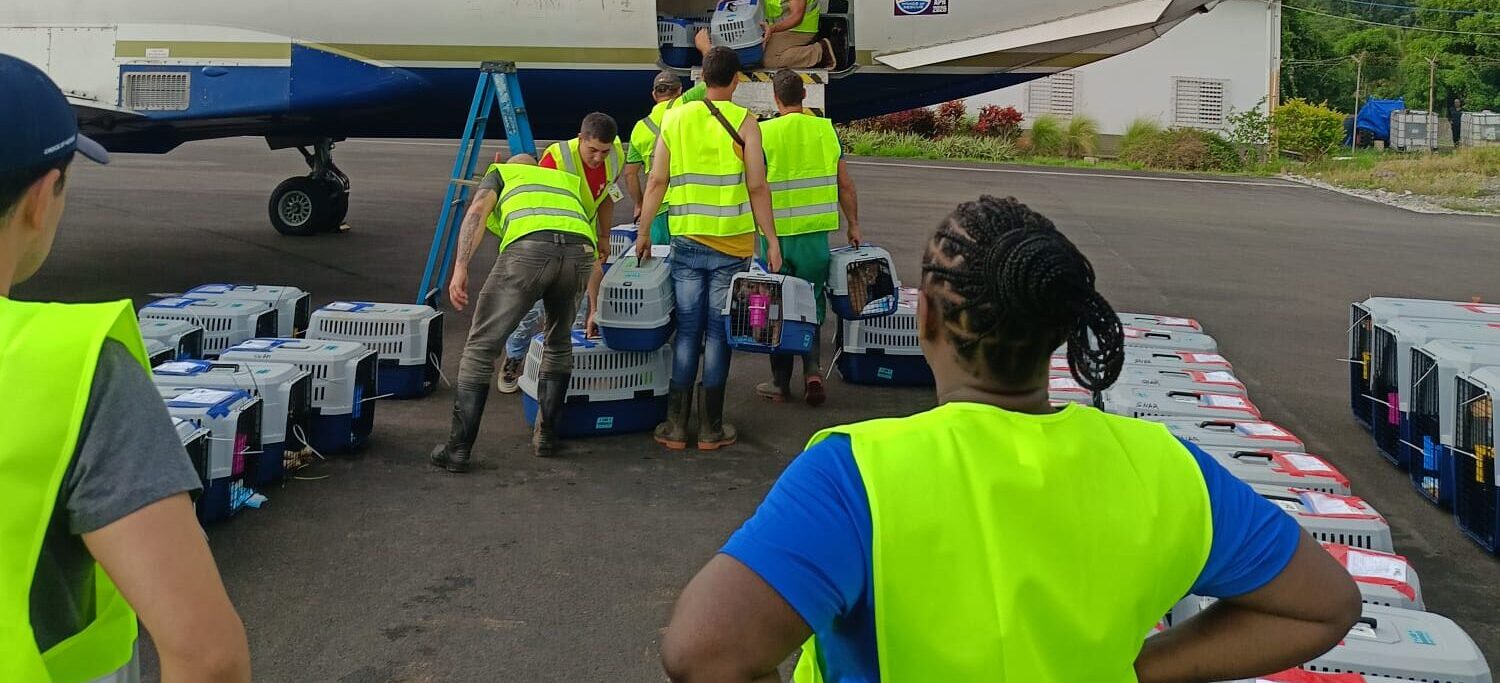
    It began as a long-awaited second chance for dozens of homeless dogs and cats waiting in St. Nicholas Animal Rescue (SNAR) in Dominica: a chartered Freedom Flight to permanent loving homes across the United States. What unfolded in the weeks leading up to departure was a cascade of deliberate sabotage and last-minute disasters that nearly stole that chance forever – and a remarkable display of community solidarity that turned near-defeat into a hard-won victory.

    This first-person account, originally published as a follow-up newsletter for SNAR supporters after the flight’s initial postponement, pulls back the curtain on the dramatic chain of events that kept the rescue mission on a knife’s edge. Three days before the flight’s originally scheduled departure on June 14, SNAR’s aviation partner, Wings of Rescue, delivered devastating news: an anonymous tip had been sent to U.S. Customs falsely claiming the shelter was planning to transport sick animals into the country.

    The baseless accusation triggered mandatory strict protocols: instead of random spot checks, every single animal on board would require a full individual inspection. Fort Lauderdale, the original destination, lacked the infrastructure to process the large group of animals under these new requirements, forcing the mission to reroute through Miami – a solution that came with thousands of dollars in unplanned extra costs. Fearing further interference from whoever had launched the initial sabotage attempt, SNAR leadership made the difficult decision to keep the new flight date confidential, breaking their silence only once the plane had safely left Dominican airspace.

    By the afternoon of June 23, things finally seemed to be falling into place. The charter plane touched down in Dominica carrying empty crates, volunteer teams worked quickly to assemble the enclosures, pilots rested ahead of the morning departure, and receiving shelters across the U.S. adjusted their plans to meet the animals in Miami. Just hours before takeoff, however, another blow struck: the mission’s U.S.-based customs broker notified SNAR that 15 dogs had been rejected at the eleventh hour over minor technical errors in their documentation, even though shelter staff had spent weeks meticulously preparing every required form, vaccine record, and spay/neuter certificate. Heartbroken but resolved, the team made the call to leave the 15 dogs behind to travel on a future mission, and began rearranging adoption placements with receiving shelters across the country.

    Just when the team thought they had weathered every possible setback, the darkest moment of the night arrived. The contracted trucking company that had agreed to transport the crated animals from the SNAR facility to the airport was scheduled to arrive at midnight – and never showed. Team members showed up at the company’s office an hour late, finding lights on inside but no one answering the door. With just four hours left until the plane’s required departure window, the entire mission – months of work, thousands of dollars in donations, and the animals’ only shot at new homes – hung in the balance.

    That is when the people of Dominica stepped in. In a frantic late-night push, SNAR staff began calling every local truck driver they could reach, waking dozens of people in the middle of the night. One by one, drivers got out of bed, reported to the shelter, loaded the crates, and delivered the animals to the airport with minutes to spare. Against every possible obstacle, the plane lifted off, carrying the rescued animals toward their new lives.

    Today, SNAR is celebrating the successful flight while continuing to rally support for the 15 dogs left behind, who are still waiting for their chance to travel. Each dog will require a $350 individual flight angel donation to cover costs for documentation, transport, and shelter placement upon arrival in the U.S. The shelter has launched a donation drive through its official website, www.snar-dm.com, to fund the next mission for these animals, asking supporters to help keep their second chance alive.

    In closing, the SNAR team extended gratitude to every person who made the successful flight possible: from Wings of Rescue and lead donor Eva who kicked off the mission with a matching donation, to the volunteers on the ground in Dominica and the remote advocacy team that coordinated last-minute placement changes, to the local truck drivers who answered the call in the middle of the night, and to every supporter who donated, shared, and stood by the mission through the silence after the initial postponement.

  • Carmen René Memorial wins inaugural Green Champions Challenge

    Carmen René Memorial wins inaugural Green Champions Challenge

    The first-ever Green Champions Challenge, a four-week community-focused environmental initiative aimed at boosting recycling across Saint Lucia, has named Carmen René Memorial Primary School its overall winner, capping off a successful campaign that mobilized more than 2,400 young eco-activists from five local primary schools.

    Organized around a core mission of collecting recyclable electronic waste and aluminum cans, the competition concluded with an official prize-giving ceremony held Tuesday, where organizers distributed awards to all participating institutions. Carmen René Memorial Primary claimed the coveted Massy Stores Champions Award, securing the official title of 2026 Green Champions Winner alongside a prize package including EC$1,500 in Massy Stores gift vouchers and refreshments for the entire student body. Canon Laurie Anglican Primary School finished as first runner-up, taking home the LUCELEC Spark Award valued at EC$1,000 to support a school improvement project. The three remaining participating campuses — St Aloysius RC Boys School, Ave Maria Girls’ School, and Gordon and Walcott Methodist Memorial School — each received the SLASPA Green Seed Award of EC$333, funding earmarked for small on-campus environmental projects ranging from native plant gardens and dedicated recycling corners to campus tree-planting drives.

    The Green Champions Challenge was coordinated by regional environmental non-profit Greening the Caribbean in partnership with the Saint Lucia Solid Waste Management Authority (SLSWMA), with additional institutional backing from the Department of Education and Digital Transformation. The initiative forms a key outreach component of the broader Integrated E-Waste Management Project, a long-term program focused on cutting the volume of electronic waste entering Saint Lucia’s Deglos Landfill and embedding a culture of responsible waste disposal across the island nation.

    Launched on May 26, the 2026 challenge generated tangible environmental impact far beyond initial projections. By the end of the campaign, participating students had collectively gathered 2,460 individual electronic waste items and aluminum cans, all of which have been transported to Greening the Caribbean’s dedicated recycling facility in Odsan. Teams at the facility are currently sorting and processing the materials ahead of export to internationally certified recycling partners for proper reprocessing.

    Organizers note that the campaign’s influence extended well beyond the walls of the five participating schools. Through student and family engagement, the initiative reached more than a dozen local communities, spreading awareness of responsible recycling practices to households across the region.

    Wayne Neale, Chief Operations Officer at Greening the Caribbean, emphasized that the challenge’s success demonstrates the power of cross-sector collaboration to address pressing environmental issues. “No single organisation, no single agency, no single sector solves the waste challenge in Saint Lucia,” Neale explained. “Greening the Caribbean is pleased to work alongside the Saint Lucia Solid Waste Management Authority, the Ministry of Education, IDB Lab, and our private sector sponsors on this school-led campaign. When the public, private, and community sectors move in the same direction, this is what is possible.”

    One of the most lasting legacies of the inaugural challenge will be ongoing access to recycling infrastructure for all participating schools. Each campus gets to keep its custom branded Green Champions collection bin, which will remain in use as a permanent recycling drop-off point for both students and local community members long after the competition concluded.

    Greening the Caribbean has announced that the Green Champions Challenge will transition into an annual flagship event, with planning for the 2027 iteration set to get underway later this year. Sariah Best-Joseph, Communications and Stakeholder Lead at Greening the Caribbean, highlighted the critical leadership role young people played in the initiative’s success. “Every school in this Challenge has won something far greater than a prize. They have shown Saint Lucia that our children, supported by a strong coalition of partners and sponsors, can lead a national response to one of the region’s fastest-growing environmental challenges,” Best-Joseph said. “Ultimately, this was never just a competition; it is a school-community environmental coalition which now leads the way.”

  • Baltimore Offers Scholarships for UWI Certificate Courses to St. Philip’s North Residents

    Baltimore Offers Scholarships for UWI Certificate Courses to St. Philip’s North Residents

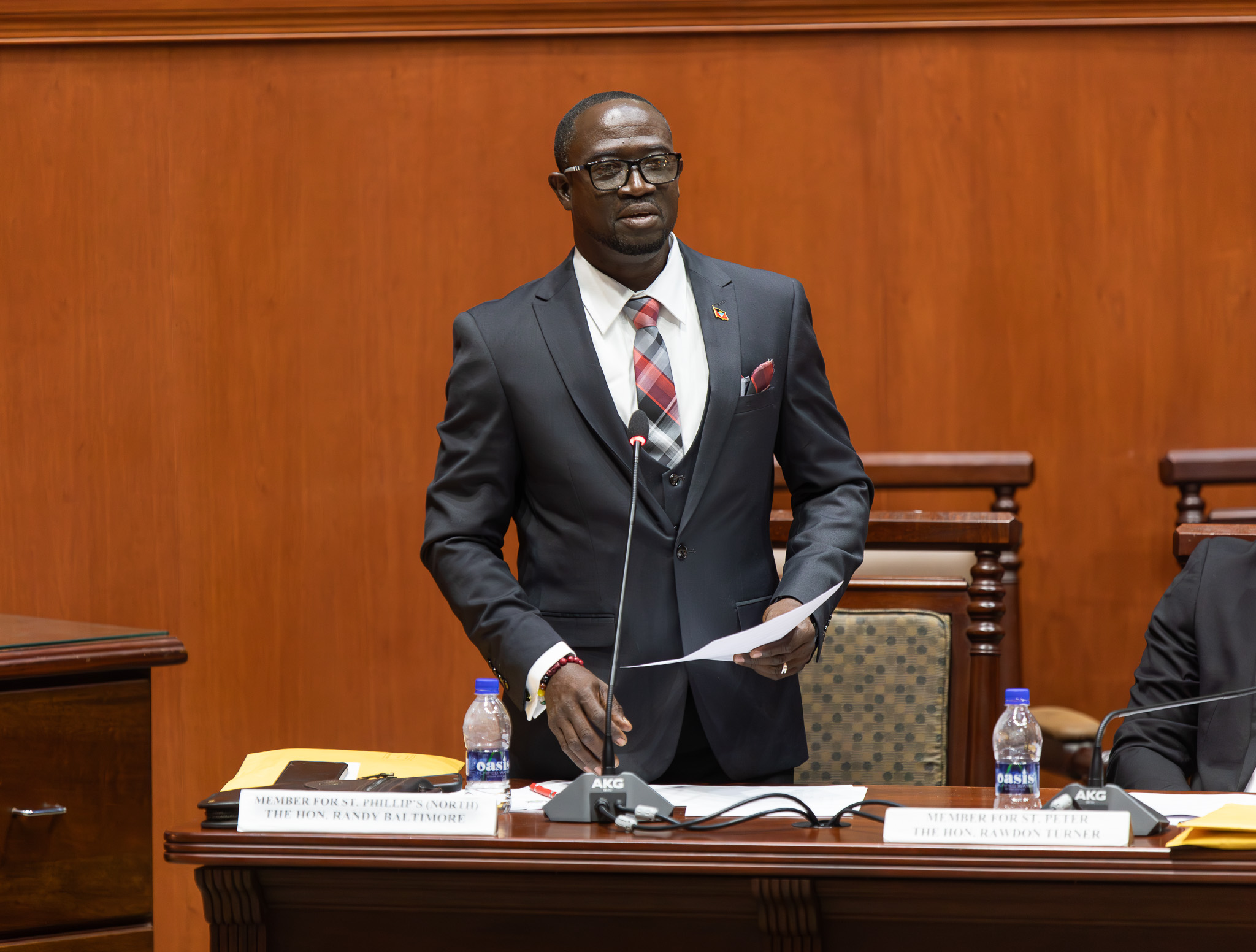
    Residents living in the St. Philip’s North region now have a unique opportunity to advance their professional skills through a new scholarship initiative launched by local Member of Parliament Randy Baltimore. The program awards partial and full coverage for short certificate courses administered by the Lifelong Learning Unit at the University of the West Indies Five Islands Campus. Per a public announcement shared by Baltimore, only a restricted number of awards will be distributed for the institution’s upcoming third-quarter academic session, which is scheduled to kick off on July 5 and wrap up on September 11. Spanning a full 10 weeks of instruction, the slate of courses caters to diverse professional and personal development goals, covering in-demand subjects that align with modern industry needs. Participants can choose from offerings including strategic human resource management, project management, property management, crisis and risk management, organizational leadership, conversational and professional Spanish, retail operations and merchandising, and the practical application of artificial intelligence in contemporary workplace settings. Baltimore has issued a call to action for all local residents who meet eligibility requirements and are interested in claiming one of the limited spots. To be considered for the award, candidates must fully fill out the official application form and compile all requested supporting documentation, submitting the complete package ahead of the firm application deadline. All submissions must be received by 4:30 p.m. local time on June 29, with no late applications accepted for consideration due to the tight timeline for course enrollment and program preparation. This initiative marks part of Baltimore’s ongoing efforts to expand access to upskilling and continuing education opportunities for constituents, helping local workers boost their employability and adapt to shifting labor market demands.

  • WEATHER (6:00 AM, June 24): cloudy skies, scattered showers, possible thunderstorms expected; people in at risk areas urged to be cautious

    WEATHER (6:00 AM, June 24): cloudy skies, scattered showers, possible thunderstorms expected; people in at risk areas urged to be cautious

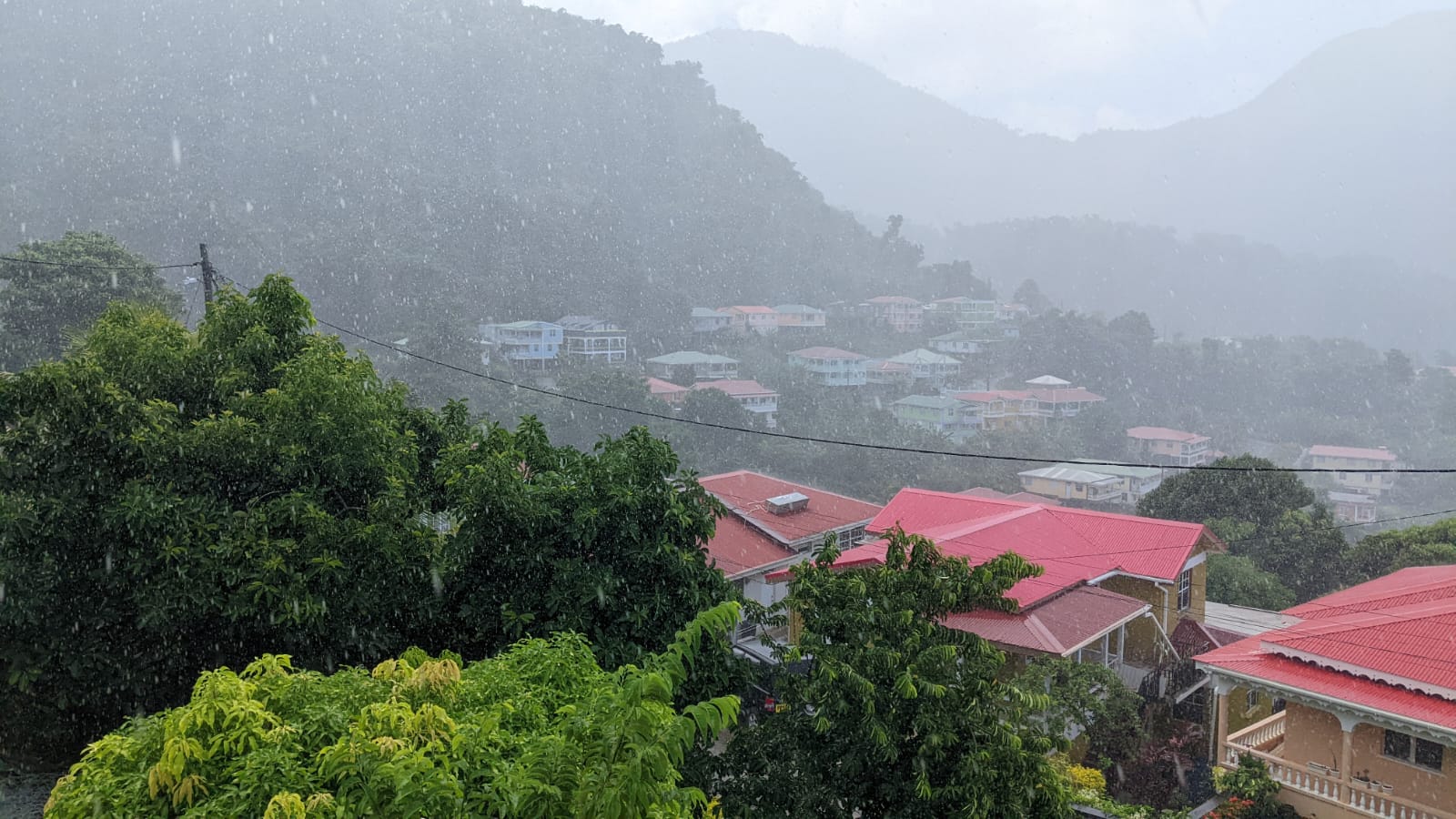
    Regional weather authorities have issued a series of public safety alerts as multiple overlapping hazardous weather conditions are set to impact the area over the coming 24 hours. Forecasters confirm that a tropical wave, carrying excess atmospheric moisture and unstable air masses, will drive weather patterns across the region through the day.

    Overnight and into the early morning, the system is expected to bring widespread overcast conditions alongside scattered rain showers. There is also a low but non-negligible risk of isolated thunderstorms breaking out across higher elevation and low-lying flood-prone zones. Officials are urging residents who live in areas vulnerable to flash flooding, landslides, and falling rock debris to stay updated on changing weather conditions and avoid unnecessary travel through high-risk zones through the day. By afternoon, precipitation is expected to taper off to just a few scattered showers, but strong gusty winds will remain a persistent hazard across the region.

    Beyond the rain and wind, a growing plume of Saharan dust is projected to push into the region starting this afternoon, carrying significant air quality risks through overnight hours. Forecasters warn that air quality will decline from moderate to unhealthy levels as dust concentrations spike. Vulnerable populations, including individuals with asthma, chronic obstructive pulmonary disease (COPD), and other pre-existing respiratory conditions, are advised to limit prolonged outdoor exposure and keep medication on hand to manage any unexpected symptoms.

    The dust will also cut down on horizontal visibility across both coastal areas and open water, prompting official warnings for commercial and recreational mariners. All boat operators are strongly encouraged to carry fully charged, functioning navigational equipment to avoid accidents while traveling through low-visibility conditions.

    Sea conditions will remain unpredictable over the next day, with forecasters noting moderately choppy seas across most of the region’s coastline. Along the area’s western shore, wave heights are expected to peak around 5 feet, while eastern coastlines could see waves reaching up to 8 feet – conditions that pose significant risks to small vessels. A formal Small Craft Advisory remains in effect for all nearshore waters, with officials reminding small boat operators and recreational sea bathers to stay out of hazardous surf and avoid unnecessary offshore activity until conditions improve.