分类: society

  • Family launches GoFundMe for Spanish sailor who went missing off Abaco

    Family launches GoFundMe for Spanish sailor who went missing off Abaco

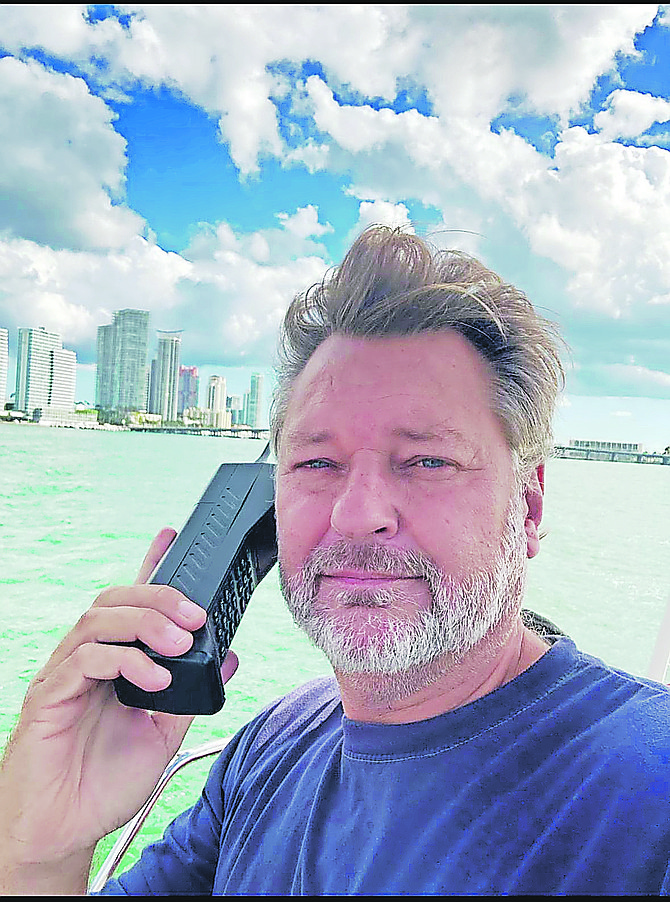
    The family of Spanish-American sailor Miguel Campoy has initiated a crowdfunding campaign to finance a comprehensive private investigation into his mysterious disappearance near South Abaco six months ago. The 56-year-old mariner vanished on September 6 after departing aboard his 44-foot blue-hulled sailboat named Hella, with his final communication indicating calm seas and an unexpectedly prolonged journey.

    Following the suspension of official search operations by both the Royal Bahamas Defence Force and the United States Coast Guard, the family has exhausted considerable resources funding private aerial and maritime searches. The campaign aims to raise €18,000 to pursue advanced investigative measures including specialized satellite imagery analysis, legal action to obtain crucial mobile phone records, and enhanced maritime traffic pattern assessment.

    To date, investigators have recovered only Campoy’s support dinghy containing personal belongings and identification documents, while the primary vessel remains missing without confirmed debris. Advanced satellite analysis has identified another vessel transiting through the area approximately when contact was lost, though authorities have been unable to establish communication with the ship’s captain or operating company.

    Miriam Campoy, the sailor’s sister, emphasizes that while no allegations of wrongdoing are being made against any vessel, the family believes it reasonable to determine whether maritime witnesses observed unusual activity. The family faces additional challenges in obtaining critical mobile phone data from service providers and manufacturers, with neither Spanish nor Bahamian authorities successfully securing this information.

    The family has now engaged U.S. legal representation to pursue court orders for accessing mobile records and last-known location data. While expressing appreciation for Bahamian officials’ courtesy, Campoy noted that resource constraints may have limited the official investigation’s scope.

    The raised funds will be exclusively dedicated to continuing search operations, investigative efforts, and offering a monetary reward for verifiable information regarding Campoy’s disappearance. The family has explicitly dismissed suggestions that the sailor staged his disappearance, citing his strong family connections and planned meetings with friends shortly after his vanishing.

  • Seven students charged over viral high school brawl

    Seven students charged over viral high school brawl

    Nassau, Bahamas – Seven students from Doris Johnson Senior High School have been formally charged by police following a violent campus altercation that was captured on video and disseminated across social media platforms. The incident, which sparked widespread public concern, shows a chaotic physical confrontation involving multiple students engaging in aggressive behavior.

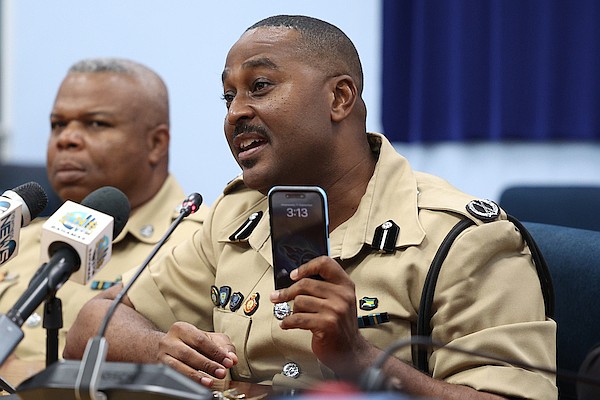
    According to Assistant Commissioner of Police Chaswell Hanna, the students face multiple charges including disorderly conduct, causing harm, and engaging in physical fighting. The widely circulated footage depicts a group of male students exchanging blows, with one individual lifting and throwing a chair at another participant. The confrontation escalated further when a student picked up a rock and struck another student in the head, while audible profanity and shouting filled the background.

    Police authorities confirmed that injuries sustained during the incident were minor, consisting primarily of scrapes and cuts that were treated by the school’s medical staff. ACP Hanna emphasized that law enforcement officials are collaborating with educational authorities and school safety partners to implement preventive measures against future occurrences.

    The police representative highlighted the availability of alternative intervention programs designed to redirect student behavior without immediate recourse to the criminal justice system. “We provide school students an opportunity to redeem themselves through participation in behavioral correction programs,” Hanna stated. “With parental consent, we place students in these initiatives, which have demonstrated success in most previous cases.”

    Addressing rumors of a school lockdown, Hanna clarified the terminology, explaining that while administrative staff brought the situation under control, the term “lockdown” inappropriately suggested students were in grave danger, which was not the case.

    Dominique McCartney-Russell, Director of Education, confirmed the ongoing investigation into the incident, noting that several involved students have been suspended to REFOCUS centers and will participate in restorative justice initiatives. Parent conferences have been conducted, with additional consequences to be determined as the investigation progresses.

  • Jamaica must consider social media restrictions, experts say

    Jamaica must consider social media restrictions, experts say

    Jamaica faces mounting pressure to implement social media restrictions for minors as educational and psychiatric experts highlight an escalating mental health crisis linked to digital platform usage. This development coincides with landmark litigation against tech giants in the United States alleging deliberate platform engineering for child addiction.

    Jamaica Teachers Association (JTA) President Mark Malabver revealed disturbing classroom realities, stating, “I have witnessed students threatening suicide after phone confiscations. Their emotional dependency on these devices has reached critical levels.” While acknowledging some educators’ innovative use of social media for instruction, Malabver asserted the overall harms significantly outweigh benefits, describing platforms as fundamentally disruptive to learning processes.

    The association president further noted concerning shifts in childhood socialization patterns, with interpersonal development increasingly occurring through digital interfaces rather than physical interaction. “We’re navigating uncharted waters,” Malabver warned, “where technology dictates our direction rather than us steering its course.”

    Medical experts reinforce these concerns. Former Jamaica Psychiatric Association President Dr. Sapphire Longmore cited regional predispositions to depression and anxiety, particularly among youth from unstable family environments. “When children lack foundational identity structures, they become exceptionally vulnerable to social media’s addictive properties and associated harms,” she explained.

    Technology executive Christopher Reckord, who chairs national AI policy committees, confirmed platform design intentionally promotes extended engagement. “These systems are architecturally designed to encourage perpetual usage,” stated Reckord, while expressing full support for age-based restrictions despite his professional involvement in digital transformation.

    Australia’s recent prohibition on social media profiles for under-16s and similar French legislative actions provide international precedents. Jamaican experts propose graduated interventions, including school-based device bans and mandatory content controls. “We previously attended schools without phones successfully,” Reckord noted, advocating for play-based childhood development over screen-based socialization.

    Dr. Longmore emphasized beyond-restriction solutions, proposing automated intervention triggers for suicidal ideation content and enhanced identity-building programs. “Alongside artificial intelligence, we must promote ancestral intelligence—grounding youth in cultural heritage and personal purpose to counter digital harms.”

    The consensus among Jamaican professionals indicates urgent need for policy development balancing digital access protections with psychological safeguarding, positioning Jamaica within global conversations about regulating children’s social media exposure.

  • Pair held over fraudulent passport and voter ID scheme

    Pair held over fraudulent passport and voter ID scheme

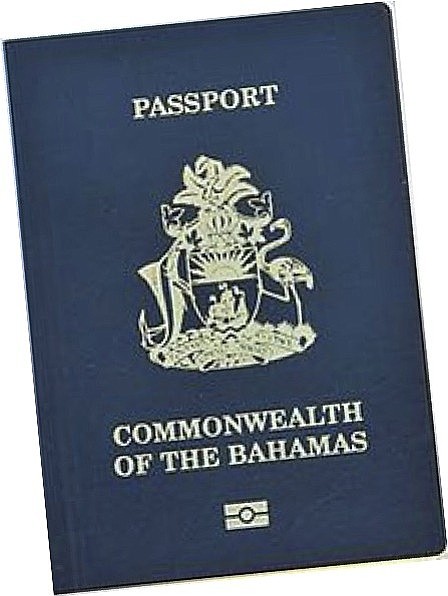
    A significant identity fraud case involving the illicit acquisition of official Bahamian documents has resulted in the imprisonment of two individuals pending trial. Max Veve Pierre, an 18-year-old Haitian national, and his 59-year-old accomplice, Gersey Pierre, stand accused of orchestrating a sophisticated scheme to obtain government-issued identification under false pretenses.

    According to prosecution details presented in court, the alleged conspiracy began on December 23, 2024, when both defendants reportedly agreed to fraudulently secure a Bahamian passport. The plan allegedly came to fruition on February 3, 2025, when they successfully obtained a passport issued in Max’s name from the official Passport Office.

    The criminal complaint further reveals that Max Pierre allegedly utilized the fraudulent passport to obtain additional official documentation. Prosecutors assert that on January 23, he presented the document at the Parliamentary Registry to secure a Bahamian voter’s card, effectively attempting to establish false citizenship credentials.

    The scheme allegedly reached its critical point on February 24, when Max Pierre presented the counterfeit passport to immigration authorities at Lynden Pindling International Airport (LPIA). It was during this interaction that immigration officers detected irregularities in the documentation, leading to the unraveling of the entire operation and the subsequent arrest of both individuals.

    Following a court appearance before Senior Magistrate Anishka Isaacs, both defendants entered pleas of not guilty to the multiple charges against them. Max Pierre faces three counts of possessing false documents, two counts of uttering false documents, and fraud by false pretenses. Both defendants additionally face charges of conspiracy to commit fraud by false pretenses.

    Despite their professions as construction workers, the court deemed the allegations sufficiently serious to warrant remand. Both individuals were subsequently transferred to the Bahamas Department of Correctional Services, where they will remain until their trial commences on May 21. Inspector Timothy Bain is leading the prosecution in this case.

  • WATCH: Allman Town Primary students march for peace

    WATCH: Allman Town Primary students march for peace

    KINGSTON, Jamaica — Young voices echoed through the streets of Allman Town as primary school students became ambassadors of peace during Jamaica’s annual Peace Day observance this Tuesday. Carrying messages of harmony and unity, the children from Allman Town Primary School organized a vibrant peace march through their community.

    The procession featured students marching alongside musical bands and community adults, creating a powerful visual representation of cross-generational solidarity. Their chants of “We want peace” resonated through the neighborhood, turning the event into both a celebration and a call for social cohesion.

    This annual observance occurs every first Tuesday of March, established through formal proclamation by then Governor General Howard Cooke in February 1996. The declaration officially recognized the peace-building initiatives of PALS Jamaica (Peace and Love in Society), an organization dedicated to conflict resolution and social harmony.

    The Peace Day tradition represents Jamaica’s ongoing commitment to addressing community violence through positive engagement and youth empowerment. By involving school children as primary participants, the event emphasizes the crucial role of education in fostering long-term social change and community resilience.

  • Commission launches three years after Protection Against Violence Act gazetted

    Commission launches three years after Protection Against Violence Act gazetted

    The Bahamian government has officially inaugurated the Protection Against Violence Commission, marking a pivotal transition from legislative framework to operational reality under the Protection Against Violence Act of 2023. This landmark development, effective February 1, 2026, establishes a comprehensive enforcement mechanism nearly three years after the law’s initial gazetting.

    At a press conference closed to media but documented through an official release, Minister of Social Services, Information and Broadcasting Myles LaRoda characterized violence as a multidimensional threat to both individual security and national stability. “The harm inflicted upon women reverberates through families, weakens communities, and ultimately compromises national progress,” LaRoda asserted, framing the Commission as the institutional force that transforms legislative intent into coordinated action.

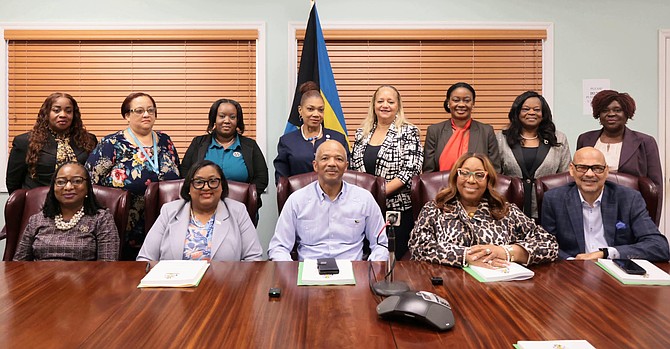
    The newly appointed Commission Chair Marisa Mason-Smith announced the body’s immediate shift from strategic planning to implementation, acknowledging foundational contributors including Dr. RubyAnn Nottage, Dr. Sandra Dean-Patterson, and the legislative drafting team led by Jewel Major from the Office of the Attorney General. “With expert groundwork established and legislation enacted,” Mason-Smith declared, “we now commence purposeful execution with unwavering resolve to eliminate violence.”

    Commission Co-Chair Pastor David Burrows addressed the generational nature of the challenge, emphasizing that meaningful impact requires educating upcoming generations to break cyclical patterns of violence. Desiree Clarke of the National Council for Persons with Disabilities highlighted the heightened vulnerability of disabled individuals, insisting that protection strategies must incorporate inclusive design principles.

    The Commission represents a whole-of-society approach rooted in legal, strategic, cultural, and faith-based dimensions. The Department of Gender and Family Affairs, under Director Sharmie Farrington, will administer the Commission’s operational functions, including coordination and oversight mechanisms. Religious and cultural representatives including Dr. Roslyn Astwood of the Bahamas Christian Council and Deputy Director of Culture Portia Sands emphasized that confronting violence through moral accountability and compassion ultimately strengthens Bahamian social fabric by reinforcing familial respect and communal responsibility.

  • Dozens of gallons of stolen diesel recovered in Manchester, three vehicles seized

    Dozens of gallons of stolen diesel recovered in Manchester, three vehicles seized

    A coordinated dawn operation between Jamaican law enforcement and corporate security has dealt a significant blow to a sophisticated fuel theft network in Manchester. The breakthrough occurred Tuesday along a haul road near Porus, where authorities intercepted a major diesel smuggling attempt.

    At approximately 4:30 a.m., Jamalco security personnel on routine patrol spotted a suspicious vehicle along the transport route. As security approached, multiple individuals abandoned the car and fled into surrounding areas, evading capture through the early morning darkness.

    The incident triggered an immediate multi-unit response with officers from both Mandeville and Porus police stations converging on the location. A search team of nine officers, under the leadership of Sergeant Dwight Holland of the Operational Support Team, conducted a thorough sweep of the vicinity.

    The operation yielded substantial evidence: 30 containers filled with stolen low-sulphur diesel, 13 empty containers presumably for future use, and three vehicles connected to the criminal activity. According to investigators, the diesel had been illegally extracted from heavy equipment operating near mining sites.

    Deputy Superintendent Valdin Amos, acting operations officer for Manchester, characterized the seizure as the product of sustained police efforts targeting transportation corridors where praedial larceny has increasingly threatened local communities. “These targeted operations are strategically designed to disrupt criminal movements, hinder further illegal activities, protect our national assets, and safeguard the livelihood of our farming communities,” DSP Amos stated.

    The successful operation highlights growing collaboration between private sector security and Jamaican law enforcement to combat resource theft that costs legitimate businesses and the national economy millions annually. Low-sulphur diesel commands premium prices on the black market due to its critical industrial applications.

  • Jamaican sign language training programme for public libraries launched

    Jamaican sign language training programme for public libraries launched

    KINGSTON, Jamaica — In a landmark move toward social inclusion, Jamaica’s library system has initiated a comprehensive Jamaican Sign Language (JSL) training program designed to dismantle communication barriers for deaf patrons. The pioneering initiative, dubbed ‘Bridging the Gap: One Sign at a Time,’ was formally inaugurated Monday at the University of the West Indies Mona campus, signaling a new era of accessibility in the nation’s knowledge institutions.

    The program will deliver structured JSL education to frontline staff across Jamaica’s entire library network, encompassing the National Library of Jamaica and regional parish libraries. This capacity-building effort aims to equip information professionals with the necessary linguistic skills to serve deaf and hard-of-hearing community members effectively and with dignity.

    Culture Minister Olivia Grange, represented by National Library Board Chair Joy Douglas, characterized the initiative as reflecting her ministry’s deepened commitment to enhancing service accessibility for persons with disabilities. Minister Grange emphasized that true inclusion must embrace Jamaicans across the spectrum of physical and intellectual capabilities, noting parallel efforts to broaden participation in cultural and athletic programs.

    The minister framed the initiative as transcending mere symbolic recognition, stating: “This is more than us saying to the deaf community—’we see you’ or ‘we value you.’ This is about empowerment and building independence.” She expressed aspirations for JSL to eventually be integrated into formal education curricula, similar to foreign language offerings, to eradicate communication barriers society-wide.

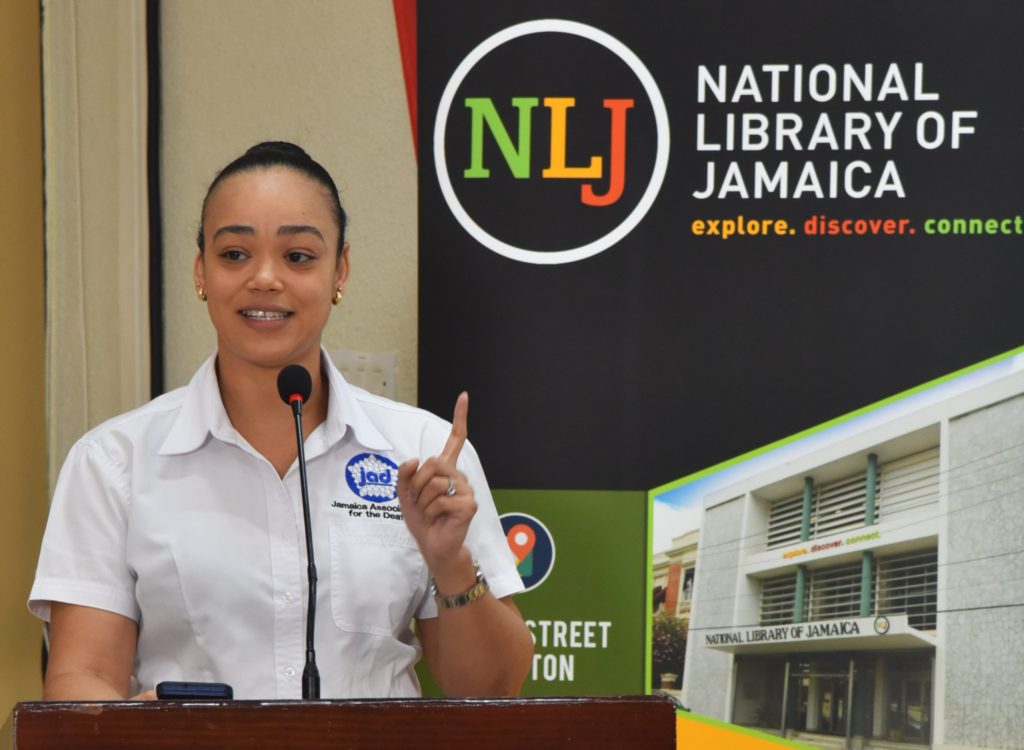
    Kimberly Sherlock Marriot-Blake, Executive Director of the Jamaica Association for the Deaf, hailed the program as a transformative milestone in national development. With over 16 years of experience providing JSL instruction to diverse stakeholders, Marriot-Blake emphasized that language accessibility fundamentally reshapes institutional systems, making them more equitable and responsive.

    She particularly commended library authorities for recognizing that true accessibility extends beyond physical infrastructure to encompass communication channels. The initiative, she noted, creates opportunities for preserving deaf cultural heritage as an integral component of Jamaica’s national identity.

    Adding political weight to the effort, Senator Professor Floyd Morris, Director of the Centre for Disability Studies at UWI, reaffirmed his commitment to pursuing official government recognition of Jamaican Sign Language, underscoring its critical role in achieving genuine social inclusion.

  • 90-y-o ‘Mass Joe’ benefits from house refurbished after Hurricane Melissa through community effort

    90-y-o ‘Mass Joe’ benefits from house refurbished after Hurricane Melissa through community effort

    In the aftermath of Hurricane Melissa’s destructive path through St. Elizabeth, Jamaica, a remarkable story of community solidarity has emerged centered around a nonagenarian known affectionately as ‘Mass Joe.’ The catastrophic storm had completely torn the roof from the lifelong New Town resident’s home, leaving the vulnerable elderly man exposed to harsh weather conditions and creating an urgent humanitarian situation.

    Initial assistance came from immediate neighbors who quickly deployed tarpaulins as temporary protection. However, these stopgap measures proved insufficient against continued heavy rainfall, leaving Mass Joe in increasingly precarious circumstances. The situation prompted an extraordinary multi-sector response that transcended traditional aid frameworks.

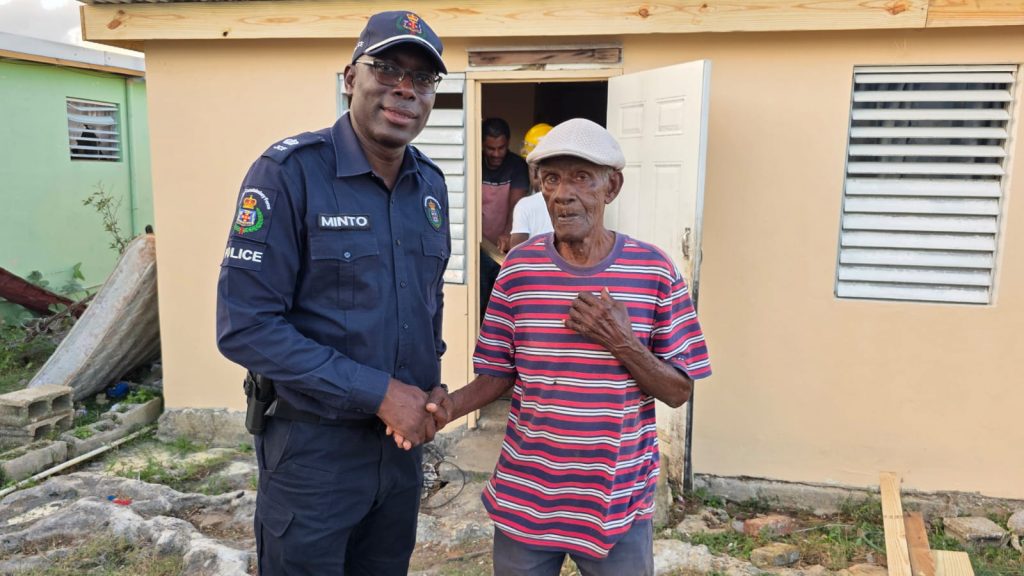
    Local leadership emerged through Superintendent Coleridge Minto, head of the St. Elizabeth Police Division, who coordinated a comprehensive rebuilding initiative. Member of Parliament Floyd Green contributed essential zinc sheeting materials for the new roof, while Brady’s Construction Company Limited provided not only lumber and building materials but also deployed their skilled carpenters and painters. Community members further enhanced the effort through voluntary labor, food provisions, and additional supplies.

    The collaborative project achieved far more than basic repairs. Workers completely replaced the entire roof structure, repainted both interior and exterior walls, installed a new mattress to replace aged bedding, and renovated the kitchen cupboard. These comprehensive improvements restored both the structural integrity and comfort of the residence, transforming it from a storm-damaged structure into a secure, habitable home.

    Superintendent Minto emphasized the significance of the collective achievement: ‘This exemplary work demonstrates what becomes possible when public servants, private sector partners, and neighbors unite around supporting vulnerable community members.’ He particularly acknowledged the crucial role of immediate neighbors whose rapid response sustained Mass Joe during the critical period before organized repairs could be completed.

    Participants in the rebuilding effort described the elderly beneficiary as profoundly grateful throughout the process. The intervention has reportedly restored Mass Joe’s sense of security and wellbeing after the traumatic post-hurricane experience. This successful community-driven initiative in New Town now stands as a powerful model of cross-sector partnership and community resilience, demonstrating how coordinated local action can effectively address urgent needs when formal institutional assistance is unavailable or delayed.

  • Beyond the rain

    Beyond the rain

    Facing severe drought conditions that have compromised 133 water supply systems nationwide, Jamaica is implementing an ambitious national strategy to fortify its water infrastructure against increasingly erratic weather patterns. Minister Matthew Samuda, overseeing water resources, has declared that traditional reliance on seasonal rainfall is no longer viable, necessitating urgent structural interventions.

    The government’s comprehensive approach centers on two primary objectives: dramatically expanding water storage capacity and implementing a nationwide engineering program to reduce non-revenue water (NRW) losses exceeding 70% in multiple parishes. These systemic losses, comprising leaks and unauthorized usage, represent a critical vulnerability in Jamaica’s water security framework.

    Evidence from Kingston and St. Andrew demonstrates the potential impact of infrastructure improvements. Through targeted NRW reduction efforts, daily water consumption in the capital region has decreased by 12 million gallons compared to a decade ago, with leakage rates plummeting from 72% to approximately 40%. This enhanced efficiency substantially mitigated water shortages during recent drought periods, with the 2022 deficit measuring 15 million gallons daily compared to 30 million gallons during the 2015 drought.

    Major infrastructure projects form the cornerstone of Jamaica’s long-term strategy. The planned Hermitage Dam development promises to secure water resilience for Kingston over the next half-century, while the Rio Cobre Water Treatment Plant will augment supply capacity across Kingston, St. Andrew, and sections of St. Catherine upon completion.

    Despite current challenges, Minister Samuda emphasized that Jamaica’s groundwater resources remain substantially adequate—approximately 500% above combined irrigation and potable water requirements, though reduced from historical levels of 700%. The critical challenge lies in storage and distribution rather than absolute water availability.

    With meteorological projections indicating below-normal rainfall through June, the government has activated immediate response measures including distribution of nearly 13,000 household water tanks and expansion of water truck fleets. Concurrently, strategic initiatives like the Western Water Resilience Project and Rio Cobre Water Supply Project aim to fundamentally transform Jamaica’s capacity to withstand prolonged dry periods in an era of climate uncertainty.