分类: society

  • Another Murder; One Mother Faces Unthinkable Loss This Mother’s Day

    Another Murder; One Mother Faces Unthinkable Loss This Mother’s Day

    As Mother’s Day 2026 approaches, families across Belize City are busy preparing bouquets, planning warm gatherings, and cherishing time with loved ones. But for one long-time CET Site resident, this holiday will bring nothing but unthinkable agony, marking a second devastating loss of a child to violent urban gun crime.

    Helen Samuels, 60-something, will not be on the receiving end of hugs or gifts this Sunday. Instead, she is sitting with her grief, mourning the murder of her 29-year-old son Jamal Samuels, who was gunned down in a brazen public shooting in their neighborhood on the evening of May 6. For Samuels, who already lost her first infant son decades ago and a second adult son to gun violence years prior, this killing leaves her with just one surviving child — and a gaping hole that no amount of resilience can fill.

    Samuels has spent her entire life building stability for her children out of hardship. For decades, she raised her four sons in a small, weathered wooden home in CET Site, where the family weathered hurricanes, heavy rains, and constant economic uncertainty. The creaky, worn structure was more than wood and nails to her; it was a testament to her sacrifice: she went without basic needs so her children could have enough, and turned the modest space into a stable home amid constant neighborhood instability. Years later, the Government of Belize provided Samuels with a new concrete starter home, but even the solid new walls cannot hold back the crippling grief she now carries.

    The shooting unfolded on Thursday evening, when Jamal stepped out of his home to run a quick errand to a nearby shop. As he made the purchase, unidentified gunmen approached and opened fire multiple times, fatally wounding him before fleeing the scene. Jamal’s sister, Sherean Tracy, was at home nearby when she heard the gunfire. She had no idea the attack had targeted her brother until first responders arrived on scene. Speaking to reporters, Tracy described the attack as cold and unrelenting, saying the shooters showed no mercy and appeared determined to kill.

    Samuels told reporters her son was not an aggressive person, and rarely spent time socializing outside the home. “He doesn’t hang out in crowds,” she explained. “He would roll his weed, sit right in our yard, smoke and drink by himself. He never kept much company.” The family believes Jamal was caught in crossfire, in the wrong place at the wrong time for a attack meant for someone else.

    Belizean police have not yet confirmed a clear target for the attack. ASP Stacy Smith, a staff officer with the department, told reporters investigators suspect the shooting stems from ongoing internal conflict between criminal factions in the Backaland area. Smith also confirmed Jamal had prior interactions with law enforcement, including a drug trafficking charge filed in 2025.

    In the aftermath of the shooting, Samuels shared her deepest regret as a mother: she never managed to move her family out of the violence-plagued neighborhood of Belize City to safer ground. “I always wished I could have moved my two boys out of Belize, away from all this,” she said. “Now I only have one son left. I don’t know how I’m going to get through this — this killing brings back every terrible memory of losing my first son.”

    Adding to Samuels’ distress in the days after the shooting, authorities have detained her only remaining surviving son for questioning in connection with the incident, leaving the grieving mother isolated ahead of Mother’s Day. The report, filed by News Five correspondent Paul Lopez, underscores the persistent toll violent street crime takes on Belizean urban families, turning a national holiday of celebration into a day of quiet survival for those touched by murder. The original newscast was transcribed from News Five’s evening television broadcast, with Kriol language remarks preserved in standard spelling for the transcript.

  • Police Swarm CET Site, as Murder and Highway Shooting May Be Linked

    Police Swarm CET Site, as Murder and Highway Shooting May Be Linked

    As of May 8, 2026, a heavy police presence is currently concentrated in the CET Site district, as law enforcement investigators probe a potential connection between two separate shocking violent incidents that have shaken the local community. Authorities are investigating whether the fatal killing of Jamal Samuels, a recent homicide case, is tied to a highway shooting that occurred earlier this week along the Phillip Goldson Highway. That shooting left two men, Hubert Baptist and Eric Frazer, wounded and under medical care at local hospitals.

    Fears of further violence and escalating retaliation have pushed regional police leadership to ramp up visible patrols and targeted operations across the area, with the dual goal of preventing additional conflict and reassuring nervous residents. Senior Superintendent Reymundo Reyes, Regional Commander for the Eastern Division, explained that law enforcement moved quickly to deploy specialized operational teams to the area starting the night after the highway shooting, out of explicit concern that violent retaliation could follow the attack.

    “From the moment the shooting involving Mr. Baptist unfolded on the Phillip Goldson Highway, we recognized that retaliation was a distinct possibility,” Reyes stated in an interview with reporters. “As a result, we immediately activated full operational deployments across this area, and we are continuing to monitor and target individuals with a history of violence who may threaten public safety in the Martins neighborhood district.”

    When pressed by reporters to confirm whether the recent homicide of Samuels and the highway shooting are definitively linked, Reyes acknowledged that investigators have not ruled out a connection, saying, “There is a possibility that yes they are connected.”

    Local news outlets are continuing to monitor developments in the case over the coming weekend, tracking both the progress of the investigation and the public safety impact of the increased police deployment. This report is adapted from a televised evening newscast, originally published as a direct transcript for online readers.

  • Teenage Gunman Hunted After San Pedro Shooting

    Teenage Gunman Hunted After San Pedro Shooting

    Authorities in San Pedro have launched an urgent manhunt for an 18-year-old gunman following a late-night shooting that left one man wounded outside a local grocery store. The incident, which unfolded on the evening of Thursday, May 7, 2026, began with a heated verbal altercation between the suspect and the victim, 32-year-old Winston Cayetano, according to official police statements.

    ASP Stacy Smith, a staff officer with the local police force, outlined the sequence of events for reporters. After the initial argument broke out inside the island grocery store, Cayetano left the premises briefly before returning. It was at this point that the teenage suspect pulled out a concealed firearm and fired a single shot, striking Cayetano in the shoulder, Smith confirmed.

    Fortunately, first responders transported the victim to a local medical facility quickly after the shooting, and he has since survived his injury and is receiving ongoing treatment. As of the latest update on May 8, the accused shooter remains at large, and law enforcement teams have not released the suspect’s name to the public.

    Police investigators say they are actively working to track down the suspect’s location, with dedicated resources assigned to the ongoing investigation. This outlet will continue to monitor developments in the case and publish updates as new information becomes available.

    This report is adapted from a transcribed evening television newscast, with all statements from officials retained in their original context for accuracy.

  • Finally, Marcus Canti Reveals Truth Behind Disappearance

    Finally, Marcus Canti Reveals Truth Behind Disappearance

    It has been three weeks since Marcus Canti, the top elected Alcalde of Indian Creek village in southern Belize, vanished without a trace — a disappearance that sent immediate shockwaves across the small Maya community and put long-simmering local disputes in the national spotlight. Now, after being found alive but deeply shaken by his ordeal, Canti has spoken publicly for the first time, detailing the terrifying moments of his abduction and calling out law enforcement for what he calls a negligent, glacial investigation into the attack.

    In a candid, emotional account of the April 13 incident, Canti explained that he had long avoided traveling alone amid rising community tensions, knowing local authorities had previously attempted to detain him with villagers successfully blocking those efforts by standing as witnesses. But on that fateful day, he made a quick, fateful choice to head alone to his small farm to harvest tomatoes, a trip he expected to take mere minutes.

    Unbeknownst to him, his attackers had been monitoring his movements, he said. As he finished collecting his crop, four men approached and grabbed him, quickly joined by a fifth who held Canti at gunpoint and marched him to a waiting truck parked off the nearby road. Canti told reporters that a sixth accomplice was already waiting in the vehicle, where he was immediately bound, gagged, and blindfolded. Though all attackers wore face coverings to hide their identities, Canti told investigators he was able to recognize several of the men by their distinct voices. He was held captive without access to water or food, beaten, and eventually abandoned before he was able to return to his community.

    Three weeks on, however, no suspects have been arrested, and Canti says there has been barely any progress in the case. Frustrated by the lack of movement from law enforcement, he charged that investigators are treating the violent abduction of an indigenous community leader as an afterthought.

    “I am deeply concerned by the agonizingly slow pace of the police investigation,” Canti said. “The investigative team provides no regular updates; we have to constantly reach out to them for any information, and almost nothing has been done. It seems clear they are not taking this matter seriously. A crime was undeniably committed against me: I was forcibly taken from my land, held hostage, abused, and left for dead. If this happened to any other person, would the police drag their feet this way? I have given my full statement, I have named the men responsible. It is their job to investigate, test those claims, and deliver justice. There can be no more delay.”

    The broader context of the attack, Maya community leaders say, stretches far beyond this single violent incident, rooted in decades of unresolved disputes over land rights, leadership authority, and outside intervention in indigenous communal lands. Cristina Coc, spokesperson for both the Toledo Alcalde Association and the Maya Leaders Alliance, told reporters that escalating friction in Indian Creek can be traced directly to the presence of rangers from Ya’axché, a conservation organization that community members say has interfered with traditional Maya land use practices.

    Coc emphasized that the abduction of a sitting local magistrate is a grave offense that demands urgent action, pushing back against the idea that crimes against low-income indigenous people deserve less investigative priority. “This is not an isolated attack,” she said. “All of these tensions, all of these underlying conflicts, have been documented and reported to the government for months, even years. Unresolved issues around land authority and outside intervention by groups like Ya’axché have steadily escalated, and now we have seen this violence. Just because we are poor indigenous people does not mean a crime against us is any less worthy of full, exhaustive investigation. We demand justice for Marcus Canti, and we demand that the government finally address the root causes of this violence before more harm is done.”

    This report is adapted from a televised evening newscast, with all direct quotations preserved and translated accurately for the online audience.

  • Maya Leaders Say No Agreement on San Marcos Land

    Maya Leaders Say No Agreement on San Marcos Land

    On May 8, 2026, a stark divide has emerged between government officials and Indigenous Maya leaders over the outcome of a high-stakes meeting addressing a simmering land conflict in Belize’s San Marcos region. While government representatives have framed Wednesday’s negotiating session as a key breakthrough in the years-long dispute between local San Marcos villagers and a private landowner, Maya community leaders say the talks delivered no tangible progress and warn that on-the-ground tensions are rapidly escalating.

    Cristina Coc, spokesperson for both the Toledo Alcaldes Association and the Maya Leaders Alliance, laid out the community’s position in a statement following the meeting, noting the conflict is already on track to be settled in court. She is pressing the Belizean government to intervene proactively to prevent the conflict from boiling over into the same kind of violent unrest that previously destabilized the Indian Creek community.

    At the heart of the standoff is a large tract of land with overlapping claims: private landowner Mr. Peña, who already controls thousands of acres of property in the region, has begun moving forward with clearing new sections of the territory that San Marcos’ Maya residents have held and used under customary communal rights for generations. Peña has retained legal representation, and his legal team is demanding that the entire village sign a legal pledge promising not to enter what the owner classifies as his private property.

    Coc pushed back against this framing, questioning how Indigenous people can be charged with trespassing on land that their community has held inherent customary usage rights to for generations. She emphasized that Wednesday’s meeting produced no substantive agreement to resolve the competing claims. The only outcome from the session was a government plan to dispatch technicians from the national lands department to conduct a formal survey of the overlapping territory, with a follow-up negotiating session scheduled after that work is complete.

    Despite the government’s planned next steps, Coc confirmed that Peña’s legal team has already made clear their intent to file a court case to resolve the dispute on behalf of their client. “We hope and pray that this conflict in San Marcos does not escalate any further, and God forbid we end up in the same situation as Indian Creek,” Coc said, underscoring the community’s fears that inaction will lead to widespread unrest.

  • St David’s residents endure weeks-long water shortage

    St David’s residents endure weeks-long water shortage

    For more than six weeks, residents of the quiet Christ Church neighborhood of St David’s have endured a daily battle to access basic drinking water, a crisis that has upended routine life, strained household budgets, and sparked growing fears over public health – all compounded by a near-total lack of clear, consistent communication from local water officials, according to multiple community members who spoke to local outlet Barbados TODAY.

    The island’s ongoing dry season has made the intermittent supply even more punishing. Locals described a grueling daily schedule that now revolves around chasing scarce water: many wake in the pre-dawn hours to scramble for whatever small amount of water trickles through their taps, while others rely on infrequent water truck deliveries and costly store-bought bottled water to meet their families’ needs.

    Residents say the outage stems from a burst water main, a problem that was initially rumored to take just two weeks to repair. Those timelines have long since expired, with no official update or resolution put forward by the Barbados Water Authority (BWA). The little water that does reach homes almost exclusively flows in the dead of night, forcing residents to sacrifice critical sleep just to fill enough containers for basic hygiene, cooking and household chores.

    “It’s been off since early April,” one anonymous resident explained. “It’d be mostly coming back on at nighttime, so you have to get up if you want to go to work to catch water. When you come home to cook something, you go scramble to get the little drops that start coming out. The situation real stiff, real stiff for real.”

    For some, the water shortage is far more than a daily inconvenience: it threatens both personal health and small livelihoods. A 61-year-old small business owner who keeps livestock shared that he has been forced to stay up through the night to collect every possible drop of water to keep his chickens alive. “I’m affected very badly. This is six weeks now, we haven’t had water,” he said. “And if it come at night, one o’clock in the morning, we have to full every saucepan. I have chickens; I have to replenish the water as it comes to make sure they do not die. I never ever seen nothing like this yet. Never.”

    Many residents have lost trust in the water supplied by BWA tankers for drinking, especially for children, leading to added financial strain on top of the physical exhaustion of the daily water scramble. “I don’t drink water from the tank [truck borne water provided by BWA]. I buy bottled water,” one resident said. “We have children and we have to send them to school. We can’t risk drinking water provided by the water tanker. We have to buy water for the children to make tea. Please come and tell us something, say something. It will mean a lot if you all come and tell us something, please.”

    Another resident, hurrying to collect water before it stopped flowing again, summed up the community’s collective exhaustion: “It’s a lot. You got a bucket in the bath to catch water. Last night it ain’t even come on until about three o’clock. That ain’t easy, boy. Not easy.”

    In a response to inquiries about the crisis, the BWA acknowledged the ongoing disruptions, attributing the intermittent outages and low pressure to consistently low water levels at the pumping station that serves St David’s and surrounding districts. The authority issued a formal apology to customers for the service disruption, noting that it will continue to provide temporary water access via its fleet of tanker trucks while crews work to resolve the underlying issue.

  • Retail Farmers Claim City Council Pushed Them Out

    Retail Farmers Claim City Council Pushed Them Out

    A growing conflict is unfolding at Belize’s Michael Finnegan Market, where small-scale retail farmers are sounding the alarm over harsh new regulatory measures imposed by the Belize City Council that they say are pushing them out of their longtime operating space.

    The dispute comes just days after the mayor framed the new market rules as a matter of regulatory compliance, denying any widespread misunderstanding of the updated policies. But vendors on the ground say enforcement officers arrived recently to implement strict new trading limitations, slashing their allowed selling days to just one per week: Saturday. For many of these small agricultural producers, this restriction could cost them their entire livelihood.

    Placido Cunil, one of the small retail farmers who relies on the market for income, spoke with local outlet News Five about the sudden changes. Cunil specializes in growing niche Chinese vegetables, a product that has a very specific customer base. Unlike common local produce popular with Belizean consumers, his crops are almost exclusively purchased by Chinese shoppers, who overwhelmingly visit the Michael Finnegan Market on Tuesdays and Fridays to place bulk wholesale orders. Currently, only a handful of local farmers grow these specific vegetables, making those two midweek days critical to Cunil’s business.

    “If I am only allowed to sell on Saturdays, almost none of my regular customers will show up,” Cunil explained. “They only come on Tuesdays and Fridays. I don’t know how I am going to move my product at all.” He added that the enforcement team attributed the policy change to the national government led by Prime Minister Johnny Briceño, though Cunil said he has not been able to confirm whether that claim is accurate. He also noted that when he attempted to record the enforcement officers delivering the new rule, they prohibited him from doing so before leaving abruptly after informing him he could no longer trade on non-Saturdays. The new restrictions apply to all retail farmers operating at the location, Cunil confirmed.

    Local news organization News Five has reached out to the Belize City Council to request comment on the new policy and the vendors’ concerns, though no response has been released publicly as of the May 8, 2026 report. This report is a transcript of a televised evening news broadcast from the outlet.

  • A New Beginning: How Stella Maris is Redefining Inclusive Education

    A New Beginning: How Stella Maris is Redefining Inclusive Education

    Nestled in Belize, a one-of-a-kind public educational institution has spent nearly seven decades reimagining what it means to leave no child behind – and now, it is opening its doors to the nation to share its transformative model of inclusive learning. Founded in 1958, Stella Maris stands as the country’s only public school dedicated exclusively to serving children with diverse abilities, where going above and beyond for every student is not a one-off outreach project, but a baked-in daily standard that shapes every interaction on campus. As part of the Ministry of Education’s national MoRE Campaign, which challenges educational institutions to expand their impact beyond core academics with a specific focus on deepening inclusion, the school is inviting the public to witness a transformation that stretches far beyond new infrastructure. In this week’s “The Bright Side” segment, correspondent Sabreena Daly shares the story of the community redefining inclusive education for Belize.

    Ten-year-old James Ramos arrived at Stella Maris just one week before Daly’s visit, relocating from a mainstream primary school in southern Belize where his experience of education was far from welcoming. For James, who makes a nightly routine of watching the news, his first days at the new school have already brought a dramatic shift. When Daly asked if he had made new friends, the 10-year-old grinned and answered simply: “Hmm. A lot!” That sense of belonging is the exact opposite of what he left behind at his previous school, a change his father gambled on when he chose to uproot his entire life to access a school that meets James where he is. After just five days, that gamble has already paid off.

    What James discovered in his first week is the product of 68 years of deliberate, student-centered work that is now sparking a national conversation about educational inclusion in Belize. As Doreth Pascascio-Griffith, the school’s new principal, explains, the MoRE Campaign’s inclusion pillar asks a straightforward, challenging question: How truly inclusive can a school be? For Stella Maris, the answer has been baked into its mission from the start – what is new is the push to invite the broader Belizean community to see that work in action.

    “It is very important for Stella Maris to do more, especially with the type of kids that we have, or dynamic kids that people would say are always left behind,” Pascascio-Griffith says. “At Stella Maris, no child is left behind. Yes, they learn differently, and yes, we as administrators are going to ensure that we’re here to do more for these students academically and with our life skill program.”

    That commitment takes tangible shape across the school’s nine purpose-fitted classrooms, which serve more than 150 students with a fully personalized learning framework split into two core pathways. The Foundation Years pathway builds foundational literacy and numeracy skills tailored to each student’s pace, while the Life Skills Learning Center focuses on building independence and communication that students can carry into adulthood. For Pascascio-Griffith, the ultimate goal goes far beyond academics: she wants every student to leave Stella Maris feeling loved, confident, and prepared to thrive in the wider world.

    That mission extends far beyond formal lesson plans, woven into the small, caring acts that define daily life on campus. While early childhood educator Verie Vassel leads morning numeracy lessons for five-year-old learners in Room One, teacher Karen Williams in Room Nine completes a daily routine that does not appear in any official curriculum: combing a student’s hair. Across the campus, teachers step in to bathe students, change diapers, and help children stay fresh and comfortable every single day – tasks the staff see as core to their role, not extra work.

    “We have our wipes, we have Pampers, we have powder. If they need a little bit of water, you know, we have the water. We kind of, you know, give them the bath, and we have them fresh every single day. That’s our job, and we love it,” Vassel says.

    Under Pascascio-Griffith’s new leadership, Stella Maris is not only expanding its support for students – it is also building stronger connections with families and the broader community. The school has launched a new public website, a monthly WhatsApp newsletter to keep parents updated, and an active parent-teacher association that gives families a formal voice in school operations. For parents like Doreen Balthazar, the new outreach efforts have been transformative, offering actionable guidance for supporting neurodivergent children both at school and at home.

    The broader Belizean community has stepped up to support the school’s mission in turn. Local community partners donate school supplies, daily meals, and holiday gifts for students, while public agencies including the Coast Guard and Fisheries Department partner directly with students on hands-on learning. Most importantly, these community partnerships have opened new pathways to real-world work experience: this year alone, 15 Stella Maris students secured workplace placements across 11 local businesses, gaining on-the-job skills that open the door to future employment.

    “It starts here, and then we take them out into the real world. And I must say thanks to these businesses that had an open heart to take these students,” Pascascio-Griffith says, noting that students build foundational employable skills – like packing store shelves – on campus, preparing them for formal roles with local employers after graduation.

    For James Ramos, that future of opportunity is just beginning. One week into his time at Stella Maris, he already carries the bright, open energy of a child who has finally found a community that accepts him for who he is. His journey mirrors the school’s own next chapter: after decades of quiet, dedicated work, Stella Maris is stepping into the national spotlight to share its model, with the mission of expanding inclusive opportunity for all diverse learners across Belize. What the school has proven, after nearly 70 years, is that “doing more” was never an ambitious goal – it was always just the baseline for serving every child.

  • Robber shot after grabbing cash from America Street money changer

    Robber shot after grabbing cash from America Street money changer

    On the evening of Friday, 8 May 2026, a violent armed robbery unfolded on America Street in Guyana, leaving one suspect wounded and sparking a widespread manhunt for a second fugitive involved in the crime, according to official statements from the Guyana Police Force.

    Preliminary investigations outline that two attackers targeted a local money changer, making off with 200,000 Guyanese dollars in stolen cash during the holdup. What the assailants did not anticipate, however, was that their target was a licensed firearm holder. In an act of self-defense during the robbery, the money changer opened fire, striking one of the suspects.

    The injured suspect was quickly taken into custody by responding law enforcement officers, and has since been transported to a local medical facility to receive treatment for non-life-threatening injuries, authorities confirmed. No reports of harm to the money changer or any bystanders have been released as of the latest update.

    As of late Friday evening, a senior police investigator noted that a widespread manhunt is already underway to locate and apprehend the suspect’s at-large accomplice, who fled the scene before officers arrived.

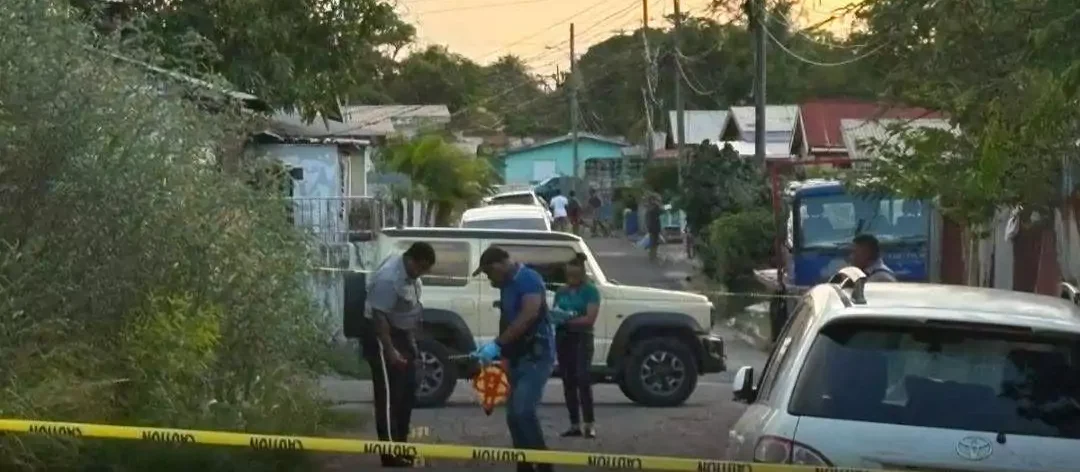
    To build a comprehensive case against the perpetrators, crime scene investigators have cordoned off the area at the intersection of America and Longden Streets, where forensic teams are currently conducting a meticulous search for shell casings, DNA evidence, and other clues that could help identify the second suspect and confirm the sequence of events during the robbery. The money changer was also escorted back to the crime site to assist investigators with reconstructing the attack and confirming key details of the incident.

    Local law enforcement has not released any further information about the identities of the suspects or updates on the manhunt as of the latest update, and the investigation remains active.

  • Former national footballer gunned down in Calliaqua

    Former national footballer gunned down in Calliaqua

    A devastating act of violence has shaken the small coastal community of Cailliaqua in St. Vincent and the Grenadines, where former senior men’s national footballer Keith James was shot to death late Friday, just nine days shy of his 38th birthday.

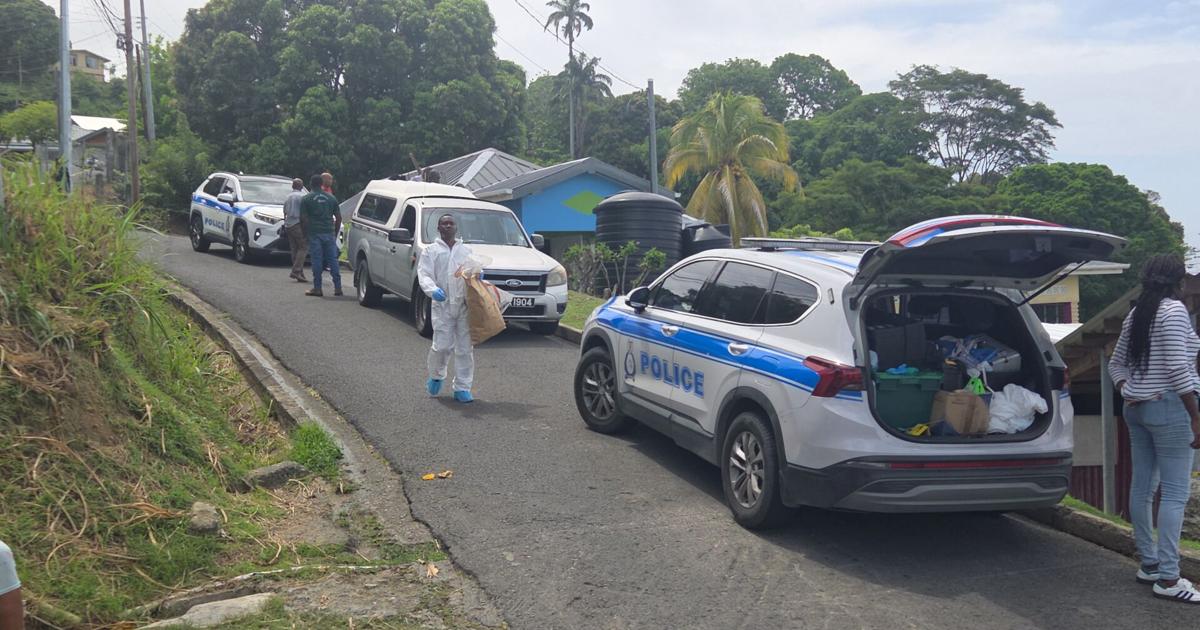
    Local law enforcement agencies remain on site in the hours following the incident, working to gather forensic evidence and interview witnesses near the Anglican Church at the heart of the south coast town where the shooting unfolded.

    Preliminary accounts from early investigators indicate James had just completed his journey back to his local residence. The fatal attack occurred moments after he stepped out of his vehicle, leaving residents and officials in shock.

    Local community members have put forward preliminary speculation about the premeditated nature of the killing: a dark-colored unregistered vehicle was spotted speeding away from the area immediately after the gunshots rang out, leading locals to believe the gunman lay in wait for James before striking.

    The tragedy marks a grim milestone for the Caribbean nation this year. James’ murder pushes the total number of homicides recorded in St. Vincent and the Grenadines in 2024 to 14, and he is the fourth person to be killed by gun violence in the country in less than a four-week period.

    Beyond his time representing St. Vincent and the Grenadines on the international football stage, James also built a well-known legacy as a player for the local club side Avenues United, earning respect from teammates and fans across the country’s domestic football circuit.