分类: society

  • Development vs. Conservation in Caye Caulker

    Development vs. Conservation in Caye Caulker

    Nestled off the coast of Belize, the laid-back island of Caye Caulker has long built its reputation as a low-key, tourism-friendly destination where pedestrians roam freely instead of congested traffic. But a proposed infrastructure project has now split local and national leadership, opening up a fierce debate over how to grow the island without destroying the natural ecosystems that make it a popular attraction.

    At the center of the dispute is a plan for seawall construction and dredging work in the western mangrove zone, a critical wetland area that acts as Caye Caulker’s natural first line of defense against coastal erosion and dangerous storm surges. The Caye Caulker Village Council has issued urgent warnings about the project’s potential risks, outlining its concerns in an official letter sent to Belize’s Department of Environment (DOE). In the correspondence, the council stresses that the construction work could cause irreversible damage to the island’s mangrove forests, erode the natural protection the ecosystems provide, and block public access to the island’s waterfront areas that are vital to both locals and visitors.

    The letter was also copied to Andre Perez, area representative for Belize Rural South, who has already publicly thrown his support behind the project and approved its progression. But the nation’s top sustainable development official says he has yet to receive the correspondence and will launch a full review to find a middle ground between progress and protection.

    “I haven’t seen the letter. It hasn’t come to me. If it came and went to the Department of Environment directly I haven’t been informed, so maybe it’s something recent,” explained Orlando Habet, Belize’s Minister of Sustainable Development, in an on-camera interview. “But I will be looking into it, discussing it with the Department of Environment to see if they have received the letter, then how we can respond.”

    Habet noted that any infrastructure project along Caye Caulker’s coast requires a balanced look at both potential benefits and drawbacks. “Just from the concerns of the community, if the seawall is there one, you have to see what positivity there is to it. If it avoids water from coming into the community during high storms and high tides. And then also looking at the negative side to it, because sometimes you build these walls and they’re not built [correctly] then it causes erosion on one side and the other. So but since I haven’t seen it I will have to address it to the DOE.”

    The core question at the heart of this dispute is one that many small Caribbean tourism-dependent islands grapple with: How can communities grow and develop without eroding the unique natural and cultural character that draws visitors in the first place. As local resident Britney Gordon put it: “How do we find a balance between development and maintaining the part of the island that attracts tourists to it?”

    For Caye Caulker, that balance is particularly critical. Unlike the busier, more developed neighboring island of San Pedro, Caye Caulker has retained a quiet, walkable identity that has become its biggest selling point. Habet emphasized that this unique character is worth protecting. “Especially Caye Caulker, I think that [the] council has also tried to see how they could maintain some type of structure within the community itself. And because it’s very touristic, we all know that if you go to San Pedro, it’s a lot more hectic. If you go to Caye Caulker, it’s a lot calmer. You can walk the streets and everything else. So you don’t want to see all those vehicles and golf carts where people are already accustomed to walk. So I think that there has to be a balance.”

    Habet added that moving forward, relevant government bodies will collaborate with local municipal leaders to enforce clear building guidelines that preserve the island’s character. “My personal view is that I like to walk, and so I would prefer that it’s not congested as what’s now become San Pedro town [in] terms of the buildings. I think that the Ministry of Infrastructure Development and Housing, which has a dedicated desk for the building codes, will be working along with the municipality to see how they can structure in some organization within it.”

    This report is a transcript of a televised evening news broadcast, with Kriol-language dialogue transcribed using a standardized spelling system.

  • Pact Celebrates Women Leaders in Conservation with Art Showcase

    Pact Celebrates Women Leaders in Conservation with Art Showcase

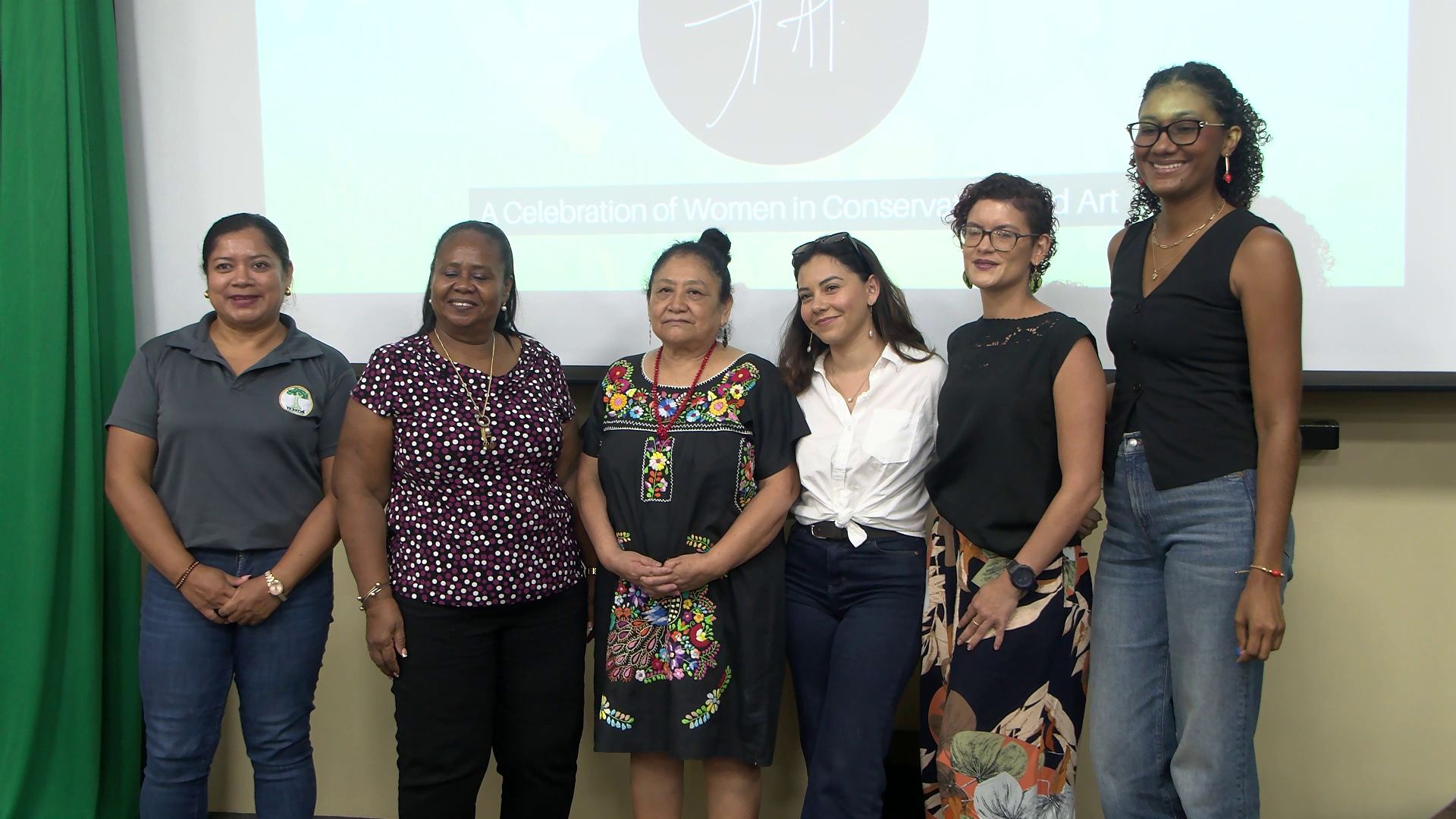
    As the Protected Areas Conservation Trust (PACT) of Belize enters its fourth decade of protecting the country’s biodiverse natural landscapes, the organization is centering the long-overlooked contributions of women to local conservation through a unique, month-long anniversary celebration that merges environmental advocacy, community storytelling, and local artistic craft.

    Titled “Rooted and Rising,” the signature event of PACT’s anniversary calendar was born from a collaborative partnership between the trust and three of Belize’s most talented female artists and creative entrepreneurs. The project pairs each creator with a trailblazing female conservation leader, tasking artists to translate the decades of work, personal journeys, and lasting impact of these environmental champions into one-of-a-kind, custom art pieces.

    For generations, women have formed the quiet backbone of Belize’s conservation movement, often leading community-led initiatives that balance local livelihoods with ecosystem protection. This showcase brings their stories out of the background and into public view. PACT Executive Director Abil Castañeda explained the core vision behind the cross-sector collaboration, noting that the project was designed to honor the lifetime of dedication these women have poured into protecting Belize’s natural heritage. “We took their life, their careers and their profession in conservation, and asked some of our brightest minds in creative arts to develop products that commemorate that life, to commemorate that dedication that they have shown over decades,” Castañeda shared.

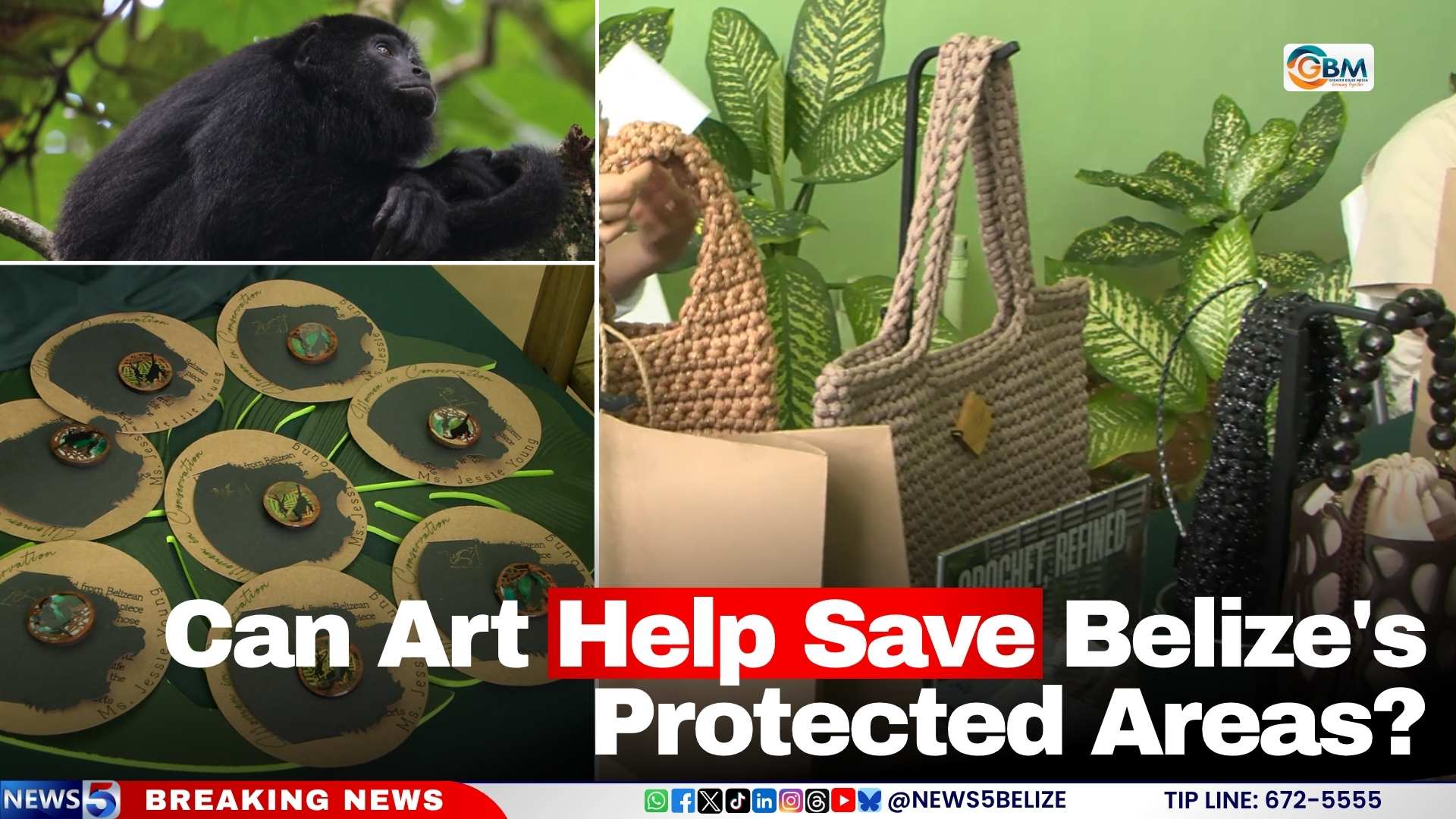
    Three standout conservation leaders were featured in the showcase: Jessie Young of the Women’s Conservation Group at the Community Baboon Sanctuary, Maria Garcia of the Itzamna Society, and Christina Garcia of the Ya’axche Conservation Trust. Young detailed the extraordinary progress her community-led group has achieved in protecting Belize’s black howler monkey population: when the sanctuary launched in 1985, only 800 monkeys remained in the area. Today, thanks to decades of consistent on-the-ground work led by local women, that population has surged to more than 6,000. Young added that managing a community-based conservation organization comes with unique complexities, but as women born and raised in the region, the team brings inherent insight into local needs and the resilience to see long-term conservation goals through. “We believe as women we have the strength that it takes to manage anything, and so we stepped in, and the landowners gave us permission to take over the management,” Young said.

    The three participating artists — Zyania Alonzo, Aesha Garel, and Landee Longsworth — each poured hours of detailed work into pieces that reflect their paired conservationist’s mission. Alonzo, who collaborated with Maria Garcia, created a handcrafted tote bag that draws direct inspiration from forest ecosystems. “I wanted to do something that represents the forest and its intricacy, so the body of the bag represents the root system that is in the forest. And then I also wanted to add the handles from the forest as well, which is made from supa seeds,” Alonzo explained, noting that the printing process for the bag’s body alone takes roughly 14 hours, with hand-braided tassels and hand-finished satin lining adding to the piece’s one-of-a-kind craftsmanship.

    Belize’s Minister of Sustainable Development Orlando Habet attended the opening of the showcase, and emphasized that the event marks a growing national recognition of women’s irreplaceable role in conservation. Today, more women than ever hold leadership, management, and technical roles across Belize’s entire network of protected areas, and the initiative also opens new pathways for local artisans to contribute to the country’s growing orange economy — the sector that encompasses cultural, creative, and heritage-based economic activity. Habet called for broader cross-government participation to support the growth of the orange economy, noting that it centers people, culture, history, and untapped creative potential that drives both economic and environmental progress.

    The showcase concluded with a public pop-up marketplace that gave visitors the chance to view and purchase the custom works. To continue supporting the featured conservation work, half of all proceeds from art sales will be donated directly to the participating conservation organizations to fund their ongoing environmental initiatives across the country.

  • ABCAS Celebrates Historic First Graduating Class

    ABCAS Celebrates Historic First Graduating Class

    On July 2, Antigua and Barbuda’s higher education sector entered a new era, as the Antigua and Barbuda College of Advanced Studies (ABCAS) hosted its very first commencement ceremony at the SJPC House of Restoration to honor over 200 trailblazing graduates who make up the institution’s historic founding class. The celebratory event drew a diverse crowd of attendees, including graduates, their families, academic faculty and staff, senior government officials, key industry stakeholders, and invited guests, all gathering to mark the start of a transformative new chapter for public tertiary education across the dual-island nation.

    The 2026 graduating cohort left the institution with a wide range of credentials, spanning associate degrees, professional diplomas, and specialized certificates. Graduates completed programs across 11 diverse academic and professional fields: business administration, culinary arts, K-12 and higher education, engineering disciplines, health care services, hospitality management, information technology, liberal arts, creative industries, and core scientific fields.

    In his official address to the graduating class, Education Minister Daryll S. Matthew framed the landmark ceremony as the fulfillment of a years-long, ambitious vision to expand accessible, high-quality public tertiary education in Antigua and Barbuda. He extended warm congratulations to the founding cohort on their historic achievement, urged graduates to leverage their newly gained skills and knowledge to drive forward national development, and highlighted the growing School of Agriculture as a standout example of ABCAS’ commitment to expanding workforce readiness and addressing critical labor gaps across the country.

    The full ceremony featured a packed schedule of symbolic and celebratory moments. ABCAS President Dr. Ezra Jonah Greene delivered opening remarks, while 2026 Rhodes Scholar Resa Nelson delivered the featured commencement address. Valedictorian Fiona Benjamin, an Associate of Arts graduate in Secondary Education TVET from ABCAS’ Dr. Alister Francis Campus, delivered the traditional valedictory address, before the entire class took part in the iconic symbolic turning of tassels to mark their official graduation. The institution also formally recognized Salutatorian Micaiah Graham, an Associate of Science graduate in mathematics and natural sciences from the Dr. Alister Francis Campus, for his exceptional academic performance.

    Two particularly moving moments resonated with all in attendance. The first was the recognition of Tahjé Browne, a national competitive cyclist and graduating student, whose well-documented perseverance and resilience through personal and academic challenges left a lasting impression on the crowd. The second was a heartfelt tribute to Brianna Clarke, a promising culinary arts student who passed away before completing her degree. ABCAS reserved an empty honorary seat for Clarke during the ceremony and presented her posthumous graduation credential to her family, cementing her place forever in the college’s historic founding class.

    As the ceremony drew to a close, the Class of 2026 departed with a unique distinction that no future graduating cohort will ever hold: the honor of being ABCAS’ very first graduating class. Their successful completion of studies does not only mark a major personal milestone for each graduate, but also lays the foundation for a lasting legacy for both ABCAS and the future of tertiary education in Antigua and Barbuda.

  • Agriculture Summer Internship Programme Gives Students Hands-On Experience at Green-castle Agricultural Station

    Agriculture Summer Internship Programme Gives Students Hands-On Experience at Green-castle Agricultural Station

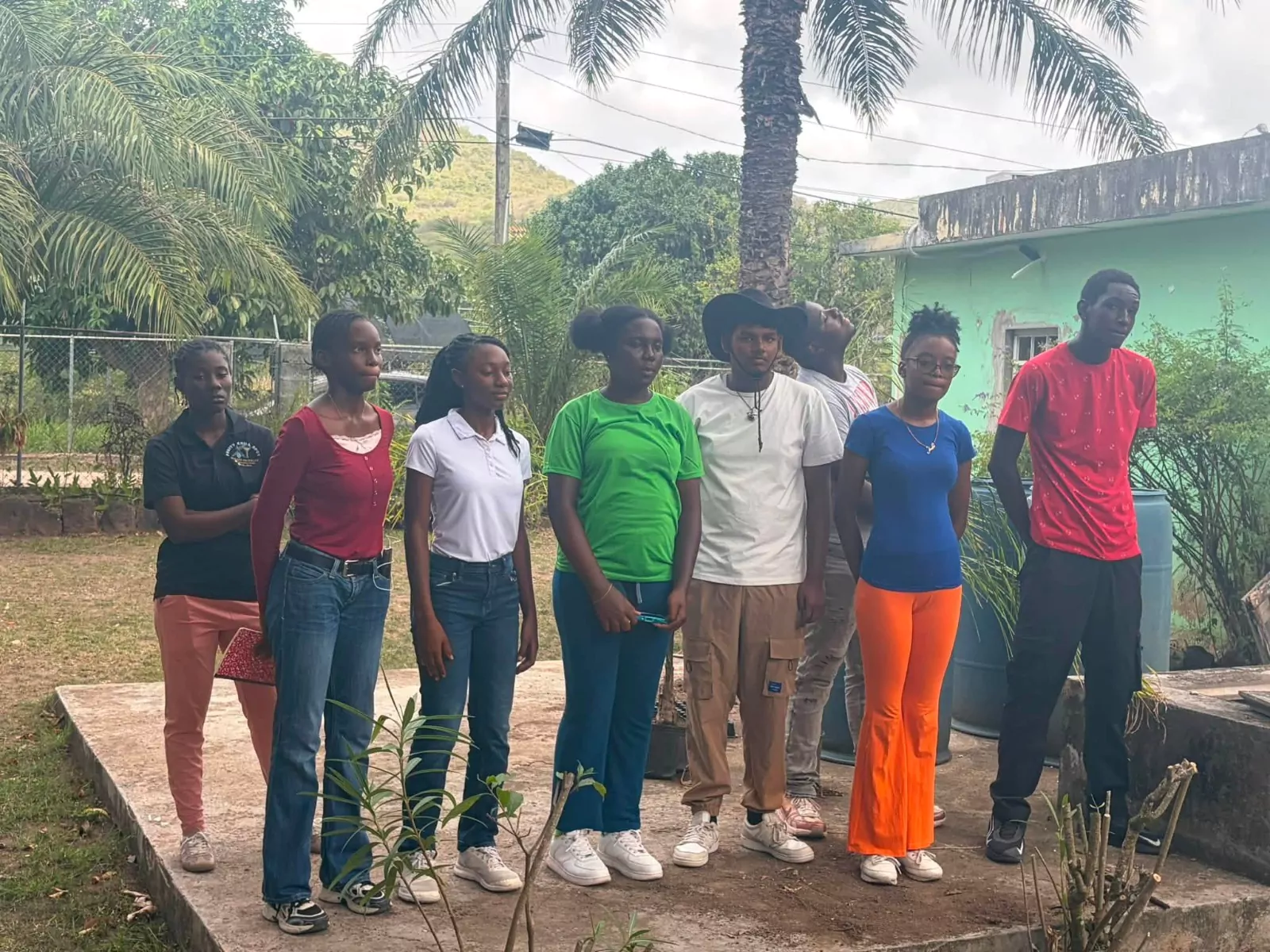
    On a recent Friday, a cohort of young participants in the Ministry of Agriculture’s Summer Internship Programme traded textbooks for field work, immersing themselves in a full day of hands-on skill-building at the Greencastle Agricultural Station. Designed to bridge the gap between classroom theory and real-world agricultural practice, the training session covered every core dimension of modern farming and station operations, from crop cultivation and nursery management to administrative workflow.

    To ensure every intern gained exposure to diverse agricultural specializations, organizers structured the day around a rotating station model. One of the first stops for many groups was the station’s nursery, where staff walked participants through the core techniques of plant propagation. Interns learned how ornamental plants, fruit trees, and young seedlings are produced through multiple methods, including traditional seed growing, stem cutting, and grafting. Agriculture Assistant Grantley and Supervisor Victor led a practical exercise on soil preparation, guiding interns through the process of sifting nutrient-ready soil and filling nursery pots to prepare for new planting. Across the nursery, a second group worked alongside trainee Zulema to transplant seedless watermelon seedlings, picking up best practices for seedling care and healthy propagation along the way.

    Outside the nursery, field-based training shifted focus to perennial tree crop management, with a deep dive into coconut cultivation. Agriculture Assistant Rennice led interactive lessons on identifying common coconut tree diseases and fungal infections, teaching interns how to properly prune infected branches to stop the spread of pathogens and outline the specific nutritional needs that support healthy coconut growth. After the coconut training, participants toured the station’s experimental groves of grafted mango and starfruit trees, observing how grafting techniques improve fruit yield and disease resistance in these commercial crops.

    The learning experience was not limited to cultivation skills. Organizers prioritized teaching foundational operational habits that keep agricultural stations running smoothly, including a hands-on session where interns organized and deep-cleaned the facility’s tool house. This exercise emphasized the critical roles of regular equipment maintenance and consistent workplace safety protocols in preventing accidents and extending the lifespan of farming tools.

    Complementing the outdoor fieldwork, the programme also included a classroom component focused on the administrative backbone of agricultural operations. Administrative Office Trainee Shanice walked interns through standard record-keeping procedures required to run a public agricultural station, covering everything from employee timesheets and entry registers to departure logs and basic salary calculation. The session highlighted that successful agricultural operations rely just as much on organized administrative work as they do on skilled field cultivation.

    The day wrapped up with a friendly competitive activity, where each intern team delivered a short presentation summarizing their key takeaways from the training. Team Grow took first place in the presentation competition, with Dynamic 7 claiming second place, Seven Sparks securing third, and Agriculture on the Go (AOTG) finishing fourth.

    As a core module of the Ministry of Agriculture’s broader Summer Internship Programme, the Greencastle Station visit serves a larger strategic goal: to equip young people with tangible, job-ready agricultural experience and cultivate interest in long-term careers in the agriculture sector. By exposing emerging professionals to every layer of agricultural operations, the programme works to build a skilled new workforce for the country’s farming industry.

  • Five Islands Education Expansion Gains Momentum

    Five Islands Education Expansion Gains Momentum

    The Caribbean nation of Antigua and Barbuda is moving forward with two transformative education infrastructure initiatives, both designed to broaden access to high-quality learning opportunities and reinforce the country’s growing higher education ecosystem, government officials confirmed this week.

    During the most recent sitting of the country’s Cabinet, Education Minister Daryll Matthew presented a progress update on the construction of the new Five Islands Primary School, noting that the development is currently tracking according to its original timeline. Minister Matthew added that a detailed public briefing outlining completed work, next phases, and any adjustments to the project will be released to the community next week.

    Cabinet members also received a status report on the planned expansion of the University of the West Indies (UWI) Five Islands Campus, a key higher education facility serving local and regional students. The project’s competitive bidding and procurement phase has generated significant industry attention: as of the latest update, roughly 18 private construction and development firms have formally registered their interest in competing for the contract, ahead of the August 14 bid submission deadline.

    Following the presentations, Cabinet collectively expressed strong confidence in both projects, emphasizing that the developments will deliver lasting, multi-generational benefits to Antigua and Barbuda, while advancing the country’s overarching national development strategic objectives focused on human capital growth and public service improvement.

  • Staatsolie Foundation geeft O.S. Leiding 8A vernieuwde leeromgeving

    Staatsolie Foundation geeft O.S. Leiding 8A vernieuwde leeromgeving

    A Surinamese primary school, O.S. Leiding 8A, has officially reopened its renovated campus facilities this week, thanks to a full renovation project funded by the Staatsolie Foundation. A celebratory handover ceremony held on Tuesday marked the formal completion of the works, bringing a transformed learning environment to hundreds of current and future students at the school.

    The foundation’s financial support covered comprehensive upgrades across two entire school wings, including full replacement of outdated electrical infrastructure and a complete refurbishment of two aging toilet blocks. The overarching goal of the project is to directly improve learning conditions for all students by addressing longstanding safety and accessibility issues at the campus.

    Attendees at the handover ceremony included representatives from the Staatsolie Foundation, the construction contractor, school faculty, and student body. To honor the foundation’s support, students performed a special cultural program featuring traditional song, dance, and spoken word performances that highlighted their gratitude for the investment in their school.

    School principal A. Charan opened formal remarks by extending sincere thanks to the foundation for its commitment to the project. Charan emphasized that the renovation is far more than just an upgrade to physical infrastructure—it is an investment in the long-term future of every student who passes through the school’s doors. “A school is more than a building,” Charan said. “It is a space where children learn, grow, and chase their dreams. Thanks to this generous contribution, we can now offer our students a far safer and more enjoyable place to learn every day.”

    The project manager for the Staatsolie Foundation recalled that during her first site visit to the school, she was struck by the poor condition of many campus areas, particularly the outdated and run-down sanitation facilities. That observation reinforced the foundation’s mission to support underserved local schools, and to invest in creating supportive learning environments that set students up for success. “That’s exactly why the Staatsolie Foundation prioritizes school renovation projects: we want to do our part to give every student the quality learning space they deserve,” she noted.

    Following the opening remarks, foundation representatives joined faculty and student leaders to unveil a commemorative project plaque. After the plaque unveiling, a group of student representatives cut the ceremonial ribbon to formally mark the renovated facilities open for use. The ceremony concluded with a guided tour for guests of the upgraded classrooms and refurbished toilet blocks, allowing attendees to see the completed upgrades firsthand.

    Members of the O.S. Leiding 8A school community have expressed widespread gratitude for the foundation’s investment. With the renovation now complete, students have access to a modern, safe, and stimulating learning environment that will support their academic and personal growth for years to come.

  • Can Art Help Save Belize’s Protected Areas?

    Can Art Help Save Belize’s Protected Areas?

    For decades, unsung women conservationists have worked quietly behind the scenes to safeguard Belize’s rich forest ecosystems and vulnerable wildlife populations. Now, a pioneering new initiative is pulling these dedicated leaders into the public spotlight – not through policy debates or grassroots protests, but through the power of creative art.

    To mark its 30th year of conservation action across Belize, the Protected Areas Conservation Trust (PACT) has launched a one-of-a-kind anniversary project called “Rooted and Rising.” The innovative exhibition pairs three long-serving female conservation leaders with three of Belize’s most talented emerging women artists, creating a space to celebrate the human effort behind the country’s decades of environmental progress that often goes unrecognized.

    Abil Castañeda, executive director of PACT, explained that the project takes generations of on-the-ground conservation work and translates it into permanent, tangible works of art that tell the story of these women’s impact. “We centered their lives, their decades-long careers and their unwavering commitment to conservation, then turned to some of our nation’s most brilliant creative talents to ask: how can we create pieces that honor this legacy, and memorialize the dedication these women have shown over decades?” Castañeda said in an interview about the initiative.

    One of the conservation leaders honored in the exhibition is Jessie Young, a core member of the Community Baboon Sanctuary’s Women’s Conservation Group. Under the leadership of Young and her colleagues, the group has overseen a dramatic recovery of Belize’s black howler monkey population: growing from just 800 individuals in 1985, when the sanctuary was founded, to more than 6,000 today. Young reflected on the challenges of building and sustaining a community-led conservation organization over decades, noting “It’s never easy to manage a community-based organisation… but we have managed to persevere. We believe as women we have the strength that it takes to manage anything.”

    For the exhibition, each artist draws direct inspiration from the conservationist they are paired with, turning their work and values into creative pieces. Artist Zyania Alonzo, who collaborated with conservationist Maria Garcia, created a handcrafted leather bag designed to echo the complex layers and biodiversity of Belize’s rainforests. “I wanted to do something that represents the forest and its intricacy,” Alonzo explained of her work.

    Beyond honoring the legacy of these women, the project also provides direct, ongoing support for future conservation work. After the exhibition closed its run, organizers hosted a pop-up marketplace where all artworks are available for purchase, with 50% of every sale going straight to the conservation groups represented in the show.

    A full feature introducing all three participating artists and the conservation leaders they collaborated with will air during tonight’s 6 p.m. broadcast of News 5 Live, giving audiences a deeper look at the intersection of art, activism and gender in Belize’s conservation movement.

  • Antigua and Barbuda Police to Intensify Crackdown on Illegal Ski Masks

    Antigua and Barbuda Police to Intensify Crackdown on Illegal Ski Masks

    The twin-island Caribbean nation of Antigua and Barbuda is rolling out an aggressive new law enforcement initiative targeting the rising trend of young people wearing ski masks in public spaces, a practice that has been prohibited under existing national legislation for years. The new crackdown was formally unveiled by Director General of Communications Maurice Merchant during a post-Cabinet press briefing held on Thursday, where he outlined that both the national Cabinet and Police Administration have grown increasingly alarmed by the steady uptick in unauthorised ski mask use across the country’s streets.

    The discussion over the emerging trend made its way to Wednesday’s weekly Cabinet meeting after ministers personally observed the growing popularity of ski masks as a fashion item among the nation’s youth. “As you travel through communities and walk along public thoroughfares in Antigua and Barbuda, it is impossible to miss the growing number of people wearing ski masks for no clear reason,” Merchant told reporters. “For many of our young people, this appears to simply be a new, controversial fashion statement.”

    Under Antigua and Barbuda’s existing laws, ski masks are classified as illegal apparel for public wear, with only narrow exceptions granted for workers who require the protective face covering to carry out their job duties. Construction workers, for example, are permitted to wear ski masks during active work shifts, but this exemption does not extend to wearing the garment in public spaces outside of working hours. “We want to make this clear to parents and the general public: ski masks are banned from public wear across Antigua and Barbuda,” Merchant emphasized.

    To enforce the long-standing ban, law enforcement officers have received formal orders to launch what Merchant described as a “rigorous campaign” aimed at eliminating unauthorised ski mask use from the nation’s public spaces. Under the new initiative, officers will confiscate any ski masks that are being worn in violation of the law. “If an individual is found wearing a prohibited ski mask in public, officers will take the item directly from their possession,” Merchant explained. He added that anyone who resists this enforcement action will face additional action from police, as local law grants officers authority to take all necessary steps to ensure compliance with the ban.

    Alongside the discussion of the ski mask ban, Cabinet members also addressed a recent uptick in street jewellery snatching incidents across the country. Prime Minister Gaston Browne pushed for harsher legal consequences for offenders, arguing that current penalties amount to little more than a “slap on the wrist” that fails to deter criminal activity. No new formal policy changes or legislative amendments were announced during this week’s briefing, however. The new ski mask enforcement campaign is set to get underway immediately, as authorities work to crack down on face coverings that they argue can enable criminal activity and address mounting public safety concerns across the nation.

  • Saint Lucia launches platform to strengthen consumer protection

    Saint Lucia launches platform to strengthen consumer protection

    Consumers across Saint Lucia are set to benefit from a transformative new initiative that will reshape how they access support and resolve issues, following the formal launch of a multi-agency agreement to establish the unified Consumer Connect Platform. Marking a historic first for the Caribbean nation, the platform brings together all of the country’s leading consumer protection and regulatory bodies under a single, coordinated system, eliminating the fragmented service delivery that has long complicated consumers’ efforts to address concerns.

    The cross-agency partnership includes five key stakeholders: the Department of Consumer Affairs, the National Consumers Association, the National Utilities Regulatory Commission (NURC), the Saint Lucia Bureau of Standards (SLBS), and the National Telecommunications Regulatory Commission (NTRC). By aligning their operations through the new platform, the collaborating organizations aim to cut through bureaucratic red tape, ensure consumer complaints and inquiries are routed to the correct authority without delay, and deliver far more accessible assistance to everyday people.

    Emma Hippolyte, Saint Lucia’s Minister for Labour and Consumer Affairs, has hailed the unified platform as a landmark achievement for consumer rights in the country. In official comments accompanying the agreement, she emphasized that the project reflects a collective commitment across government and regulatory bodies to prioritize consumer needs above institutional silos.

    “No single entity can deliver comprehensive, effective consumer protection on its own,” Hippolyte noted. She added that government bears a dual responsibility: not only to put in place the robust legislative and regulatory frameworks that safeguard consumer interests, but also to guarantee that the support and services built into those frameworks are easily accessible to every member of the public.

    Developed by the National Consumers Association, the Consumer Connect Platform is designed to simplify three core consumer needs: accessing accurate product and service information, submitting formal complaints, and securing timely assistance. For consumers, the shift means an end to the frustrating process of navigating multiple separate agencies to resolve a single issue, replacing that disjointed experience with a far smoother, faster end-to-end process.

    Hippolyte stressed that the timing of the platform’s launch responds directly to rapidly shifting market conditions across the region. As digital transformation accelerates, e-commerce expands, and digital services become an increasingly central part of daily life, consumer protection frameworks must adapt to address new challenges that did not exist in decades past.

    Each participating agency brings unique specialized expertise to the partnership, from regulating utility and telecommunications services to setting national product standards and delivering public consumer education. By pooling these skills and coordinating through the shared platform, the entire consumer protection ecosystem grows stronger, Hippolyte explained, equipping the network to tackle 21st-century consumer challenges far more effectively than any disconnected body could alone.

    Beyond its function as an information-sharing and coordination tool, the minister framed the platform as a critical step forward for public trust. For her, the initiative represents both a reaffirmation of confidence in Saint Lucia’s public institutions and a renewed commitment to delivering tangible, improved outcomes for consumers across the country.

  • Wife pleads for answers after husband vanishes

    Wife pleads for answers after husband vanishes

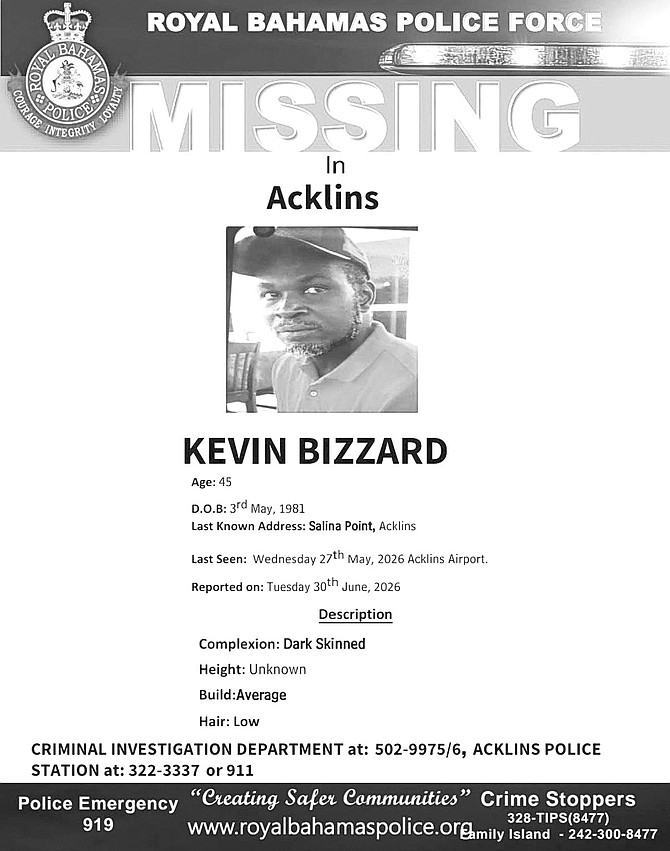
    Nearly five weeks after 46-year-old Kevin Bizzard, a resident of Acklins, The Bahamas, disappeared during a solo boat voyage between Bahamian islands, his wife Dianna Bizzard remains trapped in agonizing uncertainty, still waiting for any confirmation of whether her husband is alive or dead.

    The timeline of Bizzard’s disappearance began on May 27, when he left the family’s Acklins home bound for New Providence, where he planned to visit his brothers, according to Dianna. He checked in shortly after arriving, telling her he would depart that same evening for Abaco, a northern Bahamian island where he had previously worked repairing vessels for local owners. Dianna says she never received clear details on how he traveled to Abaco, only that local residents later confirmed he had reached the island’s main hub of Marsh Harbour and stayed there for several days.

    On May 30, Bizzard sent what would become his final communication to Dianna, and all attempts to reach him after that point have gone unanswered. “I sent messages on WhatsApp, I called his phone over and over — it doesn’t even ring anymore,” Dianna shared in an interview. She quickly reached out to local law enforcement in Abaco and island administrators to flag her concerns, but had not yet filed an official missing person report, choosing to wait two weeks in the hope that her husband would reemerge. It was not until June 30 that she formally reported him missing to the Acklins Police Station.

    In the weeks after contact was lost, Dianna learned new unconfirmed details about Bizzard’s final movements from local Abaco residents and a fishermen’s group chat. Multiple residents told her that Bizzard left Abaco alone on May 30 aboard a small black and white vessel, bound for Acklins. A relative later showed Dianna a screenshot from a regional fishermen’s chat group that claimed Bizzard had placed an emergency call for help, stating that his boat was rapidly taking on water in open water.

    Dianna says she was told the Royal Bahamas Defence Force launched an air and sea search for Bizzard the same morning the distress call was reported, but search teams failed to find any trace of Bizzard or his vessel. The Tribune has not been able to independently confirm the search effort or the distress report as of press time. To date, no trace of Bizzard or the boat has been found anywhere along the common route between Abaco and Acklins.

    For Dianna, the lack of closure has been devastating. Breaking down in tears during the interview, she described the constant uncertainty as unbearable. “I can’t eat, I can’t cook, I can’t stop thinking about where he might be,” she said. “All I want is to have him home, or to just know what happened. I just need to know where he is.”

    The couple, who have been married for nearly four years, share no children together, though Dianna says Bizzard has a child from a previous relationship whom she has never met. This is the first time Bizzard has ever disappeared without contact, Dianna says, and he is no stranger to danger at sea: years ago, he survived a boat sinking, swimming to shore alone before Dianna arranged for a private rescue boat to pick him up. Bizzard makes his living working as a boat builder and construction worker, and Dianna describes him as a kind, helpful man who was her closest friend. “He’s my best friend, I don’t know what to do without him,” she added.

    As weeks pass with no new information, Dianna continues to reach out to residents in both Acklins and Abaco, asking for any tip or sighting that could help solve the mystery of her husband’s disappearance.