分类: society

  • Open Letter to the Ministry of Health, Wellness and Social Services

    Open Letter to the Ministry of Health, Wellness and Social Services

    A long-simmering frustration with Dominica’s public health leadership has erupted into public view, as regional reproductive health advocacy group ASPIRE has publicly called out the Ministry of Health and Wellness for years of unresponsiveness on two critical policy issues: looming abortion law reform and the pressing crisis of adolescent fertility.

    The open letter, published this week, opens with a pointed juxtaposition: the nation is currently celebrating the trailblazing career of Dr. Carissa Etienne, a native Dominican who rose to become the Director of the Pan American Health Organization (PAHO) — the only leader in the institution’s history to win unanimous reappointment to a second term. Under her leadership, PAHO amplified focus on Caribbean public health needs more than any of her predecessors, a legacy ASPIRE says stands in stark contrast to the current performance of the local ministry Dr. Etienne once knew intimately.

    At the heart of the conflict is the ongoing constitutional challenge to Dominica’s existing abortion law. Should the High Court rule the current legislation unconstitutional, the Ministry of Health will immediately be required to roll out safe, accessible abortion care that balances the rights of both patients and medical staff. ASPIRE argues this ruling will leave the ministry facing a far larger, more complex challenge than simply updating service protocols: dismantling deep-rooted social stigma around abortion, a cultural force that ASPIRE says is largely amplified by institutional church influence. The advocacy group notes that politicians have long avoided confronting the church on this contentious issue, leaving critical preparation work undone.

    Mindful of the massive stakes of this impending legal shift, ASPIRE says it has extended multiple offers over several years to share its independent research findings with ministry leaders to kickstart collaborative planning for reform. To date, none of these offers have received any response.

    Beyond abortion law, the advocacy group has also pushed the ministry to take action on Dominica’s alarmingly high adolescent fertility rate, which currently outpaces the Caribbean regional average. ASPIRE presented the ministry with proven, low-barrier policy adjustments that have already been successfully implemented in five other Caribbean nations, yet again the group received no reply — not even a formal acknowledgment of receipt of their proposal.

    ASPIRE questions why a government ministry charged with protecting public health, which should prioritize timeliness and urgent action to address community needs, has been so unresponsive to civil society outreach. The group warns that without advance preparation, a court ruling will leave the ministry completely unprepared to meet its new obligations, leaving vulnerable patients without critical care.

    The advocacy group closed its letter noting that the culture of indifference and unresponsiveness now plaguing the ministry is a far cry from the public service ethos that shaped Dr. Etienne’s decades of work advancing regional public health. ASPIRE says it hopes other stakeholders receive more timely communication from the ministry, and expressed deep regret if the years of silence the group has faced reflect a broader systemic failure of Dominica’s public service.

    ASPIRE is a pro-motherhood, pro-family, pro-choice non-governmental organization registered in Dominica and four other Caribbean nations. The group works to advance equitable reproductive health policy through independent research and collaborative dialogue with civil society and government stakeholders.

  • UWI Cave Hill mourns slain law student

    UWI Cave Hill mourns slain law student

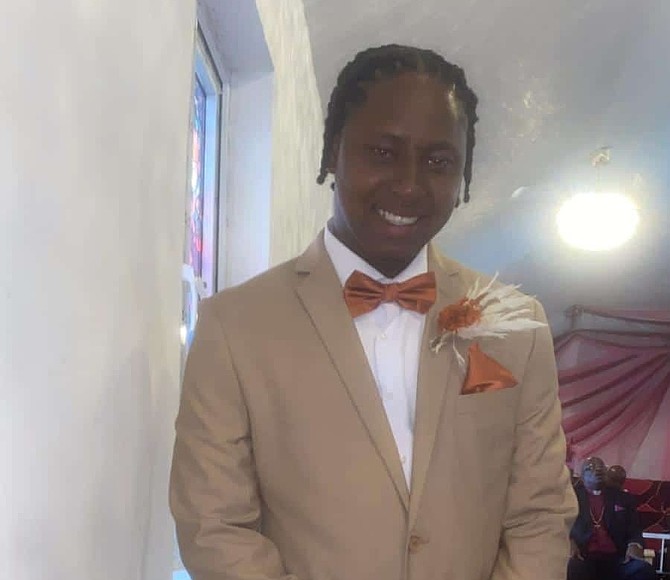
    The tight-knit academic community at the University of the West Indies (UWI) Cave Hill campus is grappling with devastating grief following the tragic killing of 26-year-old Daquan Roberts, a standout final-year law student on track to graduate with honors. Roberts lost his life in a drive-by shooting Tuesday night on Spruce Street in Bridgetown, The City, just weeks before the campus community was set to begin final examinations. The senseless violence has sent profound shockwaves through the institution, leaving students, faculty, and staff reeling from an unexpected and devastating loss.

    In an official statement released Thursday, university leadership confirmed that the entire campus is “deeply shocked and saddened by this tragic and senseless death.” In response to the tragedy, the institution has organized a campus vigil and public anti-gun violence walk to honor Roberts’ life and push back against the gun violence that cut his future short. Roberts enrolled in the UWI Cave Hill Faculty of Law for the 2023/2024 academic year, and quickly earned a reputation as a deeply committed, high-achieving student whose promise was evident to all who taught and worked alongside him. That bright, unfulfilled potential has made the loss even more devastating for every member of the law faculty community.

    Cave Hill Principal Professor Clive Landis acknowledged that grief has spread across all sectors of the campus, with the timing of the killing amplifying the emotional strain on students already gearing up for high-stakes final exams. “At this difficult time, our thoughts are with the family of Daquan Roberts, his friends, classmates, and all who knew him, and who are understandably affected by this loss,” Landis said. To support impacted students, the university has activated flexible provisions in its examination regulations, allowing any student unable to sit their scheduled exams to postpone them. This accommodation comes as the campus navigates a period of collective mourning unfolding mid-examination season, with the heaviest sorrow concentrated within the Faculty of Law.

    Interim Dean of the Faculty of Law Dr Antonius Hippolyte described a somber mood across the department, noting that Roberts was universally well-liked by peers and had left an enduring positive impression on all his lecturers. “Daquan, who was a bright and promising student, will be greatly missed. I wish to extend condolences to his friends and family as they navigate this difficult period,” Hippolyte said.

    Lecturer Carla Ali offered a more personal portrait of Roberts, capturing the full range of his character beyond his strong academic transcript. “Humble in spirit and generous in nature, Daquan was always ready to lend a helping hand to those around him. He became an integral part of the Faculty’s community and a familiar presence within the Law Library,” Ali said. She highlighted that Roberts’ consistent strong grades over his academic career reflected his natural discipline and sharp intellectual ability, but emphasized that he will be remembered far more for his warmth and kindness. “his warm smile, kind heart, and engaging personality,” she said, adding “his life, though far too brief, leaves behind a legacy of diligence, humility, and compassion that will not be forgotten.”

    Ajay Gordon, president of the UWI Cave Hill Guild of Students and a three-year classmate of Roberts, shared that the pair had planned to continue their legal studies together at the Hugh Wooding Law School in Trinidad and Tobago starting the next academic year. Gordon saw Roberts on campus just hours before the shooting, and noted that this marks the second time he has lost a classmate to violent death in recent years. “I remember fondly how easily he broke down difficult concepts of law to me and how passionate he was in lectures and tutorials. He always sat at the front and was intrigued by jurisprudence,” Gordon recalled. “I always remember that he would never pass by without giving me a fist bump. He was a very spiritual person.”

    Beyond academics, Roberts was deeply engaged in campus and community initiatives: he served as an ambassador and executive committee member for the UWISTAT Vice Chancellor’s Ambassador Corps, where he demonstrated consistent commitment to regional integration, volunteer service, and climate action, Gordon added.

    UWI officials confirmed that free professional counselling support has been made available to all students and staff as the community processes this devastating loss. The memorial vigil and anti-gun violence walk are scheduled for April 25 at the campus Peace Pole, a landmark installed in 2022 through an initiative by the Rotary Club of Barbados South that bears the message: “May Peace Prevail on Earth”.

    As of Thursday, law enforcement officials have not made any arrests in connection with Roberts’ killing, and detectives continue active investigations into the attack.

  • Top cop confirms link between Stoney Ground, Buccament killings

    Top cop confirms link between Stoney Ground, Buccament killings

    A wave of brazen, daylight gun violence that left three people dead across two communities in St. Vincent and the Grenadines has pushed the nation’s top law enforcement official to launch a full-scale operational crackdown on organized criminal activity, confirming a clear connection between the two separate shooting incidents that shocked the country over the weekend.

    Police Commissioner Enville Williams made the confirmation and announced the offensive in an official public address shared across social media channels, framing the brutal killings as a defining moment for the small Caribbean nation. In his address, Williams emphasized that the recent violence is far more than a routine law enforcement challenge—it is a direct attack on the country’s core values of peace and public safety.

    The string of violence began on the afternoon of April 10, when two men—29-year-old Enrique John, widely known by his alias Shoubu, and 22-year-old Raheem Guy, identified by sources as a close associate of John—were gunned down in the Stoney Ground neighborhood. John was killed inside a retail store at the local Russells Shopping Centre, a busy commercial hub, while Guy was fatally shot on the public sidewalk just outside the Caribbean Medical Imaging Centre, just steps away from the first shooting scene.

    Hours later, on Saturday, the body of 19-year-old Perrance Matthews, a relative of John from the Layou community, was discovered along the river defense embankment in Buccament Bay. Autopsy preliminary findings confirmed he died from multiple gunshot wounds to the head and chest. One additional person was wounded in the related violence, Williams confirmed.

    In the wake of the three deaths, Williams said the nation has reached an unavoidable crossroads: “There are moments in the life of a nation that demand more than mere observation, that demand a reckoning. Today, we stand at such a crossroad.”

    Calling the open violence “a direct assault on the peace, the dignity and the very soul of this country,” Williams said the public’s growing fear—sparked by the question of whether it is even safe to walk outside in their own communities—demanded a decisive response. “This is where we draw the line, and we’ll bring everything we’ve got to the fight,” he stated.

    The commissioner announced that the entire constabulary would shift from routine patrol to an absolute operational offensive against criminal networks. “We are focusing every lawful resource on this, and from here forward, our actions will speak louder than any words. We will be mobilising the machinery of the state to hunt down those who believe they can act without consequence,” Williams said.

    He issued a direct warning to both the perpetrators of the violence and anyone who aids them, saying: “To the criminal elements who believe they can transform the society into private hunting grounds, your arrogance is your undoing. Anyone who provides a roof, a vehicle or a wall of silence for these killers, you are not bystanders. You are accomplices to the destruction of your own country.”

    Williams added that law enforcement will dismantle the entire criminal infrastructure supporting the gun violence, using the full force of the law to target every person involved. He described the pattern of gun-related lawlessness as a dangerous cancer that must be stopped before it spreads to every town and village across the country, noting that national safety depends on the courage of everyday citizens.

    Acknowledging that the public’s anger and anxiety over the violence are completely justified, Williams called on residents to break their silence and share any information they have with authorities. “If you possess a single fragment of information, a name, a sighting, a whispered plan, bring it forward. Do not let misplaced loyalty become the solder under which more of our sons and daughters are buried,” he urged, warning against private retribution.

    “Vigilantism is not justice. It is the fuel that feeds the fire. Let the law be your shield and the police your sword,” he said. Williams also asked the public for patience in the coming days as the expanded operation unfolds, noting that all actions are being taken to protect the public good.

    To make it easier for residents to submit tips, the country’s Criminal Investigations Department and major crime units have posted dedicated hotlines—456-1801 and 457-1211—for anonymous tips. In the coming days, authorities will also launch a new QR code system that will allow residents to share information securely and freely, with all identities protected under the strictest confidentiality protocols.

    “This is the hour for our national resolve. This will not be defined by the violence of a few, but by the unity of many,” Williams said. “We will reclaim our streets, we will restore our peace, and we will ensure St. Vincent and the Grenadines remains a land where law and order are absolute.”

    As of the latest update, authorities have already made two arrests in connection with Perrance Matthews’ death. Rosia John, Enrique John’s mother, and 19-year-old Augustas Matthews, another Layou resident, have been charged with murder and conspiracy to murder. Rosia John additionally faces charges of cocaine possession and drug trafficking. Both suspects are scheduled to make their first court appearance later this Friday.

  • DEM: Be prepared for more than natural disasters

    DEM: Be prepared for more than natural disasters

    As the Caribbean island nation of Barbados prepares to enter the 2026 Atlantic hurricane season running from June to November, emergency management officials are calling on the country’s critical tourism and hospitality industry to expand its disaster planning beyond traditional hurricane and flood response to address a broader spectrum of evolving hazards.

    The call to action was delivered by Simon Alleyne, a programme officer with Barbados’ Department of Emergency Management (DEM), during the official launch of the Barbados Hotel and Tourism Association (BHTA)’s 2026 Emergency Management Workshop, hosted at The Crane Resort in the parish of St. Philip. Alleyne emphasized that while most hospitality preparedness efforts have long centered on natural hazards, the modern risk landscape demands preparation for man-made threats as well.

    “In our current social context, emergencies are not limited to the damage caused by natural disasters,” Alleyne told reporters on site. “We could face a scenario where armed intruders attempt to gain access to a hotel property. That means alongside regular evacuation drills, the industry must also develop and practice robust lockdown protocols. Hoteliers need to have clear, actionable plans to secure their properties, protect guests, and keep staff safe if an armed assailant seeks to cause harm.”

    Barbados sits in a geologically active region that exposes the island and its key tourism sector to a wide range of overlapping hazards that can strike at any time, even during the traditional hurricane window, Alleyne stressed. Beyond hurricanes and flooding, the island faces potential threats including volcanic eruptions, tsunamis, and earthquakes. Given that tourism is one of the backbone sectors of Barbados’ national economy, a robust, all-hazards preparedness framework is non-negotiable, he added.

    Alleyne went on to outline that effective preparedness relies on three core pillars: proactive planning, regular hands-on training, and cross-sector collaboration. The goal of his workshop presentation, he explained, was to reorient hoteliers to the value of documented, tested emergency plans, regular small-scale drills and evacuation exercises at individual properties, and leveraging BHTA’s existing public information networks to share best practices across the industry. “Hotels have so much to learn from one another when it comes to refining their emergency planning approaches,” he noted.

    The DEM official also highlighted major technological advancements that have boosted the island’s hazard forecasting and emergency response capabilities, spearheaded by the Barbados Meteorological Services (BMS). BMS has upgraded its monitoring infrastructure, including radar systems, that allow for faster data collection and more timely responses to everything from hurricane alerts to earthquake and tsunami warnings. Alleyne specifically called out the growing use of drone technology for post-disaster damage assessment, noting that aerial imagery and mapping allow response teams to quickly survey areas impacted by storm surge, flooding, or hurricane damage to prioritize relief efforts.

    He also drew attention to BMS’ expanded national multi-hazard early warning system, which is designed to ensure hazard alerts reach all segments of the Barbadian population. Warnings are now distributed via multiple channels: mobile phone notifications, radio broadcasts, and television alerts. For hearing-impaired residents and visitors, television alerts include on-screen text and sign language interpretation, a step that aligns with broader efforts to center accessibility in all emergency planning.

    Alleyne commended local hotels for already integrating accessibility considerations into their emergency protocols, but noted small, actionable adjustments can further improve outcomes for disabled guests. Simple measures such as offering accessible ground-floor accommodation to guests with mobility impairments can make a major difference during evacuations, he explained, since elevators often go out of service during emergencies, requiring disabled guests to be assisted down staircases. He added that accommodation providers and on-site caregivers must coordinate closely to ensure no person with a disability is left behind during an emergency evacuation or response.

    Beyond the tourism industry, Alleyne issued a call to action for all Barbadian households to take proactive steps to prepare for the coming hurricane season and potential hazards. He urged communities to prioritize pre-season cleanup work, including clearing clogged drains and gutters, removing overgrown vegetation from public rights of way, and assembling emergency supplies that go beyond the usual stock of canned goods. Households should keep essential tools such as hammers and nails on hand, alongside adequate bottled water, portable battery packs for electronic devices, and cash – a critical resource if power outages disable digital payment systems.

    Alleyne also encouraged families to assemble personalized emergency “grab bags” for every member of the household, accounting for the specific needs of children, elderly relatives, and even household pets. Finally, he reminded property owners that having up-to-date home and property insurance is a core component of long-term disaster resilience, helping families and businesses recover more quickly after a major hazard event.

  • Nissan Juke Stolen in Ottos as Owner Appeals for Public Help

    Nissan Juke Stolen in Ottos as Owner Appeals for Public Help

    A vehicle theft incident in the Ottos neighborhood has sparked a public appeal for information, as the owner of a stolen compact SUV works with local authorities to track down their missing property. The stolen car, identified as a 2012 dark brown Nissan Juke with licence plate A 75508, was taken from an address on Craven Road between the late hours of the previous night and the early hours of the current day, according to initial reports. With no major leads emerging in the immediate aftermath of the theft, the vehicle’s owner has reached out to community members for help, asking anyone who may have spotted the distinctive SUV or noticed suspicious activity around Craven Road overnight to share what they know with law enforcement. Local officials have backed this appeal, issuing guidance for residents who encounter the stolen vehicle: if spotted, community members are advised not to confront any potential thieves, instead take a discreet photo to confirm the vehicle’s identity and immediately notify police of its exact location. As of the latest update, law enforcement has not released additional details about the incident, including whether there are any persons of interest or what may have motivated the theft. Authorities have urged all local residents to remain alert to suspicious activity in the area, and encouraged anyone holding even small pieces of information that could support the recovery of the stolen Nissan Juke to step forward. Vehicle theft remains a common community concern in many residential areas, and officials note that public vigilance and cooperation often play a critical role in helping recover stolen property and holding perpetrators accountable.

  • Police awaiting forensic reports

    Police awaiting forensic reports

    Weeks after a controversial police-involved shooting left one man dead and another woman permanently injured in Trinidad and Tobago, top law enforcement officials say the investigation is held up by pending forensic testing, prompting a public call for patience from the country’s top police leader. Police Commissioner Allister Guevarro made the disclosure during a public appearance at the Trinidad and Tobago Chamber of Commerce’s Westmoorings headquarters on Tuesday, breaking down the current status of the probe into the January 20 incident that killed 32-year-old Joshua Samaroo and left Kaia Sealy paralyzed.

    The shooting, which unfolded after a vehicle chase that ended with suspects’ car crashing into a St. Augustine drain, was captured on widespread mobile footage that sparked significant public outcry and renewed national debate over excessive use of force by Trinidad and Tobago law enforcement. Two independent oversight bodies, the Professional Standards Bureau and the Police Complaints Authority, have already launched parallel probes into the incident alongside the internal police investigation.

    Guevarro told attendees that the police-led investigative work on the case is fully complete, and the file has been passed to the Office of the Director of Public Prosecutions for formal review. The only outstanding materials required to move the process forward are official lab reports from the national Forensic Science Centre, which have not yet been finalized. “The investigation, as far as the police aspect is concerned, has reached a point where we approached the Director of Public Prosecutions. What is outstanding are forensic reports. We don’t control that,” Guevarro explained.

    Pushing back against public expectations of rapid forensic results fueled by popular crime television, Guevarro noted that real-world forensic analysis follows strict, time-consuming protocols that cannot be rushed to satisfy public pressure. He pointed out that even major international law enforcement agencies like the U.S. Federal Bureau of Investigation routinely deal with delays of months or even years in forensic processing, dismissing the fast turnaround seen in scripted media as nothing more than “Hollywood magic.”

    Acknowledging the deep frustration and grief of the victims’ families waiting for answers, Guevarro expressed empathy for their position while emphasizing that accuracy in evidence gathering must take priority over speed. “So, I feel for the family and those who are waiting because I know it takes time…we want to make sure we get it right,” he said. He reaffirmed that the Trinidad and Tobago Police Service (TTPS) remains fully committed to conducting a thorough, transparent investigation that produces an outcome fully supported by solid evidence.

    Guevarro also addressed public controversy over his decision to release raw video footage of the shooting to the public early in the probe, a move that his own in-house legal team advised against. He told the audience that TTPS’s top legal official warned that releasing sensitive footage during an active investigation could jeopardize future legal proceedings and open the service up to additional public criticism. But Guevarro said he stood by his choice to give the public unfiltered access to the evidence he had seen, accepting full responsibility for the call. “I wanted to show the public what I am seeing,” he said. “At the end of the day, I am the leader of this organisation and I take the blows for it. I can stand before anybody and say I made a decision to do what I did.”

  • Guevarro: Fear more than  crime damaging economy

    Guevarro: Fear more than crime damaging economy

    In an address to leaders of Trinidad and Tobago’s business community on Wednesday, Police Commissioner Allister Guevarro sounded a stark warning: the pervasive public fear of crime has become a more corrosive threat to the nation’s economy and public confidence than the actual crime problem. Speaking at the headquarters of the T&T Chamber of Industry and Commerce in Westmoorings, Guevarro pushed back against widespread negative narratives around crime, pointing to recently compiled police data that shows sharp, measurable declines in violent and major offenses across the country.

    Guevarro framed fear not as a passing subjective emotion, but as a tangible, behavior-shaping force that warps decision-making and undermines progress long before any criminal act occurs. “Economic stability and public confidence are more interconnected than ever. This morning, I want to speak to you not just about crime itself, but about something that is far more corrosive, persistent and economically damaging, which is fear,” he told attendees.

    Official statistics compiled by the T&T Police Service tell a story that diverges sharply from dominant public perception, Guevarro explained. For 2025, the nation recorded 370 homicides, marking the second-lowest annual homicide total recorded across the last 18 years of available data, stretching from 2008 to the current year. That figure represents a 42% annual drop in homicides, a decline Guevarro noted ranks as the second-largest annual percentage reduction in the world, only trailing the progress seen in El Salvador. Broader crime trends follow the same downward trajectory: reported serious offenses dropped 30% nationwide, falling from 3,413 incidents to 2,397 in comparative reporting periods. Every police division across the country recorded improvements, with drops ranging from a 55% reduction in the North Eastern Division to a 32% reduction in the Southern Division. “These are not opinions or political talking points. These statistics tell a different story,” he emphasized.

    Yet despite these measurable gains, Guevarro said public discourse remains dominated by widespread anxiety, a phenomenon he argued is intentionally amplified by actors with self-serving interests. “Fear has become a kind of currency amplified and galvanised by those who profit from insecurity and those who build their platforms on negativity,” he said. Guevarro openly questioned whether distorted narratives around crime stem from deliberate strategic choices: “Is it because their business model depends on crime? Is it because a safer country threatens your influence, your narrative or your revenue streams?”

    The economic harm of this inflated fear is already tangible for local businesses, Guevarro warned. Fear pushes businesses to overinvest in unnecessary security measures — from extra alarms and high-resolution cameras to reinforced gates and other specialized gadgets — that drive up operating costs without meaningfully improving safety. Beyond direct costs, widespread anxiety keeps customers at home, erodes workforce confidence, and discourages outside investment, as potential investors focus only on outdated negative narratives rather than the nation’s improving trajectory.

    Guevarro also used the address to defend the current state of emergency (SOE) implemented to curb violent crime, pushing back against claims that the extraordinary measure harms legitimate business activity. “The SoE does not negatively affect law-abiding citizens, and there is no interference with business operations. The only people affected are those who terrorise communities, extort businessmen and traffic firearms,” he said. He outlined early results from the SOE, noting that over 42 days of enforcement, police carried out more than 3,500 targeted operations, arrested over 1,500 individuals, and secured charges for 340 people. “These are not the results of failure. They are the results of disruption and relentless enforcement,” he said.

    Looking ahead, Guevarro outlined the Trinidad and Tobago Police Service’s ongoing strategy to sustain declining crime rates: the service is prioritizing intelligence-driven operations, expanding modern public safety surveillance infrastructure, and strengthening coordination across multiple government agencies to disrupt criminal networks. “We are not guessing. We are not hoping. We are executing a clear strategy,” he stressed.

    In closing, Guevarro appealed to the business community to partner with law enforcement to rebuild public trust, not by ignoring the reality that crime remains an ongoing challenge, but by acknowledging the progress that has already been made. “We are not asking you to ignore the reality. We are asking you to recognise progress, support the systems that are working, and partner with us to accelerate healing,” he said. Reaffirming that the nation’s overall trajectory is positive, Guevarro warned that if unfounded fear continues to dominate national conversation, it will erode all the progress that law enforcement and the nation have worked to achieve. “The truth is, crime is real, but the fear of crime is not always rooted in fact. If fear continues to dominate the national conversation, it will undermine every single piece of progress that we have made,” he said.

  • 7 YEARS OF STRUGGLE

    7 YEARS OF STRUGGLE

    The shocking rescue of 42-year-old Sabita Basdeo, who authorities allege was held captive and systematically tortured for seven years at a private residence in San Francique, Trinidad, has pulled back the curtain on a devastating saga of survival that has unfolded across one working-poor family for nearly a decade.

    When Basdeo vanished from her home in Barrackpore, her two sons were just four and nine years old. For seven years, her husband 55-year-old Krishendeo Basdeo has carried the full weight of raising their boys alone, fighting poverty and relentless uncertainty to keep his family intact. In an interview with local outlet the Express at his cramped one-room shack — tucked at the end of an overgrown dirt track far from paved main roads — Krishendeo recalled the quiet, joyful life his family once shared, described his years of struggle to make ends meet, and opened up about his desperate hope to bring his damaged wife home.

    It all began when Sabita left the family home in search of work to supplement their meager income. A tip led her to a domestic cleaning job with a local family, a opportunity the cash-strapped mother could not turn down. “She did not know this would happen and she wouldn’t see her children again,” Krishendeo said, his pain masked by a faint, weary smile as he spoke.

    Almost immediately after Sabita failed to return, Krishendeo said he turned to police for help, filing a missing person report and pleading for investigators to intervene. He even traveled to the San Francique property himself, begging the residents there to release his wife. Instead of cooperation, he was met with public humiliation and verbal abuse, he said.

    Undeterred, Krishendeo built a daily routine centered on keeping his sons fed and educated. He woke long before sunrise to work small plots of farmland, then returned home in time to walk the boys to the local primary school. During school hours, he took odd jobs to earn enough cash to put food on the table, and he always wrapped up his work by 3 p.m. to pick his children up from class. For most nights, their dinner was simple: bread paired with cheese or spiced chickpeas, the cheapest filling meal the family could afford. When the stress of poverty and loss grew too heavy to bear, Krishendeo said he turned to his Hindu faith, praying before his household murtis for strength. Holidays like Christmas passed with no fanfare: no presents, no festive decorations, no special holiday meal. They were just another day of survival for the small family.

    Slowly, even that fragile routine collapsed. Rising school fees pushed the boys out of education, forcing them to take up low-paying odd jobs just like their father to help the family get by. Through it all, Krishendeo never stopped thinking of his wife. “I missed her. I would stay up at night thinking of her and how my sons were suffering without a mother,” he said. He described the Sabita he knew as a warm, loving woman who adored her boys — and the woman he saw after her rescue was almost unrecognizable. “Her face is really bad and her body has burns all over. It wasn’t a nice thing to see. I hope she recovers, but I don’t know. It is bad. I want her to come back home and be with us. But she is not the same,” he said.

    After her rescue, Sabita received urgent medical care at a local hospital and is currently staying with relatives as she recovers from her ordeal. Relatives who knew Sabita from her childhood in Penal said she grew up in deep poverty, born in a remote home accessible only through an abandoned sugar cane field, but was always a joyful young woman who found happiness in her small family after marrying Krishendeo in a traditional Hindu ceremony. “She was happy. She loved her children. I hope she recovers from this,” one relative said.

    Local neighbors who have watched the Basdeo family struggle for years have now called on Trinidad’s Ministry of the People, Social Development and Family Services to step in to support the family. They note that Krishendeo has been a dedicated, loving father to his sons, but systemic poverty has left him unable to improve their living conditions or access the support the family needs to heal.

    In the wake of Sabita’s rescue, law enforcement has already made progress in the case. A 38-year-old woman and her teenage son were arrested last Saturday in connection with Basdeo’s disappearance, and investigators confirmed the pair could face a raft of serious criminal charges, including felony false imprisonment. Just days after the arrests, on Wednesday morning, the $2 million San Francique property linked to the alleged captivity was destroyed by fire in what authorities are treating as a suspected case of arson.

  • Floating Bridge over Ozama River to close for two hours Saturday

    Floating Bridge over Ozama River to close for two hours Saturday

    Authorities in Santo Domingo have announced a temporary two-hour shutdown of the floating bridge spanning the Ozama River, set to take effect on Saturday, April 18. The Ministry of Public Works and Communications (MOPC) confirmed that all vehicle traffic will be barred from the crossing between 10:00 a.m. and 12:00 p.m. local time to accommodate the passage of a large marine vessel.

    The scheduled closure is directly tied to the transit of the cargo ship MV Green Chief, which is en route to the MYD Marine Repairs facility to undergo scheduled routine maintenance. While the bridge is closed, the key connection between the National District, at the heart of the Dominican capital, and Villa Duarte, located in the municipality of Santo Domingo East, will be completely unavailable to motorists.

    Local transportation officials have issued a public advisory urging all drivers planning to travel between the two regions during the closure window to plan ahead and use alternate crossing points. The recommended alternative bridges for detours are the Matías Ramón Mella Bridge, Juan Pablo Duarte Bridge, and Juan Bosch Bridge, all of which will remain open to accommodate the diverted traffic throughout the two-hour shutdown.

  • Downtown Center reports gas leak, confirms no injuries

    Downtown Center reports gas leak, confirms no injuries

    On the morning of April 17, an unexpected gas leak was detected at the Downtown Center shopping complex in Santo Domingo, triggering an immediate coordinated response from on-site management and local emergency services. As soon as the leak was confirmed, facility leadership rapidly activated pre-planned emergency response and evacuation protocols, moving quickly to clear affected zones and secure the perimeter to prevent avoidable risks to people on the property.

    Thanks to the swift, well-rehearsed action from mall staff and responding authorities, the leak was fully contained in a short timeframe, preventing any harm to the hundreds of visitors, retail employees, and commercial tenants present at the center. In an official statement released following the incident, mall representatives confirmed that no injuries or major secondary incidents had occurred, crediting proactive emergency planning and rapid collaboration for the positive outcome.

    In the days following the containment, specialized technical inspection teams have remained on site, conducting thorough structural and system assessments to pinpoint the root cause of the leak. Inspectors are systematically checking gas lines, connection points, and related infrastructure to identify any flaws, damage, or maintenance failures that may have contributed to the event. Once assessments are complete, teams will carry out any necessary repairs to fully restore safe operating conditions across the entire facility.

    Mall management has confirmed that it will maintain transparent communication with the public throughout the investigation and repair process, releasing regular updates through its official social media channels and website as more details become available.