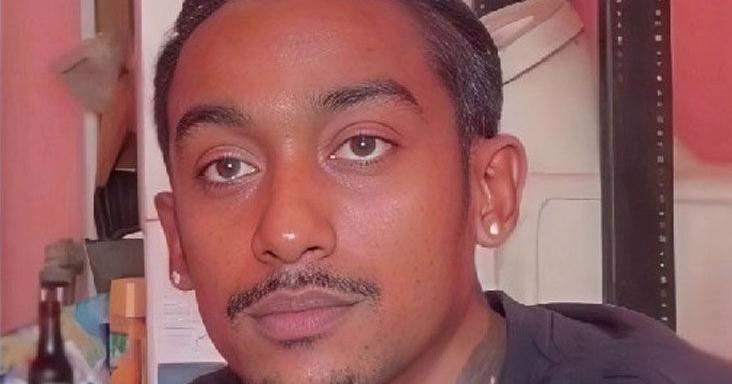
Weeks after a controversial police-involved shooting left one man dead and another woman permanently injured in Trinidad and Tobago, top law enforcement officials say the investigation is held up by pending forensic testing, prompting a public call for patience from the country’s top police leader. Police Commissioner Allister Guevarro made the disclosure during a public appearance at the Trinidad and Tobago Chamber of Commerce’s Westmoorings headquarters on Tuesday, breaking down the current status of the probe into the January 20 incident that killed 32-year-old Joshua Samaroo and left Kaia Sealy paralyzed.
The shooting, which unfolded after a vehicle chase that ended with suspects’ car crashing into a St. Augustine drain, was captured on widespread mobile footage that sparked significant public outcry and renewed national debate over excessive use of force by Trinidad and Tobago law enforcement. Two independent oversight bodies, the Professional Standards Bureau and the Police Complaints Authority, have already launched parallel probes into the incident alongside the internal police investigation.
Guevarro told attendees that the police-led investigative work on the case is fully complete, and the file has been passed to the Office of the Director of Public Prosecutions for formal review. The only outstanding materials required to move the process forward are official lab reports from the national Forensic Science Centre, which have not yet been finalized. “The investigation, as far as the police aspect is concerned, has reached a point where we approached the Director of Public Prosecutions. What is outstanding are forensic reports. We don’t control that,” Guevarro explained.
Pushing back against public expectations of rapid forensic results fueled by popular crime television, Guevarro noted that real-world forensic analysis follows strict, time-consuming protocols that cannot be rushed to satisfy public pressure. He pointed out that even major international law enforcement agencies like the U.S. Federal Bureau of Investigation routinely deal with delays of months or even years in forensic processing, dismissing the fast turnaround seen in scripted media as nothing more than “Hollywood magic.”
Acknowledging the deep frustration and grief of the victims’ families waiting for answers, Guevarro expressed empathy for their position while emphasizing that accuracy in evidence gathering must take priority over speed. “So, I feel for the family and those who are waiting because I know it takes time…we want to make sure we get it right,” he said. He reaffirmed that the Trinidad and Tobago Police Service (TTPS) remains fully committed to conducting a thorough, transparent investigation that produces an outcome fully supported by solid evidence.
Guevarro also addressed public controversy over his decision to release raw video footage of the shooting to the public early in the probe, a move that his own in-house legal team advised against. He told the audience that TTPS’s top legal official warned that releasing sensitive footage during an active investigation could jeopardize future legal proceedings and open the service up to additional public criticism. But Guevarro said he stood by his choice to give the public unfiltered access to the evidence he had seen, accepting full responsibility for the call. “I wanted to show the public what I am seeing,” he said. “At the end of the day, I am the leader of this organisation and I take the blows for it. I can stand before anybody and say I made a decision to do what I did.”