分类: society

  • Antiguan Kelton Mich Dalso Called to Bar in St. Lucia

    Antiguan Kelton Mich Dalso Called to Bar in St. Lucia

    A rising legal professional from Antigua and Barbuda, Kelton Mich Dalso, is set to reach a landmark career milestone in April 2026 when he is formally called to the Bar of the Eastern Caribbean Supreme Court’s St. Lucia Circuit, based in the country’s capital city of Castries.

    Dalso’s qualification to practice across the Caribbean regional court system comes through the framework of the Caribbean Community (CARICOM), anchored in the revised Treaty of Chaguaramas. This foundational treaty established the CARICOM Single Market and Economy (CSME), an integration agreement that Antigua and Barbuda has officially signed onto, allowing eligible legal practitioners from member states to practice across participating jurisdictions.

    This upcoming call to the regional Eastern Caribbean bar follows Dalso’s recent admission to practice in the United Kingdom. As first reported by The Times of London on 28 November 2025, Dalso was among the new practitioners admitted to the Bar of England and Wales during the traditional Michaelmas Call ceremony and reception held at London’s prestigious Gray’s Inn, one of the four historic Inns of Court that regulate bar entry in the UK.

    Dalso’s path to dual admission has been marked by consistent academic and professional achievement. He earned his Bachelor of Laws with Honours (LLB Hons) in August 2020, before going on to complete the required Bar Training Course at the University of the West of England (UWE), where he graduated with a merit classification, a mark of strong academic performance in the rigorous vocational program for barristers.

    Beyond his core qualifications as a barrister, Dalso has built out additional expertise in alternative dispute resolution: he holds professional certifications as a mediator, arbitrator, and advanced negotiator, expanding his capacity to handle a broad range of legal matters both in and out of the courtroom.

    Witnessing the upcoming 2026 call ceremony, a momentous and historic occasion for Dalso’s legal career, will be his wife and two of his sons, who will share in the celebration of his years of preparation and achievement.

  • Government enforces Crown Lands eviction

    Government enforces Crown Lands eviction

    A growing conflict over public land governance has emerged in Grenada after national authorities issued urgent 7-day eviction notices to dozens of residents living illegally on unapproved Crown land in the Gwankai district of South St George. The enforcement action, which marks a sharp shift in the government’s approach to longstanding squatter issues, has upended the lives of long-term occupants, many of whom have built homes and put down roots on the land over the course of years or even decades.

    Many affected residents say they believed they were following proper legal protocols to secure formal ownership of their properties, leaving them blindsided by the sudden eviction orders. One long-term occupant, who has resided on his plot for nearly 10 years and constructed a permanent concrete home there, told reporters he submitted a formal ownership application in 2022 but never received any feedback on his request prior to the April 7 eviction notice granting just one week to leave. Another resident echoed that frustration, noting that repeated trips to the national Ministry of Agriculture and Lands yielded no clear updates on the status of her land application before enforcement began.

    The dispute has pulled back the curtain on a long-simmering tension between widespread informal land occupation across the country and the state’s formal legal authority over public Crown lands. It has also prompted fresh scrutiny of the government’s backlog of unprocessed land applications and the lack of transparent communication with applicants before punitive action is taken.

    In an official public address on land policy released Thursday, Javan Williams, Permanent Secretary for the Ministry of Agriculture and Lands, made clear that the government is pursuing a new, stricter course of enforcement aligned with existing legal frameworks. Williams warned residents to adjust their expectations around access to Crown land, emphasizing that the ministry is committed to managing all public property in strict adherence to national law. He noted that while many people submit legitimate applications for Crown land allotment, a growing number of individuals have simply moved onto and occupied government property without any formal approval, reminding the public that squatting remains a criminal offense under Grenadian law.

    Williams referenced the Prevention of Squatting on Crown Lands Rules, Statutory Rule and Order (SRO) 5 of 2007, which lays out the official protocols for serving eviction notices to illegal occupants. Per the regulations, eviction notices must be delivered to squatters in person whenever possible; if occupants cannot be located or served within 48 hours of the notice being issued, authorities are permitted to post the notice in a clearly visible location on the occupied land or any structure built on the site.

    Williams confirmed that enforcement teams conduct formal investigations into suspected squatting cases before any notices are issued, but acknowledged that noncompliance with eviction orders has become an increasingly challenging issue. He added that some occupants have gone so far as to remove posted eviction notices to avoid compliance, and issued a formal warning against both the removal of official notices and the construction of unapproved structures on public Crown land.

    The permanent secretary also outlined the legal penalties residents face if they ignore eviction orders. Under the current law, any squatter who fails to comply with a properly served eviction notice commits a criminal offense, punishable by a fine of up to 1,000 Eastern Caribbean dollars (EC$) or a jail sentence of up to three months upon summary conviction.

    According to Williams, this expanded enforcement push is part of a broader government policy shift aimed at addressing a decades-long, complex problem of widespread illegal squatting. For years, he explained, many people have deliberately occupied public or privately held land, operating under the assumption that they will eventually be granted amnesty or formal approval. “We want to advise persons, let us all follow the law because we now are seriously invoking the eviction section of the SRO 5, 2007,” Williams stated.

    Williams acknowledged that some Gwankai residents have submitted formal applications for land allotment, but stressed that submitting an application does not grant automatic right to occupy the land. Under Grenadian law, after an application is received, a formal land survey must be completed and the request must be reviewed and approved by the national Cabinet. Only after a written authorization is issued following Cabinet approval does an individual gain legal right to use the Crown land. Any occupation prior to that formal approval, Williams emphasized, is considered illegal squatting.

    “Under the law, the Cabinet is the sole authority to direct an allotment. So, if you are not allotted a piece of Crown land, then you are deemed a squatter,” Williams added.

    The unfolding situation in Gwankai is already emerging as a critical early test of the Grenadian government’s commitment to bringing formal order to Crown land management across the country, and of how communities with longstanding informal settlements will respond to the new stricter enforcement regime. For the residents facing eviction, the conflict is far more than a policy debate: it is a fight to keep their homes, their livelihoods, and the years of financial and personal investment they have put into their properties. For the government, by contrast, the priority is upholding the rule of law and reasserting formal control over public land, amid longstanding public concerns about unregulated squatting and inefficiencies in the formal land allocation process.

    The outcome of the Gwankai dispute is expected to set a major precedent for how similar informal occupation cases will be handled across Grenada in the coming years, particularly in communities where informal settlement has outpaced formal land approval for decades.

  • One Man Detained After Alleged Sexual Assault

    One Man Detained After Alleged Sexual Assault

    Local law enforcement agencies have launched a probe into a reported sexual assault of a 22-year-old woman in Orange Walk, with one suspect already taken into custody as of April 17, 2026.

    Details released by police outline that the alleged incident unfolded on the Wednesday preceding the announcement. The victim told investigating officers that she was present at her private residence when her male neighbor arrived at her door, asking if she would make him a cup of noodles. Agreeing to his request, she let him enter her home to wait for the food to be prepared.

    It was during his time inside the residence that the neighbor is accused of carrying out the sexual assault, according to official police accounts. As of the latest update, formal charges have not been filed against the detained man. Law enforcement has confirmed that the investigation remains active, with detectives continuing to collect evidence, interview witnesses, and build a case ahead of potential legal proceedings.

  • Two arrested with illegal guns, ammo-police

    Two arrested with illegal guns, ammo-police

    In a coordinated law enforcement operation carried out Thursday afternoon in the Berbice region of Guyana, two 23-year-old men have been taken into custody following the recovery of two illegal 9mm handguns and a single round of ammunition, authorities confirmed in an update published Friday. Guyanese law enforcement agencies reported that the seizure unfolded shortly after 4 p.m. in the Dukestown area of Corriverton, when agents from the Customs Anti-Narcotic Unit (CANU) were conducting patrols near the local seawall along the Corentyne River.

    During their observation of the area, CANU teams spotted a small wooden craft carrying four unidentified men on the river, while two additional men waited on the seawall shore, each holding a sealed black box. As soon as the uniformed law enforcement agents approached the pair and identified themselves as authorities, the two men immediately discarded their boxes and made an attempt to escape on foot. At the same time, the four men on the wooden boat accelerated the vessel and fled further up the Corentyne River, evading capture so far.

    Responding officers quickly pursued the two fleeing suspects on shore and successfully apprehended both within a short time frame. Investigators then opened the discarded boxes in the presence of the arrested men, revealing two unregistered 9mm ZORAKI pistols and one live round of ammunition matched to the weapons.

    The two suspects, a local businessman who resides in Dukestown and a day laborer from nearby Springlands, Corriverton, were transported to the Springlands Police Station to be processed. The seized firearms and ammunition have been placed into police custody as material evidence for the ongoing investigation. As of Friday afternoon’s official update, both men remain in detention, with law enforcement yet to announce formal charges. Investigations are still ongoing to determine the origin of the illegal weapons, their intended use, and the identities and whereabouts of the four men who escaped on the river.

  • 20-Year-Old Shot in Corozal

    20-Year-Old Shot in Corozal

    A violent shooting incident in Corozal District has left a 20-year-old man fighting for his life in hospital, sparking a full attempted murder investigation by local law enforcement. The attack unfolded on the evening of April 16, 2026, targeting construction worker Wilbert Jonathan Vellos shortly after he dropped a friend off at their home.

    According to initial official accounts from Corozal Police, the incident occurred just after 9:25 p.m. Vellos had finished driving his acquaintance, Christopher August, to August’s residential address and was still parked in front of the property when a single unknown assailant approached the vehicle and opened fire. The gunman struck Vellos multiple times across his body, leaving him critically wounded.

    In a frightening turn of events, the suspect immediately turned their firearm on August, who had remained outside the vehicle after being dropped off, and pulled the trigger. Fortunately for August, the weapon misfired – a stroke of luck that allowed him to escape the scene quickly without sustaining any injuries. First responders rushed the injured Vellos to Corozal Community Hospital by 9:30 p.m., where he remains in care as of the latest update.

    Local law enforcement has confirmed that the investigation into the attempted murder is still active, with officers working to identify the gunman and establish a motive for the targeted attack. No further details about potential suspects or leads have been released to the public at this early stage of the probe.

  • Two injured in collision involving electric, hybrid vehicles

    Two injured in collision involving electric, hybrid vehicles

    A low-speed collision between an electric passenger vehicle and a hybrid car left two people with minor injuries on a wet roadway in St. George early Friday, prompting local emergency responders to issue a public warning for drivers navigating changing road conditions amid wet weather.

    The crash unfolded close to the intersection of Windsor and Brighton streets just after 8 a.m., according to Station Officer Roger Bourne from the Bridgetown Fire Station, the first emergency unit dispatched to manage the scene. When crews arrived, both vehicles had already sustained damage from the impact on the slick, moisture-covered surface, which had reduced tire traction significantly.

    To eliminate potential safety hazards such as unexpected electrical fires, fire and rescue teams deployed specialized stabilizing gear to secure both damaged vehicles. As an extra precaution, responders disconnected the high-voltage battery pack on board the hybrid vehicle before beginning any further on-site work. Bourne confirmed in a post-incident statement that the crash did not result in any life-threatening or serious harm to the people involved.

    “All injuries are minor, mostly soft tissue bruising caused by seatbelt tension during the sudden impact,” Bourne explained. Two ambulance teams—one operated by the government emergency medical service, and a second from a local urgent care provider—arrived promptly to assess and treat the two vehicle occupants. Both patients were recorded as being in stable condition at the scene, and they opted to seek additional follow-up medical care after being cleared from the crash site.

    Bourne emphasized that wet pavement conditions were the key contributing factor to Friday’s collision, noting that a separate, similar crash had already occurred just a short distance away along the same road corridor earlier that same morning, also tied to slippery surfaces. He issued a sharp reminder to all motorists driving through the region amid current wet weather to adjust their driving habits to match changing road conditions.

    “As I drove to the incident, it was immediately obvious how slick the road surface was. When you transition from a stretch of dry pavement into a wet patch, traction drops off much faster than many drivers expect,” Bourne said. “We all have places to be and often find ourselves in a hurry, but it’s critical to slow down and give yourself extra reaction time. A little extra caution goes a long way to preventing these avoidable crashes.”

  • From Lock-Up to Lift-Up

    From Lock-Up to Lift-Up

    Scheduled to launch in April 2026, a groundbreaking partnership between the Government of Belize and the United Nations Development Programme (UNDP) is set to reshape the nation’s approach to supporting vulnerable and justice-involved young people, centered on a full transformation of the New Beginnings Youth Development Centre.

    Officially named the “Strengthening Youth Governance and Institutional Resilience for Peacebuilding in Belize”, the initiative moves beyond the traditional punitive model of youth detention that has long perpetuated cycles of reoffending. Instead, it prioritizes a forward-looking, person-centered framework that shifts the system’s core focus from locking young people up to guiding them toward stable, productive futures. The project aligns directly with Belize’s ongoing national justice reform efforts under the PACE Justice Programme, which has advocated for diversion practices and rehabilitation over harsh, mandatory penalties for young offenders.

    At the center of the reform is the overhaul of the New Beginnings Youth Development Centre, where a decades-old “lock-up” punitive model will be replaced by programming rooted in trauma-informed care, community reintegration, and long-term life skills building. The core goal of the transformation is to break the intergenerational cycle of offending that leaves young people trapped in the justice system, providing them with targeted support to get back on track and contribute to their communities.

    Backed by BZD $100,000 in catalytic seed funding from UNDP, the initiative will roll out a suite of evidence-based programming and structural improvements. Key components include enhanced individualized case management for every young person at the facility, customized transition plans to support smooth re-entry into community life, ongoing aftercare to prevent relapse, specialized trauma-informed training for all facility staff, expanded mental health counseling services, and updated, stricter safeguards to protect the rights and well-being of residents.

    Thea Garcia-Ramirez, Belize’s Minister of Human Development, emphasized that the reform is a long-overdue shift to building public systems that actually serve young people, rather than punish them. The initiative prioritizes marginalized youth, including those in state care and those who have had interactions with the criminal justice system.

    Amilin Mendez, UNDP’s representative for the project, summed up the core philosophy behind the work: the initiative is not just about managing at-risk youth – it is about building systems that believe in young people’s capacity to change and grow, creating lasting positive outcomes for both individuals and the entire nation.

  • Police Welfare Association focused on safeguarding members finances amidst rising global costs, says chairman

    Police Welfare Association focused on safeguarding members finances amidst rising global costs, says chairman

    Against a backdrop of global soaring living costs that are straining household budgets across nearly every sector, the Police Welfare Association (PWA) of the Commonwealth of Dominica Police Force has outlined a bold new agenda focused on easing financial pressure on its members and strengthening institutional partnership during its new executive term.

    Sergeant David Andrew Jr., newly appointed chairman of the PWA, laid out the organization’s core priorities in a recent public interview, naming member financial freedom as the top policy goal for the coming year. Andrew noted that rising economic pressures are not a localized challenge – it is a worldwide trend that has hit uniformed officers just as hard as other working groups, with everyday commodity and living costs eating steadily into take-home pay.

    To address this strain, the PWA has already moved to strike strategic partnerships with private sector entities. These collaborations will deliver exclusive discounted pricing on a wide range of daily necessities and services for all PWA members, a measure Andrew said is designed to directly cut household spending burdens and soften the blow of ongoing inflation.

    Beyond private-sector partnerships, the association is also in the preliminary stages of exploring the launch of its own member-focused financial institution. The proposed entity would be tailored to meet officers’ unique needs, providing accessible loan products and customized financial service packages that fill gaps in existing support, Andrew explained.

    The PWA chairman acknowledged the consistent support the government has provided to officers, pointing to the 8 percent salary increase awarded over the last three-year period as a tangible measure that has already helped improve members’ financial standing. Even with this public sector support, however, Andrew argued that the association has a role to play in delivering additional, targeted assistance to its community – making this work a central focus for the new executive in 2026.

    Beyond financial initiatives, Andrew emphasized that the PWA is fully committed to working hand-in-hand with senior police administration to build a more effective, efficient police force for the people of Dominica. As an internal body embedded within the Commonwealth of Dominica Police Force, close collaboration with leadership is non-negotiable to advance members’ interests and deliver on policy goals, he said. Andrew acknowledged that occasional disagreements over priorities or strategies are inevitable in any large organization, but he stressed that the collective bargaining framework of unionism puts the PWA in a strong position to negotiate differences and resolve disputes productively when they arise.

    Deputy Police Chief Jeoffrey James echoed Andrew’s commitment to collaboration, welcoming the PWA’s new agenda as a positive step forward for the entire force. James framed the new executive’s term as an ideal opportunity to deepen coordination between the PWA and police administration, noting that aligned working relationships directly translate to better welfare for officers and more efficient, effective public service for Dominica’s residents.

    James reminded that the PWA’s core mandate explicitly requires working with police leadership to support officer wellness and keep the force operating smoothly. He urged the new executive board to maintain unity, shared purpose, and open communication with administration, warning that failing to prioritize this collaboration would be a misstep for the association. When built on mutual commitment, James said, the partnership between the PWA and police leadership will deliver tangible benefits for both the association and the wider force, leaving the entire institution in a stronger position to serve the public.

  • Bus Operators: ‘This is not a price increase. This is just a price alignment.’

    Bus Operators: ‘This is not a price increase. This is just a price alignment.’

    In a late-breaking development out of Belize’s public transit sector, the Belize Bus Association (BBA) has walked back its planned full suspension of all bus services starting Monday, following a lengthy negotiating session with national Minister of Transport Dr. Louis Zabaneh that concluded on Thursday. While commuters across the country can enjoy a temporary reprieve from potential widespread transit disruptions, the reprieve is only temporary, and the future of public bus fares and service remains hanging in the balance ahead of an upcoming Cabinet meeting next Tuesday.

    During the talks, BBA President Phillip Jones outlined to the minister the core grievances driving the association’s industrial action threat, which extend beyond the industry’s ongoing struggles with spiking fuel costs to an existing inequity in regulated fare structures across the country’s transit sector. Currently, the state-run National Bus Company (NBC) is permitted to charge 19 cents per mile for service, while all independent private bus operators that make up the BBA have their fares legally capped at just 14 cents per mile. This gap, Jones argues, creates an unfair playing field for non-state operators, and the association is only calling for “price alignment” rather than an arbitrary fare hike.

    According to Jones, Minister Zabaneh acknowledged the validity of the association’s concerns and agreed to carry the BBA’s full proposal, which includes a formal request for fare adjustment, to the upcoming Cabinet meeting for deliberation and approval. “It was a long meeting. We discussed some issues that were affecting us besides the hike in fuel,” Jones told local outlet News Five in a post-meeting interview. “The minister requested time because Cabinet would be meeting on Tuesday and he will need the support from Cabinet to assist us.”

    In a show of good faith amid the ongoing negotiations, the BBA has agreed to hold off on any planned industrial action while the association awaits the final outcome of the Cabinet vote. The result of next week’s meeting will ultimately determine whether bus services continue running without interruption or the country faces a full shutdown of public bus transit. Commuters across Belize are now watching closely as the national government weighs the competing priorities of affordable transit for working residents and fair operating conditions for bus operators.

  • Missing Dangriga Delivery Man Found Dead

    Missing Dangriga Delivery Man Found Dead

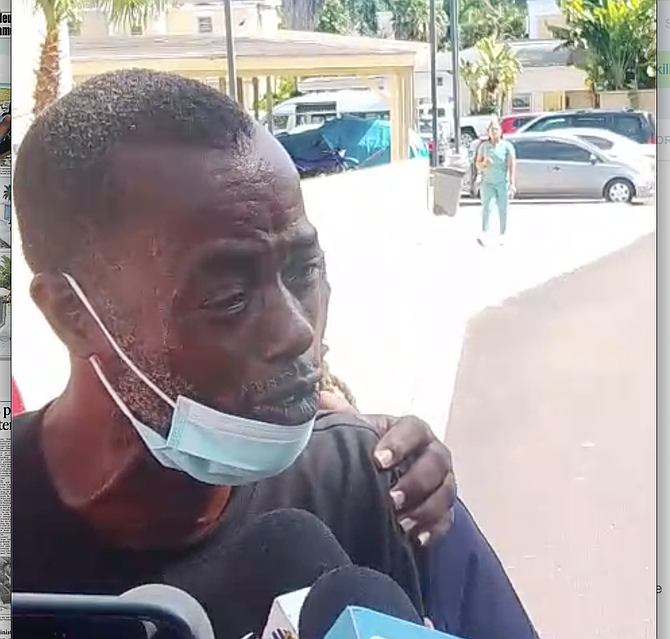
    In a tragic development out of Belize’s Stann Creek District, a 24-year-old delivery worker from Dangriga who was reported missing earlier this week has been discovered dead in the rural community of Silk Grass Village. The victim has been identified as Steve Lewis, who vanished on Tuesday morning shortly after leaving his residence to complete what was expected to be an ordinary series of delivery stops. He never made it back to his family after that departure.

    In an interview with local outlet News Five, Lewis’s mother, Suceli Lewis, shared new details about the circumstances leading up to her son’s disappearance. She confirmed that on the day he went missing, Steve received an unexpected phone call from an unidentified man based in Dangriga. The caller allegedly requested that Lewis drive him to a remote farm located within Silk Grass Village, a trip that would take the delivery man far outside his usual route. That request, and the departure that followed, marked the final time any member of Lewis’s family saw him alive.

    Once it became clear that Lewis would not return home as scheduled, local community members and family contacts mobilized to launch a large-scale search of the Silk Grass Village area. What searchers ultimately found was a devastating discovery that has left the small community reeling.

    Describing the moment her son was found, Suceli Lewis explained that search teams were spread across the rural terrain when a friend of the family made the grim find. “One of my friends came through the back [area], and he said he smelt a scent, and he said he saw vultures. So he stopped. When he stopped the cycle, then he went direct to the ditch… like a lagoon-like drain,” she recalled.

    In the wake of the discovery, the Lewis family says they have strong reason to believe Steve was deliberately lured to the location and killed. “Foul play. Based on footage, that’s why I tell you that’s foul play,” Suceli Lewis stated, though she did not share further details about the footage referenced. Additional information about the ongoing investigation into Lewis’s death is expected to be released during the News @ Noon broadcast on GBM, and local authorities have not yet released an official statement on the case as of Friday.