分类: society

  • Victim’s final call to family before dying in Andros crash

    Victim’s final call to family before dying in Andros crash

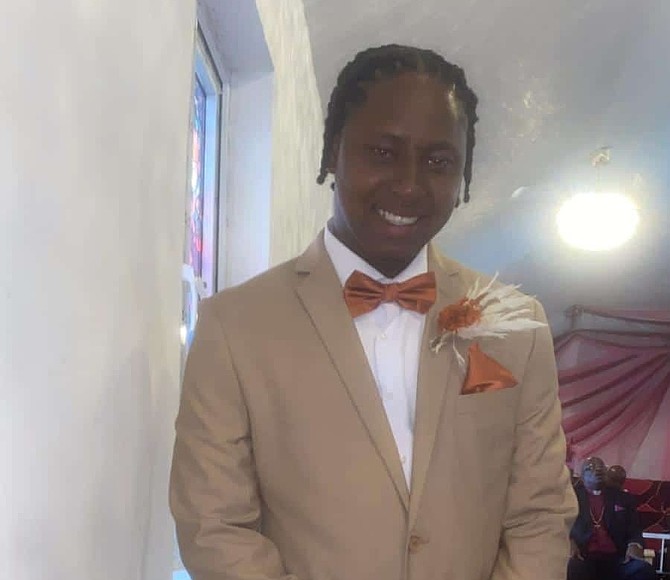
    For seven months, the Rolle family had counted down the days to Macaro Rolle’s long-awaited return home to Andros. The 24-year-old certified lifeguard, who worked at the remote Ocean Cay resort, had navigated a multi-legged journey – a boat ride to Bimini, a connecting flight to New Providence, and a final charter flight on Flamingo Air bound for San Andros Airport – to get back to the loved ones he had not seen in half a year. His father waited at the airport arrivals gate to greet him; what unfolded on Friday would instead leave the family shattered by a preventable loss, they say.

    Anthony Rolle, Macaro’s brother, was working at a location opposite the airport when a resident from their Nicholls Town community ran to deliver the devastating news: a small plane had crashed just off the runway. A second aircraft that had been trailing the Flamingo Air flight confirmed the passenger list, and within minutes, Anthony, their father, and other family members launched a desperate search for the wreckage.

    Thick black smoke billowing from the crash site near the end of the runway was visible from the family’s starting point, but blocked rural roads cut off direct access. The delay would cost Macaro his life, his family says. As they fought to clear a path toward the wreckage, the injured young man managed to place a desperate phone call to his relatives from the charred aircraft.

    In that final, heart-wrenching call, Macaro sounded initially strong, pleading for his family to reach him quickly. “Daddy, Daddy, please hurry up, come for me, Daddy. Y’all hurry up, come,” he told them, according to Anthony. He stayed on the line, describing the terrifying final moments of the flight – telling his family the aircraft had begun shaking violently and uncontrollably before impacting the ground – right up until the family could see the wreckage. When Anthony called out to him that they had arrived, the line went abruptly dead.

    By the time the family fought through blocked roads and reached Macaro, roughly two hours after the crash, he could barely respond. When Anthony called his name, the only reply was a faint, almost inaudible hum. Macaro had sustained catastrophic full-body burns in the crash: all his clothing had burned away, and his skin was badly damaged from head to toe.

    The family carried Macaro out of the brush in his father’s pickup truck and rushed him to the local clinic, where the small on-island medical team did everything they could to stabilize him. But the remote island lacked the specialized burn care Macaro needed, requiring an air ambulance to evacuate him to a larger facility in North Andros. For another two hours, the family waited for the emergency aircraft to arrive.

    Macaro’s fight ended roughly 20 minutes before the air ambulance touched down. “They land after he already died,” Anthony said. The family believes that if emergency response had been faster, and if on-island medical access had been more robust, their brother would still be alive today. “The doctor tried all he could,” Anthony noted, but limited resources on Andros could not overcome the long delays in reaching care.

    The tragedy has been compounded by the quiet plans Macaro had made for this trip: he had been building his own three-bedroom home on Andros, waiting for contractors to finish installing windows and doors ahead of his move-in. He never got the chance to step across the threshold of the home he built.

    Remembered by his family as a warm, loving man deeply devoted to his faith, Macaro wove prayer into every small part of his daily routine. “Before Macaro eat or drink or answer his phone or leave outside, he have to pray before he do that,” Anthony said. “So if you can’t wait until he finish praying, you could leave him.” The family says they have no doubt that he said a prayer before boarding the flight that would take him home for the final time. Now, their once-joyful homecoming preparations have turned into funeral arrangements, leaving their parents distraught and the entire family grieving a life cut tragically short.

  • Baha Men musician among victims as mother mourns her gifted son

    Baha Men musician among victims as mother mourns her gifted son

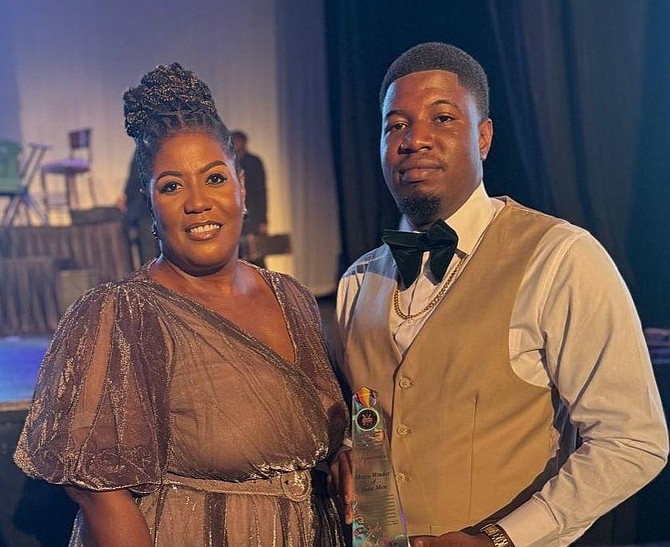
    For 27-year-old Mateo Winder, the ritual of checking in with his mother after every trip was as steady as the beat of a drum he played. It was a family tradition he had followed for years: send a message when he departed, and follow up with a call once he landed safely. On that fateful Friday, that simple routine became the final goodbye.

    When Winder boarded a Flamingo Air small charter plane bound for North Andros, alongside other members of the local group Da Pond Band, his last text to his mother Ronella Hinsey was just one word: “Leaving.” Today, that single message is all she has left of her son, one of 10 people killed when the aircraft crashed shortly before landing at San Andros Airport. The band had been traveling to the island to perform at a scheduled regatta event.

    Hinsey, a police inspector stationed in Abaco for work, first got the chilling hint of disaster when her mother called with early reports of the crash. Immediately, she reached out to Winder via WhatsApp, begging him to confirm he had landed unharmed. The message never went through. What followed was hours of agonizing, frantic searching for answers, as she called every authority, relative and contact she could think of to untangle what had happened.

    For a brief, torturous moment, Hinsey allowed herself to hope. An aviation official who checked the passenger list told her Winder’s name did not appear on the manifest. “Okay, Lord, he’s not on it,” she remembered thinking, relief flooding her. That hope crumbled quickly into devastating dread, as calls went unanswered and contacts near the crash site avoided sharing the truth. When her brother, who had traveled to the crash site at her request, stopped picking up her calls, Hinsey knew. She had lost her son.

    In the days since the crash, the grieving mother — who also serves as a gospel minister — has opened up about the quiet premonition that haunted her all week before the accident. “All that week, I just kept hearing or seeing something happening to my son and him being hurt, and he actually died,” she said. “I started praying and cancelling what I saw, and pleading the blood of Jesus over him and reading God’s word that he should not die but live to declare the works of the Lord.”

    Even in her overwhelming grief, Hinsey says she has not questioned her faith. “I didn’t ask the Lord why, because I don’t want to question God, because He knows why everything happens,” she said. “Human understanding, we won’t understand it.” Instead, she has prayed that her son’s death will not be meaningless. “I told the Lord, if that is your will, you know everything before it happens. And I said, if that is your will, then so be it. But I want my son’s death, I want him to get glory out of it. I don’t want him to die in vain.”

    Winder, who never married and had no children, built his entire life around three pillars: his faith, his family, and his music. A musical prodigy from toddlerhood, he began “playing” at two and a half years old, beating rhythms on his mother’s hairbrush and comb at the foot of her bed. By adulthood, he was a multi-instrumental talent, skilled on drums, keyboard, guitar, bass, and saxophone, and a gifted vocalist to boot. He performed regularly with both Da Pond Band and the Grammy Award-winning Baha Men, and ran his own successful business renting musical and entertainment equipment across New Providence.

    Isaiah Taylor, leader of the Baha Men, called Winder like a son to him, recalling that the young musician had just joined the group for a performance in Milwaukee as their keyboard player shortly before the crash. “This is absolutely a big blow,” Taylor said. “It’s a big, big, big blow to the industry.”

    In the wake of the tragedy, Taylor is issuing a urgent warning to fellow musicians who travel to small island events for performances: prioritize safety over a quick paycheck. “I will warn all of these musicians: do not be comfortable to jump on these charters to go to regatta to make a couple of dollars. Safety comes first. Make sure know what you’re flying, who you’re flying with,” he urged. Taylor added that he has avoided flying on small charters since a terrifying trip in the 1980s, and warned performers to consider the weight of their gear when boarding small aircraft. “If you are doing it, don’t put no kind of equipment on the plane, the little plane that you’re flying on. Because every piece of equipment that you would put on that plane also carries weight, and the plane can only lift with so much weight.”

    To date, Bahamian authorities have not released any information on the cause of the crash, nor have they indicated that excess load played a role in the disaster. For Hinsey, Winder was far more than a talented musician — he was a warm, loving light who could turn anyone’s bad day around with a joke and a smile. “He was always smiling and if anybody had a bad day, he would come there and he would make you laugh,” she said.

    For years, the pre-trip check-in was a guarantee: Winder would leave, arrive, and call home. This time, the “Leaving” message came. The return call never will.

  • Autopsy reveals  girl, 14, beaten  and strangled

    Autopsy reveals girl, 14, beaten and strangled

    A Trinidadian community has been shaken by the tragic death of 14-year-old Andrea Francis, a young teenager with dreams of becoming a hairdresser, whose death was initially ruled a suspected suicide before an autopsy uncovered she was killed via blunt force trauma and strangulation. The teen’s father, Andy Francis, has spoken out publicly to express his horror at the official findings and deny any involvement in his daughter’s death, while authorities confirm the homicide investigation remains ongoing with no suspects detained to date.

    Andrea’s story unfolded against a backdrop of joyful excitement: the 14-year-old had recently sat her Secondary Entrance Assessment (SEA) exams in May 2026, and just two days before her body was discovered on July 4, she received results confirming she had earned a spot at her top-choice institution, Cunupia Secondary School. Described by her father as a friendly, jolly teen who loved singing and dancing, Andrea had been thrilled by her acceptance and was already looking forward to starting the new school term. She had also grieved deeply for her mother, who passed away from medical complications in Guyana just nine months earlier in October 2025.

    On the night of July 3, Andrea went to bed around 9 p.m. in her family’s home at Phyllis Lane Extension, Enterprise, sharing a room with her older sister Arielle, who slept in a separate bed. The following morning at approximately 10:30 a.m., Arielle found Andrea unresponsive in her bed. Initial police assessments did not find visible marks of violence or any suspicious signs on the teen’s body or in her bedroom, leading to early assumptions that her death was a suicide. Andy Francis told local reporters in the days after her death that Andrea had been her usual happy, normal self in her final days, with no indication anything was wrong.

    A formal autopsy was conducted by pathologist Dr. Hubert Daisley on the Friday following Andrea’s death. The examination revealed the true cause of death: a combination of manual strangulation, blunt force trauma to the skull and right eye, and aspiration pneumonitis, confirming Andrea was murdered. In a striking twist, Andy Francis told the *Sunday Express* he learned of the homicide finding not from police or medical officials, but from a random social media post he saw while scrolling at around 11:30 a.m. that same day.

    Francis told reporters that authorities never officially shared the autopsy results or cause of death with him directly. He explained that he visited the San Fernando General Hospital, where the procedure was scheduled, three times that week—on the Monday, Wednesday, and Friday following his daughter’s death. On the day of the autopsy, he told reporters he waited at the hospital until after 3 p.m., when officials only told him the procedure was complete, no cause of death had been determined, and police would continue the investigation. He also pushed back hard against any insinuation of his involvement, saying, “To tell you the truth, I never beat my daughter or anything. The night before, no other time. Look my next daughter here. I have witness in the place here. Nobody never beat her Andrea Francis.”

    To date, Francis says the only contact he has had from investigators is a single phone call from an officer who came to the neighborhood to collect security camera footage from nearby homes, with no formal discussion of the case or notification that he is considered a suspect. Still, Francis acknowledged that the lack of communication from authorities leads him to believe he is being treated as a person of interest: “Well, it looking so to me ’cause nobody ain’t really talking to me. They just doing their thing.”

    Reached for comment by the *Express*, a senior homicide official confirmed that no arrests have been made in the case as of the latest updates. The official added that the investigation is active and that detectives are continuing to pursue all leads to identify and apprehend the person responsible for Andrea’s death.

  • East Ruimveldt Market reconstruction plan unveiled

    East Ruimveldt Market reconstruction plan unveiled

    On Saturday, July 11, 2026, Guyanese officials announced a major GY$528.3 million infrastructure project to completely reconstruct the aging East Ruimveldt Market, a decades-old community hub that has fallen into significant disrepair in recent years.

    Ahead of the official sod-turning ceremony that marked the start of pre-construction preparations, Local Government Minister Priya Manickchand conducted a walkthrough of the existing wooden and concrete market, speaking directly to current vendors to address their concerns about displacement during construction. She stressed that no local small business would be forced to shut down throughout the rebuilding process, outlining three alternative accommodation options to keep vendors operating: temporary sales spaces built from prefabricated containers, relocation to currently unused stalls at nearby markets, or phased construction that would allow half the market to remain operational while the other half is rebuilt – an approach that would extend the total project timeline by eight months.

    Once reconstruction is completed, the upgraded market will feature 237 modern stalls, up from the current count that is far smaller and more cramped. Every new stall will be expanded by six feet in length and built to a higher clearance, giving vendors more space to display goods and serve customers. A democratically elected market committee will also be established to oversee daily operations, including sanitation management and setting standardized opening hours for different vendor categories, from fresh produce to prepared foods.

    Minister of Labour Keoma Griffith, who is a native of the East Ruimveldt community, emphasized that the market rebuild and an adjacent new community centre are flagship development projects designed to raise quality of life for local residents. The existing market has long suffered from neglect: key sections including the meat and fish vending area are structurally degraded, and critical safety infrastructure such as the market’s fire fighting hose has been non-functional for years, leaving only a rusted, broken reel behind.

    Beyond the market itself, the project scope includes complementary infrastructure upgrades for the surrounding neighborhood. Contracts have already been awarded to five local construction firms – A.M.I.C General Contracting, Khan Contracting Services, MAEC Enterprises, Terraform Solutions and Lispen Enterprises – to carry out full cleaning of local drains and trenches, install new street lighting along surrounding access roads, rehabilitate damaged paved roadways, and construct a new pedestrian bridge connecting the market area to nearby residential blocks.

    According to official project profiles, the redesigned market’s expanded layout of 237 stalls is purpose-built to address growing demand from vendors and shoppers alike. The overhaul will not only modernize vending conditions but also boost the market’s long-term capacity to serve the rapidly growing East Ruimveldt population for decades to come.

  • Airport Authority undertakes crucial vegetation management exercise this weekend as Airfield Upgrade enters final phase

    Airport Authority undertakes crucial vegetation management exercise this weekend as Airfield Upgrade enters final phase

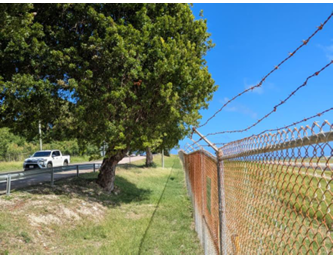
    The Antigua and Barbuda Airport Authority (ABAA) is set to oversee the removal of three mature mahogany trees along Sir George Walter Highway this Sunday, a decision reached after months of cross-stakeholder consultation and rigorous safety assessments tied to the final phase of the island’s $50 million VC Bird International Airport runway rehabilitation project.

    As the major infrastructure upgrade nears completion, the full length of the refurbished runway will soon open for regular aircraft operations. However, survey teams identified the three mahogany trees as a critical barrier to unobstructed line-of-sight between the Air Traffic Control (ATC) Tower and the western end of the airfield – a non-negotiable requirement for safe air navigation, per International Civil Aviation Organization (ICAO) standards.

    For years, ABAA attempted to manage the risk through regular pruning and ongoing maintenance. Airport officials explored every feasible alternative before settling on removal as the only remaining solution to eliminate the hazard. Joseph Samuel, ABAA’s Director of Operations, explained that the trees prevent air traffic controllers from carrying out full, effective visual surveillance of all aircraft movements along the runway. “Unobstructed visibility is essential for the safe and efficient management of aircraft operations on and around the runway,” Samuel noted.

    Eugene Silcott, Acting Chief of Air Traffic Services, emphasized that even minor reductions in visibility create a severe safety risk that can raise the likelihood of aircraft incidents or accidents. “One of the primary responsibilities of an air traffic controller is to prevent collisions between aircraft and other aircraft, vehicles, personnel, or obstacles on the maneuvering area,” Silcott said. Beyond tracking aircraft movements, controllers also rely on a clear view of the entire airfield to spot wildlife incursions, which pose another major threat to flight safety. Early detection of these hazards before clearing aircraft for landing or takeoff is foundational to a secure operating environment, he added. “Safety remains, and must always remain, our highest priority.”

    ABAA officials acknowledged that mahogany trees hold deep sentimental value for many residents of Antigua and Barbuda, and stress that the decision to remove the three specimens was not made hastily. Before finalizing the plan, the authority brought in key partners including the Forestry Unit under the Ministry of Agriculture and the national Environment Division to conduct a comprehensive ecological and structural assessment.

    The assessment, confirmed by Senior Forestry Officer Adriel Thibou, found clear evidence of termite infestation and widespread structural deterioration that has severely weakened the trees, making them far more likely to topple during storm events. Beyond the aviation visibility issue, the assessment determined that the trees’ location, height, and wide canopy encroach on protected aviation safety zones, creating unacceptable risk for aircraft operations, highway users, airport staff, and traveling passengers. That risk is amplified by the trees’ position just meters from the highway, where a falling tree could cause catastrophic road accidents during severe weather.

    “ Their removal is necessary to eliminate unacceptable hazards, protect human life, and preserve the operational integrity of VC Bird International Airport,” the assessment report concluded. “This approach aligns with both international aviation safety standards and local forestry best practices, reflecting a precautionary principle that prioritizes safety, visibility, and unobstructed airspace.”

    In a nod to the trees’ cultural and ecological value, ABAA has partnered with the Forestry Unit and Environment Division to offset the removal. The authority will fund the replanting of several new trees in pre-vetted, environmentally appropriate locations across the country. Additionally, the wood harvested from the removed mahogany trees will be repurposed into functional and commemorative public features that preserve the trees’ connection to the airport site’s natural history.

    Samuel emphasized that the compensatory measures reflect ABAA’s long-standing commitment to environmental stewardship, even as aviation safety takes top priority. “While aviation safety is foremost, we also must ensure that our operations are guided by sustainable and proper environmental practices,” he said.

    To minimize disruption to road traffic during Sunday’s removal operation, ABAA has coordinated with the Police Traffic Department, which will be on site from 6:30 a.m. to oversee traffic flow and avoid major delays along Sir George Walter Highway.

  • New top cop outlines vision for modern, accountable police service

    New top cop outlines vision for modern, accountable police service

    At her inaugural ceremonial parade held Friday, newly installed Commissioner of Police Sonia Boyce has laid out an ambitious vision for the Barbados Police Service (TBPS), framing her tenure around a “renewal of purpose” that targets rising sophisticated crime, cracks down on internal officer misconduct, and modernizes the island nation’s law enforcement infrastructure for the 21st century.

    Addressing a crowd of senior government officials, judiciary members, and uniformed officers that included acting President Dr Jeffrey Gibson, Prime Minister Mia Mottley, and former Police Commissioner Richard Boyce, Boyce opened by acknowledging the unprecedented challenges facing modern law enforcement in Barbados. She noted that criminal activity is rapidly evolving, growing more transnational, technically advanced, and violent than ever before, while shifting digital landscapes have rewrote both how offences are committed and how investigators must approach solving them. Compounding these changes, she added, are rising public expectations for transparent, accountable policing — expectations she said the service is ready to meet.

    At the core of Boyce’s agenda is a sweeping crackdown on internal misconduct, paired with a commitment to building a culture of ethical service. She emphasized that the authority carried by a police badge comes with non-negotiable responsibility, making clear that unprofessional or illegal behavior by officers will not be accepted under her leadership. To back this pledge, she announced plans to overhaul internal systems for supervision, performance evaluation, and disciplinary action, building frameworks that are fair, transparent, and timely. Alongside accountability, she also promised a clear system to recognize and reward officers who deliver exemplary service, with the goal of making ethical conduct the default expectation across the force, not an exception.

    To counter increasingly complex criminal networks operating in and around Barbados, Boyce outlined a major push for digital transformation of the TBPS, calling the upgrade no longer a discretionary improvement but an existential necessity. Key investments will focus on expanding intelligence-led policing operations, rolling out advanced data analysis tools, and updating case management systems to streamline investigations. The service will also redirect regular operational resources to prioritize curbing violent crime and firearms-related offenses, which have emerged as pressing public safety concerns. Upgrades will extend to core forensic capabilities and emergency response infrastructure, ensuring the force is equipped to match the technical sophistication of modern criminal groups.

    Boyce also stressed that sustainable public safety cannot be achieved by police alone, calling for deeper, more consistent engagement between officers and local communities. She explained that public trust — the most valuable asset a police service can hold — is built through small, daily interactions: a patrol officer taking time to listen to resident concerns, a station sergeant treating complainants with patience and respect. That trust, she noted, must be earned through consistent, fair action rather than demanded from the public.

    In a move that prioritizes the well-being of frontline officers, Boyce pledged to be a fierce advocate for rank-and-file personnel, promising expanded support for physical safety, mental health care, and professional development across the force. She argued that a police service that invests in caring for its own members is far better positioned to protect and serve the broader Barbadian public. To formalize this mutual commitment, Boyce proposed a pact of accountability and support between leadership and officers: she expects commitment, professionalism, and accountability from every member of the force, and in return, she will lead with transparency, listen to frontline concerns, advocate for critical resources, and keep officer welfare, safety, and development at the top of her policy agenda.

    Closing her address, Boyce issued a direct appeal to all Barbadian citizens, framing public safety as a shared collective responsibility. “Your safety is our priority, and your trust is our greatest asset,” she said, reaffirming the TBPS’s commitment to earning that trust through consistent, respectful, and fair action across every level of the service.

  • More Details Behind Santa Elena’s Latest Murder

    More Details Behind Santa Elena’s Latest Murder

    On a Friday in Santa Elena Town, a quiet community in the country’s western region, a senseless act of violence has left one man dead and a family grappling with unthinkable grief. Ricky Dawson Jr., a 33-year-old construction worker from the Santa Cruz area of the town, was gunned down in a public attack just steps from his own home, law enforcement authorities confirmed this week.

    According to official police accounts, Dawson had only just returned to his residential neighborhood when the incident unfolded. He was on a phone call when an unmarked black SUV drove toward his location. Multiple people inside the vehicle opened fire, discharging several rounds directly at Dawson before fleeing the scene. First responders found Dawson unresponsive roughly 100 yards from his front door, with the victim suffering a broken leg and multiple fatal gunshot wounds from the attack.

    Emergency medical teams immediately transported Dawson to the nearby San Ignacio Community Hospital, but medical staff pronounced him dead on arrival. As of Tuesday, investigators have not released any confirmed suspects or identified a clear motive for the killing. Law enforcement teams are still processing forensic evidence from the scene and interviewing witnesses to piece together the sequence of events.

    The killing has left Dawson’s family and close friends in mourning, as they remember him as a hardworking man focused on building a stable life for his young daughter. In a public statement shared on social media, Dawson’s father shared a heartbreaking tribute: “Rest in peace my son Rick! we will forever love an miss you!!” One of Dawson’s relatives pushed back against early unsubstantiated rumors that the killing stemmed from personal grudges, emphasizing that Dawson never antagonized anyone or made enemies in the community. “He Neva hurt anybody or create enemies!! All about making your money and build a future fu your daughter! People just badmind and jealous!!!” the relative said.

    Local community leaders have called for anyone with information about the black SUV or the shooting to contact the Santa Elena police department to help advance the investigation and bring those responsible to justice.

  • Complaints about prolonged power outages affect parts of Sosúa

    Complaints about prolonged power outages affect parts of Sosúa

    In the coastal municipality of Sosúa, Puerto Plata, widespread frustration has boiled over among local residents after widespread, extended power cuts left thousands without electricity for up to four hours on Monday, right in the middle of a record heat wave gripping the northern Dominican region. Neighborhoods spanning from the entrance of Maranatha down to the lower sections of the municipality, including the densely populated communities of Sosúa Abajo and Maranatha itself, bore the brunt of the unannounced service disruption. With temperatures hovering well above 30 degrees Celsius, the outage hit particularly hard for residents already struggling with stifling indoor conditions, with many taking to social media to voice their anger and demand urgent intervention from the national power distributor EDENORTE. One affected resident, speaking on condition of anonymity, summed up the widespread frustration: “We’ve gone four full hours without power, and the distributor has not even acknowledged the issue, let alone fixed it. All we want is to be able to rest comfortably, not swelter through this oppressive heat.” The outages come as part of a growing pattern of complaints across the region over inconsistent electricity reliability, with consumers increasingly pushing for both more stable service delivery and clearer, faster communication from EDENORTE when outages do occur. Critics point out that the distributor frequently fails to alert local communities of planned outages, leaving residents unprepared to cope with extended blackouts during hot weather. Notably, EDENORTE has already published its official planned maintenance schedule for the period between June 27 and July 3, 2026, which lists areas targeted for scheduled power cuts. As of Tuesday morning, the company had not issued any public confirmation linking the Monday Sosúa outages to either its planned maintenance work or an unexpected equipment failure. Local news outlet InfoENN has confirmed it has reached out to EDENORTE leadership to request an official statement addressing the complaints and clarify the root cause of the disruption, and will publish an update as soon as a response is received.

  • Family seeks financial assistance for Life-Saving Heart Transplant

    Family seeks financial assistance for Life-Saving Heart Transplant

    For Denis Milvis Feliz Mejía, a woman living with a life-threatening late-stage cardiac condition, the clock is ticking to secure a second chance at life. After years of managing her deteriorating heart health through conventional interventions and ongoing medication, her medical team has reached a stark conclusion: a heart transplant is the only remaining treatment that can save her life.

    In an open public letter shared with local communities and regional institutions, Feliz Mejía laid out the difficult path her health has taken in recent months. Multiple rounds of medical assessments, specialized testing, and exhaustive trials of all available non-surgical treatments have failed to slow the progression of her heart disease. As the condition has advanced, medication can no longer keep her symptoms in check, drastically eroding her quality of life and leaving her unable to carry out routine daily activities.

    The gravity of her diagnosis has placed more than just physical strain on Feliz Mejía and her family. Alongside the emotional toll of facing a life-threatening illness, the staggering cost of the transplant procedure, pre-operative specialized studies, lifelong post-transplant immunosuppressant medication, and extended post-surgery recovery has pushed the family far beyond their financial limits. With no other options to cover the tens of thousands of dollars in associated medical costs, Feliz Mejía has made a heartfelt public appeal to civic institutions, private companies, and all people of goodwill to offer whatever financial support they can spare.

    “This transplant is my only hope to get back the life I love, and to spend more years with the people I care about,” Feliz Mejía shared in her appeal. Every contribution, no matter how small, will bring her closer to accessing the life-saving procedure she needs to survive.

    Those who wish to stand in solidarity with Feliz Mejía and contribute to her medical fund can make donations directly to her savings account at Banco de Reservas (Banreservas), account number 9602595977, held under the name Denis Milvis Feliz Mejía. Feliz Mejía’s family and close friends have extended their advance gratitude to every person who chooses to offer support, noting that even the smallest donation will make a difference in her fight for a healthy future.

  • OPINION: The outlook of today’s young workers: self first

    OPINION: The outlook of today’s young workers: self first

    Across global labor markets, trade unions are confronting an existential demographic crisis: plummeting membership rates among young workers have pushed the issue of youth engagement to the top of every labor organizer’s priority list. Today, the average union member is 40 years of age or older, and as veteran members retire, organized labor faces an urgent need to reverse the decades-long trend of declining youth participation to secure its long-term survival.

    Currently, the key demographic groups unions are struggling to organize are millennials and Generation Z, two cohorts that make up the vast majority of today’s young working population. For context, demographic scholars generally define Generation Z as individuals born between 1997 and 2012, who will range in age from 14 to 29 by 2026. Millennials fall between Generation X (born 1965 to 1980, currently aged 46 to 61) and Gen Z, born between 1981 and 1996, placing them in the 30 to 45 age bracket as of 2026. While definitions of “young workers” vary across sectors, many experts group all workers under 30 into this category, making it clear that this growing demographic cannot be ignored or taken for granted by organized labor.

    Young workers today have come of age during a period of unprecedented economic and cultural transformation, leading them to adopt attitudes toward work that differ sharply from previous generations. This shift has been exacerbated by broader policy trends that have actively suppressed union growth over the past half century. Many labor analysts point to the widespread adoption of neoliberal policy agendas by governments around the world as a core driver of declining worker solidarity and shrinking union density.

    One of the most visible outcomes of this policy shift is the explosive growth of the gig economy, which prioritizes flexible, short-term contract work over traditional permanent full-time positions. This new labor landscape has drastically reduced the share of jobs that are traditionally unionized, creating structural barriers to organizing young workers who rarely hold long-term positions with a single employer.

    By 2026, Gen Z workers have only ever known a labor market shaped by neoliberal norms, and most have little understanding or appreciation for the gains won by unions in past decades – such as the mid-20th century push for stable, lifelong employment with guaranteed pensions, a standard that has all but disappeared in the modern economy.

    Historically, trade unions have centered their mission on advocating for worker rights, fair wages, and workplace welfare. But today’s young workers are more educated and critical of institutional power than previous cohorts, and many have grown disillusioned with what they see as increasing political partisanship within union leadership. This perceived partisan alignment has created deep divisions both between rival unions and within individual organized labor groups, gradually eroding young workers’ trust in union leadership and discouraging them from joining.

    A further structural blow to union density has come from the steady rise in self-employment among young workers. For many young people today, the appeal of flexible work lies in the ability to take full control of their own skills and career trajectories, rather than being tied to a single employer or institution. As a result, worker loyalty is increasingly directed toward individual career advancement rather than to companies, employers, or collective labor organizations, notes Dennis De Peiza, a labor and employment relations consultant at Regional Management Services Inc.