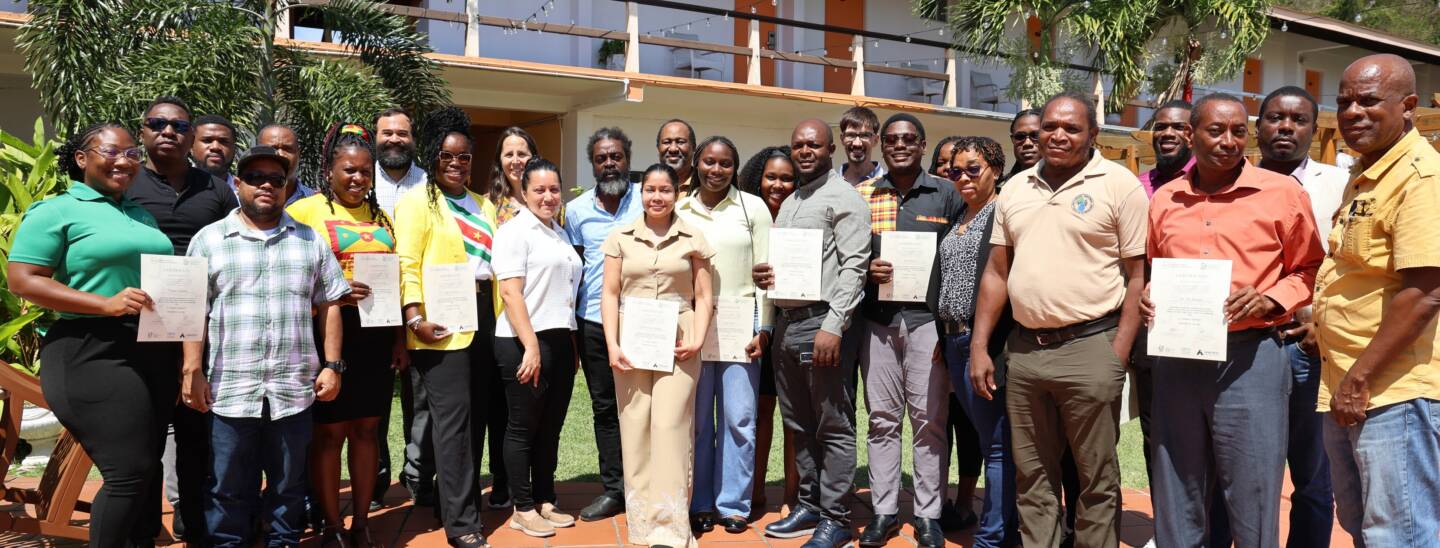
The Inter-American Institute for Cooperation on Agriculture (IICA), in collaboration with the Caribbean Agricultural Research and Development Institute (CARDI), has initiated a groundbreaking Mobile Seed Bank Project aimed at bolstering disaster resilience and food security across the Caribbean. This initiative, part of the Regional Disaster Response Roadmap, seeks to establish a robust, sustainable seed supply system capable of addressing critical shortages of high-quality seeds following natural disasters such as hurricanes, volcanic eruptions, and earthquakes. Funded by IICA, the project also aims to create a regional seed reserve to ensure farmers have access to quality planting materials during both disaster and non-disaster periods. The initiative emphasizes the conservation of traditional heirloom seed varieties and reduces dependency on costly imported seeds. Dominica, Antigua and Barbuda, and Belize have been designated as regional hubs for seed production, storage, and distribution. The project integrates innovative technologies, including agricultural drones for farmland mapping and utility vehicles for seed collection and farmer outreach. Dr. Curt Delice, IICA’s Special Affairs Coordinator for the Caribbean, highlighted the project’s dual focus on immediate disaster recovery and long-term agricultural rehabilitation. Junior Greene of CARDI underscored the proactive nature of the initiative, which aims to produce and distribute climate-resilient seed varieties. Gregory Bailey, Director of Agriculture in Antigua and Barbuda, emphasized the strategic importance of the Mobile Seed Bank in building a resilient, climate-smart agricultural sector, stating that a resilient seed system is essential for sovereignty, stability, and survival. The project includes training sessions on seed management and climate-smart agriculture, alongside consultations with regional Ministries of Agriculture to establish protocols for cross-border seed movement.
分类: science
-

Scientists say most dogs have some wolf DNA – even chihuahuas
A groundbreaking study published by US scientists on Monday has revealed that nearly two-thirds of all dog breeds carry detectable traces of wolf DNA. Contrary to previous assumptions, this genetic influence is not a remnant from the initial domestication of dogs from wolves approximately 20,000 years ago. Instead, it indicates that interbreeding between domesticated dogs and wild wolves has occurred within the last few millennia. The research, led by Audrey Lin of the American Museum of Natural History, analyzed thousands of dog and wolf genomes from publicly available databases. The findings showed that 64% of modern dog breeds, including small breeds like chihuahuas, possess wolf ancestry. Notably, Czechoslovakian and Saarloos wolfdogs exhibited the highest levels of wolf DNA, up to 40%, while sight hounds such as Salukis and Afghans also ranked high. Interestingly, the study found that 100% of village dogs—those living in human settlements without being pets—have wolf ancestry. Logan Kistler, a curator at the Smithsonian Museum of Natural History and co-author of the study, suggested that village dogs, which have more opportunities to interact with wolves, may be a key conduit for wolf DNA entering the dog gene pool. The research also highlighted that wolf DNA has influenced traits such as size, olfactory capabilities, and even personality in modern dog breeds. However, the presence of wolf DNA does not imply direct interbreeding in domestic settings. The study challenges prior scientific beliefs that dogs must have minimal wolf DNA to be considered distinct from their wild ancestors.
-

Innovation across sectors at science fair
The annual National Science Fair, organized by the Ministry of Education, showcased a range of groundbreaking innovations and sustainable practices this year. Among the standout exhibits was a cutting-edge computer application designed to assist disaster management officials in monitoring relief supplies in real time. This tool enables shelter and warehouse managers, along with senior NEMO officials, to efficiently track and distribute aid, ensuring it reaches the intended recipients without delay. Another notable innovation was a wearable sweat patch that allows users to monitor body fluid loss, offering potential benefits for health and fitness enthusiasts. The fair also featured creative projects such as the extraction of floral scents for perfume production, sustainable farming techniques from the Grenadines, and natural water purification methods. In the realm of robotics, a group of students unveiled a motorized vacuum-cleaning device equipped with proximity sensors, demonstrating their technical prowess. Additionally, exhibits on satellite communications and the use of traditional herbs for hypertension control highlighted the intersection of technology and health. The event, themed ‘Bridging Science and Society,’ spanned three days and included a prize-giving ceremony at the Methodist Town Hall in Kingstown. Juanita King, the fair’s coordinator, expressed her satisfaction with the diverse and high-quality exhibits, particularly praising the participation from secondary schools on mainland St. Vincent and the Southern Grenadines. This year’s fair saw contributions from 17 primary schools and 12 secondary schools, including all the Grenadine islands, underscoring the event’s widespread appeal and educational impact.
-

On track to climate disaster
As the world gathers for COP30 in Brazil, Dr. Anjani Ganase highlights the escalating climate crisis, with global temperatures nearing the critical 1.5°C threshold set by the Paris Agreement. Trinidad and Tobago, as a small island nation, must play its part in mitigating these impacts. Currently, the planet has already warmed by 1.4°C above pre-industrial levels, with severe consequences for marine ecosystems. Coral reefs, which support over 25% of marine biodiversity, are particularly vulnerable, with a tipping point reached at 1.2°C. This has led to widespread coral bleaching, threatening fish stocks, food security, and coastal protection. The Global Tipping Points Report 2025, released by the University of Exeter and the Stockholm Resilience Centre, warns that without urgent action to limit temperature rise to 1.5°C, coral reefs may transition to algae-dominated systems, with only a few hope spots remaining. Polar ice sheets are also at risk, with the Western Antarctic Peninsula expected to experience significant ice loss, impacting polar marine life and accelerating sea level rise. These cumulative effects increase the vulnerability of small island nations, particularly in the Pacific, which face the risk of becoming uninhabitable. The report also highlights the potential collapse of the Atlantic Meridional Overturning Circulation (AMOC), which could lead to severe droughts in the Amazon and Caribbean, and harsher winters in Europe. For Trinidad and Tobago, the combined impacts of climate change on marine ecosystems and coastal areas will be costly. Despite international funding, there has been little progress in marine management over the past 40 years. The country’s new climate change policy aims to reduce carbon emissions and build resilience, but effective implementation of legislation and marine protections is urgently needed. The report also identifies positive tipping points, with some countries shifting away from fossil fuels towards renewable energy. At COP30, Trinidad and Tobago must advocate for adherence to the Paris Agreement and take concrete actions domestically to address the climate crisis.
-

Hitler likely had micropenis, according to DNA study
LONDON, United Kingdom — Groundbreaking DNA analysis has revealed that Adolf Hitler likely suffered from Kallmann Syndrome, a genetic condition that can cause undescended testicles and a micropenis. This discovery, made by an international team of researchers and documentary makers, also dispels the long-standing myth that Hitler had Jewish ancestry. The findings are part of a new documentary titled ‘Hitler’s DNA: Blueprint of a Dictator,’ set to air on the UK’s Channel 4 this Saturday. The research, which utilized a blood sample from Hitler’s suicide sofa, indicates a ‘high likelihood’ of Kallmann Syndrome and places him in the top one percent for genetic predispositions to autism, schizophrenia, and bipolar disorder. However, the team emphasized that these conditions do not justify or explain his warmongering or racist policies. The DNA analysis also confirmed that Hitler did not have a Jewish grandfather, debunking rumors about his grandmother’s pregnancy. Geneticist Turi King, who worked on the project, noted that Hitler’s genetic profile would have classified him as a target for his own eugenics policies. The documentary aims to provide a deeper understanding of the dictator’s life and the genetic factors that may have influenced his behavior.
-

Rare killer whale sighting recorded in Exuma Sound
A rare encounter with orcas, commonly known as killer whales, has recently been documented by researchers off the coast of Eleuthera, The Bahamas. The sighting, which included two individuals previously recorded in the region, has sparked both excitement and concern among scientists. Natalie Hodges, a researcher at the Cape Eleuthera Institute (CEI), led the team that observed the orcas during a deep-sea survey focused on beaked whales in the Exuma Sound. Hodges described the experience as “really exciting” and highlighted the cultural significance of orcas, particularly her personal connection from her time in British Columbia. One of the orcas identified has been visiting Bahamian waters since 1995, underscoring the area’s ecological importance. The orcas are believed to be mammal-eating ecotypes, preying on smaller whale species, which Hodges noted as a positive indicator of a thriving ecosystem. However, the sighting also revealed a concerning detail: one of the orcas appeared to be entangled in fishing gear, a condition that has persisted for some time and poses significant risks to the animal’s health. Hodges’ research aims to understand the distribution and habitat use of deep-diving toothed whales in the Exuma Sound, a region home to 14 documented species. Her work has gained urgency due to the ongoing SpaceX Falcon 9 booster landings in the area, which introduce industrial noise that could disrupt marine life. A recent stranding of a Gervais’ beaked whale, occurring just one week after a SpaceX landing test, has raised alarms about the potential impact of noise pollution on these sensitive species. Historical mass strandings in The Bahamas have been linked to naval sonar activity, further emphasizing the vulnerability of marine mammals to anthropogenic noise. Despite these concerns, the orca sighting serves as a testament to the richness of Bahamian marine biodiversity and the need for continued conservation efforts.
-

Solar storm brings new chance of vivid auroras, signal disruptions
Unprecedented auroral displays, typically confined to polar regions, have illuminated skies at unusually low latitudes this week, captivating observers worldwide. The phenomenon, driven by intense solar activity, is expected to persist into Thursday, according to the US National Oceanic and Atmospheric Administration (NOAA). These breathtaking light shows are the result of coronal mass ejections (CMEs) — massive bursts of solar particles that trigger geomagnetic storms upon reaching Earth. On Tuesday, a level four geomagnetic storm (on a scale of five) occurred, with another CME potentially causing a repeat on Thursday. Skies as far south as Mexico were adorned with faint pink and green hues, offering a rare treat for those who would typically need to venture closer to the poles to witness such spectacles. Last year, a level five geomagnetic storm — the first in two decades — produced similarly stunning views of the Northern and Southern Lights. However, these solar storms are not without consequences. They pose significant risks to communication systems, satellites, and power grids, potentially causing widespread disruptions. The impact of this week’s solar event has already been felt, with Blue Origin, the space company founded by Jeff Bezos, postponing the launch of its New Glenn rocket on Wednesday. For those eager to witness the aurorae, experts recommend seeking darker skies away from urban light pollution and using cameras or smartphones to capture the lights through long-exposure photography, especially if they are not visible to the naked eye.