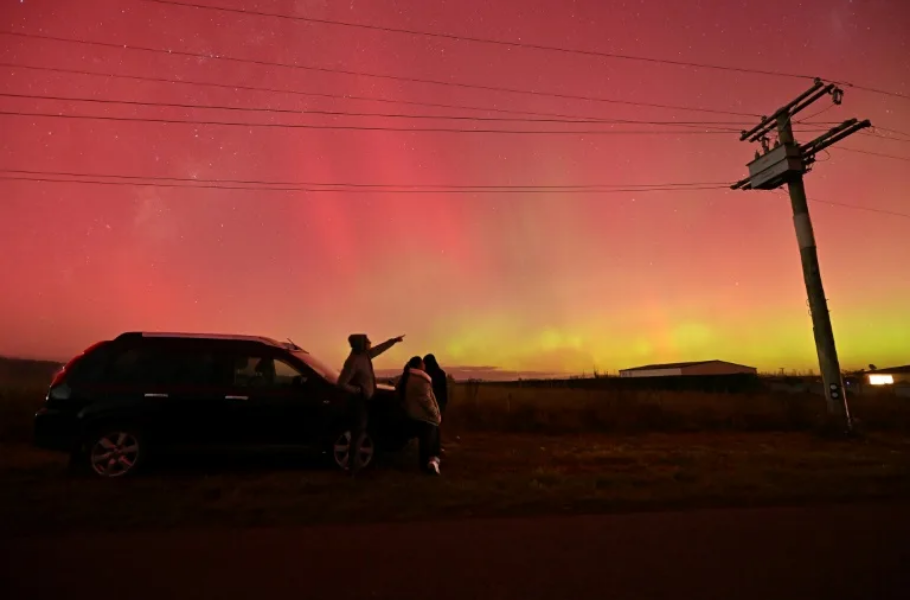
Unprecedented auroral displays, typically confined to polar regions, have illuminated skies at unusually low latitudes this week, captivating observers worldwide. The phenomenon, driven by intense solar activity, is expected to persist into Thursday, according to the US National Oceanic and Atmospheric Administration (NOAA). These breathtaking light shows are the result of coronal mass ejections (CMEs) — massive bursts of solar particles that trigger geomagnetic storms upon reaching Earth. On Tuesday, a level four geomagnetic storm (on a scale of five) occurred, with another CME potentially causing a repeat on Thursday. Skies as far south as Mexico were adorned with faint pink and green hues, offering a rare treat for those who would typically need to venture closer to the poles to witness such spectacles. Last year, a level five geomagnetic storm — the first in two decades — produced similarly stunning views of the Northern and Southern Lights. However, these solar storms are not without consequences. They pose significant risks to communication systems, satellites, and power grids, potentially causing widespread disruptions. The impact of this week’s solar event has already been felt, with Blue Origin, the space company founded by Jeff Bezos, postponing the launch of its New Glenn rocket on Wednesday. For those eager to witness the aurorae, experts recommend seeking darker skies away from urban light pollution and using cameras or smartphones to capture the lights through long-exposure photography, especially if they are not visible to the naked eye.