分类: science

  • UWI Five Islands to host public lecture on Antigua’s geological history

    UWI Five Islands to host public lecture on Antigua’s geological history

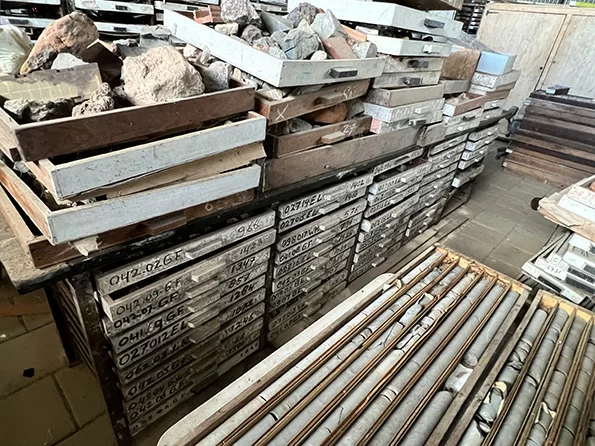
    The University of the West Indies Five Islands Campus has announced it will present a complimentary public lecture in February focusing on the geological formation of Antigua and its significance within the broader Caribbean tectonic framework. Scheduled for Wednesday, February 11th at 6:00 PM AST, the event will take place in the campus cafeteria and is freely accessible to all members of the community.

    Distinguished scholar Professor Simon Mitchell, an expert in sedimentary geology from the University of the West Indies Mona Campus, will deliver the presentation titled “Geology of Antigua: From Its Setting in the Caribbean to What We Want to Know.” His lecture will provide comprehensive insights into the island’s geological genesis, its connections to regional tectonic processes, and highlight pressing scientific questions that continue to drive contemporary geological research in the area.

    This educational initiative, organized under the auspices of the Office of the Campus Principal, represents part of the institution’s broader commitment to fostering public engagement with academically significant topics. The lecture series aims to bridge the gap between academic research and community awareness, particularly regarding matters of national and regional importance in the Caribbean context.

  • Polar Bears ‘Healthier’ Despite Melting Arctic Ice

    Polar Bears ‘Healthier’ Despite Melting Arctic Ice

    In a surprising ecological development, polar bears inhabiting Norway’s Svalbard archipelago demonstrate significantly improved physical condition compared to two decades ago, according to groundbreaking research published in Scientific Reports. The comprehensive study, tracking hundreds of bears between 1992 and 2019, reveals that body condition metrics began improving from the year 2000 onward—a period during which the region lost approximately 100 days of sea ice coverage.

    Lead author Jon Aars of the Norwegian Polar Institute expressed astonishment at the findings: “I would have predicted that body condition would decline. We observe precisely the opposite phenomenon.” The research indicates the Svalbard population remains stable or potentially growing, challenging conventional assumptions about polar bear vulnerability.

    The study suggests these Arctic predators have adapted their feeding strategies, supplementing traditional seal hunting with terrestrial food sources including reindeer and scavenged walrus remains. This behavioral flexibility appears to have compensated for reduced hunting opportunities on diminishing sea ice.

    University of Washington polar researcher Kristin Laidre notes the findings complicate simplistic narratives: “People often receive a message of total doom regarding polar bears. This research demonstrates significant regional variability in how bear populations are responding to environmental changes.”

    While climate change continues to pose the most substantial threat to Arctic species worldwide, this research reveals unexpected resilience in certain polar bear populations, suggesting their survival mechanisms are more complex and adaptable than previously understood.

  • Regional workshop on high-resolution land degradation reporting for Caribbean SIDS

    Regional workshop on high-resolution land degradation reporting for Caribbean SIDS

    Grenada will host a pivotal five-day technical workshop in February 2026, uniting Geographical Information System specialists and land management experts from across the Caribbean to enhance regional capabilities in monitoring land degradation. The specialized training program, formally designated as the Regional Technical Workshop on High-Resolution SDG 15.3.1 and PRAIS SO1 Reporting for Caribbean SIDS, represents a significant capacity-building initiative for Small Island Developing States.

    Organized by the Partnership Initiative for Sustainable Land Management (PISLM), the intensive hands-on program will bring together 26 participants—two technical experts from each of the 13 Caribbean SIDS. The curriculum has been meticulously designed to provide comprehensive training in advanced geospatial analysis techniques specifically tailored for environmental monitoring.

    Participants will engage in practical sessions covering high-resolution land cover analysis, land productivity dynamics assessment, and sophisticated soil organic carbon estimation methodologies. The program will further equip attendees with the technical expertise required to integrate these critical indicators into Sustainable Development Goal 15.3.1 assessments, which specifically target land degradation neutrality.

    A cornerstone of the workshop involves training in the preparation of PRAIS-ready datasets, including standardized tables and metadata that comply with international reporting requirements. This technical preparation is crucial for effective participation in the United Nations Convention to Combat Desertification’s Performance Review and Assessment of Implementation System.

    The workshop’s most significant anticipated outcome is the establishment of a Caribbean GIS Community of Practice dedicated to land degradation monitoring and sustainable land management. This professional network will serve as an ongoing resource for knowledge exchange and technical collaboration beyond the workshop’s duration.

    Financial support for this initiative is provided through the Global Environment Facility, with the United Nations Environment Programme acting as Implementing Agency and PISLM serving as Executing Agency. Technical training delivery is being conducted in collaboration with Apacheta, an organization specializing in environmental data management solutions.

    This capacity-building effort directly supports Caribbean nations in fulfilling their reporting obligations under international environmental agreements while strengthening regional resilience against land degradation challenges.

  • Earthquake unit dispels myth

    Earthquake unit dispels myth

    Jamaican seismic experts are actively combating the widespread misconception that atmospheric conditions influence earthquake occurrence as the nation concludes its January Earthquake Awareness Month. Karleen Black, Scientific Officer at Jamaica’s Earthquake Unit, presented definitive scientific clarification during a recent JIS Think Tank session, emphasizing that seismic events originate from profound geological processes deep within the Earth’s crust.

    Black explained that the fundamental mechanisms driving earthquakes operate at depths ranging from 15 to 100 kilometers beneath the surface, far beyond the reach of meteorological conditions. “The weather at the surface is not going to affect them,” she stated authoritatively, dismissing the long-held myth connecting hot temperatures to seismic activity.

    While acknowledging earthquakes as inherent natural phenomena, Black stressed that their devastating consequences can be substantially mitigated through comprehensive preparedness strategies. She highlighted the cascade of secondary hazards triggered by seismic events, including tsunamis, landslides, soil liquefaction, and fires, particularly emphasizing coastal tsunami preparedness for island residents.

    The Earthquake Unit maintains ongoing collaborations with multiple stakeholders to enhance national resilience through targeted public education programs and disaster readiness initiatives. These efforts form part of Jamaica’s broader strategy to build societal resistance against geological threats in this seismically active Caribbean region.

  • Google unveils AI tool probing mysteries of human genome

    Google unveils AI tool probing mysteries of human genome

    PARIS — Google DeepMind has launched a groundbreaking artificial intelligence system designed to decode the complex language of human genetics, potentially revolutionizing our understanding of genetic diseases and paving the way for innovative treatments.

    The newly unveiled AlphaGenome represents a significant advancement in genomic research, employing deep learning algorithms to interpret the previously enigmatic regions of human DNA. This development comes from the same research division that produced AlphaFold, the AI system that recently earned a Nobel Prize in Chemistry for its protein structure predictions.

    Pushmeet Kohli, Google DeepMind’s Vice President of Research, explained the historical context: “The first complete human genome sequence in 2003 provided us with the fundamental text of life. However, comprehending its intricate grammar—how our DNA actually governs biological processes—has remained one of science’s most challenging frontiers.”

    The human genome consists of approximately three billion nucleotide pairs, represented by the genetic letters A, T, C, and G. While merely two percent of this genetic material contains protein-coding instructions, the remaining 98 percent—once dismissively labeled ‘junk DNA’—is now recognized as containing crucial regulatory functions that direct cellular operations.

    AlphaGenome’s sophisticated model was trained on extensive public datasets measuring non-coding DNA across hundreds of human and murine cell and tissue types. The AI demonstrates remarkable capability in analyzing extended DNA sequences and predicting how individual nucleotide pairs influence various biological processes within cells.

    This technological breakthrough enables researchers to simulate and study the fundamental mechanisms behind difficult-to-treat genetic conditions by examining the disease-associated variants contained within non-coding DNA regions. The research findings supporting AlphaGenome’s development have been published in the prestigious scientific journal Nature.

    The scientific community has welcomed AlphaGenome as a transformative tool that could accelerate genetic research and potentially lead to novel therapeutic approaches for conditions with genetic components.

  • Antigua and Barbuda’s Agriculture Transforms as Tradition Blends with Sustainable and High-Tech Farming

    Antigua and Barbuda’s Agriculture Transforms as Tradition Blends with Sustainable and High-Tech Farming

    The agricultural landscape across the Caribbean, with a focused lens on Antigua and Barbuda, represents a dynamic fusion of historical tradition and technological innovation. This sector demonstrates remarkable resilience in confronting persistent challenges such as climate volatility, land constraints, and food import dependency. The evolution from colonial-era sugarcane monoculture to today’s diversified and tech-integrated approaches illustrates a significant regional transformation.

    Historical agricultural methods continue to form the foundational layer of Caribbean farming. Generational knowledge sustains practices such as intercropping—where cassava, maize, and pulses are cultivated together—to enhance soil health and ensure crop variety. Livestock rearing remains integral to rural livelihoods, though mindful management is essential to prevent overgrazing and land degradation.

    In response to increasing climate disruptions, including intensified hurricanes and irregular precipitation, farmers are adopting climate-smart methodologies. These strategies encompass the cultivation of drought-resistant crop varieties, advanced water conservation through rainwater harvesting and drip irrigation, and soil preservation techniques like contour farming and mulching.

    Sustainability is now a central pillar of modern agricultural development. Agroforestry systems, which incorporate fruit trees into farming plots, not only improve biodiversity but also act as natural windbreaks during storms. There is a growing shift toward agroecology, emphasizing organic alternatives such as biofertilizers and biopesticides to minimize ecological footprints.

    Innovative integrated systems are gaining traction to optimize limited land resources. Aquaponics and hydroponics enable efficient, soil-less cultivation of vegetables, particularly advantageous in urban and arid zones of Antigua and Barbuda. These closed-loop systems maximize output while conserving water—a critical consideration for island nations.

    The most groundbreaking advancement is the incorporation of drone technology. Unmanned aerial vehicles provide farmers with precise, real-time data for crop monitoring, early detection of pests or diseases, and targeted application of inputs. This precision agriculture reduces waste, lowers costs, and enhances productivity on small-scale farms, making it a powerful tool for post-hurricane recovery and yield forecasting.

    Despite promising innovations, barriers to widespread adoption persist. These include the need for comprehensive farmer training, accessible financing for technology acquisition, and supportive policy frameworks that incentivize sustainable practices. Effective collaboration between governments, research institutions, and farming communities is crucial for long-term success.

    Ultimately, Caribbean agriculture is navigating a path toward greater sustainability and self-sufficiency. By harmonizing time-tested traditions with cutting-edge technologies, the region is building a resilient food system capable of withstanding environmental and economic pressures, ensuring food security for future generations.

  • LIVE: Ms OECS Pageant 2026 Official Launch

    LIVE: Ms OECS Pageant 2026 Official Launch

    In an astronomical revelation that reshapes our understanding of the early universe, NASA’s James Webb Space Telescope has identified the most distant and ancient galaxy ever documented. Designated JADES-GS-z14-0, this stellar formation emerged a mere 290 million years after the Big Bang, pushing the boundaries of cosmic observation into unprecedented territory.

    The discovery, part of the JWST Advanced Deep Extragalactic Survey (JADES) program, demonstrates the telescope’s extraordinary capability to peer back through cosmic time. The galaxy’s confirmed redshift of 14.32 establishes it as the new record-holder for the most distant astronomical object ever verified through spectroscopic analysis.

    Dr. Jane Cooper, lead astrophysicist on the project, stated: ‘This finding fundamentally challenges our models of early galaxy formation. The brightness and size of JADES-GS-z14-0 suggest rapid stellar development occurring in the universe’s infancy, forcing us to reconsider the timeline of cosmic evolution.’

    The galaxy’s surprising luminosity indicates it contains several hundred million times the mass of our Sun, raising profound questions about how such substantial structures could form so quickly after the dawn of the universe. Researchers additionally detected signs of oxygen presence, suggesting multiple generations of massive stars had already lived and died within this early galactic environment.

    This landmark discovery not only breaks previous distance records but provides crucial insights into the epoch of reionization—the cosmic transition period when the first stars and galaxies began illuminating the universe. The Webb telescope’s infrared capabilities continue to revolutionize astronomy by capturing light stretched across billions of light-years, effectively functioning as a time machine viewing the universe’s formative chapters.

  • China–Antigua and Barbuda Training Boosts Plant Tissue Culture to Tackle Seedling Shortages

    China–Antigua and Barbuda Training Boosts Plant Tissue Culture to Tackle Seedling Shortages

    In a significant advancement for Caribbean agricultural science, Antigua and Barbuda has established its first specialized plant tissue culture facility through bilateral cooperation with China. The pioneering laboratory, equipped with state-of-the-art technology including laminar flow hoods, high-pressure sterilizers, and constant-temperature incubators, represents a cornerstone of the China-Aided Agricultural Technology Project.

    On January 21, 2026, the China–Antigua and Barbuda Modern Agricultural International Science and Technology Cooperation Base in Bethesda hosted an intensive technical workshop led by Dr. Lu Jiaju, an associate researcher from China’s Guizhou Institute of Subtropical Crops. The session brought together agricultural specialists from Antigua’s Ministry of Agriculture, Lands, Fisheries and the Blue Economy, specifically the Crop Research and Development Division.

    Dr. Lu conducted comprehensive training covering all aspects of plant tissue cultivation, beginning with laboratory safety protocols and proper attire requirements. Participants received detailed instruction on functional laboratory zoning, equipment operation, and critical procedural stages including reagent preparation, medium formulation, sterilization techniques, and explant disinfection. Using sweet potato cuttings as demonstration material, Dr. Lu performed live demonstrations of sterilization processes involving alcohol immersion and sodium hypochlorite treatment, emphasizing precise timing controls.

    The workshop employed a blended learning approach combining theoretical knowledge with hands-on practice. Trainees participated in group exercises within laminar flow cabinets, practicing cutting and inoculation techniques under expert supervision. Special emphasis was placed on maintaining aseptic conditions throughout all procedures, with detailed guidance on laboratory cleaning protocols and disinfection standards.

    Concurrent training sessions focused on laboratory management and equipment maintenance for the core technical team who will operate the facility once it becomes fully operational. This comprehensive knowledge transfer enables Antigua and Barbuda to develop independent capacity for producing high-quality, disease-free seedlings, addressing long-standing agricultural challenges in the region.

    The establishment of this facility, entirely funded and equipped through Chinese governmental support, marks a transformative step in Antigua and Barbuda’s agricultural development journey, potentially serving as a model for other Caribbean nations facing similar agricultural constraints.

  • Chile cancels energy project threatening astronomy

    Chile cancels energy project threatening astronomy

    A major conflict has emerged in Chile between renewable energy ambitions and astronomical research, pitting a green hydrogen initiative against one of the world’s most important astronomical observatories. AES Andes, the Chilean subsidiary of American energy multinational AES Corporation, has faced mounting opposition to its proposed INNA project—a green hydrogen and ammonia production facility planned for the Atacama Desert.

    The project, which entered Chile’s Environmental Impact Assessment System in 2024, has encountered significant regulatory hurdles and widespread objections from both domestic and international stakeholders. The controversy stems from the proposed location just kilometers from the town of Taltal, placing it in immediate proximity to the Paranal Observatory.

    Paranal represents one of the most critical ground-based astronomical facilities globally, housing the renowned Very Large Telescope (VLT) operated by the European Southern Observatory (ESO). The site is also currently constructing the Extremely Large Telescope (ELT), projected to become the world’s largest optical/near-infrared telescope upon completion. Scientists anticipate the ELT will revolutionize our understanding of the universe by capturing unprecedented images that could reveal new insights into cosmic history and evolution.

    The Atacama Desert has earned global recognition among astronomers for its exceptional observational conditions, combining high altitude, minimal atmospheric interference, and exceptionally dark skies—attributes that make it uniquely suited for cutting-edge astronomical research.

    Environmental assessors and scientific organizations have raised concerns that the INNA project could severely degrade these pristine conditions through multiple mechanisms: light pollution from facility operations, atmospheric emissions that could affect air clarity, and potential vibration impacts from industrial activity. The conflict highlights the growing challenge of balancing renewable energy development with the preservation of scientifically critical environments.

  • National Botanical Garden releases Volume 22 of Moscosoa Scientific Journal

    National Botanical Garden releases Volume 22 of Moscosoa Scientific Journal

    Santo Domingo’s Dr. Rafael M. Moscoso National Botanical Garden (JBN) has officially launched the 22nd volume of its prestigious Moscosoa Scientific Journal, marking a significant resurgence of botanical scholarship in the Caribbean region. This comprehensive 193-page edition represents both a scientific milestone and a heartfelt homage to the late Dominican botanist Brígido Peguero, whose groundbreaking work and advocacy for social justice left an indelible mark on the nation’s botanical sciences.

    The newly released volume, meticulously produced by the JBN’s Botany Department under the leadership of Teodoro Clase, features seven groundbreaking scientific articles that advance our understanding of Caribbean flora. These contributions from both national and international researchers encompass critical areas including the identification of previously undocumented plant species, innovative conservation methodologies, and detailed analyses of regional flora distribution patterns. A special commemorative section honors Peguero’s multifaceted legacy as an educator, research scientist, and champion of environmental justice.

    JBN Director General Pedro Suárez emphasized the publication’s dual significance as both a tribute to botanical heritage and a forward-looking scientific resource. ‘This volume not only honors Brígido Peguero’s immense contributions but also signals the journal’s formal return after a publishing hiatus, reestablishing its role as an essential reference for botanical research in the Dominican Republic and throughout the Caribbean basin,’ Suárez stated during the launch event.

    The botanical institution simultaneously announced substantial modernization initiatives for the publication, including the adoption of advanced digital publishing platforms and strategic efforts to secure inclusion in international scientific databases. These developments were revealed alongside a preview of the forthcoming Volume 23, which will feature a special focus on the collaborative ‘Magnolia Forests’ research project conducted with the Royal Botanic Gardens, Kew and other partner institutions.

    A significant enhancement in the new volume is the comprehensive revision of the journal’s ‘Instructions for Authors’ guidelines, implemented to elevate scientific rigor, ensure editorial transparency, and enhance global visibility within the international botanical research community.