分类: science

  • Elkhorn Marine Conservancy Announces Rebrand to AnuBlue

    Elkhorn Marine Conservancy Announces Rebrand to AnuBlue

    The Caribbean marine conservation landscape has witnessed a significant transformation as Elkhorn Marine Conservation (EMC) officially rebrands itself as AnuBlue, signaling a strategic expansion of its environmental mission. This nomenclature evolution embodies both geographical significance and aspirational purpose—’Anu’ pays homage to Antiguan heritage while ‘Blue’ represents the marine ecosystems central to their work. The phonetic interpretation as ‘a new blue’ poetically captures the organization’s revitalization vision for Antigua and Barbuda’s seas.

    Since its 2021 inception with a single coral nursery near Green Island, the organization has matured into a comprehensive ocean restoration initiative. The newly christened AnuBlue now operates through three synergistic pillars: restoration, research, and community engagement, creating a holistic approach to marine conservation.

    The restoration program demonstrates scientific sophistication by propagating 13 endangered coral species across four nurseries strategically located at Jumby Bay, Cades Reef, and dual sites around Green Island. The organization selectively cultivates coral fragments from parent colonies exhibiting proven heat and disease resistance. These fragments undergo careful cultivation before being transplanted to degraded reef systems. The strategic placement of genetically diverse corals in proximate locations encourages natural gamete exchange during spawning events, fostering genetic diversity that enhances climate resilience and disease resistance.

    AnuBlue’s scientific methodology incorporates cutting-edge research specifically designed for Antigua and Barbuda’s unique marine conditions. The organization conducts rigorous water quality monitoring, investigates the ecological impact of sponges and herbivorous species like crabs and sea urchins on reef restoration, and implements advanced tracking systems including whale acoustic monitoring and shark tagging. Their research contributions have gained international recognition through recent publication in peer-reviewed scientific journals.

    Community integration forms the third crucial component of AnuBlue’s mission. The organization maintains strong local partnerships, employing fisherfolk and scuba divers to ensure nursery sustainability. Recognizing the complex cultural relationship between island residents and the ocean, AnuBlue implements educational initiatives including swimming lessons, summer camps, and coastal awareness programs designed to build marine confidence and foster environmental stewardship.

    Christal Clashing, Director of Advancement and Community Engagement, emphasized: ‘Our new identity reflects both our evolution and ambition. AnuBlue represents our conviction that meaningful restoration requires integrating education, research, and community collaboration to achieve lasting impact.’ This rebranding signifies a deepened commitment to not only rejuvenating coral ecosystems but also strengthening the human-ocean connection, ensuring the long-term vitality of Antigua and Barbuda’s marine heritage for future generations.

  • The effects of light pollution

    The effects of light pollution

    A silent environmental crisis is emerging under Caribbean skies, with St. Vincent and the Grenadines facing growing concerns about artificial light intrusion. While global statistics indicate over 80% of humanity lives under light-polluted skies—including 99% of the United States population—this Caribbean nation demonstrates notably low awareness and prevention measures regarding nocturnal illumination excess.

    Light pollution manifests through three primary disturbances: glare (excessive brightness causing visual discomfort), light trespass (unwanted illumination in unauthorized areas), and clutter (confusing groupings of excessive lighting). Unlike more recognized pollution forms, this luminous interference receives minimal public attention despite its significant ecological and human health implications.

    The physiological consequences for humans include chronic sleep deprivation, with specialists emphasizing that interrupted circadian rhythms prevent the minimum eight hours required for optimal health. This deficiency leads to increased irritability and impaired daytime functioning, ultimately compromising overall wellbeing.

    Ecological disruptions prove equally concerning. Artificial nocturnal lighting interferes with critical biological processes, damaging crops through growth retardation and potentially creating food insecurity scenarios. Wildlife suffers particularly severe impacts, with turtle nesting behaviors and migratory bird patterns experiencing dangerous disorientation from artificial light sources.

    Urban infrastructure contributes significantly to the problem. Street lights—while valuable for crime reduction—often feature poor engineering or excessive placement. Commercial lighting, particularly through oversized signage, further exacerbates light pollution levels throughout the islands.

    Mitigation strategies are emerging through multiple approaches. The transition to LED technology, championed by St. Vincent’s Energy Unit, reduces energy emission and heat generation while becoming the domestic and commercial standard. Legislative frameworks exist through Public Health and Environmental Health policies, which mandate precise light measurement in foot-candles or lux units.

    Community engagement remains essential for progress. Residents are encouraged to investigate existing regulatory measures and advocate for enhanced light pollution controls. Educational initiatives promise to empower citizens in protecting both environmental integrity and human health through conscious illumination practices.

  • UK zoo says tiny snail ‘back from brink’ of extinction

    UK zoo says tiny snail ‘back from brink’ of extinction

    In a landmark conservation achievement, the greater Bermuda land snail—a species once presumed extinct—has been successfully revived from the brink of disappearance through a collaborative international effort. Chester Zoo in the United Kingdom announced the breakthrough this week, marking a rare victory in global biodiversity preservation.

    The rediscovery journey began in 2014 when researchers identified living specimens in an alleyway of Hamilton, Bermuda’s capital. This finding sparked an urgent rescue mission involving conservation specialists from Chester Zoo, London Zoo, and Bermudian authorities. The snails were transported to specialized breeding facilities in northwest England, where experts meticulously cultivated population numbers over several years.

    By 2019, thousands of snails were reintroduced to their native habitat. Recent research published in the Oryx biodiversity conservation journal confirms that six established colonies are now thriving across the archipelago. Gerardo Garcia, Director of Animals and Plants at Chester Zoo, described the achievement as “massive,” noting that such conservation successes occur perhaps “once or twice in a conservationist’s entire career.”

    The greater Bermuda land snail represents an evolutionary relic with ancestry dating back over one million years. Its survival had been threatened by multiple factors including habitat destruction, pesticide application, and predation by invasive wolf snails—a cannibalistic species that preys on native snails.

    At the project’s peak, conservationists managed approximately 60,000 snails in captivity, requiring dedicated care and specific dietary regimens. Katie Kelton, a lead keeper, recounted the substantial effort involved: “It was a lot of snails to look after… a lot of chopping lettuce, sweet potato and carrot.”

    While long-term survival depends on ongoing habitat restoration initiatives by the Bermudian government, researchers have developed effective methodologies for rapid population recovery. The conservation team has now shifted focus to the lesser Bermuda land snail—an even smaller species that may be extinct in the wild—applying lessons learned from this successful program.

    Dr. Iri Gill, a conservation scientist involved in the project, emphasized that although tiny, these snails represent “one of the biggest success stories in conservation,” demonstrating that dedicated scientific intervention can reverse biodiversity loss.

  • New UWI Study Shows How Caribbean Countries Can Better Protect Land and Sea

    New UWI Study Shows How Caribbean Countries Can Better Protect Land and Sea

    A groundbreaking collaborative publication between The Centre of Excellence for Oceanography and the Blue Economy (COBE) at The University of the West Indies Five Islands Campus and UK-based sustainability consultancy greenCrowd reveals transformative approaches to marine conservation financing across the Caribbean region. Released in January 2026, the comprehensive study documents how Small Island Developing States are overcoming significant resource constraints through financial innovation and community engagement.

    The research examines the unique challenges Caribbean nations face, including limited terrestrial space, expansive marine territories requiring protection, and constrained human and financial resources. Despite these obstacles, the publication demonstrates how regional governments are achieving remarkable conservation milestones through creative financing mechanisms and localized management strategies.

    Notable case studies include Jamaica’s community-operated fish sanctuaries, The Bahamas’ pioneering nature bond initiatives, and the Dominican Republic’s significant achievement in protecting 30% of its marine territories. The research highlights that marine tourism contributed approximately $48 billion to regional economies in 2019, representing 14% of the Caribbean’s collective GDP.

    Dr. Branson Belle, Executive Director of COBE, emphasized the critical role of protected areas for island nations confronting climate change. “These conservation zones serve as essential buffers against environmental degradation while providing ecosystem services that our communities depend upon for both survival and resilience,” stated Dr. Belle. The publication aims to provide actionable frameworks that other island nations can implement to meet international conservation targets while addressing climate vulnerability.

    The collaboration bridges ocean science with practical conservation finance, exploring sustainable funding approaches including blue bonds and debt-for-nature swaps that several Caribbean nations have successfully implemented. COBE, established in 2024 to strengthen regional capacity in ocean and coastal management, continues to work with governments to implement the strategies outlined in the publication.

    GreenCrowd brings expertise in mobilizing institutional capital through their Impact Fund into scalable, climate-positive ventures, advising SMEs, public bodies, and financial institutions on clean energy, climate infrastructure, and nature-based solutions. The partnership represents a significant advancement in translating scientific research into practical conservation finance solutions for vulnerable island nations.

  • Lower pollution during Covid boosted methane — study

    Lower pollution during Covid boosted methane — study

    PARIS — Scientific research published Thursday in the journal Science reveals an unexpected climate consequence of pandemic-era lockdowns: improved air quality inadvertently triggered the largest recorded surge in atmospheric methane levels during the early 2020s.

    The study demonstrates that reduced pollution during COVID-19 restrictions weakened Earth’s natural atmospheric cleansing mechanism, allowing methane concentrations to accelerate at unprecedented rates. This paradoxical outcome resulted from diminished nitrogen oxide emissions—primarily from transportation and industrial sources—which are essential for producing hydroxyl radicals (OH), the atmosphere’s primary methane-scrubbing agents.

    Lead author Philippe Ciais, associate director at France’s Laboratory of Climate and Environment Sciences, explained the counterintuitive finding: “We observe a clear paradox where reduced pollution unexpectedly harmed methane mitigation efforts. With less nitrogen oxide in the atmosphere, we essentially disabled the planet’s natural methane removal system.”

    The research attributes approximately 80% of methane’s dramatic accumulation during 2020-2021 to this hydroxyl radical reduction. Additional contributing factors included increased emissions from wetlands and agricultural activities driven by unusually wet conditions in tropical regions.

    Methane’s climate significance cannot be overstated. While shorter-lived than carbon dioxide, this potent greenhouse gas possesses 80 times the warming potential over a 20-year period, making it a critical focus for climate mitigation strategies.

    The study documents how methane growth rates peaked at 16.2 parts per billion annually in 2020—the highest recorded increase—before declining by approximately half by 2023 as economic activities resumed.

    Co-author Marielle Saunois characterized the phenomenon as “collateral damage” in environmental policy, emphasizing that “this research underscores the necessity of simultaneously improving air quality while aggressively mitigating greenhouse gas emissions to counterbalance these complex chemical-climate interactions.”

    The findings present policymakers with a formidable challenge: designing environmental regulations that reduce conventional pollution without compromising the atmosphere’s capacity to regulate potent greenhouse gases.

  • International team reactivates excavations to locate Enriquillo’s remains

    International team reactivates excavations to locate Enriquillo’s remains

    A multinational team of distinguished archaeologists and historical researchers has relaunched excavations in Azua, Dominican Republic, as part of the ambitious “Following the Remains of Enriquillo” initiative. Spearheaded by the Macarrulla Foundation in partnership with the General Directorate of Strategic and Special Projects of the Presidency (Propeep), the project aims to physically locate the burial site of Enriquillo, a legendary 16th-century Taíno cacique revered as a seminal figure of dignity and resistance against colonial forces.

    The fieldwork, centered on the ruins of Pueblo Viejo, represents the latest phase in a decade-long investigative process. Project executive director Lidia Martínez de Macarrulla revealed an estimated investment of $1.5 million, funding a multidisciplinary approach that integrates historical archival research, cutting-edge archaeological digs, laboratory analysis, and sophisticated technology.

    The scientific methodology employs satellite imagery to identify subsoil anomalies for precise excavation targeting, carbon-14 dating for chronological verification, and extensive reviews of international historical records to corroborate data. Martínez de Macarrulla emphasized the project’s profound cultural significance, stating it transcends pure archaeology to touch upon national historical memory and identity.

    Robert Polanco, Director of Propeep, characterized the endeavor as a crucial move to fill a historical void in the material preservation of Enriquillo’s legacy. He underscored its role in fostering a more inclusive narrative of the Dominican Republic’s pre-Hispanic history, highlighting Enriquillo’s strategies of resistance and political negotiation.

    Renowned Dominican archaeologist Kathleen Martínez, famed for her work in Egypt, is providing technical coordination for this phase. She leads a diverse team of specialists from the Dominican Republic, Egypt, and Spain, whose expertise spans archaeology, anthropology, osteology, and funerary studies. The project is anticipated to yield substantial contributions to academic scholarship and the safeguarding of the nation’s cultural heritage.

  • Dominican Republic to host the first International Congress on Urban Pest Control

    Dominican Republic to host the first International Congress on Urban Pest Control

    The Dominican Republic will achieve a historic milestone in April 2026 by hosting its inaugural International Congress on Urban Pest Control (CIPLAG RD 2026). Scheduled for April 16-17, this groundbreaking event represents a transformative initiative to elevate professional standards and technological innovation within the pest management industry across the Caribbean region.

    Under the leadership of Alexander Mata and the National Association of Urban Pest Management (ANMPU), the congress will serve as a comprehensive knowledge-sharing platform. The event will convene globally recognized experts, manufacturers of advanced biocides, and technology innovators specializing in cutting-edge monitoring and control solutions.

    The congress agenda features multiple interactive components including technical presentations by international specialists, an exhibition of emerging market technologies, professional networking sessions for strategic collaboration, and hands-on workshops dedicated to technical skill development. This multifaceted approach ensures participants gain both theoretical knowledge and practical implementation strategies.

    Strategic objectives include establishing the Dominican Republic as a regional hub for professional pest management practices while promoting environmentally sustainable methodologies. The initiative underscores the critical intersection between pest control, public health security, and ecological preservation.

    CIPLAG RD 2026 specifically targets industry entrepreneurs, technical professionals, and institutional stakeholders seeking to advance their operational capabilities. Through this congress, ANMPU demonstrates its institutional commitment to driving innovation, excellence, and professional standardization within the pest management sector.

  • 31st International Congress of Caribbean Archaeology set for Santo Domingo

    31st International Congress of Caribbean Archaeology set for Santo Domingo

    Santo Domingo has been selected as the host city for the XXXI International Congress of Caribbean Archaeology, marking a significant milestone for archaeological research in the region. The prestigious event, scheduled for July 13-17, 2026, will unfold primarily within the historic Colonial City district, with additional activities at complementary cultural venues.

    The Dominican Republic Academy of Sciences, in partnership with the International Association of Caribbean Archaeology (AIAC/IACA), will spearhead the organization of this comprehensive gathering. They have secured substantial institutional support from both cultural organizations and government entities. Key collaborators include the García Arévalo Foundation, Centro León, the Casa del Cordón Taíno Cultural Center, the Museum of Dominican Man’s Volunteer Program, and the Guahayona Institute. Official state support comes through the Vice Ministry of Cultural Heritage and the General Directorate of Museums.

    This five-day international convention will assemble distinguished researchers, academic students, heritage management professionals, and archaeology enthusiasts from across the globe. The congress agenda features presentations and scholarly discussions on cutting-edge research examining migratory patterns, cultural developments, and social transformations throughout the Caribbean region. The academic program will explore historical timelines spanning from prehistoric eras to the colonial period.

    The primary venue for academic sessions will be the auditorium at the INDOTEL Cultural Center, strategically located within the UNESCO World Heritage site of Santo Domingo’s Colonial City. Supplementary events and activities will be hosted at the Academy of Sciences headquarters and the Casa del Cordón Taíno Cultural Center, providing participants with immersive experiences in Dominican cultural heritage.

    This event significantly enhances the Dominican Republic’s standing as a central hub for archaeological scholarship and heritage preservation in the Caribbean basin. The congress promises to facilitate knowledge exchange, promote collaborative research initiatives, and highlight the nation’s commitment to advancing archaeological sciences.

  • Dominican official joins colleagues in Grenada for workshop on high-resolution land degradation reporting

    Dominican official joins colleagues in Grenada for workshop on high-resolution land degradation reporting

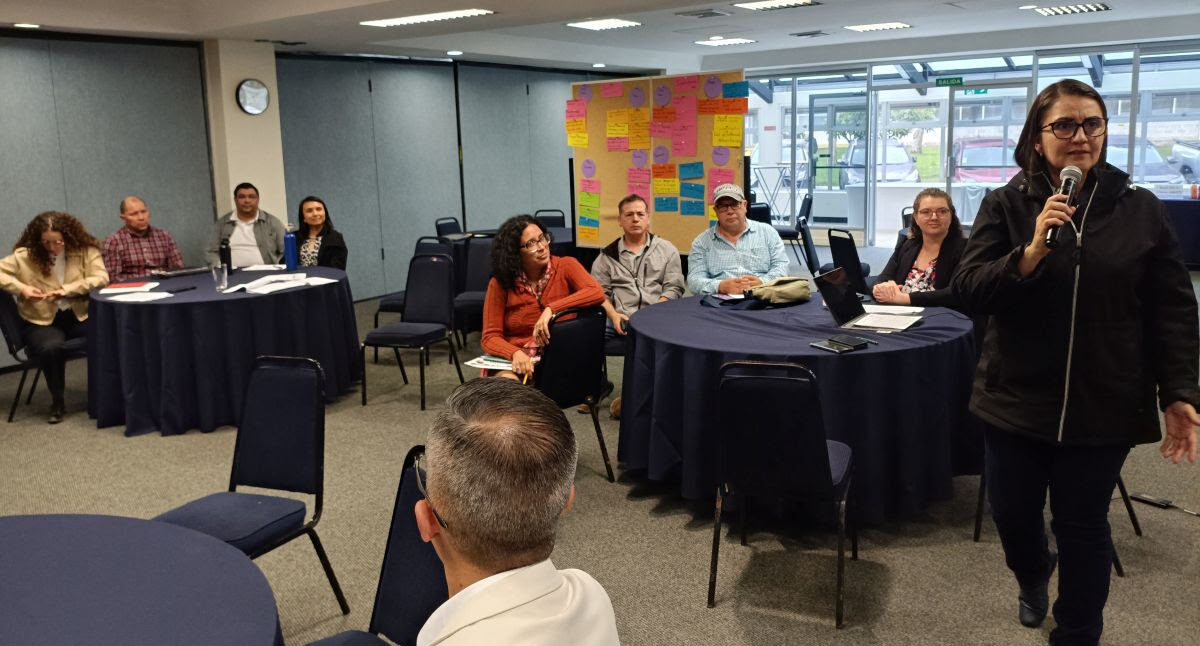
    Grenada is currently hosting a pivotal five-day regional workshop focused on enhancing land conservation reporting capabilities across Caribbean Small Island Developing States (SIDS). The event, which commenced on February 2 and continues through February 6, brings together twenty-six environmental specialists including Josh Baron from Dominica’s Department of Forestry, Wildlife and Parks.

    The technical workshop, formally titled ‘Regional Technical Workshop on High-Resolution SDG 15.3.1 and PRAIS SO1 Reporting for Caribbean SIDS,’ represents a significant capacity-building initiative for the region. Participants from all 13 Caribbean SIDS will engage in an immersive program designed to strengthen national reporting mechanisms on land degradation through advanced Geographic Information Systems (GIS) applications.

    Core curriculum components include sophisticated training in high-resolution land cover analysis, assessment of land productivity trends, precise measurement of soil organic carbon, and comprehensive integration of these indicators into Sustainable Development Goal 15.3.1 evaluations. Additionally, attendees will develop specialized skills in generating PRAIS-compliant datasets with complete metadata documentation.

    A primary objective of this gathering is the establishment of a Caribbean GIS Community of Practice dedicated to land degradation monitoring and Land Degradation Neutrality (LDN) initiatives. This professional network will support ongoing implementation of the United Nations Convention to Combat Desertification (UNCCD) through the Performance Review and Assessment of Implementation System (PRAIS) platform.

    The workshop is funded by the Global Environment Facility (GEF), with the United Nations Environment Programme (UNEP) serving as Implementing Agency and the Partnership Initiative for Sustainable Land Management (PISLM) acting as Executing Agency. Technical training is delivered in collaboration with Apacheta, creating a robust multilateral partnership aimed at strengthening regional environmental governance and sustainable land management practices.

  • Jamaica Customs Agency: Customs Protecting Society Through Vigilance & Commitment

    Jamaica Customs Agency: Customs Protecting Society Through Vigilance & Commitment

    NASA’s Perseverance rover has made a groundbreaking discovery in its exploration of Mars, uncovering compelling evidence of complex organic molecules within the Jezero Crater. This finding, published in the prestigious journal Nature, represents the most robust indication yet that the Red Planet may have hosted conditions suitable for prehistoric life.