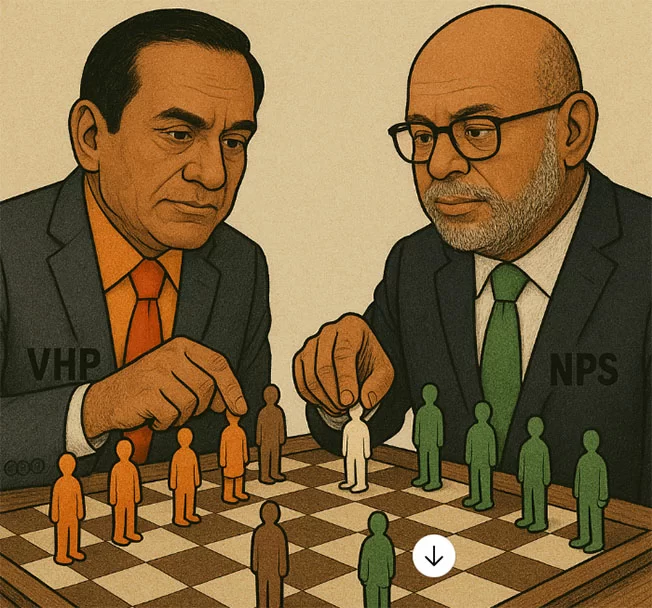
Venezuelan President Nicolas Maduro has leveled serious accusations against Trinidad and Tobago, alleging collaboration with the United States and the CIA to incite military tensions in the Caribbean. In a televised address on October 28, Maduro claimed that recent joint military exercises involving a US Navy destroyer were part of a broader strategy to destabilize Venezuela. He further announced the suspension of all gas and energy-related agreements with Trinidad and Tobago, citing strained relations with Prime Minister Kamla Persad-Bissessar and the country’s acceptance of US military presence in the region. Maduro also asserted that Venezuelan security forces had intercepted a group of CIA-funded mercenaries, uncovering plans for a high-level attack involving US naval units near Venezuelan waters. Although he provided no specific timeline for the capture, Maduro claimed to have shared ‘some clues’ with Trinidad and Tobago but refused to present evidence to the US, accusing them of collusion with the CIA. He referenced historical grievances, suggesting Trinidad and Tobago were once part of Venezuelan territory before British colonization. Drawing parallels to past US military incidents, Maduro likened the current tensions to the sinking of the USS Maine in 1898 and the Gulf of Tonkin incident in 1964, both of which he described as self-inflicted provocations. He accused Persad-Bissessar of supporting conflict and praised Venezuelans for protesting against what he termed ‘imperialist threats.’ Maduro also claimed Venezuela had thwarted three terrorist operations in recent months, including a plot to bomb Victory Square in Caracas, and vowed to defend the nation’s sovereignty and peace.
分类: politics
-

Unstatesmanlike
Prime Minister Kamla Persad-Bissessar of Trinidad and Tobago has recently drawn sharp criticism for her inflammatory and undiplomatic language, raising concerns about her suitability for public office. On October 24, the United National Congress (UNC) leader launched an unsubstantiated attack on the opposition People’s National Movement (PNM), accusing them of protecting the illegal profits of drug mafia financiers. Earlier that day, she referred to the leadership of the Law Association, a statutory body dedicated to legal advocacy, as “eat-a-food filth.” These remarks followed her earlier call for the U.S. military to “kill them all violently” in response to summary executions at sea by the Trump administration, suggesting traffickers should be “blown to pieces.” When questioned about the extrajudicial nature of such actions, she dismissively stated, “People are saying no due process, no law – whatever.” Collectively, these incidents paint a troubling picture of a leader prone to reckless and unfitting rhetoric. Despite her attempts to moderate her language in subsequent press interactions, her cavalier attitude toward facts persisted. For instance, she falsely claimed that Dr. Keith Rowley, the former Prime Minister who advocated for Caribbean peace, had been voted out of office, when in fact, he stepped down voluntarily. Her attempts to link the country’s murder rate to narco-trafficking also lack nuance, ignoring the complex socio-economic factors at play. While Dr. Rowley’s tenure was not without controversy, Mrs. Persad-Bissessar’s conduct appears to emulate the radical right, further alienating her from a multicultural and harmonious society. Her party’s electoral victory, achieved with just 30% of the electorate in a historically low voter turnout, does not equate to broad social consensus. This disconnect makes her posturing even more divisive, both domestically and internationally.
-

14 more killed in 3 alleged drug-trafficking boat strikes by US
In a decisive move against drug trafficking networks, the United States has carried out three targeted strikes in the Eastern Pacific, resulting in the deaths of 14 individuals allegedly involved in narcotics operations. US Defence Secretary Pete Hegseth announced the operation on X (formerly Twitter), emphasizing that the strikes were executed under the directives of President Donald Trump. The operation, conducted on October 27, targeted four vessels operated by Designated Terrorist Organisations (DTOs) known for trafficking narcotics. Hegseth detailed that the vessels were identified by US intelligence and were traversing established drug smuggling routes. The strikes, which occurred in international waters, resulted in no harm to US forces. Hegseth also noted that the US Southern Command initiated search-and-rescue protocols, with Mexican authorities taking over the coordination. He underscored the US commitment to combating narco-terrorism, stating that these groups have caused more American deaths than Al-Qaeda and will be treated with the same severity. ‘We will track them, network them, and then hunt and kill them,’ Hegseth declared.
-

Trinidad to deport Venezuelans
The Trinidad and Tobago government has announced plans to deport 200 illegal Venezuelan immigrants as part of a broader initiative to combat criminal activities within the country. The Ministry of Homeland Security has issued a directive mandating that all undocumented migrants be held at the Immigration Detention Centre pending deportation. This policy, which takes immediate effect, supersedes previous practices of placing illegal immigrants on Orders of Supervision. The decision was formalized in a memo signed by Videsh Maharaj, Permanent Secretary of Homeland Security, and will remain in force until further notice. Prime Minister Kamla Persad-Bissessar emphasized that the deportation targets only those illegal immigrants who have committed criminal offenses, regardless of nationality. She clarified that the policy does not apply to children and is specifically aimed at individuals detained in jails or detention centers for criminal activities. This move comes amidst ongoing tensions between Trinidad and Tobago and Venezuela, particularly over the U.S. military presence in the region. Venezuelan President Nicolas Maduro recently suspended all energy agreements between the two nations, accusing Trinidad and Tobago of supporting U.S. efforts to instigate regime change in Venezuela. The deportation policy reflects the government’s broader strategy to address illegal immigration, which has been linked to rising criminality in the country.
-

Pickstock promises 10-point plan for Golden Isles
Darren Pickstock, the Progressive Liberal Party (PLP) candidate for the upcoming Golden Isles by-election, has introduced an ambitious ten-point plan aimed at revitalizing the constituency. His platform emphasizes critical infrastructure improvements, including road repairs and enhanced drainage systems, alongside upgraded bus services. Additionally, Pickstock has proposed community-focused initiatives such as Read Across Golden Isles, Project Fresh, and the Stay in the Game sports program to foster local engagement and development.
-

Penny advises PM: Temper your language, don’t abandon Caricom
Opposition Leader Pennelope Beckles has expressed her lack of surprise over Venezuela’s decision to suspend gas agreements with Trinidad and Tobago (TT). In a recent interview with CCN TV6’s Morning Edition, Beckles emphasized the need for Prime Minister Kamla Persad-Bissessar to adopt a more measured tone in addressing the issue and to strengthen ties within the Caribbean Community (Caricom). The suspension was announced on October 27 by Venezuelan Vice President Delcy Rodriguez, who criticized Persad-Bissessar for her controversial remarks advocating violent measures against drug traffickers. This followed a US missile strike on September 2 that killed Venezuelans in international waters. Rodriguez also warned that TT’s economy would suffer without Venezuelan gas, accusing the US of attempting to control Venezuela’s natural resources. Beckles highlighted the economic implications for TT, where oil and gas remain critical revenue sources. She also questioned the government’s inconsistent stance on the Dragon gas deal, which was initially declared dead but later revived. Beckles urged the Prime Minister to clarify the nation’s position and stressed the importance of diplomacy, sovereignty, and maintaining the Caribbean as a Zone of Peace. She reiterated Caricom’s commitment to conflict resolution and called for a reduction in inflammatory rhetoric.
-

House sits October 31 to debate SoE extension
The Parliament of Trinidad and Tobago is set to convene on October 31 at 1:30 pm to deliberate on the government’s proposal to extend the current state of emergency (SoE). This follows Prime Minister Kamla Persad-Bissessar’s announcement on the Crime Watch television show on October 27. Attorney General John Jeremie will present the motion seeking a three-month extension of the SoE, initially declared on July 18, 2025, in response to intelligence suggesting criminal gangs were plotting to destabilize the government. The SoE was previously extended on July 28 for three months, with legal provisions allowing for further extensions up to six months in total. The motion emphasizes the necessity of maintaining the SoE to ensure national security and public safety. Concurrently, the Senate will meet on October 22 to discuss amendments to excise duties on tobacco and alcoholic beverages, as outlined in the recent budget. These amendments propose doubling the duties on rum, spirits, beer, and cigarettes, reflecting the government’s fiscal strategy to address economic challenges.
-

PNM condemns Government shutdown of Senate debate
The Opposition has strongly criticized the government for what it termed a premature conclusion to the 2024/2025 budget debate in the Senate on October 27. The debate ended abruptly at 9:57 PM after Opposition Senator Faris Al-Rawi completed his remarks, with Minister in the Ministry of Finance, Kennedy Swaratsingh, immediately moving to close the session. This left several key figures, including Opposition Senators Dr. Amery Browne and Foster Cummings, as well as senior government ministers, without the opportunity to contribute. Among those who did not speak were Attorney General John Jeremie, Leader of Government Business Darrell Allahar, and Agriculture Minister Ravi Ratiram, among others. Swaratsingh’s 16-minute wrap-up failed to address critical concerns raised by opposition and independent senators, including the implications of Venezuela’s cancellation of an energy framework agreement with Trinidad and Tobago, which could impact investments in the Manatee field operated by Shell. The Opposition also highlighted issues such as revenue shortfalls, unfunded public servant back pay, and overstated borrowing arrangements. The PNM accused the government of deliberately avoiding scrutiny and accountability, likening the Senate debate to the earlier House of Representatives debate, which also ended prematurely. The Senate is set to reconvene on October 29 to discuss amendments to excise duties on tobacco and alcoholic beverages, while the House will meet on October 31 to consider extending the state of emergency for another three months. The Constitution allows for a simple majority to extend the state of emergency, but a three-fifths majority is required for extensions beyond six months, posing a potential challenge in the Senate.
-

Trinidad PM says Caricom not a reliable partner
Trinidad and Tobago’s Prime Minister Kamla Persad-Bissessar has firmly stated that her country will not be coerced or pressured by external forces, as she criticized certain Caribbean Community (Caricom) nations for aligning with Venezuela amidst escalating regional security concerns. Speaking during a live interview on the Crime Watch program with Ian Alleyne on Monday night, Persad-Bissessar accused some Caricom partners of prioritizing Venezuela over Trinidad and Tobago, labeling them as unreliable allies. She emphasized that no regional government or organization would dictate her administration’s security policies. This comes as the Guyana-based Caricom Secretariat recently revealed that regional leaders had discussed security issues, including the military build-up in the Caribbean, though Trinidad and Tobago did not endorse the consensus. The U.S. has intensified its military presence in the Caribbean Sea, deploying a nuclear-powered submarine, reconnaissance aircraft, and destroyers to combat drug cartels, a move Trinidad and Tobago fully supports. Persad-Bissessar dismissed Venezuelan Vice President Delcy Rodríguez’s claims that Trinidad and Tobago is collaborating with the U.S. to destabilize Venezuela, asserting that her government has not engaged in any energy-related negotiations with Caracas. She also denied plans to allow Trinidad and Tobago to serve as a base for attacks on Venezuela, while reaffirming her administration’s commitment to combating drug trafficking and transnational crime. The Prime Minister highlighted the country’s dire crime situation, including a rising murder rate, and announced that Parliament will vote on October 31 to potentially extend the state of emergency declared in July to address these challenges.
-

PM: Trinidad and Tobago’s future does not depend on Venezuela gas
Prime Minister Kamla Persad-Bissessar of Trinidad and Tobago (TT) remains resolute in the face of Venezuela’s proposal to suspend all gas agreements between the two nations. Speaking to Newsday via WhatsApp on October 27, Persad-Bissessar emphasized that TT’s economic future does not hinge on Venezuela, citing robust plans to diversify the economy across energy and non-energy sectors. She dismissed concerns over Venezuela’s actions, stating, “We are not susceptible to any blackmail from the Venezuelans for political support.”
Persad-Bissessar also addressed the ongoing fight against drug cartels, vowing that no external entity, including Venezuela, the opposition PNM party, or Caricom, would pressure her government into retreating. She expressed frustration over gang violence fueled by illegal drugs and arms trafficking, which has terrorized TT citizens. Despite these tensions, she reaffirmed that TT maintains peaceful relations with Venezuela.
The proposed suspension of gas agreements was announced by Venezuelan Vice President and Oil Minister Delcy Rodríguez via state media Telesur. Rodríguez cited “hostile and aggressive actions” by TT, including alignment with the US’s “warrior agenda,” as reasons for the move. She referenced a recent incident involving a group allegedly linked to the CIA, accusing TT of enabling a “false-flag operation” to frame Venezuela. Rodríguez asserted that suspending the agreements was necessary to protect Venezuelan sovereignty.
TT’s Ministry of Foreign and Caricom Affairs dismissed Rodríguez’s allegations as unfounded, clarifying that the presence of the USS Gravely, an American destroyer, in TT waters was part of a routine joint training exercise with the TT Defence Force. The ministry emphasized that the visit was consistent with longstanding regional security partnerships and denied any provocation.
Political analyst Dr. Anthony Gonzales warned that unresolved tensions could escalate, urging TT to engage in proactive diplomacy to reassure Venezuela. He stressed the importance of avoiding involvement in the geopolitical struggle between the US and Venezuela, recommending dialogue to diffuse the situation. Former foreign affairs minister Winston Dookeran echoed this sentiment, emphasizing the necessity of diplomacy.
Historically, TT and Venezuela have maintained a complex relationship centered on energy cooperation, with multiple gas agreements and joint projects. However, the current tensions highlight the fragility of this partnership amid broader geopolitical pressures.