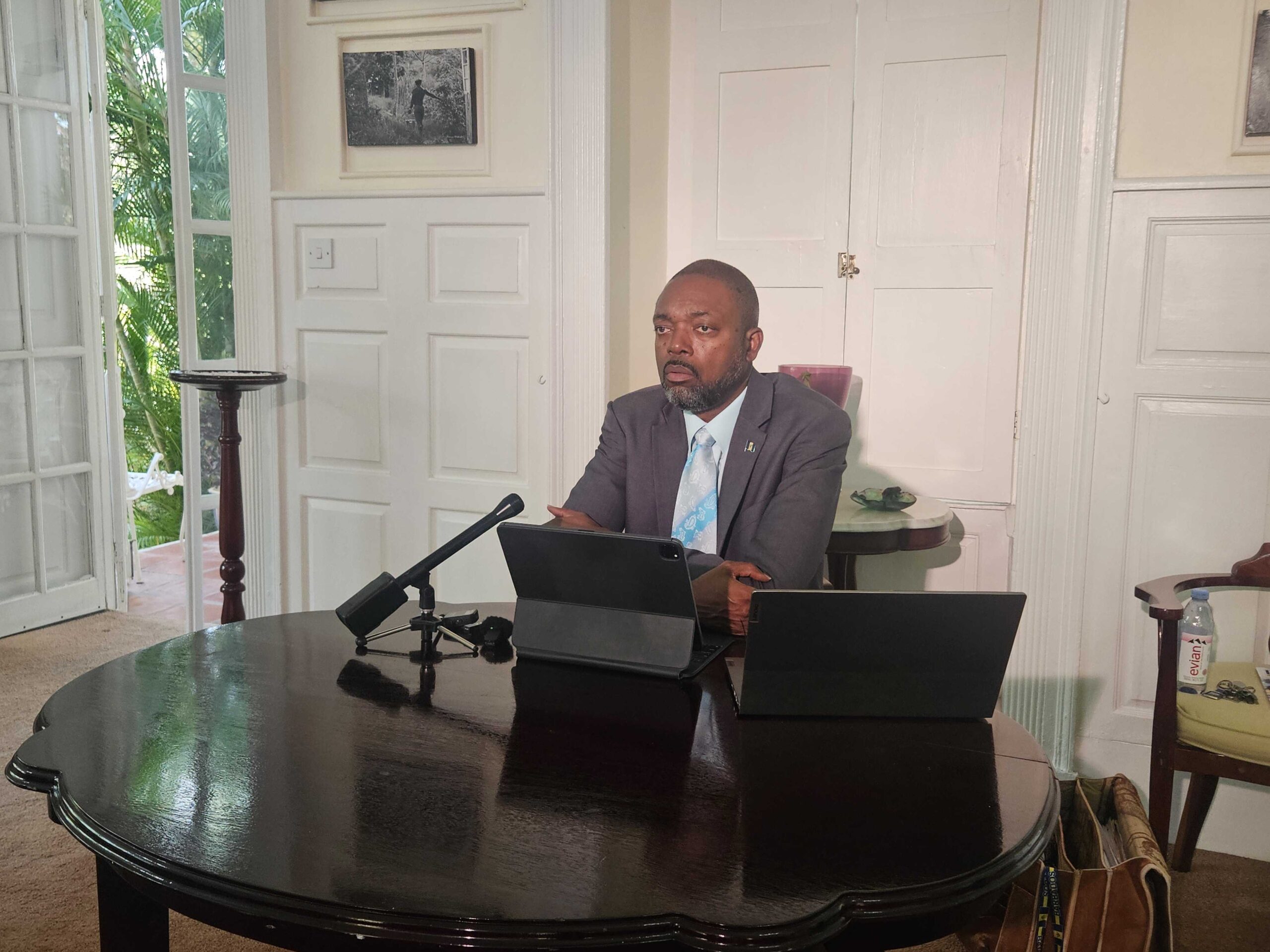
The Barbadian government has formally implemented a two per cent elevation in both national and sectoral minimum wages, effective January 2026. Labour Minister Colin Jordan staunchly defended this policy decision, characterizing it as a carefully calibrated measure that strikes an equitable balance between bolstering low-income workers and preserving corporate profitability.
During a press briefing at Illaro Court, Minister Jordan elaborated that this incremental adjustment aims to alleviate financial strain on the most vulnerable earners while maintaining business sector stability. The adjustment elevates the national minimum wage from $10.50 to $10.71 hourly—a 21-cent increase—while security guards will see their sectoral minimum rise from $11.43 to $11.66 per hour.
Minister Jordan emphasized the government’s commitment to predictable, annual wage indexing since its establishment in the 2025 Budget. He revealed that official notifications regarding the January implementation were disseminated as early as March 2025, providing approximately eight months’ advance notice to employers and stakeholders.
Addressing concerns from some business operators who expressed surprise at the announcement, Jordan maintained that communication had been both timely and unambiguous. He urged employers to remain vigilant about labor policy developments while focusing on core business operations.
The Minister provided historical context, noting that Barbados had no official minimum wage until the Mottley administration instituted one in April 2021. Previous wage regulations only covered shop assistants and domestic workers under the Shops Act. The most recent significant adjustment occurred six months prior, when rates jumped from $8.50 to $10.50 nationally and from $9.25 to $11.43 for security personnel.
Jordan confirmed that the Minimum Wage Board has commenced comprehensive analysis of the June 2025 increase’s economic impact. This evaluation will inform development of a scientifically-grounded indexing model tailored to Barbados’ specific economic conditions. While international frameworks have been examined, no domestic model has been finalized yet. Cabinet will ultimately determine policy based on the board’s recommendations.
Regarding inflationary pressures, Jordan acknowledged that imported inflation affects Barbados significantly, but asserted that the two per cent adjustment remains modest compared to global inflation trends. He framed the increase as essential for worker subsistence, noting that the additional 21 cents hourly could determine whether workers can afford basic protein sources to accompany their staple meals.