分类: politics

  • Senior PLPs urge PM ‘wait until our time is right’ and avoid early election

    Senior PLPs urge PM ‘wait until our time is right’ and avoid early election

    Amid escalating speculation about potential election timing, senior Progressive Liberal Party (PLP) supporters are publicly advising Prime Minister Philip “Brave” Davis to resist calling an early vote. The internal debate emerges as the government tables a new Boundaries Commission report and both major parties proceed with candidate ratification processes.

    At Monday’s Majority Rule ceremony at PLP headquarters, party stalwarts expressed cautious views about election timing. Laverne Henfield, a PLP councillor from Centreville, advocated for allowing the term to reach its natural conclusion: “I think he should wait until our time is right. September will make us five years. We still have some more work to do.”

    The sentiment was echoed by Shantel Brown, a longtime supporter, who warned that political momentum can be deceptive: “Go straight through. Looks could be deceiving.” This caution reflects lingering memories of the previous administration’s failed early election call, which resulted in decisive rejection by voters.

    A Marathon constituency councillor identified as Ms. Smith suggested that while waiting until September might not be necessary, any election before May would be premature: “Why an early election? We need to let it run. We need to continue to complete things that have started.”

    Sirnardo Hart, the PLP’s protocol chairman, emphasized that an early election could deprive voters of fully understanding government achievements: “Don’t call it early. Wait until September because that’s his time and so people could know what’s really going on.”

    Not all party voices expressed concern. Sherry Bowe from Freetown stated readiness for whenever elections are called, while Bimini branch chairperson Kitty Saunders expressed full confidence in the Prime Minister’s decision-making: “The prime minister has information we don’t, so whatever his decision, I believe it’s the best decision.”

    The opposition Free National Movement has consistently predicted an early election, with leader Michael Pintard recently anticipating a first-quarter 2026 vote and urging supporters to complete voter registration promptly.

  • Ramsamooj: Farley gets ‘strongest hand’ to push autonomy

    Ramsamooj: Farley gets ‘strongest hand’ to push autonomy

    Political analyst Derek Ramsamooj asserts that the Tobago People’s Party’s (TPP) unprecedented 15-0 sweep in the January 12 Tobago House of Assembly (THA) election has positioned party leader Farley Augustine with unprecedented leverage to pursue enhanced autonomy for the island. The landslide victory, which marks a historic political shift, grants Chief Secretary Augustine a compelling mandate to advance Tobago’s agenda in negotiations with Trinidad’s central government.

    Ramsamooj highlights the emerging political dynamics between Prime Minister Kamla Persad-Bissessar and Augustine, noting the results have significantly weakened the People’s National Movement’s (PNM) national standing. The TPP now commands complete control of the assembly along with both Tobago West and Tobago East parliamentary seats.

    The analyst projects substantial opportunities for political cooperation between Persad-Bissessar’s United National Congress-led administration and Augustine’s THA government. This collaboration may potentially involve negotiations for increased budgetary allocations to Tobago, possibly seeking an additional percentage point or two from the national budget over the coming four-year term.

    Ramsamooj characterizes the PNM’s defeat as indicative of a party in decline, having lost its sole Darrel Spring/Whim seat that it secured in the December 2021 election. He emphasizes that the PNM has deteriorated into a minority political entity, suffering from diminished national appeal and leadership effectiveness under current leader Pennelope Beckles. The analyst urges urgent strategic reassessment and leadership style reevaluation for the party to reclaim political relevance.

  • Mottley a sane,consistent voice

    Mottley a sane,consistent voice

    Barbados Prime Minister Mia Mottley has established herself as a principled voice for democratic values and social justice throughout the Caribbean region, drawing stark contrasts with previous generations of regional leaders. Her recent condemnation of both the kidnapping of Venezuelan President Nicholas Maduro by US forces and the delayed election results in Guyana’s March 2020 general election demonstrates her consistent commitment to institutional integrity.

    Unlike her Caribbean Community (CARICOM) predecessors who remained silent during decades of democratic erosion in Guyana from the 1950s through the 1990s, Mottley recognizes the essential relationship between strong democratic institutions and social justice. Historical Caribbean leaders often acquiesced to US gunboat diplomacy and interventionist policies that toppled elected governments without evidence of communist threats.

    The Guyanese people suffered particularly under this foreign policy approach, enduring a reign of terror that specifically targeted Indo-Guyanese communities. The subsequent dictatorship of Forbes Burnham created widespread suffering, reducing Guyana to the Western Hemisphere’s poorest nation—a tragedy that might have been prevented had regional leaders demonstrated Mottley’s courage earlier.

    This analysis connects current US foreign policy under President Trump to centuries of Western expansionism dating back to Alexander the Great and the Roman Empire, arguing that modern US imperialism continues this tradition by forcibly removing uncooperative regimes.

    The commentary calls for more citizens and leaders with Mottley’s moral fortitude to challenge injustice, noting that some Caribbean citizens ironically celebrate US military power. Mottley demonstrates that neither military nor economic supremacy is prerequisite for ethical leadership on the global stage.

    Had Mottley’s principles prevailed historically, the Caribbean might have avoided authoritarian figures like Dési Bouterse, Papa Doc Duvalier, Eric Gairy, Forbes Burnham, and Rafael Trujillo. The region could have developed into an enviable society rather than suffering the corruption and emigration that continues to affect many nations.

  • Danish foreign minister heads to White House for high-stakes Greenland talks

    Danish foreign minister heads to White House for high-stakes Greenland talks

    WASHINGTON—Diplomatic tensions reached a critical point as top Danish and Greenlandic officials convened at the White House for emergency talks regarding President Donald Trump’s persistent campaign to acquire Greenland. The high-stakes meeting occurred amid escalating rhetoric from the American president, who has repeatedly declared his intention to seize the autonomous Danish territory “whether they like it or not.”

    Danish Defence Minister Troels Lund Poulsen attempted to preempt the discussions by announcing enhanced military commitments to Greenland, telling AFP that Denmark was both boosting its Arctic military presence and negotiating “an increased NATO presence in the Arctic” to address US security concerns.

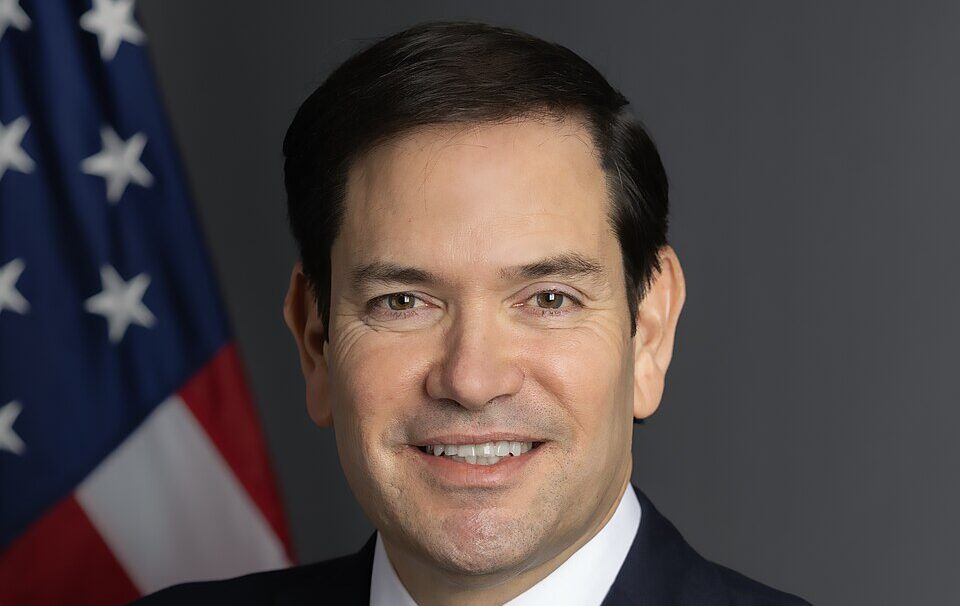
    The meeting brought together Danish Foreign Minister Lars Lokke Rasmussen, Greenlandic representatives, US Secretary of State Marco Rubio, and Vice President JD Vance, whose unexpected request to participate elevated the diplomatic significance. Lokke Rasmussen stated his intention to “clear up certain misunderstandings” regarding Greenland’s status, though observers questioned whether the Trump administration viewed the situation as a misunderstanding at all.

    Trump’s acquisition rhetoric has intensified since the January 3rd operation in Venezuela, with the president employing characteristically transactional language. He told The New York Times that ownership “is psychologically needed for success” and provides “elements that you can’t get from just signing a document,” reflecting his real estate background. The administration justifies the proposed acquisition as necessary to counter Russian and Chinese Arctic ambitions, though neither nation has made claims on Greenland.

    Greenlandic Prime Minister Jens-Frederik Nielsen delivered a definitive pre-meeting statement: “One thing must be clear to everyone: Greenland does not want to be owned by the United States. Greenland does not want to be governed by the United States. Greenland does not want to be part of the United States.” Danish Prime Minister Mette Frederiksen acknowledged the difficulty of resisting “completely unacceptable pressure from our closest ally.”

    The diplomatic standoff has prompted international responses, with France announcing plans to open a consulate in Greenland and a bipartisan Congressional delegation preparing to visit Copenhagen in solidarity with Denmark. Senate Democratic Whip Dick Durbin criticized Trump’s approach, stating that threats toward Greenland “are unnecessary and would only weaken our NATO alliance.”

    Analysts from the German Marshall Fund suggested the meeting’s outcome hinged on whether the US would moderate its position or maintain its uncompromising stance, with senior vice president Penny Naas noting: “If the US continues with, ‘We have to have Greenland at all cost,’ it could be a very short meeting.”

  • VS overweegt militaire acties tegen Iran, maar geeft voorkeur aan dialoog

    VS overweegt militaire acties tegen Iran, maar geeft voorkeur aan dialoog

    The Trump administration has confirmed that airstrikes against Iran remain among the “multiple options” under consideration as the Islamic Republic faces nationwide protests that are placing the regime under mounting pressure. While emphasizing that diplomacy remains the primary approach, White House spokeswoman Karoline Leavitt stated on Monday that President Trump is known for keeping all possibilities open—including military action.

    The confirmation comes amid escalating civil unrest across Iran, where security forces have responded with severe crackdowns. Various sources report hundreds of casualties, including both protesters and security personnel. Independent verification remains challenging due to widespread internet disruptions and restrictions on international communications.

    Iranian Foreign Minister Abbas Araghchi issued a stark warning in response, declaring that Iran possesses a “large and comprehensive military readiness” and is prepared for war should the U.S. choose to test its capabilities. In an exclusive interview with Al Jazeera, Araghchi emphasized that communication channels with Washington remain open but cautioned that Tehran is ready for all scenarios.

    He accused the U.S. and Israel of fueling instability by infiltrating “terrorist elements” among demonstrators, and urged American leadership to choose the “wise path of dialogue” rather than being drawn into conflict serving “Israel’s interests.”

    Meanwhile, divisions appear within the U.S. administration. While some officials, including Vice President JD Vance, advocate for renewed diplomatic engagement, President Trump has pointed to Iran’s violent suppression of protests as justification for potential military action. The Wall Street Journal reports that the U.S. is currently evaluating an Iranian offer to resume military discussions despite ongoing threats of attack.

    The tension is further compounded by last year’s U.S. airstrikes on Iranian nuclear facilities during the Israel-Iran conflict. Iranian Parliament Speaker Mohammad Bagher Ghalibaf warned that U.S. military assets and Israel would become “legitimate targets” should Washington intervene in Iran’s domestic affairs.

    As developments continue to unfold, the international community is closely monitoring the situation, which represents one of the most significant geopolitical crises in recent months.

  • PM hails the USA as Antigua and Barbuda’s most important development partner

    PM hails the USA as Antigua and Barbuda’s most important development partner

    In a significant diplomatic affirmation, the Prime Minister of Antigua and Barbuda has formally recognized the United States as the nation’s foremost partner in development initiatives. This declaration underscores a deepening bilateral relationship that extends beyond traditional diplomacy into substantial economic and infrastructural cooperation.

    The acknowledgment highlights the multifaceted support provided by the U.S., which encompasses critical areas such as climate resilience projects, healthcare system strengthening, and economic diversification programs. This partnership is particularly vital for the twin-island nation as it navigates contemporary global challenges, including economic volatility and environmental vulnerabilities.

    Analysts view this statement as a strategic alignment that reinforces the long-standing ties between the two nations. The U.S. has consistently been instrumental in providing technical assistance, financial aid, and policy support that directly contributes to Antigua and Barbuda’s national development agenda. This collaboration serves as a model for North-South cooperation, demonstrating how larger economies can effectively support the sustainable growth of smaller states.

    The Prime Minister’s remarks are expected to further solidify ongoing joint ventures and may pave the way for new cooperative agreements in emerging sectors such as renewable energy and digital infrastructure, marking a new chapter in the countries’ diplomatic and economic relations.

  • LETTER TO THE EDITOR: Facts over fear – Why the Deux Branches Quarry is necessary and the airport  must go on

    LETTER TO THE EDITOR: Facts over fear – Why the Deux Branches Quarry is necessary and the airport must go on

    Prime Minister Roosevelt Skerrit has issued a robust defense of quarrying operations at Deux Branches, directly countering environmental protests surrounding Dominica’s international airport project. During an official site inspection last Thursday, Skerrit presented detailed evidence challenging what he characterized as misinformation-driven opposition to the critical infrastructure initiative.

    The Prime Minister emphasized significant environmental improvements at the quarry site, noting that engineered controls have effectively eliminated mud runoff and maintained clean access roads. These measures, he asserted, demonstrate the government’s commitment to responsible environmental management throughout the development process.

    Historical context forms a crucial part of the government’s argument. Official records confirm that Deux Branches served as a quarry site in both 1969 and the 1980s, providing aggregate for the Hatton Garden-Portsmouth road construction. Notably, this infrastructure has demonstrated superior durability compared to contemporaneous projects, attributed to the exceptional density and strength of Deux Branches stone.

    Geotechnical assessments by independent experts have verified that the quarry’s materials meet exacting international standards required for major airport infrastructure. The government maintains that using locally sourced, quality-approved materials represents both economic prudence and environmental responsibility, contrasting sharply with the impractical alternative of importing aggregate from distant sources like Canada at substantially higher cost and environmental impact.

    Skerrit framed the international airport as a transformational national investment that will enhance accessibility, reduce travel expenses, expand tourism opportunities, generate employment, and strengthen economic resilience. The administration positions the project not as environmental exploitation but as responsible development utilizing national resources for national benefit.

    The government’s statement concludes that development decisions must be guided by factual evidence and scientific assessment rather than emotional appeals or alarmist rhetoric, asserting that Dominica deserves progress grounded in reality rather than paralysis driven by misinformation.

  • Dominica moves toward regulating standards in legal profession with new bill

    Dominica moves toward regulating standards in legal profession with new bill

    In a significant move toward judicial reform, Dominica’s Attorney General Levi Peter has announced the forthcoming introduction of comprehensive legislation governing the legal profession. The draft Legal Profession Bill is scheduled to be presented before the House of Assembly by the conclusion of the first quarter of 2026.

    The announcement came during Monday’s ceremonial opening of the new law year at the State House Conference Centre, where Peter emphasized the critical need for regulatory overhaul. “A robust and effective justice system fundamentally depends on a disciplined, ethical, and accountable legal profession,” Peter stated. “It is deeply regrettable that cases of professional misconduct and, in certain instances, blatant dishonesty have persistently eroded public trust and damaged the standing of this esteemed vocation.”

    Peter acknowledged that Dominica’s pursuit of comprehensive legal professional legislation has experienced prolonged delays, frequently sidelined by competing governmental priorities and limited resources. This legislative gap has persisted despite longstanding recognition of its necessity.

    The Attorney General confirmed that the draft legislation is now receiving concentrated attention and thorough examination. The development process incorporates substantive recommendations from the Dominica Bar Association, ensuring stakeholder input in shaping the new regulatory framework.

    The proposed legislation aims to achieve three primary objectives: modernization of professional regulatory standards, enhancement of disciplinary procedures, and alignment with regional best practices within the Caribbean legal community. This initiative represents the most substantial update to legal profession governance in Dominica’s recent history.

  • STATEMENT: United Progressive Party demands immediate halt to Deux Branches excavation

    STATEMENT: United Progressive Party demands immediate halt to Deux Branches excavation

    DOMINICA – January 12, 2026: Political tensions escalate in the Commonwealth of Dominica as United Progressive Party leader Joshua Francis issues an urgent mobilization directive against ongoing excavation operations at the Deux Branches site. The opposition leader characterizes the situation as an ecological emergency threatening the nation’s environmental heritage.

    Francis has initiated a broad coalition movement transcending political affiliations, summoning citizens from all demographic backgrounds to participate in sustained demonstrations at the excavation location. The movement has gained significant cultural momentum with the participation of internationally acclaimed musical artist Nasio Fontaine, whose artistic legacy extensively incorporates environmental advocacy themes.

    “Our biological heritage cannot be commodified. Our ancestral legacy remains non-negotiable. We refuse to mortgage our future for transient economic benefits,” Francis declared during a press briefing. The UPP leadership emphasizes this demonstration represents a constitutional imperative rather than partisan politics, framing environmental protection as fundamental to national survival.

    Protest organizers have established a continuous presence at Deux Branches, vowing to maintain vigil until governmental authorities terminate all excavation activities. Fontaine’s involvement provides symbolic resonance to the movement, bridging cultural preservation with ecological conservation in what participants describe as a defining moment for Dominican environmental history.

    The political leader concluded with a historical challenge: “This constitutes our generational examination. Shall we witness passively as our natural endowment undergoes destruction, or shall we collectively safeguard what rightfully belongs to all Dominicans—contemporary and prospective? Historical judgment will derive from our deeds, not our declarations.”

    The UPP has formally requested national media institutions, civil society organizations, and environmentally conscious citizens to amplify their advocacy efforts through peaceful resistance and strategic awareness campaigns.

  • Pierre promises continuity and confidence in 2026

    Pierre promises continuity and confidence in 2026

    Prime Minister Philip J. Pierre has unveiled an ambitious governance blueprint for 2026, emphasizing policy continuity across infrastructure development, social welfare enhancement, and environmental protection. During a pre-Cabinet briefing, the leader articulated his administration’s commitment to maintaining momentum from the previous term, particularly regarding major national projects.

    Infrastructure development constitutes a cornerstone of the government’s agenda. The Gros Islet highway project is scheduled to commence construction within the first half of 2026, while the Hewanorra International Airport terminal development—described as the nation’s largest infrastructure undertaking—advances through international tender processes. Contract confirmation for the airport project is anticipated before March concludes, with construction expected to initiate by mid-2026.

    Social infrastructure receives equal prioritization, with the Gros Islet Police Headquarters nearing completion and slated for inauguration during independence celebrations. Housing initiatives at Talvern and Rockhall will progress significantly, alongside formalized land distribution to long-standing occupants who have resided on government properties for decades.

    Educational reforms will emphasize continuing, adult, and special needs education, addressing functional illiteracy through specialized curricula. The government will strengthen its partnership with the Centre for Adolescent Renewal and Education (CARE) to support vulnerable youth, particularly young men facing social challenges.

    Environmental enforcement will intensify against abandoned vehicles, derelict properties, and unused lands, which Pierre identified as both aesthetic concerns and security risks. Pensioners will benefit from expanded tax relief measures, with legislation ensuring retroactive application for both public and private sector retirees.

    The Prime Minister expressed robust confidence in Saint Lucia’s economic trajectory, highlighting anticipated investments in the hospitality sector and renewed development interest in Rodney Bay and surrounding regions.