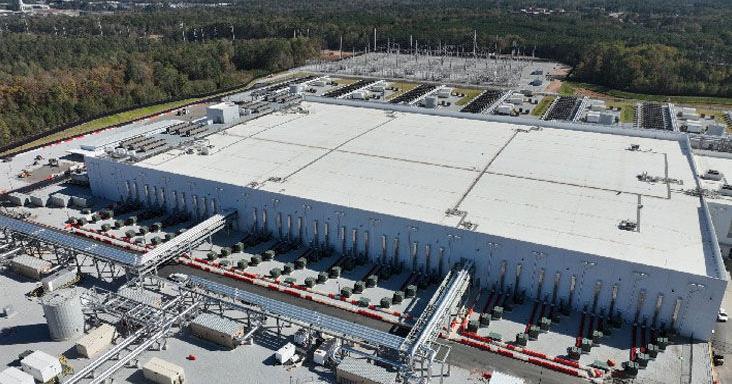
A fierce national debate over the Trinidad and Tobago government’s plan to build large-scale AI data centres has escalated this week, as a public petition demanding a suspension of the projects has surged past 19,000 signatures, while business leaders have called for greater transparency and inclusive stakeholder dialogue before moving forward. The proposal, unveiled last week by Prime Minister Kamla Persad-Bissessar, includes two major facilities: a 300-megawatt general data centre with supporting infrastructure, and a 150-megawatt AI-focused data centre that could be expanded to 500 megawatts. The prime minister has framed the projects as a forward-looking opportunity to create new jobs, generate much-needed foreign exchange, and diversify the country’s economy, but critics have raised urgent red flags over the plan’s hidden costs.
The opposition to the proposal is led by Syam Nath, founder of Nath Bioacoustics and co-founder of the Trinidad and Tobago Cetacean Sighting Network, who launched the change.org petition calling for a full halt to the projects until the government releases comprehensive public details on their impacts. As of late yesterday, the petition had collected more than 19,000 signatures from residents across the country. Nath and other conservation advocates stress that Trinidad and Tobago’s coastal and marine ecosystems are one-of-a-kind and highly sensitive, already facing multiple ongoing threats from human activity and climate change. Beyond ecological risks, many signatories have echoed concerns that the hyper-scale data centres, which require massive amounts of electricity and water for daily operations, will put additional strain on the country’s already overstretched public utilities. Many residents noted that persistent pipe-borne water shortages have plagued communities across the nation for decades, arguing the government should prioritize upgrading public infrastructure before approving resource-heavy private projects.
Persad-Bissessar has pushed back against critics, dismissing their concerns and urging opponents to abandon what she called an out-of-touch stance. She has reaffirmed that data centres represent a critical new stream of modern revenue for the country, and in a notable retort, she criticized the widespread littering that plagues many Trinidad and Tobago communities as a far more pressing public issue. Even among the country’s business community, however, opinions on the proposal remain deeply split, with multiple leading industry groups calling for full transparency and broad public consultation.
Gregory Aboud, president of the Downtown Owners and Merchants Association (DOMA), said the local business community broadly welcomes new investment, particularly foreign direct investment that can boost economic growth. Even so, he acknowledged that public opinion on the development is sharply divided, and argued that all stakeholders—including the general public—must be given space to weigh in on the proposal. Aboud pointed out that environmental conservationists’ concerns deserve full investigation, and key questions remain unanswered about whether the country’s existing water and power networks can support the massive resource demands of hyper-scale data facilities. “Any foreign investment should clearly lay out what tangible benefits it will bring to Trinidad and Tobago,” Aboud said, adding that “this matter needs a lot more discussion and disclosure to come up with a consensus that everyone accepts on behalf of the future interest of T&T.”
Kiran Singh, head of the Greater San Fernando Chamber of Commerce, struck a similar balance, acknowledging that the data centre projects could unlock meaningful economic benefits for the island nation. Singh noted that economic diversification and growing foreign exchange earnings are critical priorities for Trinidad and Tobago, and the development could help advance both goals. At the same time, he acknowledged the validity of public concerns around long-standing utility access gaps, and joined the call for greater government disclosure and a fully consultative process that addresses both potential harms and benefits of the proposal.
The domestic debate in Trinidad and Tobago comes as the future of data centre development has become a flashpoint for political controversy in the United States, following New York’s landmark decision this week to become the first U.S. state to implement a moratorium on new data centre construction. The moratorium was put in place to allow for further study of the facilities’ impacts on the environment and public health. Former U.S. President Donald Trump has sharply criticized the move, framing it as a catastrophic economic mistake that will cost the state thousands of jobs and billions in revenue.
In a post on his own social media platform, Trump called data centres “one of the biggest driving forces in the future for jobs” and described them as “big, strong, bold, and money machines for the state in which they are built.” He claimed New York Governor Kathy Hochul had canceled all existing and planned data centre projects “for political reasons,” and said companies that would have built in New York are now relocating their projects to other states including Alabama, Florida, Texas and Arizona. Trump called the tax revenue and new jobs generated by data centres “liquid gold,” arguing that “New York State has made a terrible decision.” He added that “all of this income, and other benefits, will be going to Red States, and some Blue, where data centres are sought as cash cows, with lower taxes and record-setting jobs.”
Trump pushed back against concerns over resource use, noting that data centre operators are required to pay for their own water and power use, with any surplus revenue returned to state and local communities. “Data centres are tremendous wins for the states and communities that are lucky enough to get them. New York should change its policy, immediately,” he said. He closed by warning that “the radical Left Dumocrats must not be allowed to cause us to lose data centres, AI, and all of this incredible new technology to China and other countries.”