分类: politics

  • Watts Questions Government Secrecy Over U.S. Refugee Deal

    Watts Questions Government Secrecy Over U.S. Refugee Deal

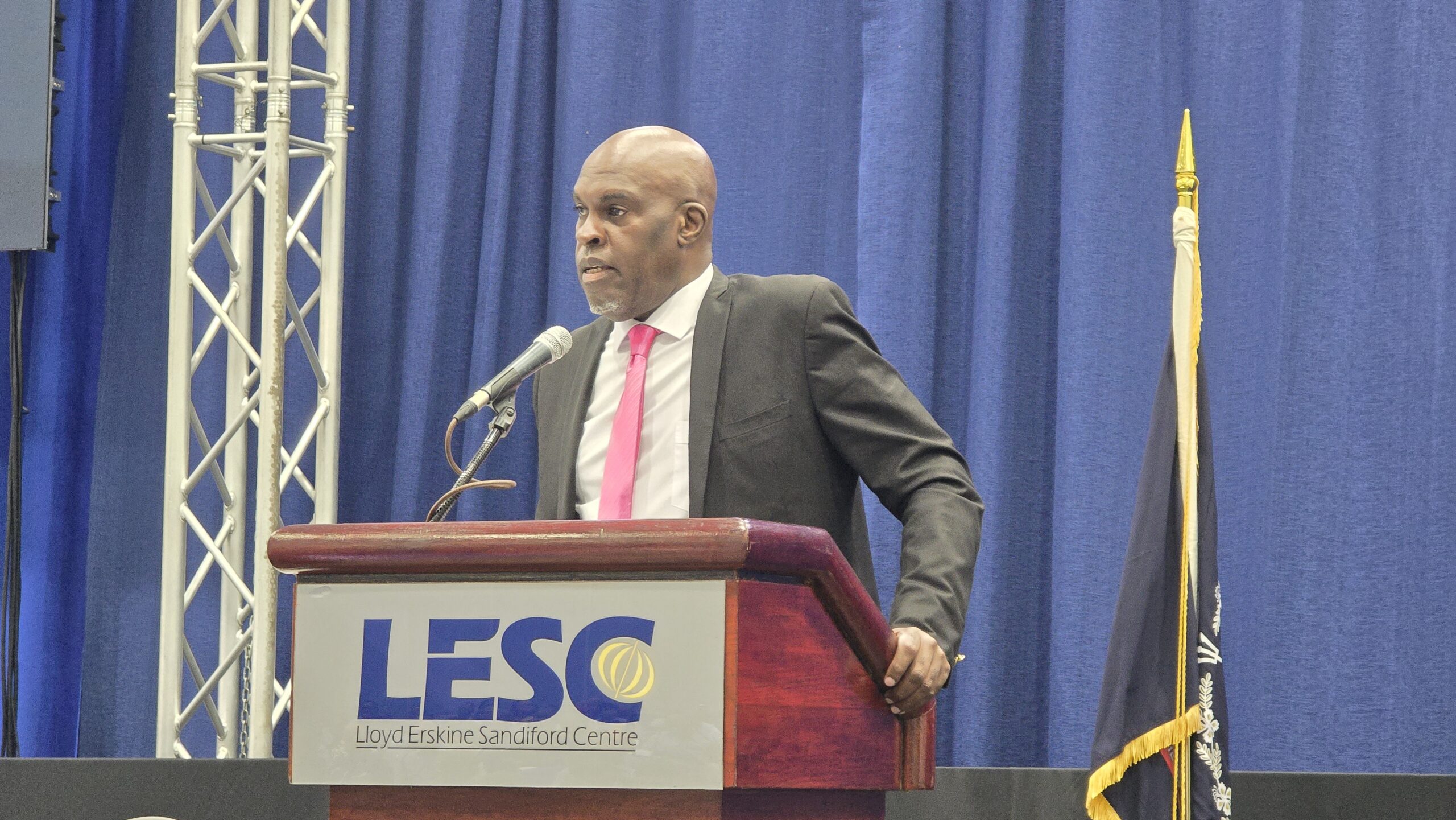
    Algernon Watts, Member of Parliament for St. George, has launched a comprehensive critique of the Antiguan government’s proposed refugee and deportee arrangement with the United States, raising fundamental questions about transparency, fiscal responsibility, and national sovereignty. During a virtual rally organized by the United Progressive Party, Watts articulated multiple concerns regarding the agreement’s formulation and potential implementation.

    The parliamentarian highlighted the conspicuous absence of preliminary briefings, parliamentary discourse, or public consultation before the arrangement’s disclosure. Watts emphasized that citizens only became aware of the agreement post-factum, characterizing the government’s communication as a ‘confession after the fact’ rather than transparent governance.

    Watts specifically referenced the Prime Minister’s acknowledgment of months-long correspondence with the U.S. State Department, questioning why these negotiations remained concealed. ‘If you must assert something wasn’t intended to be secret, its handling inevitably suggests otherwise,’ Watts contended. ‘You cannot conceal matters and then introduce them surreptitiously.’

    The MP challenged governmental assurances regarding case-by-case evaluations, an annual cap of ten individuals, and criminal exclusions, arguing that verbal commitments without written frameworks provide inadequate protection. ‘Numerical limits do not constitute strategy, and slogans cannot replace substantive safeguards,’ Watts stated. ‘Blind trust, particularly when extended to habitual prevaricators, falls short of coherent national policy.’

    Watts warned that opaque decision-making erodes public trust and fosters social fragmentation, particularly within small communities. ‘When determinations occur behind closed doors, the immediate casualty is civic confidence,’ he observed. ‘This vacuum becomes filled with speculation, apprehension, and ultimately, societal division.’

    The legislator posed practical questions regarding housing, medical screening, long-term healthcare, and trauma counseling for potential arrivals, questioning whether financial burdens would shift to citizens and already strained public services. ‘Without comprehensive planning, the weight falls upon ordinary citizens, overextended clinics, social workers, and communities where working-class Antiguans already struggle,’ Watts asserted.

    Regarding accountability, Watts questioned responsibility protocols for potential mishaps, noting that consequences would manifest locally rather than in Washington. He further cautioned about precedent-setting implications, suggesting that initial limits could expand without public consent through exception proliferation.

    Connecting to broader bilateral concerns, Watts referenced recent U.S. visa restrictions and proposed bond requirements affecting Antiguans, juxtaposing these with the current arrangement’s potential pressures. He demanded full disclosure of draft memoranda, legal authority, cost allocations, and administrative responsibilities, while urging written commitments against cap expansion without parliamentary approval and public consultation.

    Watts clarified that his position reflects pro-national interest rather than anti-migrant sentiment, concluding: ‘Antigua and Barbuda constitutes neither warehouse nor storage facility. Cooperation must be predicated on earned consent through governance conducted in daylight, not secrecy.’

  • Senator Quinn Williams urges training of local nurses before Cuban repatriation

    Senator Quinn Williams urges training of local nurses before Cuban repatriation

    In a strongly-worded address during a United Progressive Party virtual rally, Senator Pearl Quinn Williams has challenged the government’s healthcare staffing strategy, demanding substantial investment in domestic nursing education before proceeding with the repatriation of Cuba’s medical contingent. The senator articulated deep concerns about the administration’s approach to replacing experienced Cuban medical professionals with healthcare workers from Ghana without establishing a robust local foundation first.

    Williams emphasized that the Cuban medical brigade, having provided years of invaluable service to Antigua and Barbuda’s public health infrastructure, should remain during an extended transition period to ensure continuity of care while local candidates receive comprehensive training. She highlighted multiple unaddressed considerations in the proposed transition, including potential language barriers, the necessity for foreign replacements to familiarize themselves with the local healthcare system, and the critical question of how patient services would be maintained during the gap between personnel changes.

    The senator proposed a strategic reallocation of resources, suggesting that funds currently designated for foreign healthcare workers should be redirected toward supporting local trainees and expanding medical scholarship programs. She advocated for a phased approach where the Cuban medical professionals would only be repatriated after sufficient numbers of qualified local healthcare workers are prepared to assume their responsibilities, characterizing this as a more sustainable and citizen-focused model for healthcare system reform.

    Williams’ commentary extended beyond the immediate personnel concerns to address broader systemic challenges within the public health sector, noting severe operational strains resulting from staffing deficits, insufficient resources, and financial limitations at the Ministry of health.

  • Pringle blames visa restrictions affecting Antiguans squarely at the feet of PM Gaston Browne

    Pringle blames visa restrictions affecting Antiguans squarely at the feet of PM Gaston Browne

    In a sharply worded critique, Opposition Leader Jamale Pringle has placed direct responsibility for the United Kingdom’s visa restrictions on Antiguan citizens at the feet of Prime Minister Gaston Browne. The political confrontation centers on diplomatic relations between Antigua and Barbuda and the UK, with Pringle asserting that Browne’s governance approach has triggered the stringent visa requirements currently affecting Antiguans seeking to travel to Britain.

    The controversy emerges against the backdrop of the UK’s evolving immigration policies toward Caribbean Commonwealth nations. Pounding his critique, Pringle highlighted how the visa constraints have created substantial hurdles for Antiguans pursuing educational opportunities, family visits, and business engagements in the United Kingdom. The opposition leader characterized the development as a diplomatic failure that demands immediate governmental accountability.

    Pringle further contended that Browne’s administration has neglected crucial bilateral discussions that might have prevented the imposition of stricter travel requirements. This diplomatic stance, according to Pringle, has left Antiguans disproportionately affected compared to citizens from other Caribbean territories who enjoy more favorable travel arrangements with the UK.

    The escalating tension underscores deeper political divisions within Antigua and Barbuda’s parliamentary landscape, with the opposition mounting pressure on the sitting government to address what they term as ‘diplomatic mishandling’ of international relations. The visa issue has now evolved into a significant point of political contention, potentially influencing future bilateral discussions between the two Commonwealth nations.

  • Modern Family Court Division among AG’s initiatives

    Modern Family Court Division among AG’s initiatives

    In her inaugural address marking the opening of the 2026 legal year, Attorney General Louise Mitchell unveiled a comprehensive suite of judicial reforms centered on family welfare and child protection. The landmark announcement included the establishment of a unified Family Court Division, merging jurisdiction from the Family Court, Magistrates Court, and High Court into a consolidated framework for family proceedings.

    Mitchell emphasized the New Democratic Party government’s commitment to prioritizing familial challenges since assuming office in November 2025. “This administration has made history by establishing the first dedicated ministry for family affairs, under the leadership of Honourable Laverne Gibson-Velox,” Mitchell declared before the High Court assembly.

    The Family Court Division will specialize in resolving custody disputes, divorce proceedings, and child welfare cases through a streamlined approach. Mitchell stressed the division’s foundational principle: “Our judicial focus must prioritize the best interests of children and dependents, ensuring their rights remain central to all legal determinations.

    Significantly, Mitchell’s chambers have completed the Children Care Regulations 2026—draft legislation designed to operationalize the long-dormant Children (Care and Adoption) Act of 2010. For fifteen years, the absence of implementing regulations has created critical gaps in child protection, resulting in children entering state care without formal orders and parents lacking legal procedures for relinquishing parental rights.

    The new regulations establish judicial authority to issue child-specific welfare orders, create a registered network of approved foster parents, and implement standardized assessment protocols for foster care placements. “These measures will ensure foster placements receive proper oversight aligned with safeguarding standards,” Mitchell explained.

    The attorney general announced forthcoming consultations with legal professionals for feedback, affirming the government’s commitment to stakeholder engagement. “We shall embrace consultation wherever possible,” Mitchell noted, referencing advice from “someone very wise: never be afraid to consult.”

    Additional reforms include partnerships with the Bar Association and Ministry of Education for public legal education initiatives, mediation awareness programs, and commercial registry modernization. Mitchell identified duplication in domestic company registries as an anomaly requiring consolidation, pledging to amend the Companies Act to reduce excessive penalties hindering business competitiveness.

    Reflecting on her initial six weeks in office, Mitchell characterized the period as “exciting” and demonstrated the administration’s determination to transform Vincentian judicial infrastructure.

  • LETTER: Viral Trumpism Cannot Infect the Cuban Internationalism

    LETTER: Viral Trumpism Cannot Infect the Cuban Internationalism

    The enduring legacy of Cuban internationalism, rooted in the revolutionary principles of 1959, continues to shape global healthcare diplomacy despite unprecedented economic challenges. Following the revolution that overthrew the Batista regime, Cuba confronted severe healthcare disparities and mass emigration of medical professionals reluctant to serve under a socialized system. This crisis prompted the revolutionary government to initiate massive medical training programs, transforming the nation into an unexpected medical powerhouse.

    The internationalist vision, championed by revolutionary figures like Argentinian physician Ernesto ‘Che’ Guevara, evolved into systematic policy through decades of consistent implementation. Guevara’s sacrifice in Bolivia and medical missions across Africa exemplified Cuba’s commitment to global liberation struggles beyond mere symbolic solidarity. Today, this tradition manifests through extensive medical education programs hosting thousands of international students—particularly from developing nations—and the deployment of Cuban healthcare professionals to over 60 countries worldwide.

    Remarkably, these achievements occur despite the continuous economic and financial blockade that has constrained Cuba’s resources for generations. The nation’s ability to maintain both domestic healthcare excellence and international medical assistance represents a extraordinary case study in resilience and ideological commitment.

    Recent criticisms from the Trump administration regarding Cuba’s medical missions have been met with strong rebuttals from beneficiaries of Cuban medical internationalism. The contrast between Cuba’s COVID-19 response—including the deployment of medical brigades to pandemic hotspots—and the struggles of wealthier nations has highlighted the continuing relevance of Cuba’s alternative model of international cooperation. This ongoing commitment to medical solidarity continues to define Cuba’s unique position in global health diplomacy, challenging conventional paradigms of international development assistance.

  • Trump roept Iraniërs op tot aanhoudende protesten: ‘Hulp is onderweg’

    Trump roept Iraniërs op tot aanhoudende protesten: ‘Hulp is onderweg’

    Amid Iran’s most significant civil unrest in years, former U.S. President Donald Trump has issued a provocative call for Iranians to sustain their demonstrations against the government. Through his Truth Social platform, Trump declared “help is on the way” while urging citizens to document the identities of security forces committing violence against protesters, warning that perpetrators would “pay a heavy price.”

    The escalating crisis has reached alarming proportions, with Iranian officials acknowledging approximately 2,000 fatalities since protests began in late December—the first official death toll assessment. Human rights organizations present even grimmer statistics, reporting over 1,800 demonstrator deaths and more than 16,700 arrests, representing a substantial increase from previous estimates. Independent verification remains challenging due to widespread internet disruptions throughout the country.

    When pressed by journalists to specify the nature of promised assistance, Trump declined to provide concrete details. His administration has already implemented stringent economic measures, including 25% import tariffs on nations trading with Iran—a significant oil exporter. Additionally, Trump confirmed considering military options in response to the government’s violent suppression of dissent.

    The U.S. State Department has urgently advised American citizens to evacuate Iran immediately, including through land borders with Turkey and Armenia. Trump further cautioned during a CBS News interview that “very powerful measures” would follow if Iran proceeded with executing detained protesters. Reports from Kurdish organizations indicate a 26-year-old protester in Karaj faces imminent execution, though independent confirmation remains unavailable.

    Communications infrastructure in Iran continues to be severely compromised, with partial restoration of telephone services while internet access remains largely blocked. In response, Elon Musk’s Starlink satellite internet service has been made available gratis to facilitate information exchange.

    Initially sparked by economic grievances and currency devaluation, the protests have evolved into broader demands for systemic change. Iranian leadership has accused the United States and Israel of instigating unrest, labeling Trump and Israeli Prime Minister Netanyahu as “primary murderers” of the Iranian people.

    China, a major consumer of Iranian oil, has joined Turkey, Iraq, the United Arab Emirates, and India in condemning U.S. tariff policies. Despite intense repression, no significant fractures have emerged within Iran’s ruling elite that has maintained power since the 1979 Islamic Revolution.

    European nations including the United Kingdom, France, Germany, and Italy have summoned ambassadors to protest the violence. European Commission President Ursula von der Leyen described the rising death toll as “horrific,” while German Chancellor Friedrich Merz suggested the regime approaches its demise if reliant solely on violence to maintain power.

    The coming weeks present critical challenges for Iran’s future as international scrutiny and pressure intensify.

  • Breaking: More Caribbean countries expected to face U.S. immigrant visa restrictions

    Breaking: More Caribbean countries expected to face U.S. immigrant visa restrictions

    WASHINGTON, DC — The Trump administration is preparing to implement significant immigration restrictions targeting 75 countries worldwide, with numerous Caribbean nations expected to be included in the expanded list. According to sources familiar with the matter, the new policy will temporarily suspend immigrant visa processing for affected countries beginning January 21, 2026.

    The measure specifically targets individuals seeking permanent residency in the United States and stems from concerns regarding migrants’ utilization of public welfare programs. State Department officials have expressed particular apprehension about the ‘public charge’ rule, which refers to foreign nationals who access public benefits.

    In an official statement released via the State Department’s X account, the administration clarified: ‘The State Department will pause immigrant visa processing from 75 countries whose migrants take welfare from the American people at unacceptable rates. The freeze will remain active until the U.S. can ensure that new immigrants will not extract wealth from the American people.’

    While the complete list of affected countries remains unconfirmed, multiple media outlets report that several Caribbean territories are under consideration for inclusion. Potential candidates include Antigua and Barbuda, The Bahamas, Barbados, Belize, Cuba, Dominica, Grenada, Haiti, Jamaica, Saint Kitts and Nevis, Saint Lucia, and Saint Vincent and the Grenadines.

    The U.S. Embassy in Barbados has acknowledged the impending implementation of the visa pause but indicated that official confirmation regarding the specific countries affected is still pending. This development represents the latest in a series of hardline immigration measures pursued by the Trump administration since taking office, continuing its focus on restricting both illegal migration and visa overstays while enforcing immigration law violations more strictly.

  • Dossier houtexport 9: PG bevestigt: LVV kan onbeperkt aangifte doen van strafbare feiten

    Dossier houtexport 9: PG bevestigt: LVV kan onbeperkt aangifte doen van strafbare feiten

    A significant meeting occurred on Tuesday at the Office of the Prosecutor involving key legal and agricultural officials to address critical issues surrounding Suriname’s timber export sector. The discussion brought together Prosecutor General Garcia Paragsingh, Chief Prosecutor Roline Gravenbeek, and Deepak Jairam, legal counsel for the Ministry of Agriculture, Livestock and Fisheries (LVV) who also serves as state representative in the timber export case.

    The high-level consultation focused on resolving recent complications regarding the refusal of LVV’s criminal reports on January 10th. According to Jairam, these procedural misunderstandings have been completely resolved through constructive dialogue. The Prosecutor General confirmed that LVV now possesses unrestricted authority to file criminal reports for any suspected offenses and has pledged full cooperation in subsequent investigation and prosecution efforts.

    This emergency meeting was convened following a formal written request from LVV Minister Mike Noersalim dated January 13th, which urgently demanded criminal investigation into potential forgery of authentic documents within the roundwood export process. Minister Noersalim’s communication highlighted severe risks to Suriname’s timber export industry and potential international consequences if immediate action wasn’t taken.

    LVV has announced its intention to file criminal charges against Anand Ramkisoensing, who has been removed from his position as Director of Agricultural Research, Marketing and Processing. The allegations center on suspected intentional misrepresentation of wood species on official phytosanitary documentation, resulting in timber being exported under classifications prohibited by importing countries. The ministry asserts these actions violate both national legislation and international obligations, potentially damaging Suriname’s credibility and threatening the continuity of its timber export operations.

    Despite initial procedural uncertainties, Jairam confirmed the meeting ultimately strengthened collaborative efforts between the Public Prosecutor’s Office and LVV. Both parties have agreed that the Chief Prosecutor will maintain close oversight of case developments, and that LVV’s criminal reports will receive regular processing without further administrative obstacles.

  • Neither future servants nor dazzled villagers

    Neither future servants nor dazzled villagers

    The United States’ recent threats against Venezuela represent a disturbing repetition of historical patterns of imperial aggression across Latin America. This contemporary geopolitical crisis evokes painful memories of December 20, 1989, when US forces invaded Panama, resulting in civilian casualties in El Chorrillo neighborhoods, widespread bombings, and the eventual capture of Manuel Noriega.

    The current justification for intervention follows familiar pretexts, with threatening rhetoric extending beyond Venezuela’s borders to encompass all of “Our America”—a term encompassing Latin American nations. The US government continues to arrogate itself the right to violate sovereign nations and kidnap foreign leaders while flouting international law, despite generating global protests and mixed international reactions.

    Historical parallels abound. Simón Bolívar’s prophetic warning that the United States appeared “destined by Providence to plague America with misery in the name of freedom” resonates profoundly today. The current administration’s triumphalist rhetoric promising “freedom” through military intervention echoes previous justifications used against Iraq, Syria, and Libya—nations targeted for their resources by what the author characterizes as a “decadent and desperate empire.”

    Particularly troubling are statements from certain Venezuelan and Cuban expatriates who celebrate aggression against their homelands or eagerly anticipate similar military actions against Cuba. Many of these individuals reside either in their countries of origin or within the United States itself, displaying what the author condemns as shameful annexationist desires.

    The article invokes José Martí’s 1889 “Madre América” speech, delivered before the Pan-American Conference in New York, where he addressed Latin American immigrants living in the United States. Martí urged these communities to maintain pride in their heritage and serve their nations despite geographical displacement, warning against assimilationist tendencies and the naive belief that the US would generously bestow freedom and wealth upon Latin America.

    Martí recognized two types of expatriates: those who coldly transfer allegiance to their new country while secretly wiping away “the last drops of mother’s milk,” and those who proudly maintain ties to their origins. From the latter, the author demands rejection of aggression, respect for sovereignty, protection of families, and resistance against economic or residency pressures that might compel them to betray their homelands.

    The piece concludes that saving Venezuela equates to saving all of Latin America, humanity, and the principles of peace, sovereignty, and justice for all peoples threatened by imperial domination.

  • “Honor and glory to our heroes”

    “Honor and glory to our heroes”

    In a solemn demonstration of solidarity, Cuban President Miguel Díaz-Canel Bermúdez led senior government officials in signing the Condolence Book at the Venezuelan Embassy in Havana on Tuesday, honoring those who perished defending Venezuela’s sovereignty. The ceremony, which began on January 9th, has drawn numerous Cuban authorities, diplomats, and citizens paying respects to the fallen.

    President Díaz-Canel’s inscription captured the revolutionary spirit that binds the two nations: ‘Honor and glory to our heroes. Fatherland or Death! We shall overcome! Always onward to victory!’ His message expressed profound grief and outrage over what he described as ‘the vile and criminal attack on sister Venezuela’ resulting in the abduction of President Nicolás Maduro Moros and First Lady Cilia Flores.

    The Cuban leader delivered a revolutionary eulogy, extending ‘genuine and heartfelt condolences’ to both Venezuelan citizens and the 32 Cuban combatants who sacrificed their lives. He framed their sacrifice as a defense not only of Venezuela but of Cuba and the broader Latin American-Caribbean region.

    Díaz-Canel explicitly invoked the legacy of foundational figures, declaring renewed loyalty ‘to the legacy of our heroes, Fidel and Chávez’ in confronting ‘threats from the Yankee empire.’ The ceremony featured unanimous expressions of fraternity from Cuba’s highest leadership, including National Assembly President Esteban Lazo Hernández, Prime Minister Manuel Marrero Cruz, and Foreign Minister Bruno Rodríguez Parrilla.

    The event underscored the deep institutional ties between the two nations, with attendance from Emilio Lozada García of the Central Committee’s International Relations Department and Venezuelan Ambassador to Cuba Orlando Maneiro Gaspar.