分类: politics

  • Walters questions bid to acquire Savvy on the Bay land

    Walters questions bid to acquire Savvy on the Bay land

    A contentious political debate has emerged regarding the government’s proposed land acquisition adjacent to Savvy on the Bay, with Opposition Senator Ryan Walters leading criticism against what he characterizes as unnecessary targeting of an established small business enterprise.

    During parliamentary deliberations on the Tourism Levy (Amendment) Bill, Senator Walters challenged the administration’s rationale for acquiring the neighboring parking facility, citing recent formal notices that have generated apprehension among local entrepreneurs. The senator articulated concerns that the move contradicts the government’s stated commitment to fostering business development.

    Housing and Lands Minister Christopher Gibbs attempted to allay fears, asserting that business operators should remain unworried about the acquisition process. “Our objective as an administration is to promote entrepreneurial ventures, not to impede business operations,” Gibbs emphasized, promising maintained access and improved facilities upon project completion.

    However, Senator Walters presented contradictory firsthand observations from multiple visits to the Bay Street location. “I’ve frequently visited Savvy on the Bay, utilizing both on-site and opposite parking facilities without encountering access restrictions,” the opposition legislator recounted. He described unimpeded beach access with his family, including purchases from local vendors and bar patronage without property disputes.

    The senator questioned the government’s particular interest in this specific parcel, noting numerous alternative development opportunities along Bay Street. He highlighted underutilized properties including the former Mobil service station and abandoned fish market as preferable alternatives. “Why pursue a plot supporting an active business when vacant lands remain available just a stone’s throw away?” Walters inquired.

    The opposition figure expressed bewilderment at the government’s approach, suggesting the strategy contradicts public encouragement of entrepreneurship and has generated confusion among both business operators and observers alike.

  • Senate clash over Tourism Levy Bill

    Senate clash over Tourism Levy Bill

    A contentious debate erupted in the Barbados Senate on Wednesday as government and opposition legislators fiercely disagreed on the Tourism Levy (Amendment) Bill and the broader economic contribution of the nation’s vital tourism sector. The proposed legislation introduces significant fiscal measures targeting the hospitality industry, including a novel shared-economy levy that mandates global online booking platforms to collect and remit a 10 percent tax directly to the Barbados Revenue Authority.

    Opposition Senator Ryan Walters challenged the government’s recurring assertion that ‘tourism pays the bills,’ presenting a critical analysis of the sector’s recent performance. While acknowledging tourism’s historical importance, Walters cited a dramatic decline in its contribution to GDP, which he claimed has fallen from approximately 13 percent between 2016-2018 to below 5 percent in 2023-2024, projecting this trend to continue through September 2025. ‘That does not qualify the statement that tourism pays our bills,’ Walters contended. ‘That is saying the government can no longer afford to pay its bills.’

    Government Senator Lisa Cummins mounted a robust defense, presenting countervailing data from the Central Bank of Barbados indicating strong post-pandemic recovery. Citing the October 2025 quarterly report, Cummins highlighted a 5.5 percent increase in long-stay arrivals over the first nine months of the year, with particularly strong rebounds from key markets including the United Kingdom, which reached 2018 levels by 2021. US arrivals grew by 12 percent between 2021-2022, with European markets showing comparable recovery trajectories.

    Cummins contextualized the post-2018 decline, noting that Barbados was poised to exceed 900,000 visitors by February 2019—surpassing the 2018 benchmark of 800,000—before COVID-19 necessitated widespread shutdowns. Addressing employment sustainability, she outlined government strategies to develop year-round tourism, including targeted engagement with luxury cruise lines during traditionally slower summer months. These smaller, high-end vessels, while carrying fewer passengers, attract premium-spending tourists whose economic impact rivals that of higher-volume, lower-spending arrivals.

  • CARICOM unity at risk, labour leader warns

    CARICOM unity at risk, labour leader warns

    A prominent Caribbean labor leader has issued a stark warning that political divisions within the CARICOM bloc threaten to undermine regional stability and economic security. Dennis de Peiza, General Secretary of the Barbados Congress of Trade Unions and Staff Associations (CTUSAB), expressed alarm over the absence of unified condemnation from Caribbean governments regarding recent U.S. military operations near Venezuela, describing it as a dangerous precedent for the region.

    De Peiza emphasized that this collective silence jeopardizes the Caribbean’s identity as a zone of peace and carries profound implications for the region’s economic and political cohesion. The labor leader endorsed Antiguan Prime Minister Gaston Browne’s call for greater unity among member states while expressing deep concern over Trinidad and Tobago Prime Minister Kamla Persad-Bissessar’s characterization of CARICOM as ‘dysfunctional and self-destructive.’

    According to de Peiza, such rhetoric echoes the political fragmentation that led to the collapse of the West Indies Federation in 1962 and represents a worrying trend that could weaken the regional bloc’s effectiveness. He stressed that Caribbean nations, despite their small size, occupy strategically important positions and must maintain coordinated foreign and security policies.

    The labor leader also highlighted increasing pressure from the United States through travel advisories and visa restrictions, noting that these developments make regional unity more crucial than ever. While acknowledging the region’s dependence on U.S. tourism, de Peiza criticized Caribbean reliance on external markets and urged accelerated progress toward economic diversification.

    ‘We possess the collective capacity to achieve food security and develop sustainable industries,’ de Peiza stated, pointing to the agricultural potential of Guyana, Jamaica, Haiti, Trinidad and Tobago, and Barbados. He challenged regional leaders to implement progressive policies that would reduce external dependency and create employment opportunities within the region.

    Concluding his assessment, de Peiza called for substantive changes to national and regional development agendas, emphasizing that continued adherence to outdated approaches would prevent the Caribbean from achieving its full economic potential.

  • WATCH: U.S. forces seize tanker in Caribbean under Operation Southern Spear

    WATCH: U.S. forces seize tanker in Caribbean under Operation Southern Spear

    In a coordinated pre-dawn naval operation, U.S. military forces successfully intercepted and seized the motor tanker Veronica in Caribbean waters as part of ongoing efforts to disrupt unauthorized Venezuelan oil exports. The operation, conducted under the banner of Operation Southern Spear, involved specialized Marines and sailors deployed from the USS Gerald R. Ford aircraft carrier.

    The seizure was executed without incident according to U.S. Southern Command, which characterized the tanker as operating in direct violation of U.S.-imposed sanctions targeting vessels associated with Venezuela’s oil sector. The military command emphasized that this intervention demonstrates continued effectiveness in enforcing maritime quarantine measures against sanctioned Venezuelan oil activities.

    This strategic operation featured extensive interagency collaboration between the Department of Homeland Security, U.S. Coast Guard, and the Department of Justice. The broader naval presence supporting these efforts includes assets from the U.S. Navy’s Amphibious Ready Group, notably the USS Iwo Jima, USS San Antonio, and USS Fort Lauderdale.

    U.S. Southern Command framed the operation within its wider hemispheric security objectives, stating that preventing illicit oil shipments from Venezuela remains a priority to ensure that any petroleum exports comply with U.S. legal standards and proper coordination protocols. The command further emphasized that such operations reinforce maritime security partnerships and counter illicit activities throughout the Western Hemisphere.

  • OECS Heads Meet on Urgent Regional and Geopolitical Matters

    OECS Heads Meet on Urgent Regional and Geopolitical Matters

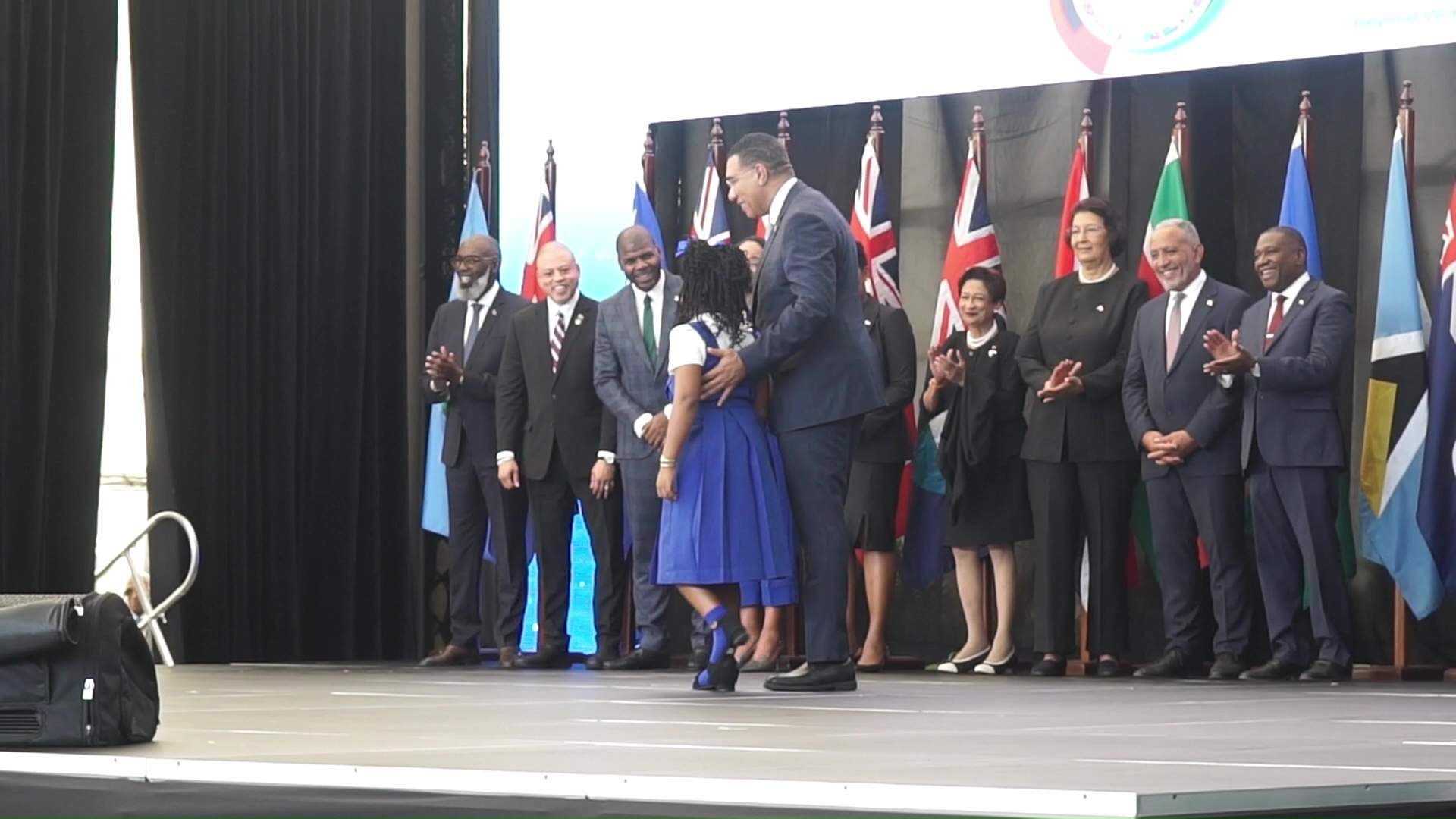
    In a significant demonstration of regional coordination, leaders from the Organisation of Eastern Caribbean States (OECS) convened in Saint Lucia on January 13, 2026, for a pivotal Heads of Government meeting. Chaired by Prime Minister Dr. Godwin Friday of St. Vincent and the Grenadines and hosted by Saint Lucian Prime Minister Philip J. Pierre, the summit brought together heads of government from across the Eastern Caribbean.

    The assembly addressed pressing geopolitical concerns, particularly focusing on the evolving situation between Venezuela and the United States and its potential ramifications for regional stability. The leaders expressed serious concerns about possible impacts on economic security, energy supplies, migration patterns, and diplomatic relations within the hemisphere.

    A central agenda item involved detailed discussions regarding formal requests from the United States for OECS member states to accept Third Country Nationals. The meeting revealed that several member states have already entered into preliminary agreements with the US through Non-Legally Binding Memoranda of Understanding. In response, the leaders established a comprehensive high-level negotiating team comprising technical experts from across the OECS to engage in structured negotiations with American counterparts.

    The summit also produced significant developments regarding Citizenship by Investment Programs (CIPs). Leaders from the five OECS jurisdictions operating CIPs reaffirmed their commitment to enhancing program integrity through established best practices. Notable progress includes substantial advancements toward creating an independent regional regulatory authority and implementing legislative reforms to strengthen existing frameworks.

    In a move toward enhanced security and efficiency, the OECS committed to implementing advanced biometric systems for traveler processing across member states. This initiative aims to bolster border security while facilitating seamless travel experiences for both citizens and visitors within the region.

    The meeting concluded with a reinforced commitment to frequent political consultation and coordinated decision-making in response to the rapidly changing global landscape. Leaders emphasized their dedication to regional solidarity and principled engagement with international partners, particularly the United States, to ensure the security and sustainable development of the Eastern Caribbean.

  • CTUSAB cautions against bias, blanket appointments under public service law

    CTUSAB cautions against bias, blanket appointments under public service law

    The Congress of Trade Unions and Staff Associations of Barbados (CTUSAB) has issued a stark warning that the implementation of the newly enacted Public Service Appointments Act could be undermined by political interference and arbitrary promotion practices. While formally endorsing the legislation, union leadership expressed serious concerns that procedural delays and partisan favoritism might compromise the fundamental principles of meritocracy within the nation’s civil service.

    During a Wednesday press briefing at CTUSAB’s Garrison headquarters, General Secretary Dennis de Peiza acknowledged the legislative advancement as a landmark achievement for labor rights, particularly noting that 1,170 temporary employees and 925 officers in acting positions would receive formal appointments. However, he emphasized that these appointments must strictly adhere to established human resources protocols managed by the Ministry of the Public Service’s Director General of Human Resources.

    The union leader articulated specific concerns regarding the potential for politically motivated appointments, stating that positions should not be treated as ‘political gifts or patronage.’ He further highlighted how excessive delays in processing appointments had previously driven qualified officers out of the public service system before they could receive formal recognition.

    CTUSAB’s apprehension extends to what it describes as ‘punitive reversions’ of experienced officers who have served in senior acting capacities for extended periods—sometimes reaching six to nine years—only to be deemed unsuitable during formal interviews and subsequently demoted to lower-ranking positions. These reversions, according to de Peiza, negatively impact salaries, employee morale, and overall confidence in the public service structure.

    Union President Ryan Phillips reinforced these concerns by referencing historical productivity benchmarks, suggesting that Barbados needs to return to more transparent and effective personnel management practices. The organization cautioned that persistent unfair practices could ultimately deplete the public service of skilled professionals, thereby weakening institutional capacity and diminishing the quality of public service delivery.

    CTUSAB maintains that preserving core values of integrity, impartiality, effectiveness, equity, and accountability remains paramount to maintaining public trust in the civil service system.

  • Applications now open for 2026 Labour Queen Pageant

    Applications now open for 2026 Labour Queen Pageant

    The Antigua and Barbuda Labour Party (ABLP) has officially commenced the organizational phase for its prestigious 2026 Labour Queen Pageant, announcing the imminent opening of contestant applications. This declaration marks the preliminary stage of preparations for one of the party’s most significant cultural showcases, which serves as a cornerstone event in its annual political calendar.

    The pageant, renowned for emphasizing elegance, artistic talent, and captivating stage performances, attracts widespread participation from aspiring contestants and generates substantial support from communities nationwide. While specific details regarding event dates and venue selection remain undisclosed, party organizers have confirmed that comprehensive information will be released progressively throughout the planning process.

    The Labour Queen Pageant represents more than mere spectacle—it functions as a platform for female empowerment and political engagement, reinforcing the party’s connection with constituents through cultural celebration. This early announcement allows potential participants ample preparation time while building anticipation for what promises to be a highlight of the 2026 political and cultural landscape.

    Organizational committees are currently developing the framework for next edition’s event, with detailed guidelines and application procedures expected to be published in the coming weeks as planning advances toward the 2026 presentation.

  • The US has officially started selling Venezuelan oil

    The US has officially started selling Venezuelan oil

    In a significant geopolitical maneuver, the United States government has initiated the formal sale of Venezuelan crude oil, marking a decisive shift in its approach to the South American nation. This action follows the non-renewal of a limited sanctions relief package that had been granted to Caracas six months prior. The sales process is being administered by a subsidiary of the US-based energy corporation Chevron.

    The decision effectively transfers control of proceeds from these oil sales from the administration of President Nicolás Maduro to an escrow account managed by the Venezuelan opposition, a move intended to support democratic processes within the country. The development represents a substantial escalation in the US strategy to exert economic pressure on Maduro’s government while simultaneously channeling resources to his political adversaries.

    Analysts suggest this unprecedented measure could have profound implications for global energy markets and international diplomatic relations, particularly with allies of Venezuela including Russia and China. The Biden administration has characterized the action as a necessary response to the Venezuelan government’s failure to implement promised electoral reforms and ensure free and fair elections.

  • Environment Minister says Dominica gov’t is ensuring follow-up actions at Deux Branches quarry amidst public criticism

    Environment Minister says Dominica gov’t is ensuring follow-up actions at Deux Branches quarry amidst public criticism

    The Dominica government is facing mounting public scrutiny over quarrying operations in the environmentally sensitive Deux Branches area, with officials maintaining that environmental protections remain paramount despite growing opposition.

    Environment Minister Cozier Frederick conducted a site inspection Tuesday to address public anxieties surrounding the extraction activities linked to the International Airport project. Frederick acknowledged the government’s awareness of public concerns while emphasizing the ministry’s commitment to implementing comprehensive mitigation strategies. “We’re taking this intervention very, seriously,” Frederick stated, recognizing the visible environmental impacts inherent in quarry operations.

    The minister revealed that Deux Branches was selected based on historical precedent and material quality assessments, noting the area had been previously quarried in the 1970s for Douglas-Charles Airport improvements. Current operations border a national park and proximity to river systems and indigenous communities adds complexity to the project.

    Environmental critics, including former Chief Physical Planner Annie Edwards, have called for immediate suspension of operations, citing potential damage to river ecosystems, biodiversity, and nearby communities. These concerns reflect broader anxieties about preserving Dominica’s “Nature Island” reputation amid development pressures.

    The Forest Division has implemented a 50-meter buffer zone between quarry activities and the Northern Forest Reserve, with Assistant Forest Officer Kelvin Felix detailing specific technical measures including sediment ponds (minimum 2m wide × 3m deep) and terracing designs to control water flow and minimize sedimentation. Regular maintenance and monitoring protocols have been established to address environmental impacts.

    Prime Minister Roosevelt Skerrit reinforced the government’s position during a December 2025 press conference, characterizing the airport as a strategic investment crucial for economic resilience and global connectivity. The administration maintains that halting quarrying would eliminate the only viable material source, potentially forcing environmentally harmful imports from other developing nations while increasing costs, creating supply chain uncertainties, delaying construction, and reducing local employment opportunities.

  • Vijf jaar zittingstermijn AAC: discussie nog open in DNA

    Vijf jaar zittingstermijn AAC: discussie nog open in DNA

    The National Assembly of Suriname witnessed intense deliberations on Thursday as parliamentary rapporteurs, chaired by NDP member Silvana Afonsoewa, examined proposed amendments to the Labor Advisory Council (AAC) Act. Central to the legislative revision is extending council members’ terms from two to five years—a move proponents argue would enhance institutional stability but critics warn requires stronger justification.

    Afonsoewa opened deliberations by characterizing the tripartite AAC—bringing together government, employers and workers—as vital for social dialogue and labor policy formulation. She contended that the current two-year term proves insufficient for maintaining continuity, developing expertise and preserving institutional memory. The proposed five-year term, she asserted, would foster stability and improve advisory quality, particularly amid significant economic and labor market reforms. Afonsoewa noted that members frequently serve beyond two years in practice.

    Opposition voices emerged swiftly. VHP representative Chuanrui Wang acknowledged continuity benefits but criticized the proposal’s inadequate substantiation. He cautioned that extended terms without mid-term evaluations, clear performance metrics or parliamentary accountability mechanisms risked stagnation rather than improved functionality. Wang emphasized that structural challenges—including limited capacity and advisory implementation—would persist merely through tenure extension.

    NDP member Jennifer Vreedzaam raised governance concerns, questioning why five years specifically was necessary when existing legislation already permitted exceptions and reappointments. She warned that unchecked continuity might breed stagnation without evaluation benchmarks. Colleague Claudie Sabajo countered that the AAC itself identified two years as insufficient for developing quality advisories, arguing longer terms would reduce administrative burdens and enable deeper policy engagement. She simultaneously requested government transparency regarding past advisory implementations.

    Representation issues took center stage when VHP’s Mahinder Jogi challenged whether the AAC adequately represented informal sector workers, small entrepreneurs and unorganized laborers. He deemed the amendment overly narrow and recommended broader legislative reconsideration. ABOP representative Edgar Sampie linked the reform to Suriname’s emerging oil and gas sector, stressing that international labor conventions demanded a robust, independent AAC. Without adequate resources and authority, he cautioned, the council risked becoming ‘a tiger without teeth.’

    NPS representative Jeffrey Lau highlighted that no labor legislation proceeds without AAC consultation. He endorsed five-year terms as better aligned with governmental periods, facilitating medium-term planning and measurable policy outcomes. The council itself, he noted, considered five years operationally feasible.

    While consensus existed on the AAC’s importance, divisions persisted regarding whether term extension sufficed or broader evaluation of composition and operations was prerequisite. Deliberations will continue Thursday with contributions from non-rapporteur assembly members.