分类: politics

  • De zaak-Maduro is geen drugszaak — het is een aanval op staatsimmuniteit

    De zaak-Maduro is geen drugszaak — het is een aanval op staatsimmuniteit

    The recent court appearance of Venezuelan President Nicolás Maduro and his wife before a federal judge in New York on January 5, 2026, has sparked profound legal and diplomatic concerns that extend far beyond a simple criminal proceeding. This case represents a pivotal moment for international legal principles governing sovereign immunity and the limits of national jurisdiction.

    At the heart of the matter lies the established doctrine of immunity ratione personae, which grants sitting heads of state, government leaders, and foreign ministers personal immunity from criminal prosecution by foreign national courts. This protection exists not to place leaders above the law, but to prevent judicial systems from becoming instruments of geopolitical retaliation. The immunity is procedural in nature—it blocks prosecution while the leader remains in office, without consideration of moral or political factors.

    The United States has attempted to circumvent this principle through a semantic maneuver centered on recognition. The argument suggests that those no longer recognized by Washington as legitimate leaders automatically forfeit their immunity. However, this approach dangerously conflates political recognition—a discretionary act—with the legal consequences of sovereignty. Immunity derives from the office itself, not from the political preferences of third-party states.

    Even accepting the US claim of jurisdiction based on extraterritorial drug laws, immunity remains an absolute barrier. Jurisdiction and admissibility are distinct concepts—the ability to apply a law does not grant carte blanche to prosecute anyone. The proper legal sequence requires addressing immunity before substance, a sequence notably ignored in this case.

    Previous US precedents involving figures like Noriega provide weak foundation for such a significant legal intervention. Unlike Noriega, Maduro exercised effective power, received international recognition from multiple states, and functioned as Venezuela’s head of state. Washington’s political attempt to redefine his status cannot override established principles of international law.

    The manner of Maduro’s appearance in US custody—whether termed capture, law enforcement operation, or abduction—carries legal significance. The domestic US doctrine that unlawful transfer does not impede prosecution holds no weight in international law regarding immunity questions. One cannot purify a proceeding by first violating the law and then asserting judicial competence.

    This case does not suggest that heads of state should never face accountability. Appropriate mechanisms exist through international courts or post-term prosecution. This distinction protects not individuals but the international legal system itself. Destroying the system to prosecute one individual normalizes a world where powerful nations can criminalize political opponents through their judicial systems.

    The potential consequences are both predictable and dangerous. If the US legitimizes this approach, it invites reciprocal actions from other nations. Today Venezuela, tomorrow another nation. National courts would become tools of geopolitical conflict, transforming international law from a protective shield into an à la carte menu selected according to political convenience.

    The inescapable conclusion remains: as long as Maduro qualifies as a sitting head of state, the US prosecution is inadmissible. This position reflects not the severity of alleged crimes but the necessary requirements of legal order. The alternative is arbitrariness—and arbitrariness marks the end of meaningful law.

  • Government announces cabinet changes, appoints new ministers

    Government announces cabinet changes, appoints new ministers

    In a strategic move to reinforce economic development and housing policy, Dominican President Luis Abinader has enacted a significant cabinet reorganization through Decree No. 3-26. The reshuffle introduces key leadership changes across three critical government ministries.

    Eduardo ‘Yayo’ Sanz Lovatón transitions from his role as Director General of Customs to assume the position of Minister of Industry, Commerce, and MSMEs. During his tenure at Customs since August 2020, Sanz Lovatón spearheaded comprehensive modernization initiatives. A founding member of the ruling Modern Revolutionary Party (PRM) and its National Secretary of Finance, he previously served as a crucial strategist during President Abinader’s 2020 electoral campaign. His legal background includes a master’s degree in International Law coupled with extensive experience in both academic and private legal practice.

    Succeeding Sanz Lovatón at the Customs Directorate is Nelson Arroyo, who previously presided over the Dominican Telecommunications Institute (Indotel) from 2020 to 2024. Hailing from Moca in Espaillat province, Arroyo brings a distinguished legal and political career spanning decades. His credentials include a doctorate in law and extensive legislative experience as a former congressman, councilman, and civil governor. During his ten-year congressional tenure, he chaired multiple pivotal committees and contributed significantly to legislative processes.

    Completing the triumvirate of appointments, Víctor ‘Ito’ Bisonó takes helm as Minister of Housing and Construction, transferring from his previous role as Minister of Industry, Commerce, and MSMEs. With over thirty years in public service, Bisonó’s congressional career encompassed four consecutive terms representing the National District. His legislative legacy includes championing policies on economic competitiveness, renewable energy adoption, and institutional strengthening. Known for his technically proficient and results-driven approach to governance, Bisonó is positioned to advance the administration’s housing agenda.

    The cabinet realignment demonstrates President Abinader’s strategic focus on optimizing governmental efficiency in sectors vital to national economic growth, foreign trade expansion, and housing development.

  • Ombudsman’s Office Empty After Government Declines Contract Renewal

    Ombudsman’s Office Empty After Government Declines Contract Renewal

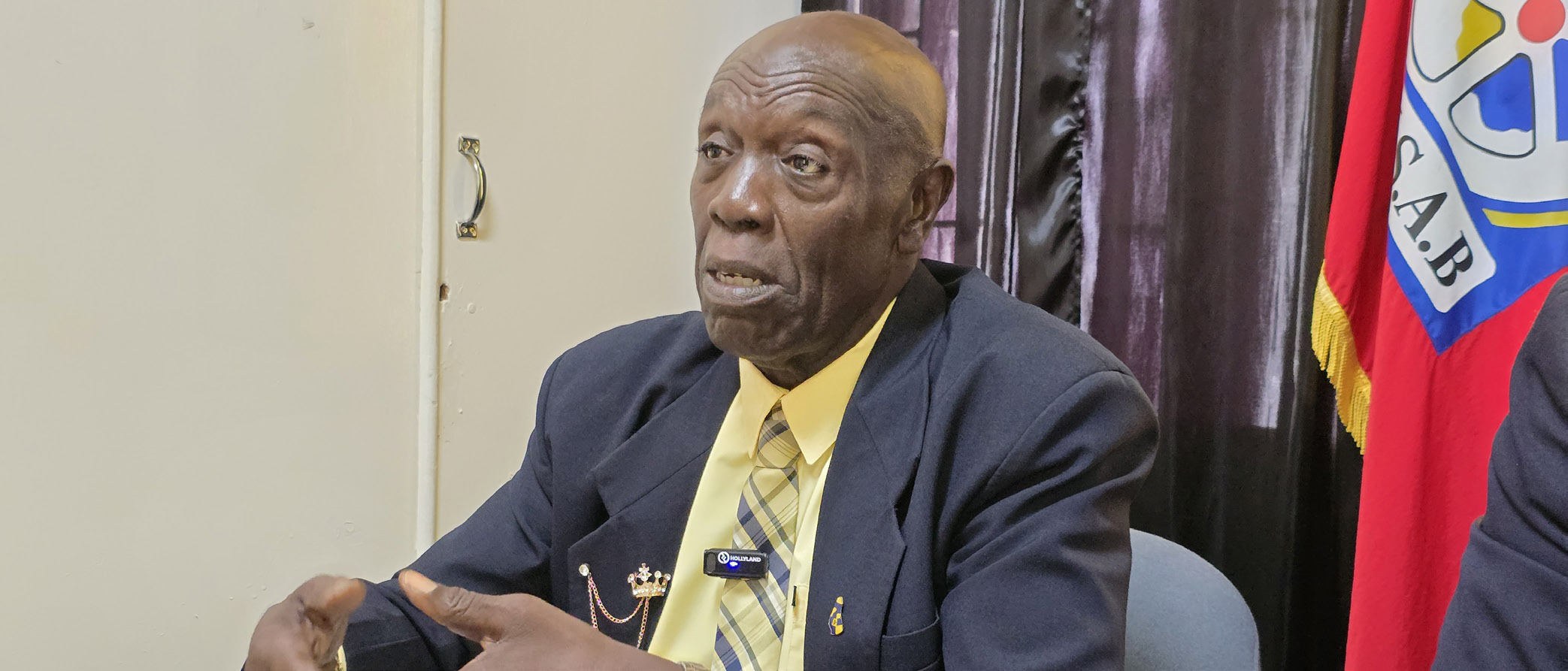
    In a move that has ignited widespread public concern, the Belizean government has allowed the position of Ombudsman to fall vacant by declining to renew the contract of retired Major Gilbert Swaso at the conclusion of 2025. The decision, made without official explanation, has created a constitutional void in the nation’s primary mechanism for citizen protection against governmental maladministration.

    The Office of the Ombudsman, established in 1999 as an independent constitutional watchdog, serves as a critical safeguard against abuse of power, violations of the Freedom of Information Act, and systemic injustice. The position carries significant authority, with compensation equivalent to Supreme Court justices and a mandated three-year term with eligibility for reappointment.

    Former Ombudsman Swaso previously emphasized the office’s vital role during a 2023 interview, stating, ‘We exist for people who suffer injustice, people who are vulnerable, people who essentially are not getting the service that they believe they deserve.’ His departure leaves citizens without this essential recourse mechanism.

    The vacancy comes at a time when the office was actively handling multiple high-profile cases, including a wrongful eviction complaint from an elderly Belize City resident, an investigation into a police-involved shooting, and a transparency request from social activist Jerry Enriquez regarding government legal fees.

    While some citizens have reported successful resolutions through the Ombudsman’s office, others like Belize City resident Monique Teck have expressed frustration with unresolved complaints against police departments. The current vacancy raises fundamental questions about governmental commitment to accountability and transparency, particularly regarding the appointment process for this supposedly independent position.

    With no interim replacement announced and no explanation provided for the non-renewal, Belizeans are left to ponder whether this constitutional protection mechanism will be maintained or allowed to deteriorate through neglect.

  • Enriquez Claims Swaso Penalized for Supporting FOI Disclosure

    Enriquez Claims Swaso Penalized for Supporting FOI Disclosure

    A significant controversy has emerged in Belize’s political landscape following the government’s decision not to renew the contract of retired Major Swaso as Ombudsman. Social activist Jerry Enriquez has publicly condemned this move, characterizing it as a deliberate retaliation for Swaso’s support of transparency initiatives against the Briceño administration.

    The conflict originated in August when Enriquez filed a formal Freedom of Information request seeking disclosure of financial details regarding government payments to attorneys involved in recent constitutional cases. In a pivotal October ruling, the Ombudsman’s office determined in Enriquez’s favor, formally recommending that the Attorney General’s Ministry release portions of the requested information.

    Enriquez contends that the non-renewal of Swaso’s contract represents a calculated effort to undermine institutional independence. “This appears to be a deliberate act by the Government of Belize to undermine anyone who stands for what is right when it becomes inconvenient for them,” Enriquez stated in an interview with News Five.

    The activist further emphasized the concerning departure from established norms, noting that Ombudsman appointments typically extend for renewable terms totaling approximately nine years. Enriquez expressed grave concerns about the potential replacement, questioning whether the government would install “a pliable political servant rather than a person committed to the laws and constitution of Belize.”

    This development raises fundamental questions about the preservation of institutional independence within Belize’s democratic framework, particularly regarding offices designed to serve as checks on governmental power rather than extensions of executive authority.

  • Dominican Republic rejects legitimacy of de facto regime in Venezuela at OAS

    Dominican Republic rejects legitimacy of de facto regime in Venezuela at OAS

    In a decisive address to the Organization of American States (OAS), the Dominican Republic has formally reaffirmed its refusal to recognize any de facto government in Venezuela. The position was delivered virtually by Deputy Foreign Minister for Bilateral Policy Francisco Caraballo during an extraordinary session of the OAS Permanent Council convened specifically to address the ongoing political crisis in Venezuela.

    Caraballo, representing Foreign Minister Roberto Álvarez, articulated that Santo Domingo’s stance remains unchanged following the July 28, 2024 elections. The government’s refusal to acknowledge Nicolás Maduro’s presidential proclamation stems directly from the absence of published electoral records, which it considers fundamental for democratic validation. “The Dominican Republic does not validate faits accomplis,” authorities emphasized, underscoring their commitment to procedural legitimacy.

    The deputy minister presented a nuanced analysis of the crisis, acknowledging that while the Dominican government cannot legitimize an authority that remains in power contrary to the Venezuelan people’s will, it simultaneously recognizes the urgent need to address deteriorating social conditions. Caraballo identified two critical immediate priorities: maintaining the basic operational capacity of state institutions and developing a carefully structured roadmap toward democratic transition.

    Emphasizing foundational inter-American principles, Caraballo stressed that any political transition must rigorously respect Venezuela’s sovereignty, self-determination, and conflict resolution through peaceful means. These principles, enshrined in the OAS Charter, the Pact of Bogotá, and the Inter-American Democratic Charter, form the non-negotiable basis for acceptable solutions.

    Concluding his address, Caraballo characterized the current situation as both delicate and potentially dangerous, issuing a compelling call for hemispheric solidarity. He urged member states to exercise collective responsibility to prevent further escalation, protect vulnerable Venezuelan citizens, and preserve regional stability. The vice minister specifically challenged the OAS to demonstrate unprecedented unity and establish an effective mechanism to support Venezuela while restoring confidence in inter-American institutions.

  • Thorne: Transport Board privatisation ‘follows path of failed sugar industry pledges’

    Thorne: Transport Board privatisation ‘follows path of failed sugar industry pledges’

    Opposition Leader Ralph Thorne has issued a stern condemnation of the Barbados government’s initiative to privatize the state-owned bus service, drawing parallels to the failed sugar industry cooperative scheme. During a heated House of Assembly debate on amendments to the Road Traffic Act, the Christ Church South representative challenged the administration’s claims of worker enfranchisement through ownership opportunities.

    Thorne recalled the 2021 sugar co-operative initiative that promised agricultural workers ownership of plantations and the Portvale mill, which ultimately collapsed without delivering on its commitments. ‘They boasted to thunderous applause that sugar industry workers would own the plantations,’ Thorne stated. ‘What is the position today? Nothing! Nil! And the same thing will happen with the Transport Board.’

    The opposition leader particularly criticized the government’s approach of deciding on divestment before conducting stakeholder consultations. He raised practical concerns about the newly acquired electric buses, questioning their cost-effectiveness for individual drivers who might purchase them under the proposed privatization model.

    In response, Deputy Prime Minister Santia Bradshaw, who serves as Minister of Transport and Works, defended the government’s position. She emphasized that the cabinet decision merely enables discussions with stakeholders, describing the process as still being at a consultative phase. Bradshaw outlined that the envisioned ‘enfranchisement model’ aims to focus on ‘improving and modernizing this economy’ while maintaining essential services for vulnerable populations including elderly citizens and school children.

    The exchange highlights growing tensions over public asset management in Barbados, with the opposition demanding greater transparency and evidence of successful worker ownership models before supporting the proposed transportation sector reforms.

  • US Secretary of State praises Ali for leadership in regional security

    US Secretary of State praises Ali for leadership in regional security

    In a significant diplomatic engagement, US Secretary of State Marco Rubio commended Guyanese President Irfaan Ali for his assertive leadership in regional security matters during their Tuesday morning discussion. The high-level conversation, confirmed by Principal Deputy Spokesperson Tommy Pigott, highlighted Guyana’s expanding role as a crucial security partner in the Western Hemisphere.

    The dialogue occurred against the backdrop of escalating regional tensions, specifically referencing recent US military operations in Venezuela that resulted in the capture of President Nicolas Maduro on narco-terrorism charges. Secretary Rubio utilized the opportunity to reinforce Washington’s commitment to enhancing security collaboration with Guyana, focusing particularly on combating transnational criminal networks, illicit narcotics trafficking, and firearms smuggling that threaten regional stability.

    Both leaders emphasized the critical need for continued cooperation in disrupting foreign terrorist organizations while simultaneously strengthening law enforcement capabilities and border security infrastructure. President Ali received reassurances regarding US support for Guyana’s sovereignty and territorial integrity—a pointed reference to ongoing Venezuelan claims over Guyana’s Essequibo Region.

    Guyana’s Foreign Secretary Robert Persaud confirmed the discussions extended to recent Venezuelan developments and broader hemispheric concerns. President Ali acknowledged US leadership under President Trump and Secretary Rubio, reiterating Guyana’s unwavering commitment to democratic principles, rule of law, and free elections. The Guyanese leader further emphasized his nation’s dedication to collaborative efforts against transnational crimes including drug trafficking, gold smuggling, and narco-terrorism.

    The diplomatic exchange builds upon the expanded military cooperation agreement signed between the two nations in December 2025, though specific details remain classified. Facing persistent Venezuelan territorial claims, Guyana has strategically strengthened defense partnerships with the United States, Britain, and France as protective measures against potential military aggression.

  • COMMENTARY: What Price Are You Willing To Pay For A US Visa

    COMMENTARY: What Price Are You Willing To Pay For A US Visa

    By Yves Ephraim

    CARIBBEAN NATION CONFRONTS DILEMMA BETWEEN VISA PRIVILEGES AND NATIONAL IDENTITY

    Beyond the substantial financial costs of US visa applications—typically exceeding $185 plus travel expenses to Barbados—lies a more profound consideration: what intangible national assets might be sacrificed in pursuit of visa convenience? This examination probes the complex trade-offs between access to American travel and the preservation of fundamental national principles.

    The core debate centers on four essential pillars of sovereignty. Birthright encompasses the authority to reject becoming a refugee processing center for foreign nations. Freedom involves protecting citizen biometrics from foreign surveillance programs without reciprocal data access. Dignity reflects the ability to conduct international relations without succumbing to coercive diplomacy. Sovereignty represents the ultimate right to refuse policies contrary to national interests.

    While US visa privileges undoubtedly provide practical advantages, this analysis questions the catastrophic assumptions surrounding potential visa restrictions. Should the United States implement comprehensive travel bans against Antiguans and Barbudans—a scenario not entirely hypothetical—would societal collapse inevitably follow? Or would alternative travel partnerships and strengthened regional alliances emerge?

    The psychological dimension reveals deeper concerns: does visa anxiety reflect what cultural icons have termed ‘mental enslavement’ or diplomatic Stockholm syndrome? This provocative inquiry challenges citizens to examine their attachment to US travel permissions.

    The ultimate question remains: are citizens prepared to endure potential economic hardships to safeguard national sovereignty? This decision transcends individual travel convenience, representing a collective determination about national direction. Unlike historical forced migrations, contemporary societies possess agency in determining their international relationships.

    The concluding choice presents two stark alternatives: comfortable compliance with external demands or resilient independence despite challenges. This sovereign decision requires courageous sacrifice and will ultimately define the nation’s geopolitical trajectory for generations.

  • LETTER TO THE EDITOR: Balancing diplomacy and reality – Dominica’s refugee decision under scrutiny

    LETTER TO THE EDITOR: Balancing diplomacy and reality – Dominica’s refugee decision under scrutiny

    Dominican Prime Minister Roosevelt Skerrit’s controversial decision to accept third-country refugees from the United States has ignited intense national debate, balancing diplomatic calculations against domestic practicalities. The arrangement, presented as a strategic move to strengthen bilateral relations with Washington, aims to safeguard Dominican citizens’ access to American travel, education, and employment opportunities while implementing stringent security protocols.

    The announcement has drawn sharp criticism from opposition figures and legal experts who question both the procedural and substantive implications. Prominent attorney Cabral Douglas highlights the absence of parliamentary approval, characterizing the bypass as a concerning erosion of democratic sovereignty. The United Progressive Party has amplified these concerns, citing insufficient public consultation and potential strains on the nation’s housing infrastructure, job market, and social services.

    Beyond the sovereignty questions, practical implementation challenges loom large. The arrangement lacks transparent details regarding security vetting procedures, financial support mechanisms, and resource allocation for refugee integration. Economic analysts note that Dominica’s limited capacity necessitates substantial U.S. support across housing, healthcare, and education sectors to prevent overwhelming domestic systems.

    The geopolitical context reveals additional layers to the decision, with observers noting the timing follows recent U.S. visa restrictions that potentially threatened Dominican interests. While the humanitarian dimension remains undeniable, the success of this initiative hinges on robust security safeguards, transparent governance, and verifiable commitment of American resources. Ultimately, this delicate balancing act between international diplomacy, humanitarian responsibility, and domestic capability will test the Skerrit administration’s ability to protect national interests while honoring global commitments.

  • Today marks the anniversary of the death of former Prime Minister Pierre Charles

    Today marks the anniversary of the death of former Prime Minister Pierre Charles

    The Commonwealth of Dominica observes the twentieth anniversary of the passing of former Prime Minister Pierre Charles, who led the nation from 2000 until his untimely death on January 6, 2004. Charles, who represented the Grand Bay constituency as Member of Parliament for nearly two decades, passed away following a cabinet meeting after battling a chronic heart condition.

    Charles’ ascent to the premiership occurred under tragic circumstances when he succeeded Prime Minister Roosevelt Douglas, who had died suddenly in office just three years prior. This marked the second consecutive instance of a sitting prime minister dying while in service, creating a period of significant political transition for the Caribbean nation.

    His political career began with an appointment to the Senate at the remarkably young age of 25 in 1979. After entering electoral politics, Charles secured his parliamentary seat in 1985 as a member of the Dominica Labour Party (DLP), maintaining this position for fifteen consecutive years despite his party being in opposition.

    When the DLP formed a coalition government with the Dominica Freedom Party in 2000, Charles assumed the portfolio of Minister for Public Works and Communications. During Prime Minister Douglas’s eight-month tenure, Charles frequently served as acting Prime Minister, demonstrating his readiness for national leadership.

    Following Douglas’s sudden passing in October 2000, Charles seamlessly transitioned into the role of Prime Minister. Despite undergoing angioplasty surgery in February 2003 and requiring medical leave—during which Osborne Riviere acted as Prime Minister—Charles continued governing until his final day.

    Before entering politics, the Grand Bay native pursued education at Dominica Grammar School and St. Mary’s Academy, followed by teacher’s college. He worked as an educator and community organizer, developing the grassroots connections that would later define his political approach.