分类: politics

  • PM: Fines from Customs Violations to Fund Social Programs

    PM: Fines from Customs Violations to Fund Social Programs

    In a significant move to address customs violations, Prime Minister Gaston Browne of Antigua and Barbuda has unveiled plans to establish the ‘People’s Restitution Fund.’ This initiative aims to collect penalties, interest, and other charges from importers found guilty of breaching customs regulations. The fund is designed to formalize the management of recovered monies and fines, ensuring they are directed toward public welfare projects. The announcement comes on the heels of Browne’s recent remarks regarding restitution efforts in the ongoing government vehicle probe, where a dealer agreed to repay $10 million. Additionally, the Prime Minister has confirmed that excess or improperly assigned government vehicles will be sold at public auction following a comprehensive fleet audit. This initiative underscores the government’s commitment to transparency and accountability in managing public resources.

  • UPP told to make it clear whether they want car dealers to go to jail

    UPP told to make it clear whether they want car dealers to go to jail

    Prime Minister Gaston Browne has announced that his administration is seeking restitution from vehicle dealers involved in the ongoing government fleet controversy. This development follows revelations that millions of dollars were spent on government vehicles outside standard procurement procedures. Browne disclosed that one dealer has already agreed to repay $10 million, while another is currently under audit. The prime minister emphasized that the audit and reassignment process for the vehicles are still underway. Additionally, Browne stated that any unassigned vehicles will be sold at public auction in the near future. The controversy has sparked significant public scrutiny, with the prime minister urging the opposition to clarify its stance on the matter. This situation highlights broader concerns about transparency and accountability in government procurement practices.

  • Sri Lankan Opposition Politician Shot Dead

    Sri Lankan Opposition Politician Shot Dead

    Sri Lanka’s political landscape has been rocked by the assassination of Lasantha Wickramasekara, a 38-year-old opposition politician, who was shot dead inside his office in Weligama on Wednesday. This incident marks the first political killing in a recent surge of violent shootings across the nation. According to the Associated Press, an unidentified gunman entered Wickramasekara’s office, opened fire, and fled the scene. Despite being rushed to the hospital, Wickramasekara succumbed to his injuries. Authorities have suggested that the attack may be connected to gang rivalries, with Sri Lanka’s public security minister alleging that the victim had ties to narcotics and faced multiple court cases. However, opposition leaders have dismissed these claims as politically motivated, accusing the government of failing to protect its political rivals. Lawmaker Ranjith Madduma Bandara condemned the killing, stating, ‘The government must take responsibility for this. This is a political killing.’ Sri Lanka has witnessed a significant increase in violent crime this year, with 100 shootings reported, resulting in 51 deaths and 56 injuries. Police have arrested dozens of suspected gang leaders, some of whom were extradited from countries including the UAE, Indonesia, India, and Nepal.

  • Alexander gets balance wrong

    Alexander gets balance wrong

    During the October 22 session of the Standing Finance Committee, Homeland Security Minister Roger Alexander repeatedly invoked ‘national security interests’ to avoid answering questions, raising concerns about transparency and accountability. This approach, while not unprecedented, reached new heights as Alexander dismissed inquiries on topics ranging from police vehicle leasing to minor equipment purchases, labeling them as state secrets. For instance, when MP Keith Scotland questioned the use of drones detailed in the budget, Alexander accused him of revealing ‘national security information.’ Similarly, a $2.5 million allocation for a new unit was deemed ‘operative and covert,’ with Alexander refusing further discussion. This pattern of deflection drew criticism from opposition MPs, who accused the minister of overusing national security as a shield. The situation highlighted Alexander’s struggle to balance operational security with parliamentary accountability, a challenge exacerbated by his recent additional responsibility for prisons in the Prime Minister’s portfolio reshuffle. Critics argue that Alexander, a former TV host and controversial police officer, appears more adept at the operational aspects of security policy than navigating the complexities of parliamentary scrutiny. The PNM’s criticism of Alexander’s lack of transparency also drew scrutiny, given their own history of invoking secrecy during their tenure. The episode underscores the need for greater clarity and oversight in how national security concerns are addressed in parliamentary proceedings.

  • Kamla: PNM protecting drug mafia, undermining TT safety

    Kamla: PNM protecting drug mafia, undermining TT safety

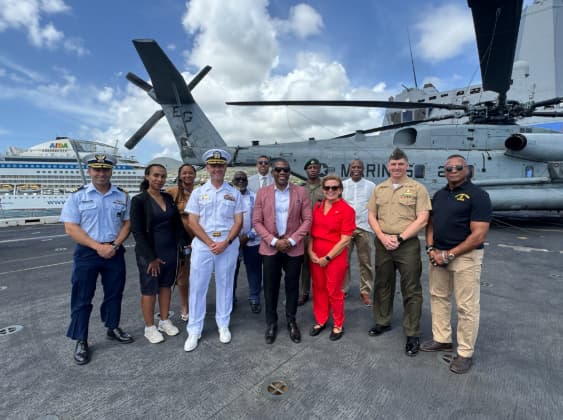
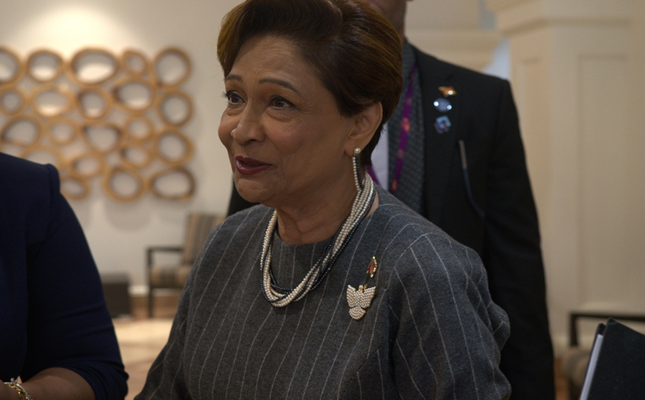
    Prime Minister Kamla Persad-Bissessar has launched a scathing critique against the opposition People’s National Movement (PNM), accusing them of orchestrating a disinformation campaign to shield their alleged drug mafia financiers. In a statement released on October 24, the Office of the Prime Minister (OPM) condemned the PNM for undermining efforts to combat drug, arms, and human trafficking in Trinidad and Tobago (TT). The Prime Minister highlighted the nation’s vulnerable borders, which have facilitated illegal activities, including the entry of tens of thousands of migrants and the brutal murders of over 10,000 citizens in the past two decades. The OPM further alleged that PNM-controlled constituencies are disproportionately affected by drug-related gang violence, yet the party prioritizes the interests of its financiers over the welfare of its constituents. Amid these accusations, the government welcomed the USS Gravely warship and the 22nd US Marine Expeditionary Unit for joint military training with TT’s defense force from October 26 to 30. This collaboration, part of the renewed Status of Forces Agreement (SOFA) between TT and the US, aims to enhance national security and operational readiness. Prime Minister Persad-Bissessar emphasized the importance of international partnerships in safeguarding the nation, stating, ‘TT must always come first.’

  • Box drain politics

    Box drain politics

    In Trinidad and Tobago, cronyism and nepotism have long been pervasive issues, deeply embedded in both the private and public sectors. The practice of leveraging personal connections to secure opportunities has become a defining characteristic of the nation’s professional and political landscape. This ‘contactocracy,’ as it is often termed, perpetuates a cycle where governance and societal progress are hindered by favoritism rather than meritocracy. A recent revelation by Legal Affairs Minister Saddam Hosein has brought this issue to the forefront. Hosein disclosed that a well-known blogger received payments exceeding $3.3 million between 2017 and 2025 through a company registered in her name. Despite the company’s claim of ‘over 25 years of experience in communications and media consultancy,’ it had only been operational for three weeks when it was awarded the contract by the Ministry of Finance in 2017. The blogger defended her eligibility, asserting her competence as a digital marketing strategist. While government contracts with private entities are not inherently problematic, the lack of transparency and merit-based selection processes raises significant concerns. The absence of a verifiable digital footprint for the work allegedly performed further fuels skepticism. This case underscores a broader issue: the prioritization of connections over qualifications in state contracts. Such practices not only erode public trust but also perpetuate inefficiencies and inequities in governance. The narrative of ‘eat-ah-food’—a colloquial term for benefiting from state resources—often overshadows legitimate contributions, as seen in the author’s own experiences. Despite delivering impactful campaigns for state organizations like Cepep and the Ministry of Health, the author faced accusations of cronyism when appointed to the EMA board. This highlights the politicization of public service and the need for systemic reform to ensure fairness and accountability in governance.

  • Rowley joins ex-Caricom leaders’ appeal for zone of peace

    Rowley joins ex-Caricom leaders’ appeal for zone of peace

    As he celebrated his 76th birthday, former Trinidad and Tobago Prime Minister Dr. Keith Rowley expressed his support for a joint statement by ten former Caricom leaders, urging the Caribbean region to remain a zone of peace. The statement comes amid growing concerns over the United States’ military presence in the region and recent deadly maritime strikes targeting alleged drug traffickers off Venezuela’s coast, which have reportedly claimed the lives of Venezuelans and two Trinidad and Tobago nationals. Rowley criticized Prime Minister Kamla Persad-Bissessar’s decision not to endorse the statement, labeling it as ‘reckless’ and a ‘dangerous dereliction of duty.’ He emphasized Trinidad and Tobago’s historical leadership in regional unity and expressed disappointment in the current government’s stance. The joint statement, signed by former leaders from Antigua and Barbuda, Belize, Barbados, Dominica, Grenada, Guyana, Jamaica, and St. Lucia, calls for a reduction in military buildup to preserve peace and stability. It also reaffirms the region’s commitment to sovereignty and the rule of law, as established during the 1972 Chaguaramas meeting. The appeal coincides with the scheduled arrival of the USS Gravely, a U.S. warship, in Port of Spain for military exercises, raising concerns among international relations experts about potential U.S. intentions to influence Venezuelan politics.

  • US warship to dock in Trinidad this weekend

    US warship to dock in Trinidad this weekend

    The government of Trinidad and Tobago has announced the arrival of the USS Gravely, a US guided-missile destroyer, for a five-day visit starting October 26. The warship, carrying members of the 22nd US Marine Expeditionary Unit, will dock in Port of Spain and engage in joint military training exercises with the Trinidad and Tobago Defence Force (TTDF). The USS Gravely, equipped with advanced weapons systems and helicopter capabilities, has recently been involved in counter-narcotics and maritime security operations in the Caribbean. The visit underscores the US commitment to regional security and aims to enhance military cooperation through expert exchanges on infantry tactics, maintenance procedures, and medical capabilities. The exercises are designed to improve tactical proficiency, mutual trust, and operational readiness among partner forces. This development follows a recent advisory from the US Embassy in Trinidad and Tobago, warning American citizens to avoid US government facilities during the Divali holiday weekend due to heightened security concerns. Additionally, the visit comes amid discussions among Caribbean Community (Caricom) leaders regarding regional security dynamics. Trinidad and Tobago’s coalition government, led by Prime Minister Kamla Persad-Bissessar, has reiterated its support for US military operations, emphasizing their role in combating narco-trafficking, human trafficking, and transnational crime to foster a ‘zone of peace’ in the region. The Persad-Bissessar administration has received praise from US Secretary of State Marco Rubio for its alignment with regional security initiatives.

  • Ex-AG Ramlogan: There was precedent for CJ’s appointment

    Ex-AG Ramlogan: There was precedent for CJ’s appointment

    Trinidad and Tobago’s judicial landscape witnessed a significant transition as Justice Ronnie Boodoosingh was sworn in as the nation’s ninth Chief Justice on October 22 at President’s House in St. Ann’s. The ceremony, attended by key dignitaries, marked a pivotal moment in the country’s legal history. Former Attorney General Anand Ramlogan, SC, lauded the appointment, describing Boodoosingh as a jurist with “unimpeachable credentials” whose leadership is expected to bolster public trust in the judiciary. In a statement issued on October 24, Ramlogan emphasized Boodoosingh’s extensive experience in both criminal and civil law, praising his integrity and dedication. He also commended acting President Wade Mark for swiftly filling the vacancy left by the resignation of former Chief Justice Ivor Archie on October 22, averting potential instability in the judiciary. Addressing concerns over the expedited consultation process, Ramlogan cited historical precedents, including the 2015 appointment of Alvin Hilaire as Central Bank governor, to justify the urgency. He argued that Archie’s prior retirement announcement provided ample time for deliberation, dismissing opposition claims of inadequate consultation as unfounded. Ramlogan asserted that the appointment was both lawful and constitutionally sound, referencing past executive actions upheld by the Privy Council. Legal experts noted that while the appointment process could face constitutional challenges, such claims would not overturn the decision but might result in a judicial declaration. Boodoosingh’s tenure is anticipated to uphold the continuity and integrity of judicial leadership in Trinidad and Tobago.

  • Government, opposition argue over hospitals

    Government, opposition argue over hospitals

    A heated debate unfolded in Trinidad and Tobago’s House of Representatives as Health Minister Dr. Lackram Bodoe and Diego Martin North/East MP Colm Imbert clashed over a $100 million budget allocation for the Couva Hospital and Multi-Training Facility (CHMTF). The dispute occurred during the Standing Finance Committee’s deliberations on October 23, which aimed to approve a $7.04 billion budgetary allocation for the Health Ministry. Imbert questioned the significant funding for the CHMTF, which the opposition UNC plans to rename the Couva Children’s Hospital, while noting the absence of allocations for hospitals in Arima, Point Fortin, and Sangre Grande. He criticized the government for what he termed political discrimination, arguing that hospitals built under the former PNM administration were being neglected. Bodoe defended the allocation, stating that the Couva hospital had been neglected under the PNM and required substantial investment. He highlighted issues discovered during a post-election visit, including underutilization and non-functional medical equipment. The debate also touched on 515 vacancies in the Health Ministry, with Finance Minister Davendranath Tancoo attributing the issue to the previous PNM government. Imbert further questioned the allocation of $16 million to pay lower-level employees at the North West Regional Health Authority, suggesting potential inefficiencies. The session grew contentious, prompting Speaker Jagdeo Singh to call for order. The exchange underscores the ongoing political tensions and challenges in Trinidad and Tobago’s healthcare sector.