分类: politics

  • AG Benjamin Plans Law School for Antigua and Barbuda Before End of Next Term

    AG Benjamin Plans Law School for Antigua and Barbuda Before End of Next Term

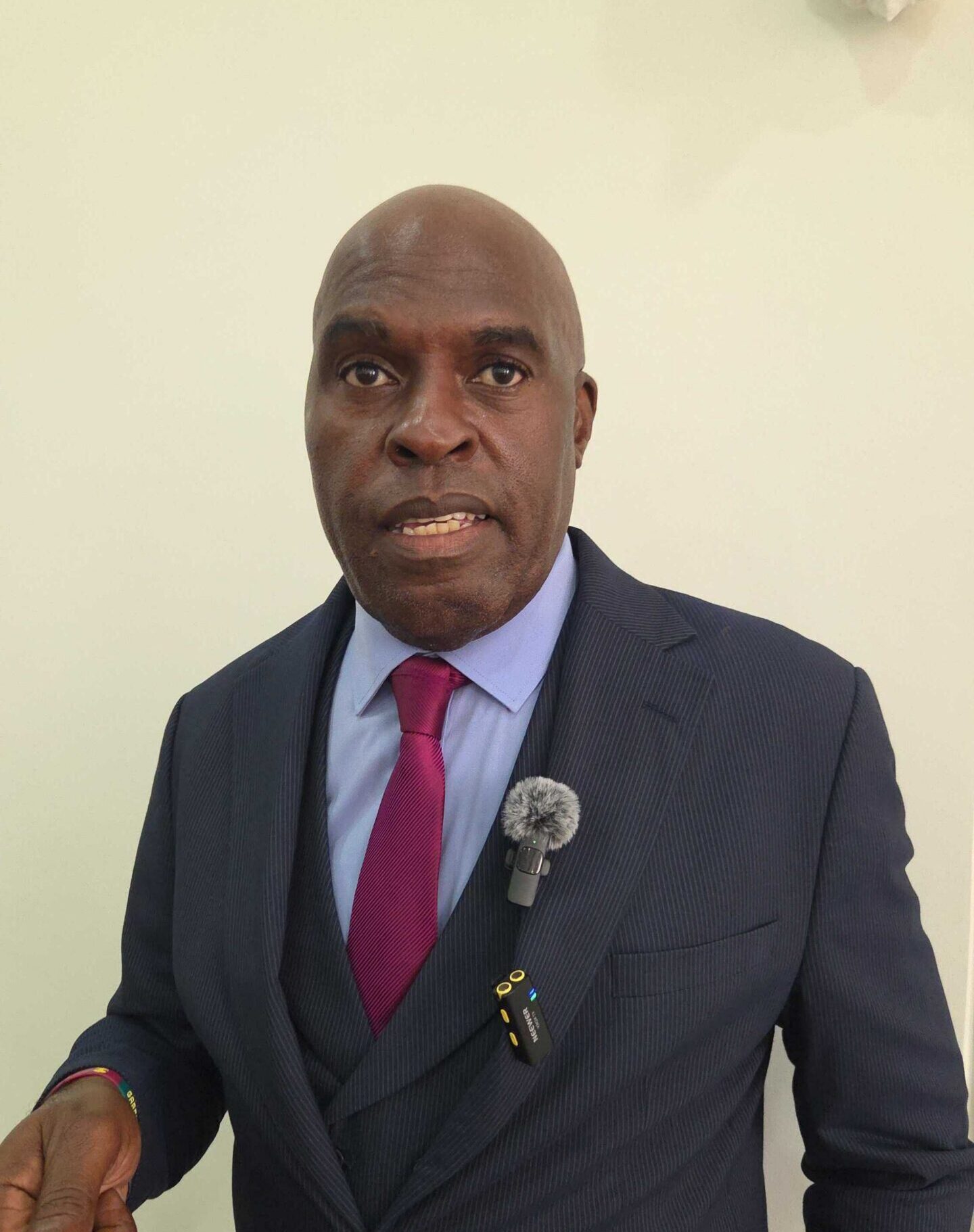
    As the twin-island nation of Antigua and Barbuda prepares for its April 30 general election, incumbent Attorney General Benjamin has positioned the launch of a new national law faculty — scheduled to welcome its first cohort of students this September — as a landmark policy pledge for his upcoming term if re-elected.

    In an interview held as part of his re-election campaign for the St. John’s City South constituency, Benjamin laid out his vision for the full establishment of the law school, a project that has already cleared the foundational planning stages. Preparatory work for the initiative has included in-depth consultations with leading regional legal practitioners and government stakeholders, building on the existing progress the country has already made in expanding tertiary education, most notably the successful launch of a local university campus and established graduate degree programs.

    Benjamin emphasized that the new law school will fill a critical gap in regional higher education. Demand for accredited legal training across the Caribbean has consistently outstripped the limited number of spots available at existing regional institutions, he explained. To address this, the facility will not only serve domestic students from Antigua and Barbuda, but also learners from across the Organisation of Eastern Caribbean States (OECS) and even international students from further afield.

    For decades, the Attorney General noted, aspiring lawyers from Antigua and Barbuda have been forced to relocate overseas to complete their legal education, a process that creates significant financial and logistical barriers for young people. With the establishment of a local law school, that burden will be eliminated for future generations, he said. “I didn’t want Antiguans and Barbudans to go through that hassle when it came to study law,” Benjamin stated.

    Beyond expanding access to education, the new law faculty is a core component of Benjamin’s broader strategy to modernize Antigua and Barbuda’s entire legal framework and cement the country’s status as a regional leader in legal innovation. He pointed to ongoing efforts already underway to update the national legal system, including the rollout of electronic litigation processes, the creation of specialized courts, and the formalization of standardized sentencing guidelines — all aligned with the goal of advancing holistic legal development across the nation.

    Announced as one of several key long-term policy initiatives Benjamin aims to advance if voters return him to office, the law faculty project marks a major milestone in the country’s push to expand educational opportunity and strengthen regional governance.

  • Prime Minister Gaston Browne Sends Letter to President Trump Condemning Shooting Incident

    Prime Minister Gaston Browne Sends Letter to President Trump Condemning Shooting Incident

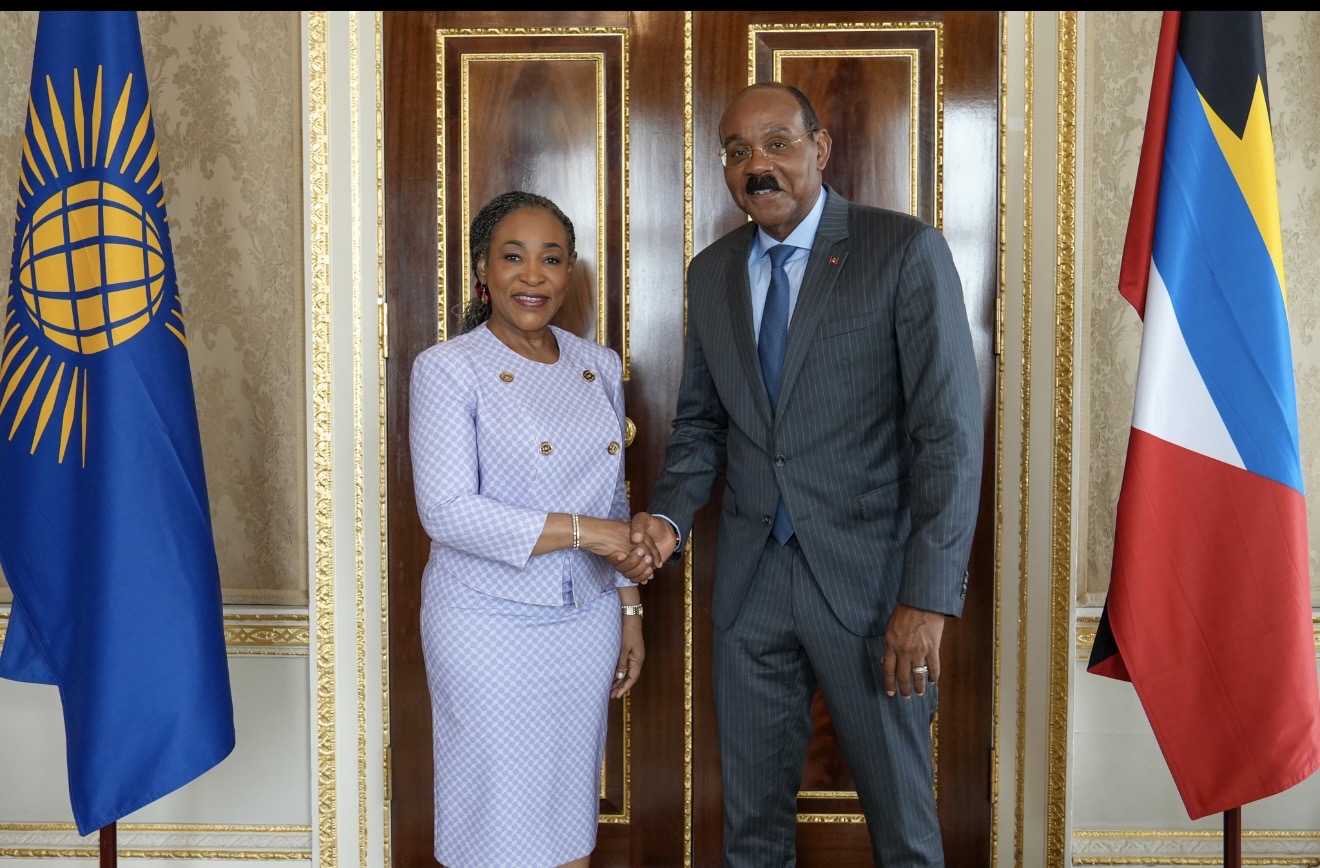
    An armed incident that unfolded at the White House Correspondents’ Association Dinner on a Saturday evening has drawn international condemnation, with the Prime Minister of Antigua and Barbuda Gaston Browne issuing an official letter to U.S. President Donald J. Trump denouncing the act of violence and expressing relief over the president’s safety.

    Dated April 27, 2026, the official correspondence, released through the Office of the Prime Minister of Antigua and Barbuda, extends concern not only to President Trump and First Lady Melania Trump, but also to all attendees of the high-profile annual press gathering. Prime Minister Browne emphasized that the nation’s government and people share profound relief that the president emerged unharmed from what he described as a deeply disturbing assault.

    In the letter, Browne made clear that there is no scenario that justifies the use of lethal force against elected leaders, democratic governing institutions, working members of the press, or civilians exercising their right to peaceful free assembly and expression. Political disagreements or personal grievances, he stressed, can never serve as a legitimate basis for armed attack against those participating in open democratic discourse.

    The Prime Minister reaffirmed his administration’s shared commitment to the core principle that democracy must be protected through the rule of law, civil, reasoned debate, respect for established state institutions, and peaceful civic participation. Echoing this commitment, he emphasized that political violence has no place in any functioning democratic public life.

    Browne also highlighted the critical role of U.S. law enforcement personnel in responding to the incident, commending their quick thinking, professional training and courage. Their swift intervention, the letter notes, stopped what could have become a far deadlier and more devastating tragedy. Browne requested President Trump convey the nation’s well wishes for a full and rapid recovery to the law enforcement officer who was injured during the response to the attack.

    Closing the correspondence, Prime Minister Browne reiterated that the government and people of Antigua and Barbuda stand in full solidarity with President Trump, the U.S. federal government, and the entire American people in the wake of the attack.

  • Chet Greene Says He Expects to Secure About 85 Per Cent of Vote in St. Paul

    Chet Greene Says He Expects to Secure About 85 Per Cent of Vote in St. Paul

    As Antigua and Barbuda prepares for its national general election on April 30, incumbent three-term lawmaker E.P. Chet Greene is entering polling day with overwhelming confidence, projecting that he will secure a fourth consecutive parliamentary term with a landslide 85 percent of the vote in the St. Paul constituency.

    A native son of St. Paul who has held the constituency’s seat since 2014 under the banner of the governing Antigua and Barbuda Labour Party (ABLP), Greene laid out his bullish forecast during a recent “Know Your Candidate” public interview. He explained that both on-the-ground feedback from local residents and internal party tracking point to a lopsided win for his campaign. Citing preliminary unofficial internal polling, Greene shared that the data currently shows an 85-15 split between himself and his competitors, a result that aligns with what his team has observed through months of direct voter outreach and campaign engagement across the district.

    Greene emphasized that his expected strong showing is not a stroke of luck or a last-minute shift in voter sentiment, but the product of years of consistent, targeted investment in the St. Paul community. Over his three terms in office, he has prioritized funding and support for local schools, religious institutions, and neighborhood-wide public programs — work that he says has built deep trust between him and the constituents he represents.

    The incumbent also made clear that he sees no serious challenge from the two candidates running against him, dismissing both as unviable contenders for the seat. He labeled the independent candidate in the race as politically irrelevant, and criticized the opposition United Progressive Party’s nominee for only engaging with the St. Paul community in the final months ahead of the election. Greene argued that voters cannot be expected to back a candidate who has not built a long-standing record of commitment to the area, noting that many local residents were offended by what they see as a last-minute outsider attempting to represent their interests.

    Beyond his own race, Greene extended his confidence to the entire ABLP ticket, predicting that the governing party is positioned for a historic total sweep of all 17 seats in the country’s parliament. He noted that polling data and voter engagement across every electoral district shows a national swing moving firmly in the ABLP’s direction, with all seats considered competitive and winnable for the incumbent party. For his own campaign, Greene wrapped up by reaffirming his comfort and confidence heading into the April 30 vote, saying his strong standing is rooted in the proven track record of delivery he and his team have built for St. Paul over the past decade.

  • Venezuela’s Acting President visits Barbados

    Venezuela’s Acting President visits Barbados

    BRIDGETOWN, Barbados – In a continued push for diplomatic engagement with Caribbean nations following dramatic political upheaval in her home country, Venezuela’s Acting President Delcy Rodríguez touched down in Barbados on Sunday. This trip marks her second visit to a member state of the Caribbean Community (Caricom) since she took office in January, after a United States incursion into Venezuela resulted in the detention of sitting President Nicolas Maduro.

    Rodríguez’s first Caricom stop came in early April, when she made a brief several-hour visit to Grenada on April 9. During that trip, she held closed-door talks with Prime Minister Dickon Mitchell and his full cabinet, an encounter an official Grenadian statement later characterized as having unfolded in a “cordial and constructive atmosphere.”

    While official details of her current Barbados itinerary have not been made public, a senior source familiar with the visit confirmed to the Caribbean Media Corporation (CMC) that Rodríguez is scheduled to hold one-on-one talks with Barbadian Prime Minister Mia Mottley before she departs the island nation Monday afternoon. The source noted that the trip is part of a broader diplomatic tour of Caribbean states, saying “She seems to be making the rounds to some Caribbean countries.”

    Despite the lack of pre-visit official details, Prime Minister Mottley released a public statement via her social media channels framing the meeting as a meaningful opportunity for bilateral and regional progress. “The visit will provide an opportunity for high level discussions on areas of practical cooperation and wider regional development,” Mottley wrote. She added that Barbados’s foreign policy framework has long been grounded in core principles of mutual respect, open dialogue, and results-driven engagement. “We continue to engage our partners with a clear focus on building relationships that can deliver tangible benefits for our people and the wider region,” she emphasized.

    Rodríguez’s diplomatic tour of the Caribbean comes on the heels of a high-profile meeting last week between the acting president and former Trinidad and Tobago prime minister Stuart Young, who shared a photograph of their gathering in Caracas across his social media platforms. Young, who previously served as Trinidad and Tobago’s energy minister, wrote on Facebook that “It was a pleasure meeting Her Excellency, Delcy Rodríguez, Presidenta Encargada, of the Bolivarian Republic of Venezuela earlier this week.”

    The meeting underscores the shifting diplomatic dynamics around Venezuela within the Caribbean, particularly for Trinidad and Tobago, where current Prime Minister Kamla Persad-Bissessar – who was declared “persona non grata” by Venezuela’s National Assembly – has a long history of open criticism toward both Rodríguez and the Maduro administration. Even so, Persad-Bissessar recently announced that Port of Spain plans to dispatch an official diplomatic mission to Caracas to advance negotiations over cross-border energy reserves, with the goal of securing what the government calls Trinidad and Tobago’s “just share” of the resources.

    At the center of these energy negotiations are two key offshore gas fields. The Dragon gas field, which sits within formally recognized Venezuelan territorial waters but lies in close proximity to Trinidad and Tobago’s existing energy infrastructure, has long been identified as a critical potential supply source for the country’s growing liquefied natural gas (LNG) industry. Development of the field has been stalled for years, however, due to persistent geopolitical tensions and sweeping international sanctions imposed on Venezuela’s energy sector. A second field, Loran Manatee, spans the two countries’ overlapping maritime boundaries, and while Trinidad and Tobago has already moved forward with development on its portion of the reserve, negotiations over Venezuela’s share remain ongoing.

  • GOB Launches $10 Million Solar Water Project in Four Villages

    GOB Launches $10 Million Solar Water Project in Four Villages

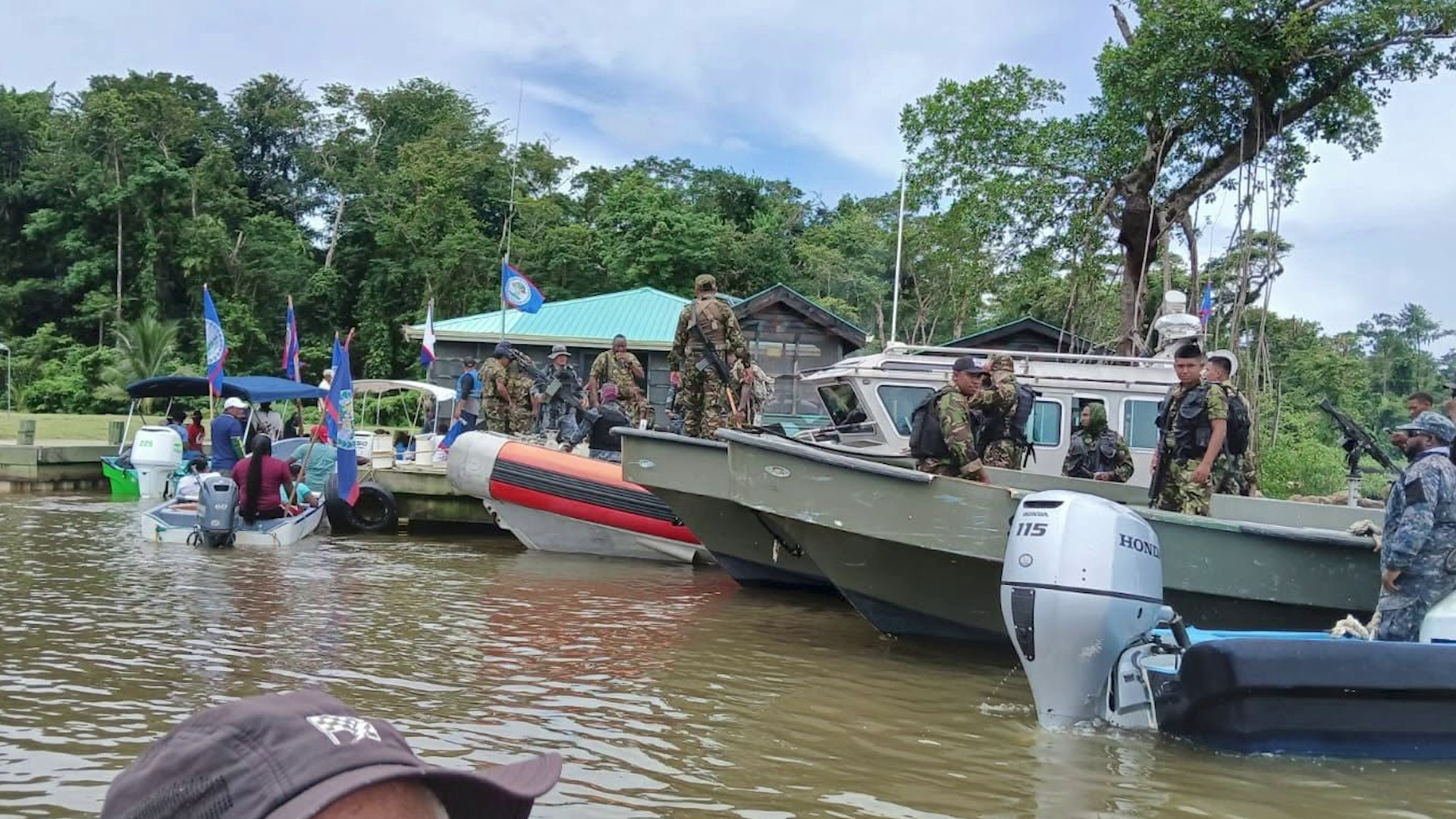
    In a major push to address long-standing rural water insecurity, the Government of Belize officially launched a $10 million sustainable infrastructure project this Friday that will deploy solar-powered water systems to households across four underserved communities in Toledo and Corozal Districts.

    Named the Securing Water Resources through Solar Energy and Innovative Adaptive Management (SEAM) initiative, the entire project receives full financing from the global Adaptation Fund, an international body dedicated to supporting climate adaptation actions in developing nations. The project targets four communities where consistent, clean access to potable water has remained an unmet need for years: three rural settlements in the southern Toledo District — Boom Creek, Dolores, and Otoxha — and one northern community, Copper Bank, located in Corozal District.

    Over the five-year implementation timeline, project officials estimate more than 1,800 local residents will gain direct, reliable access to improved water services through the new solar-powered infrastructure. Unlike traditional electric water systems that rely on costly, carbon-intensive grid power, the SEAM project’s solar design aligns with global climate adaptation goals, cutting operational costs while delivering long-term sustainable water access for vulnerable rural populations.

    The SEAM project first received formal approval in 2025 during the Adaptation Fund’s 45th Board Meeting held in Bonn, Germany. From its earliest planning stages, the initiative has been framed as a replicable pilot model: if successful, policymakers plan to scale the solar water model to dozens of other rural communities across Belize that grapple with identical water security challenges, many worsened by climate change-driven drought and shifting rainfall patterns.

    Oversight of the SEAM project will be managed by the Protected Areas Conservation Trust (PACT), while the country’s Ministry of Rural Transformation will lead on-the-ground implementation. Notably, preliminary construction and preparation work has already gotten underway in several of the target villages, marking an early milestone for the initiative that comes just one year after its formal approval.

  • Can Russia Help End the Iran Conflict?

    Can Russia Help End the Iran Conflict?

    On April 27, 2026, a high-stakes diplomatic meeting between Iranian Foreign Minister Abbas Araghchi and Russian President Vladimir Putin unfolded in St. Petersburg, bringing a new layer of regional dynamics to the escalating long-running conflict between Iran and the United States. Photographs published on Araghchi’s official Telegram channel captured a formal, cordial handshake between the two top diplomats alongside senior delegations from both nations, setting a cooperative tone for the discussions.

    In remarks carried by Russian state television, Araghchi framed the longstanding connection between Moscow and Tehran as a robust strategic partnership, one that both sides are committed to expanding in the coming months. Speaking to journalists after the closed-door talks, the Iranian foreign minister emphasized that his country has maintained a firm stance against pressure from what he called the world’s greatest superpower – the United States. He went on to assert that Washington has failed to secure any of its core policy objectives through its campaign of pressure on Iran, a remark that underscored Tehran’s continued defiance.

    Russian Foreign Minister Sergei Lavrov later characterized the bilateral talks as productive, confirming that the in-depth discussions ran for approximately 90 minutes. Long before the face-to-face meeting, Kremlin spokesperson Dmitry Peskov had already publicly announced that Russia stands prepared to take on the role of mediator in future peace negotiations aimed at de-escalating the ongoing Iran conflict. This announcement positions Russia as a key potential broker in a standoff that has gripped global security for decades, as Moscow seeks to expand its diplomatic influence in the Middle East while deepening its economic and security ties with Tehran.

    The meeting comes at a time of heightened friction across the Middle East, with U.S.-Iran tensions remaining at near-crisis levels after years of stalled negotiations over Iran’s nuclear program and regional military activities. By deepening bilateral cooperation and offering mediation, Russia is moving to solidify its role as a central player in Middle East peace processes, countering U.S. influence in the region while supporting its key ally Tehran.

  • Golding doubles down on call for police officers to wear body cams on specialised operations

    Golding doubles down on call for police officers to wear body cams on specialised operations

    KINGSTON, Jamaica — In a sharp rebuke of the ruling government’s stance on police accountability, Opposition Leader Mark Golding is standing firm in his demand that officers of the Jamaica Constabulary Force (JCF) wear body-worn cameras during all high-risk specialized operations.

    Speaking exclusively to Observer Online in an interview Tuesday, Golding argued that there is no justifiable policy or ethical reason to block the adoption of this widely used accountability tool. “Body-worn camera technology has already been successfully integrated into policing protocols across dozens of jurisdictions globally,” he noted. “Beyond meeting international policing standards, the measure would do critical work to rebuild public confidence and trust between local communities and law enforcement at a time when public distrust is running high.”

    Golding’s call comes amid ongoing public uproar over a string of controversial fatal police shootings that have sparked grave concerns about excessive use of force by JCF officers. According to the opposition leader, mandatory body cameras would not only improve transparency around police conduct, but also strengthen national public security overall by repairing the JCF’s standing with the Jamaican people.

    “This reform will boost our country’s security, reinforce the JCF’s positive reputation, and move us closer to the more just and equitable Jamaica all citizens deserve,” Golding said. He added that he believes Minister of National Security Dr. Horace Chang has taken the wrong approach to the growing demand for reform, calling out Chang for belittling and maligning civil society groups and ordinary citizens who have pushed for the body camera policy.

    Chang has faced intense backlash from the public and advocacy groups in recent days after dismissing calls for body cameras on high-risk operations targeting armed criminals, publicly deriding the proposal as “a crazy idea”. The minister’s comments have amplified partisan tensions over police accountability in Jamaica, a nation that has long grappled with public concerns over extrajudicial violence and a lack of transparency in law enforcement operations.

  • Customs flags six fraud cases a month as 103 recruits join

    Customs flags six fraud cases a month as 103 recruits join

    Customs agencies in the Caribbean archipelago of the Bahamas are detecting as many as six fraudulent import cases every single month, with the vast majority involving importers deliberately misstating the value or volume of incoming goods to cut down on required duty payments, Comptroller Ralph Munroe confirmed publicly this week. The announcement coincided with a formal induction ceremony for 103 newly hired officers, a key step in the department’s multi-phase push to tighten enforcement of trade and tax regulations across the country’s sprawling network of ports.

    During an interview with local outlet the Tribune, Munroe detailed the most common forms of fraud the agency encounters on a regular basis. “The most widespread issue we see is fraudulent invoicing: an importer knows they paid $1,000 for a shipment, but they declare just $500 or $600 on their official paperwork,” Munroe explained. “When our officers cross-reference the stated prices against supplier records and current online market rates, the discrepancy is immediately obvious.”

    To identify these irregularities, the department has invested heavily in specialized training for frontline personnel, teaching officers how to spot inconsistencies by cross-checking declared invoice values against supplier documentation and prevailing industry price benchmarks. Munroe added that the agency also benefits significantly from informal intelligence sharing within the local business community, where competing companies often tip off authorities to suspicious low declarations from their rivals.

    “Competing businesses have the clearest insight into what market rates actually are, so when one competitor is bringing in goods at a declared value far below what everyone else pays, that’s a red flag that they’re very quick to report to us,” Munroe noted. “That community partnership has become one of our most effective tools for rooting out fraud.”

    Unlike many regulatory violations that require lengthy court proceedings, the vast majority of confirmed customs fraud cases are resolved through administrative channels, a process that the comptroller says cuts down on delays and reduces backlogs for the country’s court system. Under existing Bahamian law, the Comptroller of Customs is granted explicit authority to issue financial penalties or seize undervalued goods directly, eliminating the need to go through the judicial system for most cases.

    “In many instances, the comptroller’s office brings far more specialized expertise to these trade fraud cases than a generalist magistrate, which means we can resolve them faster and more accurately,” Munroe argued. “This administrative framework keeps our system efficient and keeps unnecessary pressure off of the overstretched court system.”

    The addition of 103 new frontline officers comes as the department works to address longstanding staffing challenges across its 28 operating ports spread across the Bahamas’ 100,000 square mile maritime territory. Many of these remote ports require 24/7 monitoring to combat smuggling and fraud, stretching existing personnel thin. Munroe emphasized that while the new recruits will ease workload strain for current officers, gaps in staffing still remain a persistent priority for the department.

    As the largest single contributor to the Bahamas’ national revenue, Customs collects approximately 40 percent of the country’s total government income – equal to around $1.5 billion annually – through duties, taxes, and user fees levied on goods entering the country through its ports of entry. Munroe added that the department has also adapted to shifting global trade patterns, increasing monitoring of small-parcel imports through international courier systems, and has not experienced major operational issues beyond temporary volume surges during peak shipping periods.

    Throughout his remarks, Munroe stressed that institutional integrity remains the core foundation of the department’s work, noting that sustained public trust is a non-negotiable requirement for effective enforcement of customs regulations. “We cannot do our job of protecting legitimate businesses and collecting critical revenue for the government if the public does not trust that we are acting fairly and transparently,” he said. “That focus on integrity will guide every expansion of our operations moving forward.”

  • Minister defends privacy amid controversy over public officer’s political clothing

    Minister defends privacy amid controversy over public officer’s political clothing

    A growing political controversy over a top Bahamian public official’s visible partisan activity has put the country’s public service neutrality rules under the spotlight, with top cabinet officials passing responsibility for addressing the situation between government departments.

    Bahamas Foreign Affairs Minister Fred Mitchell said Tuesday he would not offer any public comment on the controversy surrounding Melvin Seymour, his ministry’s Permanent Secretary, who was photographed wearing branded gear of the ruling Progressive Liberal Party (PLP) during Nomination Day at a political rally on Cat Island, an event attended by Prime Minister Philip Davis.

    The incident drew sharp criticism last week from Brensil Rolle, the country’s former Public Service Minister. Rolle argued that Seymour’s public display of partisan affiliation directly violates the government’s General Orders, which mandate political neutrality for civil servants. He warned that failure to take disciplinary action would erode public trust in the independence and integrity of the public service, ultimately rendering the regulations governing public officials’ political activity unenforceable.

    Mitchell pushed back against repeated requests for comment during a press briefing, insisting that personal conduct falls to the individual and internal personnel matters should remain confidential. “I really don’t have any comment to make on any of that, except to say that one’s personal conduct is one’s personal conduct,” Mitchell said. “There are people who are responsible for the matters which you’ve raised, but that’s as far as I can go at this point.”

    When asked whether public servants across the country are treated equally regardless of their political alignment, Mitchell declined to answer, noting that it would be inappropriate for him to address the question. He emphasized that privacy should be the default standard for handling internal personnel issues, pushing back against growing demands for public transparency around the case.

    “I understand in this dispensation that privacy means nothing to anyone anymore, but my view is privacy is an important issue, and personnel matters are private and personal, unless that person wants to disclose what those issues are,” Mitchell said. He added that under his leadership of the Foreign Ministry, no public servant affiliated with the opposition Free National Movement (FNM) has faced dismissal or professional retaliation for their political membership.

    Mitchell repeatedly rejected further calls for public comment, reaffirming that internal personnel matters should not be debated in public and that the issue falls under the purview of other government bodies. “Again, I said personnel matters are private. I have no wish to delve into someone’s personal personnel issues in public, and I don’t think it’s appropriate to do so. I think that’s a question which ought to be left to others,” he said.

    Labour and Public Service Minister Pia Glover-Rolle clarified Sunday that the Seymour case falls under the jurisdiction of the Office of the Prime Minister. “The Office of the Prime Minister will, in that regard, handle any communications regarding that matter,” she said, adding that her department has already issued clear, repeated guidance on the General Orders that restrict public servants’ partisan political engagement.

    Latrae Rahming, communications director for the Prime Minister’s Office, confirmed Tuesday that Prime Minister Davis will address questions about Seymour directly to the press, though he could not provide a specific timeline for the briefing.

    At its core, the controversy hinges on whether Seymour’s public partisan display violated the General Orders that require all civil servants to remain politically neutral. Seymour, a retired public servant who was rehired into his current role, earns a total annual compensation package of $221,316, combining his salary, existing pension, and job-related allowances.

  • Opposition calls for parliamentary oversight of cement shortage

    Opposition calls for parliamentary oversight of cement shortage

    KINGSTON, Jamaica — As Jamaica struggles to move forward with recovery efforts in the wake of Hurricane Melissa, a top opposition official is sounding the alarm over a persistent national cement shortage, urging immediate parliamentary intervention to address a crisis that threatens both reconstruction work and broader national economic progress.

    Anthony Hylton, the opposition’s spokesman on Investment, Trade and Global Logistics, laid out his call for urgent action in an official press release issued Tuesday, pushing for the crisis to be immediately referred to parliament’s Economy and Production Committee. Hylton says the full parliamentary body must conduct a complete, transparent probe into the root causes of the shortage, evaluate whether the current government’s response to the disruption has been sufficient, and work out targeted policy interventions that will lock in stable cement supplies for Jamaica’s medium and long-term needs.

    In the days leading up to his formal request, Hylton has held a series of consultations with core stakeholders across Jamaica’s construction sector, from independent contractors and domestic manufacturers to hardware retail operators and major infrastructure investors. Across these conversations, stakeholders have repeatedly shared urgent concerns: the ongoing shortage has already thrown construction project timelines off schedule, eroded confidence among local and foreign investors, put thousands of sector jobs at direct risk, and driven up input and consumer costs across the entire construction ecosystem.

    “You cannot credibly promise to ‘build back better’ if we cannot even begin building at all,” Hylton emphasized in his statement. “Cement is the non-negotiable foundational input for every part of our work, from post-disaster reconstruction to upgrading national infrastructure and building long-term economic resilience. Relying on last-minute imports as a stop-gap is not a meaningful strategy — it is just a temporary band-aid that does nothing to guarantee long-term supply security or protect domestic Jamaican jobs down the line.”

    Hylton added that the widespread destruction caused by Hurricane Melissa should serve as a critical wake-up call for policymakers to shift away from reactive crisis management and toward proactive, forward-looking planning. “Hurricane Melissa has made it painfully clear that Jamaica needs to be prepared to rebuild quickly and effectively when disaster strikes. That level of preparedness depends on planning and action today, not scrambling for reactive fixes after a crisis hits,” he said. “Parliament has a core constitutional and public responsibility to make sure the right systems and stable supply chains are in place to support national recovery and drive long-term inclusive development.”

    Hylton went on to note that a comprehensive national strategy to guarantee stable, reliable cement supply is no longer a secondary policy concern — it is an urgent priority. This urgency is amplified by multiple overlapping demands: the ongoing need for post-Hurricane Melissa reconstruction, the national government’s own commitment to building back stronger and more climate-resilient infrastructure, and rapidly rising demand from major new projects spanning housing development, tourism infrastructure, manufacturing facilities, and national climate resilience upgrades.

    The crisis has not come without explanation. Carib Cement, Jamaica’s dominant domestic cement manufacturer, released a public update last week confirming that weeks of unusually heavy rainfall across the island have severely disrupted its operations. The adverse weather has created major challenges for raw material extraction and processing, and contributed to unplanned equipment breakdowns and process disruptions that have pulled down temporary production levels.

    While the company acknowledged that some supply delays persist, driven by both elevated post-reconstruction demand and ongoing adverse weather conditions, Carib Cement gave public assurances that cross-functional teams are working around the clock to restore full, optimal production levels as quickly as possible.