分类: politics

  • Pintard called out on Cartwright snub

    Pintard called out on Cartwright snub

    A bitter internal debate has erupted within the Free National Movement (FNM) of the Bahamas in the wake of the party’s crushing defeat in the May 12 general election, after a senior former party figure publicly called out opposition leader Michael Pintard for his controversial Senate selection choices.

    Former Cabinet minister Leslie Miller delivered sharp criticism of Pintard this week, labeling the FNM leader’s decision to exclude deputy party leader Shannedon Cartwright from his Senate picks as “mean-spirited” and “spiteful”. Pintard, who successfully held onto his Marco City parliamentary seat despite the party’s poor overall performance, named four people to fill the FNM’s Senate openings: former professional basketball player Rick Fox, two attorneys Elsworth Johnson and Arinthia Komolafe, and Dr Trevor Johnson. Cartwright, who lost his bid for the newly created St James constituency to Progressive Liberal Party candidate Owen Wells, was noticeably absent from the list.

    Critics across the party have argued that the snub is a deliberate move to sideline Cartwright, a sitting party deputy who represented the St Barnabas constituency from 2017 up to the 2026 general election. The FNM emerged from the national vote with just eight parliamentary seats, a result that left the party as the official opposition against the governing Progressive Liberal Party.

    Miller, who has long standing as a former FNM Cabinet member, argued that Pintard’s exclusion of Cartwright raises serious questions about both his leadership style and how he treats senior party stakeholders. “I just see the leader of opposition as a mean-spirited person on his actions as leader to FNM, has proven that over and over and over again,” Miller told local media.

    While Miller acknowledged that Cartwright never personally approached him to say he was seeking a Senate appointment, he added that he is confident the former lawmaker would have accepted the position if it had been offered. Miller also extended his criticism to Pintard’s treatment of two other former senior party figures from the Minnis administration: Desmond Bannister and Renward Wells. He alleged that Pintard has actively worked to push the two veteran politicians out of key frontline political roles, treating them unfairly in the process.

    When reporters from The Tribune reached out to Pintard to ask for an explanation for Cartwright’s exclusion from the Senate lineup, the opposition leader declined to provide any on the record comment. As of press time, Cartwright also had not responded to multiple requests for comment on the controversy.

  • RD Vial announces feasibility study for Central Cibao Expressway

    RD Vial announces feasibility study for Central Cibao Expressway

    In a major step forward for regional infrastructure development in the Dominican Republic, state highway authority RD Vial has officially greenlit a feasibility assessment for the long-proposed Central Cibao Expressway, a transformative project designed to boost connectivity across four key provinces in the country’s Cibao heartland.

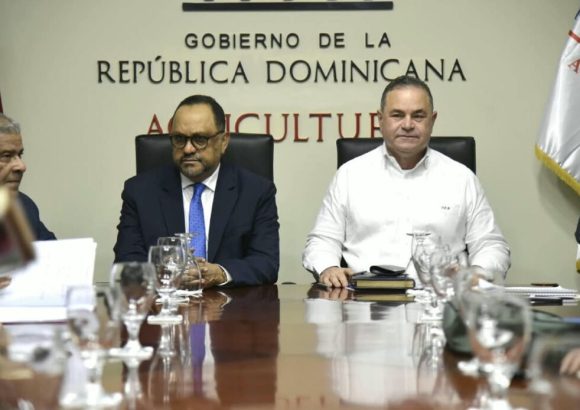
    RD Vial Director Hostos Rizik outlined the project’s scope in a recent statement, confirming that the new roadway will connect the existing San Francisco de Macorís highway to the heavily traveled Duarte Highway, positioned near the main entrance of Cibao International Airport. Rizik added that a third-party consulting firm has already received formal authorization to kick off preliminary technical analyses, noting that the project is a high-priority initiative for President Luis Abinader’s administration, which has pushed aggressively to advance its development agenda.

    The announcement has drawn broad praise from business leaders and regional development advocates, who have long framed the expressway as a critical catalyst for long-term economic growth in the Cibao region. Ricardo Fondeur, a representative of the Association for the Development of Santiago (APEDI), emphasized that stakeholders are eager to see the feasibility process move forward as quickly as possible, adding that industry groups are confident the assessment will validate the project’s technical and economic viability.

    Juan María García, another prominent regional development figure, expanded on the project’s expected benefits, noting that streamlined traffic flow and cut travel times between two of the region’s largest urban centers – Santiago and San Francisco de Macorís – will unlock broader economic activity across the entire central Cibao region. This area already contributes roughly 20% of the Dominican Republic’s total gross domestic product, making infrastructure improvements here a high-stakes investment for the entire country’s economic future.

  • US Green Card seekers must now apply from home countries

    US Green Card seekers must now apply from home countries

    In a sweeping policy shift unveiled Friday in Washington D.C., the Trump administration has enacted a landmark change to U.S. permanent residency rules that will require the vast majority of foreign nationals seeking green cards to submit their applications from their country of origin.

    Zach Kahler, a spokesperson for U.S. Citizenship and Immigration Services (USCIS), outlined the new regulation in an official statement, noting that only applicants facing extraordinary, exceptional circumstances will be exempt from the new requirement. Under the updated framework, any foreign national currently residing in the U.S. on a temporary status will be required to return to their home nation to move forward with their permanent residency application.

    Kahler emphasized that the U.S. immigration system is structured around a core principle: nonimmigrant visa holders — including international students, temporary skilled workers, and tourists — enter the country for limited, time-bound stays tied to a specific purpose. “Our system is designed for them to leave when their visit is over,” Kahler said, adding that temporary entry should never serve as a backdoor to starting the green card application process.

    Data from The Washington Post shows that the U.S. issues more than 1 million green cards annually, and prior to this policy change, more than half of all successful applicants were already residing in the United States on temporary visas when they submitted their applications. Moving forward, all green card applications from foreign nationals abroad will be processed by the State Department through U.S. consular offices located across the globe.

    Administration officials argue the new rule will strengthen border integrity and immigration enforcement. Kahler explained that requiring in-country applications will reduce the need for U.S. authorities to locate and deport individuals who remain in the country illegally after their green card application is rejected. Instead of overstaying their temporary visas after a denial, applicants will remain in their home countries while their cases are processed.

    This latest regulatory change aligns with a core campaign promise Trump made during his 2016 bid for the White House: cracking down on unauthorized immigration by expelling millions of undocumented migrants already residing in the U.S. Since taking office, his administration has steadily closed off multiple legal pathways to permanent U.S. residency as part of its broader restrictive immigration agenda.

  • IOM NEWS: Saint Lucia launches draft National Migration Policy grounded in data and diaspora engagement

    IOM NEWS: Saint Lucia launches draft National Migration Policy grounded in data and diaspora engagement

    Against a backdrop of shifting demographic pressures and widespread labor gaps across the Caribbean, the eastern Caribbean island nation of Saint Lucia has taken a landmark step toward proactive, inclusive migration governance. On Monday, May 18, the government officially launched its long-awaited draft National Migration Policy during a formal media briefing and multi-stakeholder panel discussion, with direct technical and strategic support from the International Organization for Migration (IOM).

    The policy framework represents a holistic, whole-of-society approach to migration management, developed through years of rigorous data collection, cross-sector stakeholder consultations, and forward-thinking strategic planning. Unlike reactive migration policies that treat population movement as a challenge to be contained, Saint Lucia’s new draft positions migration as a core driver of long-term sustainable development and national resilience.

    At the heart of the draft policy is a rights-centered, gender-responsive, development-focused governance structure designed to standardize the measurement, monitoring, and management of all migration flows in the country. It identifies five priority action areas: streamlined and equitable labor migration, deeper engagement with the Saint Lucian diaspora worldwide, strengthened national migration data systems, enhanced protection for vulnerable migrant populations, and robust crisis-era migration governance protocols. All priorities are aligned with broader national goals of boosting inclusive economic growth and strengthening national resilience to external shocks.

    Addressing attendees at the launch, IOM Caribbean Coordinator Patrice Quesada underscored the cross-cutting nature of migration policy, noting that population movement impacts every corner of national life and cannot be confined to a single government sector. “Migration does not belong to one sector, it cuts across different aspects of society,” Quesada explained, emphasizing that meaningful progress requires coordinated collaboration between national government agencies, civil society organizations, and private sector stakeholders.

    Quesada confirmed that the policy was built on extensive empirical data and months of targeted consultations with groups across Saint Lucia, ensuring that the framework reflects the unique realities of the country’s current migration landscape, rather than adopting a one-size-fits-all model designed for other regions. Looking across the broader Caribbean region, Quesada highlighted that nearly all countries in the area face growing demographic decline and acute labor shortages that threaten long-term economic stability. Saint Lucia’s proactive policy, he argued, offers a replicable model for turning migration into a solution to these shared challenges. By leveraging migration strategically, countries can close critical workforce gaps, strengthen national resilience, and lay the groundwork for sustained development. “Saint Lucia is showing what developing a migration policy that is fit for purpose and forward-looking can achieve for the entire region,” Quesada added.

    Julian Dubois, Saint Lucia’s Ambassador for Diaspora Affairs, used the launch to center the conversation on the untapped potential of the country’s global diaspora population. Dubois called for a fundamental paradigm shift in how nations view emigration, moving beyond the outdated framing of “brain drain” to a new model of “brain gain” and global “brain circulation.”

    Rather than viewing migration of skilled workers as a net loss for the country, Dubois argued that cross-border movement of Saint Lucians is a strategic national asset. “Migration is not just a statistic, it is a living, breathing bridge” connecting Saint Lucia to global expertise, cutting-edge innovation, and new streams of international investment, he explained. “The island of Saint Lucia may be bounded by 238 square miles of beautiful Caribbean land, but the nation of Saint Lucia is global. Effective migration management is the key that unlocks this global potential.”

    Dubois urged all public and private stakeholders to strengthen diaspora engagement through modern, structured mechanisms, including expanded cross-border knowledge exchange programs and targeted investment incentives, to unlock the full development potential of Saint Lucians living and working abroad. He noted that while remittances already play a critical role in supporting household economic stability across the island, policy frameworks must go further to encourage long-term productive investment and broad-based economic transformation that benefits all Saint Lucians.

    The launch of the draft policy opens a period of public consultation, during which stakeholders and members of the public will have the opportunity to provide feedback before the final policy is formally adopted. Regional development observers have already highlighted Saint Lucia’s initiative as a potential blueprint for other small island developing states across the Caribbean grappling with similar demographic and economic challenges.

  • PM secures critical energy, trade, and security alliances

    PM secures critical energy, trade, and security alliances

    From May 18 to 19, 2026, Grenada Prime Minister the Honourable Dickon Mitchell completed a high-stakes, two-day official working visit to Washington, D.C., marking a landmark step in deepening diplomatic and economic collaboration between the Caribbean island nation and the United States. The packed itinerary centered on five core priority areas: cross-border investment, energy development, trade expansion, critical infrastructure upgrades, and regional security cooperation, with Mitchell holding direct, substantive talks with senior officials from the U.S. Cabinet, congressional leaders, and major U.S. private sector stakeholders.

    ### Strengthening Bilateral and Economic Partnerships
    The entire diplomatic mission was framed around boosting Grenada’s global visibility as an attractive destination for sustainable trade and international investment, starting with high-level dialogue across key U.S. government branches. At the U.S. Department of State, Mitchell sat down with Deputy Secretary of State Christopher Landau to reaffirm shared commitments to regional collaboration and expand mutually beneficial bilateral economic ties.

    Moving to the Department of Commerce, the prime minister held targeted discussions with Commerce Secretary Howard Lutnick and William Kimmett, Under Secretary for the International Trade Administration. The talks centered on unlocking Grenada’s emerging oil and gas potential while streamlining and optimizing existing trade routes between the two nations to reduce barriers for Grenadian exporters. Mitchell also made direct outreach to key congressional leaders, including Representative Joe Wilson of the House Foreign Affairs Committee and Senator Bill Hagerty, ranking member of the Senate Foreign Relations Subcommittee on the Western Hemisphere, to secure ongoing legislative support for the deepening of U.S.-Grenada bilateral relations.

    ### Advancing Energy Security and Maritime Logistics
    A central pillar of Mitchell’s visit was advancing Grenada’s goals of energy sovereignty, climate resilience, and long-term economic sustainability, with technical and private sector discussions focused on renewable energy development and supply chain improvements. At the U.S. Department of Energy, the Grenadian delegation met with a senior leadership team including Juan Pablo Varela, Special Advisor for International Affairs, and John Lassek, Deputy Assistant Secretary for the Office of Subsurface Energy, Hydrocarbons and Geothermal Energy. The two sides explored opportunities for U.S. technical assistance and international private investment in Grenada’s geothermal and utility-scale solar energy sectors.

    Separately, Mitchell held talks with Adam Cortese, CEO of UGT Renewables, focused on mobilizing global private capital to deliver large-scale solar energy projects and related infrastructure to unlock Grenada’s abundant renewable energy potential. For maritime logistics, a meeting with Tropical Shipping CEO Tim Martin centered on practical improvements: streamlining cross-border supply chains, cutting freight costs for Grenadian businesses, and building more efficient maritime logistics networks that support the island nation’s trading community.

    ### Aligning on National and Regional Security Priorities
    Addressing shared border management challenges and aligned geopolitical interests across the Western Hemisphere, Mitchell held strategic strategy sessions at the White House National Security Council with Michael Jensen, Senior Director of the NSC, and Will Turner, Special Advisor to the Vice President for the Western Hemisphere. Discussions focused on advancing regional stability in the Eastern Caribbean, advancing the U.S. ‘Americas First’ policy framework, expanding U.S. support for Grenada’s disaster response and risk management systems, and strengthening joint air and maritime border security enforcement in the subregion.

    In his post-visit commentary, Mitchell emphasized that the two days of intensive engagement marked the starting point of a deeper, long-term partnership with the United States, one centered on driving Grenada’s national development goals through expanded bilateral cooperation. “By solidifying direct alliances with U.S. federal agencies, key congressional committees, and major industrial leaders, we are positioning Grenada to attract premium, sustainable investments that deliver long-term benefits to our people,” Mitchell noted.

    Before arriving in Washington for official diplomatic talks, Mitchell undertook a two-day engagement with the Grenadian diaspora in New York City from May 16 to 17. During that trip, he attended the graduation ceremony of St George’s University at Madison Square Garden, where renowned Grenadian physician Dr. Dolland Noel was honored with the institution’s Distinguished Service Award. Alongside the Project Polaris Team and Grenada’s Ambassador for Diaspora Affairs Terry Forrester, Mitchell also led a well-attended town hall meeting at Medgar Evers College, where he addressed questions and priorities from the local Grenadian community. He also took part in the Spice Excellence Awards, where 12 accomplished Grenadians from diverse professional fields were recognized for their outstanding career achievements.

    Following the conclusion of his official travel, Mitchell and his delegation completed their itinerary and returned to Grenada on Wednesday, May 20, 2026. This report was issued by the Office of the Prime Minister of Grenada.

  • UWP raises alarm over crime and governance

    UWP raises alarm over crime and governance

    Opposition political group the United Workers Party (UWP) has launched a scathing rebuke of the Saint Lucia government’s management of public safety and national development, arguing that the island nation’s ongoing surge in violent crime is a direct product of long-running structural gaps and incompetent leadership.

    Speaking at a formal press conference, former Member of Parliament for Vieux Fort North Calixte Xavier broke down the roots of the current crisis, emphasizing that the unchecked crime wave gripping the country did not materialize suddenly. “Crime at this level does not emerge overnight. It takes time,” he noted, attributing the escalation to expanding transnational criminal networks, unregulated flow of illegal firearms across borders, and a reactive governance style that lacks proactive long-term strategy.

    Xavier cast doubt on the tangible impact of the government’s recent public safety interventions, pointing out that even after increasing police deployments, allocating new law enforcement equipment, reshuffling the security ministry, and imposing a 2.5% national levy for health and security initiatives, the island has yet to record a sustained drop in homicide rates.

    He further criticized gaps in border security framework and weak support for frontline law enforcement, highlighting concerning missteps including the disbandment of the police canine unit, non-functional border scanning equipment, and plummeting morale among ranks of the Royal Saint Lucia Police Force. “Our security begins at our borders,” Xavier said, adding that the poor treatment of serving officers has directly eroded their ability to carry out their duties effectively.

    Beyond systemic failures, Xavier drew attention to the devastating human and social toll of persistent violent crime, from the chronic trauma endured by victims, their families, and first responders to the unaddressed mental health burden placed on police officers who repeatedly respond to violent incidents. He revealed that the Royal Saint Lucia Police Force currently has no dedicated in-house counsellor to support officers dealing with occupational trauma, a gap he described as a “a bigger problem” that exacerbates existing morale issues.

    Xavier also outlined the crippling financial strain that violent crime places on affected households, noting that the loss of a breadwinner and unexpected medical bills often push already vulnerable families into severe economic hardship. Echoing widespread public discontent, he stressed: “We are tired of speeches. We are tired of promises. We want safety, we want leadership.”

    UWP Second Deputy Political Leader Dominic Fedee expanded on the party’s critique, framing rising crime as a visible symptom of far deeper failures in governance, economic planning and national priority-setting. He warned that Saint Lucia is effectively “drifting” at a moment when clear, decisive strategic direction is most needed.

    Fedee pointed out that the government has controlled substantial financial resources from international loans and the island’s popular Citizenship by Investment Programme, yet the public still remains gripped by feelings of insecurity, uncertainty and distrust in the government’s national direction. “The issue confronting Saint Lucia was never simply a lack of money; the issue was a lack of priorities,” he explained.

    He called for sweeping improvements to transparency and accountability, particularly for public funds generated through the citizenship by investment initiative, noting that “the people of Saint Lucia deserve transparency, they deserve accountability.”

    Fedee argued that the absence of long-term strategic planning has directly fueled broader social ills including rising youth unemployment, weakened community cohesion, and growing social instability. “When governments fail to create opportunity, fail to plan strategically… criminal networks eventually begin filling the vacuum,” he said, underscoring the direct causal link between economic mismanagement and rising crime.

    He also issued a stark warning that the ongoing surge in violence threatens to damage Saint Lucia’s $tourism sector$, the central pillar of the island’s national economy. Rising instability and negative international press could deter international visitors and drive away critical foreign investment, Fedee argued, noting: “A country cannot market paradise abroad while instability spreads at home.”

    In addition to security failures, Fedee criticized the government’s ad-hoc, unplanned approach to national development projects, which he said has disproportionately harmed informal vendors and artisanal fisherfolk. He claimed there is no cohesive national policy to protect vulnerable groups when large-scale redevelopment projects move forward, leaving marginalized communities to bear the brunt of poorly planned growth.

    Fedee concluded by emphasizing that Saint Lucia needs comprehensive, long-term solutions rather than short-term, reactive fixes. “Band-aids cannot replace nation building,” he said, renewing the UWP’s call for strategic forward planning, greater governmental accountability, and equitable sustainable development across the island.

  • LIVE FROM 11AM: UWP Press Conference 21st May 2026

    LIVE FROM 11AM: UWP Press Conference 21st May 2026

    Local media outlet DNO has announced that it will provide uninterrupted live coverage of an upcoming press conference held by the United Workers Party (UWP), set to kick off at 11 a.m. local time on the same day this announcement was made.

    The UWP, a major political organization in its region, has scheduled this press briefing to address current political topics of public interest, and the live broadcast arrangement will allow audiences across digital platforms to access real-time updates directly from the event without delay.

    DNO, which regularly covers local political developments and public events, made this announcement via its digital channels, prompting local residents and political observers to prepare to tune in for the latest official statements from the UWP leadership.

  • Vertrouwenscrisis bij SBB: minister Soeropawiro wil ontslag Ruben Ravenberg

    Vertrouwenscrisis bij SBB: minister Soeropawiro wil ontslag Ruben Ravenberg

    A high-stakes leadership dispute has erupted at Suriname’s leading forest management regulatory body, with Minister of Land and Forestry Policy (GBB) Stanley Soeropawiro formally requesting permission from the dismissal committee of the Ministry of Public Health, Welfare and Labor to remove Ruben Ravenberg, general director of the Stichting Bosbeheer en Bostoezicht (SBB), from his post. In his formal request, the minister cites compelling, weighty grounds for the termination, outlined in a written submission to the independent committee. Soeropawiro points to two core issues: a severely broken working relationship between Ravenberg and the SBB board, and documented irregularities surrounding Ravenberg’s official employment status. The conflict centers on what is described as a “parallel agreement” that was put in place alongside Ravenberg’s standard indefinite-term employment contract. According to the minister, this secondary agreement was created without required legal authorization, specifically lacking an official mandate from the Council of Ministers. This action, he argues, directly violates SBB’s foundational statutes, which explicitly state that the organization’s director must be appointed, suspended, and dismissed by the minister on the nomination of the board. Beyond the contractual irregularity, Soeropawiro emphasizes that a deep, irreparable trust crisis between Ravenberg and the SBB governing board has created a full administrative deadlock, making productive continuation of the employment relationship impossible to maintain. In response to the allegations, Ravenberg has pushed back aggressively, pushing a narrative that frames the termination attempt as a politically motivated purge rooted in past administration mistakes being pinned on him. Speaking to local outlet Starnieuws, the SBB director confirmed the existence of the parallel agreement, but insists the contract was finalized under the authority of former GBB Minister Dinotha Vorswijk. What is an error of the previous administration, he argues, is now being wrongfully blamed on him to push him out of the role. Ravenberg further claims the dismissal effort is driven by hidden political interests, alleging that three candidates have already been shortlisted to replace him. He calls the effort a conspiracy that serves personal and political agendas, noting that SBB’s own statutes work against the group pushing for his ouster. During a February 27 meeting with Soeropawiro, which was also attended by member of the National Assembly Bronto Somohardjo, Ravenberg made clear that he would not allow his reputation and professional integrity to be undermined, and that he is prepared to pursue legal action to defend his position if necessary. The director has provided the dismissal committee with a full account of the meeting, telling the body that his version of events contradicts the narrative put forward by the SBB board and the minister. For his part, Soeropawiro confirms that the meeting failed to resolve the existing conflict. Ravenberg was formally interviewed by the dismissal committee on Wednesday, with the committee announcing it will issue a final ruling on the minister’s termination request on June 5. The outcome of the case will have significant implications for governance of Suriname’s critical forestry sector, which forms a core part of the country’s economy and environmental policy.

  • Appeal Court Overturns EC$176,500 Award Against Digicel

    Appeal Court Overturns EC$176,500 Award Against Digicel

    A key appellate court has thrown out a previous multi-thousand dollar compensation award against regional telecommunications giant Digicel, ruling the company was unjustly denied a fundamental right to a fair legal process in the original employment dispute. On 19 May, the Eastern Caribbean Court of Appeal officially vacated the September 2023 ruling from the lower Industrial Court, which had ordered Digicel to pay former employee Karl Skepple a total of EC$176,500 in compensation for alleged unfair dismissal. The appellate judges have now ordered that the entire dispute be reheard by a newly assembled Industrial Court tribunal.

    The case stretches back nearly a decade, to August 2015, when Digicel terminated Skepple’s employment following an internal disciplinary investigation. The company moved to dismiss Skepple after substantiating allegations that he had made unwanted inappropriate sexual advances toward a fellow member of staff. Six years after his termination, in 2016, Skepple launched a formal legal claim against Digicel at the Industrial Court, arguing his dismissal was unlawful and unfair.

    In the original 2023 proceeding, the Industrial Court moved forward with its full hearing and ultimately ruled in Skepple’s favor despite the complete absence of any legal representation for Digicel or any company representative to present the firm’s side of the case. The tribunal subsequently granted the former employee the EC$176,500 award, which covered both lost earnings and damages for unfair dismissal.

    Digicel immediately challenged the ruling on appeal, arguing that the original Industrial Court tribunal had violated the company’s constitutionally protected right to a fair hearing. The telecom firm’s legal team explained that counsel had requested an adjournment of the original hearing due to an unresolvable scheduling conflict with a separate ongoing matter in the High Court, noting that Digicel’s attorney had only received five full days’ advance notice of the Industrial Court hearing date. That request for an adjournment was rejected by the original tribunal.

    After reviewing the appeal, appellate judges concluded that the lower Industrial Court had improperly handled the adjournment request: rather than conducting a full assessment of the merits of Digicel’s reasoning for seeking a delay, the tribunal improperly centered its decision solely on whether Skepple’s legal team consented to the adjournment.

    While the appellate court did publicly criticize Digicel for its own procedural missteps in the case, specifically repeated delays in filing required witness statements, judges emphasized that these shortcomings did not forfeit the company’s core legal rights to cross-examine opposing witnesses and present formal legal arguments to the tribunal. In its written judgment, the Court of Appeal underscored that “The right to legal representation and the right to be heard are fundamental entitlements.”

    With the original ruling now fully set aside, the entire dispute will return to the Industrial Court for a complete new hearing before a different panel of tribunal members, allowing both parties to fully present their cases in line with constitutional fair hearing requirements.

  • FM Chet Greene Attends CARICOM Foreign Ministers Meeting in Suriname

    FM Chet Greene Attends CARICOM Foreign Ministers Meeting in Suriname

    As the 15-nation Caribbean bloc CARICOM navigates a turbulent landscape of evolving global and hemispheric shifts, its top leader is sounding the call for deeper coordination among member states to project a unified, influential voice on the international stage.

    On Wednesday, May 20, 2026, CARICOM Secretary-General Dr. Carla Barnett delivered opening remarks to foreign affairs ministers gathered in Paramaribo, Suriname, for the 29th Meeting of the Council for Foreign and Community Relations (COFCOR), emphasizing that collective action is not a choice for the bloc’s small island and coastal nations—it is a non-negotiable necessity.

    Barnett framed the current global moment as one defined by rapid systemic shifts that reshape regional economies, cross-border trade partnerships and core foreign policy priorities for every CARICOM member. She reminded attending delegates that policy decisions emerging from COFCOR and other CARICOM governing bodies carry direct, tangible impacts on the economic prosperity and social well-being of the bloc’s 16 million citizens, pushing for outcomes that will reinforce the entire community’s long-term resilience amid uncertainty.

    Against this backdrop of shifting global dynamics, Barnett outlined the bloc’s ongoing diplomatic strategy: strengthening long-standing partnerships with traditional allies while expanding diplomatic outreach to new global partners. During the 29th COFCOR meeting, CARICOM delegates are scheduled to hold targeted discussions with representatives from Japan, Singapore and the United Arab Emirates, focusing on areas of mutual strategic and economic interest.

    Looking forward to the remainder of 2026, the Secretary-General stressed the critical need for coordinated, bloc-wide preparation for a packed slate of high-stakes global diplomatic gatherings that will shape outcomes on CARICOM’s top priority issues. These key issues include advancing reparatory justice for colonial-era harms, stabilizing the ongoing crisis in Haiti, addressing the accelerating impacts of climate change, securing equitable access to climate finance for vulnerable small states, and upholding global peace and security. The upcoming major events include the Commonwealth Heads of Government Meeting set to be hosted in Antigua and Barbuda, the annual United Nations General Assembly, the Organization of American States General Assembly, and the UN Climate Change Conference (COP31).

    “One of our Caribbean Community’s greatest strengths is our ability to project a united voice,” Barnett told attendees, noting that this collective unity is the only tool that allows small developing states to meaningfully shape global decision-making processes that directly impact their futures. While she acknowledged the inherent challenges of balancing individual national priorities with shared regional goals, Barnett reaffirmed that cross-member coordination remains an essential foundation for CARICOM’s success. “None of our small nations can effectively confront these challenges in isolation. Working together is therefore not an option, it is an imperative,” she added.

    Founded in 1973 via the Treaty of Chaguaramas—revised in 2001 to establish a regional single market and economy—CARICOM counts 15 full member states and six associate members, with a total population of roughly 16 million people, 60 percent of whom are under the age of 30. The bloc organizes its work around four core pillars: economic integration, coordinated foreign policy, human and social development, and cross-border security cooperation. Widely recognized as one of the most successful regional integration projects in the developing world, CARICOM aims to build an inclusive, resilient, and competitive global bloc that guarantees human rights, social justice, and equal opportunity for all citizens to thrive and share in shared prosperity. The CARICOM Secretariat, the organization’s central administrative body, is headquartered in Georgetown, Guyana.